



More than 70 percent of Lesotho’s population relies on agriculture for their livelihoods. Yet the sector remains one of the country’s most fragile. For smallholder farmers who make up the backbone of the rural economy, a single bad season can mean more than a failed harvest. It can mean the collapse of an entire household.
The question is no longer whether Lesotho’s farmers need protection from climate risk. The question is what kind of protection is both practical and affordable. Increasingly, the answer points to a relatively young but promising financial instrument: index insurance.
What Is Index Insurance?
Traditional crop insurance sends an assessor to a farm after a loss event to verify damage and calculate a payout. This is slow, expensive, and ill-suited to remote rural areas where smallholder farmers often need funds immediately.
Index insurance works differently. Payouts are based on an agreed indicator, such as rainfall levels or average regional yields, rather than on a farm-by-farm inspection. If the index drops below a set threshold, signalling poor crop development conditions, a payout is issued automatically. There is no farm visit, no lengthy claims process, and no waiting months for a decision.
This makes index-based coverage a practical option for smallholders in developing countries, precisely the demographic that conventional insurance has long failed to reach.
Breaking the Low-Risk, Low-Reward Trap
The consequences of having no safety net are more far-reaching than they might appear. Small-scale farmers in low- and middle-income countries often protect themselves against future losses by choosing crops with stable but low yields, and by limiting upfront investments in more productive technologies such as fertiliser. The result is a cycle of low-risk, low-return agriculture that is difficult to escape.
“When farmers know that a catastrophic season will not wipe out everything, they are more willing to invest in better seeds, fertiliser, and modern farming techniques.”
From agricultural research on index insurance and farmer behaviourResearch supports this. In studies testing whether offering weather index insurance alongside drought-tolerant seed varieties had advantages over offering the seed variety alone, farmers were significantly more willing to make productive investments when insurance was part of the package. Index insurance has the potential to break the low-risk cycle by providing a credible floor beneath which household income cannot fall.
Lesotho Takes Action
Lesotho’s government has begun to take this seriously. A feasibility study conducted in the Mafeteng, Maseru, and Berea districts assessed the potential for implementing agricultural insurance and e-voucher mechanisms aimed at enhancing smallholder resilience. The study was commissioned through the Ministry of Agriculture, Food Security and Nutrition in collaboration with the World Food Programme and the Second Smallholder Agriculture Development Project.
This week, momentum continued. The Ministry of Agriculture, in collaboration with the World Food Programme, hosted a stakeholders’ meeting on crop insurance, focused on promoting smart subsidies and agricultural insurance to boost agricultural investment. Researchers presenting the feasibility study highlighted weather index-based insurance as particularly well suited to Lesotho’s circumstances, noting that such mechanisms provide farmers with timely payouts when weather conditions meet predetermined thresholds.
The Challenges Are Real
- Limited access to information about insurance products among rural communities.
- Financial constraints that make market-rate premiums unaffordable for most smallholders.
- Inadequate rural infrastructure, including digital connectivity and literacy.
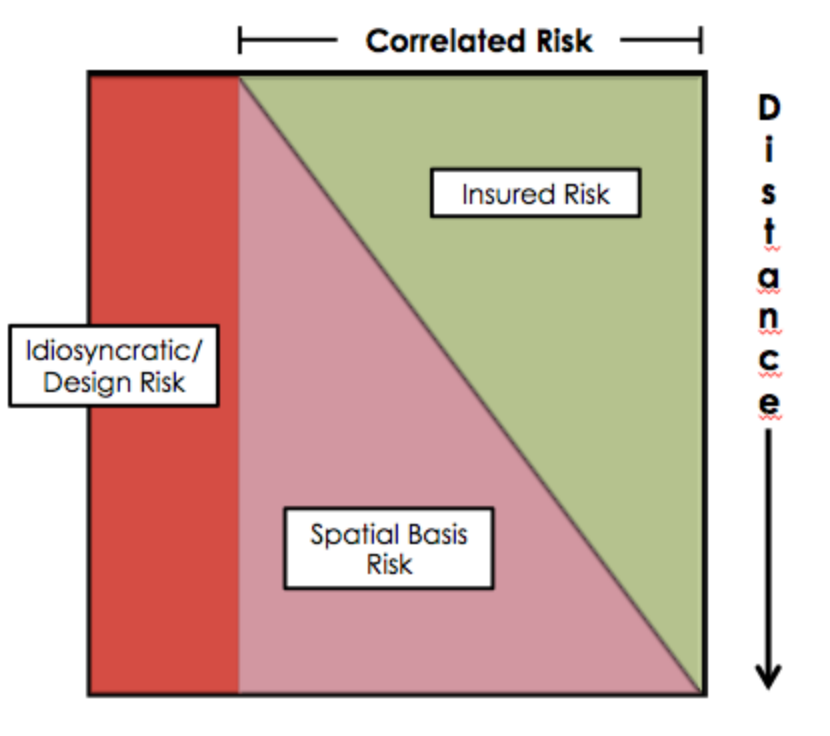
- Basis risk: the gap between what the regional index measures and what an individual farmer actually experiences.
- Highly variable climate and terrain, which complicates product design and pricing.
- Low uptake at full cost, suggesting subsidies or social protection integration may be necessary for meaningful scale.
A representative from the World Bank noted at the recent stakeholders’ meeting that agricultural insurance in Lesotho remains complex due to the country’s variable climate and terrain. Farmers must carefully consider the specific risks they wish to insure against, including drought, excessive rainfall, or hail, as well as the cost implications, since broader coverage results in higher premiums.
What Success Looks Like
A partnership between a microfinance institution, an insurance technology company, and the UN Capital Development Fund enabled over 15,000 smallholder farmers, primarily low-income rural women, to receive coverage protecting their rice yields against frost, excessive rainfall, heatwaves, hail, flood, drought, pests, and disease. The lesson is consistent: index insurance works best when embedded within a wider support system of agricultural practice improvement and infrastructure development.
Reaching farmers at scale requires more than a well-designed product. It requires addressing digital literacy, rural accessibility, and the need for products tailored to the specific crops and risk profiles of different communities across Lesotho’s varied terrain.
A Window of Opportunity
The convergence of government intent, international partnership, and growing evidence for what works makes this a genuine moment of opportunity. Index insurance is not a solution to every problem facing Lesotho’s agricultural sector. But as a tool for stabilising farm incomes, encouraging productive investment, and building resilience against a climate that is becoming less predictable, it deserves a central place in the country’s agricultural development strategy.
For the millions of Basotho whose lives depend on what the land produces each season, the promise of a financial safety net has rarely been more urgent.