

Mohahlaula Airlines
Thursday, July 23, 2026
Home Blog Page 38

IEC Appointments Delay Sparks Constitutional Alarm

0

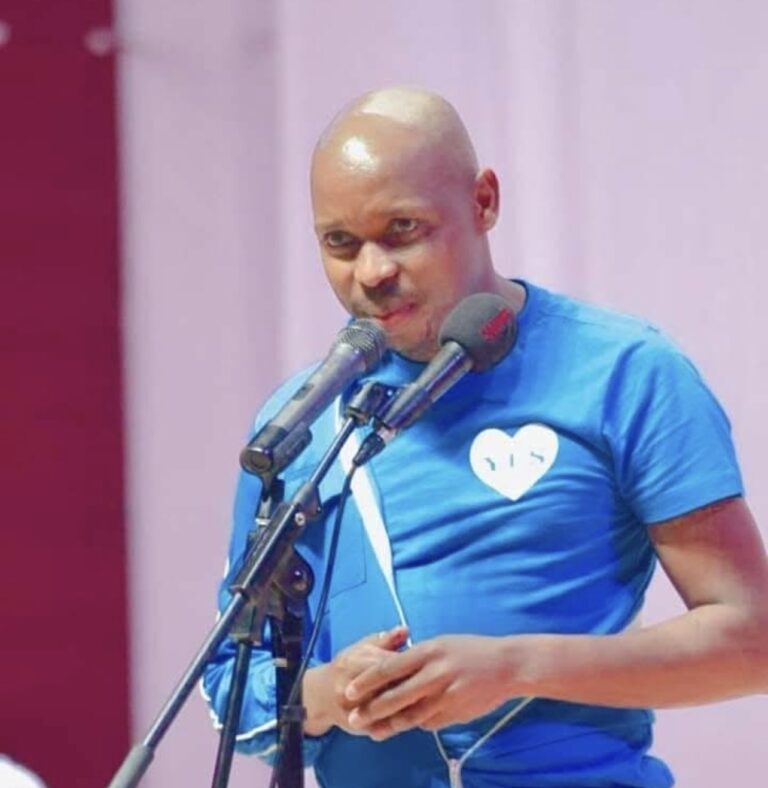
MASERU — The political party Yearn for Economic Sustainability (YES) has formally petitioned the Council of State to proceed without further delay in advising His Majesty King Letsie III on the appointment of three commissioners to the Independent Electoral Commission (IEC), warning that the continued inaction has no legal basis and risks undermining constitutional governance.

In a letter dated 23 December 2025, addressed to the Senior Private Secretary of the Council of State, YES argues that all constitutional requirements for the appointment process have already been met and that there is currently no lawful impediment preventing the Council from discharging its advisory role under Section 66(4) of the Constitution of Lesotho.

According to the party, the Forum of Political Parties lawfully submitted a list of five nominees to the Council of State on 30 October 2025, from which three commissioners are to be appointed by the King acting on the advice of the Council, as prescribed by the Constitution.

YES further notes that recent litigation brought by Tumisang Mosotho and Peshoane Tsikoane challenging aspects of the process was dismissed by the High Court of Lesotho, and crucially, that no application for a stay of execution or suspension of the judgment was filed thereafter.

“In law, this means there is currently no legal impediment, court order, or lawful restraint preventing the Council of State from proceeding,” the party states in its submission.

Warning of unconstitutional delay

The YES letter characterises any continued delay in the appointment of IEC commissioners as unconstitutional, arguing that holding the process in abeyance without a subsisting court order or statutory authority is inconsistent with the Constitution.

The party cautions that such delay risks setting a dangerous precedent where constitutional obligations are suspended indefinitely without judicial sanction, thereby weakening institutional accountability and public confidence in governance structures.

Local government elections at risk

The matter is described as one of national urgency, particularly in light of Lesotho’s trajectory toward local government elections in several electoral divisions where councils have lapsed.

According to YES, the absence of a fully constituted IEC directly frustrates the country’s ability to hold timely elections, depriving affected communities of representation, service delivery oversight, and democratic participation on an equal footing with other electoral divisions.

“The absence of commissioners at the IEC directly frustrates this constitutional and democratic obligation,” the letter reads.

Call for immediate action

YES emphasises that the Forum of Political Parties followed an agreed, transparent, and algorithmic method in submitting the list of nominees, and that any further delay not only prejudices democratic processes but also erodes public trust in constitutional institutions.

The party has therefore urged the Council of State to proceed without further delay and advise His Majesty to appoint the three IEC commissioners so that the Commission may function fully ahead of the forthcoming local government elections.

Polihali Dam Hits Critical Height as Africa’s Largest Water Transfer Project Enters Peak Construction Phase

0

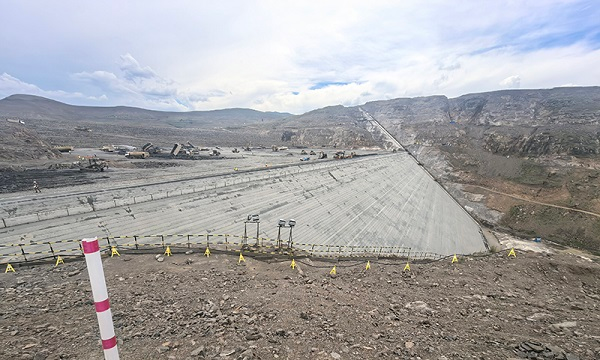
The Power Construction Corporation of China (POWERCHINA) has confirmed a major construction milestone at the Polihali Dam in Lesotho, with the dam reaching full-section fill to its design elevation of EL.1977 metres, equivalent to a structural height of 65 metres.

The achievement, reached on 6 December 2025 and formally announced by POWERCHINA later in the month, marks the transition of the region’s largest water diversion control initiative into its peak construction phase.

Located in Lesotho’s Mokhotlong District, the Polihali Dam is the centrepiece of Phase II of the Lesotho Highlands Water Project, a landmark bi-national partnership between Lesotho and South Africa aimed at strengthening long-term water security, energy resilience and regional economic development.

The project is implemented by the Lesotho Highlands Development Authority (LHDA) and is widely regarded as one of southern Africa’s most ambitious examples of transboundary infrastructure cooperation.

To mark the milestone, a high-level delegation of more than forty representatives visited the construction site, including Mokhotlong District Administrator Mr Kepa Keqe, Principal Chiefs and Members of Parliament. The delegation was accompanied by LHDA officials and members of the international supervision team, who observed the mechanised embankment filling process and concrete works on the intake tower.

Speaking during the visit, Mr Keqe described the milestone as a defining moment in Lesotho’s national development trajectory, underlining the dam’s strategic importance to both countries’ water and energy needs. He expressed confidence that timely delivery of the project would translate into lasting socio-economic benefits for communities in the highlands and beyond.

Once completed, the Polihali Dam will impound water from the Senqu River and channel it through an extensive tunnel network into South Africa’s Vaal River system. The reservoir is expected to significantly enhance water supply reliability for Gauteng Province, the continent’s most industrialised urban region, while also supporting hydropower generation within Lesotho.

Engineering experts and project stakeholders have consistently framed the Polihali development as a practical demonstration of regional partnership and shared benefit. The project reflects a governance model grounded in joint planning, consultation and mutual contribution between neighbouring states, supported by international contractors and financiers.

POWERCHINA’s role at Polihali forms part of a broader pattern of large-scale infrastructure collaboration across Africa, particularly in water and energy sectors where Chinese firms have become prominent partners in projects aligned with national and regional development priorities.

Beyond its engineering scale, the Polihali milestone has been interpreted by analysts as a signal of growing African agency in infrastructure delivery. Increasingly, African states are asserting greater influence over project design, sequencing and implementation, while engaging global partners on negotiated and strategic terms.

However, as construction accelerates, observers caution that environmental management, social safeguards and equitable water governance remain critical. Sustained transparency, community participation and ecological oversight will be essential to ensure that the project’s long-term benefits are broadly shared, particularly by highland communities directly affected by the reservoir.

If delivered as planned, the Polihali Dam is expected to enhance livelihoods across both Lesotho and South Africa through improved water availability, job creation and expanded economic activity. Its progress reinforces a growing continental commitment to cooperative, rules-based and inclusive management of shared natural resources, setting a notable precedent for future regional infrastructure initiatives.

Law Society President raises alarm over arrest of former First Lady brother, cites settled Constitutional Court ruling

0

The President of the Law Society of Lesotho, Lintle Tuke, has expressed concern over what he describes as questionable and potentially unlawful conduct by the Lesotho Mounted Police Service, the prosecution and the Magistrates’ Court following the arrest and detention of a young man, Tsebang Ramoholi, allegedly for insulting the Lesotho Defence Force commander by telephone.

In a Facebook post, Tuke said official police communications indicate that Ramoholi was arrested for a telephonic insult, criminally charged and brought before court on 22 December, where he was denied bail. He said the circumstances of the arrest and prosecution raise serious legal questions, particularly in light of long settled constitutional law.

Tuke reminded the country that criminal defamation and criminal insults were declared unconstitutional by the Constitutional Court of Lesotho nearly a decade ago, following the prosecution of former Lesotho Times editor Basildon Peta.

Constitutional Court ruling on criminal defamation

The matter arose from Peta v Minister of Law, Constitutional Affairs and Human Rights, a case stemming from the criminal prosecution of Peta after the publication of an article involving the then commander of the Lesotho Defence Force, Lieutenant General Tlali Kamoli.

In its judgment, delivered by a full bench of Justices Mokhesi, Mahase and Moiloa, the Constitutional Court struck down provisions of the Penal Code that criminalised defamation, holding that they violated the constitutional right to freedom of expression guaranteed under section 14 of the Constitution.

The court found that the offence was overly broad and vague, and that it created a chilling effect on free expression, particularly for journalists and members of the public engaging in debate on matters of public interest. It noted that criminal liability could arise even where no one other than the complainant had heard the alleged defamatory statement, a position the court said could not be justified in a democratic society.

The judges further criticised the extension of criminal defamation to statements concerning deceased persons and found the statutory defence of “public benefit” to be imprecise and susceptible to abuse.

On the role of the media, the court stated that the press is entitled to wide latitude when scrutinising public officials, including the use of robust language, satire and provocation. It emphasised that public figures must tolerate a higher degree of criticism than private individuals.

The court ultimately declared criminal defamation unconstitutional, confirming that disputes relating to reputation and insult must be pursued through civil litigation rather than criminal arrest or detention.

Questions over continued arrests

Tuke said the legal position has been settled for many years, yet arrests and prosecutions for alleged insults and defamation continue to be reported.

“This legal position has been settled for nearly a decade,” he said, questioning whether the persistence of such cases reflects a lack of understanding of the law by those tasked with enforcing it.

Legal practitioners have warned that continued reliance on unconstitutional offences undermines the rule of law and exposes the state to potential civil liability for unlawful arrest and detention.

At the time of publication, the police and the prosecution had not publicly responded to the concerns raised by the Law Society President.

Legal explainer: what the law says on insults and defamation

Are insults and defamation crimes in Lesotho?

No. Criminal defamation and criminal insults were declared unconstitutional by the Constitutional Court. They are no longer criminal offences.

What does this mean in practice?

The police cannot arrest or detain a person solely for allegedly insulting or defaming another person.

How should disputes about reputation be handled?

They must be pursued through civil courts. The aggrieved person may sue for damages or other civil remedies.

Who should not be involved?

Police, prosecutors and criminal courts should not be used to settle disputes about insults, defamation or reputational harm.

Why did the court strike down criminal defamation?

The court found that it violated freedom of expression, was vague and overly broad, and had a chilling effect on journalism and public debate.

Zimbabwe Records 9.64 Percent Economic Growth in Third Quarter of 2025

Zimbabwe’s economy expanded by 9.64 percent year on year in the third quarter of 2025, according to new data released by the Zimbabwe National Statistics Agency (ZIMSTAT). The figure marks a significant increase from the 2.28 percent growth recorded during the same period in 2024, reflecting what officials described as a broad-based recovery across key sectors of the national economy.

Speaking at a press briefing in Harare, ZIMSTAT’s national accounts manager Grown Chirongwe said the performance underscored the resilience and gradual stabilisation of the economy following years of volatility. He attributed the rebound to improved production conditions and sustained activity in both goods-producing and service-oriented industries.

Chirongwe noted that the upturn was primarily driven by robust performance in mining and quarrying, manufacturing, finance and insurance, wholesale and retail trade, and agriculture. These sectors, he said, benefitted from a combination of favourable weather patterns, increased investment in production capacity, and policy adjustments aimed at improving macroeconomic stability.

In a recent statement, the International Monetary Fund (IMF) observed that Zimbabwe’s economic recovery in 2025 had been stronger than anticipated, with expectations that the growth momentum will continue into 2026. The IMF highlighted that this positive trajectory is being reinforced by fiscal reforms, currency management efforts, and rising commodity exports.

Economists have suggested that the figures should be read with cautious optimism, noting that while headline growth is encouraging, structural vulnerabilities remain. Persistent inflationary pressures, limited access to external financing, and the need for further policy coherence continue to pose challenges to long-term stability.

Observers also emphasise the importance of assessing these developments within a wider African economic context, where several nations are navigating recovery amid shifting global market dynamics and local structural adjustments. Zimbabwe’s performance illustrates the potential of African economies to sustain growth through domestic resilience and regional cooperation, even in the face of external headwinds.

The third-quarter results, therefore, not only signify a turning point for Zimbabwe but also contribute to a broader narrative of African economic agency, challenging simplified portrayals of the continent’s financial systems. The data highlight the nuanced and diverse realities of national recovery paths that extend beyond conventional metrics of growth.

For more details, visit the official ZIMSTAT website and the IMF report on Zimbabwe.

ACE Maseru FC Exits A Division League Due to Financial Difficulties

ACE Maseru Football Club’s troubled A Division League campaign came to a premature end earlier this week after the club officially pulled out of the competition, closing a season defined by nothing but off-field problems and financial strain.

On Tuesday, 9 December, the A Division League Management Committee (ADMACO) circulated a notice to all A Division League clubs, stating that, together with the Club Licensing Committee (CLC), it had established that ACE Maseru FC failed to show-up to two  of their scheduled league matches, a home fixture against All Aces and an away match against FC Summit. The missed fixtures immediately set off alarm bells within league administration.

ADMACO and the CLC held a meeting last week Tuesday with ACE Maseru FC to seek clarity and explore possible solutions. The club was informed that failure to resolve the matter would result in the deduction of all points earned in matches involving the team. During these talks, the club’s leadership revealed that they are facing severe financial challenges, which means they are no longer in a position to continue competing in the A Division league. ACE Maseru then formally applied to ADMACO for permission to withdraw from the league, a development that was communicated to the Lesotho Football Association (LeFA).

On Wednesday 17th December, LeFA, working jointly with ADMACO, approved ACE Maseru FC’s withdrawal from the A Division League.

Ace Maseru’s season had been problematic from the very start. The club failed to complete their Club Licensing registration within the required timeframe at the beginning of the 2025/26 season, a lapse that resulted in an automatic six-point deduction. This penalty left the club rooted to the bottom of the standings from the opening rounds until their eventual exit from the league.

In retrospect, the administrative setbacks and continued struggles pointed to deeper-rooted challenges at the club, suggesting that the warning signs were present long before the final decision to withdraw was taken.

Massacre at Bekkersdal Tavern: Gunmen Open Fire, Kill Nine, Then Disappear

0

A squad of gunmen pulled up to a packed tavern in Bekkersdal, unleashed a hail of bullets, and vanished almost as quickly as they arrived.

Witnesses say the attackers arrived in a white kombi and a silver sedan, firing indiscriminately into the crowd as if it were target practice. Even as they sped away, the shooting continued.

According to the South African Police Service, at least nine people were killed and ten others wounded in the attack.

Police have confirmed that the tavern was fully licensed. The motive behind the brazen assault remains unknown, and no arrests have been made.

Authorities are now searching for suspects who, for the moment, seem to have melted into the night.

Comparison of Sector Lending Patterns With National Climate and Development Priorities

0

A. National Climate and Development Priorities

Lesotho’s strategic documents (NSDP II, NFIS II, NDCs and resilience frameworks) emphasise shifting the economy toward productive, climate‑resilient and export‑oriented sectors. Core priorities include agriculture, MSMEs, manufacturing, tourism, technology and climate‑resilient livelihoods.

B. Actual Lending Patterns in the Banking Sector

Available CBL and IMF data show that lending is dominated by households, real estate, business services and manufacturing. Agriculture remains one of the smallest credit recipients, while MSMEs face major collateral and formality barriers. Climate‑aligned sectors remain under‑financed.

C. Alignment Matrix: Policy Priorities vs Lending Reality

Priority DomainPolicy ExpectationObserved Lending PatternAlignmentComment
AgricultureClimate‑resilient agriculture and food systemsConsistently lowest share of creditLowLargest mismatch between priority and financing
MSMEsJob creation, productive credit expansionMost MSMEs excluded from bank creditLow–MediumBanks serve mainly formal, larger firms
ManufacturingExport‑oriented industrialisationMaterial share of business creditMedium–HighAlignment visible but concentrated in bigger firms
Tourism & Creative IndustriesSector growth and job creationBuried within services/real estateMedium–LowNo targeted lending strategy
Green Tech & InnovationLow‑carbon, resource‑efficient MSMEsNo dedicated lending lines visibleLowStrong policy, weak implementation
Water & EcosystemsAdaptation and resilienceNo bank‑driven financing; mostly public/donorLowNatural resource finance not commercialised
Energy TransitionRenewables and efficient technologySome solar/clean energy lendingMediumEmerging but still marginal
Inclusive JobsYouth and women‑focused accessNo gender/youth‑disaggregated lending dataLow–MediumInitiatives exi

D. ESG Interpretation

The comparison shows partial alignment: manufacturing and some service sectors receive meaningful credit, but agriculture, MSMEs, climate adaptation sectors and green entrepreneurship remain heavily under‑financed. The ESG implication is clear: Lesotho’s banks have not yet shifted portfolios in line with national climate and development strategies.

E. Implications for Accountability and Policy Dialogue

This matrix exposes where banks need to reallocate capital. For an ESG‑aligned financial sector, Lesotho requires greater disclosure of sectoral loan books, climate‑linked products and MSME financing outcomes. Tribune or Data Matrix can use this comparison to demand transparency and challenge banks to publish climate‑relevant lending data.

Proportional Representation and the Age of Coalitions…What MMP Has Really Changed in Lesotho

0

When Lesotho adopted the Mixed Member Proportional electoral system in the early 2000s, the immediate objective was clear and largely uncontested. The country needed to end the cycle of disputed elections, post-electoral unrest, and winner-takes-all outcomes that had repeatedly pushed politics to the brink. On that narrow test, MMP succeeded. It delivered inclusive parliaments, reduced electoral violence, and restored a basic level of confidence in the ballot.

But two decades on, the more difficult question has emerged. What has MMP done to governance itself?

Since 2012, Lesotho has lived almost continuously under coalition governments. Elections no longer produce decisive winners. Instead, they generate negotiations, alliances, counter-alliances, and fragile majorities stitched together by necessity rather than shared vision. Coalition politics has shifted from being an exception to becoming the permanent condition of governance.

In principle, this should not be alarming. Proportional systems across the world routinely produce coalitions. In stable democracies, coalitions can enhance accountability, force compromise, and prevent the excesses of dominant parties. The problem in Lesotho has not been coalition government as such, but coalition government without coalition culture.

MMP exposed a political environment that was unprepared for proportionality. Parties entered coalition negotiations without coherent programmes, without clear red lines, and often without internal consensus. Agreements were frequently reduced to leadership arrangements and cabinet arithmetic, thin on policy substance and silent on dispute resolution. When tensions inevitably arose, there were few institutional or political mechanisms to manage them.

The result has been a pattern of instability that elections alone have failed to resolve. Votes of no confidence became frequent. Floor-crossing, though regulated differently than under the First Past the Post era, re-emerged in new and creative forms. Executive authority became contested not just in parliament, but through the courts, security institutions, and extra-parliamentary manoeuvring. Government collapse stopped being exceptional and started to feel routine.

It is tempting to blame MMP for this volatility. That temptation should be resisted.

Electoral systems distribute representation. They do not manufacture political maturity. What MMP did was remove the artificial stability that First Past the Post once imposed by excluding large segments of the electorate. Under the old system, dominance masked fragmentation. Under MMP, fragmentation is visible, measurable, and politically consequential.

In that sense, MMP did not create instability. It revealed it.

The deeper causes of coalition failure lie elsewhere. Weak internal party democracy has produced parties that are vehicles for personalities rather than institutions with ideological coherence. Leadership contests often take place in government rather than within party structures. Loyalty is negotiated, not assumed. Access to state resources continues to outweigh long-term policy performance as the central incentive of politics.

Coalitions formed in such an environment are bound to be fragile.

Yet, it would be a mistake to conclude that Lesotho must choose between proportionality and stability. The experience of the past decade suggests a different lesson. Proportional systems demand stronger institutions, clearer rules, and higher political standards than majoritarian ones. They require enforceable coalition agreements, transparent policy frameworks, regulated floor-crossing, and a shared understanding that losing power within a term is not a constitutional crisis.

MMP corrected the arithmetic of representation. It ensured that votes mattered and that opposition voices could no longer be erased by electoral formulas. What it did not do, and could never do on its own, was reform political behaviour.

That task remains unfinished.

If Lesotho’s first democratic struggle was about inclusion, the current one is about governability. The challenge now is not to abandon MMP, but to mature into it. To build parties that can survive without permanent access to power. To normalise compromise without treating it as betrayal. To accept that pluralism is not disorder, but a condition that must be managed.

Coalition instability is not proof that MMP has failed. It is evidence that Lesotho’s democracy is still learning how to live with the consequences of fairness.

A message to our paying subscribers

0

The holiday season invites rest. It does not demand silence.

As others slow down, look away or choose comfort over truth, we want to speak directly to you, our paying subscribers. You are not passive readers. You are participants in the fight for accountability.

Your decision to support Lesotho Tribune financially is not a small thing. It is a deliberate choice to back independent journalism in a country where “power” prefers darkness and scrutiny is often treated as hostility. Because of you, stories that were meant to die quietly were published. Because of you, questions that were never meant to be asked were asked publicly.

We do not take that lightly.

This season is also about sharing what matters. Some give books. Others give time. A few choose to give access to truth. If there is someone in your life who believes in accountability, who asks difficult questions or who deserves better information than slogans and silence, a Lesotho Tribune subscription is one way to extend that commitment beyond yourself.

As families gather and the year is weighed honestly, we recognise that the work continues precisely because people like you refuse to be distracted by ceremony while institutions decay. You understand that governance failures do not take holidays and neither does the public interest.

We hope you find moments of rest and meaning in the days ahead. But know this: when the celebrations pass and the new year begins, Lesotho Tribune will return sharpened, not softened. Still independent. Still unbought. Still unwilling to look away.

Thank you for standing with us when it matters.

Lesotho Tribune

Information Liberates.

Court of Appeal nullifies secret bail, High Court orders fresh hearing before same Judge

0

MASERU

The High Court has ruled that the fresh bail application by retired Commissioner of Police (COMPOL) Molahlehi Letsoepa, who stands accused of the murder of Police Constable Mokalekale Khetheng, will be heard by Justice ’Mafelile Ralebese, the same judge who previously granted him bail before the matter was reversed on appeal.

The ruling was delivered this week following heated legal arguments over the interpretation of an earlier order by the Court of Appeal, which had set aside Letsoepa’s bail and declared the original proceedings a nullity.

At the centre of the argument was whether the Court of Appeal, when it ordered that the matter be settled to the High Court to be heard afresh and in open court, intended that the bail application should be placed before a different judge altogether.

The prosecution, represented by the office of the Director of Public Prosecutions (DPP), strongly argued that the matter should not return to Justice Ralebese. The DPP maintained that because the Court of Appeal had nullified the earlier bail proceedings, the application ought to start on a “clean slate” before a different judge to avoid any perception of bias or preconceived views.

However, the High Court rejected that argument, ruling that nothing in the order of the Court of Appeal expressly required that the bail application be heard by a new judge. The court held that Justice Ralebese remains properly seized with the matter and is competent to hear the application afresh, provided that it proceeds in open court and in accordance with established legal norms.

The ruling clears the way for the controversial bail application to be argued anew, this time under intense public scrutiny, following months of legal arguing and emotional reactions from the family of the deceased police officer.

Letsoepa’s fresh bail bid comes after the Court of Appeal, during its October sitting, reviewed and set aside the High Court order that had admitted him to bail. In a strongly worded judgment, the appellate court declared the bail proceedings a nullity and ordered that the matter be remitted to the High Court for a fresh hearing conducted openly.

The Court of Appeal found that the original bail hearing had taken place in chambers, without the involvement of the family of the late Constable Khetheng, who had a direct and substantial interest in the outcome. The judges ruled that, in the absence of exceptional circumstances, hearing bail applications in chambers is irregular and unlawful.

“The proceedings were conducted in secrecy,” the appellants argued, insisting that such an approach undermined transparency, fairness and public confidence in the administration of justice.

The appeal was brought by members of Khetheng’s family, who challenged the legality of the bail proceedings and questioned how such a serious matter, involving the alleged murder of a police officer, could be handled behind closed doors.

In upholding the appeal, the Court of Appeal emphasised the importance of openness in criminal proceedings, particularly in bail applications that have far-reaching implications for both the accused and the victims’ families. It ruled that the High Court had made a mistake by entertaining the bail application in chambers without exceptional circumstances to justify such a departure from normal practice.

As a result, the appellate court nullified the bail order and directed that the matter be reconsidered afresh, in open court, and according to the norm.

Following that ruling, Letsoepa filed a fresh bail application at the High Court. However, before the merits of the application could be canvassed, the prosecution raised a preliminary objection, insisting that the matter should be assigned to a different judge.

The DPP argued that since Justice Ralebese had already expressed herself on the bail application during the earlier proceedings, it would be inappropriate for her to hear the matter again. According to the prosecution, the phrase “heard afresh” in the Court of Appeal order implied a completely new process before a different judicial officer.

The defence, on the other hand, dismissed the prosecution’s interpretation as strained and unsupported by the wording of the appellate court’s order. They argued that a matter being heard afresh does not automatically require a change of judge, especially where the earlier proceedings were nullified on procedural grounds rather than on the merits.

In its ruling, the High Court agreed with the defence position. The court held that the Court of Appeal had been clear in its criticism of the procedure followed, namely, the decision to hear the bail application in chambers, and not the identity of the judge who presided over it.

The court further noted that judges are trained to approach matters impartially and to apply their minds afresh where required to do so by law. It concluded that Justice Ralebese is capable of reconsidering the bail application without being influenced by the earlier, now-nullified proceedings.

The decision means that Letsoepa’s bail application will proceed before Justice Ralebese, but this time in open court, where the prosecution, defence and interested parties, including the family of the deceased, will be afforded an opportunity to participate.

Independent business & current affairs journalism · Lesotho Subscribe — M85/month
| Independent business & current affairs journalism · Lesotho