
Mohahlaula Airlines
Thursday, July 23, 2026
Home Blog Page 39

Lesotho Launches BIOFIN Project 

0

The Ministry of Environment and Forestry, in partnership with the Ministry of Finance and Development Planning and the United Nations Development Programme (UNDP) has launched the Biodiversity Finance Initiative (BIOFIN) project- a global programme that supports countries to identify, mobilise and sustainably manage financial resources required to protect biodiversity and strengthen ecosystem resilience. 

This initiative is expected to support the implementation of the National Biodiversity Strategy and Action Plan III (NBSAP III) by bridging the biodiversity finance gap in Lesotho. 

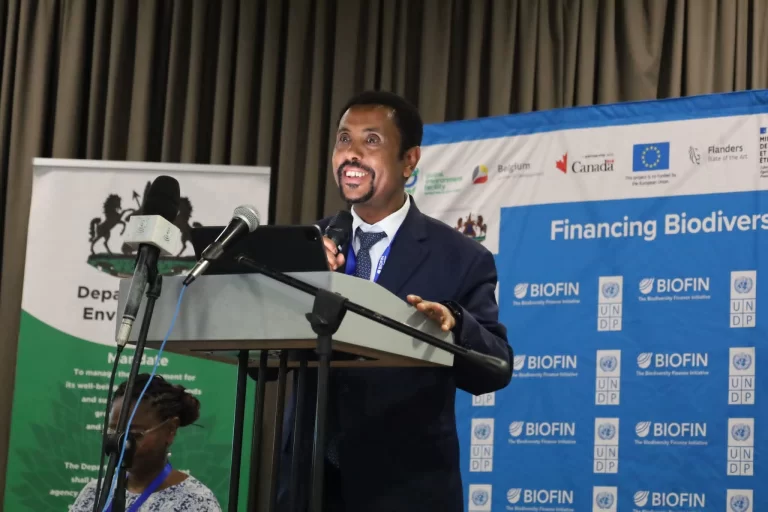
Taye Amsalu, the UNDP Deputy Resident Representative to Lesotho, said biodiversity is a very important part of nature worthy of being protected so that it can take care of people in return, encouraging participants of the launch to take care of their ecosystem and territories as the makers and breakers of sustainable development. 

He said Lesotho was one of the few countries that is good at ratifying international treaties and international frameworks, commending its government for approving environmental-related treaties, conventions and frameworks. 

However, he said these conventions need to be localised so that their trickle-down effect can be visible on the ground. 

“What we are doing here is to domesticate some of those frameworks and make it work in our context. We have our own national sector development plan where environment is mainstream. We have our biodiversity strategic and action plan. And today we are going to see how do we really finance the plans we have,” Amsalu said. 

He warned of the shortage in funding, saying the financial gap is one of the issues threatening Lesotho’s development impact. 

“In terms of development trajectory, we are lqgging behind in a lot of development dimensions. And one of the problems is financing,” he said. 

Amsalu said this issue was becoming very hard, especially given the current financial cuts across the globe, however reassuring that the launch was meant to reflect what Lesotho’s biodiversity’s financial architecture looks like. 

The Ministry of Environment has been undertaking a lot of initiatives and activities to protect the environment, introducing alternative plans like the plastic levee, protected area use, tourism levees and others. 

The Minister responsible for Environment and Forestry, Letsema Adontṣ̌i, said the project launch marked an important milestone in a collective journey to secure sustainable financing for biodiversity conservation and to position biodiversity as a core pillar of national development. 

He warned of the source of biodiversity which he said was under increasing pressure, adding that the decline in climate, water, the system’s strong erosion and growing threat to water resources were suspected contributing factors. 

Adontṣ̌i said these challenges were continuously intensifying the situation, putting an additional strain on the ecology systems and communities that depend on weather. 

“Communities are suffering larger disturbances and harvesting smaller quantities. This clearly indicates that natural regeneration can no longer keep peace with humanity,” he continued, adding that the government was however finalising the recognition of national biodiversity strategies and active action plans aligned with other global biodiversity frameworks. 

Through experience, the ministry has learned that strategies alone are not as sufficient. Without sustainable and predictable financing, “even the best plans remain aspirations rather than actions.” 

As part of the Convention on Biological Diversity, Lesotho like many other parties is required to prepare, update and implement its National Biodiversity Strategy and Action Plans (NBSAPs) which provides the global direction for biodiversity action through to 2050; a vision to live in harmony with nature. 

This vision, Rorisang Thamae, the UNPD Technical Leader, said can only be achieved if people were to take action to halt and reverse biodiversity loss for the benefit of people and the planet through conservation, sustainable use and fair and equitable sharing of benefits. 

The Ministry of Forestry had engaged the UNDP in this initiative to look at some sustainable financing solutions that would be recommended for the implementation of biofin, bringing together economists and environmental partners to find financing solutions for biodiversity conservation in Lesotho. 
Ministry of Agric Forms Task Team To Fight Foot, Mouth Disease

0

Lesotho has not had a recorded case of Foot and Mouth Disease (FMD)– a transboundary threat to livestock, rural livelihoods and cultural heritage- within its borders for some time

However, with the proximity of FMD, prevalent in some Provinces of South Africa, the government is actively working to prevent an outbreak which is considered a significant threat to the country’s livestock. 

To prepare for this fight, the Ministry of Agriculture, Food Security and Nutrition, through its Department of Livestock and Animal Health Services hosted a meeting this week to establish a Foot and Mouth Disease Multi-Sectoral Task Team to monitor the disease. 

This meeting focused on strengthening government strategies in the help to fight the disease while also preparing farmers and stakeholders alike for its break since its widespread has been reported in the neighbouring country’s provinces. 

Before the formation of the task team, surveillance activities were carried out in districts like Quthing in the previous year to gather data and maintain the country’s FMD-free status declaration. 

The country’s veterinary doctors were then commended for ensuring Lesotho remains free from the disease. 

However, officials have expressed concern over the high risk of FMD entering the country due to its geographical location, cross-border movement of unregistered livestock, often due to theft and ongoing FMD outbreaks in the Free State.

The ministry and its partners were therefore called to action to put together prevention strategies and strengthen regional disease monitoring mechanisms. 

Speaking at the meeting, the Director General of the Ministry of Agriculture, Dr Relebohile Lepheana, explained that FMD is a highly contagious disease, famous among cattle, sheep and goats. 

However, there has never been a report of the disease in quite a while in the country, but this, she alarmed, although can be regarded as an achievement, does not mean Lesotho is immune to the disease. 

“The country remains at high risk because of cross-border movement of unregistered livestock,” she warned. 

If the task team is slow to work and the disease successfully made its way into the country, Dr Lepheane warned of a couple of potential consequences that may arise including the loss of access to wool and mohair markets and the high costs associated with disease control, vaccination, movement restrictions and quarantine measures.

She therefore urged Basotho to adhere to measures that have been put together to regulate the importation of susceptible animals. 

She also urged the ministry to conduct rapid livestock assessments, establish animal protection zones and ensure the availability of contingency plans for everyone.

The newly found task team has been tasked with an important job of strengthening national coordination, prevention and preparedness efforts of the disease and the ministry vowed to stay commited to safeguarding technical and animal health standards while supporting the enforcement of animal movement controls.

Defence challenges phone records in mother’s murder case, seeks ‘trial within trial’

0

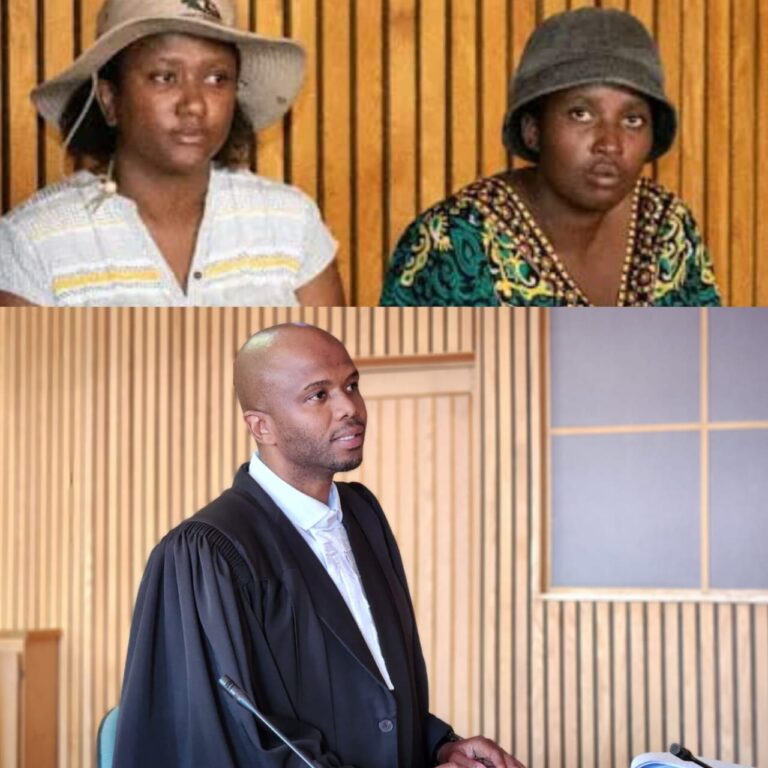
Drama unfolded in the High Court this week when defence lawyers for the Rasekoai sisters strongly challenged the use of cellphone records in their murder trial, arguing that the evidence was obtained illegally and violated the accused persons’ constitutional right to privacy.

The matter was before Justice ’Maliepollo Makhetha, where sisters Nthei Rasekoai and ’Mamphoka Rasekoai stand charged with the murder of their mother, Martha Rasekoai. 

The alleged crime is said to have occurred on July 25, 2022, at their home in Masowe 4, after which the deceased’s body was allegedly dumped in a donga where it was later discovered.

During proceedings, defence lawyer Advocate Makhabane Masupha applied for the court to hold what is known as a “trial within a trial”, a separate legal process conducted within the main trial to determine whether certain evidence was lawfully obtained and whether it should be admitted.

Advocate Masupha explained that, in law, a trial within a trial is often held to determine whether evidence was legally and constitutionally obtained before it can be used against an accused person. The application arose after the defence objected to the testimony of Moneri Mochochoko, a Senior Specialist in Management Information Systems at Vodacom Lesotho. Mochochoko was called by the prosecution to testify about cellphone records allegedly linked to the accused.

The defence argued that Mochochoko should not be allowed to continue giving evidence until the court first determines whether the cellphone records were lawfully obtained. Advocate Masupha told the court that the accused never gave consent for their cellphone records to be accessed. He further argued that they were not made parties to the proceedings in the Magistrate’s Court where the prosecution obtained a court orde

Labour Court finds Revenue Service Lesotho board in contempt, sentences members to prison

The Labour Court of Lesotho has delivered a stinging ruling against the Board of Revenue Service Lesotho (RSL), finding its members in contempt of court and sentencing them to 30 days’ imprisonment, a sentence which has been suspended on strict conditions.

In a ruling delivered on 17 December 2025, the President of the Labour Court held that the RSL board and senior officials deliberately disobeyed a lawful court order, despite being fully aware of its existence.

The matter arose from an interlocutory application for contempt of court brought by Mathabo Moneko, the applicant in the case. The respondents include the RSL board members and the institution itself.

In its findings, the court was unequivocal. It concluded that the respondents knowingly failed to act in accordance with an earlier order of the court, rejecting any suggestion that the order was unclear or that its authenticity was in doubt.

“We therefore come to the conclusion that the respondents deliberately disobeyed an order of this court knowing of its existence,” the court ruled.

While acknowledging the importance of Revenue Service Lesotho to the national economy and the perceived integrity and expertise of its board members and chief executive, the court stressed that no institution or individual is above the law.

“It should not be forgotten that this court is entrusted in ensuring equal protection of the law to everyone, hence the respondents are equal before the eye of the law,” the judgment states.

The court warned that continued non-compliance could leave it with no option but to commit the respondents to prison.

As part of the final order, the Labour Court ruled that:

• The respondents are sentenced to 30 days’ imprisonment for contempt of court.

• The sentence is wholly suspended indefinitely, on condition that the respondents purge their contempt by reinstating the applicant to her position, pending the finalisation of the main application.

• The respondents are ordered to pay the costs of the application on the ordinary scale.

The ruling sends a strong message about judicial authority and compliance with court orders, particularly by powerful public institutions. It also places immediate pressure on Revenue Service Lesotho and its board to comply with the court’s directive or face the real prospect of jail time.

The matter is expected to have significant implications for governance and accountability within state-linked institutions, especially where court orders are ignored or treated as optional.

Governance Analysis: Imported ESG Frameworks vs Lesotho’s Development Agenda

0

At the core, imported ESG frameworks in Lesotho’s banks do some good for development, but structurally they exist first to protect the South African parent balance sheets, and only secondarily to advance Lesotho’s own agenda.

Let’s unpack that in a governance-focused way.

1. Who designs the ESG rules that Lesotho’s banks follow?

Three of Lesotho’s four commercial banks are subsidiaries:

– Standard Lesotho Bank → Standard Bank Group (JSE-listed, SA-regulated).

– Nedbank Lesotho → Nedbank Group.

– FNB Lesotho → FirstRand Group.

Their ESG policies, exclusion lists, climate commitments and risk frameworks are designed and approved at group level in Johannesburg, under JSE, South African Reserve Bank and global investor pressure.

These include:

– Group-wide climate risk policies, some coal/oil & gas restrictions, and sector “heat maps”.

– Group environmental and social risk assessment (ESRA / E&S) frameworks used in credit decisions.

– Group governance structures (sustainability committees, risk committees, integrated reports) that bundle Lesotho together with other subsidiaries in Africa.

Locally:

– FNB Lesotho explicitly says it uses an ESRA process to manage environmental and social risk in lending.

– Standard Lesotho Bank publishes a local ESG report but the underlying frameworks are clearly “Standard Bank Group” frameworks adapted for Lesotho.

– Nedbank Lesotho adopts the green and sustainability language from Nedbank Group, positioning itself as a “green and caring bank” while relying heavily on group policies.

So the design authority for ESG sits outside Lesotho. Local boards are mostly implementers of group policy, not originators.

2. What are those group ESG frameworks actually optimising for?

From a governance standpoint, group ESG frameworks mainly pursue three things:

1. Regulatory compliance and licence to operate

– JSE listings, King IV, South African Reserve Bank’s climate risk guidance and global investor expectations push big SA banks to show credible ESG risk management.

2. Portfolio de-risking and capital protection

– ESG and climate tools are used to protect the group’s consolidated balance sheet from stranded assets, litigation, reputational risk, and future capital charges.

– Sector policies (e.g. on coal, mining, deforestation, large dams) are primarily calibrated to global risk norms, not Lesotho’s specific development trade-offs.

3. Reputation and investor signalling

– Integrated and climate reports are written for asset managers, global ratings agencies and NGOs in London, New York and Johannesburg, not for a farmer in Mohale’s Hoek.

None of this is inherently bad. But it means the first-order objective of these ESG systems is to keep the group safe and attractive to its capital providers. Lesotho’s needs are a constraint, not the design centre.

3. Where do these imported ESG rules help Lesotho?

There are genuine development benefits.

(a) Basic governance and ethics

Group codes of ethics, risk frameworks and compliance systems raise the floor:

– FNB Lesotho publishes a detailed Code of Ethics and privacy notice, including human rights expectations and supply chain conduct (e.g. prohibiting modern slavery).

– Standard Lesotho Bank’s ESG report discusses whistleblowing, anti-fraud frameworks, conduct metrics and complaints-handling systems.

That gives Lesotho a higher baseline for corporate behaviour and governance than you might otherwise expect in a small market. It also gives regulators (CBL) more robust risk and compliance partners.

(b) Exposure to climate and environmental risk tools

– FNB Lesotho’s ESRA, imported from FirstRand, forces some consideration of environmental and social risk in lending.

– Standard Lesotho Bank’s group framework and local ESG report explicitly highlight nature, water and climate risks, and SLB has partnered on water-resilience and conservation projects.

These tools, in principle, should reduce reckless lending into environmentally destructive projects and slowly normalise the idea that climate risk is financial risk.

(c) Some alignment with green and inclusion objectives

Group sustainability narratives do create some room for:

– Renewable energy and solar finance pilots (Nedbank’s “green” positioning, Standard Bank Group’s clean energy focus).

– Youth enterprise and SME projects (SLB’s Bacha Entrepreneurship Project, FNB SME competitions).

So imported ESG does not only de-risk the parents. It delivers some real, tangible local positives.

4. Where do these frameworks clash with Lesotho’s development agenda?

This is where the governance critique bites.

(a) Development priority sectors are structurally “unbankable” in group risk models

Lesotho’s policy documents are crystal clear:

– NSDP II and NFIS II want massive scaling of finance to smallholder agriculture, MSMEs, rural livelihoods and climate adaptation.

Yet, under group credit and ESG risk frameworks:

– Smallholder farmers with insecure land rights, limited audited statements and climate exposure are textbook high-risk clients.

– MSMEs without formal collateral, audited accounts or long track records are penalised by risk-weighted models and E&S risk flags.

Imported ESG tools make it easier for a credit committee in Johannesburg to say:

“Agricultural value chain in Lesotho + climate risk + weak collateral = too risky for our group capital.”

So the same ESG risk lens that is meant to avoid harm can also lock in a conservative, low-development lending pattern, directly at odds with Lesotho’s aim to use finance as a lever for structural transformation.

(b) Climate policy interpreted as “don’t touch high-risk climate sectors”

From Lesotho’s viewpoint:

– Climate strategy is about investing more, not less, in climate-exposed sectors, but changing how they operate (better seeds, irrigation, soil management, water systems, resilient infrastructure).

From a group risk lens:

– The simplified takeaway can become: “Agriculture, rangelands, water infrastructure and small rural enterprises are climate-exposed, so they are high risk. Better keep exposure small.”

Without explicit development mandates, imported ESG tends to avoid climate risk, rather than finance climate resilience.

(c) Local accountability vs group accountability

Who do Lesotho subsidiaries ultimately answer to when ESG tension arises?

– Legally and financially, parent shareholders and regulators are the priority.

– NSDP II, NDC targets and Lesotho’s vulnerable communities are not hard constraints inside group ESG scorecards.

Example governance dilemmas:

– A Lesotho project is high impact for national food security but looks messy on an E&S checklist (land tenure disputes, weak EIAs).

– Group ESG risk tools may flag it as “too controversial”, and group risk committees have veto power.

In that moment, parent de-risking trumps local development.

5. Is there any way to bend imported ESG toward Lesotho’s agenda?

Yes, but it requires local governance interventions, not just more glossy reports.

(a) CBL and government: set local ESG expectations

Instead of passively importing group frameworks, Lesotho could:

– Issue Guidance Notes on climate and development-oriented ESG for banks.

– Require banks to report Lesotho-specific ESG data (sectoral credit, MSME shares, agriculture, gender/youth data, climate exposures).

(b) Co-design de-risking tools that align with both agendas

If parent banks fear losses, the answer is not to starve Lesotho’s priority sectors of capital, but to:

– Use guarantee schemes, blended finance and public risk-sharing (with donors, IFC, AfDB, etc.).

(c) Strengthen local board responsibilities on development

Local boards could be required to:

– Report on how their ESG frameworks contribute to NSDP II, NFIS II and NDC implementation.

– Develop local “ESG + development” scorecards that sit alongside group scorecards.

6. Bottom line: who is ESG really serving?

On the evidence:

– Today, imported ESG frameworks primarily serve parent balance sheets.

– Lesotho benefits at the margin.

– But there is no hard mechanism ensuring that these frameworks are optimised for Lesotho’s development priorities, especially where those priorities require taking more risk.

When the referee has no whistle

0

There is something deeply unsettling about watching an institution exercise sweeping authority at the very moment it lacks the legal standing to do so.

The Independent Electoral Commission’s recent campaign to deregister allegedly non-compliant political parties raises exactly that concern. Not because compliance does not matter. It does. But because who is enforcing the rules, when they are doing so, and how selectively they are applied matters just as much in a constitutional democracy.

At present, Lesotho has no substantive IEC commissioners. Their terms have expired. No new commissioners have been lawfully appointed. Yet the institution is acting as though nothing has changed, issuing determinations with profound consequences for political participation and pluralism.

This is not a technicality. It goes to the heart of legality.

An electoral management body derives its authority from statute and from the lawful appointment of its commissioners. Without commissioners in office, the IEC is not merely weakened. It is incomplete. Decisions taken in this vacuum invite legal challenge, institutional embarrassment, and public distrust.

And then there is the question of consistency.

The IEC insists that parties must comply with its regulations, including requirements around constitutions, reporting, and internal democracy. That principle is sound. But it collapses the moment enforcement becomes selective.

The ruling Revolution for Prosperity (RFP) has, by all publicly available information, not held an elective conference within the timeframe prescribed by IEC regulations. Internal democratic renewal is not optional. It is a core requirement meant to prevent personal capture of political organisations and to ensure accountability to members.

Yet there has been no visible urgency from the IEC to address this glaring non-compliance. No public warning. No enforcement action. No demand for timelines. Silence.

So the picture that emerges is uncomfortable: smaller or opposition parties face deregistration, while the governing party’s breaches are overlooked. Whether intentional or not, the optics are corrosive. An electoral umpire cannot afford even the perception of favouritism.

This matters because elections are not only about voting day. They are about the integrity of the entire electoral ecosystem. When parties are removed from the register in a process that appears legally questionable and unevenly applied, the damage extends far beyond those parties. It undermines confidence in the referee itself.

There is also a broader institutional concern. Acting ultra vires, even in the name of order, is a dangerous habit in a fragile democracy. If an institution without properly constituted leadership can still exercise coercive powers, then rules cease to be safeguards and become instruments.

The irony is sharp. An IEC that insists on strict compliance from political parties is itself operating in a space of questionable compliance with the law governing its own composition.

This is not an argument against regulation. It is an argument for procedural legitimacy.

The correct sequence matters. Appoint commissioners lawfully. Restore the institution’s full authority. Then enforce the rules evenly, transparently, and without fear or favour. Anything else risks turning regulation into repression, and administration into arbitrariness.

For the ruling party, the issue is equally serious. Internal democracy is not a public relations exercise. A party that governs the country cannot credibly preach constitutionalism while sidestepping its own regulatory obligations. Silence from the IEC does not erase non-compliance. It merely postpones accountability.

For Parliament, the executive, and the Council of State, the failure to timeously reconstitute the IEC has now spilled into a governance problem. This is no longer about bureaucratic delay. It is about the integrity of the electoral system itself.

Lesotho has paid a heavy price in the past for institutions that overreach, under-reach, or selectively enforce the law. The lesson should have been learned by now.

A referee without a whistle should not be ejecting players from the field.

LeFA Finally Pulls Plug on Leslie , Entire Technical Team

The Lesotho Football Association (LeFA) has finally acted on mounting pressure from the football fraternity by firing senior national team coach Leslie Notši and his entire technical team, in a move that signals the beginning of a new era under the association’s recently elected leadership.

The dismissals, confirmed by LeFA Secretary General Mokhosi Mohapi, follow Likuena’s failure to deliver on it’s mandates in both the 2025 Africa Cup of Nations (AFCON) qualifiers and the 2026 FIFA World Cup qualification campaign. Many questioned why changes were not made sooner despite a string of disappointing results and persistent struggles.

Coach Notši, along with his assistant coaches Bafokeng Mohapi and Abraham Mongoya and goalkeeper coach Samuel Ketsekile, were eventually shown the door. For months, the writing had been written on the wall. LeFA’s executive committee had openly suggested that Notši’s future would be decided after the national team’s poor performances, yet decisive action was repeatedly delayed.

Likuena failed to advance beyond the group stages at the COSAFA in South Africa earlier this year in June, stumbled through a disappointing World Cup qualifiers campaign, and missed out on qualification for the 2025 AFCON tournament in Morocco, scheduled for 21 December to 18 January 2026. All these missions ended in failure, which further intensified calls for a coaching overhaul.

Despite a verbal warning issued after the World Cup qualifiers, that the technical team’s days were numbered, LeFA raised eyebrows by allowing Notši to remain in charge for two international friendly matches against Malawi at Toyota Stadium in Bloemfontein. Many supporters viewed the decision as a clear contradiction of the association’s own stance.

Notši, who also notably doubled as LeFA’s technical director, was appointed in 2023 following the departure of Serbian coach Veselin Jelusic. While his reign did produce a bright moment in guiding Likuena to the 2023 COSAFA Cup final, where they lost narrowly to Zambia, many critics argue that isolated success was not enough to mask deeper, long-term problems.

LeFA Secretary General Mokhosi Mohapi has confirmed the sackings, but has also clarified further that the purge extends far beyond the senior men’s team. It affects coaches of all national teams, including the Under-20 and Under-17 squads for both men and women. Coaches currently in possession of LeFA property have been instructed to return all association assets by the end of the week, while the federation finalizes pro rata payments for work already completed.

These mass dismissals also come in the wake of a significant political change at LeFA, following the election of Lijane Nthunya as president in October, bringing to an end the reign of former president Advocate Salemane Phafane KC. According to Mohapi, the restructuring is part of a deliberate strategy to align technical appointments with the vision of the new administration.

Mohapi stated that the association will soon advertise the coaching vacancies, as it seeks to search for a new technical team that aligns with the new leadership’s vision to rescue a national side that many believe has been allowed to drift for far too long.

Independent business & current affairs journalism · Lesotho Subscribe — M85/month
| Independent business & current affairs journalism · Lesotho