



There is something deeply unsettling about watching an institution exercise sweeping authority at the very moment it lacks the legal standing to do so.
The Independent Electoral Commission’s recent campaign to deregister allegedly non-compliant political parties raises exactly that concern. Not because compliance does not matter. It does. But because who is enforcing the rules, when they are doing so, and how selectively they are applied matters just as much in a constitutional democracy.
At present, Lesotho has no substantive IEC commissioners. Their terms have expired. No new commissioners have been lawfully appointed. Yet the institution is acting as though nothing has changed, issuing determinations with profound consequences for political participation and pluralism.
This is not a technicality. It goes to the heart of legality.
An electoral management body derives its authority from statute and from the lawful appointment of its commissioners. Without commissioners in office, the IEC is not merely weakened. It is incomplete. Decisions taken in this vacuum invite legal challenge, institutional embarrassment, and public distrust.
And then there is the question of consistency.
The IEC insists that parties must comply with its regulations, including requirements around constitutions, reporting, and internal democracy. That principle is sound. But it collapses the moment enforcement becomes selective.
The ruling Revolution for Prosperity (RFP) has, by all publicly available information, not held an elective conference within the timeframe prescribed by IEC regulations. Internal democratic renewal is not optional. It is a core requirement meant to prevent personal capture of political organisations and to ensure accountability to members.
Yet there has been no visible urgency from the IEC to address this glaring non-compliance. No public warning. No enforcement action. No demand for timelines. Silence.
So the picture that emerges is uncomfortable: smaller or opposition parties face deregistration, while the governing party’s breaches are overlooked. Whether intentional or not, the optics are corrosive. An electoral umpire cannot afford even the perception of favouritism.
This matters because elections are not only about voting day. They are about the integrity of the entire electoral ecosystem. When parties are removed from the register in a process that appears legally questionable and unevenly applied, the damage extends far beyond those parties. It undermines confidence in the referee itself.
There is also a broader institutional concern. Acting ultra vires, even in the name of order, is a dangerous habit in a fragile democracy. If an institution without properly constituted leadership can still exercise coercive powers, then rules cease to be safeguards and become instruments.
The irony is sharp. An IEC that insists on strict compliance from political parties is itself operating in a space of questionable compliance with the law governing its own composition.
This is not an argument against regulation. It is an argument for procedural legitimacy.
The correct sequence matters. Appoint commissioners lawfully. Restore the institution’s full authority. Then enforce the rules evenly, transparently, and without fear or favour. Anything else risks turning regulation into repression, and administration into arbitrariness.
For the ruling party, the issue is equally serious. Internal democracy is not a public relations exercise. A party that governs the country cannot credibly preach constitutionalism while sidestepping its own regulatory obligations. Silence from the IEC does not erase non-compliance. It merely postpones accountability.
For Parliament, the executive, and the Council of State, the failure to timeously reconstitute the IEC has now spilled into a governance problem. This is no longer about bureaucratic delay. It is about the integrity of the electoral system itself.
Lesotho has paid a heavy price in the past for institutions that overreach, under-reach, or selectively enforce the law. The lesson should have been learned by now.
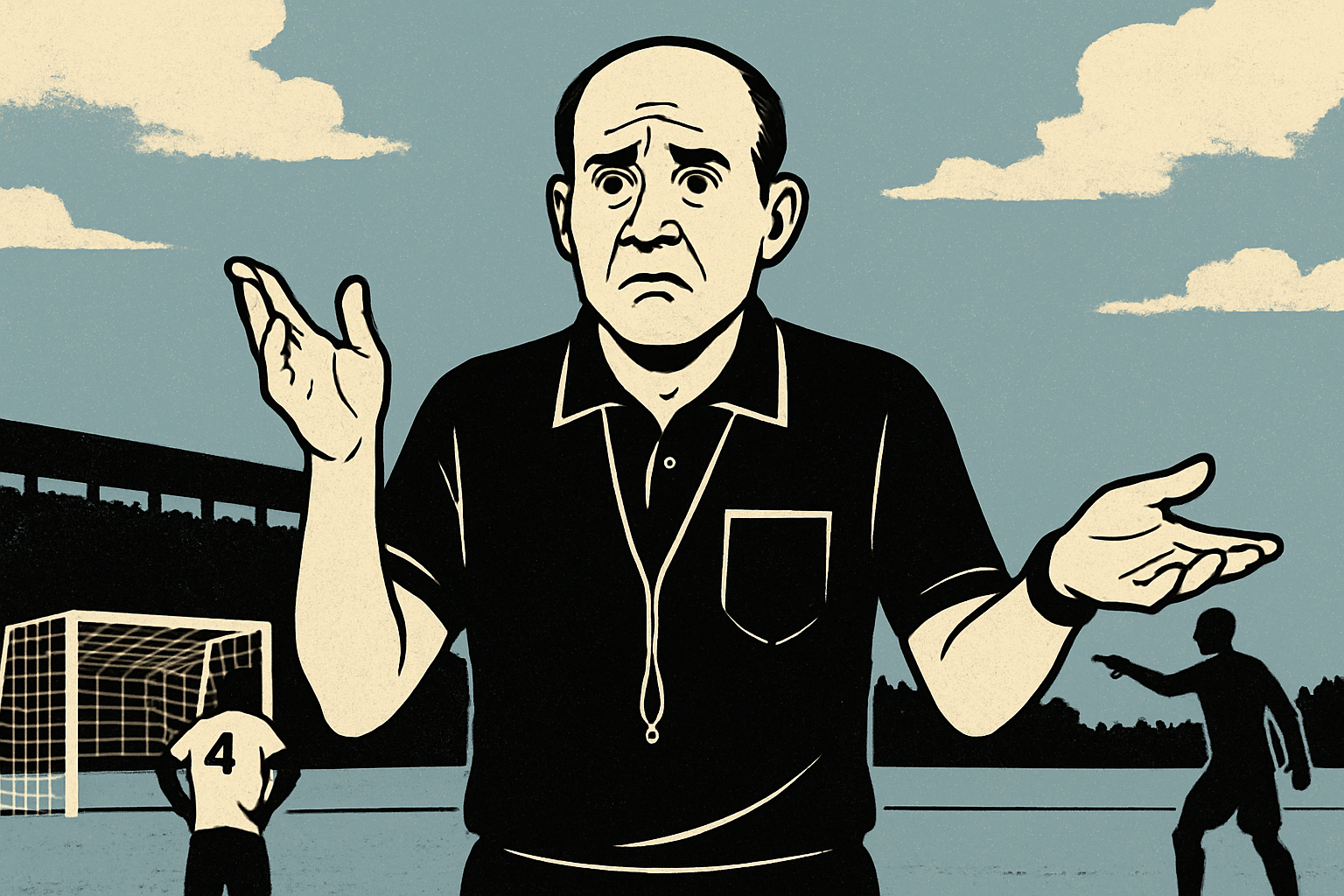
A referee without a whistle should not be ejecting players from the field.