

Mohahlaula Airlines
Thursday, July 23, 2026
Home Blog Page 42

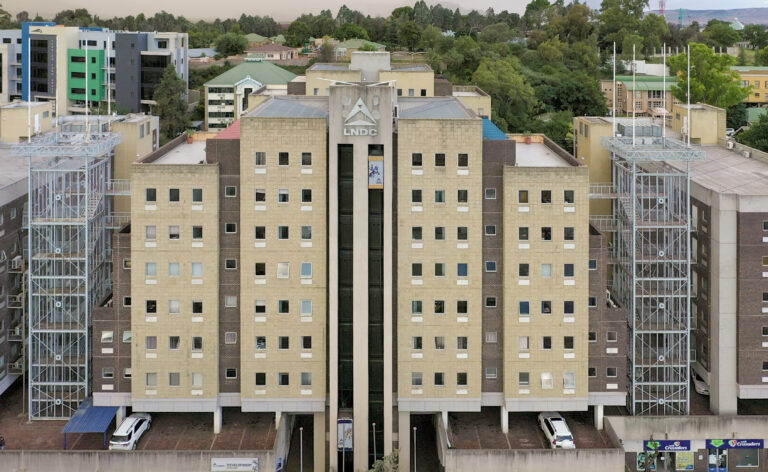
LNDC Executive Channels Tenants to Minister’s Private Properties

A disturbing conflict of interest scandal is unfolding inside the Lesotho National Development Corporation. At the centre of it is Tšepo Putsoa, the LNDC Property Manager who has already been suspended for corruption involving the embezzlement of millions. New allegations now suggest he may have been using his public role to steer tenants toward private properties owned by a sitting minister.

Lesotho Tribune was alerted by a well known blue chip company that had previously rented office space from LNDC in Maseru. The company, which asked to remain anonymous, said that due to harsh economic conditions they approached LNDC to renegotiate their rent. Those talks failed.

Frustrated, the company began searching for cheaper space and eventually found a commercial property near Sparrows. Their shock was immediate when they discovered that the property belonged to Minister of Local Government, Police and Home Affairs, Lebona Lephema. The shock deepened during the viewing. The person handling the process was the same man they had been negotiating with at LNDC, Tšepo Putsoa, now appearing to act in a private capacity on behalf of the minister.

“It felt like déjà vu,” said a company source. “We were desperate for a solution after LNDC refused to ease rental terms. Only to find ourselves negotiating with the same man, but now representing a private landlord. That is when alarm bells started ringing. Was this coincidence or intentional”

To get clarity, Lesotho Tribune contacted Putsoa and LNDC’s interim CEO. No response was offered. The publication also reached out to Minister Lephema’s executive team. Once again, nothing came back.

The silence raises serious concerns. If LNDC’s refusal to renegotiate leases was influenced by Putsoa’s private dealings, the situation would point to an abuse of public office. It would also amount to a breach of the Public Officers Code of Conduct, which prohibits public servants from using their official positions to advance private business interests.

A corporate governance analyst who reviewed the matter described the situation as a textbook conflict of interest. “When the same official who denies you favorable terms at a public institution later appears on behalf of a minister’s private property, the issue is not coincidence. This is exactly the kind of practice that destroys public confidence.”

The central allegation is that tenants were being pushed out of LNDC properties and redirected toward properties owned by the minister, with Putsoa functioning as the link. If this pattern is confirmed, the implications could extend to corruption, abuse of office and fraud.

Lesotho is already grappling with questions about transparency, accountability and the use of state machinery for private gain. Incidents like this deepen fears that key institutions are being captured by politically connected networks.

Lesotho Tribune has submitted follow up questions and continues to pursue the story. As pressure builds on LNDC and the Ministry of Local Government to explain the overlap between public duties and private financial interests, the country must confront a difficult truth. Public institutions are beginning to serve private power rather than the people they exist to protect.
RFP at war with itself…WhatsApp group texts expose a party tearing from within

0

The Revolution for Prosperity has long insisted it is united behind its reform message. But a leaked and heated exchange between two of its own MPs tells a very different story. The messages, dripping with accusation, resentment and outright hostility, reveal a party broken into factions and paralysed by infighting at constituency level. What emerges is not a healthy internal debate. It is a political knife fight happening inside the ruling party’s own house.

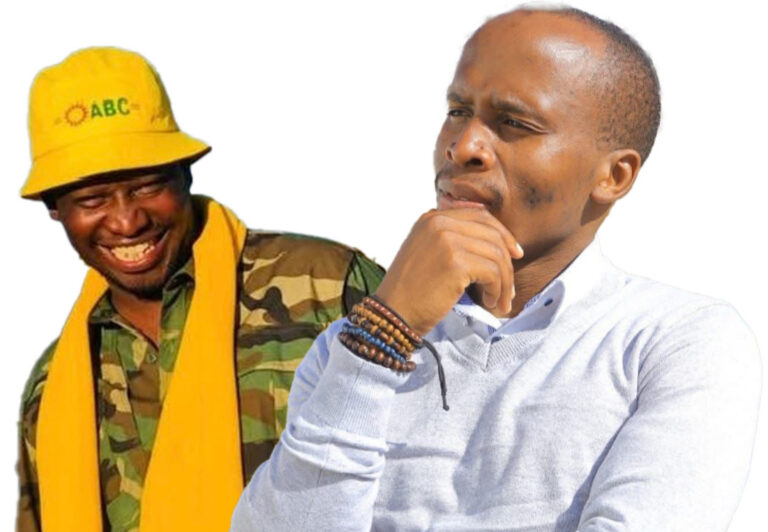
The conversation, between RFP backbencher ‘Mope Khati and Foreign Affairs Minister Lejone Mpotjoane, reads like a political earthquake. The two men accuse each other of sabotage, vote interference, manipulation of constituencies, and deliberate obstruction of public services. Both claim the other is running parallel structures on the ground. Both insist the other is lying. And neither hides the bitterness.

A Backbencher Declares War

In the first message, ‘Mope delivers a scathing rebuke. He accuses Minister Mpotjoane of positioning himself as a kingmaker inside RFP. He says the Minister treats constituencies like private territory and recruits his own preferred candidates behind the backs of elected MPs. The tone is raw. He accuses the Minister of undermining him in Pela-Ts’oeu, blocking services meant for his voters and spreading messages that promised government projects will never materialise. He even warns that the RFP leadership should tell him directly if they no longer want him as an MP.

His frustration is not quiet. It is a roar.

“You Are Not a Godfather Here”

Khati fires a slavo, reminds Mpotjoane that he  once said Sam Matekane (RFP leader) was merely a front for Democratic Congress.

You always complain!

Mpotjoane denies blocking electricity connections or bridge construction in Pela-Ts’oeu. He denies recruiting candidates in constituencies that are not his own. He accuses ‘Mope of twisting facts and weaponising private conversations they shared.

He calls ‘Mope a habitual complainer…

It is a reply that reveals a man deeply insulted and prepared to fight back.

Accusations of Parallel Structures

The exchange then escalates into claims that Mpotjoane has been coordinating teams within Pela-Ts’oeu. ‘Mope insists that the Minister’s drivers, allies and committee members have been moving through his constituency campaigning for a candidate allegedly loyal to him. He says these individuals even boast that public services will be withheld because they have the Minister’s blessing.

It is an extraordinary accusation for one ruling party MP to direct at another.

A Party Coming Apart

What the conversation shows is not simply personal disagreement. It is evidence of structural decay inside RFP. MPs no longer trust one another. Ministers are suspected of interfering in constituencies not their own. Grassroots committees are split into hostile camps. Promised public services are allegedly used as political weapons. Internal disputes are no longer discussed quietly in party rooms but hurled across text messages in the language of betrayal.

The tone is emotional. It is territorial. It is personal. And it exposes a party struggling to contain its own ambitions.

Old Ghosts of Coalition Politics

What ‘Mope says at one point should worry the RFP leadership. He compares the party’s internal sabotage to the chaos that destroyed the All Basotho Convention. In Lesotho’s political history, this is not a light warning. Parties here do not collapse from opposition pressure. They collapse from internal poisoning.

RFP may be following the same path.

A Party With No Internal Discipline

The exchange makes one thing clear. The party has no functioning dispute-resolution mechanism. If MPs resort to public outbursts and private text wars, it means no one at the top is enforcing discipline or mediating conflicts. It means factions are running freely. It means the promise of unity that helped RFP win the 2022 election has evaporated.

Both men accuse the other of feeding private conversations to the party leader. Both accuse the other of dishonesty. Both believe they are victims of political sabotage.

In a party with firm leadership, such an exchange would not be possible.

What This Means for Governing

Factional fights inside a ruling party always spill out into governance. The allegations here point directly to stalled public projects in Menkhoaneng and Pela-Ts’oeu. They point to cabinet ministers accused of blocking development for political advantage. They point to MPs who no longer coordinate but openly accuse each other of sabotage.

If the ruling party is this fractured internally, the country’s governance will inevitably feel the consequences.

When the Leader Is Present But Leadership Is Absent

What makes this entire saga even more astonishing is where it unfolded. These were not private side-messages exchanged in frustration. This was a full-scale political knife fight happening inside an official WhatsApp group that includes Prime Minister Sam Matekane and the entire RFP leadership. They watched the blows land. They watched the accusations fly. They watched their MPs tear each other apart in full view of the party command. And they said nothing.

Not a correctionNot a reprimandNot even a call for calm.

Silence became the leadership’s only contribution.

It was the kind of silence that tells a story all on its own. A story of a leader who has lost the room. A story of a movement that no longer fears its own centre. A story of a governing party that has become so uncertain of its authority that it cannot even contain a public internal brawl happening right in front of it.

And now something darker has surfaced. RFP insiders say the party will not field candidates in constituencies belonging to nineteen MPs who have been demanding that Matekane fire corrupt ministers. Even if these MPs win their primaries, the party will simply refuse to register them with the IEC. In Peka, for example, RFP has already signalled that if MP Mohopoli Monokoane wins the primary, the party will abandon the constituency entirely. Instead, it will openly instruct its supporters to vote for Tello Kibane, who is preparing to run as an independent candidate.

It is a move that reveals a party leadership willing to punish dissent even at the cost of shrinking its own footprint. It is also a move that confirms what many Basotho have suspected but could not yet prove. The RFP is no longer fighting the opposition. It is fighting itself. And the battlefield is every constituency where an independent mind refuses to bow to a corrupt minister or a powerful faction.

What the public witnessed in those WhatsApp messages was not just two MPs trading insults. It was the live disintegration of internal discipline. It was the slow unravelling of authority. It was a governing party losing control in real time.

If this is how RFP behaves behind closed doors, the question is no longer whether the party is divided. The real question is whether it is still governable at all.

A New Era At The Roof Of Africa As James Moore Changes The Guard

0

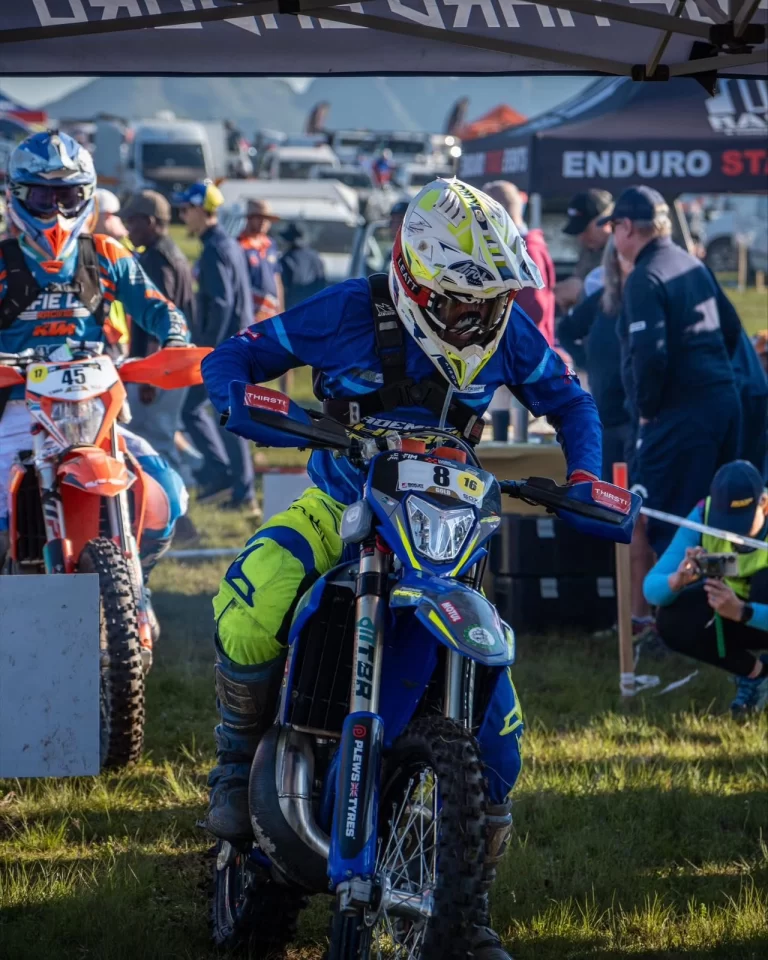
The 2025 edition of Roof of Africa lived up to its reputation as one of the world’s toughest enduro motorcycle races. Running from the 19th to 22nd November 2025 across the rugged highlands of Lesotho. The event doubled as the Grand Finale of the FIM Hard Enduro World Championship (HEWC), drawing global attention to the “Kingdom in the Sky.”  

Roof of Africa is widely known as hard enduro’s defining challenge, earning the nickname “Mother of Hard Enduro.” It tests riders through steep climbs, rough rock, and shifting mountain terrain under extreme conditions. Since it’s inception in 1967, the race has grown from a modest local competition into an international event drawing hundreds of riders worldwide.  

2025 Edition’s Race Structure & Participation

This was the 56th edition of Roof of Africa, and over 400 riders from about 15 countries, including Australia, Germany, China, USA, UK, South Africa, Zimbabwe and more took part this year.

The competition ran across four classes as usual: Gold, Silver, Bronze, and Iron.  But the format was a little different this year.

• Day 1 (19 Nov): Registration, Press Conference, and a Mass Parade in the city of Maseru.

• Day 2 (20 Nov): Time Trial session at Ha Lebamang to set the starting order for the races.  

• Days 3 & 4 (21–22 Nov): Gruelling mountain stages through the terrain of the Maloti mountains — demanding long riding days, technical skill, navigation, stamina and resilience.  

Highlights & Final Results

On Day 1 Time Trial, Billy Bolt (Husqvarna) posted the fastest time ahead of Manuel Lettenbichler (KTM) and James Moore (KTM).  

Across the three intense days, James Moore, a rising rider — delivered a determined performance, handling the rocky climbs and unpredictable terrain with skill and determination. On the final day, despite navigational difficulties for some, Moore maintained enough consistency to finish with a total time of 10:42:08, securing overall victory in the Gold Class.  

The full top 3 (Gold Class) were

1. James Moore (KTM) — Winner, 10:42:08  

2. Manuel Lettenbichler (KTM) — +1:52 behind Moore  

3. Billy Bolt (Husqvarna) — +5:52 from Moore  

Other notable top-5 finishers: Mario Roman (Sherco) 4th, Mitch Brightmore (GasGas) 5th.  

In Other classes:

• Silver: Top winner — Grant Burton-Durham  

• Bronze: Winner — Stiaan van Den Heever  

• Iron: Winner — Gideon Malherbe  

Notably, On November 19th, when the event opened it’s doors for early registration and held its official media press conference at Avani Lesotho Hotel & Casino. Four top international riders sat on the press panel; James Moore, Manuel Lettenbichler, Sandra Gomez and Dylan Jones, fielding questions from the gathered media before a single wheel turned in the mountains.

During the session, the MC  placed Moore’s season into perspective, reminding the audience that his rise had not been sudden.

“I won’t say this is your breakout season because 2 seasons ago you won the final day of the roof — that’s when everyone remembered your name. And last year you were smashing championships locally, then this year taking down the International Junior Championship. Tell me about your season.”

Moore, calmy acknowledged the roller-coaster season of 2025.

“Yeah, my season started off a little bit shaky, to be honest,” he began, explaining the early back-wheel failure. “Then, yeah, I had an injury after that, at one of the 10 Extreme rounds. I ruptured my kidney. So yeah, it’s been a huge up and down.”

Despite the setbacks, his tone shifted when speaking about the final chapter of his year.

“To finish off… it gets in what the world championship is. I’m really happy, and we have this race, home-race, so it’s really cool to be here, see all the fans, and all the organizers say it’s gonna be a bit of a better year. Last year was crazy, 10-hour days, so i’m hoping for a little bit shorter.”

He smiled and added: “Yeah, i’m keen to get started.” 

Another question fired at James pointed out his demanding travel schedule and asked whether schooling still fit into the picture.

“It’s been a very, very busy season for yourself. Are you still crowbarring schooling in there? It looks like you’re traveling every time.”

Moore responded with light humor, but the message was serious. “I’m fortunate enough to have a dad that supports my dream. I’m just focusing on riding now. Taking a gap year, another gap year next year,” he replied cheekily. “I’m trying to focus on racing, and make something out of this.” 

James Moore arrived not only to race, but to prove that his breakthrough season has shaped a rider ready to contend amongst champions, and he went on and did just that by winning the gold class with a time of 10:42:08.

the win by a rising rider (James Moore) signals a shift, a “changing of the guard” emphasising that even newcomers, with grit and skill, can prevail.

Central Bank Cuts Policy Rate Amid Moderating Inflation

Maseru 

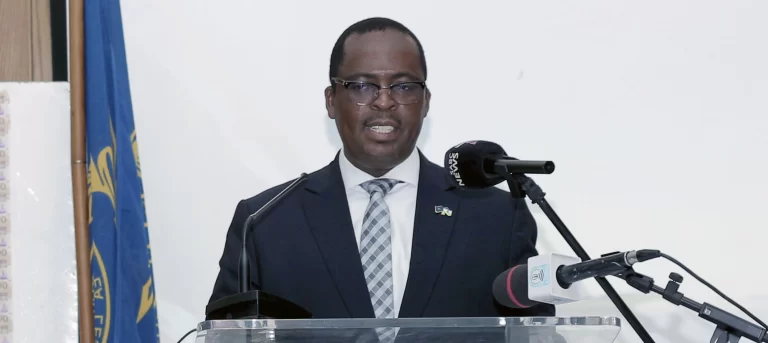
The Central Bank of Lesotho (CBL) has announced a reduction in its key policy rate, signalling a strategic move to align with regional monetary conditions and support domestic economic stability. The Governor of the bank, Dr MalukeLetete, announced this at the Monetary Policy meeting held in Maseru this week. 

He highlighted that the bank had resolved to lower the CBL Rate by 25 basis points, bringing it down to 6.50 percent per annum from the previous 6.75 percent.

This decision, Dr Letete said, comes as the bank continues its commitment to maintaining the peg between the Loti and the South African Rand, following a similar rate cut by the South African Reserve Bank (SARB).

The Monetary Policy Committee (MPC) has therefore advised banks to set their prime lending rate at no more than the CBL Rate plus 350 basis points, warning also that the Net International Reserves (NIR) target floor has been revised downwards to US$830 million from US$840 million, a change deemed adequate to underwrite the Loti-Rand peg.

These decisions, DR Letete said, were informed by a comprehensive review of global, regional and domestic economic conditions.

The bank’s 2025 projections had predicted a slight upward revision, though the overall sentiment remains one of moderation, with advanced economies experiencing subdued activity. Likewise, inflation has generally eased across major economies but persists as a concern in selected regions while risks like trade tensions, labour supply shocks and financial vulnerabilities remain pertinent.

Dr Letete alerted that regionally, South Africa’s economy had demonstrated improved growth in the third quarter of 2025, primarily driven by household spending. Despite an uptick in inflation to 3.6 percent in October 2025, he said, the SARB also reduced its policy rate by 25 basis points to 6.75 percent, a move Lesotho has now mirrored to maintain monetary alignment.

He announced a shocking revelation, informing that Lesotho’s economy experienced a slowdown in the third quarter of 2025, attributed to weak manufacturing and subdued domestic demand, particularly in private spending. While the medium-term outlook suggests modest growth due to weaker exports and mining output, it was said that this is expected to be partially offset by anticipated stronger textile exports to South Africa.

On a lighter note, inflation in the country is said to have moderated to 4.5 percent last month, down from 4.7 percent in September. This easing, Dr Letete said, was primarily due to lower food prices, increased supply of vegetables, reduced fuel costs and a stronger Rand. However, he cautioned that inflation could remain moderately higher if food prices persist in their elevation.

In July, the government’s budgetary operations (GBO) recorded a notable surplus of 10.0 percent of GDP, a major boost by SACU receipts and water royalties while public debt-to-GDP saw a slight increase to 56.0 percent due to project disbursements. Meanwhile, the current account deficit moderated in the third quarter, a result of stronger exports, with SACU receipts and foreign investment income continuing to provide crucial buffers.

Dr Letete said the NIR increased by US$60.78 million between September and November, an increase that exceeded the bank’s revised target.

Looking ahead, the Governor emphasised the MPC’s commitment to closely monitoring global and regional developments, reaffirming its readiness to implement necessary measures to safeguard the credibility of the Loti-Rand peg while also ensuring continued financial stability for Lesotho.

A killer’s plea: man convicted of murder asks court to spare him

0

MASERU

The High Court this week was drawn into an emotional battle for mercy as Tšenolo Thamahane, recently found guilty of murder and attempted murder, stood before the bench to plead for a lenient sentence. 

The packed courtroom held its breath as the defence attempted to soften the grim weight of the crimes he has been convicted of.

Thamahane’s conviction arises from a violent shooting that unfolded on March 08, 2025, a tragic episode that claimed the life of ‘Malechakane Mokhoema and left her sibling, High Court Assistant Registrar Tebello Mokhoema, fighting for her life.

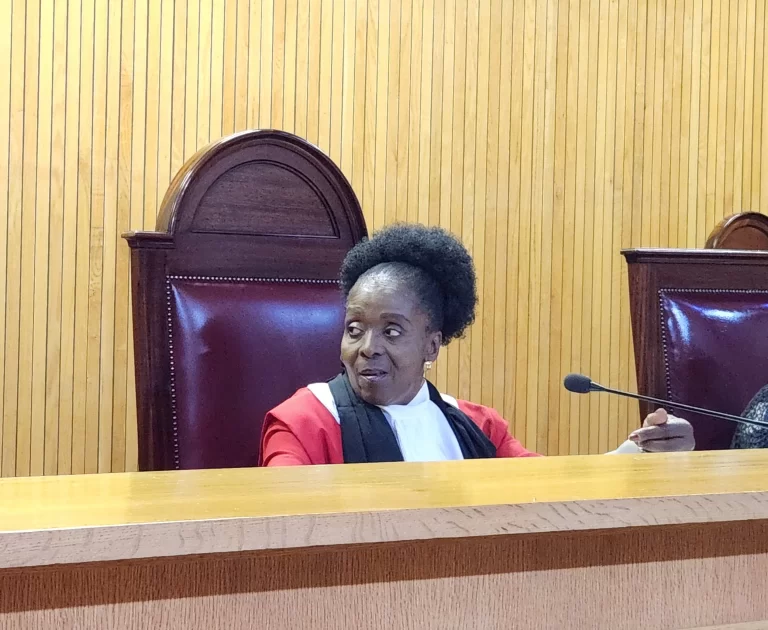
Last week, Acting Justice Palesa Rantara rendered a categorical verdict: the prosecution had proved beyond reasonable doubt that Thamahane acted intentionally and unlawfully when he carried out the attack.

But with the sentencing phase now underway, the focus has shifted from guilt to the question of what punishment fits the crime, a question that flooded the courtroom with tense exchanges and contrasting narratives about motive, remorse and justice.

Representing the convict, Advocate Katiso Nhlapo painted a picture of a man overwhelmed by anger following a verbal confrontation, insisting that Thamahane had no premeditated intent to kill. 

According to the defence, the tragic turn of events stemmed from a momentary loss of control rather than a calculated decision. 

“Extenuating circumstances exist in this matter,” Nhlapo told the court, urging the judge to consider the emotional volatility that he argues triggered the shooting.

The defence further leaned heavily on Thamahane’s conduct after the incident as evidence of remorse. Nhlapo explained that his client turned himself in to the authorities soon after the shooting, demonstrating an acceptance of responsibility. 

He told the court that while in custody, Thamahane went so far as to direct his relatives to approach the bereaved family with intentions of reconciliation and compensation.

According to Advocate Nhlapo, Thamahane has expressed readiness to compensate both the family of the deceased and the surviving victim, a gesture the defence suggests shows a willingness to repair, as far as is possible, the damage he caused.

Adding another layer to the plea, Advocate Nhlapohighlighted Thamahane’s personal circumstances. He is a father to a 15-year-old daughter and the primary provider for his household. 

He therefore urged the court to weigh the impact of a long sentence on the convict’s young child and dependents, arguing that punishment should not unduly destroy the lives of the innocent.

However, the Crown held a firm and unyielding stance. Advocate Lehlohonolo Phooko dismissed the defense’sarguments as hollow attempts to dilute an act of deliberate violence. According to the prosecution, the lack of extenuating circumstances is “as clear as daylight.”

Phooko reminded the court that Thamahane did not act in a moment of blind rage, but with explicit intent. He reminded the court that the accused had announced his violent plans publicly and later carried them out with chilling precision. 

The prosecution underscored the brutality of the killing, a defenseless woman gunned down in full view of children, an image that Phooko said would permanently scar the minors who witnessed it.

“Murder is among the gravest offences known to our law,” Phooko argued, stressing that its severity dwarfs any personal hardships or responsibilities cited by the defence. The state insists that retribution and societal protection must take precedence, particularly in a case where the attack was calculated and executed with full awareness of its consequences.

Last week’s judgment, in which Acting Justice Rantarameticulously dismantled the defense’s arguments on intent, continues to cast a long shadow over the proceedings. The judge found that Thamahane acted with full knowledge of what he was doing, rejecting any claims of provocation or diminished responsibility.

As sentencing approaches, the court faces a delicate and consequential task: balancing the convict’s plea for mercy against the brutal facts of the crime and the enduring pain of the victims’ family. The legal teams are now awaiting the court’s decision, one that will determine whether Thamahane’s appeals for leniency can survive the gravity of the offence for which he stands convicted.

Scientists look at new solutions to aphid problem

0

Using other insects to control pests like greenfly has been a massive success story for farming, reducing the use of chemical pesticides.

But new research from Harper Adams University suggests the aphids may well be evolving resistance to this approach.

Scientists there are talking to the companies that farm wasps and produce other biological controls to alert them to the issue.

The solution might be to diversify the genetic mix of wasps and other predators, so they can out-evolve any resistance the aphids come up with.

On one Shropshire fruit farm, just down the road in Newport, there are still a surprising number of strawberries for early November.

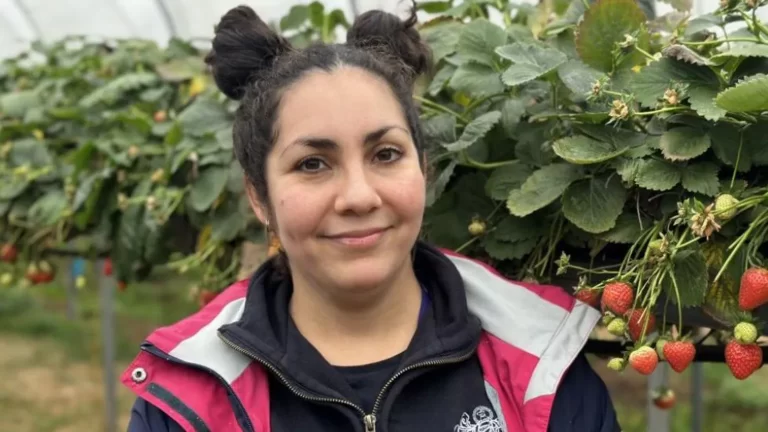
The farmer there, Gabriel Slabbert, has used tiny wasps, no bigger than a grain of rice, to control a grower’s eternal enemy, aphids.

This is biological pest control and Mr Slabbert said it was an “essential” tool for farmers.

He said many pesticides were restricted or even banned and supermarket buyers also wanted growers to reduce their chemical use.

“We hang a tube [containing wasps] at the side of the gutter. Open a little trapdoor and they fly out to do what they need to do,” he said.

But the wasps do not eat the aphids, like ladybirds do, rather they inject an egg inside the aphid.

As it grows into a baby wasp it also kills the aphid and means the strawberries of Littywood Farm continue to thrive.

However, researchers at Harper Adams University have found that aphids are starting to become resistant to the commercially grown wasps.

“It’s patchy, and sometimes they work fine,” Laura Martinez-Chavez, from the university, said.

“But sometimes they don’t work at all or at least aren’t as effective as the grower expects them to be.”

It is not unusual for pests to develop resistance to chemicals over time, but in this case some aphid populations have found a way of countering their predators by stopping their eggs developing inside them.

It means these particular wasps no longer kill the aphids and so are less effective or even useless as a form of pest control.

“It happens in nature” Entomologist Professor Tom Pope explained.

“First one side evolves resistance, but then the other evolves to overcome it.”

There is a lot of complex genetics going on here, which the researchers are studying, while also warning the companies which produce the wasps of the danger.

The likely solution is to diversify the genetic mix of wasps and other predators.

Currently the extent of this resistance is unclear, but by taking action now it is hoped the industry can preserve the effectiveness of biological control in the long term.

News Source: BBC

G20 Report Warns That Global Inequality Is Reaching Dangerous Levels

0

The G20 Extraordinary Committee of Independent Experts on Global Inequality has released a landmark report that paints a stark picture of widening inequality across the world. Commissioned by the South African G20 Presidency and led by Nobel laureate Joseph Stiglitz, the report warns that the concentration of wealth and political power among a small elite is destabilising economies, weakening democracies and deepening social fractures.  

A world of extremes

According to the report, 83 percent of countries now have high income inequality, defined as a Gini coefficient above 0.4. These countries represent 90 percent of the world’s population. Only a small fraction of humanity lives in countries with low inequality.  

Even though global income inequality between countries has narrowed slightly since 2000 due largely to China’s rise, income disparities within countries have surged. The top 1 percent have increased their income share in nearly half the world’s economies, reaching 68 percent of the global population. Meanwhile, the bottom 50 percent saw their real incomes rise by only 358 US dollars in 40 years, compared to 191,000 US dollars for the top 1 percent.  

The wealth gap is even worse

Wealth inequality is described as “far higher” than income inequality and rising faster. The report finds that since 2000, the richest 1 percent captured 41 percent of all new wealth, while the poorest half of humanity captured 1 percent. On average, the richest 1 percent grew their wealth by 1.3 million US dollars, while an individual in the bottom 50 percent gained 585 US dollars.  

The global billionaire class has expanded rapidly. There are now more than 3,000 billionaires, whose combined wealth is equal to 16 percent of global GDP. The world is expected to see its first trillionaire within a decade.  

Public wealth is shrinking as private wealth explodes

Despite the world becoming wealthier overall, governments have seen declining levels of public wealth. Fig 1.4 in the report illustrates a steep rise in private wealth contrasted with stagnating or falling public assets. Many states, including those in advanced economies, now hold significant net debt, limiting their ability to invest in public goods.  

The Committee attributes much of the explosion in private wealth to government interventions during crises. Central bank actions after the 2008 financial crisis and during the COVID-19 pandemic pumped trillions into financial markets, pushing up asset prices and enriching asset owners. This “explains why fortunes at the top expanded sharply without corresponding increases in productive capital”.  

Inequality undermines democracy

The report draws a direct connection between extreme inequality and democratic erosion. Countries with high inequality are seven times more likely to experience democratic decline.  

The Committee notes that concentration of wealth often leads to:

• increased political influence by the ultra-rich

• manipulation of elections

• weakened checks and balances

• media capture

• shrinking civic spaces

These factors allow elites to shape laws and policies that protect their interests at the expense of broader society.  

Inequality slows economic growth

Contrary to past beliefs, the report argues that reducing inequality improves economic performance, social stability and long-term productivity. It highlights several channels through which inequality harms economies:

• reduced aggregate demand

• poor education and health outcomes

• limited social mobility

• higher indebtedness

• vulnerability to shocks

• increased political instability

The report concludes that the belief in a trade-off between equity and growth is outdated. Instead, inequality undermines both economic efficiency and development prospects.  

Global rules have deepened inequality

The report argues that international economic rules are a major driver of inequality. These include:

• intellectual property regimes that restrict access to medicines and green technologies

• unregulated capital flows that increase volatility and debt crises

• tax rules that allow multinational corporations and the ultra-rich to avoid taxation

• trade rules that prevent developing countries from industrialising

• investor-state dispute settlement mechanisms that undermine public regulation

These systems have created “large net transfers from developing countries to richer ones,” worsening historic divides.  

Food insecurity is rising as billionaire wealth surges

One of the most striking charts in the report shows a sharp divergence since 2019. Billionaire wealth soared, while global food insecurity rose by 335 million people, reaching 2.3 billion.  

The Committee notes that inequality is now heavily intertwined with climate change, health risks and food crises.

A call for a new global body on inequality

The report’s most important proposal is the creation of a new International Panel on Inequality (IPI), modelled after the IPCC. The panel would provide:

• authoritative assessments of inequality

• global tracking of wealth and income trends

• guidance on policy design

• deeper analysis of intersecting inequalities

• improved data governance and measurement

The IPI would be a legacy of the South African Presidency of the G20.  

Policy proposals for countries

The report outlines a suite of policy options, including:

• rewriting global IP rules

• strengthening antitrust measures

• expanding public services and social protection

• implementing stronger inheritance taxes

• raising progressivity of income and wealth taxes

• nationally reorganising labour markets to strengthen workers’ bargaining power

• expanding public investment in education, health and climate mitigation

It concludes that extreme inequality is a policy choice, and reversing it requires political courage and coordinated global action.  

A warning with global implications

The Committee closes by warning that inequality is now one of the greatest threats to global stability. Without urgent action, the world risks deeper political polarisation, economic stagnation, food insecurity, climate vulnerability and social breakdown.

“Extreme inequality is not inevitable. It is the result of choices. It can be reversed with political will,” the report states.  

Inside North Korea’s New Unusual Premier League Broadcasts

North Korean football fans are getting a taste of the English Premier League (EPL), but not in the way the rest of the world sees it. Recent investigations reveal that the country’s state broadcaster, Korean Central Television (KCTV), has been airing heavily edited versions of EPL matches under strict conditions that reshape both the length and the content of the games.

While the broadcasts offer rare glimpses of international football to North Korean audiences, they come with significant censorship and modification that reflect the tightly controlled nature of the country’s media.

Matches Cut Down to 60 Minutes

Instead of the standard 90-minute format, KCTV’s version of Premier League fixtures is edited down to roughly 60 minutes. Research groups such as 38 North have confirmed that large portions of gameplay, analysis, and downtime are cut to create a shortened highlight-style program. The purpose appears to be both editorial control and fitting foreign content into state-determined broadcast slots.

Delayed and Selective Broadcasting

North Korean viewers do not watch the Premier League in real-time. Matches are aired weeks or even months after they take place, with only a small percentage of total fixtures making it onto the national broadcaster. How KCTV obtains the footage remains unclear, but there is no evidence of any official licensing agreement with the Premier League.

English Stadium Text Replaced

Any English language signage or graphics visible in the stadium, whether on advertising boards, scoreboard overlays, or broadcast graphics — is removed or covered with North Korean text. In many scenes, Korean language graphics simply sit on top of the original feed, effectively erasing foreign branding.

South Korean Players Are Edited Out

One of the most consistent censorship practices involves removing footage of South Korean players. Matches involving teams with South Korean stars such as Hwang Hee-chan (Wolvess), Kim Ji-soo (Brentford), and Son Heung-min (Tottenham Hotspur) are either excluded entirely or edited so that the players do not appear on screen. Analysts believe this aligns with North Korea’s long-standing information restrictions regarding South Korea.

Removal of LGBTQ+ Symbols

North Korean broadcasts also strip out any content containing LGBTQ+ symbols, including rainbow flags typically displayed by fans in Premier League stadiums. This aligns with the country’s broader censorship policies toward foreign political or social messaging.

A Controlled Window Into Global Football

Despite the layers of editing and censorship, these broadcasts still offer North Koreans a rare window into international football. However, what they see is not the Premier League as the world knows it, but a carefully reconstructed version shaped to fit state priorities. In the end, the coverage says less about the action on the pitch and more about how tightly North Korea manages the flow of global culture, even when the subject is just the beautiful game.

Lesotho Is Being Left Behind Because Its Leaders Do Not Know What They Are Doing

0

Sometimes I think this country has become too comfortable with calling itself “full of potential.” We say it everywhere. At conferences, in glossy investment decks, even during those awkward television interviews where officials promise miracles with a straight face. The phrase has almost become something we use to reassure ourselves when things are clearly going wrong, like when the power cuts hit again or when a flagship project collapses before it even starts.

And while we keep repeating the same comforting line, the rest of the world is moving. Fast. The momentum around clean energy, sustainable tourism and climate related investment has shifted in a way that should worry anyone who still believes Lesotho can catch up by doing nothing. This was clear during the recent G20 gathering in South Africa where global leaders talked climate finance and renewable investment as if it were the centre of the economy, not a side conversation. It should have been our moment too, in some way. But we were nowhere near the picture.

I sometimes wonder if our leaders fully grasp how big this transition is. The world is turning toward renewables with a speed that feels, honestly, a little intimidating. Investors want solar, wind, green hydrogen, pumped storage and stable grids. They want regulation that is predictable. They want countries that show they understand where the future is leaning. Lesotho could fit in that category. We have the altitude, the hydrology, the wind corridors, the sunlight. The tourism appeal too. Even international agencies point out that our renewable potential is exceptional and that electrifying the whole country sustainably is quite possible if leadership actually commits.

But that last part is always the problem. Leadership. We enjoy making big announcements. Targets like one hundred percent electrification. Exporting green power. Becoming a renewable hub. The list stretches on. And yet the basic groundwork is never done. The political class seems more comfortable with the performance of vision than the discipline of execution. And it shows in the simplest ways. Slow institutions. Confusing regulations. Appointments that reward loyalty rather than competence. Infrastructural neglect that undermines tourism long before tourists arrive. When ministries struggle with basic tasks, the world will not take the country seriously on the bigger ones.

This isn’t some abstract complaint. It affects real people. If we miss the energy transition, we remain stuck with power imports and unpredictable supply. If we mismanage tourism, we create jobs for neighbouring countries instead of our own youth. If we keep ignoring renewable investment, capital will continue flowing to places where leaders actually know what they are doing. And those countries will grow while we stand still, telling ourselves again how much potential we have.

What frustrates me most is that the opportunity is actually there. It is not imagined. Studies have highlighted our hydropower potential over and over. We have the geography for wind. There is interest from investors. The King has even pitched projects abroad. We now have a national fund for the just energy transition. Yet somehow everything slows down once it reaches the hands of politicians. Approvals take forever. Decisions are postponed. Professionals are sidelined. It feels like development is treated as a side project rather than a national priority.

Tourism and renewables could complement each other in ways that transform communities. Picture off grid eco lodges powered by solar. Hiking trails supported by clean micro grids. Local cooperatives running small energy projects. Jobs in hospitality growing alongside jobs in energy construction and maintenance. It is not unrealistic. Other countries have done it. Yet our government appears more obsessed with internal fights, two day summits and donor funded reports than real work. There is a strange belief that progress will somehow arrive by itself.

The truth, uncomfortable as it is, is that nothing improves without a different kind of leadership. We need people who understand climate finance, who appreciate what investor confidence truly means, who recognise that development is built through small, consistent decisions. Leadership that is willing to act boldly even at political cost. Leadership that values transparency because it knows investors read signals carefully. Leadership that understands tourism is not just about one event or some monument, but about a national reputation built over years.

Right now we have the opposite. Leaders who attend international conferences then return home to do nothing. Leaders who complain about marginalisation after ignoring every chance to lead. Leaders who speak about renewable energy the way people use fashionable words they don’t fully understand. Leaders who cannot stabilise failing institutions but still talk about exporting power. It becomes tiring to listen.

Lesotho has resources, geography and people who can carry the country forward. What it does not have is a leadership class that treats the future with seriousness. If we keep going like this, the world will transition without us. Neighbouring countries will rise through tourism and renewables while we continue recycling the same promises. And the worst part is that we will act surprised when it happens.

The time for believing that potential is enough has passed.

Independent business & current affairs journalism · Lesotho Subscribe — M85/month
| Independent business & current affairs journalism · Lesotho