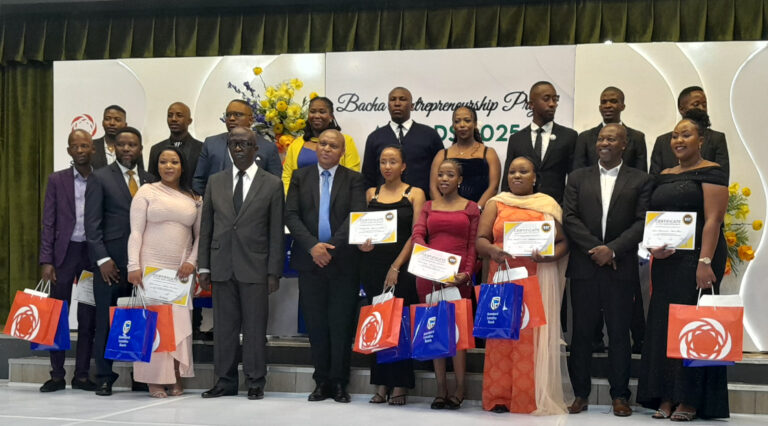
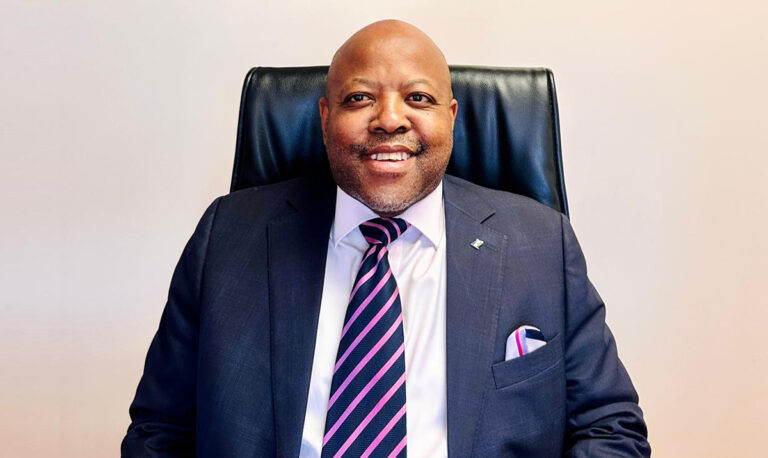
Bacha Entrepreneurship Project (BEP), a collaborative effort of the Revenue Services Lesotho (RSL), Standard Lesotho Bank (SLB) and Basotho Enterprises Development Corporation (BEDCO), concluded its 2025 journey by recognising outstanding entrepreneurs in this year’s cohort in Maseru on Thursday. Acting Commissioner General of the RSL, Rakokoana Makoa, said the awarding ceremony was a celebration to honour entrepreneurs who continue to shape the entrepreneurial landscape of Lesotho while also acknowledging their achievements in this remarkable journey. He said the project has become more than just a funding initiative but “a platform where ideas are nurtured, potential is recognised and the future of our economy is steadily being rewritten by young innovators with bold ambitions”. Just in the year 2025, a total of five exceptional startups joined the BEP, adding to the existing 38 businesses that have been supported by the initiative. Each of these entrepreneurs, CG Makoa said, represents a story of hope, determination and progress. “The project has invested over 10.4 million in the same capital and generated more than 200 jobs,” he informed, however, expressing disappointment in the 11 businesses that were financed by the initiative but closed down. He said despite the challenges faced, they stay determined to strengthen their support systems as they continue to polish the project, an inspiration sparked by the rising number of businesses that continue to thrive, speaking to the resilience of entrepreneurs and the value of intentional, well-structured empowerment. CG Makoa applauded the power of collaboration, saying the milestones the project has reached were not achieved in isolation, extending gratitude to the collaborative partners that have always ensured the success of the BEP. “The collaboration between RSL, Standard Lesotho Bank and BEDCO remains at the heart of BEP’s success. SLB and BEDCO have walked this journey with us since the beginning and they have done so with so much loyalty and dedication,” Makoa said. The work of the three institutes in the project is to ensure that funded businesses receive guidance, monitoring and financial stewardship, all essential elements needed for the sake of growth. For RSL, Makoa said, initiatives like the BEP reflect a broader mandate that goes beyond BEDCO. The authority supports entrepreneurship with an understanding that this is a way to strengthen the foundation of the country’s economy, widen the tax base in a sustainable way and contribute to the long-term national development. The CG said the authority currently has about 150,000 taxpayers and the wish is to grow this number to 200,000, a target that will ensure everyone pays their fair share of tax. “Therefore, every thriving business is a building block for a stronger result,” he said. In the eyes of the RSL, the awarding ceremony was a recognition of potential and readiness for entrepreneurs to grab the opportunity presented to them and the advantage of the open business landscape. ‘Mamotipi Raletlala, one of the adjudicators in the selection criterion of the finalists, said this year alone they had 465 entrepreneur applications, but they only assessed 200. “After the screening process, each applicant had to assess 80 business plans, from which the top 50 had to be selected,” she said, saying that from this selection, the applicants had to undergo training to function or refine their business plans to be assessed for the top 15 which qualified them for the next level. The top five winners were supported with a combined funding value of more than 1 million pounds, an investment that represented more than just financial support but an affirmation of a belief in the potential and creativity of the pursuit of Basotho youth. It was revealed that the success rate of entrepreneurs under the BEP is more than 70 percent, with projections indicating that entrepreneurship development, especially in small businesses, has an extremely high failure rate. Therefore, achieving a success rate of more than 70 percent is remarkable. Acting CEO- BEDCO, Tṣ̌epang Tlali, highlighted their role in the project, informing that it entails coordinating all project activities. He said the programme has existed for over a decade and although it is often classified as relatively small in terms of funding, it has recorded tremendous impacts. One example of the notable impacts is the successful incubation of more than 100 enterprises, an achievement that ushered in new entrepreneurship components in the programme. Since 2014, the project has invested over M10 million, supported 33 youth-led businesses and created over 200 jobs. The BEP, as celebrated in this milestone, continues to be a cornerstone of collective commitments in measuring innovation, empowering young people, and stimulating sustainable economic growth in Lesotho. It targets Basotho youth aged between 21 and 35 who have completed their high school studies, are unemployed and have a passion for entrepreneurship. The project represents possibility, partnership and progress for entrepreneurs in Lesotho. The strides that were celebrated were therefore meant to fuel the determination to remain innovative, collaborative and committed to creating opportunities for many others to innovate.
The Food and Agriculture Organisation (FAO) and the Ministry of Agriculture, Food Security and Nutrition conducted a validation workshop this week to review and validate the draft of the Fisheries and Aquaculture Governance Framework in Maseru.
The workshop marked a significant milestone in Lesotho’s efforts to transform its fisheries and aquaculture sector, promoting sustainable development, conservation and economic growth.
Speaking at the workshop, Minister of Agriculture Food Security and Nutrition, Thabo Mofosi, revealed that Lesotho’s fishery sector was historically developed to cater to colonial officials’ interests, focusing on sport fishing rather than agricultural development.
“For many years, this sector played only a marginal role in our national economy,” he said.
“A look into our history shows that fisheries in Lesotho were not developed as part of an agricultural agenda but rather to entertain colonial officials who viewed our rivers as suitable for sport fishing.
Mofosi shared the history of the sector, noting that the introduction of trout was driven by the personal interests of senior officers in the colonial police service.
“The trout we find in our rivers today were transported from Natal and introduced in the late 1930s by the police,” he said, adding that despite challenges, including unsuccessful trials with tilapia, Lesotho has made progress, with significant public investments in the 1960s, including the establishment of the Maseru Hatchery.
He expressed gratitude to FAO for providing critical decision-support information and a platform for policy dialogue.
He said the policy frameworks developed through this collaboration mark a decisive shift from the colonial legacy, placing aquaculture as a strategic priority for job creation, investment and inclusive growth in Lesotho.
This policy framework includes an Aquaculture and Fisheries Policy, Aquaculture Strategy, Aquatic Animal Health Strategy and aquaculture training curriculum; instruments that will guide updates to Lesotho’s legal and institutional frameworks aligning with the national vision for prosperity.
“We intend to leverage developments in the water sector, both in the highlands and lowlands to foster a sustainable, inclusive and globally competitive aquaculture industry,” Mofosi said.
Lesotho is already exporting significant volumes of trout to international markets, thanks to private sector investments in the Katse Dam.
The Minister emphasised that aquaculture in the country should not be the exclusive domain of large multinational companies but also accessible to small-scale players, especially in warm-water aquaculture in the lowlands.
“I am confident that the potential of these value chains will become evident in the coming months as selected lowland fish farmers receive technical mentoring and support,” he said.
The validation workshop brought together stakeholders to review and validate the draft Fisheries and Aquaculture Governance Framework. With the right coordination and incentives, Lesotho aims to develop a fully-fledged fishery industry, improving food security, nutrition and economic growth.
The sector’s potential is vast and with the new policy framework, Lesotho is poised to unlock its fishery and aquaculture potential, contributing to sustainable development and prosperity.
In Hengdian, China’s answer to Hollywood, the future of filmmaking is already here. Elsewhere in Zhejiang Province, productions that would traditionally require months of work, dozens of crew members and actors are now completed in a week. Where Western film industries nervously debate artificial intelligence’s role in creative work, China has decisively moved forward-not by replacing human creativity, but by retraining its workforce to harness AI as a tool for enhancement rather than replacement.
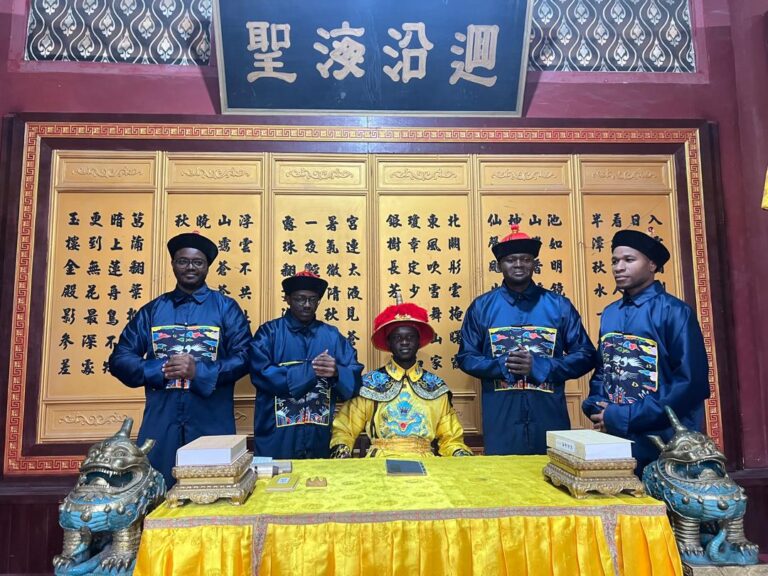
I witnessed this transformation first-hand during a CHINA-AID Educational Training Centre-sponsored month-long visit to Zhejiang province, and the implications for African storytellers are profound. The Training Program on Professional Skills for African Film and Audio-visualIndustry Practitioners was a robust initiative which proved that while we, in Africa, remain tethered to outdated paradigms – debating whether to embrace or resist technological change – China has leaped ahead by decades. The lectures received from Zhejiang Normal University’s film school proved that indeed AI is being embraced at every level and it is enhancing efficiency. The question facing African filmmakers isn’t whether to adopt these innovations, but how quickly we can do so while also learning from them.
The irony of my own education illustrates our predicament perfectly. When I graduated in 2007, I held a distinction in typewriting. Typewriters had already vanished from newsrooms. This disconnect between what we teach and what the world demands persists across much of Africa in 2025. We’re preparing students for industries that no longer exist while the tools reshaping global storytelling remain largely unexplored on our continent.
The Hengdian model
What China has built in Hengdian represents more than just infrastructure-it’s a complete reimagining of the production ecosystem. The scale is staggering, but what struck me most was the integration of AI and new technology at every level. AI doesn’t simply speed up post-production; it’s woven into all processes. The result isn’t soulless automation but rather the democratization of high-quality production capabilities. Companies like Versatile are achieving staggering results.
This matters for Africa because our stories have always struggled against resource constraints. Limited budgets mean limited ambition. But if AI can compress production timelines and reduce costs without sacrificing quality, suddenly the economics of African storytelling shift dramatically. A film that might have been impossible at $500,000 becomes viable at $50,000, a mere fraction. More stories can be told, more voices can be heard, and more perspectives can reach global audiences.
And unlike what Zimbabwe did decades ago by diminishing the role of the gatekeeper in the music sector opting for mere quantity and not quality, the quality that is being achieved is staggering. True, getting rid of gatekeepers does help one way, but without caution and care, societal and cultural values that distinguish any people may be eroded thereby doing more harm than good.
Learning from Lanxi and beyond
During my time in Zhejiang, I visited Lanxi, a city that exemplifies how China balances reverence for history and luminaries littered therein with aggressive modernization. Traditional architecture provides authentic backdrops for contemporary narratives. The past isn’t treated as a museum piece but as living inspiration for present creativity.
This approach offers a template for African storytelling. We too possess rich cultural traditions, complex histories, and diverse narratives that deserve global platforms. Yet we’ve often struggled to package these stories in ways that compete internationally-not because our stories lack merit, but because we lack the technical infrastructure and distribution networks to present them compellingly.
The vocational film school I visited in Zhejiang produces graduates who aren’t just theoretically trained but practically experienced. Their portfolios include work that has achieved national and international recognition while they’re still students. The curriculum not included boy adapts rapidly to industry changes but also drives it. When new platforms emerge or technologies evolve, the training evolves with them.
Compare this to many African film schools, where equipment is outdated, industry connections are limited, and graduates emerge with skills the market no longer values. The typewriting distinction I earned nearly two decades ago exemplifies this pattern repeated across disciplines. We cannot continue training for yesterday’s industries while tomorrow’s opportunities pass us by.
The China University of Zhejiang
At CUZ, I encountered an institution that treats filmmaking not as fine art alone but as an integrated discipline combining technology, business, and culture. Students learn traditional cinematography alongside AI-assisted production techniques. They study distribution strategies for emerging platforms that didn’t exist five years ago. They’re prepared not just to work in the industry as it exists but to shape the industry as it evolves.
This holistic approach is what African institutions must adopt. We need film programs that teach both craft and commerce, tradition and innovation, local storytelling and global distribution. Our graduates must be as comfortable navigating Chinese social media platforms as they are shooting on location in rural villages.
The collaboration imperative
The shortage of African stories in China represents both a challenge and an opportunity. The few African narratives that have reached Chinese audiences-whether through film, television, or digital platforms-have attracted strong viewership. The appetite exists; what’s missing is the pipeline.
This requires collaboration, not competition. We should invite Chinese filmmakers, technicians, and producers to Africa, immersing them in our contexts and stories. Simultaneously, we must send African storytellers to China-not as tourists but as serious students of their methods, technologies, and distribution strategies.
The goal isn’t to mimic Chinese content but to learn their processes. How do they integrate AI without losing human creativity? How do they develop new platforms rather than depending on Western gatekeepers like Netflix and YouTube? How do they monetize content across diverse distribution channels? These are technical and business questions, and China has developed compelling answers.
Beyond Western gatekeepers
Consider the mathematics of the current system. A Lesotho-produced film uploaded to YouTube might realistically achieve 100,000 views, primarily from neighbouring South Africa where local content naturally takes precedence. Netflix, meanwhile, imposes demands that effectively exclude most African productions from their platform. There is a new form they call micro-film that is garnering billions of views for a single film. On some platforms, a single stream is worth RMB2. If a Lesotho production gets 200 million views on such a platform, that amounts to RMB400 million. That is almost US$60 million or M1 billion.
One of the things that make such films attractive is their riveting storylines, high production value and short episodes. But wishing it does not make it happen. We must start working.
The revenue from such viewership transforms filmmaking from a financially precarious passion project into a sustainable industry. It revitalizes a whole economic ecosystem. It builds producer confidence. Success breeds investment, investment enables quality, and quality attracts larger audiences-creating a virtuous cycle that’s impossible within current Western-dominated distribution systems.
China has created dozens of platforms where content that might not suit traditional broadcasters generates millions in streaming revenue. These platforms reflect Chinese preferences and viewing habits, but their success demonstrates that alternatives to YouTube and Netflix are viable. Africa needs similar platforms tailored to our contexts, languages, and storytelling traditions.
Cultural resonance
One view I have always held is that any two peoples must always focus on their similarities instead of their differences. It was refreshing that Africans indeed share a lot of similarities with the Chinese. Our dishes differ, but we essentially eat the same things-grains, vegetables, meat prepared with care and shared communally. Our lives revolve around family, respect for elders, and collective rather than purely individual success.
These similarities suggest our stories might resonate with Chinese audiences more naturally than they do with Western ones. Where Hollywood has often reduced Africa to poverty, conflict, and exoticism, Chinese audiences might recognize the universal human experiences our stories contain-family obligations, generational tensions, economic aspirations, romantic complications, and the eternal dance between tradition and modernity.
The work must start now
We must start from where we are, pursuing excellence with available resources while building toward more ambitious goals. This means several concrete steps.
First, African governments and private investors must fund exchanges that send filmmakers, technicians, and students to Chinese institutions for extended training. Brief tourism-style visits accomplish little; we need immersive programs lasting months or years.
Second, we should invite Chinese production companies to establish African operations, not extracting our stories but collaborating on their telling. Joint ventures that combine Chinese technical expertise with African creative vision could produce work that succeeds in both markets.
Third, African entrepreneurs must develop continent-specific streaming platforms and social media networks. We cannot depend indefinitely on Western companies that don’t prioritize our content or Chinese platforms designed for Chinese users. We need infrastructure we control.
Finally, African film schools require comprehensive reform. Curriculums must evolve continuously, incorporating new technologies and platforms as they emerge. Partnerships with Chinese institutions could accelerate this process, bringing cutting-edge training to African students without requiring everyone to travel abroad.
The choice facing African storytellers isn’t whether to embrace AI and emerging technologies but whether we’ll do so proactively or find ourselves marginalized by another generation of innovations we failed to adopt. China’s example demonstrates that technological advancement need not obliterate tradition or eliminate jobs-it can enhance human creativity and multiply opportunities.
Our stories deserve global audiences. Our filmmakers deserve world-class training and tools. Our entrepreneurs deserve platforms that serve our interests. Looking east, we can find models that make all of this possible. The question is whether we’ll act while the opportunity remains, or whether we’ll still be debating the merits of change while the world moves forward without us.
Silence Charumbira is an international journalist based in Maseru, Lesotho. He is former Deputy Editor of the Lesotho Times and Sunday Express. He has also worked with multiple reputable organisations like China Daily, Guangming, Associated Press (AP) The Guardian and CNN, among others. He writes on diverse topics including China-Africa relations. Views expressed in this article are his own and do not necessarily represent those of the publication.
Ministers responsible for water from the countries of Botswana, Lesotho, Namibia and South Africa assembled in Gaborone for the 8th Ordinary Meeting of the Orange-SenquRiver Commission (ORASECOM) Forum of the Parties this week to review substantial progress in the joint management and development of the shared water resources within the Orange-Senqu River Basin, providing strategic directions for the Commission’s future endeavours.
The Ministers unanimously reaffirmed their unwavering commitment to transboundary water cooperation, acknowledging significant strides made since the last meeting in 2023.
Among the most notable advancements, the forum celebrated progress towards the ratification of the 2018 revised ORASECOM Agreement, a crucial step set to modernise and bolster the Commission’s legal and institutional framework while ensuring greater efficiency and effectiveness in its operations.
The forum placed a significant focus on prioritising sanitation and water quality, as ministers acknowledged the successful integration of sanitation into the forthcoming Integrated Water Resources Management & Investment Plan (2026–2035). This plan aims to ensure coordinated action on pollution, water quality and Water, Sanitation and Hygiene (WASH) across various sectors.
In a move set to boost regional infrastructure, progress was noted on the Noordoewer/Vioolsdrift Dam Bridging Feasibility Study in the Lower Orange-Senqu region. ORASECOM was therefore appointed as the Project Executing Agency, with the procurement of a consultant already underway.
The Forum commended the Commission for delivering a range of impactful basin-wide initiatives including the Lesotho-Botswana Water Transfer Project (L-BWTP) slated for conclusion by mid-2027, completion of the UNDP-GEF SAP Implementation Project and initiation of the ORASECOM Water Fund- a long term financing mechanism aimed at supporting basin restoration, water security and climate resilience, with a Project Identification Form (PIF) already submitted to the Global Environment Facility.
Ministers also reviewed the Commission’s financial status, acknowledging invaluable support from International Cooperating Partners such as UNDP-GEF, the African Development Bank and the German Government. They encouraged ongoing resource mobilisation and deeper partnerships to sustain basin-wide programmes.
The Forum welcomed steady progress under existing bilateral and trilateral cooperation frameworks, including the Permanent Water Commission (Namibia-South Africa), Lesotho Highlands Water Commission (Lesotho-South Africa) and Botswana-South Africa Joint Permanent Technical Commission, underscoring the value of technical and political collaboration across the river basin.
All Ministers reiterated their shared commitment to safeguarding the Orange-Senqu River Basin as a strategic resource vital for regional water security, economic development and ecological sustainability, further calling for collective efforts to effectively tackle the escalating effects of climate change.
The 9th Ordinary Meeting of the Forum has already been scheduled to be hosted by Lesotho in 2026 and promises continued momentum in these critical regional efforts.
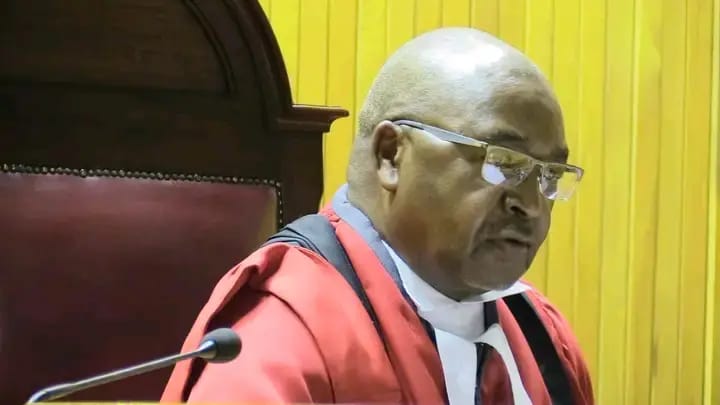
MASERU-New details have emerged in the high-profile 2014 bombings trial, after a forensic expert told the court that police officers made it difficult for civilian forensic teams to properly investigate the scenes of two deadly explosions. The testimony, delivered this week before the High Court, has raised fresh questions about how the investigations were handled at the time.
Mofo Setloboko, who in 2014 served as a Senior Lab Technologist in the Forensic Laboratory under the Lesotho Mounted Police Service (LMPS), took the stand as the 27thstate witness in the case against former Lesotho Defence Force (LDF) Commander Lieutenant General Tlali Kamoli and four army members. The five face charges relating to bomb attacks at the home of Liabiloe Ramoholi (also known as Maesiah Thabane) at Moshoeshoe II and at the home of former Police Commissioner Khothatso Tšooana at Ha Abia.
The explosions, which rocked the nation more than a decade ago, remain among the most politically charged incidents in Lesotho’s recent history. This week’s testimony shed new light on what happened behind the scenes as investigators tried to piece together the events of January 2014.
“They did not want us there”, Witness describes tension at crime scenes
Setloboko told the court that when he and his civilian forensic team arrived at Moshoeshoe II and Ha Abia on January 27, 2014, they immediately felt unwelcome. Instead of cooperation, he said they were met with resistance from police officers already at the scene. According to him, the police made it clear they did not want the civilian forensic specialists involved.
He described the working environment as hostile and said they were constantly pressured and restricted from performing their duties freely. “There was no cooperation at all. The police did not want the civilian team at the crime scenes,” he told the court. “We were victimised and forced to work under pressure, and some items were hidden from us.”
The court heard that the strained relationship between the investigative teams created gaps in what should have been a coordinated and professional examination of the crime scenes.
During his testimony, Setloboko was shown a photograph of an unexploded bomb that police officers said had been found at Ha Abia. To the court’s surprise, he stated he had never seen the device, even though he was one of the forensic experts assigned to the investigation. He explained that if the device had indeed been found at the scene, and if the civilian team had been given access to it, he would have included it in his official findings.
“I did not see that unexploded bomb,” he said. “If it was on the scene and we were given the chance to examine it, I would have documented it in my report.”
His statement suggested that important evidence may have been withheld from the civilian forensic team, raising concerns about how the police handled key materials in the investigation.
Setloboko explained to the court that his team collected several metal pieces from both crime scenes. These fragments appeared to have come from explosive devices and contained visible burn marks. The items were taken to the forensic laboratory for testing. After conducting examinations, he discovered that the fragments contained a plasticizer, a chemical compound commonly used to increase the power of an explosive.
He explained that when added to an explosive mixture, a plasticizer ensures maximum heat and pressure, resulting in a stronger and more destructive blast.
His findings, he said, were consistent with the type of explosions reported at the two homes. The results showed that the devices were not simple makeshift bombs but rather powerful, carefully assembled explosives.
With Setloboko’s testimony completed, the court adjourned the case to Monday next week, when the trial will resume. The state is expected to call more witnesses as it continues to build its case against Kamoli and the four soldiers. The 2014 bombings case has been one of the longest-running and most significant trials in Lesotho, involving senior security figures and allegations of politically motivated attacks.
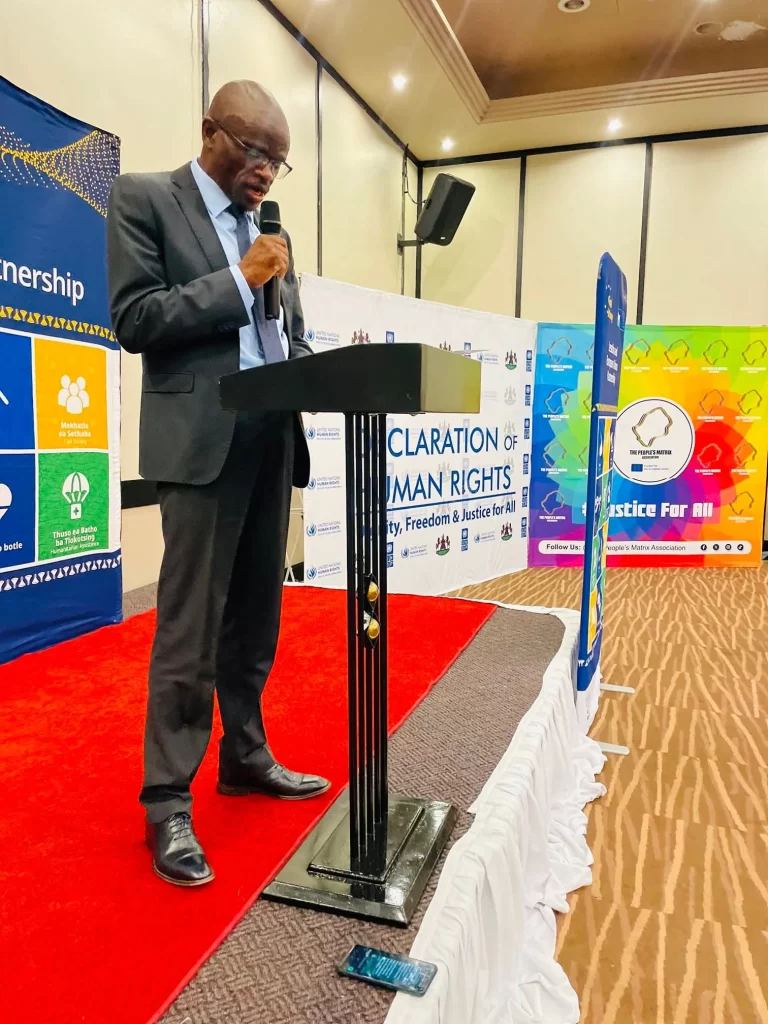
The Ministry of Law and Justice in collaboration with The People’s Matrix, Sesotho Media & Development brought together government officials, civil society representatives and development partners to review Lesotho’s human rights landscape in a first-ever National Symposium Human Rights held in Maseru this week.
As part of the 16 Days of Activism Against Gender-Based Violence, the symposium aimed at reflecting on national progress, assessing current human rights initiatives and assessing their impact and identifying opportunities for improvement, with particular attention to combating GBV.
Speaking at the gathering, Deputy Attorney General MakheleSekati reaffirmed the country’s commitment to international and regional human rights treaties, highlighting notable achievements including the enactment of the National Human Rights Commission, progress in drafting human rights legislation and active engagement in regional and international forums.
Sekati said the LMPS was a witness to the harm that people endure to GBV, saying this harm steals dignity, shatters families and leaves scars unseen, yet unforgettable.
“We see it in the trembling hands of a woman seeking help, in the eyes of a child who has watched violence unfold at home and in the quiet desperation of those who suffer in silence, hoping no one will notice,” he said, adding that GBV is not just a statistics, an abstract problem but a wound that stabs the very soul of the nation.
He went on to explain the terror that GBV leaves in the hearts of victims, their homes and how it affects the lives of those around them, saying the alarming statistics of such cases call for rapid response from government and all stakeholders.
He said there was a time when the LMPS was not moving fast enough to help in cases of GBV, when systems that were meant to protect created more suffering for the victims, however pledging that they have introspected and are ready to listen to survivors with patience and humanity.
“We will respond with urgency because every minute matters. We will protect without hesitation or fear and we will pursue justice with every breath in our bodies,” he pledged.
Sekati said this work was not the sole responsibility of the police, calling on everyone to come together to help in the brutal fight.
He pleaded with partners to not let the symposium be just a meeting but a rebirth-call to action and demand for transformation in the fight against GBV- urging them to confront the systemic issues that perpetuate violence and inequality.
“We must listen to the voices of those who’ve been silenced and amplify the power of those who’ve been marginalized,” he pleaded.
With its financial backing in the success of the symposium, Marcella Veneziani, the EU Country Representative expressed their commitment to helping end GBV in Lesotho.
She highlighted the urgent need for reflection, awareness and action, emphasising support for victims and strengthening of key institutions including the Lesotho Human Rights Unit and the LMPS.
Tampose Mothopeng, Human Rights Defender and Sexuality Activist, also weighed in, saying the symposium had presented a crucial platform for the government to reflect, account and take action towards a just and inclusive Lesotho.
Mothopeng emphasised inclusion of the LGBT community voices in decision making platforms, national reforms and committees, applauding government for passing the 10thAmendment that expresses inclusivity.
The symposium, Mothopeng said, called for a development of a national policy against hate crimes- this policy will improve access to justice and ensure equitable health services for all.
The symposium meant to create a unified Lesotho, bringing together diverse voices to strengthen protection, accountability and inclusion across the country including local chiefs, community members from marginalized groups such as sex workers, LGBTI persons and people with disability.
Discussions of the day were also believed to have strengthened a shared commitment to building a safer, more equitable Lesotho.
The report paints a picture of chaos, manipulation and blatant disregard for the Public Procurement Act. According to the leaked document, the Ministry of Health and QMMH management pushed ahead with a multi-million maloti leasing arrangement without proper consultation, without legal compliance and without transparency. The result was an irregular award to a company that did not even participate in the procurement process.
This is one of the most damning procurement investigations Parliament has produced in recent years. At its centre is a pattern of conflicts of interest, questionable reversals of decisions, improper committee compositions and what appears to be a deliberate attempt to rush a private healthcare deal through the system.
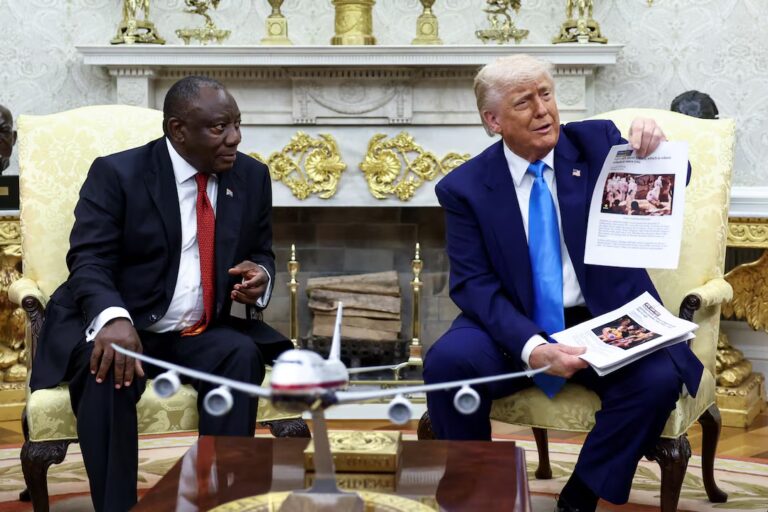
In a live address, Ramaphosa attributed the Trump administration’s G20 boycott and aid cuts to false narratives pushed by groups at home and abroad, including exaggerated farm murder claims and misrepresentations of the 2024 Expropriation Act. The new law, which he signed in January, updates apartheid-era rules to allow limited no-compensation cases for public interest like land reform, always under court oversight. He reaffirmed South Africa’s democratic strengths, from its Bill of Rights to Mandela’s legacy of dialogue, while inviting critics to a national conversation and pledging friendship with Americans amid calls for respectful engagement.
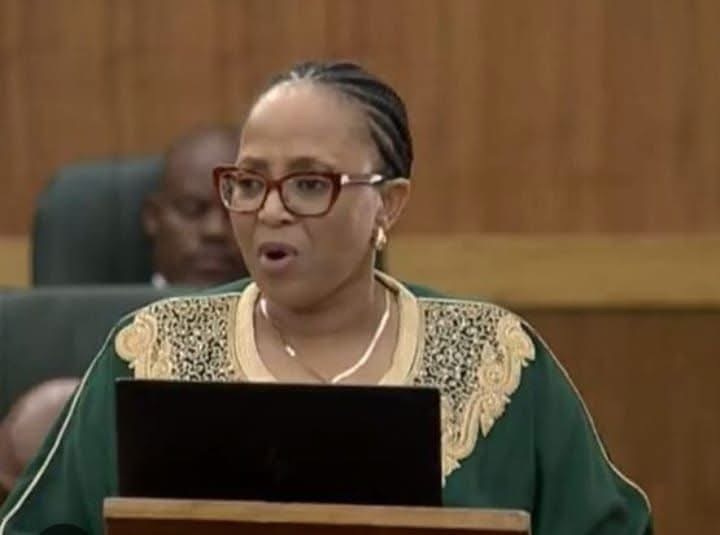
There are moments in a nation’s economic story when a minister of finance must project clarity. Calm. Competence. Something that resembles a steady hand on the tiller. What we saw in the Mid-Term Budget Review delivered on 26 November 2025 was the opposite. The minister of finance expressed shock at an economy that has been screaming for attention for two years. She sounded blindsided by problems that her own decisions helped create. And she seemed genuinely surprised that the numbers had turned against her, even though the storm clouds were visible from the moment the RFP government took power.
The most troubling part of this review is not the data. It is the disbelief shown by the person responsible for managing it. The minister lamented everything from weak growth projections to revenue shortfalls, grants collapsing and royalties underperforming. Yet each one of these problems was either predictable, preventable or caused by policy choices that defied economic logic. The shock feels theatrical.
A Government That Intentionally Strangled Its Own Economy
When the RFP government announced that it would no longer procure goods and services through small suppliers because it could no longer afford to pay so-called middlemen, it presented the decision as fiscal discipline. In reality, it was a reckless assault on the backbone of the local economy. The truth is simple. In Lesotho, government is the single biggest customer. Most businesses, from traders to service providers, survive on government procurement. Removing that spending without a transition plan was not discipline. It was sabotage.
The result was obvious. When you kill demand, you shrink the tax base. You increase unemployment. You hollow out the very private sector you claim you want to grow. The minister should not be shocked that tax revenue is lagging or that the domestic economy remains weak. It is the predictable outcome of a government that withdrew spending from its own market.
Trump’s Sanctions Arrived Before the Budget. The Minister Pretended They Did Not.
One of the most astonishing omissions in this budget is the failure to adjust when Donald Trump announced sanctions and punitive tariffs long before the 2025/26 Budget was passed. These tariffs targeted exactly the sectors that fund Lesotho’s export earnings and donor credibility. That alone should have prompted an immediate redraw of the national budget.
But pride got in the way. Instead of revising the numbers, the ministry acted as if the old assumptions were still valid. It passed a budget based on grant flows that were no longer guaranteed, including MCC and USAID support. The consequences appear clearly in the review. Grants were budgeted at M3.48 billion. By mid-year, government had received only M758.9 million. The projection for the year is just M1.38 billion. The minister calls this a shock, yet the disappointment was visible from the first day the sanctions were announced. This is not shock. It is negligence disguised as surprise.
On Muela, The Minister Pretends Not To Have Known
The minister also laments the decline in LHDA royalties, blaming the “unexpected extension” of Muela maintenance for reduced water transfers to South Africa. But this was a planned shutdown. She knew about it. The Ministry of Finance is always briefed on LHDA maintenance schedules because royalties are a strategic revenue line.
To act stunned now suggests either she ignored the briefing or she is retreating behind uncertainty to hide poor planning. Either way, it weakens public trust. A serious finance minister does not pretend Muela maintenance happened in the dark.
The Numbers Tell a Story of Avoidable Weakness
The review shows that Lesotho is projected to grow at 1.3 percent, down from the 3.4 percent expectation that the minister herself sold to the public. This is not global pressure alone. This is domestic policy failure layered on external shocks. Grants have collapsed. Capital spending is at only 18 percent of government-funded projects. Manufacturing is in crisis. Mining is shedding jobs. Agriculture is recovering from last year’s drought. And the private sector is suffocating.
The minister attributes most of the pain to external factors. Yet the most damaging decisions were made here at home.
The Shock Is Not in the Numbers. It Is in the Leadership Vacuum.
What stands out in this review is the absence of accountability. The minister delivers the numbers as if someone else prepared the budget. As if someone else ignored the sanctions. As if someone else strangled the procurement system. As if someone else failed to prepare for Muela.
It is difficult to build public confidence when the national strategy appears to rely on hoping for good luck. It is even harder when the minister seems genuinely startled each time reality arrives.
Lesotho needed a minister who would acknowledge her missteps, adjust her course and restore confidence. Instead, we received a performance of surprise. The shock is not that the economy is struggling. The shock is that the minister seems unaware of the role she played in getting us here.
If nothing changes, then the next budget will read worse than this one. Blame placed everywhere else. And a minister who continues to be shocked by outcomes she helped shape.
In fact we boldly predict that the coming budget will the most incoherent since democracy.
Lesotho’s Ministry of Health is drifting into a crisis that senior officials can no longer deny. It is a crisis documented by the Ministry’s own Human Resources personnel. It is a crisis confirmed by internal correspondence that has been on the Principal Secretary’s desk for more than a year. And now new allegations suggest that the rot has continued despite repeated warnings.
Sources at the Ministry confirmed to the Lesotho Tribune that as recently as Thursday 27 November 2025, the same Mr Jack who has long been accused of manipulating recruitment processes has reportedly hired scores of new workers. These individuals are believed to be headed to Maseru District Hospital. It is alleged that each person paid fifteen thousand maloti directly to him to secure employment.
This is unfolding in a public health system that has been brought to its knees by staff shortages, collapsing services and chronic mismanagement.
Leadership Pretends Not To Know
When the Lesotho Tribune approached the Principal Secretary for Health, she acknowledged being warned about the sale of jobs and requested that we bring her evidence. She said we should meet her on Monday 1 December 2025. Her response was startling because the leaked letter exposing the malpractice carries a date stamp from her own office that is more than a year old. The information has been in her possession for months. It was not new to her. What is new is public scrutiny.
A Recruitment System That Has Become a Private Business
The leaked HR complaint paints a disturbing picture. Shortlisting inside the Ministry has collapsed into a one man operation. One officer allegedly handpicks candidates in complete disregard of the Public Service Act. There is no consultation with line managers. There is no supervision. There is no compliance with the law.
The requirements of the Act are clear.
Section 8 demands merit based recruitment.
Section 10 allows the Minister to create policies that promote fairness and equal opportunity.
Sections 20 and 21 insist that recruitment be transparent and compliant with the Act.
The Regulations require that HR must shortlist with the line manager and obtain approval from the Head of Department and the Minister.
None of this is being followed.
The leaked memo states that the current system “perpetuates factors of bias and corruption” and creates fertile ground for job selling. The language is calm but the meaning is severe. Recruitment has become a personal revenue stream.
A Case That Laid Bare the Abuse
The letter cites a real case that exposed the depth of the malpractice. A candidate was shortlisted and appointed as Manager Childhood Illnesses without input from the line manager. The line manager refused to accept the appointment. They had no role in the process. They had no knowledge of it. The officer who was appointed through this flawed process is now stuck in a professional limbo created entirely by the Ministry.
The case is still unresolved. It is one example of many. And it is happening at a time when Lesotho continues to lose experienced health workers to better governed systems in the region.
Whistleblowers Punished, Not Protected
The Directorate on Corruption and Economic Offences has been silent, even though job selling is a textbook example of corruption. Our sources inside the Ministry say the silence is not accidental. They claim that details of the whistleblowers were shared with senior management. These individuals were later transferred to remote facilities with harsh working conditions. The transfers were not coincidental. They were punishment.
The whistleblower anticipated this possibility. In the leaked letter they write that the memo “might put my head on the block”. They were right. They were targeted for telling the truth.
Minister Silence and Political Questions
We also asked Minister Selibe Mochoboroane whether he had instructed Mr Jack to hire village health workers aligned to his political party. He did not respond. The silence feeds suspicion. The Ministry’s leadership has been aware of the allegations for over a year. None of them have acted decisively.
A System That Has Normalised Illegality
What emerges from all the documents and testimonies is a Ministry that has allowed illegality to become routine. A Ministry that treats recruitment as an informal marketplace. A Ministry that protects the perpetrators and abandons the victims.
When one man can shortlist candidates, sell positions, ignore line managers, and continue operating despite a formal complaint that reached the PS, the Minister, the Director General, the Director HR and the Public Service Commission, it becomes clear that this is not a rogue act. It is a structural collapse.
The DCEO’s Silence Is A Scandal On Its Own
The DCEO said it wasn’t aware of this particular case. It was created to investigate exactly this type of misconduct. Its failure to act is a scandal within a scandal. It raises the question of whether the Directorate has capacity or whether it is simply unwilling to confront politically protected wrongdoing.
Lesotho continues to spend millions on anti corruption institutions that retreat when the stakes are high.
The Collapse of Governance at the Heart of the Health System
The Ministry of Health is supposed to protect lives. Instead, its hiring system has been turned into a private business venture. Laws are being ignored. Whistleblowers are being punished. Public trust is being shredded.
This is no longer an internal administrative issue. It is a collapse of governance at the core of the health sector.
A Call for Immediate Action
Lesotho cannot rebuild its health system under this level of corruption. The Public Service Act is not optional. The leadership cannot continue pretending that the evidence does not exist. The DCEO cannot continue protecting silence.
The country deserves a Ministry that hires fairly. A Ministry that protects whistleblowers. A Ministry that does not sell jobs to desperate Basotho. A Ministry that treats public office as a public trust.
This is a scandal the Ministry of Health cannot hide any longer.