


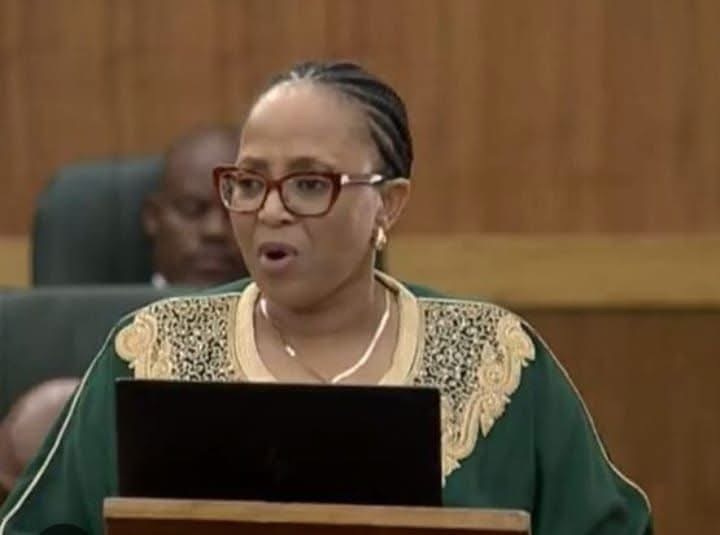
There are moments in a nation’s economic story when a minister of finance must project clarity. Calm. Competence. Something that resembles a steady hand on the tiller. What we saw in the Mid-Term Budget Review delivered on 26 November 2025 was the opposite. The minister of finance expressed shock at an economy that has been screaming for attention for two years. She sounded blindsided by problems that her own decisions helped create. And she seemed genuinely surprised that the numbers had turned against her, even though the storm clouds were visible from the moment the RFP government took power.
The most troubling part of this review is not the data. It is the disbelief shown by the person responsible for managing it. The minister lamented everything from weak growth projections to revenue shortfalls, grants collapsing and royalties underperforming. Yet each one of these problems was either predictable, preventable or caused by policy choices that defied economic logic. The shock feels theatrical.
A Government That Intentionally Strangled Its Own Economy
When the RFP government announced that it would no longer procure goods and services through small suppliers because it could no longer afford to pay so-called middlemen, it presented the decision as fiscal discipline. In reality, it was a reckless assault on the backbone of the local economy. The truth is simple. In Lesotho, government is the single biggest customer. Most businesses, from traders to service providers, survive on government procurement. Removing that spending without a transition plan was not discipline. It was sabotage.
The result was obvious. When you kill demand, you shrink the tax base. You increase unemployment. You hollow out the very private sector you claim you want to grow. The minister should not be shocked that tax revenue is lagging or that the domestic economy remains weak. It is the predictable outcome of a government that withdrew spending from its own market.
Trump’s Sanctions Arrived Before the Budget. The Minister Pretended They Did Not.
One of the most astonishing omissions in this budget is the failure to adjust when Donald Trump announced sanctions and punitive tariffs long before the 2025/26 Budget was passed. These tariffs targeted exactly the sectors that fund Lesotho’s export earnings and donor credibility. That alone should have prompted an immediate redraw of the national budget.
But pride got in the way. Instead of revising the numbers, the ministry acted as if the old assumptions were still valid. It passed a budget based on grant flows that were no longer guaranteed, including MCC and USAID support. The consequences appear clearly in the review. Grants were budgeted at M3.48 billion. By mid-year, government had received only M758.9 million. The projection for the year is just M1.38 billion. The minister calls this a shock, yet the disappointment was visible from the first day the sanctions were announced. This is not shock. It is negligence disguised as surprise.
On Muela, The Minister Pretends Not To Have Known
The minister also laments the decline in LHDA royalties, blaming the “unexpected extension” of Muela maintenance for reduced water transfers to South Africa. But this was a planned shutdown. She knew about it. The Ministry of Finance is always briefed on LHDA maintenance schedules because royalties are a strategic revenue line.
To act stunned now suggests either she ignored the briefing or she is retreating behind uncertainty to hide poor planning. Either way, it weakens public trust. A serious finance minister does not pretend Muela maintenance happened in the dark.
The Numbers Tell a Story of Avoidable Weakness
The review shows that Lesotho is projected to grow at 1.3 percent, down from the 3.4 percent expectation that the minister herself sold to the public. This is not global pressure alone. This is domestic policy failure layered on external shocks. Grants have collapsed. Capital spending is at only 18 percent of government-funded projects. Manufacturing is in crisis. Mining is shedding jobs. Agriculture is recovering from last year’s drought. And the private sector is suffocating.
The minister attributes most of the pain to external factors. Yet the most damaging decisions were made here at home.
The Shock Is Not in the Numbers. It Is in the Leadership Vacuum.
What stands out in this review is the absence of accountability. The minister delivers the numbers as if someone else prepared the budget. As if someone else ignored the sanctions. As if someone else strangled the procurement system. As if someone else failed to prepare for Muela.
It is difficult to build public confidence when the national strategy appears to rely on hoping for good luck. It is even harder when the minister seems genuinely startled each time reality arrives.
Lesotho needed a minister who would acknowledge her missteps, adjust her course and restore confidence. Instead, we received a performance of surprise. The shock is not that the economy is struggling. The shock is that the minister seems unaware of the role she played in getting us here.
If nothing changes, then the next budget will read worse than this one. Blame placed everywhere else. And a minister who continues to be shocked by outcomes she helped shape.
In fact we boldly predict that the coming budget will the most incoherent since democracy.