Mohahlaula Airlines
Thursday, July 23, 2026
Home Blog Page 44

The Spin Just Got Real: Your Favorite Land-Based Spinners are Now Online exclusive on betPawa!

0

For years, the captivating allure of Spinners games has drawn crowds to land-based casinos across Africa. The thrilling anticipation as the wheel spins, the tension building with every turn, and the celebration when your chosen symbol lands — these moments are etched into the heart of gaming culture.  But let’s be honest, the queues, the travel, and the waiting for a seat could sometimes dampen that spontaneous excitement.

Well, get ready to ditch the wait and embrace instant thrills! betPawa, in an exclusive partnership with Black Lagoon Games, is electrifying your gaming experience by bringing your beloved land-based Spinners games directly to you, online! This isn’t just an upgrade; it’s a revolution that puts the excitement of the casino right in your pocket.

Your Favorite Spinners, Now at Your Fingertips!

Imagine the thrill of your top Spinners games, accessible anytime, anywhere. No more searching for a physical location or battling for a spot. Now, you can dive into the action with:

These iconic games are now just a tap away on your mobile device or computer. Play at your own pace, enjoy immediate results, and experience the pure thrilling excitement of the spin whenever the mood strikes.

Effortless Gaming, Exclusive Access

Playing your favorite Spinners online with betPawa is not just convenient; it’s seamless and rewarding:

  • Exclusively on betPawa: For a limited time, betPawa is the only place you’ll find these incredible online Spinner games. This is your unique chance to be part of the future of gaming.
  • Unmatched Convenience: Play on the go, during your commute, or from the comfort of your couch. Your mobile phone becomes your personal casino, offering instant access to endless entertainment.
  • Instant Gratification: Say goodbye to queues! With betPawa, you jump straight into the game, experiencing immediate results and constant excitement.
  • Easy Deposits & Withdrawals: Your gaming experience should be hassle-free. betPawa ensures smooth and secure transactions, making deposits and withdrawals incredibly simple.
  • Instant Payouts: Win big? Get your winnings instantly! betPawa is committed to providing quick and efficient payouts, so you can enjoy your success without delay.

Don’t miss out on this incredible evolution of a beloved tradition. The future of Spinners games is here, and it’s online, exclusively at betPawa.

Visit betPawa today to play now and be part of the Spinners revolution!

RFP Building it’s army – Mofomobe

0

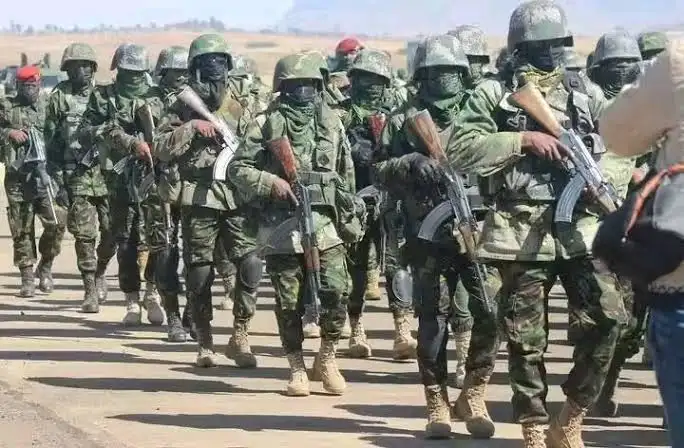
A voice clip circulating across the country has thrown the Revolution for Prosperity (RFP) into a fresh storm. In the recording, a party member from Moselinyane constituency explains how the ruling party allegedly allocated five people per constituency for recruitment into the Lesotho Defence Force (LDF). The problem is the scale behind the claim. Publicly, the LDF offered 500 posts, yet the voice clip suggests RFP had already taken up 400 of them.

For many Basotho, this is the worst form of political favouritism. What should have been a nationwide, open recruitment exercise is now being read as a partisan rollout designed to reward loyal followers.

The Basotho National Party (BNP) leader, Machesetsa Mofomobe, has condemned the revelations. He accused the RFP of quietly building its own army under the cover of state structures. 

“This is not recruitment. This is a political project,” he said, warning that the country cannot afford a defence force whose loyalty is tied to a political party instead of the nation.

Basotho on social media say the alleged move directly contradicts the promises the RFP made when it entered office. The party had campaigned on fairness, merit and an end to nepotism.

Attempts to get comment from RFP spokesperson were unsuccessful. Inside the party, however, some members are already uneasy. Sources say there is concern that the scandal may deepen the growing perception that the government is losing its grip on its own elections promises.

Mofomobe warns that politicising the defence force is a dangerous path. The LDF carries the responsibility of protecting the country. Once its ranks are filled through political patronage, the public begins to question whom the army serves.

BNP insists this scandal cannot be allowed to pass quietly. The party plans to push for a full investigation and for government to publish the recruitment list alongside the actual criteria used.

Meanwhile, many young Basotho who applied in good faith say they now feel cheated. They believed the 500 posts were open to everyone. Instead, they are left wondering whether they ever had a real chance.

For the RFP, this controversy goes beyond a leaked clip. It cuts into its credibility, its promises and the trust it worked hard to build. And unless the government addresses it transparently, the suspicion that the ruling party is building a loyalist army will only grow louder.

Corruption trial stalled, Judge slams “unready” case

0

MASERU

The long-running corruption case involving MatlakengMember of Parliament Dr Mahali Phamotse has once again hit a standstill after the High Court sharply ruled that the matter is far from ready to proceed this week.

Presiding Judge, Justice Molefi Makara, made it clear that he would not set a hearing date until every document required for the trial had been properly handed to the defence. The judge stressed that the court cannot allow a trial of this magnitude to begin when critical paperwork is either missing or unreadable.

The case, which also involves co-accused ‘MapasekaKolotsane and Ratšiu Majara, was expected to make procedural progress. Instead, the court was met with a fresh wave of disputes over incomplete discovery, the crucial process where the prosecution must provide the defence with all documents, witness statements and evidence intended for use at trial.

During the brief appearance, Advocate Peleha Joala, representing the prosecution, informed the court that the defence had raised serious concerns. 

According to him, the defence teams had discovered that some witness statements were never handed over. Worse still, some of the documents already submitted were so faint or unclear that the defence could not properly read or use them.

He acknowledged the seriousness of the issue and agreed that it could not be ignored or downplayed. Joala then committed himself before the court to follow up urgently with the defence. He promised to ensure that all missing documents are delivered and that the illegible papers are replaced with clear, readable versions.

Justice Makara did not mince his words. After hearing both sides, he stated firmly that the matter is simply not ready for hearing. He explained that it would be unfair and procedurally improper to push forward when the defence has not been given all the material they need to prepare.

He went on to emphasise that discovery is not a mere formality; it is a cornerstone of a fair trial. Without it, the defence would be left in the dark, unable to challenge the State’s evidence or understand the case fully. Because of this, the court refused to assign a trial date and ordered that all discovery disputes must be resolved first.

Freedom on the Net 2025: An Uncertain Future for the Global Internet

0

By Kian Vesteinsson and Grant Baker 


The internet is more controlled and more manipulated today than ever before. Global internet freedom declined for the 15th consecutive year in 2025, as authoritarian governments employed censorship and offline repression to quash protests that were organized online, and people in democracies faced an escalation in constraints on digital expression.
When the Freedom on the Net project was launched in 2011, following a 2009 pilot, there was widespread optimism about the power of information technology to support prodemocracy movements and drive progress for human rights.
These hopes were buoyed by the prominent role played by online platforms in Iran’s Green Movement and the Arab Spring that followed. From the outset, however, it was apparent that governments could use the same digital technologies to smother dissent and shape online narratives in their favor. 
During this report’s coverage period, from June 2024 to May 2025, conditions deteriorated in 27 of the 72 countries assessed, while 17 countries registered overall gains. The year’s largest decline occurred in Kenya, followed by Venezuela and Georgia. China and Myanmar remained the world’s worst environments for internet freedom.
Bangladesh earned the largest improvement, while Icelandretained its status as the freest online environment, followed by Estonia.
Fifteen years of Freedom on the Net analysis shows that the internet has transformed the ways in which state authorities and other powerful actors assert control over information. 
Authoritarian rulers have deployed tools of digital repression to strengthen their hold on power, particularly in response to protests or elections that challenge their rule, driving the most precipitous cumulative score declines recorded by the report. 
And in countries across the democratic spectrum, from the worst autocracies to some of the world’s freest societies, political leaders have sought to manipulate online narratives through increasingly sophisticated methods, often attempting to shape the information space without overt censorship.
The immediate future of internet freedom will depend on how governments deploy incentives for and controls over the next wave of technological innovation. Governments around the world are already ramping up their development of AI ecosystems, pouring huge investments into cloudcomputing infrastructure and natural-language and reasoning models. 
Innovations in satellite-based connectivity will change how people access the internet, while the rise of technical measures to verify the age and identity of people using the internet will dramatically alter the online experience. 
Freedom of expression, access to information, and privacy should be among the values that guide both regulation and innovation.
Those working to safeguard internet freedom face new headwinds, however. The US government’s decision to dismantle its foreign aid institutions resulted in the termination of its support for internet freedom programming, a long-standing priority across multiple Republican Party and Democratic Party administrations. 
The cuts entailed the cessation of funding to experts developing anticensorship technology and encrypted communication tools, to people working on human rights issues in the world’s least free environments and to organizations that assisted journalists, activists and others under threat for the content they posted online. (Freedom House was among the organizations that were materially affected by the freeze in US foreign assistance, which included the removal of funding for Freedom on the Net and our broader emergency support programs.) 
The United States has long served as a leading advocate of global internet freedom, and its withdrawal from the vanguard leaves a significant gap.
Fifteen consecutive years of decline should stir alarm among supporters of internet freedom and galvanize remedial efforts in the years to come. Halting and reversing the negative trend will require coordinated action by likeminded allies from government, the private sector, and civil society. 
As emerging technologies begin to affect the exercise of human rights online, these partners must establish safeguards for free expression and privacy to ensure that any technical innovation leads to improvements for global internet freedom.

Assessment Report Presents Challenges in Socioeconomic Issues

0

To provide policymakers, government, and other stakeholders with information for decision-making and development programming, the Disaster Management Authority (DMA) has conducted a vulnerability assessment analysing food and nutrition security and vulnerability in Lesotho for the 2025/2026 consumption year. 

With a population of 2,077 million people, a life expectancy of 61.6 years and a poverty rate of 49.7 percent, the DMA’s report presents Lesotho’s socioeconomic context, which is clouded by a few challenges. 

According to the report, the unemployment rate stands at 30.1 percent, with an inflation rate of 6.3 percent. This has raised the cost of living and the survival minimum expenditure basket from M1220.00 to M1320.00 per month for four people in 2025. 

Other socioeconomic shocks presented in the report include loss of formal employment and price hikes that have significantly reduced total household incomes, further weakening their already fragile purchasing power. 

These price hikes have affected at least 34 percent of households, making it difficult for them to afford both food and non-food essential needs. 

It had been found that most households spend most of their income on food, indicating an economic crisis. 

However, the persistently high food prices, as compared to the previous year, have significantly undermined the purchasing power of households, making it increasingly difficult for them to even afford essential food and non-food items. 

Most households reported that one of the shocks that negatively impacted their purchasing power was the loss of employment as a result of the US administration, which led to the closure of factories and projects earlier this year. 

The report continues to show that the overall inflation trend from February to May 2025 has been slightly increasing from 3.7 percent to 4.4 percent; however, it remains lower than the same period in 2024. 

Food inflation has exhibited a notable increase, rising from 5.6 percent in January to 6.3 per cent in May 2025, but it is said to be below the 10.4 percent that was recorded in May 2024.

In an effort to assess livelihoods from different regional zones with the aim of identifying improvements or deteriorations in livelihoods strategies, the authority found that the main source of livelihoods for most households was casual labour, remittances, old age pensions and crop sales.

For other people, brewing was found to be the main source.

The dry spells that were experienced this year resulted in a decline in agricultural labour opportunities. However, these opportunities are expected to increase slightly in the future while household food sources and expenditure patterns are anticipated to remain unchanged.

Overall, the report said livelihood sources have not shifted compared to the previous year (2024), indicating no significant difference in household income-generating activities.

More than half of urban households across most districts reported a total income of M1,700.00 or more. This level of income is slightly above the survival minimum basket and it enables households to meet their survival minimum essential basket.

DMA Presents Shocking Statistics in Food Security

0

The Disaster Management Authority (DMA) 2025 Vulnerability Assessment and Analysis (VAA) report, conducted to inform evidence-based policy and programming decisions aimed at improving food and nutrition security in Lesotho, has presented some shocking revelations. 
This report is an order from the Lesotho Vulnerability Assessment Committee (LVAC); a government-led multi-disciplinary committee in the office of the Prime Minister- DMA that was established in 2002 and has been mandated to carry out livelihood vulnerability analysis to provide timely analysis for emergency interventions as well as medium to long-term programming. 
Before this report, the IPC Acute Food Insecurity Analysis released a few weeks ago had projected that 258,300 people, compared to 293,000 (2024), in rural areas would be in crisis or worse from May to September 2025, increasing to 334,100 people from October 2025 to March 2026.
In urban areas, the Economic Capacity of Households to Meet Essential Needs (ECMEN) revealed that 190,850 people compared to 296,049 people would be food insecure in the 2025/26 consumption year, contributing to a total food-insecure population of 524,950 for the 2025/26 consumption year which is a decrease of 25% from last year (2024/25).
Therefore, notable findings from the DMA assessment report include: 
-A national crop production that has indicated an increase in all main cereal crops production,
-maize production estimated at 45,780 mt in the year 2025 as compared to 56,472 mt total production in 2024, indicating a 19 percent decline in maize production,
-a decline in sorghum production by 43 percent, with the current production estimated at 3,616mt compared to 6,300mt in 2024 and
-wheat production that showed a 17 per cent increase as compared to the 2023/24 season; the current year production is estimated at 4,874 mt compared to 4,183 mt in 2024. 
The authority, therefore, recommends immediate humanitarian assistance for the food-insecure population. It also believes that it will be highly beneficial if the government also continues to design interventions intended to promote market opportunities for local farmers who have surplus from their own produce. 
It calls on key stakeholders from governments, agencies and the private sector to collaborate in an effort to design and implement programmes that will improve food production and nutritional status in Lesotho. 
It also recommends improvement of rangelands, protection of water sources and the conduct of comprehensive vaccination campaigns to prevent livestock diseases, calling on the government to act on scaling up anticipatory actions, early warning systems, impact-based forecasts and investment in risk financing to mitigate and timely respond to impacts of hazards and disasters. 
Putting into action the National Strategic Resilience framework to diversify livelihoods and build resilience against future shocks is also highly important. 
These measures, the authority says, aim to improve food and nutrition security and to reduce vulnerability in Lesotho.

Firing Engineers Will Crash LEC and Basotho Will Pay the Price

0

Something deeply unsettling is happening inside the Lesotho Electricity Company. Three of the company’s top engineers are suspended, and sources insist the administration wants all of them gone on what look like flimsy and politically motivated charges. If that is true, then the board of directors is dragging the country into a crisis they do not appear to understand.

LEC is not an ordinary state entity where political appointees can bluff their way through decisions. It is an engineering company. It runs on technical knowledge, lived experience and competence that cannot be replaced by slogans about reform or quick staff reshuffles. Removing engineers who carry decades of specialised skills is not only short sighted. It is negligence that borders on self sabotage.

An engineering company behaving like a political playground

If these suspensions are an attempt to purge people rather than solve problems, then the board is showing that it does not appreciate what actually keeps the lights on. The people now being pushed aside are the same ones who understand which feeders fail in winter, which substations need constant balancing, which transformers misbehave after storms and which regional power partners respond fastest during emergencies. Not everything in a utility is written in neat policy documents. Much of it lives in the heads of the engineers who have held LEC together under difficult conditions.

Treating such people as disposable is the clearest sign of incompetence at governance level.

Institutional memory is walking out the door

Corporate governance principles emphasise the value of institutional memory. When long serving technical staff leave, the company loses more than workers. It loses intelligence accumulated over years. It loses insights that guide planning, troubleshooting and crisis response. It loses consistency in decision making.

New recruits may arrive with fresh qualifications, but they will not have the instinctive understanding of LEC’s grid that comes from living through faults, cable theft, transformer failures, wet season overloads or emergency imports from Eskom and EDM. That kind of understanding cannot be replaced quickly. Sometimes it takes years to build and sometimes it never returns once lost.

Relationships with Eskom and EDM will suffer

The public often forgets that LEC does not operate alone. The utility relies heavily on its relationships with Eskom in South Africa and Mozambique’s EDM. These relationships depend on trust and familiarity. They depend on knowing who picks up the phone, who can speak confidently about system stability and who has the authority to negotiate emergency supply or grid adjustments.

When senior engineers who hold these relationships are removed suddenly, it raises questions. It makes foreign partners wonder whether LEC is stable or whether it has been captured by internal politics. LEC has already been criticised for questionable procurement decisions and weak oversight. This is not the time to send another signal of instability.

What this means for Basotho

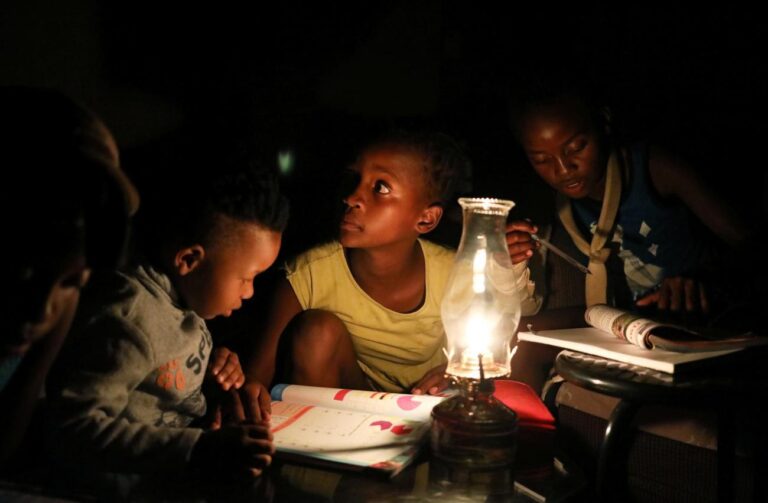
Electricity is not a political game. It is felt in homes, in businesses, in clinics and in farms. When engineers are fired on weak grounds, the risk of system instability rises. Outages last longer. Repairs take more time. Businesses lose stock. Pumps stop working. Emergency calls take longer to resolve.

A responsible board would understand this. A responsible minister would step in before the situation spirals into full crisis.

What should happen now

The board should stop this reckless path and commission an independent technical review. The engineers facing suspension deserve due process. Their knowledge should be protected rather than purged. External partners like Eskom and EDM should be reassured, in clear and honest terms, that LEC remains guided by expertise and not by factional motives.

If this does not happen, then the country must prepare for a darker and more expensive future. An electricity utility does not survive long when competence is sacrificed for politics. And Basotho will carry the cost for decisions made by people who refuse to listen to those who actually understand the system.

Fire Them or Face Us as RFP MPs Issue Ultimatum to Matekane

0

Maseru

Revolution for Prosperity backbenchers have placed Prime Minister Sam Matekane under intense pressure, insisting he must respond to their demands to remove cabinet ministers accused of corruption by tomorrow.

According to several MPs who spoke to Lesotho Tribune, the group of nineteen legislators is no longer willing to tolerate what they view as a slow and protective approach toward ministers implicated in questionable conduct. One MP said the group expects a firm commitment from Matekane by Monday, noting that failure to act will force the MPs to explore political alternatives.

“We will be forced to weigh our options as MPs, because contrary to what people who are misleading Matekane think, we have options and we will exhaust them,” the MP told this publication.

Another MP was more blunt, warning that the credibility of the revolution itself is on the line. “We promised Basotho clean revolutionary government, it is clear that at this pace we are failing them. We need to course correct and that will happen,” the MP said.

Several MPs confirmed that while they remain committed to the party, they will not compromise on the principle of clean governance. They insist that Matekane must demonstrate decisive leadership by removing ministers at the centre of repeated accusations, procurement disputes, and alleged ethical breaches.

Lesotho Tribune reached out to Matekane’s spokesperson for comment, but no response was available at the time of publication.

Whose system is it?A secret formula to success

0

A Continent More Than Sixty: Reflections on the Post-colonial Promise

Dating back to 1960, the Year of Africa, marked by the independence of 17 African nations, culminated African independence movements. As Independent Lesotho turns sixty years next year, more than half of Africa’s 54 countries havesixty years and counting since they gained independence, but Africa has a very bleak 60-plus years’ record to show because the vestiges of colonialism have now more than ever accentuated themselves like permanent scars. Culprits of underdevelopment like poverty, high unemployment rate, high infant mortality rate, low life expectancy, corruption, poor access to health care are common phenomena, which want to entrench themselves permanently, rendering Africa as a failed continent.  

In retrospect, the democratic model that Lesotho and most African countries have been pursuing for decades after independence needs to be re-examined. It has largely been a copy-and-paste caricature of Western democracy with little adaptation to each nation’s unique circumstances.

The African proverb says, “even the smallest drum can one day call the entire village to attention.” At only 37, Ibrahim Traore of Burkina Faso has risen to popularity because he represents an unequivocal departure from the traditional way of governing that has come to be expected from post-colonial African leaders. His way of doing things seems to be working for his country so far and provides at least to some degree, a rudimentary model of the teachings of Franz Fanon.

Frantz Fanon viewed the colonial legacy as a violent and psychological imposition that distorted the identity of the colonized. He argued that liberation requires a cultural and psychological “de-alienation” through the reclamation of national identity. He contended that true decolonization requires not just political independence, but the “revolutionary dismantling of the colonial state” and governing structures thatguarantee the removal of the permanent scars on the psyche of the colonised peoples.

But for the most part, the majority of African states use the Western democratic model, which tends to follow 4- or 5-year cycles and, when an incumbent government loses power, a fresh regime takes over and abandons the previous government’s development trajectory. Sadly, in most cases, the new governments tend to throw away “the baby with the bath water” and start afresh, a cycle which is repeated all the time,condemning Africa to permanent stasis.

Chinese Experiencethe Development Path Suited to its National Conditions

Lesotho, along with other nations on the African continent, could take a leaf from the just-ended recommendations of 15thFive-Year Plan by the People’s Republic of China, which they can adapt to their own unique circumstances to chart home-grown, organic development trajectories.

Now officially the second-largest economy on the globe, thePeople’s Republic of China and the Communist Party of China’s“whole process people’s democracy” is a tried and tested development model that has proven effective and efficient, which puts the people front and centre.

By contrast, the colonial education system is one of the most potent weapons that has ensured the imperial system continues under the neo-colonial era in a very subtle but effective way. Their understanding of “development” revolves around Western models, which have proven to be largely inappropriate or unsuitable for the needs of African communities, especially because they are rigidly prescriptive in nature with little or no room for adaptation.

This is particularly apparent in the IMF and World Bank’s one-size-fits-all prescriptions for austerity, a solution which has repeatedly failed, and there are plenty of examples of its failures in Africa, Latin America and Asia.

China’s approach to Africa’s development is that each country has unique characteristics around which it can develop a governance model that will lift its people out of poverty. 

China has proven itself consistently in breaking and surmounting barriers and frontiers which were said to be impenetrable, including successfully lifting and extricating hundreds of millions of its citizens out of poverty in just a few decades, a fact which even those in the global north acknowledge all the time.

15th Five-Year PlanA Vivid Example of the Whole Process Peoples Democracy 

Here is why looking up to China’s historical experience could help. The Asian giant’s success is clear for all nations to see.Coincidentally, the Five-Year Plans started way back in 1953, the same year President Xi was born, which embodies unswerving determination. The fact that China judiciouslypursues continuity and consistent planning is clear from the outset. The recommendations for formulating the 15th Five-Year Plan, with high-quality development as the main focus, emphasises domestic technological innovation and indigenizing critical technologies to reduce dependence on foreign suppliers, particularly in key areas such as aerospace, quantum computing and artificial intelligence.

Xi Jinping, general secretary of the CPC Central Committee, headed the drafting group and played a decisive role in formulating the recommendations. The drafting of the recommendations was marked by openness and inclusiveness. Six research teams were dispatched to 12 provincial-level regions and met with local officials and visited 66 primary-level organizations, including enterprises, communities and schools.Around the same time, public opinions were solicited on the new plan during a month-long online consultation campaign. 

The initiative drew over 3.11 million valid submissions, yielding more than 1,500 constructive suggestions across 27 topics. Atotal of 2,112 suggestions had been collected from various regions, departments and sectors, resulting in 218 revisions to the document. During the fourth plenary session of the 20th CPC Central Committee, 168 members and 147 alternate members of the CPC Central Committee discussed the draft recommendations and proposed further refinements.

“It is fair to say that the drafting work for this document is yet another vivid example of Intra-Party Democracy and Whole Process People’s Democracy in action”, President Xi said, clearly showing that this inclusive process demonstrates that China’s planning is not an exercise in bureaucracy, but a living example of consultative governance in practice—an embodiment of the “whole-process people’s democracy” that aligns national vision with grassroots participation.

Every organisation has a secret formula to success. I think the active ingredient and catalyst for the secret formula to success for CPC is the party’s uncompromising people’s ownership, people-centeredness, Intra-party democracy and the whole process people’s democracy. 

High-standard Opening Up and Pursuing Common Development with Countries Around the World

The recommendations of the 15th Five-Year Plan also seek to continue expanding high-standard opening up. China seeks to build a community with a shared future for humanity that is better prepared for external shocks while continuing to expand high-level global engagement on the basis of genuine multilateralism.

President Xi Jinping said, “Countries cannot thrive without an international environment of open cooperation, and no country can afford to retreat to self-imposed isolation,”“Multilateralism is the shared aspiration of the people and the overarching trend of our time. It provides an important underpinning for world peace and development.” during the Virtual BRICS Summit held on September 8, 2025.

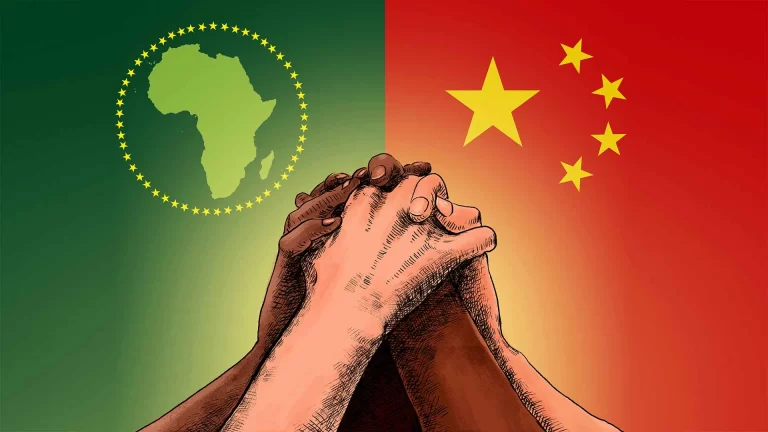
The great leadership that the People’s Republic of Chinaexemplifies beyond its borders anchors and strengthens many international organizations of which China is a member state,like the Shanghai Cooperation Organization (SCO), BRICS, FOCAC, APEC, Asian Development Bank(ADB), etc. Through FOCAC (Forum on China-Africa Cooperation) and BRI Belt and  Road Initiative, Africa has experienced the mushrooming and crisscrossing of edificial and infrastructural landmarks of ports, airports, bridges, schools, roads, and myriad developmentprojects in agriculture, health, energy, etc. that blanket the continent of Africa.

Even more interesting for China’s partners, like Lesotho, is the fact that China always presents its Five-Year Plans with the rest of the global economy in mind, rightly so, bearing in mind the world is a complex web of interdependence and China now plays a key role in different sectors globally. Therefore, a stable and prosperous China inevitably spurs global growth and helps stabilise a world facing growing uncertainty, especially in the post-COVID era.

Building Systems That Reflect the People’s Rhythm

There is a hymn that says “once to every man and nation, comes the moment to decide. In the strife of the truth with falsehood. For the good and evil side”. This time, the lessons should be thoughtfully adapted to Lesotho or any other African country’s unique culture, circumstances, and needs after thorough consultations among communities.

The contemporary history of the People’s Republic of China has a miracle that embodies principles of critical and thorough planning, opening up, a socialist market economy, and an objective & forward-looking ideology. Deng Xiaoping, chief architect of China’s socialist reform and opening up and modernization, is indeed a name to conjure with in the subject of the practicability of governance systems. In one of his thoughts, he made an analogy that “it does not matter whether the cat is black or white; as long as it catches mice,” an economic philosophy which states that the effectiveness and efficiency of a system or method justifies its deployment and existence than its mere colour or look or common belief.

An ancient African proverb says, “All monkeys cannot hang on the same branch.” There are limits to a single resource, whether it’s wisdom, a system, or a natural resource. Everyone’s life situation is different, so there is a need for diversity, balance and individual paths for progression, growth and success to be realized.

It is therefore incumbent upon those in the global south especially sub-Saharan Africa, whether through BRI, FOCAC or BRICS to deftly choose and create smart areas of cooperation and linkages with China, that will benefit them and repatriate sound development and capacity building as the People’s Republic of China traverses the 2026 to 2030 15th Five-Year Plan period.

Surely through the Global Civilization Initiative, which is currently in high cultural exchange throttle, Africa can seek to hold China’s hand in exchanging its best practices as it implements key 15th Five-Year Plan areas spanning High-Quality development, technological self-reliance, industrial modernization, indigenization of aerospace, quantum computing, AI, as well as deepening economic reforms that promote high-standard opening up.

SA Intensifies Efforts to Combat GBV

0

Maseru

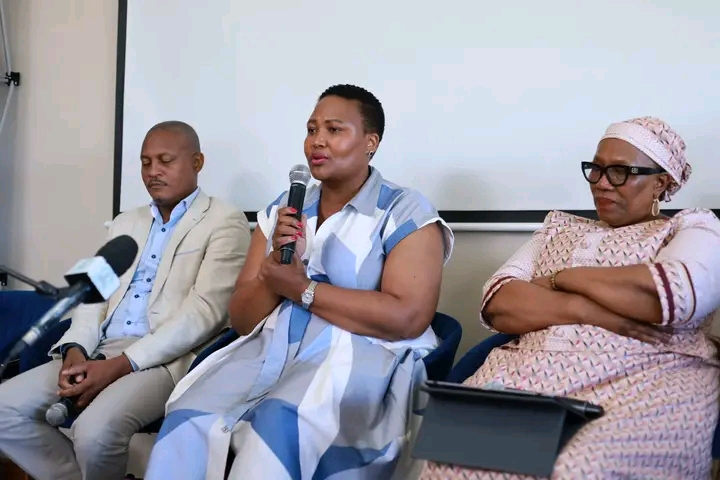
The Southern Africa region hosted a crucial two-day Strategic Dialogue and Stock-Take Joint Sub-Regional Initiative to address the scourge of Gender-Based Violence (GBV) against women and girls in Maseru this week. 

The event brought together resident coordinators, donors and partners from Botswana, Eswatini, Lesotho, Namibia, South Africa and Zambia to accelerate progress towards achieving the Sustainable Development Goals (SDGs), particularly SDG 5.

In her welcoming remarks, United Nations Resident Coordinator in Lesotho, Amanda Khozi Mukwashi, highlighted the alarming prevalence of GBV in the Southern African region which undermines women and girls’ rights to safety, education and economic empowerment. 

“GBV remains the most widespread human rights violation across Southern Africa”, she said, emphasising that ending GBV is key to realising SDG 5 and progress on other goals such as health, education and poverty reduction.

Despite progress made, agencies continue to face persistent challenges, including funding gaps, access to justice and weak enforcement of laws and policies. 

These barriers hinder collective efforts to create safe and equal societies for women and girls. The dialogue, therefore, aimed to address these challenges and explore sustainable strategies for GBV prevention and response.

On the second day of the event, participants focused on partnerships, financing and charting the way forward for ending GBV across Southern Africa. 

A roundtable with donors and partners discussed financing GBV interventions, identifying opportunities for joint action, co-financing and innovative resource mobilisation across the region.

This event was part of regional efforts to accelerate progress towards achieving the SDGs. The spotlight initiative, a global effort to eliminate violence against women and girls, supported this critical dialogue.

The outcome of this dialogue is expected to inform a comprehensive regional strategy to address GBV, strengthen partnerships and mobilise resources to support GBV prevention and response initiatives. 

As Mukwashi emphasised, working together creates a Southern Africa where women and girls can live free from violence, fear and discrimination.

The dialogue also brought together diverse stakeholders, including governments, civil society organisations, donors and UN agencies, to deepen collaboration and commitment to ending GBV. 

The collective efforts of these partners will be crucial in driving progress towards a GBV-free Southern Africa.

As the region reflects on progress made and challenges remaining, the focus now shifts to implementation and action. The Maseru dialogue has set the stage for a renewed commitment to eliminating GBV and promoting gender equality across Southern Africa.

Independent business & current affairs journalism · Lesotho Subscribe — M85/month
| Independent business & current affairs journalism · Lesotho