



A Continent More Than Sixty: Reflections on the Post-colonial Promise
Dating back to 1960, the Year of Africa, marked by the independence of 17 African nations, culminated African independence movements. As Independent Lesotho turns sixty years next year, more than half of Africa’s 54 countries havesixty years and counting since they gained independence, but Africa has a very bleak 60-plus years’ record to show because the vestiges of colonialism have now more than ever accentuated themselves like permanent scars. Culprits of underdevelopment like poverty, high unemployment rate, high infant mortality rate, low life expectancy, corruption, poor access to health care are common phenomena, which want to entrench themselves permanently, rendering Africa as a failed continent.
In retrospect, the democratic model that Lesotho and most African countries have been pursuing for decades after independence needs to be re-examined. It has largely been a copy-and-paste caricature of Western democracy with little adaptation to each nation’s unique circumstances.
The African proverb says, “even the smallest drum can one day call the entire village to attention.” At only 37, Ibrahim Traore of Burkina Faso has risen to popularity because he represents an unequivocal departure from the traditional way of governing that has come to be expected from post-colonial African leaders. His way of doing things seems to be working for his country so far and provides at least to some degree, a rudimentary model of the teachings of Franz Fanon.
Frantz Fanon viewed the colonial legacy as a violent and psychological imposition that distorted the identity of the colonized. He argued that liberation requires a cultural and psychological “de-alienation” through the reclamation of national identity. He contended that true decolonization requires not just political independence, but the “revolutionary dismantling of the colonial state” and governing structures thatguarantee the removal of the permanent scars on the psyche of the colonised peoples.
But for the most part, the majority of African states use the Western democratic model, which tends to follow 4- or 5-year cycles and, when an incumbent government loses power, a fresh regime takes over and abandons the previous government’s development trajectory. Sadly, in most cases, the new governments tend to throw away “the baby with the bath water” and start afresh, a cycle which is repeated all the time,condemning Africa to permanent stasis.
Chinese Experience—the Development Path Suited to its National Conditions
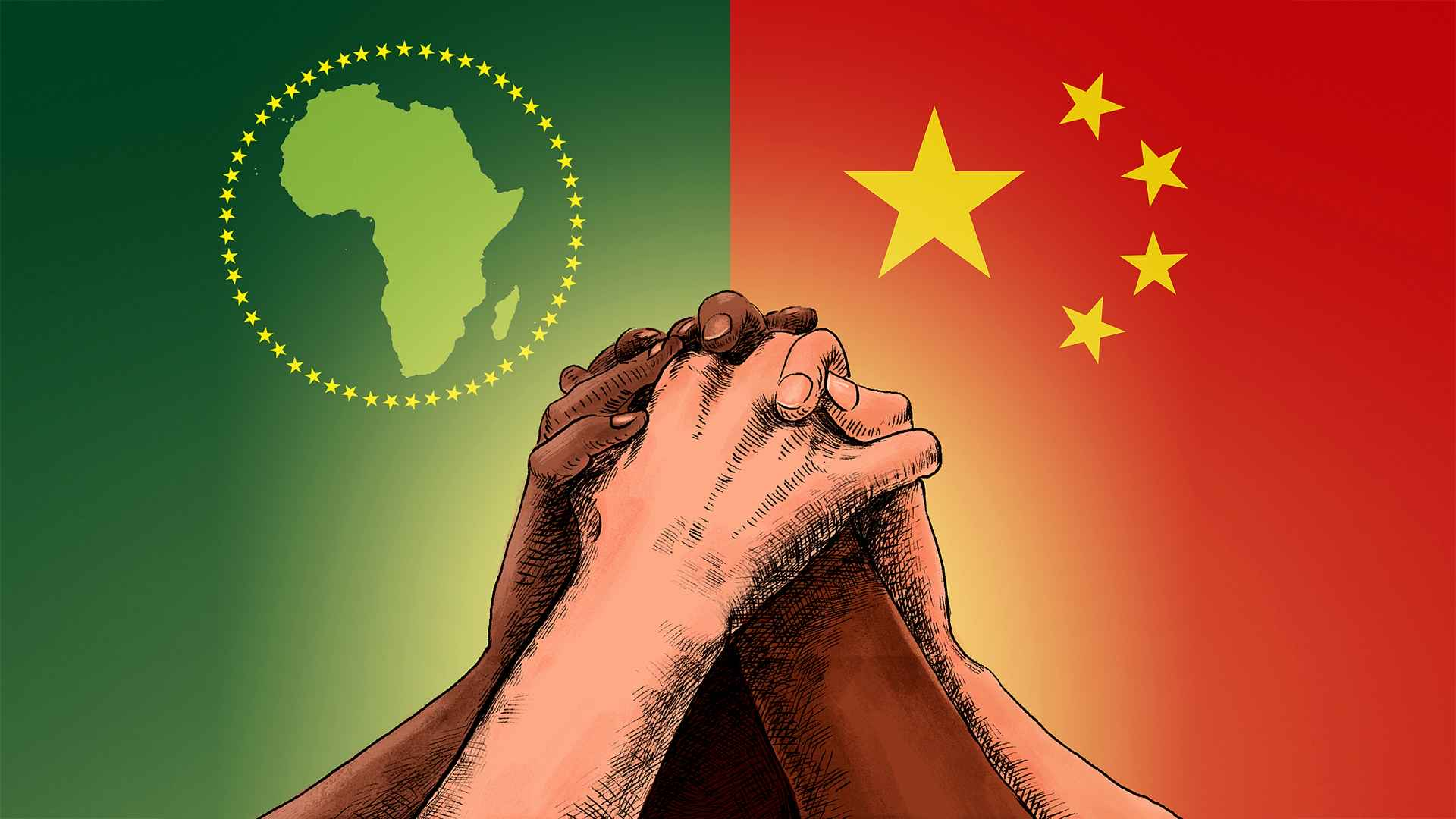
Lesotho, along with other nations on the African continent, could take a leaf from the just-ended recommendations of 15thFive-Year Plan by the People’s Republic of China, which they can adapt to their own unique circumstances to chart home-grown, organic development trajectories.
Now officially the second-largest economy on the globe, thePeople’s Republic of China and the Communist Party of China’s“whole process people’s democracy” is a tried and tested development model that has proven effective and efficient, which puts the people front and centre.
By contrast, the colonial education system is one of the most potent weapons that has ensured the imperial system continues under the neo-colonial era in a very subtle but effective way. Their understanding of “development” revolves around Western models, which have proven to be largely inappropriate or unsuitable for the needs of African communities, especially because they are rigidly prescriptive in nature with little or no room for adaptation.
This is particularly apparent in the IMF and World Bank’s one-size-fits-all prescriptions for austerity, a solution which has repeatedly failed, and there are plenty of examples of its failures in Africa, Latin America and Asia.
China’s approach to Africa’s development is that each country has unique characteristics around which it can develop a governance model that will lift its people out of poverty.
China has proven itself consistently in breaking and surmounting barriers and frontiers which were said to be impenetrable, including successfully lifting and extricating hundreds of millions of its citizens out of poverty in just a few decades, a fact which even those in the global north acknowledge all the time.
15th Five-Year Plan—A Vivid Example of the Whole Process People’s Democracy
Here is why looking up to China’s historical experience could help. The Asian giant’s success is clear for all nations to see.Coincidentally, the Five-Year Plans started way back in 1953, the same year President Xi was born, which embodies unswerving determination. The fact that China judiciouslypursues continuity and consistent planning is clear from the outset. The recommendations for formulating the 15th Five-Year Plan, with high-quality development as the main focus, emphasises domestic technological innovation and indigenizing critical technologies to reduce dependence on foreign suppliers, particularly in key areas such as aerospace, quantum computing and artificial intelligence.
Xi Jinping, general secretary of the CPC Central Committee, headed the drafting group and played a decisive role in formulating the recommendations. The drafting of the recommendations was marked by openness and inclusiveness. Six research teams were dispatched to 12 provincial-level regions and met with local officials and visited 66 primary-level organizations, including enterprises, communities and schools.Around the same time, public opinions were solicited on the new plan during a month-long online consultation campaign.
The initiative drew over 3.11 million valid submissions, yielding more than 1,500 constructive suggestions across 27 topics. Atotal of 2,112 suggestions had been collected from various regions, departments and sectors, resulting in 218 revisions to the document. During the fourth plenary session of the 20th CPC Central Committee, 168 members and 147 alternate members of the CPC Central Committee discussed the draft recommendations and proposed further refinements.
“It is fair to say that the drafting work for this document is yet another vivid example of Intra-Party Democracy and Whole Process People’s Democracy in action”, President Xi said, clearly showing that this inclusive process demonstrates that China’s planning is not an exercise in bureaucracy, but a living example of consultative governance in practice—an embodiment of the “whole-process people’s democracy” that aligns national vision with grassroots participation.
Every organisation has a secret formula to success. I think the active ingredient and catalyst for the secret formula to success for CPC is the party’s uncompromising people’s ownership, people-centeredness, Intra-party democracy and the whole process people’s democracy.
High-standard Opening Up and Pursuing Common Development with Countries Around the World
The recommendations of the 15th Five-Year Plan also seek to continue expanding high-standard opening up. China seeks to build a community with a shared future for humanity that is better prepared for external shocks while continuing to expand high-level global engagement on the basis of genuine multilateralism.
President Xi Jinping said, “Countries cannot thrive without an international environment of open cooperation, and no country can afford to retreat to self-imposed isolation,”“Multilateralism is the shared aspiration of the people and the overarching trend of our time. It provides an important underpinning for world peace and development.” during the Virtual BRICS Summit held on September 8, 2025.
The great leadership that the People’s Republic of Chinaexemplifies beyond its borders anchors and strengthens many international organizations of which China is a member state,like the Shanghai Cooperation Organization (SCO), BRICS, FOCAC, APEC, Asian Development Bank(ADB), etc. Through FOCAC (Forum on China-Africa Cooperation) and BRI Belt and Road Initiative, Africa has experienced the mushrooming and crisscrossing of edificial and infrastructural landmarks of ports, airports, bridges, schools, roads, and myriad developmentprojects in agriculture, health, energy, etc. that blanket the continent of Africa.
Even more interesting for China’s partners, like Lesotho, is the fact that China always presents its Five-Year Plans with the rest of the global economy in mind, rightly so, bearing in mind the world is a complex web of interdependence and China now plays a key role in different sectors globally. Therefore, a stable and prosperous China inevitably spurs global growth and helps stabilise a world facing growing uncertainty, especially in the post-COVID era.
Building Systems That Reflect the People’s Rhythm
There is a hymn that says “once to every man and nation, comes the moment to decide. In the strife of the truth with falsehood. For the good and evil side”. This time, the lessons should be thoughtfully adapted to Lesotho or any other African country’s unique culture, circumstances, and needs after thorough consultations among communities.
The contemporary history of the People’s Republic of China has a miracle that embodies principles of critical and thorough planning, opening up, a socialist market economy, and an objective & forward-looking ideology. Deng Xiaoping, chief architect of China’s socialist reform and opening up and modernization, is indeed a name to conjure with in the subject of the practicability of governance systems. In one of his thoughts, he made an analogy that “it does not matter whether the cat is black or white; as long as it catches mice,” an economic philosophy which states that the effectiveness and efficiency of a system or method justifies its deployment and existence than its mere colour or look or common belief.
An ancient African proverb says, “All monkeys cannot hang on the same branch.” There are limits to a single resource, whether it’s wisdom, a system, or a natural resource. Everyone’s life situation is different, so there is a need for diversity, balance and individual paths for progression, growth and success to be realized.
It is therefore incumbent upon those in the global south especially sub-Saharan Africa, whether through BRI, FOCAC or BRICS to deftly choose and create smart areas of cooperation and linkages with China, that will benefit them and repatriate sound development and capacity building as the People’s Republic of China traverses the 2026 to 2030 15th Five-Year Plan period.
Surely through the Global Civilization Initiative, which is currently in high cultural exchange throttle, Africa can seek to hold China’s hand in exchanging its best practices as it implements key 15th Five-Year Plan areas spanning High-Quality development, technological self-reliance, industrial modernization, indigenization of aerospace, quantum computing, AI, as well as deepening economic reforms that promote high-standard opening up.
You have 1 free article left this month. Create a free account for 15 articles/month.
Create free account