



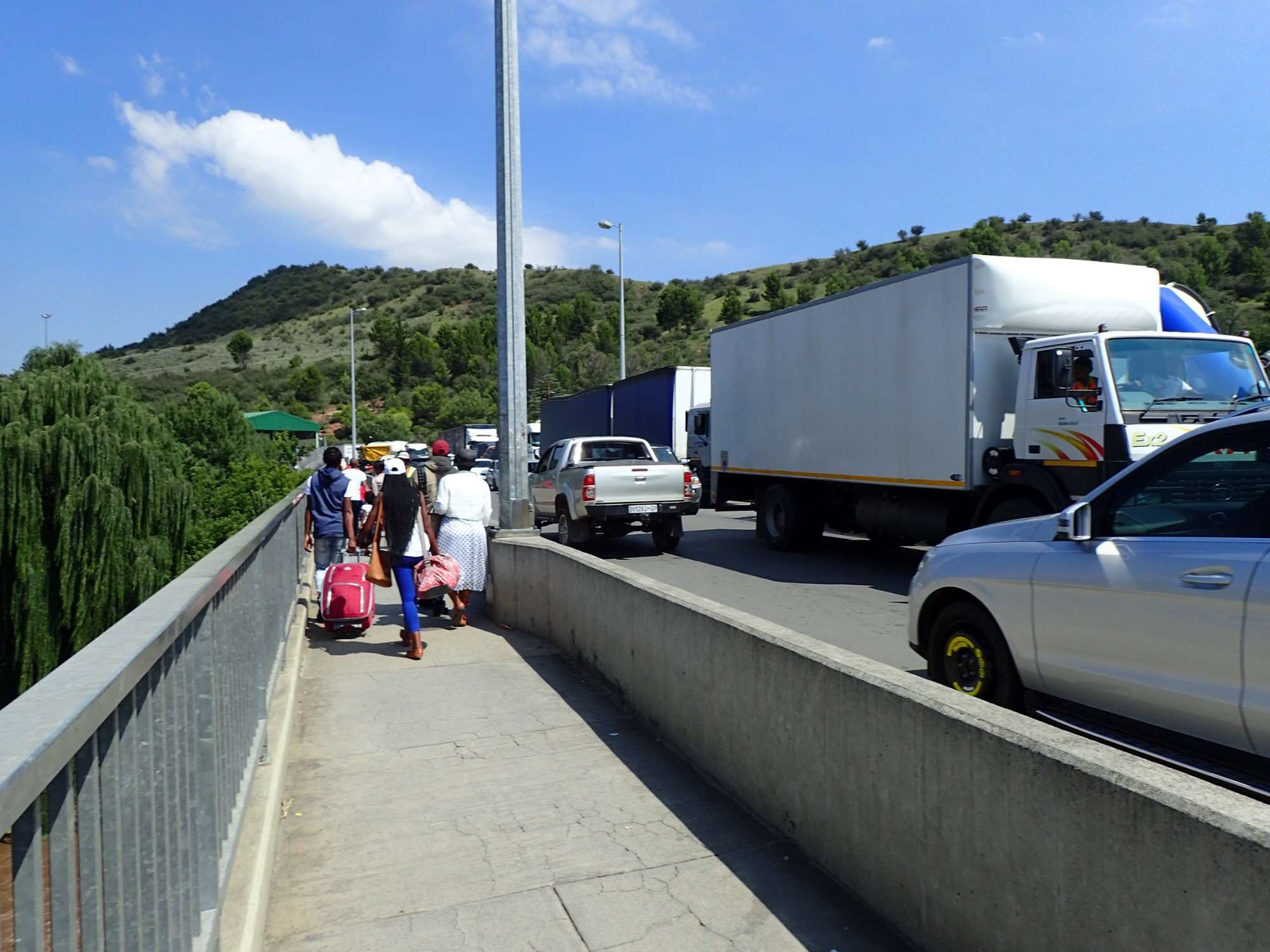
Nearly half of all Basotho say they have considered leaving. Among the educated, the young, and those with the most to give, the figure is higher still. This is not a statistic. It is a quiet verdict on what home has become.
MALEFO THINYANE · LESOTHO TRIBUNE
There is a particular kind of silence that settles over a household the morning after someone has gone. Not the silence of sleep, or of early rising, or of a house simply at rest. It is a silence with a shape to it. The shape of a person who was here and is no longer here, and who may not come back for a very long time. If they come back at all.
Lesotho knows this silence intimately. It has known it for generations. Long before any researcher put a number to it, before any Afrobarometer survey asked the question in a structured way and recorded the answer on a spreadsheet, the country had already been living the reality that the spreadsheet now confirms: nearly half of all Basotho have considered leaving. Among young people, the figure is 56 percent. Among those with post-secondary education, the people a nation builds itself with, the figure rises to 62 percent. And of those who want to leave, 72 percent name South Africa as their destination.
These are not people who hate Lesotho. That is important to say plainly, because the conversation about emigration in this country too often collapses into accusation: those who leave are disloyal, ungrateful, weak in their love of home. That framing is not only unfair. It is a way of avoiding the harder question, which is not why are they leaving but what are we failing to build that makes leaving feel like the only rational answer?
“They are not leaving because they do not love this country. They are leaving because they love their children more than they love the idea of staying.”
I want to tell you about a young woman I will call Palesa, because that is not her name and she did not ask to be written about, but her story is the kind of story that sits behind the statistics and gives them weight. Palesa finished her degree at the National University of Lesotho two years ago. She graduated with honours. She spent eight months applying for work in Maseru, in every sector she could find a door into. She went to interviews. She followed up. She dressed well, she prepared, she was, by every measure anyone could apply, ready to contribute. She received polite rejections, or silence, or the particular cruelty of the promise that we will be in touch that is never kept.
She is in Johannesburg now. She found work within three weeks of arriving. She sends money home every month. She is building something, carefully and with discipline, and when I ask her whether she thinks about coming back she is quiet for a moment before she says: one day. Not now. Maybe one day.
One day is not a plan. One day is what people say when they are not ready to say never but cannot honestly say soon.
What strikes me about Palesa’s story, and about the hundreds of stories like hers that play out quietly across this country every year, is that the decision to leave is almost never made in a single dramatic moment. It is made in accumulation. It is made in the thirty-second unanswered job application, and the electricity that goes out for the third time this week, and the road that has been waiting for repair since before anyone can clearly remember, and the conversation at a family gathering where the uncles speak of their time on the mines in South Africa with a mixture of pride and something else, something that is not quite shame but lives in the same neighbourhood.
The mines. That is the original text from which every subsequent chapter of Basotho migration is written. For well over a century, young men from these mountains have crossed the border to dig what South Africa needed dug, and returned with wages and with something harder to name: a calibration of what the world outside looks like, what it pays, what it demands, and what it offers in return. That knowledge has been passed down. It has not made Basotho love South Africa. It has made them pragmatic about it.
“One day is not a plan. One day is what people say when they are not ready to say never but cannot honestly say soon.”
Pragmatism is not disloyalty. A person who chooses to feed their family by crossing a border is not making a political statement. They are making a human one. And governments that respond to this human statement by building walls, whether literal or bureaucratic, or by moralising about national duty to people who cannot find work, are not solving the problem. They are insulting the people who have the problem.
The Lesotho government, to its credit, has begun to acknowledge migration as something to be managed rather than shamed. Bilateral labour agreements have been pursued. Programmes to prepare young Basotho for employment beyond the country have been established. The United Nations country team has framed managed migration as a legitimate development pathway, drawing the parallel to Moshoeshoe I himself, who understood that survival sometimes required strategic movement and the formation of new alliances. These are reasonable, adult responses to a structural reality.
But managed migration and retained talent are not the same ambition. One accepts the outflow and attempts to channel it. The other asks whether the conditions that generate the outflow can be changed. Both matter. The second is harder, and it is the one this country has struggled to pursue with the consistency and urgency the numbers demand.
Youth unemployment in Lesotho was 24.7 percent in 2025. That is the official figure, the measured, documented, internationally comparable figure. The lived experience suggests the real number is considerably higher once discouraged workers, those who have stopped looking because looking has produced nothing, are accounted for. These are not abstract percentages. They are mornings. They are people getting up and having nowhere to go that will value what they have to offer.
I am not writing this column to condemn anyone who has left, or who is thinking of leaving. I am writing it because the silence that follows their departure is a message, and messages that are not read do not stop arriving. They accumulate until they become something louder than silence: the gradual hollowing of a country’s most capable generation, the slow drain of the people who might, under different circumstances, have been the ones to build the thing that would have made others want to stay.
Palesa knows this. She does not speak of it with bitterness. She speaks of it with the careful, considered resignation of someone who has made peace with a choice she did not want to have to make. She would have preferred to stay. She chose, instead, to build. That those two things were incompatible is not her failure.
It is ours.