


Mohahlaula Airlines
Thursday, July 23, 2026
Home Blog Page 45

Lesotho Ready to Host its Biggest Roof of Africa Yet

0

The Lesotho Off Road Association (LoRA) is gearing up to deliver a world-class edition of the iconic Roof of Africa. This edition is set to make history and place the Mountain Kingdom firmly on the global motorsport stage.

Widely celebrated as “The Mother of Hard Enduro,” the country’s oldest and most prestigious off-road motorcycle race will take place from 19 to 22 November 2025. More than 400 riders from around the world are expected to tackle Lesotho’s unforgiving terrain. The event will roar to life in Maseru on the opening day before shifting to Ha-Lebamang, Roma, where riders will battle the mountains over the remaining three days.

This year’s edition is particularly monumental. For the first time ever, the Roof of Africa has been officially recognised by the International Motorcycling Federation (FIM) as part of the Hard Enduro World Championship (HEWC). This means the Roof of Africa 2025 will serve as the final and decisive round of the 2025 championship, the race where the new Hard Enduro World Champion will be crowned, right here in Lesotho.
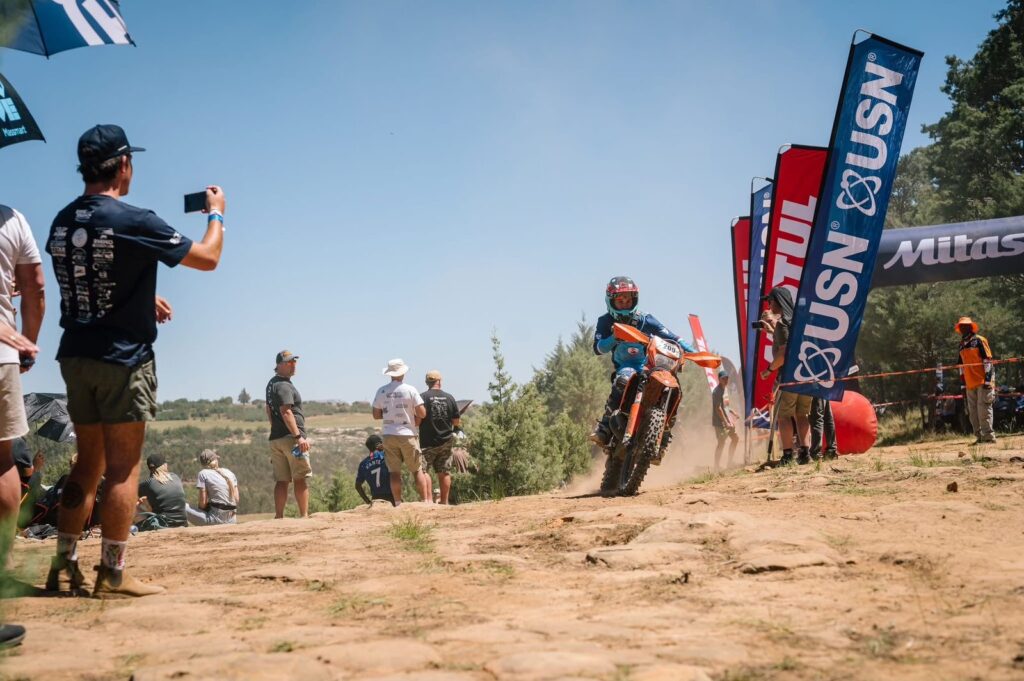
This breakthrough elevates our country onto the global motorsport map like never before. It is a proud moment for the nation, offering an opportunity to showcase its rugged landscapes, rich culture, and world-class riding terrain to international audiences, teams, and media.

While the 2024 edition attracted 506 competitors from 12 countries, the 2025 event will feature just over 400 riders from an estimated 15 nations, a more compact but even more competitive lineup. Among them will be 20 local riders eager to challenge some of the world’s best.

The international field is expected to be exceptionally strong, with top HEWC stars confirmed to compete. These include Billy Bolt, reigning giants like Manuel Lettenbichler, and Teodor Kabakchiev, as well as Lesotho’s own dominant force, Wade Young, who boasts an incredible nine Roof of Africa victories to his name.

The Roof of Africa is more than a sporting event, it is a major economic engine for the country. In 2024, the race injected an estimated M5 million into the local economy through spending on accommodation, food, transportation, and services.

With the 2025 edition now an official stop on the Hard Enduro World Championship calendar, Lesotho is set to welcome even more visitors, larger teams, and greater international exposure. The resulting financial boost is expected to surpass previous years, offering immense benefits to tourism operators, small businesses, and local communities across the race zones.

As anticipation builds, one thing is clear; Roof of Africa 2025 will be unlike any edition before it. Bigger, tougher, globally significant, and proudly Basotho. The world will be watching as Lesotho shows once again why it remains the true home of hard enduro.

Shocking Details Why LEC Procurement Manager Resigned 

0

Maseru — Sources close to the utility sector reveal that Peo Mputsoe, procurement manager at the Lesotho Electricity Company (LEC), was coerced into resigning after two rural-electrification contracts were allegedly pressured by the Ministry of Energy to be awarded to companies owned by MPs from the governing Revolution for Prosperity (RFP). The identities of the MPs are known to this publication but are being withheld for now.

According to sources, the pressure came directly from the Principal Secretary at the Ministry of Energy, Tankiso Phapano, who demanded that the contracts be awarded to the named companies rather than via open and competitive procurement. Mputsoe reportedly refused and was subsequently pushed out.

While Phapano did not respond to repeated questions from this newspaper, Mputsoe likewise declined to comment, citing company and legal constraints.

Procurement irregularities at LEC: A disturbing track record

The story gains traction when viewed against the backdrop of documented procurement failures at LEC. For example, in one major scandal a contract worth M1.2 million was awarded for four-core cable to a QwaQwa-based company with no visible ties to the electrical sector. The cable supplier lacked certification from the NRCS or SABS and the entire process was handled directly by Mputsoe without proper tendering and oversight.

Further, the Public Accounts Committee charged Mputsoe with ignoring procurement regulations, opening bid boxes without bidders present, relying on limited competitive tendering when that did not seem justified, and awarding tenders using “emergency” procurement when standard procedures were viable.

Against that record, the alleged demand by Phapano for specific companies to receive contracts raises grave questions about governance, transparency and accountability in Lesotho’s power sector.

Phapano himself was strongly reprimanded by the PAC for meddling in the affairs of LEC, a private company with its own Board of Directors and Management. Foolishly Phapano had made a remark that he has the power over LEC.

Why this matters

Contracts for rural electrification should strengthen service delivery, increase access to electricity and reduce poverty in remote areas. But if contract awards are being driven by political or personal interests rather than merit, the country loses on three fronts:

  • Technical capacity and institutional integrity: When a senior procurement manager with experience resists irregular demands and is forced out, the institutional memory and internal resistance to mal-practice erode.
  • Stakeholder trust: International partners such as the World Bank or regional utilities expect procurement transparency. A pattern of interference by senior ministry officials damages that trust.
  • Financial risk: As previous procurement scandals at LEC show, inflated costs, poor suppliers and lack of documentation lead to fiscal leakage and higher cost for consumers.

The unanswered questions

  • Did Phapano formally instruct Mputsoe to award the contracts to the RFP-linked companies or was it informal pressure?
  • Were the two rural electrification contracts tendered publicly, or was the process manipulated to favour the preferred companies?
  • Have the RFP-linked companies met the technical standards and eligibility required for contracts of this type?
  • What is the status of the investigation into the earlier cable procurement scandal and how does this recent allegation connect?

Response sought and silence received

When approached, PS Phapano did not provide a response by publication time. The office of the Ministry of Energy acknowledged receipt of our queries but offered only that “the ministry will respond in due course”. Mputsoe also declined to be interviewed, stating he was bound by LEC policy not to speak to media on personnel matters.

Conclusion

If the allegations hold true, this episode would be yet another sign that governance systems at both LEC and the Ministry of Energy are malfunctioning. Lesotho can ill afford to see its rural-electrification drive hijacked for political favouritism. Basotho deserve that contracts be awarded on merit, that spending is justified, and that public servants who raise the alarm are protected, not punished. The bigger question now: Will Parliament and oversight institutions step in or allow this to become just another scandal that fades away?

NECDOL Sounds Alarm Over Rising Violence Against Children

0

Maseru

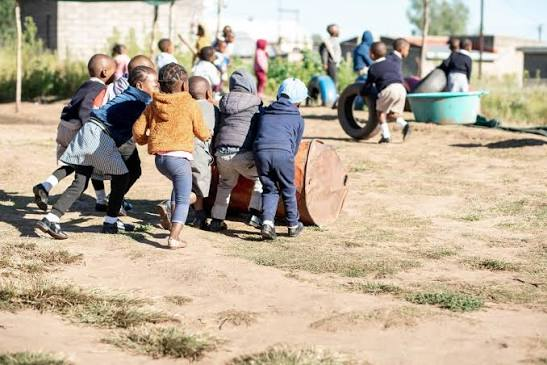
The Network of Early Childhood Development of Lesotho has issued a strong public warning over what it describes as an alarming surge in violence against children across the country. The organisation says recent incidents point to a disturbing pattern of abuse, negligence and brutal discipline in schools and childcare facilities.

In its statement, NECDOL recalls that it first raised concern in May 2025 after the rape of a two-year-old at a day-care centre and the death of a five-year-old attributed to a teacher’s negligence. Those incidents, together with earlier cases involving the rape, murder and abuse of children under the age of eight, formed part of what the organisation calls a worsening crisis that has not been met with the urgency it demands.

The latest reports of young children and adolescents suffering serious bodily harm at the hands of teachers under the guise of discipline have renewed fears about the safety of learners in schools. NECDOL says it is deeply troubled that spaces which should offer protection and learning are instead becoming sources of fear for children and parents.

The organisation is calling on authorities and the Ministry of Education and Training to take immediate action. It insists that all related teachers and schools must be held accountable. NECDOL cites the Education Act of 2010 which states that a learner must not be subjected to cruel, inhuman or degrading punishment, and emphasises that no form of discipline should ever lead to hospitalization or lasting trauma.

NECDOL is also appealing to communities to prioritise the protection and well-being of all children. Schools and neighbourhoods, it argues, should be safe spaces where children can grow, play and become productive members of society. The organisation warns that if urgent steps are not taken, the continued exposure of children to violence will create long-term emotional, psychological and social harm.

Quoting the Sesotho phrase “Ngoana ke oa motse kaofela,” the statement reminds Basotho that every child belongs to the entire community and that everyone has a responsibility to protect them.

NECDOL says the future of Lesotho’s children depends on decisive action from authorities and communities, not only a few individuals. It warns that failing to confront the growing pattern of abuse will amount to neglecting the country’s most vulnerable citizens.

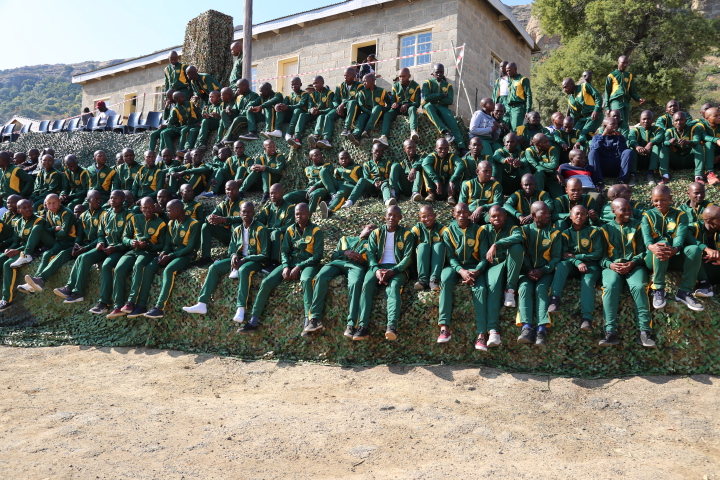
Second LDF Trainee Dies 

0

Maseru

The Lesotho Defence Force has recorded a second trainee death since the start of its current military training intake, raising fresh concerns about the conditions and safety protocols at the training facility.

Sources confirmed to Lesotho Tribune this morning that another recruit has died, barely a week after the first fatality. Details surrounding the latest death remain scarce, with the LDF yet to issue an official statement.

Families of trainees and human rights advocates are already demanding transparency, saying two deaths in such a short period signal a deeper problem that cannot be dismissed as isolated incidents.

Lesotho Tribune has reached out to the LDF for comment. No response had been received at the time of publication.

“Fire Your Corrupt Ministers or We Sink You” RFP MPs

0

The atmosphere was tense from the moment Prime Minister Sam Matekane walked into the meeting room, flanked by Ministers Shelile and Nthati Moorosi. Before the meeting could even begin, the twenty RFP backbenchers, already agitated by weeks of political stalemate, told the two ministers to leave. Their message was blunt: they were not part of this meeting. The Prime Minister looked unsettled but complied with their demand. The ministers walked out in silence.

Opening Confrontation

Once the door closed, the MPs wasted no time. They accused Matekane of shielding corrupt ministers, listing portfolios they believed had become dens of rent-seeking, including Energy, Police, Home Affairs, and Local Government. They demanded that these ministries be cleaned up and new ministers appointed. Some MPs, notably Maretlane, Moroke, Dada, and Motsoane, dominated the exchanges. Their tone mixed frustration with defiance. They made it clear that until Matekane fired the implicated ministers, they would not return to parliament or approve the upcoming budget.

Matekane’s Defence

Matekane responded calmly at first. According to the recording, he told the MPs that the Directorate on Corruption and Economic Offences (DCEO) had advised him that “no one is corrupt unless they have been caught with bribe money.” He insisted he could not act on rumours or political pressure without tangible evidence. “You can’t expect me to fire ministers on hearsay,” he said, adding that the DCEO had trap money mechanisms for such cases, but none of his ministers had been caught.

He then turned defensive, saying he could personally vouch for the integrity of the very ministers the MPs wanted dismissed. He told them they were not corrupt, describing them as dedicated members of his cabinet. The room grew louder, with some MPs openly scoffing at his words.

The Phapano Question

Attention then shifted to the controversial figure of PS Phapano. MPs accused the principal secretary of wielding excessive influence and being part of the problem. Matekane dismissed their grievances outright. “Phapano is not going anywhere,” he declared. “He is very helpful to the government.” That remark drew groans from the MPs, some whispering that Matekane was protecting insiders while ignoring the party’s broader concerns.

On Coalition Partners

When pressed on the issue of firing coalition partners from the Alliance of Democrats (AD) and Basotho Action Party (BAP), Matekane’s tone hardened. He said the decision would not be his alone. “That is not my call,” he told them. “It is a party issue, not a government one.” The MPs murmured in disagreement, arguing that the coalition had diluted RFP’s power and allowed rival factions to thrive at their expense.

Power Play and Ultimatum

The discussion soon turned strategic. MPs said they wanted clear representation in cabinet, proposing that Dada, Motsoane, and Maretlane be appointed ministers. They argued that those who had stood by Matekane through tough times deserved to lead key ministries. The Prime Minister listened but offered no promises.

When it became clear that Matekane would not yield, the MPs took a collective stance. “You have seven days,” one of them said. “If we don’t get answers, we will not attend parliament or pass your budget.” It was a direct threat that could paralyze the government.

Closing Moments

As the meeting drew to a close, the air was thick with resentment. Matekane stood firm, maintaining that leadership required patience and due process. The MPs, however, left with visible anger and disillusionment. Some shook their heads as they walked out, others vowed to stand by their ultimatum.

By the end of the meeting, one fact had become clear: the Revolution for Prosperity is now divided between a Prime Minister who believes he must protect his ministers until proven guilty and MPs who believe he has already betrayed the moral high ground that brought him to power. The next seven days will reveal which side bends first.

Inside the 500 Tractors Hoax

0

Maseru — Prime Minister Sam Matekane’s much-publicised “500 tractors scheme” is beginning to look like another political mirage after a Lesotho Tribune undercover investigation revealed that farmers hoping to benefit are being turned away under stringent commercial lending conditions.

Two weeks ago, the government announced with fanfare that it had signed an agreement with Lesotho Post Bank, meant to unlock financing for farmers to buy tractors under what the Prime Minister called a national mechanisation drive. The deal involved the Ministry of Finance, acting as guarantor, and the Ministry of Agriculture and Food Security, under a Partial Credit Guarantee Scheme.

During the signing ceremony, Lesotho Post Bank stated that government would deposit M50 million as a guarantee fund. Out of this, farmers would supposedly enjoy a 30 percent subsidy on the cost of tractors and accessories, keeping prices “affordable.” The bank further explained that farmers would apply in writing, after which it would perform due diligence before recommending applicants to the Ministry’s deputy principal secretary for approval.

That was the official narrative. What Lesotho Tribune discovered tells a different story.

On the Ground: Promises Collide With Policy

On Monday, a Lesotho Tribune reporter went undercover alongside a group of hopeful farmers who attended a briefing session at Lesotho Post Bank.

The tone of the meeting quickly turned uneasy. According to the bank official who addressed the group, applicants would be required to meet normal commercial lending standards, including proof of income, financial statements, a lease showing control of at least 10 hectares of land, and 30 percent collateral.

Only after these hurdles would the bank “assess the bankability” of each applicant. The moment those words were uttered, murmurs of anger and disbelief spread across the room. Farmers who had expected a state-backed subsidy realised they were being asked to meet conditions few smallholders can fulfil.

When asked specifically about the 200 tractors reportedly reserved for youth, the official said she was “not aware of such an arrangement.”

The same official later added that the Partial Credit Guarantee Scheme was not new, explaining that it began during the Majoro administration in 2021, and that “the current government merely increased the guarantee from M50 million to M200 million.”

Conflicting Messages and Silence

These revelations directly contradict Prime Minister Matekane’s public statements suggesting the scheme would immediately make tractors accessible to ordinary farmers. Instead, what appears to exist is a standard bank-loan facility with partial government backing, hardly a subsidised mass programme of 500 tractors.

Lesotho Tribune contacted both Lesotho Post Bank and the Office of the Prime Minister to reconcile these conflicting accounts.

The bank said its spokesperson responsible for media queries “will be available next week.” Repeated calls and written questions to the Prime Minister’s office went unanswered by press time.

Farmers Feel Misled

For many farmers who attended the session, the experience felt like a betrayal. “We were told this was a government project that would help us own tractors,” one attendee said after the meeting. “Now they are asking for collateral and ten hectares, they knew we wouldn’t qualify.”

As frustration grows, agricultural analysts warn that the government’s credibility is at stake. What was marketed as a flagship empowerment initiative now looks like a repackaged credit programme, raising questions about whether Lesotho’s leaders are inflating development announcements for political effect.

—————————————————————————

Editorial Note

If the Prime Minister’s office fails to clarify how the “500 tractors scheme” differs from previous credit-guarantee programmes, the public will be left to conclude that the promise was, at best, exaggerated and at worst, misleading. For farmers already battling rising input costs, the hope of mechanised agriculture may once again be postponed by political spin.

—————————————————————————

LNDC Sleeps as Hippo Knitting Bleeds from AGOA Uncertainty

0

Maseru – Lesotho’s textile industry is bracing for another blow after Hippo Knitting (Pty) Ltd announced plans to retrench 420 workers early next year, citing ongoing uncertainty over the renewal of the African Growth and Opportunity Act (AGOA).

In a letter dated November 7 and addressed to the Department of Labour, trade unions, and the Ministry of Trade, Managing Director Grace Lin said the company had been forced to make “a further retrenchment” effective January 25, 2026, as U.S. market access under AGOA remains unconfirmed.

The U.S. legislation, which provides duty-free access for eligible African countries, has long underpinned Lesotho’s garment exports. But with Washington yet to announce a renewal and customers pulling back orders, production at Hippo Knitting has dropped to levels “too low to sustain operations.”

The company warned that the absence of AGOA renewal has rendered its products uncompetitive in the U.S. market, triggering “a severe and sustained decline in orders.” Despite efforts to cut costs and find new markets since June 2025, Hippo Knitting said it has been unable to generate enough volume to keep its factory fully operational.

The firm said it would start formal planning to wind down operations by July 2026 if conditions do not improve. “We will conduct this process in strict compliance with all legal consultation and labour requirements,” the letter stated.

Lin made an urgent appeal for government intervention, calling for “freezing rental obligations and providing financial support to help sustain operations.” She warned that the remaining jobs now depend on “swift and collective action.”

The textile and apparel sector is one of Lesotho’s largest private employers, with tens of thousands of jobs linked to AGOA exports to the United States. If Hippo Knitting proceeds with its retrenchments, it would mark another significant setback for a sector already hit by global uncertainty and weak demand.

Consultations with labour representatives and government officials are expected in the coming weeks.

RFP Backbenchers Are Right to Rebel Against Matekane’s Arrogance

It was bound to happen. Power, even when wrapped in the language of reform, eventually collides with its own creation. The revolt by Revolution for Prosperity (RFP) backbenchers against Prime Minister Sam Matekane is not a betrayal of the movement but a necessary correction. What began as murmurs of discontent among loyalists has matured into open defiance, an unmistakable signal that even inside the ruling party, patience with Matekane’s one-man style of governance has reached its limit.

A Party Built on Personality, Not Process

When the RFP was launched in 2022, it was not a political party in the traditional sense. It was an experiment in populist technocracy, a billionaire’s promise to run government like a business. That idea resonated with a disillusioned electorate tired of corruption and paralysis. But as the saying goes, campaign charisma cannot substitute for institutional discipline.

Since taking office, Matekane has governed through personal networks rather than party structures. Cabinet decisions often emerge as pronouncements instead of outcomes of consultation. Those who disagree are quietly sidelined. The backbenchers’ boycott of Parliament this week is therefore not mere rebellion. It is an assertion that Parliament must be more than an applause chamber.

The Backbenchers’ Case Has Merit

The MPs have named names, accusing Ministers Matjato Moteane, Nthati Moorosi, Motlatsi Maqelepo, Ntoi Rapapa, Retselisitsoe Matlanyane, and Lebona Lephema of corruption and arrogance. Their demand is simple: accountability must begin at home.

This is not mutiny. It is a return to the core promise that made RFP a household name, the promise of clean governance. These MPs are echoing what many Basotho whisper daily, that Matekane’s revolution has been hijacked by opportunists who treat public office as an extension of private business.

Matekane’s Weakening Grip

By refusing to attend Parliament, the backbenchers have struck where it hurts most, legislative legitimacy. Without them, Matekane’s majority evaporates, reducing his government to a fragile minority that cannot pass key bills or budgets. For a prime minister who prides himself on efficiency and investor confidence, paralysis in Parliament is political humiliation.

The letter he sent warning MPs to return to Parliament is telling. It was not the voice of authority but the plea of a leader suddenly aware that control is slipping. In politics, power is rarely taken in one blow; it erodes through moments like this, when loyalty gives way to conscience.

The Lesson in Power Dynamics

Every reformer who rises on the promise of “cleaning up” learns the same truth: you cannot moralize your way through politics. You must build coalitions, respect dissent, and share credit. Matekane’s failure to understand this has isolated him. The backbenchers, far from being reckless, are rebalancing a lopsided power equation.

Their defiance may embarrass the government, but it also reclaims dignity for Parliament. It reminds the prime minister that democratic legitimacy flows upward from the people’s representatives, not downward from executive authority.

What Happens Next

If Matekane doubles down, he risks fracturing the RFP beyond repair. If he listens, he may yet salvage his legacy as a reformer who learned to lead democratically. Either way, the backbenchers have changed the political conversation.

For the first time since 2022, Matekane faces resistance not from the opposition or Section 2 [ read civil society], but from within his own house. And in the logic of power, that kind of rebellion is the most dangerous and the most necessary.

Because revolutions, like governments, survive only when they remain accountable to their own ideals.

Independent business & current affairs journalism · Lesotho Subscribe — M85/month
| Independent business & current affairs journalism · Lesotho