

Mohahlaula Airlines
Thursday, July 23, 2026
Home Blog Page 46

Roads Directorate Accused of Bias and Discrimination in Billboard Removals

0

Maseru — The Roads Directorate is under fire for what industry players describe as a pattern of discrimination and selective enforcement of its so-called policies governing structures within the road reserve.

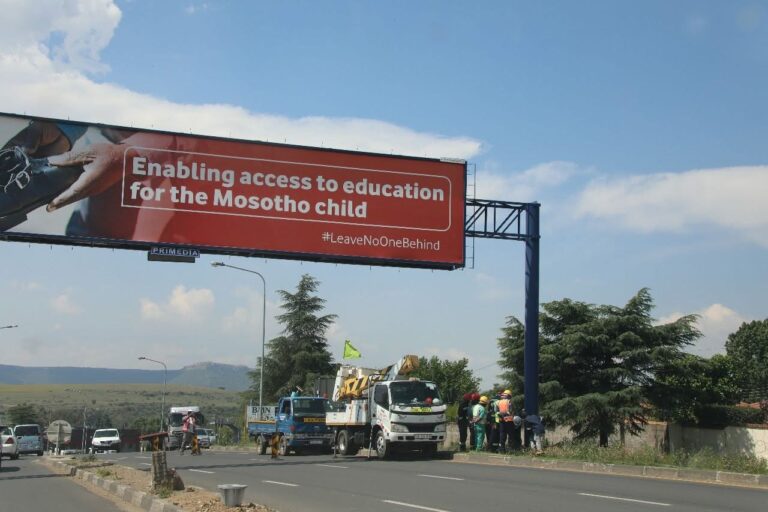
Outdoor advertising companies have accused the Directorate of unfair treatment, alleging that while billboards belonging to local businesses were removed along Moshoeshoe Road this week, a billboard owned by Primedia, a South African company, was left untouched.

Lesotho Tribune can confirm that at the time of publication, the Primedia billboard remained standing, even as local operators counted their losses.

A group of advertising stakeholders who spoke to this publication described the Directorate’s actions as “a clear case of bias and institutional prejudice against local enterprises.” They say the agency has failed to explain why local billboards were demolished when no road construction or development is planned along the affected stretch of Moshoeshoe Road.

One advertiser said, “It is discrimination in broad daylight. The Directorate hides behind policies that no one has seen, yet chooses who to punish and who to protect.”

The publication put a series of direct questions to the Roads Directorate, all of which went unanswered. Among them:

• Why has the Directorate not removed the Primedia billboard located along Moshoeshoe Road after the intersection leading to LEC?

• What exactly is the policy governing the removal of billboards and structures in the road reserve?

• Does the Directorate differentiate between billboards and other permanent properties built within the same reserve area?

• Why has there been no action against numerous properties and billboards on the Main South 1 Road from Borokhoaneng, which are visibly encroaching on the road reserve?

• Which company was awarded the contract to take down the billboards and structures, and how was that contract awarded?

Industry representatives allege that the Directorate frequently changes its policy “willy-nilly,” depending on who owns the structure in question. They accuse the Director-General of personally interfering in operational decisions and using discretion to protect certain companies while punishing others.

“The entire process lacks transparency and consistency,” said another stakeholder. “There is no published framework. What we are witnessing is the misuse of authority at the expense of local businesses that are already struggling.”

Analysts argue that this controversy underscores a broader governance problem within state institutions, where rules are often applied selectively. They warn that unless the Roads Directorate clarifies and standardises its enforcement policy, it risks eroding public confidence and discouraging investment in the local advertising industry.

As of this report, the Directorate had declined to respond to Lesotho Tribune’s questions.

⸻————

Editor’s Note

What is unfolding at the Roads Directorate is more than a dispute over billboards. It is a reflection of a deeper rot in public administration where power is exercised without accountability and policies are applied at whim. When institutions treat citizens and businesses unequally, they betray the very purpose for which they exist.

Lesotho cannot build a credible investment climate if state agencies operate on personal discretion instead of transparent rules. Selective enforcement is corruption by another name, and it chips away at public trust one billboard at a time.
Matlama Fans Land the Club in Trouble Again

Just weeks after being fined by the Premier League Management Committee (PLMC) for supporter misconduct, Matlama FC have once again found themselves in trouble — this time with the Lesotho Football Association (LeFA).


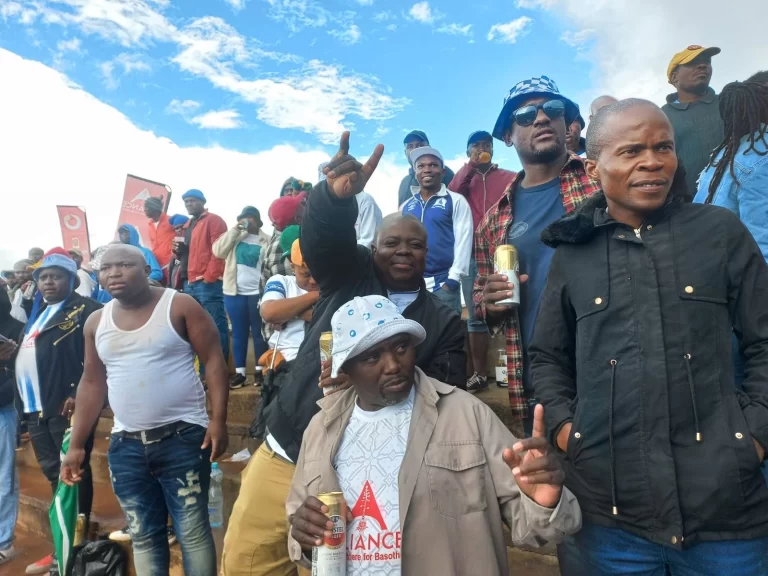
LeFA has officially suspended Matlama from using Bambatha Tšita Sports Arena in Maseru, following reports of disorderly behaviour by the club’s fans after their 3–0 defeat to LCS FC last Sunday. The loss ended Matlama’s five-match unbeaten run and left tempers flaring amongst the team’s supporters.

The match remained goalless until the final ten minutes, when former Matlama player Lisema Lebokollane scored twice in just 4 minutes (81st and 84th minutes) before an own goal by Lekhetho Mohai towards the end of the match that sealed Matlama’s fate.

According to the LeFA report, angry fans allegedly linked to Matlama were involved in damaging street lights near Bambatha Arena after the match. LeFA also cited the team’s repeated failure to maintain cleanliness at the venue following fixtures — an issue the governing body says it has warned the club about on several occasions.

However, Matlama’s Public Relations Manager Ramafahla Thamae has strongly dismissed the allegations, insisting the club did not damage any property and that it’s staff always clean the stadium after matches. “When we play on Saturday, we clean on Sunday. When we play on Sunday, we clean on Monday — once everyone has left the grounds,” Thamae explained.

As a result of the suspension, Tse Putsoa are currently banned from hosting or playing matches at Bambatha Tšita Sports Arena until the matter is resolved to LeFA’s satisfaction.

This punishment adds to Matlama’s growing disciplinary record this season, following their recent M20,000 fine from the PLMC after fans threw objects onto the field during the Maluti Mountain Cement Charity Cup Final just two weeks back.

While Matlama remains one of Lesotho’s most successful and passionately supported clubs, these recurring cases of fan indiscipline are beginning to overshadow the team’s footballing achievements. The same loyal supporters who proudly rally behind the Blues must now confront a hard truth — that their actions, on and off the field, carry real consequences for the club they love.

Until that changes, Matlama’s greatest opponent might not be found on the pitch, but in the stands. With back-to-back sanctions now hanging over the club, questions are mounting about how Matlama’s management and supporters will respond to safeguard their reputation and ensure future compliance with league and association regulations.

Matekane’s Self-Admiration Club Masquerading as a Cabinet Retreat

0

Two weeks ago, the Matekane cabinet went on a “retreat.” Officially, it was about assessing their performance. In reality, it looked more like a self-admiration club than a genuine review. I’ve watched enough governments to know that when politicians start grading their own work, the outcome is almost always glowing. Who ever fails themselves, after all?

Perhaps they meant well. Maybe they wanted a quiet space to reflect, far from the daily noise. But then again, why not invite independent experts, economists, policy analysts, even Parliament’s oversight committees to assess the data fairly? You cannot expect honesty when the same people who make the mistakes are also the ones writing the report. It reminded me, frankly, of Idi Amin’s style of governance: everything done within a closed circle, applause mandatory.

And that’s what bothers me. We keep seeing a pattern of showmanship rather than self-correction. The country is sinking under delayed projects, a shrinking economy, and institutions gasping for air. Yet the people in charge still find time to pat themselves on the back. It feels detached. Almost surreal.

I think what disappointed me most is how ordinary this has become. The Prime Minister once promised to bring a new kind of discipline to government, a corporate mindset. But any serious businessperson knows you don’t evaluate your own performance without outside auditors. You don’t declare success until the numbers say so. If Matekane’s government truly believed in accountability, they would have welcomed that external scrutiny. Instead, we got staged optimism.

Still, maybe it’s not all bad. Maybe a retreat, even one that leans too far into self-praise, is better than no reflection at all. But the danger lies in believing your own narrative. Because once leaders start believing they’re doing fine, the rest of us stop existing in their mirror.

“Khetheng Was Never Brought to Me” Retired Superintendent Tšukulu

MASERU

A new chapter has unfolded in the long-running murder trial of Police Constable (PC) Mokalekale Khetheng this week, as Retired Superintendent Thabo Tšukulu, one of the accused, took the stand once more to give his side of the story.

Speaking calmly but firmly before the High Court, Tšukulutold the court that Khetheng was never brought before him after being arrested and taken to the Hlotse Police Station in March 2016.

At that time, Tšukulu was the Officer Commanding the HlotsePolice Station while also acting as the District Commissioner of Police for Leribe. 

His testimony, delivered with a tone of control and accuracy, sought to distance himself from the controversial events surrounding Khetheng’s disappearance and death, a case that has shaken public trust in the police force.

“When Constable Khetheng was brought to Hlotse Police Station, he was not brought to me,” Tšukulu said clearly. 

“I never saw him on that day.”

He explained that earlier that day, he had received a call from a Senior Superintendent Makara, who was the District Commissioner of Police in Mokhotlong. 

Makara informed him that one of his officers, Constable Khetheng, had not been reporting for duty. Concerned about the matter, Makara asked Tšukulu to locate Khetheng and connect him over the phone so that he could urge him to return to work.

“I then instructed Inspector Mofolo to look for Constable Khetheng at Sebothoane, where he stayed, so that he could be brought to me,” Tšukulu told the court. 

“I wanted to put him in touch with his superior in Mokhotlongso that they could talk directly.”

He went on to testify that during his lunch break, he received a call from Inspector Mofolo who informed him that they had indeed found Khetheng and that the police had brought him to the station. 

Tšukulu said he instructed them to wait until he returned from lunch, but when he came back, he never saw Khetheng.

“I gave an order that they should wait for me,” he said. 

“But when I returned, no one brought Khetheng to my office. I never saw him.”

Constable Khetheng was last seen being arrested by fellow police officers at a public gathering in Sebothoane, Leribe, in March 2016. His family and colleagues searched for him for months before his body was discovered buried at LeperengCemetery in Maseru. 

His death led to the arrest of several police officers, including Tšukulu, who now stand accused of his murder.

Throughout his testimony, Tšukulu sought to clarify his role and denied any direct involvement in the handling of Khetheng after his arrest. His version of events suggests that responsibility for what happened next lay with the officers who had taken Khetheng into custody that day.

He said he was surprised to later learn that Khetheng had disappeared while under police care.

“I was shocked when I heard that Khetheng was missing,” he told the court. 

“As far as I knew, he had been found and was supposed to speak with his superior. After that, I never saw him again.”

During earlier sessions, other witnesses testified that Khetheng was indeed taken to Hlotse Police Station but was later removed under unclear circumstances. 

The Khetheng murder case has become one of the most closely watched trials in Lesotho’s justice system.

As proceedings continue, Retired Superintendent Tšukulu is expected to face further cross-examination as the Crown probes inconsistencies and attempts to link him to the events surrounding Khetheng’s disappearance.

For now, his testimony remains firm and unwavering, as he maintains he never saw Constable Khetheng alive, never ordered his detention and never received him at the HlotsePolice Station that day.

“I only know what I was told,” he said in closing.

“Khetheng was found, but he was never brought to me. I had no contact with him at all.”

There Is Hope For Basotho & LHDA

0

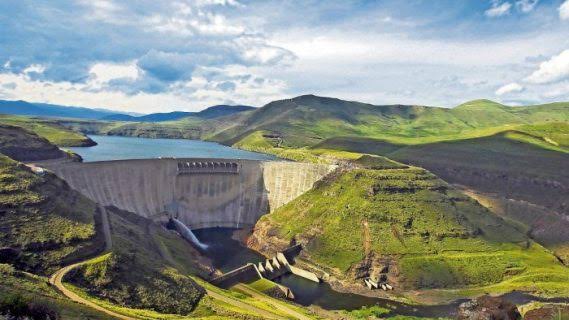
In the heart of Lesotho’s development landscape stands the Lesotho Highlands Development Authority (LHDA), a structurally born of ambition, strategic partnership, and promises of national prosperity. Yet, beneath the surface of its capital projects lies a troubling paradox: the subordination of constitutional human rights to corporate policy. 

The LHDA operates under a corporate framework that treats the state and its indigenous peoples as stakeholders of varying privilege, not as bearers of inviolable rights. Its operational policies often drafted in alignment with international partners and financiers have created an ecosystem where “policy compliance” is exalted above constitutional fidelity. The language of human rights is replaced by that of “corporate procedure,” “project compliance,” and “mitigation frameworks.”

Well, in practice around early 2000s, this has led to communities being displaced, livelihoods disrupted, and environmental damages excused under the rhetoric of “national interest.” Compensation becomes conditional, consultation becomes tokenistic, and constitutional rights, to property, dignity, and justice are reduced to bureaucratic checklists.

The judiciary, which should stand as the last bastion of constitutional protection, has increasingly failed to draw the line between what is lawful and what is merely policy-compliant. Court rulings in disputes involving LHDA have too often leaned toward procedural regularity rather than substantive justice. In some cases, judges appear more persuaded by the technical documentation of corporate lawyers than by the lived realities of affected citizens. This perpetuate a once beautiful project to be a LULU (Locally Unwanted Land Use because now it has become a socially contested development which is assumed to abuse the rights of the indigenous people.

This judicial timidity stems from a deeper structural problem, the inability or reluctance to assert constitutional supremacy over parastatal authority. When courts begin to interpret corporate conduct through the lens of institutional convenience rather than constitutional command, justice ceases to be the guiding principle of governance. It becomes a negotiation between legality and legitimacy, a dangerous equilibrium for any democracy. Maybe it needs to be reminded that it is in the business of saving lives.

If this trajectory persists, capital projects themselves may soon become persona non grata in Lesotho. Public resentment is growing as citizens witness the displacement of entire communities and the marginalization of local voices under the banner of development. Structural incompetence within both LHDA and the state oversight mechanisms has led to delayed compensations or once off compensation, environmental mismanagement, and inconsistent accountability. Project growth must be incorporate the livelihood of the resettled citizens: this means, as long the project lives, the custodians of that project will continue to benefit if the project sustains. Now, the narrative of development has been hijacked by institutional arrogance and bureaucratic self-preservation. The very projects meant to uplift the nation are now perceived as instruments of dispossession. If citizens begin to view these projects as threats rather than opportunities, the legitimacy of state-led development will collapse further than it is currently.There is still time to rectify the administrative missteps.

For this, the judiciary must reclaim its constitutional authority. It must distinguish policy from principle, discretion from right, and administration from justice. Parliament, too, must assert oversight through legislative reforms that align corporate governance with constitutional imperatives. Lesotho stands at a crossroads. It can continue the path where corporate policy dictates constitutional meaning, or it can reaffirm that no institution however powerful is above the Constitution. The survival of both justice and development depends on that choice of people first development and vice versa.

Lesotho Hosts 59th SAPP Ex-Co Meeting

0

Maseru

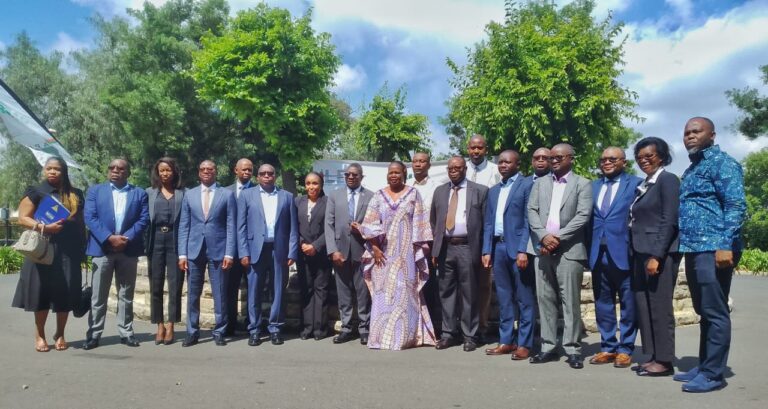
This week, the Lesotho Electricity Company (LEC) hosted the SAPP’s 59th Executive Committee meeting with a strict focus on how to maintain loyalty to the pool’s vision; striving for full integrity, a competitive energy market and a reliable provider of sustainable energy solutions for the SADC region and beyond. 

Speaking at the high-level stakeholders meeting, the Minister of Energy and Natural Resources, Mohlomi Moleko, highlighted key achievements in the energy sector, ongoing challenges and future strategies for enhancing regional energy integration and sustainability within the Southern African Development Community (SADC).

Among the key highlights, he noted the significant SAPP’s 30 years of existence that were celebrated in July this year and the 400kV Matimba-Phokoje-Insukamini interconnector, which has facilitated electricity trading among SADC countries, not leaving behind the Malawi to Mozambique and the Angola-Namibia (ANNA) interconnector, which is still undergoing progress.

Beyond transmission projects, Mohlomi applauded SAPP on Competitive Electricity Markets which have enabled power utilities to trade electricity, address deficits and generate additional revenue. 

In the last decade, 14,546 GWh were traded, resulting in an exchange of USD 986 million, thanks to the markets. 

Mohlomi said despite these achievements and milestones, challenges remain, but as the ministry, they already have solutions in place for damage control. 

He said the electricity supply industry in the SADC region is still experiencing insufficient electricity generation capacity, facing challenges including transmission and distribution infrastructure limitations high power distribution losses, reduced regional power trade, and the impacts of climate change, emphasising the importance of coordinated planning that he said could save the region up to $37 billion in net present value terms.

In the context of Lesotho, Moleko said they were committed to an accelerated energy revolution focused on renewable energy, adding that the government is actively supporting the adoption of environmentally friendly technologies with the aim of becoming a net exporter of green energy.

According to the Minister, Lesotho has commissioned the first phase of its new Solar Generation Plant that generates 30MW and is currently negotiating additional capacity- 40MW- with battery energy storage systems. As a result of the good progress this phase has experienced, detailed planning for the hydropower generation component of Phase II of the Lesotho Highlands Water Project (LHWP) is underway.

Moleko urged experts in the energy sector to develop solutions that mitigate risks and address challenges in the region. 

He emphasised the need to combat vandalism of transmission infrastructure and highlighted the importance of private-sector participation in generation and transmission investments.

He reaffirmed Lesotho’s commitment to providing reliable, sustainable and affordable power to Basotho, encouraging greater participation in the SAPP electricity market.

The SAPP represents more than just an interconnection of power connections but embodies the interconnection of regions, capacities and shared commitments. For Lesotho, membership in the pool has been transformative, enhancing grid reliability, supporting cross-border exchanges and providing invaluable lessons from the experiences and innovations.

For the LEC, the idea is to be active contributors to the realisation of the vision of the SAPP that will come to life. 

At this meeting, the LEC showed its commitment to playing its part in infrastructure investment, operational excellence and active participation in initiatives that strengthen a shared power-eco system. 

Makhalanyane Accuses Matekane And His Ministers of Waging War on Rule of Law

0

Maseru – Lesotho’s political temperature soared on Friday after Hon. Mokhothu Makhalanyane, Chair of Chairs in the National Assembly, issued an explosive statement accusing ministers and senior government officials of sabotaging accountability institutions and waging a campaign of intimidation against independent civil servants.

In a fiery press release dated 7 November 2025, Makhalanyane praised senior officials who were dismissed or forced out for resisting political interference, including Advocate Mathabo Makoko, the Commissioner General of the Revenue Services Lesotho (RSL), and Mrs. Likhapha Mahase, the Accountant General, whose contract was not renewed. He also referenced Advocate Seeng Matsoša and Mr. Moepana Kopo of the Asset Recovery team, who were dismissed after exposing irregularities in government asset management.

“These are not moments of weakness, but powerful ingredients, rich and sacred, watering the roots of Lesotho’s liberation struggle against corruption, maladministration, and the abuse of political power,” Makhalanyane declared.

He accused sections of the executive of undermining the rule of law through “intimidation and interference” and said those targeted had chosen “principle over convenience, and truth over silence.” His remarks are seen as a direct challenge to Prime Minister Sam Matekane’s administration, which has been accused of using fear and executive power to silence dissent within public institutions.

Makhalanyane warned that the current pattern of political interference, coming just weeks after Lesotho hosted the SADCOPAC 2025 conference on parliamentary oversight, was “flabbergasting” and risked destroying both public confidence and the country’s international image.

“Their courage must inspire Parliament, the Judiciary, the Media, Civil Society, and every Mosotho to rise above fear and defend the soul of our democracy,” he wrote. “Power is not a weapon to silence the righteous, it is a responsibility to serve with integrity.”

In a striking passage that could deepen tensions between Parliament and the executive, Makhalanyane said the committees of Parliament were ready to confront corruption “regardless of consequences.” He admitted that the past weeks had placed a “heavy load” on his shoulders, but vowed that oversight committees would no longer be bullied or compromised.

“Their sacrifice is our call to action. Their pain is the seed of a freer Lesotho,” Makhalanyane concluded.

His statement is likely to trigger a fierce political storm within the ruling Revolution for Prosperity (RFP), coming amid open rebellion by the party’s backbenchers and widespread criticism of Matekane’s handling of governance and accountability.

Independent business & current affairs journalism · Lesotho Subscribe — M85/month
| Independent business & current affairs journalism · Lesotho