



Maseru
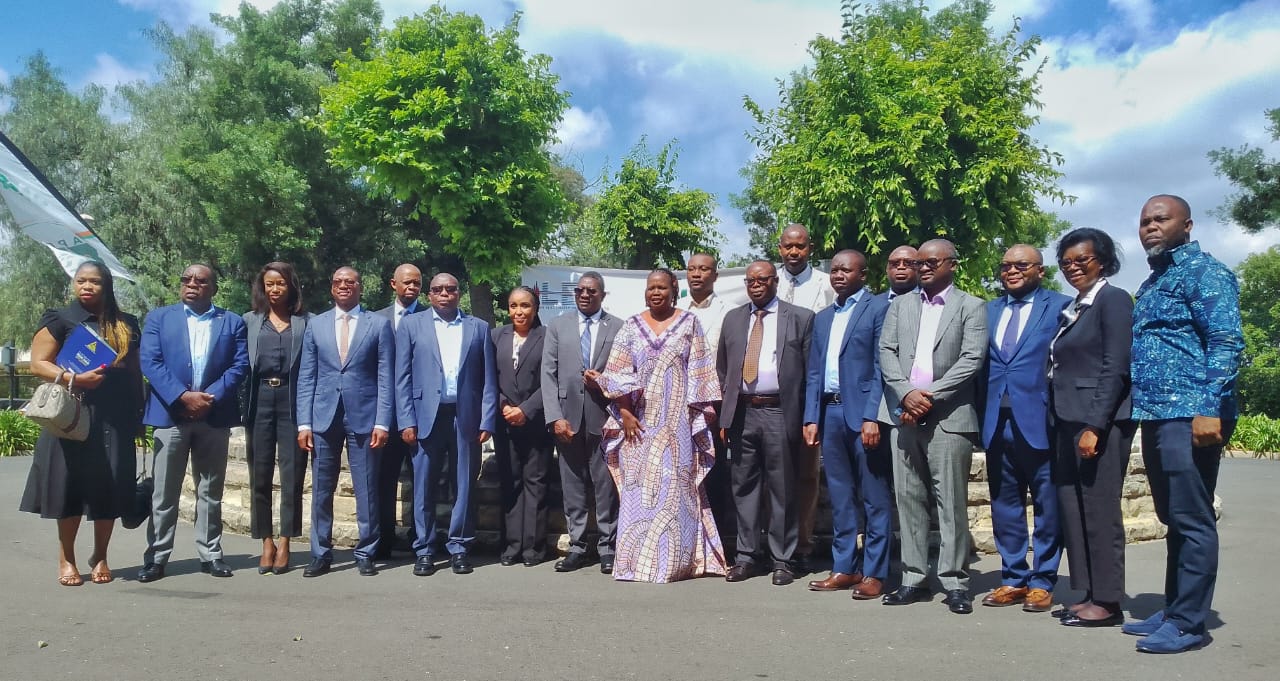
This week, the Lesotho Electricity Company (LEC) hosted the SAPP’s 59th Executive Committee meeting with a strict focus on how to maintain loyalty to the pool’s vision; striving for full integrity, a competitive energy market and a reliable provider of sustainable energy solutions for the SADC region and beyond.
Speaking at the high-level stakeholders meeting, the Minister of Energy and Natural Resources, Mohlomi Moleko, highlighted key achievements in the energy sector, ongoing challenges and future strategies for enhancing regional energy integration and sustainability within the Southern African Development Community (SADC).
Among the key highlights, he noted the significant SAPP’s 30 years of existence that were celebrated in July this year and the 400kV Matimba-Phokoje-Insukamini interconnector, which has facilitated electricity trading among SADC countries, not leaving behind the Malawi to Mozambique and the Angola-Namibia (ANNA) interconnector, which is still undergoing progress.
Beyond transmission projects, Mohlomi applauded SAPP on Competitive Electricity Markets which have enabled power utilities to trade electricity, address deficits and generate additional revenue.
In the last decade, 14,546 GWh were traded, resulting in an exchange of USD 986 million, thanks to the markets.
Mohlomi said despite these achievements and milestones, challenges remain, but as the ministry, they already have solutions in place for damage control.
He said the electricity supply industry in the SADC region is still experiencing insufficient electricity generation capacity, facing challenges including transmission and distribution infrastructure limitations high power distribution losses, reduced regional power trade, and the impacts of climate change, emphasising the importance of coordinated planning that he said could save the region up to $37 billion in net present value terms.
In the context of Lesotho, Moleko said they were committed to an accelerated energy revolution focused on renewable energy, adding that the government is actively supporting the adoption of environmentally friendly technologies with the aim of becoming a net exporter of green energy.
According to the Minister, Lesotho has commissioned the first phase of its new Solar Generation Plant that generates 30MW and is currently negotiating additional capacity- 40MW- with battery energy storage systems. As a result of the good progress this phase has experienced, detailed planning for the hydropower generation component of Phase II of the Lesotho Highlands Water Project (LHWP) is underway.
Moleko urged experts in the energy sector to develop solutions that mitigate risks and address challenges in the region.
He emphasised the need to combat vandalism of transmission infrastructure and highlighted the importance of private-sector participation in generation and transmission investments.
He reaffirmed Lesotho’s commitment to providing reliable, sustainable and affordable power to Basotho, encouraging greater participation in the SAPP electricity market.
The SAPP represents more than just an interconnection of power connections but embodies the interconnection of regions, capacities and shared commitments. For Lesotho, membership in the pool has been transformative, enhancing grid reliability, supporting cross-border exchanges and providing invaluable lessons from the experiences and innovations.
For the LEC, the idea is to be active contributors to the realisation of the vision of the SAPP that will come to life.
At this meeting, the LEC showed its commitment to playing its part in infrastructure investment, operational excellence and active participation in initiatives that strengthen a shared power-eco system.