



MASERU
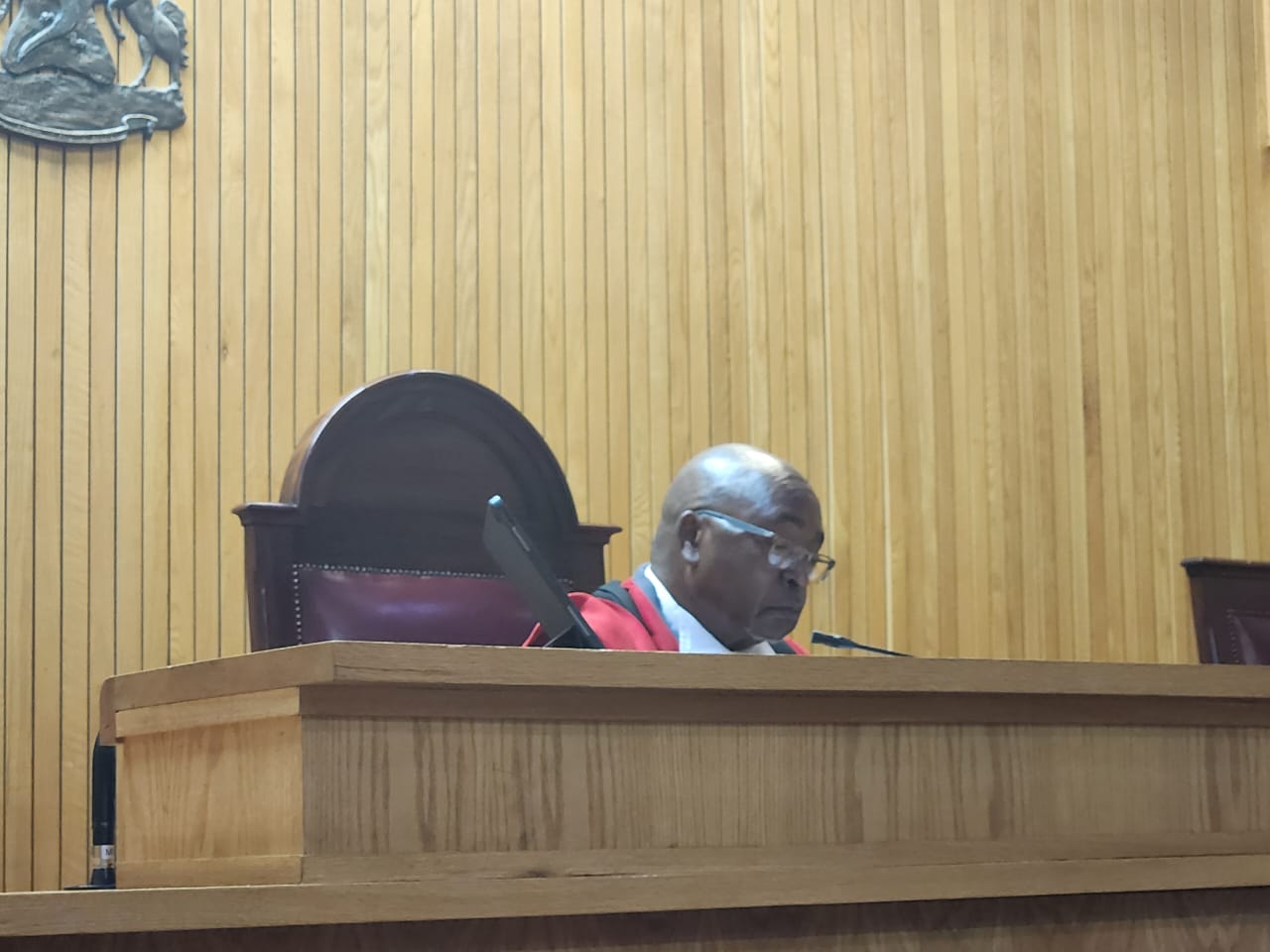
The long-running murder trial over the death of Police Constable Mokalekale Khetheng took a revealing turn this week as one of the accused, Retired Superintendent Thabo Tšukulu, returned to the witness stand to continue his testimony before the High Court of Lesotho.
Testifying as a defence witness, Tšukulu gave a detailed account of his arrest, detention and questioning by fellow officers in August 2017.
His calm but firm tone in court drew the attention of everyone present, as he described what he called “days of interrogation” inside the Police Headquarters, a place he once worked in.
He told the court that from August 4 to 8, 2017, he was held at Police Headquarters following his arrest in connection with the murder of Constable Khetheng.
During that time, he said, he was questioned every night by two separate teams of investigators.
“The first team was led by Inspector Lebajoa,” Tšukulu said.
“The second team was made up of Superintendent Advocate Paseka Mokete and Senior Inspector Advocate MamelloNtsane and they questioned me in the presence of Inspector Lebajoa and Sergeant Thamae.”
The retired officer said that although the interrogations were intense and emotionally draining, he was never physically assaulted or injured.
“I was not beaten. I did not suffer any wounds or bruises,” he stated clearly, maintaining his composure on the stand.
However, he told the court that some of his co-accused, Inspector Mothibeli Mofolo, Senior Inspector Mabitle Matonaand Sub-Inspector Haleokoe Taasoana, were not as fortunate.
“When we were taken to the Magistrate’s Court on August 8, 2017, they had visible injuries,” he said, describing how the men appeared weak and battered after their detention.
Despite claiming he was treated relatively well, Tšukuluexpressed dissatisfaction with one major issue, being denied access to his lawyer while in custody.
“I was not allowed to see my lawyer,” he said.
“During visiting hours on August 5, 2017, Advocate Mohaucame to the Police Headquarters to see me, but he was turned away.”
According to his testimony, the officers who refused his lawyer’s visit were Sergeant Thamae, Lance Sergeant Mohoang and Police Constable Tshabalala.
“They told him I could not be seen,” he said.
When asked how he felt about being denied legal access, Tšukulu said he considered it a violation of his rights.
“I had worked in that same institution for years. I knew the rules and I knew I was entitled to speak to my lawyer,” he told the court.
During cross-examination, defence lawyer Advocate Zwelakhe Mda asked Tšukulu about claims that he had allegedly confessed details about how Constable Khethengdied. Tšukulu denied this strongly.
“I never told Senior Superintendent Letsosa or anyone else about how Khetheng died,” he said.
“I never spoke to anyone about the death of the deceased.”
He insisted that during his entire detention, no confession or discussion took place regarding the killing.
“Those statements are not true,” he said confidently.
The case, which has dragged on for years, has seen numerous twists since the disappearance and subsequent discovery of Constable Khetheng’s body in 2016. He was last seen being arrested by police officers in Hlotse, Leribe.
One could say his testimony could help the court determine whether the accused officers were subjected to coercion or improper interrogation while in custody, an issue that could influence the admissibility of certain evidence in the case.
For now, the defence continues to call witnesses in a bid to prove that the accused officers had no direct role in the killing of Constable Khetheng. The Crown, on the other hand, maintains that the evidence will show that the officers acted unlawfully and that Khetheng’s death was a result of police misconduct.
As proceedings resume, all eyes remain on the courtroom where justice for Constable Mokalekale Khetheng and the fate of those accused of his murder continue to unfold.