Mohahlaula Airlines
Tuesday, July 21, 2026
Home Blog Page 5

MP says he was offered R10 million and an armoured BMW to stay silent

An MP testifying before the Madlanga Commission says he was offered cash, a tender and an armoured vehicle to stay quiet about a suspended Crime Intelligence general.

Staff Reporter

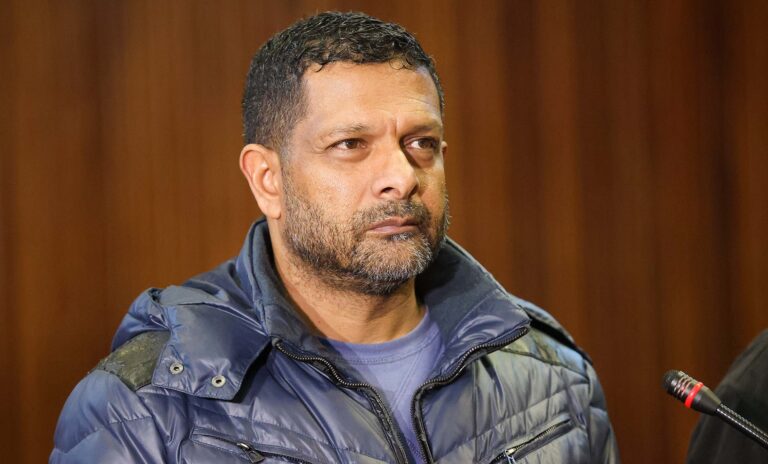
MK Party MP Vusi Shongwe has told the Madlanga Commission that suspended Crime Intelligence Major-General Feroz Khan allegedly tried to buy his silence after Shongwe named Khan before Parliament’s Ad Hoc Committee.

Shongwe said Khan, acting through businessman Yusuf Careem, allegedly offered him a R2 million (about $121,000) Checkers security tender, R10 million (about $607,000) in cash, and an armoured BMW 7 Series.

“What do you want? We can look after you.”

Shongwe said he rejected the alleged offers and did not want the tender.

The claims were made under oath as part of the commission’s investigation into alleged corruption, political interference and criminal networks within Crime Intelligence.

LEC can’t pay Eskom. Its acting MD has a security convoy.

The board of the Lesotho Electricity Company has sanctioned an acting managing director’s salary ten times what company policy allows, while sources inside LEC say he travels with a two-vehicle Toyota Fortuner security convoy. The company owes its electricity suppliers hundreds of millions of maloti and survives on government bailouts.

Tšeliso Mokela is the acting managing director of the Lesotho Electricity Company. His company owes South Africa’s Eskom and Mozambique’s Electricidade de Moçambique hundreds of millions of maloti. Its liabilities exceed its assets by M98.6 million (approximately $5.99m at today’s rate of M16.44/$1). Its cash reserves have fallen by M145.8 million (approximately $8.87m). The government injected M300 million (approximately $18.24m) to keep the lights on. The board of directors, sources tell the Lesotho Tribune, has authorised Mokela a security arrangement that they say has no precedent for a parastatal executive in this country.

“This acting MD uses a company Toyota Fortuner and his security entourage uses another Fortuner. Not even a minister in this country is guarded like this!” a source with direct knowledge of the arrangement told the Lesotho Tribune.

“Not even a minister in this country is guarded like this!”

The Lesotho Tribune put these concerns to LEC in writing. The company said it would respond next week. This report will be updated in full when that response arrives.

The pay arrangement

The acting managing director question sits in a wider pattern of expenditure that the LEC board approved while the company bled money. In March 2025, the board suspended the entire 10-member executive management team to allow a forensic audit by the Auditor General. Board chairperson Nathaniel Maphathe vacated his post and took the acting managing director role. Over the following 11 months, LEC paid the suspended executives approximately M12 million (approximately $730,000) in salaries. That figure excludes the acting allowances paid to the staff covering their roles.

The Public Accounts Committee summoned LEC in June 2025 and found that Maphathe had drawn M170,000 (approximately $10,340) per month as acting salary, equal to that of suspended managing director Mohlomi Seitlheko. LEC’s own 2021 compensation policy caps acting allowances at 10 percent of the substantive salary, which would be M17,000 (approximately $1,034). The board had instead applied the outdated 2015 policy to justify paying the full amount. The PAC found that Maphathe had in addition received a company vehicle, a M4,000 fuel allowance, and mobile phone benefits.

The board subsequently reversed course, cutting acting allowances to the 10 percent ceiling in August 2025 — only after the committee’s scrutiny. Tšeliso Mokela has since been appointed in the acting managing director role. It is under his tenure that the security convoy arrangement, as described by sources to the Lesotho Tribune, is said to be in place.

The financial position

An external audit submitted to the Ministry of Energy in January 2025 found that LEC’s current liabilities exceed its assets by M98.6 million (approximately $5.99m). Cash reserves had fallen by M145.8 million (approximately $8.87m). The auditors issued a disclaimer opinion on the company’s accounts after management failed to supply adequate records. The audit also found that LEC had been relying on manual financial journal entries without supporting documentation, flagged as a high risk for fraudulent transactions, and that the company had failed to adhere to the King IV Code on Corporate Governance.

The structural cause is straightforward: LEC buys electricity from Eskom and EDM at prices higher than it charges consumers, generating losses it cannot absorb. Bulk electricity costs rose from M805.8 million (approximately $49.02m) in the 2022/23 financial year to M1.18 billion (approximately $71.78m) in 2023/24, a rise of 46.85 percent. The company imports as much as 89 percent of its electricity needs at market prices while selling below cost to consumers.

The government injected M300 million (approximately $18.24m) to allow continued electricity purchases. A previous board was dissolved in October 2024 by then-Energy Minister Prof Nqosa Mahao, who cited the board’s failure to meet its fiduciary duties. That board had approved M6 million (approximately $364,900) in staff bonuses despite the company’s financial position. Mahao was himself dismissed by Prime Minister Sam Matekane in November 2024 before the High Court resolved a challenge the board had launched against his show-cause letters.

The current board, inducted between November and December 2024, inherited those conditions. It then approved acting allowances at ten times the rate the company’s own policy prescribed. Sources say it has now also approved a security and vehicle arrangement for the acting managing director that no comparable official in Lesotho receives.

The Lesotho Tribune asked LEC to confirm whether Mokela’s security detail exists, who authorised it, what it costs the company per month, and what the board’s basis was for approving it. LEC said it would respond next week.

South Africans are more accepting of LGBTI people and more hostile to immigrants

South Africa · Human Rights

A new national survey finds that South Africans have grown more accepting of LGBTI people over the past decade. The same survey finds they have grown more hostile to immigrants over the same period. The two trends are linked.

Staff Reporter

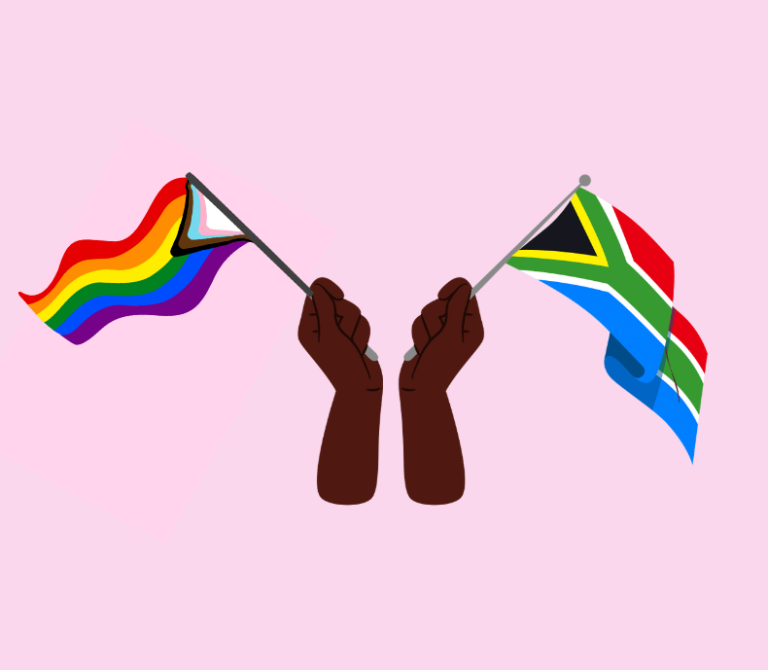
South Africa has become measurably more accepting of lesbian, gay, bisexual, transgender and intersex people over the past decade. It has also become more hostile to immigrants over the same period. A new nationally representative survey, released in Johannesburg on Friday night, finds those two trends are correlated — and flags the connection as a concern for advocates and policymakers.

The report, titled Admission Reserved, was commissioned by the Other Foundation and conducted by the Human Sciences Research Council (HSRC). It is the first nationally representative survey to provide a disaggregated estimate of South Africa’s LGBTI population, and builds on Progressive Prudes, a landmark public opinion survey published by the Other Foundation and the HSRC in 2015.

The report was launched at the Other Foundation’s offices in Parkwood, Johannesburg, on 26 June 2026, a date that falls on the 20th anniversary of marriage equality for LGBTI people in South Africa, and 30 years after the adoption of South Africa’s Constitution, which was the first in the world to explicitly prohibit discrimination on the grounds of sexual orientation.

The anti-immigrant link

The report reveals a correlation between anti-LGBTI and anti-immigrant attitudes. People who hold more hostile views towards LGBTI people are more likely to hold hostile views towards immigrants, and vice versa. The report does not establish the direction of causation, but the co-movement of the two trends across the decade is one of its most pointed findings.

While acceptance of LGBTI people has generally increased, hostile attitudes towards immigrants intensified in the same period. The report identifies this as an area requiring attention from civil society and policymakers working on both sets of issues.

“The door to equality and freedom has opened, but admission is still too often reserved.”— Admission Reserved report, The Other Foundation & HSRC, 2026

What the numbers show

The proportion of South Africans who say same-sex sexual activity is “always wrong” has fallen from 66% in 2015 to 52% today. Support for marriage equality has risen from 37% to 45% over the same period. Some 46% of respondents say their views towards LGBTI people have become more accepting in the last five years.

On equal rights, 60% of South Africans now believe gay and lesbian people deserve the same rights as all other citizens, up from 51% a decade ago. Some 57% say the same about bisexual and transgender people. On intersex rights specifically, 68% agree that intersex people deserve equal rights.

Family acceptance figures show roughly half of South Africans would accept a gay (49%), lesbian (51%), transgender (50%), or bisexual (46%) family member. Acceptance of an intersex family member is higher, at 64%. Around half also say LGBTI people should be included in their culture and traditions.

Population estimate

For the first time, the survey provides a reliable national estimate of the LGBTI population. It finds that 5.3% of South Africa’s adult population is LGBTI, representing approximately 2.39 million people. Within that figure, 2.5% of South Africans identify as gay, lesbian, or bisexual; 1.0% as transgender or non-binary; and 2.7% as intersex.

The report finds no significant racial group differences in levels of acceptance or rejection of LGBTI people.

Five attitude clusters

The survey maps South African public opinion into five clusters. Committed Champions, who strongly support LGBTI inclusion across all areas of life, make up 9% of the population. They are most likely to be women, urban residents, tertiary-educated, and those with lower levels of religiosity.

Evolving Allies, who broadly support equal rights but are less certain on more specific issues such as same-sex parenting or transgender rights, are the largest group at 32%. They tend to be younger and are more likely to be women.

In-Betweeners hold mixed or uncertain views, shaped by religion and social media conversations. They make up 29% of the population and are the most diverse group by gender, age, and education. The report identifies this group as the most likely to shift towards acceptance through familiarity and personal contact with LGBTI people.

Principled Conservatives, at 22% of the population, show low levels of acceptance around same-sex relationships and family inclusion but may still support basic equal rights in principle. They are more likely to be male, older, and from rural or non-metro areas.

Uncompromising Hardliners represent 7% of the population and consistently reject LGBTI inclusion across all areas of life. Some 51% of this group has had no real-life contact with an LGBTI person. Their views are least likely to shift through persuasion, but the report notes they may soften through direct personal experience.

Public advocacy gap

Despite broadly rising acceptance, public advocacy for LGBTI people remains limited. Only 17% of South Africans say they have spoken in support of or defended a gay, lesbian, or bisexual person in public. The figure is lower still for transgender people, at 9%. A further 27% say they have not done so but may in future; 30% say the same regarding transgender people.

Some 39% of South Africans report having at least one LGBTI friend or family member.

Key indicators: 2015 vs 2026

Indicator 2015 2026
Same-sex activity “always wrong” 66% 52%
Support marriage equality 37% 45%
Gay & lesbian people deserve equal rights 51% 60%
Would accept a lesbian family member 51%
Views more accepting in past 5 years 46%

Source: Admission Reserved, The Other Foundation & HSRC, 2026. The 2015 baseline is drawn from Progressive Prudes, the Other Foundation & HSRC.

INVITATION FOR PRE-QUALIFICATION OF SUPPLIERS FOR THE PROVISION OF GOODS, SERVICES AND MINOR WORKS

Invitation for Pre-Qualification of Suppliers – Pension Fund 2026/27

Ha Nyakane man gets five years for tavern killing

0

Courts · High Court

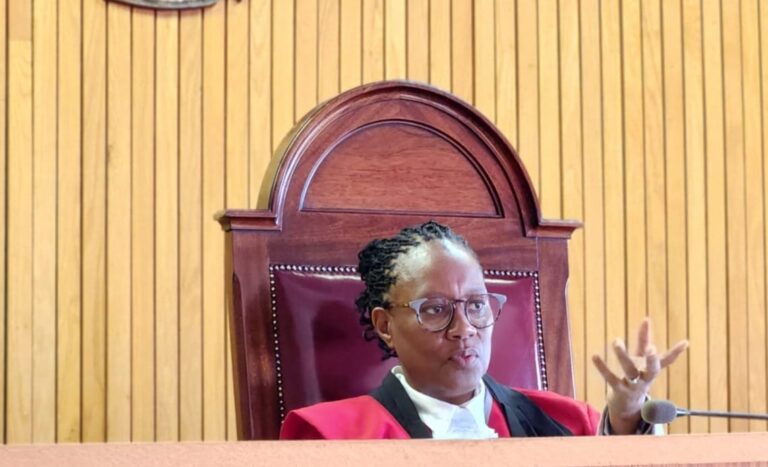
A Ha Nyakane man who struck a fellow villager on the head with a nylon stick at a tavern in 2021, killing him, has been sentenced to five years in prison. The court also ordered him to pay M6,000 (approx. USD 330) to the deceased’s family.

Tholoana Lesenya

The High Court has sentenced Mokhopheli Motete, 30, of Ha Nyakane, Maseru district, to an effective five-year prison term after he admitted to fatally assaulting a fellow villager with a nylon stick at a local tavern in September 2021.

Justice Mabatšoeneng Hlaele delivered the judgment after accepting Motete’s guilty plea to culpable homicide. The prosecution had originally charged him with murder but agreed to reduce the charge.

What happened

On or about 19 September 2021, Motete, the deceased and other villagers were drinking at a tavern in Ha Nyakane. Motete fell asleep. When he woke, he attacked the deceased, striking him on the head with a nylon stick. The blow was severe enough that the victim lost the ability to speak. He was taken to a local health facility and later referred to Tšepong Hospital, where he died from his injuries.

A post-mortem examination confirmed the cause of death as bleeding in the brain caused by the assault. Court records show that Motete later told his wife he had killed the deceased. The nylon stick was handed over to police and produced as an exhibit.

The sentence

Justice Hlaele sentenced Motete to 20 years’ imprisonment, suspending 15 years on condition that he does not commit another offence involving the loss of human life within five years. The effective custodial term is therefore five years.

The court noted that while Motete had pleaded guilty and was considered capable of rehabilitation, the seriousness of the offence required a custodial sentence. The judge found that the nylon stick, traditionally regarded as a potentially lethal weapon, demonstrated the gravity of the attack. The court also took note that Motete did not assist in taking the injured man to hospital after the assault.

Motete told his wife he had killed the deceased. The nylon stick was handed to police and produced in court as an exhibit.— Court record, High Court of Lesotho

Orders of the court

In addition to the custodial sentence, the court ordered Motete to pay M6,000 (approx. USD 330) in compensation to the deceased’s family. The amount must be paid within three years of his release from prison, or earlier. The court also directed the State to confiscate and destroy the nylon stick under the supervision of the court registrar or a designated representative.

Case summary

Detail Note
Accused Mokhopheli Motete, 30, Ha Nyakane, Maseru district
Charge Culpable homicide (reduced from murder)
Incident date On or about 19 September 2021, Ha Nyakane
Sentence 20 years, 15 suspended — effective 5 years
Compensation order M6,000 (approx. USD 330) to deceased’s family
Presiding judge Justice Mabatšoeneng Hlaele

SADC and the leaders who will not leave

Editorial

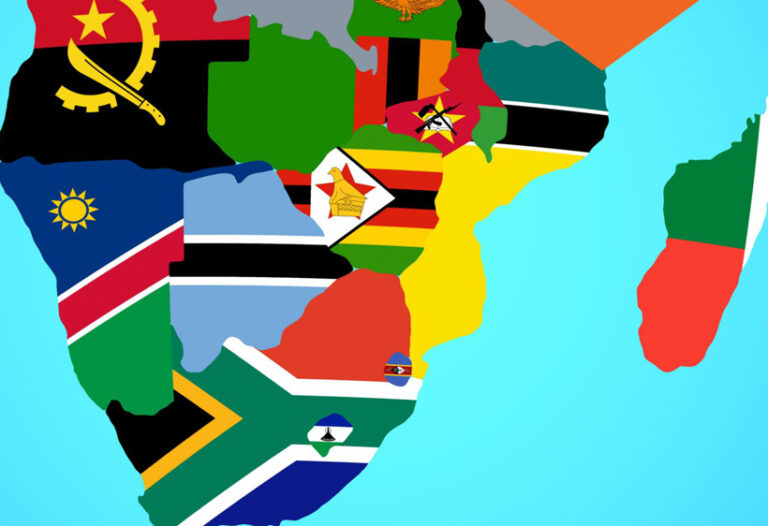
SADC was built to guarantee democracy, peace, and shared prosperity across southern Africa. Its record in recent years suggests it has become something closer to a mutual protection society for those in power.

The Editors  ·  Lesotho Tribune

When Zambia’s Frederick Chiluba attempted to manoeuvre around his country’s constitutional term limits in the early 2000s, his peers in the region did not look away. As Prof. Nqosa Mahao, Lesotho’s former Minister of Energy, dismissed after calling out corruption in the Matekane government, noted this week: “We learn from President Mbeki that when President Chiluba tried to amend the constitution to extend his rule his counterparts in SADC sent President Mogae to talk him out of it.” Mogae talked Chiluba out of it. Chiluba stepped down in 2002. Democratic norms held.

Prof. Mahao then asked the question that hangs over every crisis now unfolding in this region: “Perhaps the problem lies with our current breed of Regional Leaders. Do they appreciate that they bear the moral responsibility to hold each other to certain standards for the sake of good governance and the stability of our individual countries?”

Judging by the evidence of the past two years, they do not.

Former President Ian Khama of Botswana said it plainly this week: “Here we go again. Another power hungry president has the constitution amended through rigging and cash inducements to extend his term of office.” He was speaking about Zimbabwe. He could have been speaking about the region at large.

“Zimbabwe has now become the latest in a growing list of countries whose presidents want to cling to power and manipulate the constitution to achieve that.”
Seretse Khama Ian Khama, former President of Botswana

Zimbabwe’s National Assembly passed Constitutional Amendment Bill No. 3 this month. The bill extends presidential and parliamentary terms from five to seven years, defers elections from 2028 to 2030, and removes the right of citizens to directly elect their president. In future, parliament will choose the head of state. In Zimbabwe’s case, that means ZANU-PF will choose the head of state. President Emmerson Mnangagwa, 83 years old and elected for a constitutionally final term in 2023, now looks set to remain in office until 2030 at the least. Analysts warn the structural changes could lock his party’s control of the presidency until 2044. Public consultations on the bill were marred by violence and intimidation. Opposition withdrew. The bill sailed through on ZANU-PF’s two-thirds parliamentary majority.

What has SADC said? Essentially nothing. What has SADC done? Essentially nothing. Mnangagwa is, at this moment, the chairperson of SADC.

Madagascar: a coup by another name

In October 2025, Madagascar’s President Andry Rajoelina was forced from office by a military unit, CAPSAT, after weeks of youth-led protests over service delivery failures. Rajoelina fled the country. Parliament impeached him in his absence. The Constitutional Court then installed Colonel Michael Randrianirina, the CAPSAT commander, as president. Randrianirina promised elections within 18 to 24 months.

The African Union read this for what it was: an unconstitutional change of government. It suspended Madagascar immediately. SADC chose a different path. Rather than suspension, SADC engaged. It invited Randrianirina to a virtual summit. It urged dialogue. When South African President Cyril Ramaphosa received Randrianirina in Pretoria in January 2026, the reception was warm. The message from the region was, in effect, accommodating.

The organisation that suspended Madagascar in 2009 when Rajoelina himself led a coup now welcomed back a colonel who came to power through precisely the same mechanism. Its own inconsistency made Madagascar’s instability more predictable, not less. That price is credibility, and SADC has been spending it freely.

Mozambique: silence as endorsement

Mozambique’s post-election crisis of 2024 and 2025 produced some of the most damning evidence of SADC’s institutional failure. After a deeply contested election in October 2024, in which the EU observation mission noted unjustified alterations to results, two senior opposition figures were shot dead in Maputo. Months of protests followed. Police killed protesters, including children as young as 16. By early 2025 the death toll had exceeded 300.

SADC’s observer mission declared the election orderly and professionally conducted. When the violence escalated, the regional body convened an extraordinary summit in Harare in November 2024. Tanzania led the push to ensure Mozambique would not face meaningful SADC pressure. The summit’s communique merely noted a briefing from the outgoing Mozambican president. Nothing more.

Mozambican civil society did not bother petitioning SADC when they sought external support. They went directly to South Africa. When citizens facing state violence no longer trust the regional body designed to protect them, that body has lost its core purpose.

A continent of clocks running backward

Khama listed the examples: “Cameroon (Paul Biya, 43 years in power and 93 years old), Uganda (Yoweri Museveni, 40 years in power and 81 years old), Rwanda (Paul Kagame, 26 years in power and counting and 68 years old).” The list of those who will not leave is longer than the list of those who do.

He identified what connects them: “Political assassinations, fabricated charges and detentions, kidnappings and disappearances as recently in Tanzania and Uganda are the modus operandi of these and other such tyrants.” These are not accidents of governance. They are its methods.

On Zimbabwe’s specific history, Khama did not spare the language: “Zimbabwe and its long suffering people have been subjected to the same from the days of Gukurahundi to present day.” And he drew a conclusion that should settle any argument about whether this constitutes continuity or change: “The only thing that has changed since Rhodesia and Ian Smith, is the name of his country and that of its leaders. Oppressors come in all colours.”

What Mnangagwa is doing to Zimbabwe’s constitution is different in method but not in spirit. The bill’s architects in ZANU-PF had the audacity to justify it by saying elections are toxic. The logical end of that argument is no elections at all. The 2013 constitution was drafted with the specific intention of preventing the accumulation of power that Robert Mugabe personified over four decades. CAB3 systematically dismantles those protections. Mnangagwa, who styled himself the father of a Second Republic distinct from Mugabe’s excesses, now leads the effort to reverse the constitutional order built to prevent a return to exactly that.

“The only thing that has changed since Rhodesia and Ian Smith, is the name of his country and that of its leaders. Oppressors come in all colours.”
Seretse Khama Ian Khama, former President of Botswana

What accountability requires

SADC’s founding documents are not ambiguous. The Treaty of 1992 commits member states to human rights, democracy, and the rule of law. The SADC Principles and Guidelines Governing Democratic Elections require members to prevent political violence. The Windhoek Treaty provision against unconstitutional changes of government exists precisely for moments like these. These are not aspirational clauses. They are binding obligations that member states signed.

The problem is that SADC has no spine for enforcement when the violator is a sitting head of state, and particularly not when that head of state chairs the organisation. The AU at least suspended Madagascar. SADC watched. The AU expressed concern about Zimbabwe. SADC is run by the man whose constitution is being bent. The structural conflict of interest is complete.

What is required is not a summit communique that notes a briefing. What is required is the clarity that Prof. Mahao’s question demands. When a member state amends its constitution to abolish direct presidential elections, that is not a domestic administrative matter. It is a fundamental alteration of the democratic contract between citizens and the state, and it falls squarely within SADC’s stated mandate. When a member state kills hundreds of protesters after a disputed election, that is not an internal security matter. It is a regional crisis, because instability in Mozambique paralyses the ports on which half of southern Africa’s trade depends.

SADC leaders must either enforce the norms they agreed to or stop claiming to represent those norms. The current position, in which the body holds summits, issues communiques, deploys panels of elders, and changes nothing, is worse than silence. It is performance in the service of impunity.

The people of Zimbabwe deserve to directly elect their president. The people of Mozambique deserved an honest count of their votes. The people of Madagascar deserved a civilian government and a credible transition, not a colonel installed by constitutional fiction. In each case, SADC had the mandate, the platform, and the precedent to say so clearly. In each case, it chose otherwise.

Festus Mogae went to Lusaka. He talked. Chiluba listened. That is the standard this region set for itself, and it is the standard the current generation of leaders has abandoned. The question Prof. Mahao posed is the right one. Whether anyone in the region has the political courage to answer it honestly remains, for now, unanswered.


Team Lesotho Ready to End Six-Year CUCSA Absence in Botswana

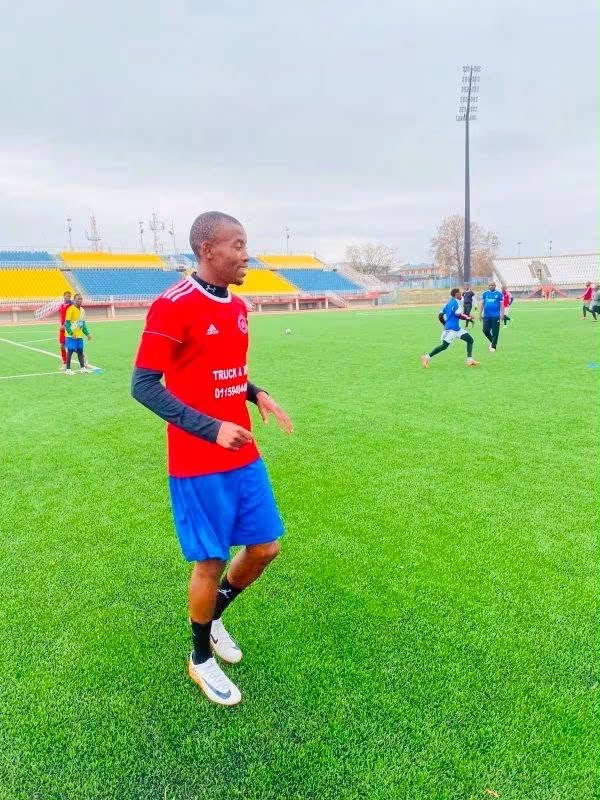
Team Lesotho has been officially sent off ahead of the 2026 Confederation of University and College Sports Associations (CUCSA) Games, with athletes determined to make a strong impression as the country returns to the regional competition after more than six years. The CUCSA Games, scheduled to take place in Gaborone, Botswana, from Sunday, June 28 to Sunday, July 5, are a biennial multi-sport tournament that brings together university and college student-athletes from across Southern Africa (Region 5). The Lesotho University Colleges and Sports Association (LUCSA) hosted a farewell ceremony at Setsoto National Stadium on Saturday, June 27, to officially send off Team Lesotho as they departed to represent the nation at the prestigious regional event. Addressing the athletes, LUCSA President Mpolokeng Tsenoli urged the team to make the most of the opportunity by showcasing their abilities on the regional stage. Tsenoli highlighted the significance of Lesotho’s return to the competition, noting that the country has been absent from the Games for more than six years due to financial challenges. Lesotho had originally been awarded the rights to host the 2020 edition in Maseru, but those plans were disrupted by the COVID-19 pandemic, leading to the postponement of the event before the hosting rights were eventually reassigned. This year’s delegation will compete in six sporting codes: men’s and women’s football, athletics, basketball, volleyball, netball and chess. Preparations for the Games have been extensive, with all teams undergoing intensive training in recent weeks. LUCSA FC and the LUCSA Ladies football team, coached by Dr. Makhetha, have been training at Setsoto National Stadium as they fine-tuned their preparations for the tournament. Their performances in a series of friendly matches have demonstrated both their progress and determination heading into the regional competition. On June 19, LUCSA FC produced an emphatic 4-0 victory over LMPS in a friendly match before playing out an entertaining 4-4 draw against LU FC on June 20. The women’s side also showed encouraging form by defeating Villa Ladies 2-0 on June 22. Speaking during the farewell ceremony, women’s football captain Joalane Tongoane expressed confidence in the team’s readiness, assuring stakeholders that Team Lesotho is travelling to Botswana with the ambition of achieving results rather than merely making up the numbers. “We are going there to compete and deliver results, not simply to participate,” she said. With months of preparation complete and confidence high across the various sporting codes, Team Lesotho now heads to Gaborone eager to re-establish the country’s presence at one of Southern Africa’s biggest university sporting events and fly the national flag with pride.

Fresh produce prices and the CPI: what South Africa’s latest data means for farmers

Farmer’s corner

South Africa’s fresh produce markets are sending a mixed signal this winter: vegetables are holding up in price as demand softens and fruit remains in deflation, while the country’s overall cost of living hit its highest point in nearly two years, driven not by food but by fuel.

By Staff Reporter  ·  Lesotho Tribune  ·  June 2026

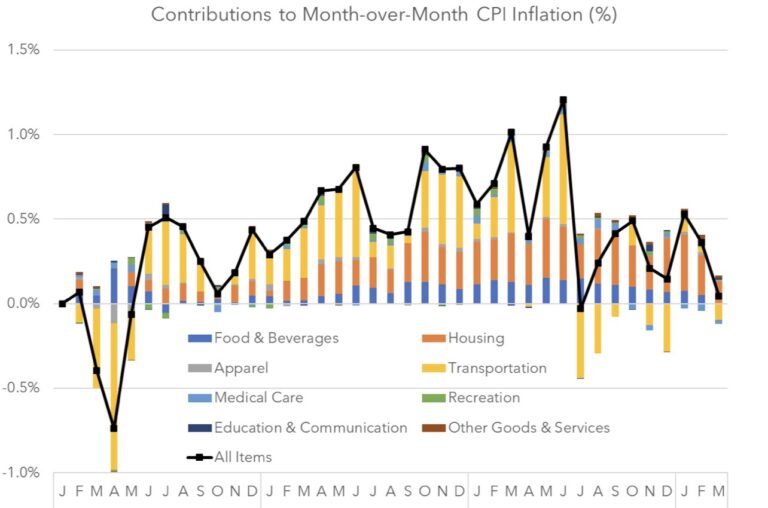
South Africa’s national consumer price index (CPI) rose to 4.5% in May 2026, up from 4.0% in April, according to Statistics South Africa. This is the highest rate since July 2024, when it was 4.6%. The monthly increase was 0.7%.

The surge did not come from the food basket. The inflation rise was largely driven by increases in fuel prices. The fuel index recorded a second large monthly increase, leaping by 14.3% to reach an annual rise of 28.7%. Over the past 12 months, prices for petrol increased by 24.8% and diesel by 53.8%. Stripped of fuel, the annual CPI stood at 3.7% in May, unchanged from the month before.

Inflation for food and non-alcoholic beverages continues to subside, declining to 1.9% from 2.9% in April. This is down from the peak of 5.7% recorded in July 2025. For farmers who sell staple vegetables and fresh fruit, the data tells a more specific story, and it is not uniform.

“Prices for fruits and nuts and vegetables are lower than a year ago, at -8.5% and -6.0% respectively. Both categories have been in deflationary territory since October 2025.”
Statistics South Africa, May 2026 CPI release

Vegetables: softening demand, but prices holding

At the national fresh produce markets, vegetable prices have come under demand pressure heading into the second half of June. According to AMT’s Dr Johann van der Merwe, vegetable demand has softened over the most recent trading weeks, with the question now being whether prices will follow.

Demand improved during parts of the past period, giving support to several vegetable prices. However, increasing volumes are limiting strong upward momentum, especially in potatoes. Carrots and onions still show potential for further gains.

Potatoes, onions, tomatoes, cabbages, and carrots are the five highest-volume vegetables at South Africa’s national fresh produce markets. Johannesburg’s market holds a 46% share of national trade, with an estimated 43 million people across the country depending on the national markets for fresh fruit and vegetables.

Selected price movements, May–June 2026

Commodity Month-on-month Year-on-year (CPI) Direction
Potatoes Volume pressure −6.0% (vegetables)
Onions Potential for gains −6.0% (vegetables)
Carrots Potential for gains −6.0% (vegetables)
Maize meal Deflation deepening −4.4%
Brown bread Marginal decrease −0.3%

Sources: Stats SA CPI May 2026; AMT Fresh Produce Market Report June 2026. ▼ = lower year-on-year. ◆ = mixed/watch.

Fruit: volume pressure, falling prices

The fruit market has faced sustained downward pressure since October 2025. Prices for fruits and nuts are 8.5% lower than a year ago, and the category has been in deflationary territory continuously since October 2025.

Banana prices dropped sharply in late May, while oranges, lemons, grapefruits and avocados also remained under pressure due to higher volumes on the market. Table grapes and blueberries were exceptions, still showing strength.

Fruit markets continued to face a clear downward trend across most categories, driven largely by increasing supply and relatively soft demand. The key question as markets move deeper into winter is how long this pressure will last before tightening seasonal supply provides a floor.

Meat and dairy: inflation cools but remains positive

Meat inflation cooled in May, recording an annual increase of 7.3% compared with April’s 9.4%. The monthly rate was -0.8%. Stewing beef prices dropped by 3.0% and beef mince by 2.4% between April and May. For farmers supplying beef to market, the monthly relief does not erase a still-elevated year-on-year position.

The annual rate for the milk, other dairy products and eggs category increased to 0.9% from 0.1% in April. Full cream long-life milk rose 1.7% month-on-month, low fat fresh milk by 1.5%, and cheddar cheese by 1.5%.

What this means at the farm gate

For Basotho farmers selling into the South African market, the data points in two directions. Fruit and most vegetable categories are cheaper than a year ago, which is good for consumers but compresses margins for producers. At the same time, fuel costs are 28.7% higher year-on-year, raising transport costs for every tonne that moves from the Free State or the Lesotho highlands to a national market.

Annual deflation for cereal products deepened in May, dropping to -1.4%, with maize meal 4.4% cheaper than a year ago. Cheaper staples reduce input costs for livestock farmers using maize-based feed, but also reduce the price of competing starch products in the retail basket.

The rand traded at approximately R16.48 to the US dollar on 23 June 2026 (USD /bin/sh.061). For farmers with export exposure, any further rand softening would partially offset the local price deflation in fresh produce. The rand has averaged R16.43 to the dollar so far in 2026.

Lesotho’s own CPI data, published by the Bureau of Statistics, lags South Africa’s by several months. The most recent available figure, for February 2026, showed inflation at 2.7%, down from 3.4% in January. No figures for March, April or May have been published. The gap in publication timing means Basotho farmers and policymakers are currently working from data that is at least three months behind the South African picture.

The core inflation rate, which excludes food, non-alcoholic beverages, fuel, and energy, rose to an over one-and-a-half-year high of 3.8% in May, up from 3.6% the previous month. This reflects cost pressures across the rest of the economy that affect farming operations, including packaging, labour, and equipment.

The next Stats SA CPI release, covering June 2026 data, is scheduled for mid-July. Market watchers will be looking at whether vegetable deflation deepens as the winter season progresses or whether tightening supply in select categories, particularly onions and carrots, provides a floor.

Green Recovery Drive Begins In Lesotho To Heal The Land And Support Families

Maseru

Lesotho has started a new nationwide campaign to fix its damaged environment and give communities more ways to earn a living.

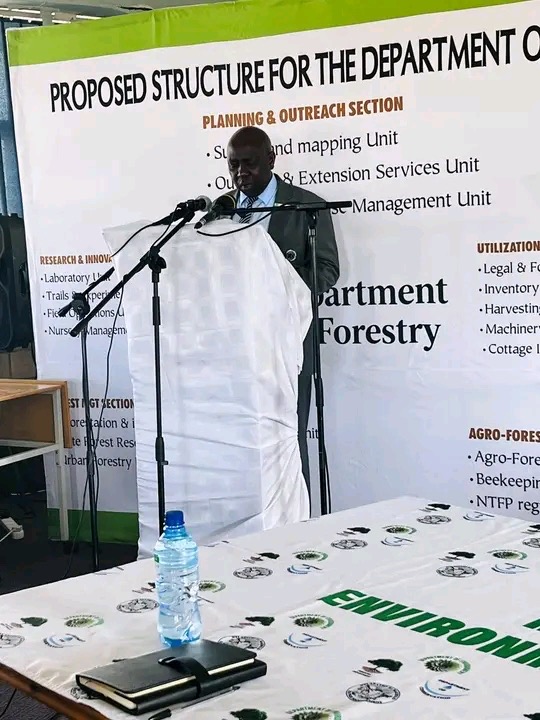
The Ministry of Environment and Forestry officially launched the Green Recovery Initiative on Thursday in Maseru. The programme will run for the full 2026/27 financial year and is being described as one of the country’s biggest efforts yet to fight land degradation, grow more trees, and improve life in both rural and urban areas.

This is said to be more than just planting trees, Minister of Environment and Forestry, Thabo Mofosi, said the project is also about the future of Basotho.

“The Green Recovery Initiative is not only about planting trees; it is about building a sustainable future for present and future generations,” Mofosi told the crowd at the launch.

According to the Ministry, the plan has four main goals: cut down soil erosion, increase the number of trees across the country, help households earn more money, and play a part in slowing down climate change.

Officials say the work will be practical and hands-on. The key activities include:

  • Large-scale tree planting across villages, towns, and open land
  • Protecting forests and grasslands that are already there, so they are not lost to cutting or overgrazing
  • Building green boundary walls using trees and shrubs instead of only stone or wire
  • Teaching better land care so farmers and communities can use soil and water wisely
  • Getting communities involved so local people own and look after the projects

Director of Forestry, Mokete Bereng, said new forest laws and clear guidelines will back up the work to make sure it lasts.

“We will no longer simply plant trees; we will raise trees,” Bereng said. “That means we will watch them, care for them, and make sure they survive.”

The Ministry says the initiative is also an economic plan. By focusing on fruit trees and forestry work, the programme is expected to create jobs and increase fruit production. That could mean more food at home and more products to sell in local markets.

Bereng noted that many Basotho villages face serious problems right now, including soil erosion, loss of forests, and the effects of climate change. These issues are hurting farmland and the families who depend on firewood and farming to survive.

To make sure the trees do not die after planting, the Department of Forestry will monitor new sites closely and support communities with the care and knowledge they need.

The first phase will begin in Leribe District and teams plan to plant 850 fruit trees at Matlameng in Ha Mahlehle to kick off the project. After that, the initiative will be rolled out to other districts across Lesotho.

The Ministry urges every Mosotho to be part of the campaign. Officials say the success of the Green Recovery Initiative depends on people planting trees, protecting young plants from animals and fire, and keeping them safe until they are fully grown.

“Plant a tree, protect a tree, and preserve a tree,” the Ministry urged. “Together we can secure a greener and more sustainable future for our children and grandchildren.”

Independent business & current affairs journalism · Lesotho Subscribe — M85/month
| Independent business & current affairs journalism · Lesotho