
Mohahlaula Airlines
Thursday, July 23, 2026
Home Blog Page 52

Mofomobe Demands Urgent Action Over Governance Breach at LEC

0

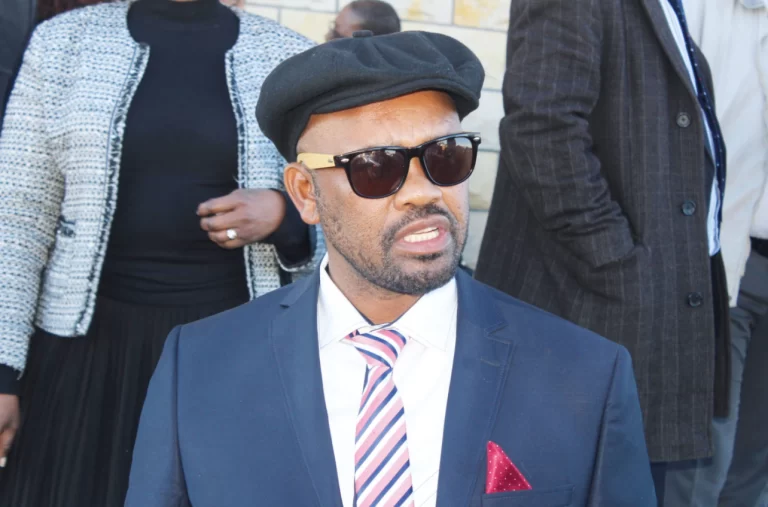
Leader of the Basotho National Party (BNP) and Member of Parliament, Hon. Machesetsa Mofomobe, has written to the Minister of Energy, Hon. Mohlomi Moleko, raising serious concerns about what he terms a “breach of corporate governance” at the Lesotho Electricity Company (LEC).

In a strongly worded letter dated 13 October 2025, Mofomobe accuses the LEC board of violating the Public Enterprises Act of 2023, the Companies Act of 2011, and the OECD Guidelines on Corporate Governance of State-Owned Enterprises. His letter highlights that a non-executive board member had been appointed as Acting Managing Director and, after the expiry of that acting appointment, reverted to their board position.

Mofomobe argues that this arrangement compromises the independence and objectivity required of state-owned enterprise boards. “This development raises serious concerns of corporate governance irregularity,” he wrote, insisting that such practices blur the separation between management and oversight functions.

Quoting the Public Enterprises Act, Mofomobe reminded the minister that Section 21(1) prohibits commissioners or board members from taking part in the day-to-day administration of public enterprises. The BNP leader said this provision exists to ensure that management and oversight remain distinct and that board members do not exercise executive powers.

He further cited the Companies Act, which obliges directors to act with due care and avoid conflicts of interest, noting that a board member’s temporary assumption of an executive role, followed by their return to the board without procedural safeguards, may constitute a breach of fiduciary duty.

Mofomobe also referenced the OECD Guidelines, which warn that former executives should not immediately return to board positions without a cooling-off period, as this undermines the board’s independence and objectivity.

The BNP leader urged the Ministry of Energy to intervene swiftly and reverse what he described as an “irregular arrangement” to restore public confidence in LEC’s management. He warned that if the matter remains unresolved, he will seek legal remedies to defend good governance and the rule of law.

“This issue must be treated with the urgency and seriousness it deserves,” he concluded.

The letter was also copied to the Public Accounts Committee and the Lesotho Institute of Directors.

If left unaddressed, this controversy could deepen concerns about governance standards across Lesotho’s state-owned enterprises, many of which are already under scrutiny for lax oversight and political interference.
Breaking | DCP Paseka Mokete suspended

0

Maseru

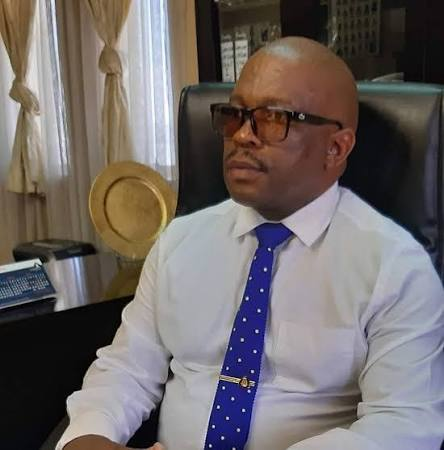
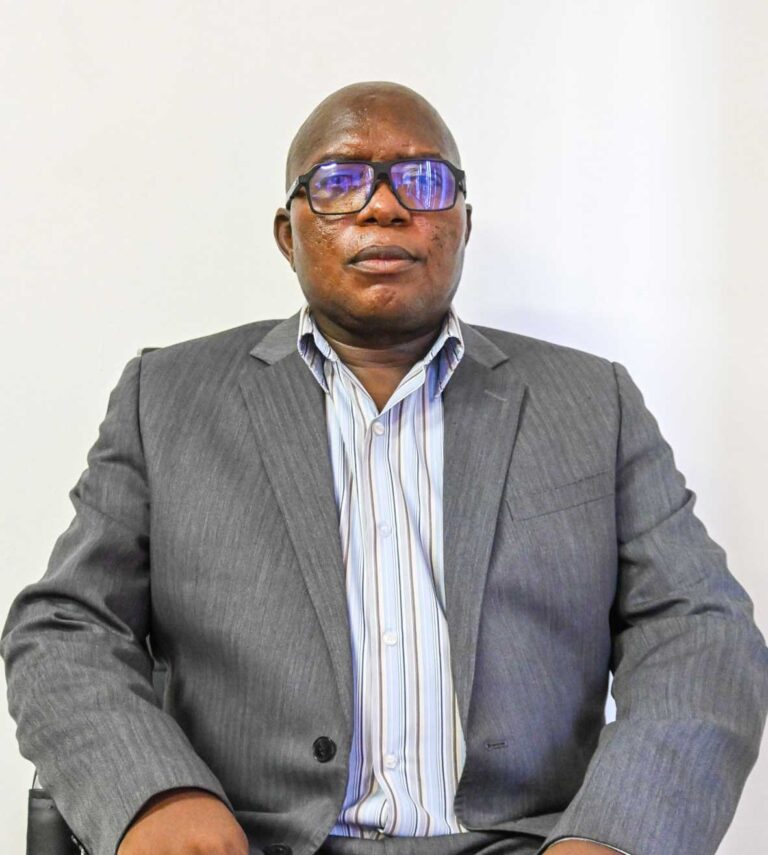
Impeccable sources within the Lesotho Mounted Police Service have informed Lesotho Tribune that Deputy Commissioner of Police Paseka Mokete has been suspended by Commissioner of Police Borotho Matsoso. The suspension follows a show-cause letter that was reportedly issued to DCP Mokete earlier this week.

According to those familiar with internal proceedings, the decision comes after what insiders described as growing tension between the two senior officers over operational control and recent disciplinary actions within the force. It remains unclear what specific allegations were raised in the show-cause letter, but sources say the matter involves “conduct unbecoming of a senior officer.”

This development mirrors previous turbulence within the LMPS hierarchy, where senior officers have been sent on forced leave or suspended under circumstances that often blur the line between disciplinary oversight and internal politics.

When contacted for comment, both the Police Spokesperson and DCP Mokete were unavailable. Lesotho Tribune continues to make efforts to obtain official confirmation and further details regarding the reasons and duration of the suspension.

More to follow as the story develops.

LEC’s New Acting MD Once Charged for Abuse of Office Now Heads Two State Power Companies

0

Maseru

The Lesotho Electricity Company (LEC) has confirmed the appointment of Tšeliso ’Mokela as Acting Managing Director, a move that has stirred disbelief and outrage among majority of Basotho who see it as yet another chapter in the revolving door of controversial state appointments.

The announcement, made through an official notice on Friday, comes just a day after the abrupt removal of Acting MD Nathaniel Maphathe. Sources within the utility say Maphathe’s exit followed internal tensions with the Ministry of Natural Resources and the Board over disciplinary processes and governance failures.

But the replacement has raised more eyebrows than the dismissal itself.

’Tšeliso ’Mokela, who currently heads the Lesotho Electricity Company Communications (LECC), will now hold two critical leadership posts within the country’s power sector, a concentration of authority that analysts describe as bizarre and reckless, particularly in an environment already marred by governance scandals and public distrust.

What further complicates the appointment is the political proximity. ’Mokela’s wife, Teboho Mokela, is the current Government Secretary, the most powerful civil service position in Lesotho. The pair now effectively straddle both the bureaucratic and operational arms of the state, a situation critics say represents the very definition of conflict of interest.

This is not the first time Tšeliso ’Mokela’s name has appeared in controversy. Records show that in September 2020, as Chief Executive Officer of the Lesotho Communications Authority (LCA), he was charged alongside several board members for abusing the functions of their offices. The charges related to his failure to disclose personal interests during meetings where his own remuneration was discussed.

Investigations at the time revealed that under his leadership, the LCA Board approved a 57 percent bonus for him without any performance assessment, in violation of internal policy that capped bonuses at 20 percent. As a result, he pocketed over M889,000 in bonuses and salary adjustments for the 2016 to 2018 financial years, an act later flagged as irregular and corrupt.

A senior governance expert who spoke to Lesotho Tribune described the LEC Board’s decision as a slap in the face to accountability.

“It is almost surreal,” he said. “You have a man who was charged for corruption now heading two of the country’s most strategic state-owned enterprises, while his wife sits as the Government Secretary. It makes a mockery of the government’s own anti-corruption rhetoric.”

At LEC, insiders say morale has plummeted as staff view the appointment as politically motivated rather than based on merit. One employee, speaking on condition of anonymity, said the decision “feels like punishment for those who believed reform was finally possible.”

’Mokela’s dual role will also stretch the corporate governance boundaries between LEC and its subsidiary LECC, both of which are integral to Lesotho’s energy infrastructure and already under scrutiny for inefficiencies, procurement irregularities, and mismanagement of public funds.

What remains unclear is whether the Public Accounts Committee (PAC), which has recently been investigating SOE governance failures, will summon the new Acting MD to explain his past conduct and potential conflict of interest.

For now, the lights at LEC may stay on, but the moral circuit seems dimmer than ever.

PAC Orders LNDC to Fire Internal Auditor

MASERU-In a stunning revelation that has rocked one of Lesotho’s most noticeable public institutions, Public Accounts Committee (PAC) has demanded that the Lesotho National Development Corporation (LNDC) immediately fire its Internal Auditor, Puleng Tsekoa (‘Mapaballo Rantsane) who is a sister to LNDC Board chairperson, Palesa Tsekoa, over serious allegations that her appointment was driven by corruption and nepotism.

The heated confrontation unfolded this week in Parliament, where LNDC officials faced a tough grilling from PAC members over irregularities revealed in the Auditor General’s report. What began as a standard inquiry quickly exploded into a scandal that has left the corporation’s credibility hanging by a thread. PAC Chairperson, Honorable ‘Machabana Lemphane-Letsie, dropped the bombshell early in the hearing, accusing LNDC of appointing Rantsane as a “reward” for giving the corporation a clean audit report in her previous role. The Chairperson said the sudden shift from a disclaimer-filled audit history to a perfect report under Rantsane’s hand was “too convenient to ignore.”

“She gave LNDC a clean bill of health when no one else could,” Lemphane-Letsie declared. “And not long after that, she was hired as their Internal Auditor. That is not a coincidence but it’s a payback.” Her statement sent shockwaves through the room. 

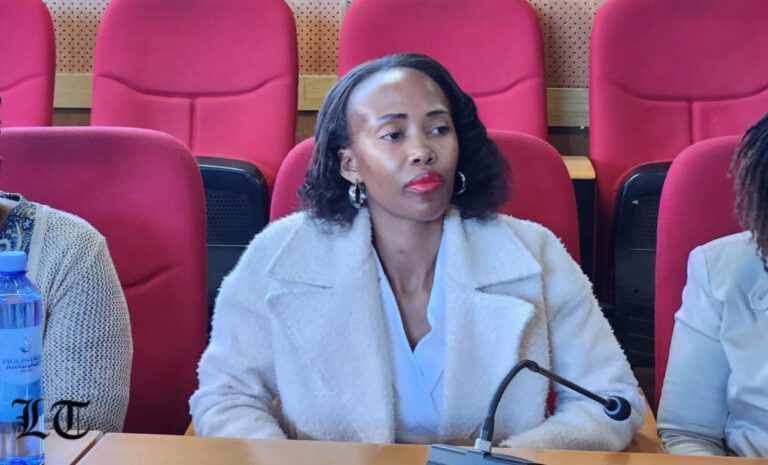
The committee demanded to know how Rantsane, who allegedly lacks the minimum qualifications for the position, could have been approved by LNDC’s recruitment board. It later appeared that one of the four board members who handled the hiring process is directly related to her, arevelation that fueled scandal among committee members and confirmed their suspicions of nepotism.

Interim Chief Executive Officer of LNDC, Molise Ramaili, tried to distance himself from the scandal, telling the committee that he was not involved in Rantsane’s recruitment. “The hiring was managed by a four-member board,” Ramaili explained, adding that he only learned later that questions had been raised about her qualifications.

But PAC members were not convinced. They accused LNDC’s leadership of turning a blind eye to corrupt hiring practices that have become all too common in state institutions. “When unqualified people are put in charge of financial oversight, corruption becomes a permanent feature,” Lemphane-Letsie said coldly.

The PAC’s findings have left LNDC scrambling to manage the fallout. The corporation, which plays a central role in attracting investment and promoting industrial growth in Lesotho, now faces a public relations disaster. The committee has ordered the immediate dismissal of Rantsane and called for disciplinary action against any officials who may have connived in her hiring.

BCM Leader Accuses Officers of Denying Him Basic Dignity in Shocking Court Revelation

MASERU-In a dramatic courtroom turn, the leader of the Basotho Covenant Movement (BCM), Dr. Tšepo Lipholo, told the Maseru Magistrate’s Court that prison officers denied him access to the toilet while in court, a revelation that left the courtroom for a moment shocked.

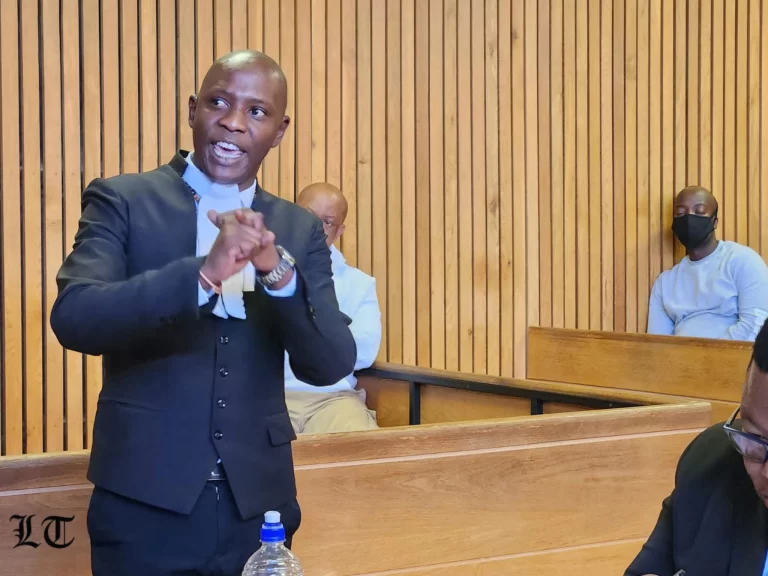
Appearing before Magistrate Thamae Thamae, Dr. Lipholo made the startling claim during proceedings in which his legal team was set to argue for the magistrate’s recusal. The application seeks Magistrate Thamae’s withdrawal from a matter in which Lipholo is fighting for his release from custody, claiming that his case has stalled unfairly.

According to Lipholo’s explanation, the incident unfolded shortly after a short health break which was granted because one of the correctional service officers had indicated that the accused, (Dr. Lipholo) is asking for a health break. He told the court that while he was supposed to leave the court room to the toilet one of the senior correctional service official Mafatle approached him together with others, blocking his way indicating that he should not do that. Lipholo said he told the correctional service officers that he has a right to have a health break but one official made it to a point that he said Lipholo seems to be taking advantage them.

The BCM leader further told the court that his stay in prison has been marked by humiliation and mistreatment. He alleged that even though the Deputy Commissioner of the Lesotho Correctional Service had told the public that he is not abused in any sort in the facility, he had lost his tooth in the hands of some of the correctional service officers. “Even my food has been tampered with,” he continued, alleging that on one occasion, his meal was mixed with powdered soap.

“These acts are a clear violation of my rights,” Lipholo declared, insisting that the inhumane treatment was not only degrading but also part of a pattern of intimidation designed to silence him.

Magistrate Thamae appeared visibly disturbed by the allegations. Addressing the court, he emphasized that accused persons are under the protection of the law while before the court. “When accused individuals are in this courtroom, they are under the authority of the court,” he said firmly. “No one has the right to infringe upon their basic rights or dignity.”

But what left many observers surprised was that the magistrate did not summon the officers accused of the misconduct to respond to the claims, nor did he launch an immediate inquiry to verify the allegations. Instead, he advised that matters concerning the accused’s treatment in custody should be discussed with his legal representatives.

The courtroom murmured with unease as Dr. Lipholo was led back into custody, visibly unsettled. His supporters, seated quietly in the gallery, exchanged worried glances. To them, the testimony confirmed their long-standing fears that their leader has been deliberately mistreated since his arrest.

As the court adjourned for the day, the atmosphere remained tense. The magistrate did not immediately deliver a ruling on the recusal application, leaving uncertainty hanging over the proceedings.

Likuena Fight Bravely as Nigeria Escape with a Slim 2-1 Win

0

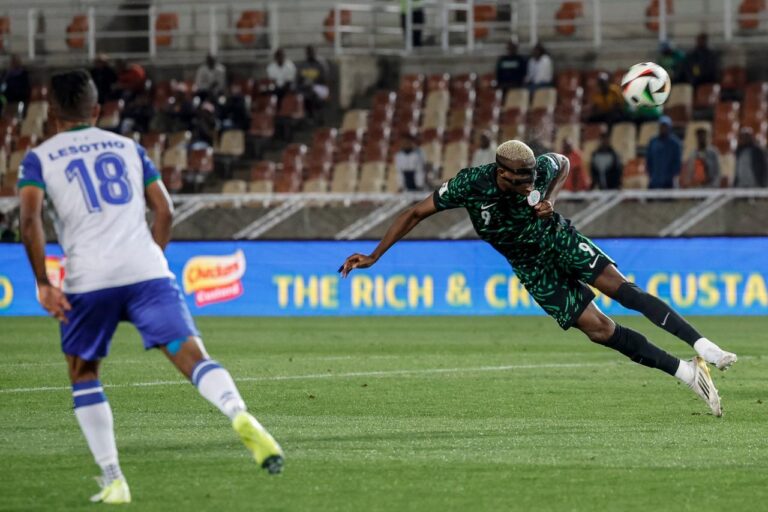
Nigeria claimed their crucial 2-1 win over Likuena in Friday’s 2026 FIFA World Cup qualifying clash at the Peter Mokaba Stadium, maintaining their push for a spot in the tournament. Despite being heavy favourites, the Super Eagles were made to work hard for all three points by determined Likuena.

The first half ended goalless, despite both teams creating chances. Likuena showed resilience in defence, while Nigeria’s talented attacking lineup struggled to find the breakthrough and capitalise on their chances. The deadlock was finally broken early in the second half when Moses Simon’s goal-bound effort was blocked by Likuena’s wing-back, Thabang Malane’s arm in the box. The referee pointed to the spot, and Nigerian captain William Troost-Ekong calmly converted the penalty in the 55th minute to give the nigerian visitors the lead.

Nigeria doubled their advantage shortly after when substitute Akor Adams marked his senior debut with a composed finish. The goal came from a well-executed pass by star striker Victor Osimhen, showing Nigeria’s true attacking depth and quality.

Likuena, however, refused to go down without a fight. A late error by Nigerian goalkeeper Stanley Nwabali gifted the Lesotho a goal, sparking a tense finale. But despite the pressure, Nigeria held on to secure their third win of the qualifying campaign.

The Super Eagles dominated much of the match, with their quality on full display. Nigeria’s squad boasted a wealth of international experience, with many of their players featuring for top clubs across Europe. Captain William Troost-Ekong currently plays in the Saudi Pro League, while centre-back Calvin Bassey and midfielder Alex Iwobi both feature for Fulham FC in the English Premier League. Right winger Tolu Arokodare plies his trade at Wolverhampton FC, left winger Ademola Lookman is a key player for Serie A side Atalanta FC, and super striker Victor Osimhen stars for Galatasaray S.K. in Turkey.

In contrast, most of Lesotho’s players are domestically based, with limited exposure to top-tier international football. The disparity in experience and talent was evident throughout the match, but credit must go to Likuena, who managed to keep the scoreline close and displayed admirable grit and determination.

This result continues Nigeria’s strong run against Lesotho, having now won three of their last four meetings in the past six years, with the remaining match ending in a draw. Although Lesotho have often proven to be stubborn opponents, the Super Eagles once again found a way to prevail.

LCA Warns Against Unlicensed Courier Operators as Lesotho Marks World Post Day 2025

0

MASERU — As the world celebrates World Post Day 2025 under the theme “Empowering Communities through Reliable Postal Services”, the Lesotho Communications Authority (LCA) has issued a stern warning to unlicensed courier operators that continue to flout national regulations.

In a statement released on Thursday, the LCA said the rise in unregistered courier services poses serious risks to consumers and undermines fair competition in the postal and logistics industry. The Authority said it has received numerous complaints about such operators who have been conducting business without oversight, thereby gaining unfair market advantages and jeopardizing public trust.

World Post Day, which commemorates the founding of the Universal Postal Union (UPU) in 1874, serves as a reminder of the critical role postal and courier services play in connecting communities, facilitating trade, and driving development. This year’s celebration focuses on building trust, accountability, and inclusivity within the postal ecosystem—values that the LCA says are central to its mandate.

“The Authority has noted the proliferation of unlicensed courier service providers operating within the country. These unregistered entities have been engaging in predatory practices that distort the marketplace and expose consumers to risks such as loss or theft of parcels,” the statement reads.

The LCA cautioned that customers who choose to use unlicensed couriers have no recourse under the Consumer Complaints Procedure and Guidelines 2022, meaning they cannot be compensated for losses or damages.

Currently, over 200 unlicensed courier operators are believed to be operating illegally across the country. The Authority said it is working closely with law enforcement, the One Stop Business Facilitation Centre, and Revenue Services Lesotho to identify and clamp down on such operators.

“These illegal providers are subject to arrest and possible closure by law enforcement agencies,” the LCA said.

To help protect consumers, the LCA released a list of companies that are currently licensed and legally authorized to operate courier services in Lesotho. These are:

Lesotho Postal Services

DHL Lesotho

Kayhil Freight

RCJ Express

Skynet Worldwide Express

Leseho Logistics

Skyberg

The Authority urged the public to verify the licensing status of courier companies before using their services.

“Consumers are strongly advised to avoid engaging unlicensed providers, as doing so exposes them to substantial financial and personal risk,” the LCA reiterated.

The celebration of World Post Day, marked annually on 9 October, continues to highlight the importance of postal services in global and local development. For Lesotho, this year’s commemoration also serves as a call to action—to protect the integrity of the postal industry, ensure consumer safety, and reaffirm the role of reliable postal services in empowering communities.

45 Basotho Apply for Three IEC Commissioner Posts

0

Maseru 

Parliament’s Office of the Clerk has confirmed receiving 45 applications from Basotho vying to fill the vacant positions of Commissioners at the Independent Electoral Commission (IEC). The confirmation comes through a letter dated 3 October 2025, addressed to Adv. Lekhetho Rakuoane, Secretary of Registered Political Parties.

According to the correspondence signed by Adv. Lebohang Maema KC, Clerk to the National Assembly, the applications were submitted following a public notice inviting suitably qualified Basotho to serve as IEC Commissioners. The deadline for submission was Thursday, 2 October 2025 at 4:30 p.m.

The Clerk’s letter indicates that the full list of applicants, along with their curriculum vitae and supporting documents, has been enclosed and forwarded to the Secretary of Political Parties “for action.” This marks the beginning of a vetting process expected to determine the next cohort of IEC Commissioners who will oversee the country’s electoral management.

A register of submissions seen by Lesotho Tribune shows a diverse list of applicants drawn from academia, civil service, law, and the private sector.

The Independent Electoral Commission plays a pivotal role in maintaining Lesotho’s democratic processes by managing national elections, voter registration, and political party financing. The appointment of new Commissioners follows the end of the tenure of the previous team, which guided the country through the last general elections.

Ramahooana Matlosa, Political analysts told Lesotho Tribune that the composition of the incoming IEC will be critical ahead of the next electoral cycle, especially as the country continues to navigate reforms and restore public confidence in its institutions.

The list will now be reviewed by the relevant authorities before recommendations are made for final appointments.

When the Land of the Free Turns Its Guns Inward

0

It is a bitter irony: the United States, self-styled as the beacon of democracy, is now experimenting with the very tools long associated with repressive regimes…

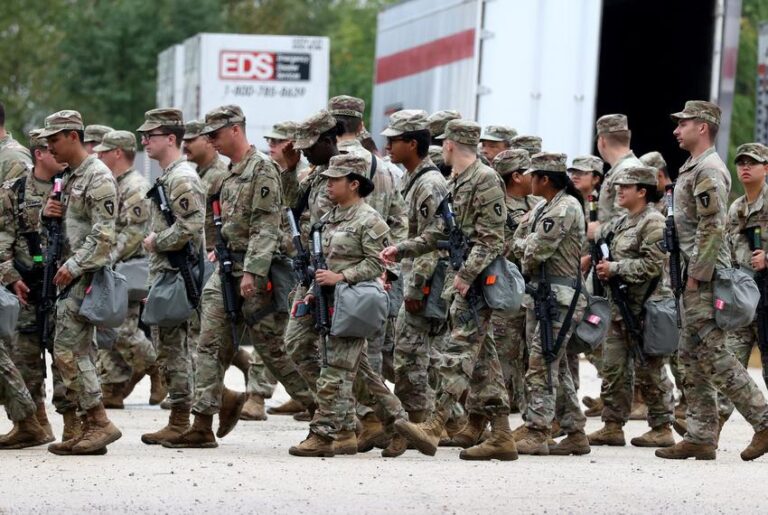
There was a time when America preached restraint, lectured the world on democracy, and wagged its finger at every government that used the military to settle domestic scores. Today, that same country has deployed soldiers into its own streets. President Trump’s decision to send the National Guard into cities like Chicago, Washington, and Los Angeles is not just political theatre. It is the slow cracking of a system that once claimed to be unbreakable.

For decades, African nations have been told that only weak states unleash the army on their people. Yet here we are, watching the supposed guardian of democracy resort to the very “third world” practices it condemns. It feels strange to see the stars and stripes flutter above military convoys patrolling civilian neighbourhoods. The land of the free has started to look like the land of fear.

Trump’s justification sounds familiar. He says cities are unsafe, governors are failing, and the federal government must restore order. That script has been used by many leaders across Africa who wished to appear strong while silencing discontent. The difference is that when those leaders acted, Washington called them tyrants. Now, the White House has decided that the same formula, soldiers in the streets, can cure a democracy’s growing unease.

In Illinois, a federal judge has already blocked the deployment. In Oregon, another has done the same, warning that the use of troops would inflame tensions rather than ease them. Even so, the message has already spread far beyond America’s borders: when power feels threatened, it reaches for the gun.

This is what makes the move dangerous. Other leaders are watching. If Washington can militarise dissent, then anyone can. It erases the last moral barrier that separates democratic authority from brute force. The African strongmen who once trembled under Western lectures now have a convenient reply: “We are only doing what the United States does.”

America has always served as both teacher and mirror. When it turns its back on its own principles, it gives license to every opportunist who believes power should never be questioned.

In Lesotho, we have lived through this before. The army was sent into communities under the banner of “disarming criminals.” Instead, civilians were beaten, tortured, and in some cases, killed. Reports from Amnesty International described people stripped, assaulted, and left to rot in detention. Nobody was held accountable. The government’s silence was telling.

The Biden administration, said nothing. Not a word condemning the torture. Not a statement demanding justice. It taught our leaders that the world does not care, so long as you wear the label “ally.” That silence has cost lives.

And now, with the United States flirting with the same militarised instinct, it becomes almost impossible for Washington to call anyone else out. The preacher has joined the sinners.

What we are witnessing is not a momentary lapse but a shift in how power justifies itself. Soldiers are being rebranded as peacekeepers, and dissenters as threats to national unity. It is a dangerous vocabulary. Once a nation convinces itself that order must come before freedom, the rest is predictable: arrests, intimidation, and silence.

The United States may recover from this. Its institutions are stronger than ours. Its courts are still willing to say no. But even if it does recover, the damage is done. The world has seen the mask slip.

America’s moral authority was never in its might but in its example. If that example fades, it leaves the world darker. Lesotho’s weak leadership, already prone to abuse, now has cover. Other fragile democracies will follow. Every soldier deployed on a city street will trace their justification to the country that once claimed to be the world’s conscience.

The lesson is brutal but clear. Democracy dies not in coups, but in small compromises that feel reasonable at the time. Today it is “restoring order.” Tomorrow it is “ensuring stability.” Before long, the citizen becomes the suspect.

America should know better. And so should we.

Mkhwanazi’s War on the Press Is a Fool’s Errand…

0

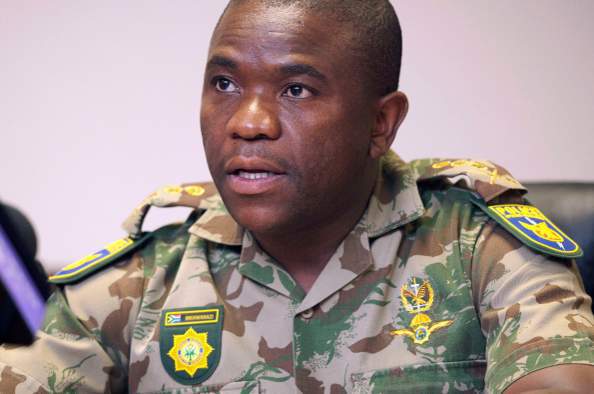
Lieutenant General Nhlanhla Mkhwanazi’s remarks before South African Parliament this week were more than reckless [Yes before you wonder why we have an opinion on South African issues…more than half of Lesotho’s ruling party MPs are “South Africans”… not that we need justification to have opinion!]. They were dangerous. His call for journalists to be spied on by the State Security Agency and for reporters to be jailed for so-called misinformation is an assault on the very foundation of South Africa’s democracy.

As a senior police officer, Mkhwanazi carries the weight of public trust and the responsibility to uphold the Constitution. That same Constitution guarantees freedom of the press and the right to receive and impart information. His words, therefore, are not just an opinion. They are an abuse of authority.

What makes his position even more troubling is that it betrays a deep misunderstanding of how media accountability already works. South Africa’s Press Council exists to deal with ethical breaches. It is a forum where the public can lodge complaints, and where journalists are held to account through a transparent and independent process. By ignoring that, Mkhwanazi is not calling for ethics. He is calling for control.

During his testimony, he accused journalists of being “handled” by rogue intelligence officers and spreading misinformation. Yet he offered no proof. Accusations made under parliamentary privilege, without evidence, are nothing but character assassination. If he truly believes certain reporters are corrupt, he should present credible evidence to their editors or to the Press Council. What he should not do is demand that intelligence agencies monitor newsrooms or threaten imprisonment for mistakes.

When state officials begin to decide which journalists are “ethical” and which are not, democracy begins to die quietly. Fear replaces inquiry. Self-censorship takes root. Whistleblowers stop talking. It becomes easier for corruption and abuse to thrive because those who might expose it are afraid of being watched or jailed. This is precisely the playbook of repressive governments that see truth as a threat rather than a tool for reform.

Mkhwanazi’s justification that “national security” requires secrecy is equally hollow. National security cannot be used as a blanket excuse to hide misconduct or silence scrutiny. Oversight is not an enemy of the state. It is its lifeblood. When a senior law enforcement official advocates for spying on journalists, he undermines the very legitimacy of the institutions he leads.

If he genuinely wants to clean up the image of journalism, he should start by respecting due process. He should report unethical conduct through existing structures. He should encourage transparency in policing and ensure that his own house is in order before turning the state’s intelligence machinery on the media.

South Africa has travelled a painful road to earn its freedoms. Journalists were once harassed, jailed, and killed for telling the truth. To hear a high-ranking police official echoing that dark history is deeply unsettling.

Lieutenant General Mkhwanazi must be reminded that his oath is to protect the Constitution, not to weaken it. A nation that allows its police to decide what journalists may or may not write is not a democracy. It is a warning sign.

The right thing for him to do is simple. Retract the call. Respect the press. Strengthen accountability within the law. Anything less is a betrayal of South Africa’s democratic promise.

We don’t want to have his incompetent colleagues here in Lesotho having similar ideas!

Independent business & current affairs journalism · Lesotho Subscribe — M85/month
| Independent business & current affairs journalism · Lesotho