
Mohahlaula Airlines
Thursday, July 23, 2026
Home Blog Page 53

Sub-Saharan Africa Maintains Resilient Growth but Faces Urgent Jobs Challenge

0

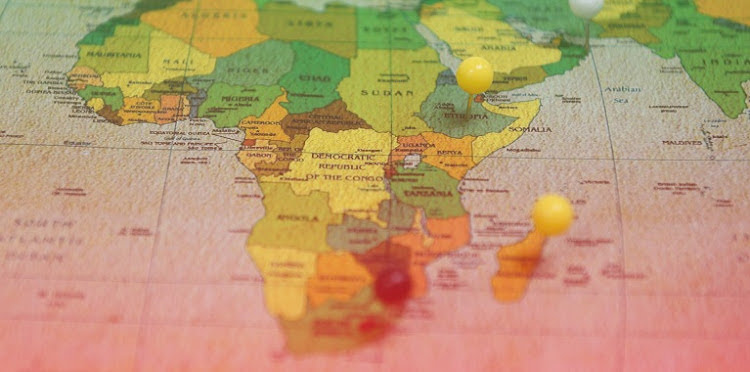
Sub-Saharan Africa’s economy remains resilient, with growth projected to reach 3.8 percent in 2025, up from 3.5 percent in 2024. This acceleration reflects easing inflationary pressures and a modest recovery of investment despite persistent global economic uncertainty.

The number of countries experiencing double-digit inflation has fallen sharply—from 23 in October 2022 to 10 in July 2025—signalling progress in stabilising prices. Yet, downside risks loom large, including the indirect effects of global trade policy uncertainty, declining investor appetite and a shrinking pool of external finance, including declining official development assistance. External debt service has more than doubled over the past decade, reaching 2 percent of GDP in 2024. The number of Sub-Saharan African countries in or at high risk of debt distress has nearly tripled, rising from eight in 2014 to 23 in 2025—nearly half of the region.

The pace of growth remains insufficient to meaningfully reduce extreme poverty or create the quantity and quality of jobs needed to meet the demands of a rapidly growing labour force. Africa is experiencing the world’s largest and fastest demographic shift. To harness this opportunity, countries must accelerate growth that delivers high-quality jobs—a central theme of the 32nd edition of Africa’s Pulse, the World Bank’s biannual economic update for the region, which this year focuses on Pathways to Job Creation in Africa.

“Over the next quarter century, Sub-Saharan Africa’s working-age population will grow by more than 600 million,” said Andrew Dabalen, World Bank Chief Economist for the Africa Region. 

“The challenge will be matching this growing population with better jobs, given that only 24 percent of new workers today land wage-paying jobs. A structural shift toward more medium and large firms is essential to generate wage jobs at scale.”

The report outlines a set of policy priorities to help countries stimulate large-scale job creation. Reducing the cost of doing business is critical to enable businesses to expand and new high-growth firms to enter the market. Policies that target the provision of better infrastructure – energy, digital, transport – and human capital and skills development are essential for creating an ecosystem for people and businesses to thrive. Strengthening institutions and governance can ensure stability, curb corruption, and create a predictable business environment that attracts private sector investment.

Stimulating private sector development in sectors such as agribusiness, mining, tourism, healthcare and housing and construction will also be key. For example, for every job created in tourism, an additional 1.5 jobs are generated in related sectors.  With the right reforms and investments, Sub-Saharan Africa can unlock its vast employment potential and chart a path toward inclusive and sustainable growth.

News Source: World Bank Group

Wall Street crashes after Trump announces 100% tariffs on China; $1.5 trillion wiped out

Wall Street crashed on Friday after President p Trump announced a 100% tariff on Chinese goods and export controls on critical software.

US stock markets saw heavy losses on Friday after President Donald Trump announced a 100 percent tariff on Chinese goods and export controls on critical software. The move has raised worries that the US and China could start a new trade war.

Trump sets new tariffs and export controls

President Trump posted on Truth Social that the tariffs will take effect on November 1, 2025, or sooner depending on China’s actions. “Based on the fact that China has taken this unprecedented position, and speaking only for the USA… the United States of America will impose a Tariff of 100 per cent on China, over and above any Tariff that they are currently paying. Also on November 1, we will impose Export Controls on any and all critical software,” Trump wrote.

Earlier on Friday, Trump accused China of taking “an extraordinarily aggressive position on trade” by sending “an extremely hostile letter to the world.” He also said there was “no reason to meet” withChinese President Xi Jinping after Beijing introduced new export controls on rare earth elements.

“It has just been learned that China has taken an extraordinarily aggressive position on Trade in sending an extremely hostile letter to the World, stating that they were going to, effective November 1st, 2025, impose large scale Export Controls on virtually every product they make, and some not even made by them. This affects ALL Countries, without exception, and was obviously a plan devised by them years ago. It is absolutely unheard of in International Trade, and a moral disgrace in dealing with other Nations,” Trump said.

China controls much of the global supply of rare earth minerals used in electronics, electric vehicles, and defense technology. The country has now added five new elements to its restricted list: holmium, erbium, thulium, europium, and ytterbium. With this, the total number of restricted rare earth stands at 12 out of 17. China now requires export licences not only for the minerals themselves but also for technologies used in “mining, smelting, and magnet production.”

The key concern revolving this development is that these moves could disrupt global supply chains and disturb the technology industry. Experts warn of slower economic growth, market volatility, and uncertainty for businesses and investors worldwide.

Mokela Appointed Acting Managing Director of LEC

0

The Lesotho Electricity Company (LEC) Board of Directors has appointed Mr. Ts’eliso ’Mokela, who’s the husband to current Government Secretary, as the new Acting Managing Director, following the reversion of Mr. Nathaniel Maphathe to his substantive role as a Non-Executive Director. The announcement was made through an official notice issued on Friday, 10 October 2025.

According to the Board, the decision follows the successful completion of Mr. Maphathe’s interim assignment, which began in March 2025 after the suspension of Managing Director Mr. Mohlomi Seitlheko. Maphathe’s tenure was primarily focused on stabilising operations, improving governance, and ensuring compliance with audit and procurement processes.

During his interim term, the Board credits Maphathe for completing the long-delayed Auditor-General–led audit process, ensuring transparency and independence. His leadership, the notice said, positioned LEC on a “renewed trajectory towards operational and financial stability.”

Following that, the Board resolved to appoint Mr. Ts’eliso ’Mokela to lead the utility on a three-month interim basis while disciplinary proceedings continue against the suspended Managing Director and certain executives.

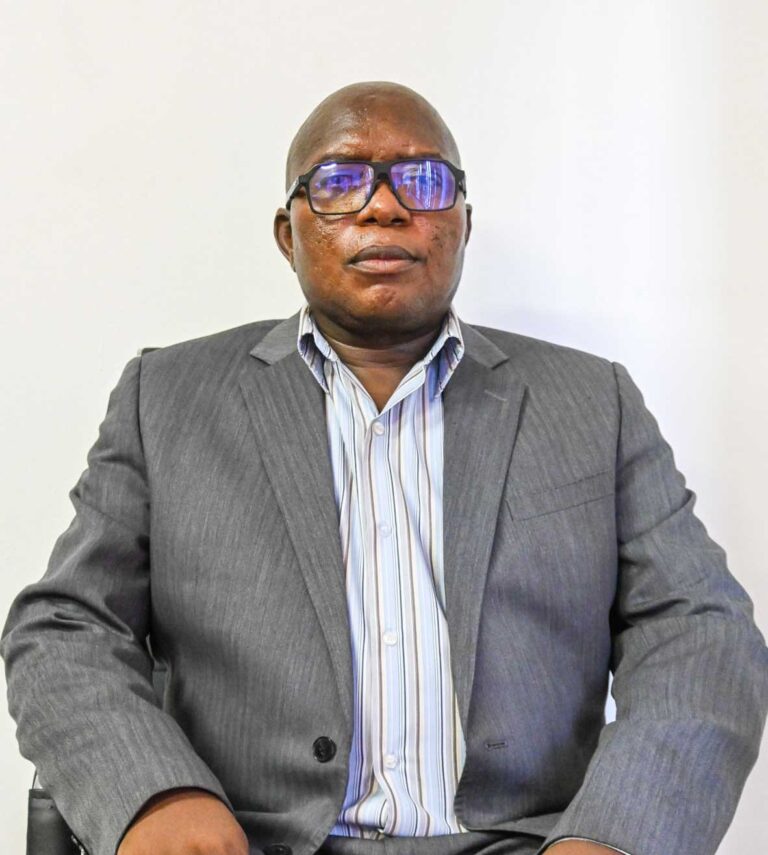
Mr. ’Mokela currently serves as Managing Director of the LEC’s subsidiary, the Lesotho Electricity Company Communications (LECC). He brings over 20 years of experience in corporate governance, policy, and regulation.

A former Chief Executive Officer of the Lesotho Communications Authority (LCA) and former Principal Secretary in the Ministries of Communications and Gender and Youth, Mokela has led major institutional reforms, including the Communications Act of 2012 and the establishment of Lesotho PostBank.

The Board highlighted Mokela’s “strategic, policy, and leadership expertise” as key assets in ensuring stability at LEC during this transition period. It further assured employees, customers, and the public that operations remain fully functional and that the appointment marks continuity in LEC’s governance improvement agenda.

Lesotho Tribune understands that Mokela’s appointment comes at a time when the utility is under pressure to restore public confidence amid internal investigations and regulatory scrutiny.

BREAKING | LNDC Heads to Court to Block PAC Hearing

0

Sources within the Ministry of Trade and Industry have this morning informed Lesotho Tribune that the Lesotho National Development Corporation (LNDC) Board of Directors has instructed management to file an urgent court application seeking to bar the Public Accounts Committee (PAC) from proceeding with its scheduled hearing on Monday, 13 October 2025.

If confirmed, this would make LNDC the second state-owned enterprise to take legal action aimed at stopping the PAC from conducting its oversight duties. The Lesotho Electricity Company (LEC) recently filed a similar court application to halt its own appearance before the parliamentary committee.

The PAC was expected to question LNDC management and board members over governance, procurement, and financial accountability issues linked to recent reports of irregularities in the corporation’s operations.

At the time of publication, Lesotho Tribune had not received official comment from either LNDC or the Ministry of Trade and Industry. More details to follow as the story develops.

BREAKING | DPP Motinyane Suspended by King Letsie III on Advice of Public Service Commission

Director of Public Prosecutions (DPP) Advocate Hlalefang Motinyane has been suspended from office in terms of Section 141(7) of the Constitution of Lesotho, pending the outcome of a tribunal inquiry into her fitness to hold office.

According to a letter from the Public Service Commission (PSC) dated 7 October 2025, the suspension is precautionary and not punitive, aimed at safeguarding the integrity of investigations and preventing possible interference with witnesses or evidence. The PSC emphasized that Advocate Motinyane will continue to receive her full salary and benefits during the suspension.

The decision follows the publication of two Legal Notices in the Government Gazette:

Legal Notice No. 137 of 2025, which formally appoints a Tribunal under Section 141(6) of the Constitution, and

Legal Notice No. 141 of 2025, which suspends Advocate Motinyane from exercising her functions as DPP.

The Tribunal, constituted by foreigners, appointed by King Letsie III on the advice of the Prime Minister, will be chaired by Justice Thomas Sibusiso Masuku, with Justice Ivy Chatha Kamanga and Justice Latifa Mansoor as members.

The Tribunal’s mandate is to investigate, inquire, and determine whether Advocate Motinyane ought to be removed from office and to submit its findings and recommendations to the King within eight weeks of commencement.

The establishment of the Tribunal and subsequent suspension mark a significant constitutional development, following months of legal and political tension surrounding the Office of the DPP.

RFP Backbenchers Forced to Oppose Mofomobe Motion

Maseru – A political master stroke has just been thrown in the  National Assembly by Hon. Machesetsa Mofomobe, by tabling a motion demanding that MPs holding South African citizenship or residency status publicly declare it. What appears on the surface as a technical matter of accountability has exploded into a test of loyalty, sovereignty, and party discipline, placing the ruling Revolution for Prosperity (RFP) at the center of a controversy it would rather avoid.

The motion, lodged on October 1, calls on every member of the National Assembly to submit a written declaration if they possess South African identity documents, passports, or permanent resident permits. It further requires the Speaker or Clerk to publish those declarations in the interest of transparency and the protection of Lesotho’s sovereignty.

The RFP Dilemma

For RFP, which swept to power on a reformist ticket in 2022, the motion cuts uncomfortably close to home. A backbencher who spoke to Lesotho Tribune under condition of anonymity disclosed that party leaders have been quietly rallying MPs to oppose the motion.

“We have been told to close ranks and vote against it,” the MP said. “But privately many of us admit it touches a real issue.”

The same MP claimed that as many as 23 RFP legislators hold South African IDs. If true, that would represent nearly half the party’s caucus. Lesotho Tribune could not independently verify the number, and official comment from the RFP was not forthcoming. Attempts to reach the party’s spokesperson went unanswered.

Mofomobe’s Crusade

Hon. Mofomobe, a seasoned political maverick, insists the motion is about more than paperwork. Speaking to Lesotho Tribune, he accused elements within Lesotho’s leadership of harboring divided loyalties.

“Lesotho is led by people who hate this country and want to see us becoming part of South Africa,” Mofomobe said. “This motion will expose how deeply infiltrated our politics is by South African agents.”

His words cut directly into a long-running national anxiety: the porousness of the border with South Africa, the ease with which Basotho obtain South African documents, and the creeping suspicion that Lesotho’s sovereignty is being quietly hollowed out.

A History of Double Lives

The issue of dual identity is not new. For decades, many Basotho, both ordinary citizens and politicians, have sought South African documents for convenience, access to jobs, and mobility. What has rarely been confronted, however, is the political cost when those same documents are held by lawmakers entrusted with shaping Lesotho’s future.

Lesotho’s constitution does not permit dual citizenship for adults, creating a legal grey zone in which leaders can openly or covertly benefit from South African status without facing scrutiny. Previous parliaments have skirted around the question, but Mofomobe’s motion drags it back into the spotlight.

A Test of Sovereignty

At its heart, the debate is less about passports and more about sovereignty. Can a legislator sworn to defend Lesotho also hold the papers of another state? Does the possession of a South African ID amount to divided allegiance, or is it simply a pragmatic reality of life in the Mountain Kingdom where proximity to South Africa shapes almost every economic and social dynamic?

For Mofomobe, the answer is clear. The infiltration of foreign influence has already compromised national decision-making. For RFP, however, the motion represents a political landmine. If dozens of its MPs are exposed as South African document holders, the party risks accusations of hypocrisy, illegitimacy, and betrayal of national interest.

Political Fallout

Analysts warn that whatever the outcome of the vote, the damage is already done. By raising the issue in Parliament, Mofomobe has forced the RFP into a defensive crouch. If the motion fails, it will be seen as evidence of the ruling party shielding compromised MPs. If it passes, it could trigger a crisis of legitimacy with implications far beyond Parliament.

Some even suggest that the revelation of widespread dual status among MPs could spark public anger and calls for broader constitutional reform. For a government already battling perceptions of elitism and internal fractures, the motion could not have come at a worse time.

The Silence of the Party

The RFP’s refusal to publicly address the allegations only deepens suspicion. Silence in politics often speaks louder than words. The unanswered calls to the party’s spokesman leave a vacuum that Mofomobe has filled with incendiary claims about South African “agents” steering Lesotho’s destiny.

What remains unclear is whether the RFP leadership intends to confront the issue head-on or simply rely on numbers in Parliament to smother the motion. Either way, the public now watches closely, aware that the debate touches the core of who governs Lesotho and for whose interests.

A Nation Watching

As the motion makes its way through the Order Paper, the stakes are undeniable. For Lesotho, this is more than a question of administrative transparency. It is a confrontation with uncomfortable truths about identity, allegiance, and the fragility of sovereignty in a small state overshadowed by a giant neighbor.

Hon. Mofomobe has forced the country to ask: Who really governs Lesotho?

LNOC Hosts 3rd Edition of Maseru National Youth Games with Growing Success

0

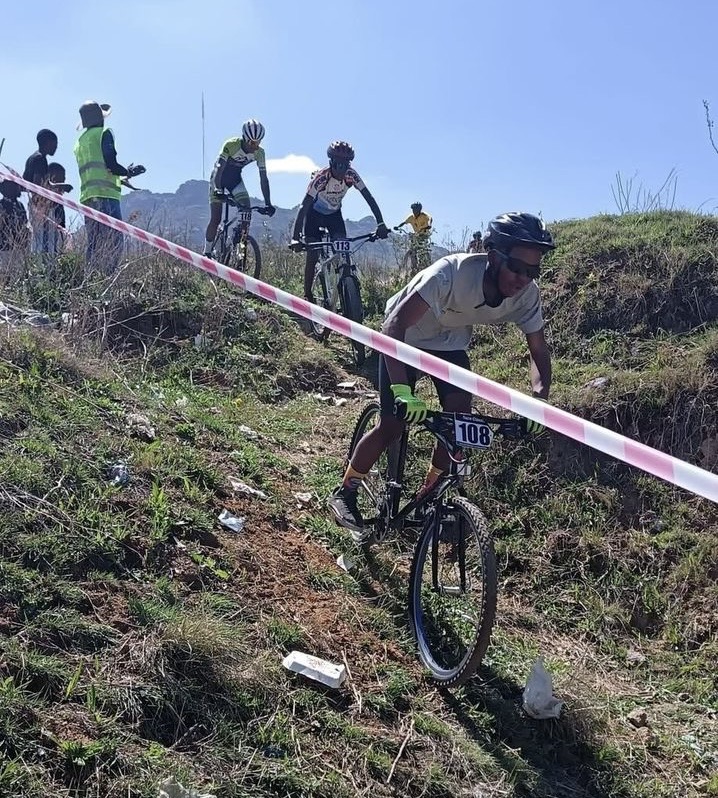
Maseru, Lesotho – From October 1st to 4th, 2025, the Lesotho National Olympic Committee (LNOC) successfully hosted the third edition of the Maseru National Youth Games, bringing together young athletes from across the nationand beyond for a celebration of sport, talent, and unity. Taking place across venues in Maseru and Mafeteng, the Games showcased the LNOC’s continued commitment to nurturing young talent and elevating the standard of sport in Lesotho.

This year’s Games were the largest to date, featuring 15 sporting disciplines for athletes aged 14 to 19 years old. The sporting codes included: athletics, swimming, boxing, chess, cricket, cycling, mountain biking, rowing, women’s rugby, table tennis, taekwondo, tennis, beach volleyball, baseball5, badminton, and judo. This marks a significant expansion from the inaugural edition, which began with just nine codes, growing to twelve in the second edition, and now reaching its current peak.

LNOC Chief Executive Officer, Mr. Marake Raleaka, emphasized the Games’ role in preparing young athletes for international competitions. “These Games bring youth together to prepare themselves for competitions outside the country, where they will be staying in one place and interacting with athletes from different nations,” he stated. To replicate the experience of global tournaments, all participating athletes were housed together at the Police Training College (PTC) throughout the duration of the Games.

Aligning with the LNOC’s Strategic Plan, the 3rd Maseru National Youth Games continue to grow in both stature and scale, further establishing themselves as a cornerstone of Lesotho’s youth sports development. The Games serve not only as a national celebration of youth sport but also as a key talent identification platform for national federations. Promising athletes identified during the event may be recommended for development at national or even international sporting bodies.

The event’s growing reputation also drew regional interest, with representatives from Eswatini attending for the second consecutive time. Their presence underscores Lesotho’s rising profile in the organization of youth competitions, offering a model that neighbouring countries are eager to learn from.

To ensure high standards and a competitive environment, the LNOC allocated an estimated budget of M700,000 towards this year’s Games. This investment facilitated the delivery of top-notch sports equipment, further enhancing the quality and experience of the competition.

As the LNOC continues to invest in youth development, the Maseru National Youth Games stand as a powerful symbol of progress in Lesotho’s sporting landscape, fostering future athletes and champions while promoting unity, discipline, and international readiness among the country’s young athletes.

We Could Not Secure You a Future, But We Will Gladly Charge You for Trying to Make One Yourself

0

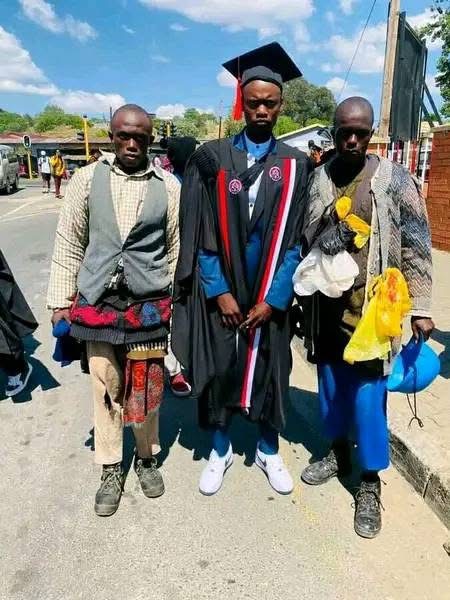
It is graduation season in Lesotho. The moment is meant to be joyous. Families travel long distances, graduates put on rented gowns, and photographers line up to capture a milestone that comes only once. Yet behind the applause and the photo sessions lies a practice that speaks volumes about how our institutions of higher learning see themselves and see the young people they produce.

Universities and colleges now demand that photographers pay a fee to take pictures at graduation ceremonies. Three hundred here, five hundred there. It sounds small until you consider who is being asked to pay.

Many of these photographers are not outsiders. They are not strangers parachuting in to make a quick profit. They are graduates themselves or peers of the graduates, people who have turned to the camera because there are no jobs. They are part of the very generation the institutions failed to place in employment. For them, photography is not a side hustle. It is bread and butter. It is school fees. It is rent. To ask them for money before they can work is not policy. It is cruelty.

There is also a deeper insult. The photos taken at graduations are not for the photographers. They are for the families who sacrificed for years to put their children through school. By charging photographers, institutions are not only squeezing the unemployed. They are indirectly charging the same parents who already carried the heavy cost of tuition. Families are paying twice, first to educate and then to celebrate.

This is what makes the practice sickening. It reveals an instinct for petty revenue collection where there should be vision. Instead of asking how to create opportunities for the graduates they produce, institutions busy themselves with policing who holds a camera on the day. Instead of building pathways into the world of work, they close the gates tighter and collect from those struggling outside.

The truth is simple. If institutions of higher learning were serious about their role, they would be forming partnerships with these young photographers. They would be teaching creative entrepreneurship. They would be creating digital labs where skills in photography, editing, and media can be nurtured into sustainable businesses. They would be finding ways to add value, not extract it.

What we are seeing instead is short sightedness dressed up as regulation. It is a small act, but one that exposes the larger decay. Our institutions no longer measure themselves by the futures they create. They measure themselves by the fees they collect.

So here we are, in the season of graduations. The gowns will shine, the speeches will flow, and the photographers will still show up because they have no choice. But the question lingers. What kind of higher learning charges the very people who turn unemployment into survival? What kind of institution produces the jobless, then taxes them for daring to work?

The answer is in front of us. We could not secure you a future, but we will gladly charge you for trying to make one yourself.

Independent business & current affairs journalism · Lesotho Subscribe — M85/month
| Independent business & current affairs journalism · Lesotho