Mohahlaula Airlines
Wednesday, July 22, 2026
Home Blog Page 57

Mokhotlong People Call For Suspension of LHWP Phase II

0

About 1,600 Basotho from 18 rural communities in Mokhotlong had filed a complaint with the African Development Bank (AfDB) that funds the Lesotho Highlands Water Project (LHWP). These communities, international news outlets have said, demand transparency over forced displacements, inadequate compensations, environmental harm and intimidation linked to Phase II of the LHWP. 

Through their legal representative, Seinolu Legal Centre and the Accountability Counsel, a US-based NGO, the communities have also requested the suspension of the project until all their concerns are resolved. 

The Lesotho Highlands Development Authority (LHDA) this week then responded to the stated allegations, asserting that no household had been relocated without comprehensive consultation. It said all households affected by the project were involved in asset registration and entitlement confirmation to ensure all are aware of their compensation. 

‘To date, over 93 percent of private asset compensation has been completed, with more than LSL154 million paid,” the LHDA statement read, however admitting that it acknowledges that delays are due to missing documents, absence of beneficiaries and or internal disputes. 

It said that despite these hiccups, compensation dates for communal assets had been agreed upon and will be implemented in the next year. 

On the issue of environmental harm, the authority said the project was guided by the Environmental and Social Impact Assessment (ESIAs) with mitigation measures, stating that independent environmental audits are conducted annually and made available to regulators and key stakeholders. 

‘Engagement with communities is a central pillar. Since 2012, LHDA has held numerous consultations with affected villages,” the statement further reads, saying management and other project overseers are also always available to listen to communities’ grievances. 

The LHDA says it recognises the role of civil society organisations and has formalised a broader engagement platform for NGOs. Its response to the allegations aims to reassure the public that the project continues to be carried out responsibly, addressing potential negative impacts while ensuring community engagement and environmental protection. 

Since its implementation, the LHWP has faced scrutiny due to its significant social and environmental impacts. This is not the first time communities in the project area have raised concerns over the project. It has become a regular thing or normality to hear of communities requesting that the project be suspended. 

The Accountability Counsel has also long been involved in raising concerns to ensure that affected people have access to fair and just compensation. 

But despite all the allegations and dissatisfactions by the Mokhotlong people, the authority stands still on its emphasis of being committed to mitigating negative impacts and ensuring community rights. 

While it presents a positive view of its operations, sources and organisations provide critical perspectives on the project’s challenges and impacts. 

The LHWP is scheduled for completion by 2029, nearly four years from now, a decade later than it was initially planned to come to completion.

CAN AGOA REALLY BE RENEWED SPECIFICALLY FOR LESOTHO?

0

By Khotso Mahonko

Lesotho is apparently sending a high-level delegation of negotiators to Washington in a bold attempt to secure relief from the newly imposed U.S. tariffs. Our garment exports, which are the heartbeat of our manufacturing sector, now face a 15% duty under America’s revised trade policy. The mission is ambitious: to persuade the United States to lower that tariff, ideally to zero while also pushing for AGOA’s renewal for another ten years. These talks arrive at a decisive moment when AGOA itself expires this month, and without an extension, the foundations of Lesotho’s export economy could be shaken to the core.

What makes the story more complex is the journey we have traveled in just a few months. InApril, Lesotho was suddenly struck with a crippling 50% tariff on U.S. exports, a blow that threatened to wipe out the industry overnight. When Washington revised the structure in August, pulling that rate down to 15%, there was a moment of relief, even gratitude. But the truth is sobering: while 15% is certainly better than 50%, it remains unbearably steep for a low-margin garment sector where profit margins often hover between three and seven percent. In practical terms, that means most of our factories are now producing at a loss whenever their garments land in American ports.

And these are not abstract numbers. We are talking about 11 factories in Lesotho that supply the U.S. market, together employing around 12,000 Basotho workers. These are mothers, fathers, young people and most importantly the breadwinners whose monthly wages sustain households, educate children, and inject life into local economies. Their livelihoods hang in the

balance of these negotiations. If we fail, it will not just be an economic setback, it will be a human crisis.

Even Kenya, a much larger economy placed at the baseline tariff of 10%, has raised alarm bells

that it cannot sustain competitiveness under the new system. If Kenya is “crying” at 10%, how much more desperate is Lesotho at 15%? This perspective is important: our country is not asking for extraordinary favours out of greed, but rather fighting for survival in a sector where even a modest duty becomes suffocating.

The danger is simple but brutal. If buyers cannot make orders viable in Lesotho, they will not hesitate to redirect their sourcing elsewhere. Ethiopia offers one such destination. Over the last decade, Ethiopia has deliberately built competitive industrial parks such as Hawassa, combining ultra-low labour costs, subsidised utilities, and integrated logistics to lure global apparel brands.

Firms there enjoy structural advantages that Lesotho does not yet match. Add in Asia with Vietnam, Bangladesh, and Cambodia leading the pack through economies of scale, integrated textile value chains, and world-class shipping networks and you see how fragile Lesotho’s position has become. Global buyers are pragmatic: they will not wait for us to solve our problems when alternatives are already waiting with open arms.That is why these negotiations in Washington carry such urgency. Without relief, closures in factories in Lesotho are almost inevitable. Thousands of Basotho families will suddenly face unemployment, and the knock-on effects will ripple through schools, small shops, taxis, and entire communities. Lesotho’s economy leans heavily on textiles as a core pillar of export earnings, and any collapse here will shake the country’s already fragile economic foundations.

Importantly, Lesotho is not crying alone. South Africa, Madagascar, Mauritius, and Kenya have all mobilised to press their own cases to Washington. Madagascar, for example, has openly warned that 60,000 jobs in its textile sector are at risk. Kenya has dusted off its earlier pursuit of a bilateral trade deal with the U.S. to seek protection for its industries. This continental mobilisation shows that Lesotho’s plea is part of a larger African alarm. Washington cannot ignore this chorus without undermining its Africa strategy, especially at a time when China and other powers are actively deepening their influence on the continent.

But here lies the central tension: can the U.S. realistically bend on its 10% baseline? That’s what I doubt could happen. In Washington, that floor has been presented as a matter of principle, a demonstration of “reciprocity” designed to quiet domestic critics who argue that AGOA gave Africa free rides for too long. To roll it back for one country risks setting a precedent, if America compromises on its 10% baseline tariffs for Lesotho even if it’s on a

humanitarian card, they would have set a precedent that other countries can beg USA to give them 0% as well. Politically, it is a hard sell and I really don’t think USA will give Lesotho anything below 10% baseline no matter how we can sell a desperate case of vulnerability.

Yet again, trade policy is never carved in stone. The U.S. has a track record of making surgical exceptions when the humanitarian costs are severe and the financial costs are minimal. Lesotho fits that profile perfectly: our export volume is tiny in the grand scheme of U.S. trade, but the livelihood impact is colossal at home. Granting relief to Lesotho would not shake American industries, but it would save thousands of jobs here and generate goodwill that strengthens Washington’s standing in Africa.

So what is realistically possible? We should not dream of a wholesale exemption, but we can hope for carefully designed carve-outs. The U.S. might reduce tariffs to zero only on specific apparel lines, or grant temporary waivers for two or three years to allow breathing space.

Another possibility is quota-based relief, letting a fixed volume of Lesotho’s garments enter duty-free. Each of these models would let Washington preserve its political principle while also demonstrating flexibility.

But let us not be naïve: America does not give without taking. Relief will almost certainly come with conditions. Some will be symbolic, others substantive. On the softer side, Washington may

expect Lesotho to deliver public diplomacy wins like high-profile visits, public thanks, and statements aligning with U.S. narratives. But there may also be tougher requests: like voting alignment at the United Nations, greater security cooperation, or opening our procurement markets to American firms. At worst, they might even push us to loosen our ties with China, given the U.S. and China rivalry.For a small country negotiating from desperation, these demands are dangerous. The challenge is to give away symbols, not sovereignty. Public gestures and UN votes are cheap but binding economic concessions that limit our future development choices are not. Our negotiators must be vigilant in drawing red lines.

What happens if Lesotho succeeds? At best, we save 12,000 jobs, stabilise our export base, and buy time to build competitiveness. But that time must not be wasted. Relief should be coupled with reforms: investing in local textile inputs, diversifying products, raising productivity, improving our environment for a successful industrialization that can attract investors and I would argue even diversifying our exports to other markets outside the U.S. Only then will Lesotho stand a chance to compete without leaning permanently on mercy.

And what if we fail? Well, the consequences will be immediate and devastating. Factories will close down. Jobs will vanish. Export revenues will shrink, straining foreign reserves and weakening the loti. Investor confidence will crumble. The deindustrialisation of our garment sector would not just be an economic loss; it would be a social catastrophe that could take generations to repair.

That is why this delegation’s mission is not a technical exercise, it is a fight for Lesotho’s future.

We must present a case that is firm, evidence-based, and compassionate. We must make Washington see not just trade statistics but human lives: the 12,000 Basotho workers who risk losing everything, the families who depend on their wages, the fragile stability that hangs in the balance. And we must also show a plan, a commitment that any reprieve we receive will be used as a springboard for real transformation.

At the end of the day, AGOA or any American mercy cannot carry us forever. At best, it can buy us time. And what we do with that time will define whether our garment sector survives or fades into history. If we use it to strengthen our foundations, we can stand taller in the global economy as a textile production powerhouse. If we squander it, we will find ourselves back here again,only weaker.

Lesotho must hope for mercy. But more importantly, Lesotho must prepare for transformation

Using Music Therapy to Decrease Maternal Mortality

0

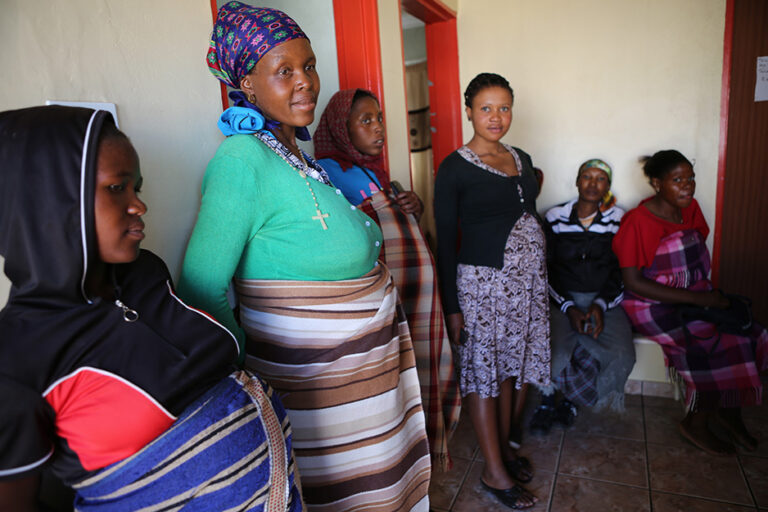
Did you know music has been used in child development and literacy to counter short concentration spans and improve memory and vocabulary? It has also been used in health campaigns to promote HIV/AIDS prevention messaging, encouraging community engagement and raising awareness. 

This was revealed this Friday in Masrru during the Lesotho Alliance for Maternal Mental Health Launch. 

‘Mateboho Refiloe Makote, founder of Love Maternity Lesotho, said the launch was a groundbreaking milestone for maternal health in Lesotho. 

“And this is happening because the Community Health Interventions through Musical Engagement for Maternal Mental Health (CHIME) project joined hands,” Makote said. 

CHIME is a four-year global research project that works towards improving the mental health and wellbeing of antenatal women in The Gambia, South Africa and Lesotho. It aims to generate evidence on how culturally embedded music-based interventions can be used to improve maternal mental health. 

Dr Maama, Director Primary Health Care, speaking on behalf of the Ministry of Health, said mental health was a huge concern for Lesotho. 

“We are facing high maternal mortality as well as neonatal mortality,” she said, adding that this has been a concern for the ministry, hence the launch of the project. 

Dr Maama said before implementing the project, the ministry explored and dug more into Basotho indigenous practices, gathering evidence to make interventions evidence-based. 

“Some of the things that we have been practising as Basotho, I think we’re just taking them for granted because we were saying, What can music do? So we are very grateful for this moment because as we address maternal health we are going to achieve good maternal health outcomes,” Dr Maamaasserted. 

Dr Zulu, speaking on behalf of Dr Innocent Nwanjira, the World Health Organisation (WHO) representative for Lesotho, said many women experienced changes in their mental health during pregnancy and a year after birth, saying one in five women will experience mental health conditions during pregnancy and also one year after that birth. 

“Pregnancy, birth, any parenthood may change and may be stressful because it causes change to the woman’s identity, physical health and economic situations,” Dr Zulu highlighted.

He stated that perinatal anxiety and depression in this period are also very common, affecting one in 10 women in high-income countries and one in five women in low and middle-income countries. 

Dr Zulu said there were many gaps in the Lesotho health sector legal framework, policy, infrastructure, skilled workforce and the quality of service delivery, especially in the maternal mental health. 

“However, he applauded the ministry for making strides in addressing the gaps through the development of the mental strategy, building of mental treatment units and all difficulties there are within hospitals and strategies to be implemented to change the course. Mental and child services are in a unique position to offer support for the women and their mental health,” he emphasised. 

It was said that the CHIME project came at an opportune time and will surely be a game changer, calling the ministry and all partners to join hands to ensure the good mental health of mothers and their healthier lives and best development outcomes for children. 

The project chapter in Lesotho aims to explore the role of traditional music in promoting maternal mental health since its strong traditions make it an ideal setting to explore the potential of music-based approaches to support maternal mental health. 

It is funded by the National Institute for Health and Care Research (NIHR) Global Health Programme using UK international development funding from the UK government to support global health research.

Whatever to Hide From the Truth

0

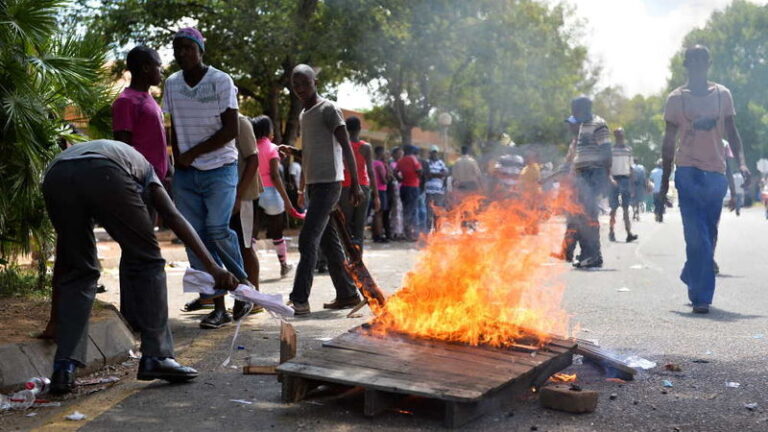
This week, the opposition came forward strongly in parliament, highlighting concerns about how the Matekane-led government may be misusing the Constitution to inhibit peaceful protests. 

Since time immemorial, marches or protests, peaceful, have always been the public’s way of expressing complaints to the government. 

Throughout history, the people have expressed their grievances this way, exercising their right to communicate their concerns to those in power. Traditionally, Basotho have been granted permits by the police for peaceful demonstrations.

However, there seems to be a newly proposed law, yet to be gazetted, maybe, that requires individuals to seek permission directly from the prime minister before obtaining approval from the police to march. 

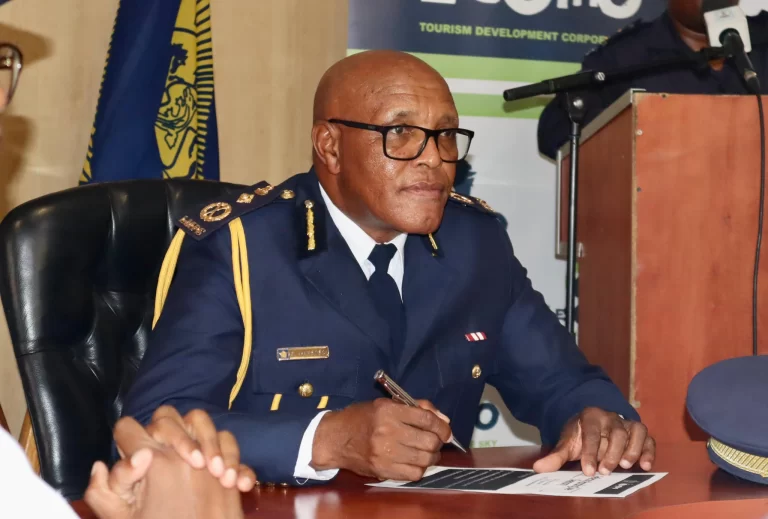
The police boss, Compol Borotho Matsoso, was heard on local radio stations reinforcing this law, suggesting that those denied permission are welcome to seek resolution through the courts of law. 

I bet we all heard him silently laugh after uttering these words.

Opposition MPs like Machesetsa Mofomobe, leader of the Basotho National Party (BNP), voiced their disbelief at this development, citing countries like Israel and South Africa that support the right to protest. He cautioned the government that imposing such restrictions could draw negative attention from international bodies and development partners.

Questions have started arising about the independence of the police; are their decisions made autonomously or influenced by political motives?

Many Basotho have taken to social media to express their views on the matter, suggesting that it is probably high time the police take off their uniform and dress in political regalia because they are clearly failing to distinguish between being protectors of the law and being political enforcers.

The public is questioning the motives of the current government and how it aligns with its promises of transparent governance aimed at creating the Lesotho that the people desire. 

But where is the transparency in blocking citizens from voicing their concerns to the prime minister without just cause? 

How can we envision the Lesotho of our dreams when the police are positioned as gatekeepers undermining the people’s voices? 

Just recently, an unarmed student at the National University of Lesotho lost their life due to police action during a protest over educational rights. This tragic event serves as a reminder of the urgent need for dialogue and open communication. 

Or perhaps this is the kind of stability the government seeks—where citizens feel compelled to protest without permits, driven by their concerns. As civil citizens, we merit the right to express our needs without fear or any restrictions.

But we do understand, when this happens, protesting illegally, the police can finally be useful, shoot and kill protestors and add more names to their victims list. 

We will, however, expect a statement that will later read something like “no permit was granted for the march, therefore we had to act to eliminate any possible danger that could come with the march. We do not wish to have a repeat of the 1998 massacre.”

But there isn’t much we can say to advise this government on how to handle its matters. Anyway, it is always alert to play victim; we are being fought from all angles. 

But it must recognise urgency in addressing these issues and many others before it is too late. The growing disconnect between the government and its people needs immediate attention to rebuild the lost confidence. 

But if this is indeed the path of revolution, then we, the humble citizens, whose rights are forever violated, whose voices can not even be heard in the corridors of the state house, must remain hopeful and engaged, for we possess no power to contribute towards meaningful change.

We are the children of the nation in its literal sense. Let us obey the rules of our leaders and follow in their commands. 

Senators warn of Illegal liquor trade, endangering community members’ lives

0

MASERU

Tempers flared in the Senate this week as lawmakers sounded the alarm over what they described as a “lawless liquor trade” that is spiralling out of control and endangering lives across Lesotho.

The debate, which quickly grew heated, laid bare deep concerns that liquor traders are operating without respect for the law, opening late into the night and creating hotbeds of crime and risky behaviour in local communities.

Leading the charge was Senator ‘Mabataung Mokhathalawho stood up to press the Leader of the House, MatjatoMoteane, on what action government is taking through the Ministry of Tourism, Culture, Youth and Sports, the ministry responsible for licensing and regulating liquor outlets.

“Every day, as members of these communities, we see what is happening,” Mokhathala declared. 

“Liquor businesses open whenever they want and no one seems to stop them. Around these places, prostitution is rampant and used condoms are being thrown everywhere. This careless behaviour is a direct danger to public health.”

Her blunt words drew nods of agreement from other Senators who argued that the growing culture of unregulated drinking is tearing at the fabric of society.

Senator ‘Makholu Moshoeshoe added her voice, warning that the consequences go far beyond noise and disorder. 

“These establishments are hazardous,” she said.

“They do not just harm the people living nearby, even the customers themselves are at risk. The reckless behaviourthat happens in and around these places is putting everyone in danger. We need action now, not later.”

The Senators painted a miserable picture, neighbourhoods disturbed late into the night, families worried about children walking past drinking spots and vulnerable people drawn into cycles of alcohol abuse and risky sexual encounters.

Some Senators noted that while the law clearly sets limits on when liquor can be sold, in practice, those rules are widely ignored. Traders often keep their doors open well past legal hours, some operating as though they are untouchable. 

Mokhathala pressed further, asking Moteane whether the ministry has inspectors or monitoring systems in place. 

“Communities feel abandoned,” she said. 

“We cannot continue watching while our people’s health and safety are put at risk.”

The Leader of the House acknowledged the seriousness of the concerns and promised to convey them to the ministry. However, Senators insisted that words are no longer enough. They demanded visible enforcement, rom shutting down illegal outlets to holding business owners accountable.

The debate also touched on the public health crisis that unchecked liquor trading fuels. Easy access to alcohol, Senators argued, worsens domestic violence, increases road accidents and exposes young people to exploitation.

“Too many young men and women are falling victim,” Moshoeshoe said. 

“What starts as a night out too often ends in violence, disease or broken homes. That is the reality on the ground.”

The Senate discussion comes at a time when many Basotho are voicing frustrations about alcohol outlets mushrooming in every corner, from small villages to busy towns. Community leaders have long complained that these businesses are eroding social values and putting pressure on an already fragile health and policing system.

By the end of the debate, Senators were united on one point; government can no longer look the other way. They urged the ministry to roll out clear enforcement measures, tighten licensing procedures and work hand-in-hand with police and local councils to bring back order.

For now, though, residents continue to live with the noise, litter and dangers that accompany unregulated drinking spots. And unless swift action follows, Senators warned, the lawless liquor trade will keep thriving at the expense of public safety.

“Every day we delay is another day our people suffer,” Mokhathala concluded. 

“The ministry must step in before it is too late.”

LMPS in a Dodgy Deal with Mergence

0

Lesotho Tribune can exclusively reveal that the Lesotho Mounted Police Service (LMPS) entered into a secret and highly irregular Memorandum of Understanding (MoU) with Mergence Investment Managers Lesotho, a company recently flagged by the Public Accounts Committee (PAC) for questionable dealings. The MoU, signed without proper authorization or legal clearances, effectively tied LMPS to a commercial development scheme on police-owned land, with LMPS providing land while Mergence would raise capital and run a retail shopping complex..

The MoU That Should Never Have Been Signed

The MoU, seen by Lesotho Tribune, sets out that Mergence would raise capital, manage construction, and operate a retail centre on police land, while LMPS would contribute the land itself. Profits would be shared. The terms were bold and commercial.

Yet the Police Act No. 7 of 1998 is clear: the role of LMPS is to uphold the law, preserve peace, protect life and property, and bring offenders to justice. Nowhere does it empower the police to repurpose state land into joint ventures with private financiers.

The document itself acknowledges that such agreements must be cleared by the Ministry of Police, the Attorney General, and other relevant authorities. But there is no evidence that these approvals were ever sought. Instead, the MoU was executed in the shadows, sidestepping the checks that safeguard public assets.

Witness to a Deal, But Not Its Contents?

The MoU was signed on behalf of the Commissioner of Police, Compol Borotho Matsoso. His deputy, DCP Paseka Mokete, signed as a witness.

When Lesotho Tribune questioned DCP Mokete about his role, his response was startling:

“I did witness the signing of the MoU, but I know nothing about the contents of the MoU/document.”

The answer raises more questions than it answers. How could a senior police officer, entrusted with the highest duties of law enforcement, affix his signature to a binding document yet plead ignorance of its contents? Was he misled, sidelined, or now attempting to distance himself from a controversial deal? Whatever the explanation, it speaks to institutional negligence at best and complicity at worst.

A Compromised Partner

Even more troubling is the choice of partner. Mergence Investment Managers Lesotho has been a recurring feature in PAC inquiries into the management of pension funds. Questions of conflicts of interest, opaque structures, and possible capture have dogged the company.

To hand over police land to such a firm shows a reckless disregard for governance. It also entrenches suspicions that the LMPS, rather than protecting state resources, is now entangling itself with private interests whose track record is already under scrutiny.

“He Believes He Is Untouchable”

One senior cabinet member, speaking to Lesotho Tribune on condition of anonymity, said he was “not shocked” by Compol Matsoso’s involvement.

“This is not surprising at all. Compol Matsoso has long acted as if he is untouchable. He undertakes deals that no accountable public officer should touch, and yet he carries on as though laws and institutions do not apply to him.”

Such remarks underscore a deepening perception that the leadership of LMPS has drifted into dangerous territory, insulated from oversight and emboldened by impunity.

Ministries and Mergence Stay Silent

Lesotho Tribune put questions to both the Ministry of Police and the Ministry of Finance, asking whether they had knowledge of or authorized the MoU. Neither responded.

Mergence itself also did not comment, despite repeated requests. The silence is telling. If the deal were above board, the parties would have no reason to withhold explanations. Instead, the absence of accountability only heightens suspicions that the MoU was deliberately concealed.

A Pattern of Capture

This deal is not an isolated episode. It forms part of a disturbing pattern in which public institutions in Lesotho are repeatedly roped into irregular partnerships with politically connected companies.

The pension fund scandals, also involving Mergence, revealed how public savings were exposed to conflicts of interest. Now, with LMPS land at stake, even the country’s police force—the very institution meant to uphold the law—appears ensnared in the machinery of capture.

What makes this case particularly egregious is the symbolism: if even the police, guardians of the law, are seen to be cutting illegal deals, what message does that send to ordinary Basotho about the state of governance?

Where Was Oversight?

By law, the Ministry of Police and Public Safety, the Attorney General, and Parliament should have been consulted before any land-based agreements were signed. These institutions are the gatekeepers meant to prevent precisely this kind of misuse of state assets.

Their failure to intervene raises serious questions:

• Were they deliberately bypassed, or did they choose to look away?

• Why did the Ministry of Police remain silent when its own department was implicated?

• And why did the Ministry of Finance, custodian of state assets, not issue any caution?

Legal and Financial Risks

The MoU as it stands is legally unenforceable. Without statutory approval, it lacks legitimacy and can be voided at any time. But the risks are broader.

If Mergence invested money on the basis of this document, disputes could arise that drag LMPS into costly litigation. Public land could become entangled in court cases, delaying its rightful use and exposing taxpayers to unnecessary liability.

Meanwhile, the reputational damage to LMPS is immense. A force already struggling with public trust now faces accusations of being complicit in the very forms of corruption and capture it is supposed to fight.

Questions That Demand Answers

This unfolding scandal leaves urgent questions on the table:

• Who initiated the discussions with Mergence?

• Did Compol Matsoso act alone, or was there political backing for this deal?

• Why did DCP Mokete sign as a witness without knowing the contents of the MoU?

• What due diligence was done on Mergence before handing them police land?

• And most importantly, will anyone be held accountable?

A Dangerous Precedent

If allowed to stand, the LMPS–Mergence deal sets a precedent where any public body can sign away state assets under the cover of “joint ventures,” with no legal authority or oversight. This is not only illegal; it is corrosive to democracy.

For ordinary Basotho, the consequences are far-reaching. Land that should serve the public interest risks being diverted to private enrichment. A police service that should be beyond reproach now appears compromised.

The Road Ahead

The MoU is still just a piece of paper. It can and should be nullified. But that alone is not enough. There must be accountability. Those who abused their positions to sign unauthorized deals must face consequences.

Parliament, civil society, and watchdog institutions must insist on answers. Silence from ministries and Mergence cannot be tolerated. The integrity of public assets—and public trust in the police—depends on it.

What is clear is this: the Lesotho Mounted Police Service, whose mandate is to uphold the law, has itself broken it. In doing so, it has handed the country yet another reminder of how far state capture has spread, and how urgently accountability is needed.


LEC Board Dumps Audit to Protect Politicians

The Lesotho Electricity Company (LEC) is once again in the spotlight for the wrong reasons. The board of directors appears to be abandoning the forensic audit that justified the suspension of nearly the entire executive committee earlier this year. In its place, the board has introduced a series of disciplinary charges against members of management that insiders describe as both frivolous and misdirected.

How the Suspensions Began

The crisis began when the LEC board announced a sweeping forensic investigation in response to allegations of deep-rooted corruption, irregular procurement, and the misuse of company funds. The move was presented as a turning point in the governance of the state-owned utility.

On the back of those allegations, the board suspended almost the entire executive committee, including senior managers responsible for finance, customer services, human resources, and operations. The suspensions were justified as necessary to protect the integrity of the forensic audit and to prevent interference with investigators.

At the time, public perception was that the board was taking a decisive step toward accountability. Yet even then there were murmurs of political influence. Sources close to the process suggested that the audit was being used as a political weapon to target certain executives who had fallen out of favor with ruling elites.

Audit Abandoned Before Findings

Months later, no audit findings have been produced. Lesotho Tribune has reliably learned that the forensic process is being quietly shelved. The reason, according to multiple insiders, is that the audit no longer serves the board’s or government’s political purpose.

Two factors appear central to this decision:

I. The individuals whom the board wanted to implicate are unlikely to be named in the audit.

II. Evidence is pointing toward ruling Revolution for Prosperity (RFP) cabinet members and NEC figures who have been fingered in the plundering of the power utility.

Allowing the audit to reach its conclusion would risk exposing politically powerful actors.

New Charges Against Suspended Executives

Instead of publishing the audit’s findings, the board has opted to charge suspended executives with internal misconduct. Charge sheets seen by Lesotho Tribune outline allegations ranging from failing to maintain proper employee records, to neglecting to file reports on financial losses, to inadequate oversight of payroll and refunds.

What is striking is that these charges are administrative in nature. They revolve around alleged negligence, poor record keeping, or delays in reporting, rather than corruption or fraud. Crucially, they make no reference to the forensic audit or to the allegations that justified the executives’ suspension in the first place.

A Misguided Strategy

The board’s actions suggest misdirection. The original mandate was to get to the bottom of alleged large-scale corruption at LEC. By quietly abandoning the audit and pressing technical charges instead, the board risks undermining both corporate governance and public trust.

Observers warn that this approach carries three risks:

• It erodes confidence among stakeholders who expected a transparent audit.

• It shields political figures from accountability by diverting focus onto mid-level negligence.

• It destabilizes the utility by prolonging the uncertainty of leadership and weakening the morale of staff.

A Larger Governance Crisis

The LEC saga is more than an internal company issue. It is another chapter in the governance failures of state-owned enterprises in Lesotho. Boards are often captured by political interests and end up using oversight mechanisms for political maneuvering rather than accountability.

The decision to abandon the forensic audit and replace it with weaker charges against suspended executives sends a troubling message. It leaves unanswered questions about the scale of financial impropriety at LEC and reinforces the perception that accountability ends where political interests begin.

Central Bank Reserves Shrink by Over M1.4 Billion in May 

0

The Central Bank of Lesotho has reported a significant drop in its assets for May 2025, with foreign reserves falling sharply even as the Bank posted stronger profits.

According to the official return of assets and liabilities, total assets stood at M22.3 billion at the end of May, down from M23.7 billion in April. The decline of more than M1.4 billion was mainly due to lower balances with foreign banks and a reduction in rand notes and coins held by the Bank.

Balances with banks abroad fell to M6.17 billion from M7.79 billion in April, while rand holdings dropped to M262 million from over M510 million. The figures suggest the Bank had to draw heavily on reserves during the month, either to defend the loti or to meet external obligations.

Despite the tighter reserves, the Central Bank still managed to grow its operating profit. The Bank recorded a profit of M201 million for May, up from M138 million in April. This reflects stronger returns on investments, which rose slightly to M10.37 billion from M10.06 billion.

On the domestic side, internal assets remained broadly stable at M1.2 billion, with currency inventory increasing as more notes were printed or prepared for circulation. Currency already in circulation rose modestly to M1.91 billion, indicating an increase in cash flowing within the economy.

Reserves, which form the Bank’s buffer against shocks, slipped to M6.97 billion from M7.03 billion in April. Deposits held at the Bank also dropped to M7.93 billion from M9.12 billion, reflecting a general tightening of liquidity.

The monthly returns are published in line with section 53(3) of the Central Bank of Lesotho Act, 2000. The notice was signed by Finance and Development Planning Minister Retšelisitsoe Matlanyane, who is required to table the Bank’s financial position for public record.

Why It Matters

Lesotho’s financial system is tightly linked to South Africa’s through the Common Monetary Area. The loti is pegged at parity with the rand, which means the Central Bank must hold adequate foreign reserves to back every loti in circulation. The rule of thumb is that reserves should cover at least three months of imports, giving the country breathing space in times of economic stress.

Over the years, Lesotho has faced challenges maintaining strong reserves. Sharp declines in Southern African Customs Union (SACU) revenues or sudden increases in government spending have often placed pressure on the Central Bank’s position. In the early 2010s, for example, the Bank was forced to intervene heavily to maintain stability when SACU receipts fell. Similar pressures resurfaced during the COVID-19 pandemic, when reserves were drawn down to cushion the economy.

Against this backdrop, the May 2025 figures highlight a familiar concern. While the Bank’s profitability is encouraging, the erosion of reserves in a single month by more than a billion maloti is a reminder of how vulnerable the country remains to external shocks. For an economy that depends heavily on imports and remittances, any weakening of the reserve position can undermine confidence in the loti and put strain on the peg with the rand.

Economists argue that stronger fiscal discipline, better export growth, and careful management of SACU revenues are critical to ensure the reserves remain at healthy levels. Without that, the Central Bank may find itself under pressure to defend the currency more often, at a time when global conditions are already uncertain.

Independent business & current affairs journalism · Lesotho Subscribe — M85/month
| Independent business & current affairs journalism · Lesotho