

Mohahlaula Airlines
Wednesday, July 22, 2026
Home Blog Page 58

Matekane’s Ban on Demonstrations is a Fool’s Errand Betrayal of Democracy

0

The “decision” by Prime Minister Sam Matekane’s administration to ban public demonstrations is one of the most reckless and short-sighted moves since he came into office. It is not only a constitutional blunder but also a betrayal of the very spirit of democracy he claims to defend. Demonstrations are not a privilege bestowed by leaders on the people. They are a right. A right that sits at the core of every functioning democracy.

What kind of democratic leader looks at citizens voicing their concerns and responds with a ban? What does it say about Matekane’s understanding of the office he holds? Or perhaps the better question is, does he even care to understand? Democracy is not tidy. It is not meant to be comfortable for those in power. It is meant to be noisy, messy, sometimes disruptive. That is the nature of citizens demanding accountability.

When a government denies its people the right to demonstrate, it strips away a critical safeguard against authoritarian drift. Is Matekane trying to signal that his government cannot withstand criticism? Is this the beginning of a slow march toward abolishing democracy altogether?

The irony is painful. This is the same Matekane who rode into State House on the wave of public hope and citizen enthusiasm. He branded himself as a fresh alternative to the politics of old. Yet now he is proving to be no different, if not worse, because he cloaks repressive actions in the language of order and governance.

A ban on demonstrations is not order. It is fear. It reveals a government too insecure to face its people and too arrogant to learn from dissent. Instead of listening to what citizens are saying, Matekane’s administration has chosen to silence them. This is not strength. It is stupidity of the highest order.

History does not forget leaders who confused the silence of the people with peace. Silence can be a dangerous illusion. It builds resentment beneath the surface until it erupts. Is Matekane prepared for that moment? Is he prepared to deal with the consequences of denying citizens their most basic democratic right?

If this government had wise counsel around it, they would have reminded the Prime Minister that demonstrations are not the problem. They are the thermometer of society. They show where anger is rising and where government is failing. Banning them does not solve the problem. It hides it. And any leader who chooses to hide problems rather than confront them is setting himself up for failure.

Matekane may think he is tightening control, but in reality he is losing legitimacy. Once people believe their right to protest has been stolen, they begin to question whether their vote has any meaning either. From there, it is only a matter of time before trust evaporates.

Lesotho’s democracy is fragile. For Matekane to tamper with it in this way is not only foolish but dangerous. If the Prime Minister truly sees himself as a democrat, then he must reverse this decision immediately. Otherwise, we are left to wonder: is he planning to lead a democracy or abolish it?
Storm Mountain Diamonds Confirms Job Cuts as Prices Stay Low

0

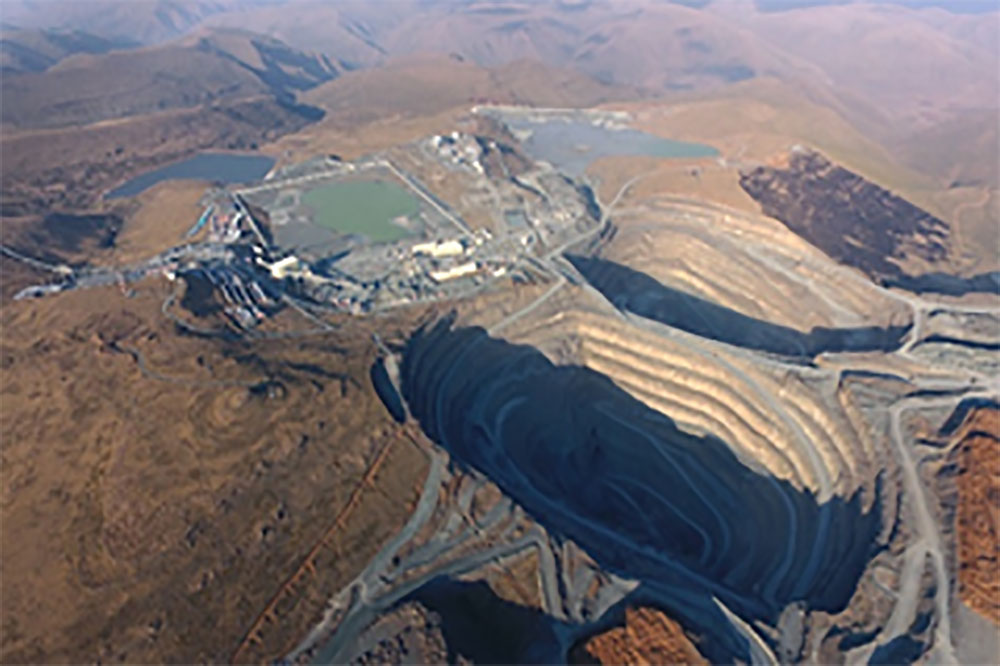
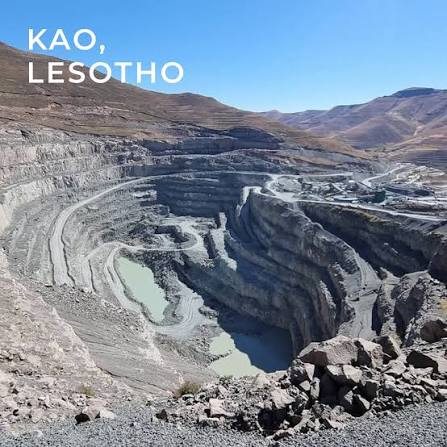
Storm Mountain Diamonds (SMD), operator of the Kao Mine, has warned employees that the company is being forced into painful cost-cutting measures as the global diamond market shows no sign of recovery. In a memo dated 8 September 2025, the Chairman of the Board, Robert Cowley, said low diamond prices now appear to be permanent and the company must adapt.

Cowley confirmed that although the company had completed its high-pressure grinding roll (HPGR) expansion project to improve efficiency, SMD could not continue without additional capital injections. To extend the life of the mine, SMD requires capital projects such as waste stripping estimated at M150 million per year. Without these investments, the mine is likely to run out of ore.

The board has already engaged the Government of Lesotho for possible financial relief. Despite extensive consultations, no firm commitments have been secured.

Mine Closure Considered

SMD’s board admitted that closure of the mine had been actively considered due to the dire outlook. However, it has resolved to keep operations running while pursuing aggressive cost reductions. One of the most immediate measures is a 20 percent reduction in overall costs across the business.

The board has also instructed management to cut employment costs by 30 percent. This could trigger large-scale dismissals for operational reasons. Employees will receive formal notices, and dismissals will follow Lesotho’s Labour Code of 1992, as well as international best practice.

Operations Continue Under Pressure

While the cuts are rolled out, mining and production will continue. SMD is renegotiating contracts with its mining contractor and other suppliers to reduce costs further. Cowley urged employees to remain focused and to continue working safely, noting that the company’s survival depends on a collective effort.

The memo underscores the scale of the challenge facing Lesotho’s mining sector. The diamond industry has been a key source of revenue and jobs, but with global demand weak and prices subdued, even established players such as SMD are struggling to remain afloat.

Tumelo Makae Targets Glory at the 2025 UCI World Mountain Bike Championships

0

VALAIS, Switzerland — Lesotho’s premier mountain biker, Tumelo Makae, is proudly flying his nation’s flag at the UCI World Mountain Bike Championships this week in the Swiss Alps. The 29-year-old began his campaign on Tuesday afternoon with the Short Course (XCC) qualification race at 16:30. His main target, however, is the Olympic Cross-Country (XCO) event, scheduled for Sunday 14 September at 13:30—the highlight of the championships and the focus of his months of preparation.

The Lesotho National Olympic Committee (LNOC) has publicly wished him success, noting that his performances continue to showcase the country’s growing reputation in international cycling. Makae is currently ranked around #270 in the UCI world elite standings with approximately 145 ranking points, an impressive position for a rider from a small mountain kingdom competing against the sport’s global powerhouses.

At home, he is a multi-time national champion in both Cross-Country Olympic (XCO) and Short Track (XCC)disciplines. Earlier this year, he underlined his status as Lesotho’s most decorated mountain biker by finishing runner-up at the 2025 Lesotho National XCO Championships.

Beyond national borders, Makae races for the internationally recognised Pump for Peace Racing Team, a program dedicated to expanding cycling opportunities in under-represented regions. He is a repeated finisher of the grueling Cape Epic stage race in South Africa, one of the toughest multi-day mountain bike events in the world, demonstrating the endurance and skill required to compete at elite level.

He has also lined up at UCI World Cups and World Championships across Europe, including demanding Swiss venues such as Crans-Montana and Lenzerheide, where he regularly tests himself against the world’s best.

By consistently appearing on the international stage, Tumelo Makae has become Lesotho’s leading cross-country mountain biker, ensuring the small, mountainous nation remains visible on the global MTB map. His combination of perseverance, national pride, and international ambition makes him a role model for young athletes throughout Lesotho.

As he takes on the rugged alpine trails of Valais this weekend, he will have the support of Basotho on his back.

Vodacom Remembers Mofolo, Celebrates GBV Survivors

0

The Afro Barometer reports of 2022 studies found that 53 per cent of Basotho said violence against women is “somewhat common” while 28 per cent found it a “very common” occurrence within their communities. 

In Lesotho, it is reported that 86 percent of women endure the bitterness that comes with GBV. The 2024 Studies by LDHS uncovered that 36 percent of women in Lesotho have experienced violence committed by their recent intimate partner.

This week, the Vodacom Women Network Forum held an event in remembrance of the late Rethabile Mofolo, who died five years ago at the hands of her husband. The event was not only meant to cherish Mofolo but also to extend consolation and support to other GBV survivors. 

A Lesotho Mounted Police Services (LMPS) representative assured women at the event that even if the victims may feel like at some point they are not given a just reception by the law, they should be courageous enough to seek help from other members of the police until justice is served     

The memorial hosted the United Nations Resident Coordinator, Amanda Mukwashi, who detailed in her remarks that the importance of recalling that there are people behind the statistics of GBV year in, year out.

“What happens to another woman happens to me. If she is naked, then I am naked” she uttered.

Mukwashi added that to make it easier to eliminate chances of GBV occurring, the new culture could be shifted by engaging in talks about GBV regularly.

“It does not matter what kind of conversations or setting we are in, we should regularly speak of GBV. We should also teach a boy child about how to best care for a woman with dignity and respect they deserves.”

Mohale Ralebitso, Vodacom Lesotho CEO, emphasised the importance of having men as partners in the fight against GBV. 

“As men, we have to be on the front line fighting so that GBV is ended, whether the perpetrators of these tragic acts are our friends or not, we have to report in an instant and have those men handed over to the law.”

“There is no plausible explanation that could define why we still live in a world that has GBV. We should all come in collective to eradicate it,” Mohale reiterated.

The event encompassed some of the GBV survivors who shared their tales, which have impacted their lives, to get vocal on the topic.

Blurry Future for Natural Diamonds and Minerals

0

The glitter of diamonds has long defined wealth, prestige and the promise of national prosperity. For countries like Lesotho, whose soil has given birth to some of the world’s most extraordinary stones and adopted other mineral deposits, diamonds are not just commodities; they are symbols of sovereignty, survival and status. 

Yet, the future is becoming increasingly blurry. The rise of synthetic diamonds and alternative minerals signals a dramatic shift in the global economy of value, one that threatens to reduce Lesotho’s crown jewel to little more than a relic of nostalgia.

Globally, laboratories can now replicate what the earth took billions of years to forge. Lab-grown diamonds are cheaper, cleaner and marketed as ethically superior. The consumer, once enchanted by the myth of natural rarity, is being persuaded by science and sustainability. It is no longer the “blood diamond” debate that shames African mines it is the very irrelevance of digging into the ground when machines can deliver the same sparkle.

Other minerals are facing similar fates. From synthetic graphite to alternative rare earth substitutes, industries are leaning into innovation. In energy, battery technologies are experimenting with chemistries that bypass traditional cobalt or lithium. The trend is unmistakable: nature’s exclusivity is being rewritten by laboratories and factories.

For Lesotho, the tragedy is layered. Diamonds, once touted as the country’s passport to prosperity, now represent a fragile dependence on a vanishing market. The political leadership, often accused of incompetence and short-sightedness, seems unable to grasp the magnitude of this global transformation. “Woe to the land (Lesotho) where slaves become kings” a bitter biblical phrase fit for a country where governance is more about survival than strategy, where leadership is reactive rather than visionary.

This is not merely an economic challenge; it is a civilizational warning. If synthetics dominate the future, then Lesotho must urgently ask: what comes after diamonds? Yet, within the walls of power, the question is drowned in factional fights, corruption scandals, and performativity politics. The rulers mistake glitter for growth while the world silently shifts beneath their feet.

The blurry future is not about the stone itself, but about the choices unmade. Nations that innovate will thrive, while those that cling to extractive myths will sink. For Lesotho, the writing is on the wall. Diamonds may no longer be forever.

The Future of Textile Companies Hangs in the Balance

Maseru 

The Lesotho textile industry, once buoyed by the African Growth and Opportunity Act (AGOA) introduced around 25 years ago, now finds itself at a critical juncture. AGOA allowed Lesotho and several other nations to export textile goods to the US market without the burden of tariffs, serving as a lifeline for the industry and a vital pillar of the country’s economy.

However, a shadow has been cast over this once-thriving sector with the recent announcement of a staggering 15 percent tariff on exported goods, a policy shift engineered by the Trump administration. 

This decision marks the end of AGOA, sending ripples of uncertainty through the textile industry, particularly in Lesotho where countless lives and livelihoods depend on it.

For many Basotho, the termination of this agreement threatens to dismantle their economic foundations. The impending job losses loom large as numerous textile factories brace for closure, leaving workers in dire straits. 

One such factory facing bleak prospects is Hippo Knitting, a company that has long prided itself on providing stable employment for around 800 individuals. 

Due to plummeting orders from overseas buyers, Hippo has announced a heart-breaking decision to halve its workforce. 

However, in a bid to navigate these turbulent waters, the company had previously attempted to keep operations afloat by rotating staff, scheduling some employees to work limited days while permanently releasing others from their duties. 

In the midst of this distressing situation, factory workers’ unions have stepped in, advocating for those set to be laid off to receive their rightful compensation. 

These unions said they are trying to engage with key stakeholders in hopes of finding solutions to avert further job losses and stabilise employment levels.

The devastating news of impending job cuts only adds to the mounting frustrations shared by many Basotho, as the country grapples with an escalating unemployment crisis. 

A few months ago, Prime Minister Sam Matekane’sgovernment declared the high unemployment rate in Lesotho a state of emergency, rallying citizens around the urgent need for collective action to address this pressing issue.

In an ambitious pledge, the government announced plans to generate over 6,000 jobs for the Basotho. Yet, as if caught in a relentless cycle, the attempts to heal one wound seem to lead to another, causing the employment landscape to spiral further out of control, threatening mass disillusionment.

Before the COVID-19 pandemic struck the world, the Lesotho textile industry employed approximately 45,000 individuals, making it the largest formal private employer in the nation. 

But in the wake of the US tariffs and resulting turmoil, that number has dipped to around 35,000, leaving many to wonder what the future holds for this once-vibrant sector and the families it sustains.

Senate returns to work after recess with promise of action

0

MASERU-The Senate of Lesotho has reconvened after its winter recess, marking the start of the seventh meeting of the first session of the Eleventh Parliament.

Vice-President of the Senate, Tsukutlane Au, welcomed members back, urging them to return to work with new energy and determination. He reminded them that break is not just a holiday, but a time to reconnect with communities and bring their concerns to Parliament.

In his opening remarks, Au expressed hopefulness that senators were ready to wrestle the heavy workload ahead. He praised the passage of the 10th Amendment to the Constitution, which has been described as a milestone in Lesotho’s reform journey.

That amendment, he said, played a vital role in removing Lesotho from the Southern African Development Community (SADC) watch list on political instability. “This is a sign that our country is slowly moving towards stability and maturity in democracy,” he noted.

But Au was quick to caution that much more needs to be done. He reminded members that while one area of reform has been completed, six others remain untouched.

“It has taken us more than ten years to get this far,” he said, with a concerned tone. “How long will it take us to get to the next ones?”

He stressed that economic reforms must now be given priority, calling them “the most critical” of all. Without them, he warned, Lesotho will struggle to address unemployment, poverty, and the growing frustration of ordinary citizens.

Political analysts say the Senate’s return is happening at a delicate time. With the economy under pressure and many families struggling, the public expects lawmakers to move quickly and deliver results.

Au’s message was clear: the reform journey is far from over, and the Senate must fast-track its work if the nation is to benefit. As the seventh meeting gets underway, Basotho will be watching closely to see whether Parliament can build on its past achievements and take bold steps towards reforms that will change daily life for ordinary people.

Three Ranges Trail Preparations Underway

0

Maseru

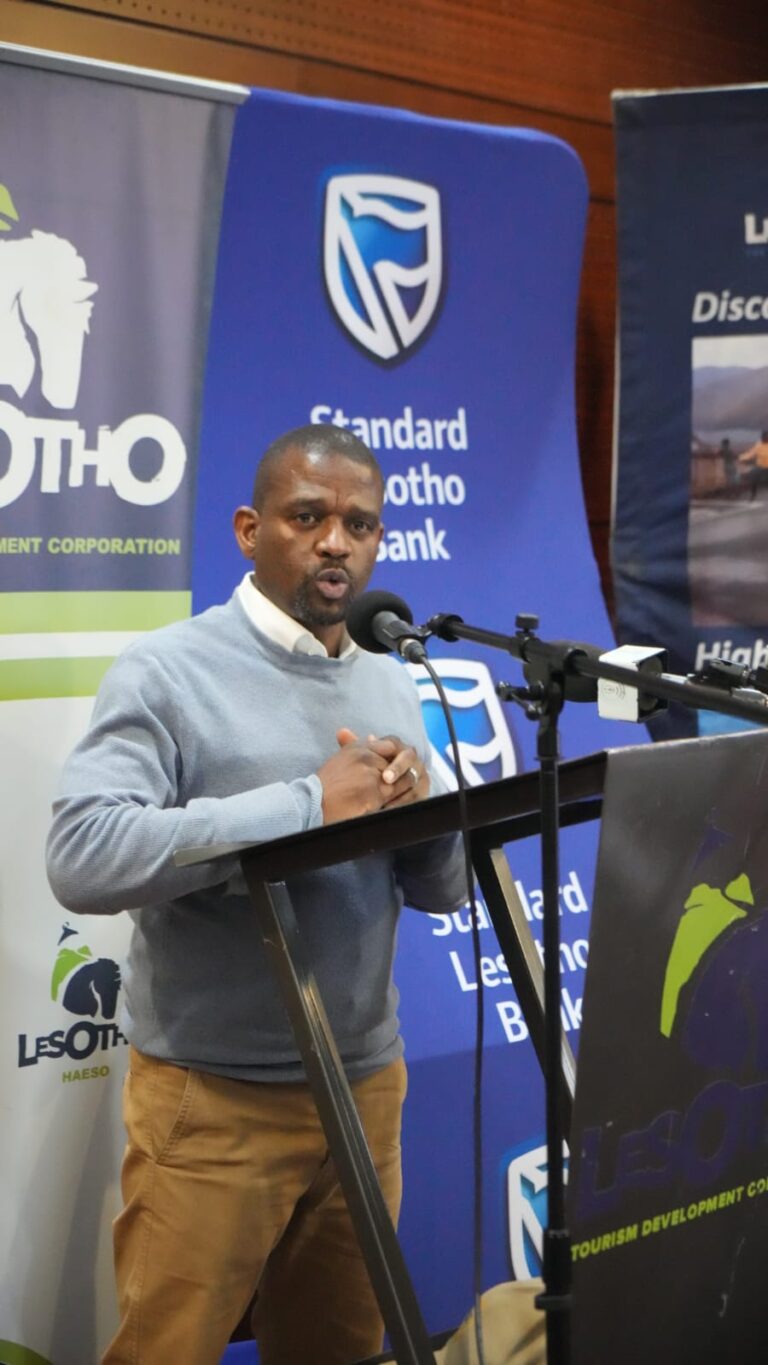
The third 3 Ranges Trail, organised by Thapoha Hiking Club, is set to make a return this October to test the endurance of hikers and travellers in Lesotho. This was announced by the club this week.

Mushroomed within Lesotho Tourism Development Corporation (LTDC), the club announced that the preparations towards the third episode of the tourism and hiking excursion have reached completion, with the first trail hiking piloted in 2023. 

The tour offers hikers an experience like no other, filled with rich Basotho culture, history, as well as exposure to the beauty of the Mountain Kingdom. 

The starting point of the hike is marked at the lowest point in Lesotho, 389 metres above sea level and escalating to the peak of mountain Thabana-Ntlenayana which is positioned at 3,482 metres above sea level.

The Chairperson of Lesotho Council for Tourism (LCT) Advocate Makhetha Motšoari, revealed that this challenging terrain brings a one-of-a-kind experience that will sell Lesotho, placing it as a tourist attraction to be considered. 

“Lesotho is the only country in the world entirely above 1,000 metres in elevation. This gives us a rare gift: pure mountain air, unspoiled natural landscapes and breath taking views that few places can match. We are not competing on beaches or on the savannah wildlife. We are competing on altitude, endurance, culture and the raw beauty of our mountains. This is our comparative advantage,” Advocate Motṣ̌oari said.

“We are talking about an experience that will attract international hikers, domestic adventurers and regional visitors, each of whom contributes to our economy and our people’s livelihoods. This is why today we boldly declare: Lesotho is Africa’s premier high-altitude hiking destination.” 

Motšoari also highlighted that the initiative is set to play a pivotal role in reflection tourism and economic impact, citing that it is a development tool which is going to bring opportunities for local guides, homestays and village communities who will provide food, accommodation and cultural storytelling.

“It creates jobs in guiding, transport, logistics, hospitality and eco-conservation. It puts Lesotho firmly on the global adventure tourism map, alongside destinations like the Inca Trail in Peru or Mount Kilimanjaro in Tanzania,” he supplemented.

He further reiterated that the Trail is not just about walking, but about rediscovering the spirit of humanity in nature as this trail has been defined as the most challenging of all hiking in the Southern Africa region.

The 288.3-kilometre trail name was ingeniously derived from the three mountain ranges through which the trail traverses. These are the Thaba-Putsoa, Takalatsa (Central) and Drakensberg mountain ranges. 

Motšoari noted that this trail gives the best of both worlds, by promoting a healthy lifestyle in hiking as well as promoting tourism, giving the participants exposure to some of Lesotho’s most renowned natural attractions and showcasing the best of the country’s picturesque beauty and cultural heritage. 

Hikers will be treated to exceptional views, passing through rivers and all four ecological zones of Lesotho and five districts.

In this hiking episode, the club has partnered with corporate sponsors with an additional backing of M40,000.00 from Standard Lesotho Bank.

The LTDC noted that forging partnerships will help the corporation to create development impacts on the locations that form part of the route, citing plans to reinforce and do renovations on some of the schools that are used as shelters during the course.

It noted that the hike has also been tailored to be enjoyable and challenge hikers. It has however also been designed to fit every hiker depending on whether one is at a beginner, intermediate or professional level of hiking.

The route is divided into manageable sections to accommodate varying levels of strength and endurance. It is divided into three sections: a 4-day section, a 6-day section and a 4-day section. The purpose is to accommodate hikers with different fitness levels as well as commitments.

Apple launches its thinnest phone ever along with new iPhone 17 models

0

It’s September and that means one thing: no, not that the kids are finally back at school but Apple’s announcing its latest tech.

Apple’s annual September product event is undeniably the tech powerhouse’s largest event of the year and is said to be its biggest revenue driver.

Speculation has suggested that the iPhone 17 (which might be available in black, white, steel gray, green, purple and light blue and will hit shelves as early as next week) and a new Apple Watch will be announced today in what Apple has promised to be ‘awe dropping’.

There could be some mention of the company’s future AI plans, which Apple’s CEO Tim Cook said they will be ’embedding’ into devices.

“Taking a step back, we see AI as one of the most profound technologies of our lifetime,” Cook said back in July, per CNN.

“We are embedding it across our devices and platforms and across the company. We are also significantly growing our investments,” he added.

And now it has officially announced the Apple Air — Apple’s thinnest iPhone yet which measures just 5.6mm thick. 

“Our intention was to make an iPhone that feels like a piece of the future, powerful, yet so thin and light it seems to disappear in your hands,” the company said of the new device.

Supposedly the device is Apple’s most durable iPhone yet, despite being it’s thinnest. 

It boasts a ceramic shield that encloses a titanium frame on both sides, The Verge reports.

France’s government collapses

0

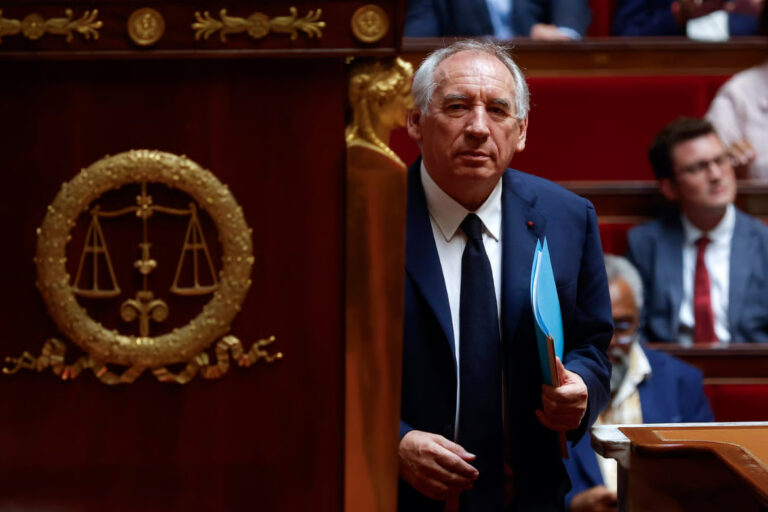
PARIS — French lawmakers toppled Prime Minister François Bayrou’s minority government on Monday evening, thrusting the country deeper into a political crisis that will force President Emmanuel Macron to name a fifth premier in less than two years.  

Three hundred and sixty four lawmakers voted to oust Bayrou, while 194 supported him.

Macron’s office hasn’t said whether he will speak tonight. 

But Macron has limited options to steer France out of this crisis. He is reportedly leaning towardappointing another prime minister — the fifth since January 2024 — but a new premier would face the same intractable parliament. So too would a technical government made up of civil servants.  

Another snap election looks unappetizing, though, as it could easily deliver another hung parliament.  

In an extreme scenario, Macron could even resign, but that’s highly unlikely given his past statements.

Independent business & current affairs journalism · Lesotho Subscribe — M85/month
| Independent business & current affairs journalism · Lesotho