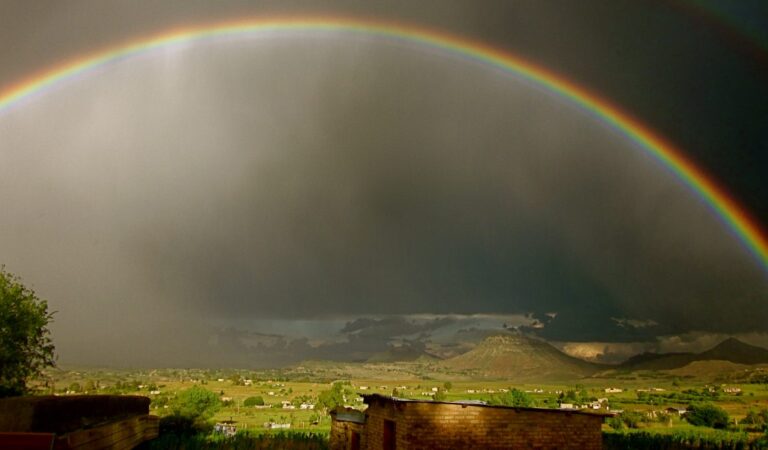
The preliminary forecast from Lesotho Meteorological Services for the 2025/26 season carries some encouraging news. Rainfall between October and February is expected to be normal to above normal, with the heaviest rains most likely during the peak summer months of December, January and February. Temperatures, meanwhile, are projected to remain close to their long-term averages.
For farmers, this outlook is more than just a weather note. It is a signal to begin planning carefully, taking advantage of expected rains while also guarding against the risks that come with wetter conditions.
Field preparation
This is the time to make sure soils are ready. Deep ploughing, timely ridging, and applying organic matter or compost will improve moisture retention and fertility. In areas prone to waterlogging, drainage must be addressed early to prevent crop losses once heavy rains arrive.
Timing the planting
With rainfall expected to start within the normal range in October, farmers can begin sowing early maturing crops in the OND period. Leafy greens, beans, and short-season maize varieties will benefit from this window. The expected increase in rainfall from December onwards favours planting of main-season maize, sorghum, and root crops that need steady moisture to thrive. Staggering planting dates remains a wise practice, ensuring that not all crops face the same weather risks.
Managing risks in wetter conditions
Above-normal rainfall during mid-summer can also mean higher chances of fungal diseases and pests. Farmers are encouraged to monitor crops closely, remove diseased plants quickly, and use preventative sprays where possible. Proper spacing between plants will help with air circulation, reducing the spread of disease.
Horticultural opportunities
For those in horticulture, this season presents an opening for expanding vegetable production. Tomatoes, cabbages, carrots, and beetroot can all perform well under these rainfall conditions if supported by mulching and timely weeding. Farmers with access to irrigation should use it to even out dry spells in early summer, ensuring steady growth.
A word to farmers
The forecast is not a guarantee, but it is a strong guide. As you prepare your fields, remember that agriculture has always been about working with the possible, not the perfect. This season, nature seems prepared to meet us halfway. The rest depends on careful choices, patient observation, and a willingness to adapt. The soil is waiting, and with it, the promise of another harvest.
(Meteorological information from Lesotho Meteorological Services.)
A storm is brewing in Maseru. The Law Society of has hauled the highest offices of state before the High Court in a constitutional showdown that could strip the Tenth Amendment to the Constitution Act, 2025 of its teeth.
The Society is not mincing words. It wants Sections 4, 5 and 6 of the amendment ripped out and declared dead on arrival, insisting they offend Section 85 of the 1993 Constitution. In simple terms, lawyers are accusing Parliament of tampering with the heart of the country’s supreme law and the King of lending his signature to a constitutional fraud.
The respondents in the dock could not be more telling. The Speaker of the National Assembly. The President of the Senate. His Majesty the King. The Attorney General. Every pillar of the state that pushed or permitted this amendment has been named. It is a rare and bold confrontation, one that sets the legal fraternity squarely against the political elite.
The Society is also demanding that every act carried out under those contested provisions be wiped off the record. That means the political class cannot simply shrug off this case as academic. Real decisions, real power plays, could be undone if the court rules in favour of the lawyers.
The founding affidavit, signed by advocate Lintle Tuke, makes it clear that the case is being brought not for sport but in the interest of justice. The Society has asked the court to fast-track the matter, warning that delay would only embolden unconstitutional governance.
Respondents have until 25 September to state whether they will fight the case. If they do, they have ten days to file their answers. That timeline alone puts immense pressure on the state to come out clean on why it believes the Tenth Amendment deserves to stand.
This is no ordinary court challenge. It is the legal profession, acting as custodian of the rule of law, calling out the legislature, the executive and even the monarchy for crossing the constitutional line. If the Law Society succeeds, the judgment could shake the very architecture of power in Lesotho.
For Basotho watching from the sidelines, the question is simple. Will the courts rise to the occasion and defend the 1993 Constitution, or will the country continue its drift into constitutional adventurism dressed up as reform?
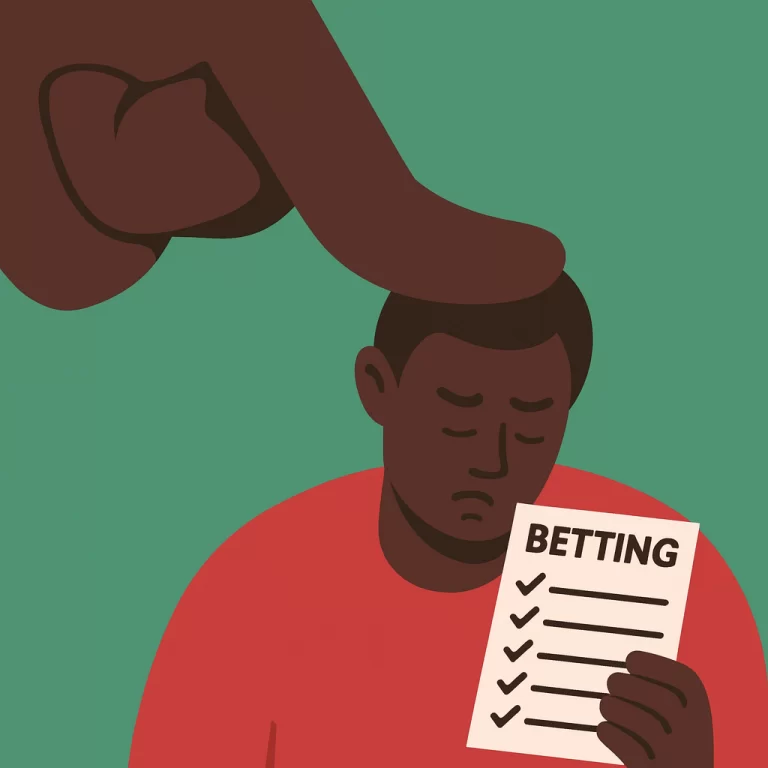
Sports and online betting have become a regional epidemic. In South Africa alone, gamblers staked R1.14 trillion in the year ending March 2024, up 40 percent from the year before. Two-thirds of that amount about R761 billion was spent on sports betting. Studies now show 31 percent of South African bettors are problem gamblers, up from just six percent in 2017. Disturbingly, almost half of sports bettors admit they are gambling to cover essentials like rent and school fees.
Lesotho is not insulated. Betting shops and mobile apps have multiplied, yet regulation remains toothless. The Lesotho Tribune reached out to all licensed sports betting companies in the country. Every one of them categorically refused to answer questions about what help they offer to gambling addicts. Their silence says everything.
Against that backdrop, the Tribune sat down with a young Mosotho who has lived through the spiral of addiction. He requested anonymity. What follows is his story, in his own words.
Lesotho Tribune (LT): How did it start? How did betting affect your relationships and overall well-being?
Addict (A): My friend introduced me to betting, and honestly it looked interesting because the very first time I started, I won. I would win 3,000 or 5,000, and I won a lot of times. Then suddenly I started losing a lot, but because I had seen that there is money in this thing, I encouraged myself and said I was investing, that it would come back.
I started by betting with my business money, then I risked my customers’ money after they placed orders. I do not know what I was doing but I always told myself “E tlo khutla.” Eventually this thing took every cent I had. I borrowed from mashonisa and owed a lot of them. I borrowed money from everyone I knew. My clients were fighting me, demanding their money or their orders, and I failed to deliver. I broke the trust my friends and customers had for me.
LT: What led you into gambling? Were there red flags you ignored?
A: I felt anxious and irritable when I could not gamble. I spent most of my time betting and I could not stop myself. I kept borrowing money from different people. I was hoping for financial gain because I am not working. I just wanted money.
LT: At what point did you realise you needed help? Did you receive any support?
A: I suffered severe headaches from debt and stress. I was emotionally tired. I started talking about it to the closest people around me and then I looked for professional help. They were supportive, and that was important for me.
LT: What did you do when you felt the urge to gamble?
A: I started reading a lot of books. I began going to church. I prayed a lot about it and I never turned back.
LT: Has recovery been helpful? What positive changes and new interests have you found?
A: Recovery has been very helpful. I have started paying my debts. I am working on myself and trying to fix the broken trust of the people who loved and believed in me.
My new interests include watching podcasts, and I often come across gambling stories that are similar to mine. I am thankful that I acknowledged I had a problem and worked on myself. It could have been much worse.
LT: What is your advice to others who are struggling with gambling addiction?
A: They should seek professional help. That is the only way.
LT: How do you maintain your recovery today?
A: I maintain my recovery by tracking my progress and being accountable. I read a lot about gambling addiction.
The Bigger Picture
This testimony is not an isolated case. It is a warning. Lesotho’s streets are filling with betting shops, its youth glued to mobile apps, and its households haunted by debt collectors. Regulations remain weak, public awareness is minimal, and the industry refuses even to acknowledge addicts exist.
As our anonymous source shows, recovery is possible. But it should not be left to luck, prayer, and personal willpower alone. The state must enforce strict oversight and betting companies must be compelled to provide meaningful support to those whose lives their business model destroys.
For now, their refusal to answer basic questions about responsibility tells its own story.
If nothing changes, the winners will remain the betting companies, and the losers will be the people of Lesotho.
Are banks reaching rural farmers, informal traders and youth entrepreneurs, or are inclusion wins still skimming the surface?
Key takeaways
• Access has expanded fast, largely via mobile money, but productive credit for MSMEs remains scarce.
• Youth and informal entrepreneurs are visible in the economy yet under-served by formal finance.
• Governance frameworks have strengthened on paper, now the test is transparent practice, measurable outcomes and board diversity disclosure.
I) Access vs. usage: inclusion’s two-speed track
Lesotho’s new National Financial Inclusion Strategy II (2024–2028) confirms headline progress: overall financial inclusion rose to 91 percent by 2021, driven mainly by mobile money. The strategy now pivots to harder problems such as MSME credit, smallholder insurance and usage that improves livelihoods.
Fresh MSME data underline the gap between access and meaningful finance. Only 34 percent of MSME owners are “banked,” while 66 percent use mobile money. Most start or run their businesses with personal savings or family help, and 79 percent do not borrow at all. This is inclusion for transactions, not for growth.
II) Marginalized segments: who is still left behind?
Rural farmers
NFIS II makes farmers a priority and calls for targeted products, risk-sharing and climate-smart insurance. This is explicit recognition that rural producers remain under-served by bank credit. Lesotho PostBank has begun positioning products for agriculture, but system-level mechanisms such as guarantees and parametric cover are what the strategy says must scale between 2024 and 2028.
Informal traders
Informality is the norm for MSMEs. Most are micro or single-person businesses, many outside Maseru’s formal ecosystem. These firms rely on savings and mobile wallets, not bank overdrafts or working-capital lines, limiting resilience and growth potential.
Youth entrepreneurs
A full 33 percent of MSMEs are youth-owned, yet younger owners report thinner capital buffers and lower borrowing. NFIS II highlights youth inclusion as a policy priority, but delivery will hinge on simpler KYC, starter credit with risk-sharing, and financial education that is tied to actual products.
III) What banks are doing (and not yet doing)
• Low-cost accounts: Standard Lesotho Bank’s Bothebelele M0.00 offers a no-minimum opening balance and entry-level features, signalling affordability moves in the mass market. The bank also markets a suite of savings options for low-income clients.
• Digital rails for traders: SLB’s Unayo platform targets micro-merchants and community payments, aiming to onboard the informal economy with simplified KYC and agent-led sign-ups. It is a promising bridge, but impact will depend on credit plug-ins, not payments alone.
• Rural and agri focus: Lesotho PostBank explicitly markets agriculture finance, aligning to NFIS II’s farmer agenda and to its public-interest mandate.
These are meaningful steps on the social pillar of ESG, yet none by themselves close the credit gap MSMEs and smallholders face.
IV) Governance: frameworks up, disclosures patchy
Consumer protection architecture
Lesotho enacted the Financial Consumer Protection Act, 2022, giving the Central Bank of Lesotho clear powers on market conduct, data protection duties for providers, and disclosure rules. The Financial Consumer Protection (Disclosure of Credit Information) Regulations, 2023, followed, tightening credit-disclosure standards. The Central Bank also runs a formal complaints channel through its Financial Consumer Protection Division.
On practice, SLB’s 2023 ESG report details complaint handling, anti-fraud, AML/CFT, whistleblowing and conflict-of-interest policies aligned to the Mohlomi Corporate Governance Code, the national soft-law benchmark launched in 2021. That is encouraging, but customer-outcome data and independent redress statistics remain limited in the public domain.
Board diversity and transparency
Public profiles show Lesotho PostBank chaired by Adv. Mampe Matela-Mphana, with a visibly mixed board. FNB Lesotho publicly lists its directors. What is still uncommon across banks is consistent, quantified disclosure on board gender mix, independence, tenure and succession pipelines, the kind of metrics investors now expect under the governance pillar of ESG.
V) Are banks serving the marginalized or are gains still exclusive?
Progress:
• Transactional access is broad and affordable options exist, especially via mobile money and low-fee accounts. Complaints channels and market-conduct rules are in place.
Gaps:
• Credit for productivity is the missing piece. MSMEs and farmers largely finance themselves, formal borrowing is the exception not the rule. Youth-owned firms enter but struggle to scale. Board-level ESG reporting is improving but uneven, especially on diversity and consumer-outcome metrics.
Bottom line: Lesotho’s inclusion story has moved from “can people transact?” to “can enterprises grow?” Banks have laid rails and improved governance frameworks. The next ESG test is whether those rails carry risk-sharing credit and fit-for-purpose insurance to the last mile, youth, rural farmers and informal traders, with transparent results.
VI) What to watch (2024–2028)
• NFIS II delivery: New credit-guarantee tools, agri-insurance pilots and MSME scoring models that reduce collateral barriers.
• Bank disclosures: Annual, comparable board-diversity and complaint-resolution metrics, published alongside ESG reports and pricing schedules.
• Product evolution: Low-cost accounts like Bothebelele and digital wallets like Unayo linked to micro-working-capital with transparent pricing and fair-use safeguards.
The footballing rivalry between Lesotho’s Likuena and South Africa’s Bafana Bafana has tilted heavily in South Africa’s favour in recent years. In their last six encounters, South Africa has claimed four victories, Lesotho has managed a single win, and the two sides have shared one draw. Lesotho’s last triumph over their neighbors dates back to 28 July 2019, when Likuena stunned Bafana Bafana with a 3–2 victory in Maseru during the African Nations Championship qualifiers. That celebration was short-lived, however, as South Africa struck back just days later, cruising to a 3–0 victory on 4 August 2019.
A turning point came in 2021, when both CAF and FIFA banned the Setsoto Stadium from hosting international fixtures, citing its failure to meet essential infrastructure standards. This decision forced Lesotho to host “home” games across the border in South Africa, a costly arrangement that drained the Lesotho Football Association (LeFA) and stripped local fans of the opportunity to cheer on their team at home. The effects were immediate. On 13 July 2021, Lesotho suffered a 4–0 defeat to South Africa at Nelson Mandela Bayy Stadium, underlining the challenge of competing without a true home advantage.
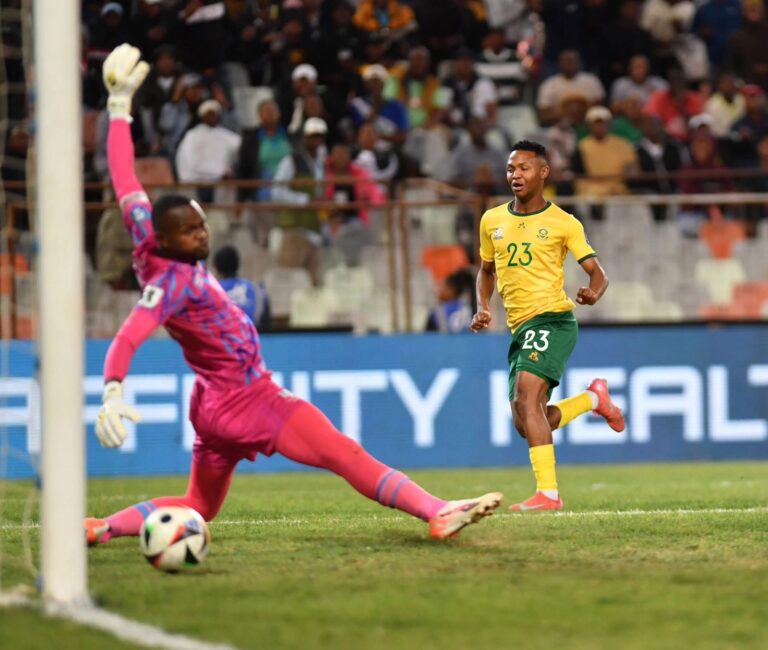
The two nations next met in a friendly match at Lucas Masterpieces Moripe Stadium, another fixture hosted in South Africa. This time, Likuena held their own, grinding out a 0–0 stalemate, yet their struggles to convert such resilience into victories remained clear. In 2025, the rivalry intensified with two FIFA World Cup qualifying clashes. On 21 March 2025, South Africa prevailed 2–0 at Peter Mokaba Stadium, and their most recent meeting came just this week, on 5 September 2025, at the Free State Stadium in Bloemfontein, where Bafana Bafana once again proved too strong, winning 3–0 thanks to goals from Mohau Nkota, Lyle Foster, and Oswin Appollis.
Since being forced to play all their fixtures away from home starting in 2021, Lesotho has never beaten South Africa. With South Africa enjoying a home advantage in every encounter, Likuena’s chances have been continually hampered, not only by the quality of the opposition but also by the lack of a proper stadium at home and the lack of home fans to support them.
The prolonged closure of Setsoto Stadium has become a symbol of frustration for Lesotho’s football community. On 16 April 2025, the Minister of Tourism, Sports, Arts and Culture, Motlatsi Maqelepo, announced that refurbishment work is targeted for completion before October 2026. Until then, fans will have to endure another year of watching their national team play “home” games away from home, while the players themselves continue to suffer from the absence of true home support.
For Lesotho, the rivalry with South Africa has become more than just a battle on the pitch, it is now a reflection of the country’s broader infrastructural struggles. Until Setsoto Stadium is rebuilt, refurbished and reopened, Likuena will remain disadvantaged, both competitively and emotionally, in one of Southern Africa’s most passionate football rivalries.
For years, we have been told to be patient with Likuena. That one day the results will come. That building takes time. Patience has been given, but the scoreboard does not lie. In the past twenty years the national team has lurched from one disappointment to another, with only the occasional spark. The pattern is too familiar to ignore. It is not just about players having an off day. It speaks to an administration that has lost direction…or is it something else?
Look at the COSAFA Cup. In 2023 Likuena stunned everyone by reaching the final. It felt like a turning point. Then came 2025, a four nil hammering by Angola followed by three nil against Namibia. You cannot sell hope one year and deliver humiliation the next. That is not growth. That is roulette.
World Cup qualifiers have been no kinder. Since the cycle began, Likuena has managed only two wins, two draws, and six losses. Just three goals scored, twenty conceded. A minus seventeen goal difference is not simply a statistic. It is an indictment. It says Lesotho is showing up not as a competitor but as a filler of fixtures. In March this year, the team lost two nil to South Africa and scraped a one all draw with Rwanda, on Friday hammered three nil by South Africa. That leaves Lesotho at the bottom of the group. If this does not alarm the leadership at LEFA, nothing will.
Then came the seven nil humiliation against Morocco in late 2024. One of the heaviest defeats in recent memory. Yes, there was a one nil win over the Central African Republic soon after. But does one result erase the embarrassment of conceding seven? No. It is part of the larger story of a team without a system, without a plan, and without leadership strong enough to demand accountability.
Off the pitch the picture is just as bleak. Setsoto Stadium, the symbol of national football pride, remains half renovated and half abandoned. Construction was halted because the money ran out. What does that say about priorities? A stadium in disrepair is not only a physical failure. It is a reflection of football administration that cannot manage its own house, let alone lift the game to continental standards.
Some will argue that Lesotho is small, that resources are thin, and expectations should be modest. That excuse has been used for decades. The truth is that size has never stopped other nations from punching above their weight. Iceland did it. Cape Verde is doing it. What they have is leadership, vision, and structure. These are the missing ingredients in Lesotho.
The players are not the problem. They run, they fight, they put their bodies on the line. But no amount of sweat can make up for poor planning. Winning culture cannot be built on disorganisation. That responsibility lies at the feet of LEFA’s leadership.
There is no polite way to put this. The game is stagnant. Results are humiliating. Infrastructure is crumbling. Leadership has failed to turn potential into progress. Unless there is real change, not token reshuffling, we will be sitting in the same place in another three years while the rest of Africa continues to move forward.
It is time to end the illusion that patience will solve everything. Football thrives on accountability. Accountability begins at the top. LEFA has had its chance. It has squandered it. Kapo kea pota?
The recent arrest of a Lesotho Times newspaper editor has profoundly impacted the media landscape of Lesotho, shining a light on the significant challenges journalists face in our country—issues that many, including our government and media institutions, often hesitate to address.
The editor was detained under the questionable charge of “impersonating an investigator”, and this raises an important question: What do our institutions truly understand about the essence of investigative journalism? Was this arrest a deliberate tactic to hide corruption, shield a powerful individual from accountability or an indication of a systemic failure to uphold investigative integrity?
Understanding investigative journalism is crucial, especially at this point and time. It is a vital form of reporting that demands thorough examination of topics that matter; a pursuit of truth that often uncovers serious crimes, political corruption and corporate misdeeds. Journalists seek out sources or are often approached by individuals eager to reveal hidden information, allowing them to bring to light facts that might otherwise remain obscured.
Yet, too many, including our institutions, fail to recognise that the core mission of investigative journalism is to hold those in power accountable, expose hidden truths and ensure citizens are informed, not merely to sensationalise for attention. Journalists dedicated to this vital work operate with courage and independence, fully aware that their revelations may provoke backlash from influential entities.
Sadly, the recent arrest represents a misunderstanding of the responsibilities being carried out. The editor was doing his job, equipped with critical information on potential corruption within our system. The authorities, feeling threatened, chose to twist the narrative, leading to the wrongful arrest of a professional merely doing what he was meant to.
The truth is our journalists understand the ethical standards that govern their work and would never misrepresent themselves. This arrest highlights a harsh reality; that repression frequently emerges when those in power feel challenged, stifling the vital work of journalists striving to uncover the truth.
This incident serves as both a wake-up call and a rallying cry for our community to stand firm in support of press freedom. Investigative journalism is the beacon that illuminates hidden truths and without our protection and support, the essential work we do risks being undermined.
The arrests and threats faced by journalists create an environment that chills press freedom and deters the bold pursuit of truth. Yet these challenges also underscore the necessity for investigative journalism as a powerful tool for transparency and accountability.
At Lesotho Tribune, we are passionate advocates for investigative journalism. However, our voice alone is not enough. We must come together, media houses and journalists alike, to push for laws that protect our work and ensure the safety of our sources. Our reporters must be equipped with the skills and resources needed to investigate effectively and safely. However, there is a pressing need for education on the critical importance of press freedom among the public and government as many overlook its vital existence.
The recent events compel us to recognise the fundamental role of investigative journalists in strengthening democracy and civic society by uncovering truths and challenging power structures.
To effect meaningful change, we must unite to advocate for robust legal protections. Last week’s events serve as a vital reminder that we are engaged in a fight for our rights and freedoms. Often perceived as adversaries, the true enemy lies with those who fear the exposure of the truth.
Fellow journalists and media personnel, we have received a call to action and it is in our hands to respond. Will we allow this moment to pass unnoticed or will we unite to claim our rights and stand boldly against injustice?