



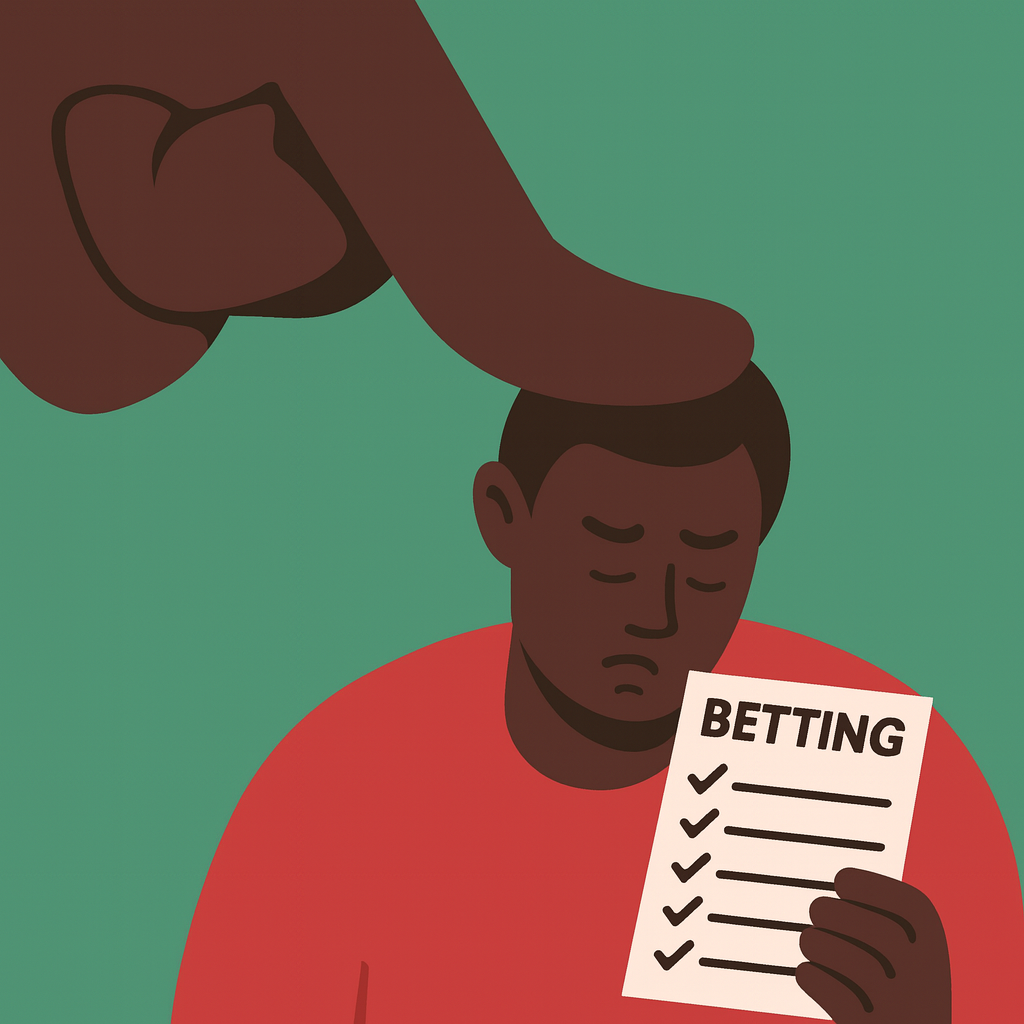
A Regional Crisis Hits Home
Sports and online betting have become a regional epidemic. In South Africa alone, gamblers staked R1.14 trillion in the year ending March 2024, up 40 percent from the year before. Two-thirds of that amount about R761 billion was spent on sports betting. Studies now show 31 percent of South African bettors are problem gamblers, up from just six percent in 2017. Disturbingly, almost half of sports bettors admit they are gambling to cover essentials like rent and school fees.
Lesotho is not insulated. Betting shops and mobile apps have multiplied, yet regulation remains toothless. The Lesotho Tribune reached out to all licensed sports betting companies in the country. Every one of them categorically refused to answer questions about what help they offer to gambling addicts. Their silence says everything.
Against that backdrop, the Tribune sat down with a young Mosotho who has lived through the spiral of addiction. He requested anonymity. What follows is his story, in his own words.
Lesotho Tribune (LT): How did it start? How did betting affect your relationships and overall well-being?
Addict (A): My friend introduced me to betting, and honestly it looked interesting because the very first time I started, I won. I would win 3,000 or 5,000, and I won a lot of times. Then suddenly I started losing a lot, but because I had seen that there is money in this thing, I encouraged myself and said I was investing, that it would come back.
I started by betting with my business money, then I risked my customers’ money after they placed orders. I do not know what I was doing but I always told myself “E tlo khutla.” Eventually this thing took every cent I had. I borrowed from mashonisa and owed a lot of them. I borrowed money from everyone I knew. My clients were fighting me, demanding their money or their orders, and I failed to deliver. I broke the trust my friends and customers had for me.
LT: What led you into gambling? Were there red flags you ignored?
A: I felt anxious and irritable when I could not gamble. I spent most of my time betting and I could not stop myself. I kept borrowing money from different people. I was hoping for financial gain because I am not working. I just wanted money.
LT: At what point did you realise you needed help? Did you receive any support?
A: I suffered severe headaches from debt and stress. I was emotionally tired. I started talking about it to the closest people around me and then I looked for professional help. They were supportive, and that was important for me.
LT: What did you do when you felt the urge to gamble?
A: I started reading a lot of books. I began going to church. I prayed a lot about it and I never turned back.
LT: Has recovery been helpful? What positive changes and new interests have you found?
A: Recovery has been very helpful. I have started paying my debts. I am working on myself and trying to fix the broken trust of the people who loved and believed in me.
My new interests include watching podcasts, and I often come across gambling stories that are similar to mine. I am thankful that I acknowledged I had a problem and worked on myself. It could have been much worse.
LT: What is your advice to others who are struggling with gambling addiction?
A: They should seek professional help. That is the only way.
LT: How do you maintain your recovery today?
A: I maintain my recovery by tracking my progress and being accountable. I read a lot about gambling addiction.
The Bigger Picture
This testimony is not an isolated case. It is a warning. Lesotho’s streets are filling with betting shops, its youth glued to mobile apps, and its households haunted by debt collectors. Regulations remain weak, public awareness is minimal, and the industry refuses even to acknowledge addicts exist.
As our anonymous source shows, recovery is possible. But it should not be left to luck, prayer, and personal willpower alone. The state must enforce strict oversight and betting companies must be compelled to provide meaningful support to those whose lives their business model destroys.
For now, their refusal to answer basic questions about responsibility tells its own story.
If nothing changes, the winners will remain the betting companies, and the losers will be the people of Lesotho.