The Lesotho Tribune strongly condemns in the harshest terms the cowardly and barbaric assault of our colleague, journalist Monaheng Mphahama, who was physically attacked on Friday (18 July 2025) evening while performing his journalistic duties.
Mphahama was broadcasting live on his Facebook news platform, exercising his constitutionally protected right to inform the public when he was violently assaulted by an individual involved in the very car accident he was reporting on in the Maseru CBD. This unprovoked and senseless attack is not just an assault on Mphahama as a person, it is an attack on press freedom, the public’s right to know, and on democracy itself.
This incident highlights the growing dangers journalists face in Lesotho simply for doing their jobs. It also underscores the glaring absence of adequate protection for members of the media. It is unacceptable that a journalist should be met with violence for carrying a camera instead of a weapon, and for choosing to report the truth instead of staying silent.
We call on the Government of Lesotho, the Lesotho Mounted Police Service, and all relevant authorities to treat this matter with the urgency and seriousness it deserves. The perpetrator must be held accountable through swift legal action, not just to deliver justice to Mphahama, but to send a clear message that the intimidation and assault of journalists will never be tolerated in a democratic society.
We further urge the government to take immediate steps to guarantee the safety of journalists, provide clear protocols for media protection in hostile situations, and reaffirm its commitment to upholding press freedom as enshrined in the Constitution of Lesotho and international human rights frameworks.
An attack on one journalist is an attack on all of us.
We stand in full solidarity with Monaheng Mphahama and all journalists in Lesotho who continue to serve the public interest despite increasing threats and hostility.
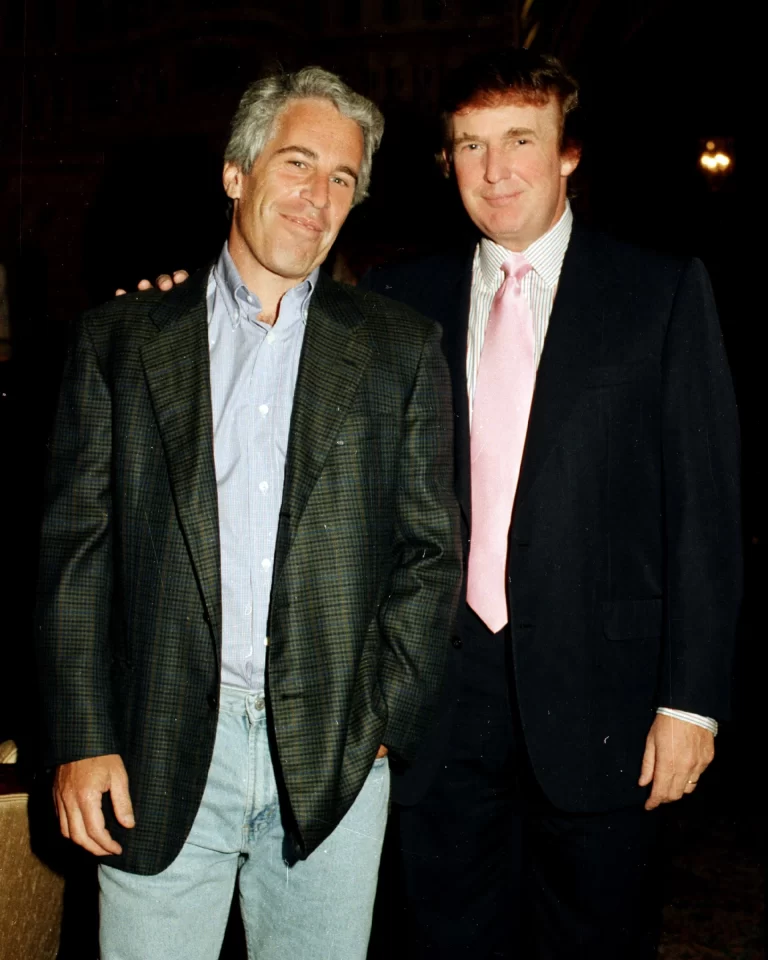
According to the Journal, a letter addressed from Trump to Epstein for his 50th birthday in 2003 was part of a leather-bound book including dozens of other cards. The Trump letter ends with “Happy Birthday — and may every day be another wonderful secret,” the Journal reported July 17.
Trump denied writing the letter and said in a social media post the story is “false, malicious, and defamatory.”
The review also found no evidence that Epstein blackmailed prominent people as part of his actions or that he was murdered while in custody, according to the memo.
The announcement came after Bondi had seemingly confirmed a client list existed when she was asked about it during a February Fox News interview: “It’s sitting on my desk right now to review,” she said.
White House Press Secretary Karoline Leavitt said July 7 that Bondi’s past remarks referred to “the entirety of all of the paperwork” in the Epstein case, not a list of clients.
Trump supporters, others question handling of Epstein case
After the July 7 memo, some politicians and Trump supporters alike have called into question the administration’s handling of the Epstein case and the assertion that a client list doesn’t exist.
Trump has lashed out at supporters who have questioned the handling of the case.
July 17: Did Trump write a birthday card to Epstein? What WSJ report says
The Wall Street Journal on July 17 published a report detailing a lewd letter bearing Trump’s name that was sent to Epstein for a 2003 birthday album. The letter contained text inside a hand-drawn outline of a nude woman, with Trump’s signature displayed as “a squiggly ‘Donald’ below her waist, mimicking pubic hair,” the Journal wrote.
Trump denied writing the card in a series of social media posts, calling it “FAKE” and saying, “These are not my words, not the way I talk. Also, I don’t draw pictures.”
He also said he plans to sue the newspaper over the publication of the story, adding that its editors were “warned directly” by him.
July 17: Bondi says she will release Epstein grand jury docs
After the Journal report, Trump said in another social media post he is directing Bondi to reveal more Epstein documents.
“Based on the ridiculous amount of publicity given to Jeffrey Epstein, I have asked Attorney General Pam Bondi to produce any and all pertinent Grand Jury testimony, subject to Court approval,” he said. “This SCAM, perpetuated by the Democrats, should end, right now!”
Bondi responded on July 17 that “we are ready to move the court tomorrow to unseal the grand jury transcripts.”
CAPE TOWN, South Africa (AP) — The United States sent five immigrants it says were convicted of serious crimes to the African nation of Eswatini, the U.S. Department of Homeland Security said — an expansion of the Trump administration’s largely secretive third-country deportation program.
The U.S. has already deported eight men to another African country, South Sudan, after the Supreme Court lifted restrictions on sending people to countries where they have no ties. The South Sudanese government has declined to say where those men, also described as violent criminals, are after it took custody of them nearly two weeks ago.
In a late-night post on X Tuesday, Homeland Security Assistant Secretary Tricia McLaughlin said five men — citizens of Vietnam, Jamaica, Cuba, Yemen and Laos — had been deported to Eswatini. She said they were all convicted criminals and “individuals so uniquely barbaric that their home countries refused to take them back.”
The men “have been terrorizing American communities” but were now “off of American soil,” McLaughlin added.
McLaughlin said they had been convicted of crimes including murder and child rape and one was a “confirmed” gang member. Her social media posts included mug shots of the men and what she said were their criminal records and sentences. They were not named.
The Eswatini government said Wednesday the men, which it referred to as “prisoners” and “inmates,” were being held in isolated units in unnamed correctional facilities in Eswatini but were considered to be in transit and would ultimately be sent back to their home countries.
In a series of posts on X, the Eswatini government said it would collaborate with the United States and the U.N. migration agency to facilitate their return home and ensure “due process and respect for human rights is followed” as part of their repatriation. The government gave no timeframe for that to happen.
Four of the five countries where the men are from have historically been resistant to taking back some citizens when they’re deported from the United States. That issue has been a reccurring problem for Homeland Security even before the Trump administration. Some countries refuse to take back any of their citizens, while others won’t accept people who have committed crimes in the United States.
Lesotho Promised to take detainees in
President Donald Trump has not been particularly kind to the small African nation of Lesotho. His administration’s dismantling of the United States Agency for International Development hit the nation of about 2.3 million people hard, by cutting millions of dollars of funding for public health and other programs. In March, he ridiculed the country during his address to Congress, alleging that the United States had spent $8 million “to promote LGBTQI+” in a country “nobody has ever heard of.” And then last week, he dropped the hammer: A 50-percent tariff on all imports from the country—which was tied for the highest in the world, before Trump paused the implementation on Wednesday afternoon.
In announcing the 90-day reprieve—which will keep 10-percent tariffs on much of the world and a 125-percent surcharge on Chinese imports—Trump boasted that “more than 75 countries” had expressed their willingness to negotiate with the White House. Lesotho, at least, was one of them. According to a State Department memo obtained by Mother Jones, high-ranking Lesotho officials scrambled to cut a deal in the days following Trump’s Rose Garden tariff announcement. The memo, sent out Monday from the US Embassy in Maseru, detailed the government’s efforts to stay on the good side of an American president who has inexplicably put the country in its crosshairs.
On a list of American companies the country was eager to do business with, one name stood out. Musk’s satellite telecommunications company, Starlink, has been trying to break into the market in Lesotho for a while—Musk even met with prime minister Sam Matekane in New York last year. While Musk has been stymied by regulators in some other African countries—most notably South Africa—the Lesotho government had good news on that front.
“To demonstrate opportunities for U.S. businesses, the [government] is finalizing a licensing agreement for Starlink, with the goal of having a signed agreement by April 15,” the memo stated. “Deputy Prime Minister Nthomeng Majara and others stated the deal is essentially complete.” (SpaceX, Starlink’s parent company, did not respond to a request for comment.)
The memo also played up Lesotho’s willingness to help out on military matters. In addition to previous partnerships in the region, “an advisor close to PM Matekane” told the chargé that his government would consider sending troops to the war-torn Democratic Republic of the Congo “to support peacekeeping operations there, particularly as the United States seeks access to minerals,” according to the memo.
“In a further demonstration of their commitment to the United States,” it continued, “the Foreign Minister said Lesotho would explore accepting third country national…deportees from the United States”—that is, foreign nationals deported by the United States who aren’t accepted by their home countries. The Wall Street Journal reported last week that at least six other countries were in talks with the Trump administration about accepting deportees, including nearby Eswatini.
Third-country removals raise concerns
Trina Realmuto is a lawyer with the National Immigration Litigation Alliance and one of the lawyers litigating a key case challenging the Department of Homeland Security’s efforts to remove people to third countries without notice or giving them the opportunity to raise concerns over persecution or torture. Third countries are ones not specifically listed on the final order of removal issued by an immigration judge and usually not the country a deportee is from.
Realmuto said part of the administration’s goal with flights like the one to Eswatini is to send a message that people could be punished by being sent to “far-flung countries.”
“It’s disturbing that we don’t know what the exchange was to get Eswatini to accept these individuals. We don’t know if there were diplomatic assurances and, if so, what they said. We don’t know if these individuals were given notice,” Realmuto said. “It’s all done in secrecy.”
A July 9 memo to U.S. Immigration and Customs Enforcement staff lays out the agency’s policy governing when and how ICE can send someone with a final order of removal to a “third country.”
If the United States has received assurances that the State Department deems credible from the third country that people the U.S. sends there won’t be tortured, ICE can send them without any further procedures.
If the U.S. hasn’t received those assurances, ICE can still send the person there but first has to notify them, in a language the person understands, telling them where they’re going. Time between notice and deportation is generally 24 hours, but can be as little as six hours.
ICE doesn’t have to ask if they fear being sent there. If the person raises concerns on their own, they’re interviewed by an asylum officer and must show it’s more likely than not they’ll be persecuted or tortured there.
“It’s an impossible standard to meet, especially if the person is not knowledgeable about the country,” Realmuto said.
Eswatini is an absolute monarchy
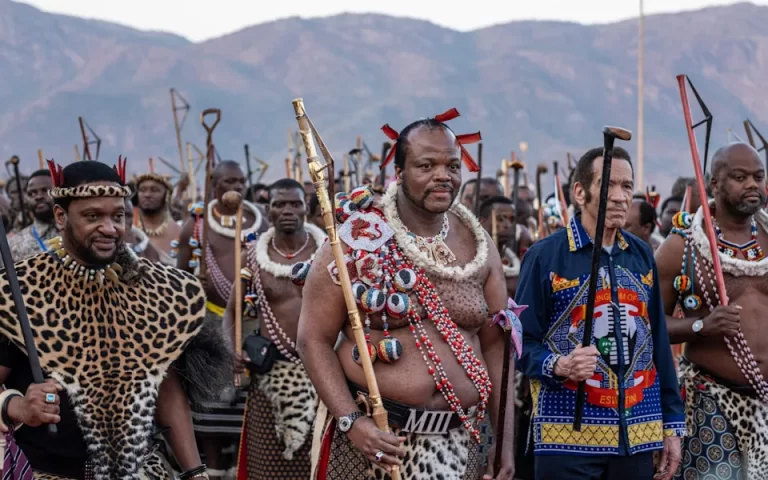
Eswatini, previously called Swaziland, is a country of about 1.2 million people between South Africa and Mozambique. It is one of the world’s last remaining absolute monarchies and the last in Africa. King Mswati III has ruled by decree since 1986. Political parties are effectively banned and pro-democracy groups have said for years that Mswati III has crushed political dissent, sometimes violently.
As with South Sudan, rights groups criticized the Trump administration’s choice to send the deportees to Eswatini, given its record.
Amy Fischer, Amnesty International USA’s director of refugee and migrant rights, said the U.S. State Department’s own 2023 human rights report found credible accounts of unlawful or arbitrary killings by security forces in Eswatini, impunity for abuses, and harsh prison conditions.
“As a result, anyone returned to this country is at risk of serious human rights violations,” she said. “The cruelty is the point.”
US is seeking more deals
The Trump administration has said it is seeking more deals with African nations to take deportees from the United States. Leaders from some of the five West African nations who met last week with President Donald Trump at the White House said the issue of migration and their countries possibly taking deportees from the U.S. was discussed.
Some nations have pushed back. Nigeria, which wasn’t part of that White House summit, said it has rejected pressure from the U.S. to take deportees who are citizens of other countries.
Rwanda’s foreign minister told The Associated Press last month that talks were underway with the U.S.about a potential agreement to host deported migrants. A British government plan announced in 2022 to deport rejected asylum-seekers to Rwanda was ruled illegal by the U.K. Supreme Court last year.
The eight men deported by the U.S. to war-torn South Sudan, where they arrived early this month, previously spent weeks at a U.S. military base in nearby Djibouti, located on the northeast border of Ethiopia, as the case over the legality of sending them there played out.
The South Sudanese government has not released details of its agreement with the U.S. to take deportees, nor has it said what will happen to the men. A prominent civil society leader there said South Sudan was “not a dumping ground for criminals.”
Analysts say some African nations might be willing to take third-country deportees in return for more favorable terms from the U.S. in negotiations over tariffs, foreign aid and investment, and restrictions on travel visas.
The Eswatini government said its arrangement with the U.S. posed no security threat to the people of Eswatini. “This exercise is the result of months of robust high-level engagements between the U.S. government and Eswatini,” it said.
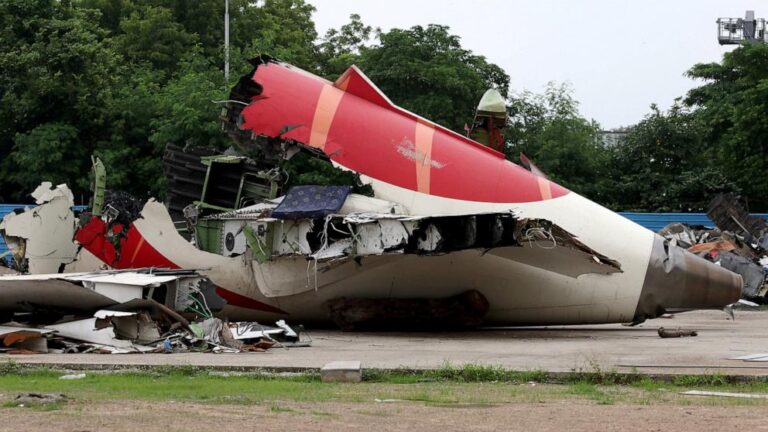
Early analysis of the Air India crash black box suggests the captain manually shut off fuel switches – a stunning revelation, if confirmed.
The June crash claimed 260 lives, with harrowing footage showing the aircraft plunging moments after takeoff.
The report cites unnamed U.S. officials involved in the early investigation, though Indian authorities have not publicly confirmed the claim.
What was first seen as a tragic mechanical failure may now point to intentional human action – triggering urgent new questions about motive, protocol, and pilot oversight.
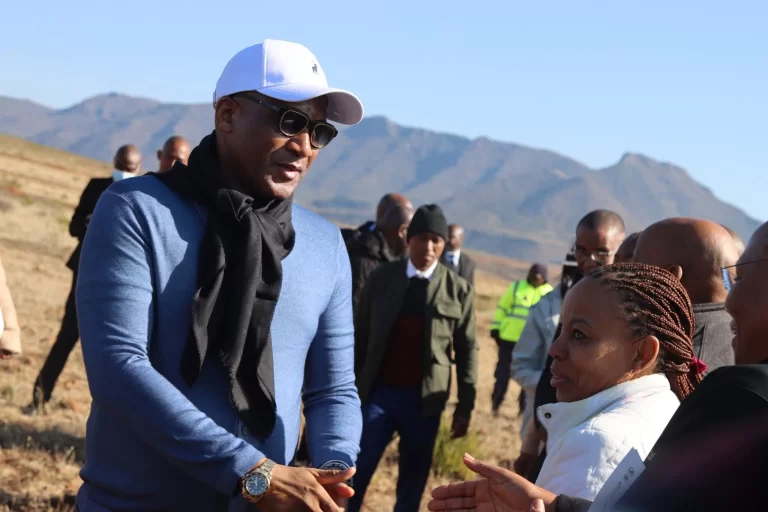
The President of Botswana, Advocate Duma Boko, has emphasized the need for impartial leadership and a commitment to citizens’ welfare in advancing major regional infrastructure projects such as the Makhaleng Dam.
Speaking during a visit to the proposed dam construction site along the Makhaleng River in Malealea, Mafeteng on Wednesday, Boko highlighted the strategic importance of the project, which is set to supply water to Botswana, Lesotho, and South Africa.
Welcomed by Lesotho’s Minister of Foreign Affairs and Minister of Water, President Boko noted that Botswana continues to grapple with severe drought, and this trilateral project offers a sustainable solution to water scarcity, benefiting multiple sectors in the region.
The Makhaleng Dam is expected to cost USD 3 billion, jointly funded by the three partner countries. Botswana will receive the largest allocation of water—150 million litres annually—followed by Lesotho with 90 million litres and South Africa with 60 million litres.
Construction is anticipated to begin early next year following the completion of a comprehensive feasibility study.
As part of his visit, President Boko also toured the Katse Dam in Lesotho for a study tour and is expected to join celebrations for His Majesty’s birthday this Thursday in Berea.
South Africa has assumed the Chairmanship of the Southern African Customs Union (SACU), marking the start of its one-year leadership term from 15 July 2025. The transition follows SACU’s established alphabetical rotational schedule and sees South Africa take over from Namibia.
Key Appointments Under South Africa’s Chairmanship
With this handover, South Africa now leads SACU’s main decision-making bodies: the Summit, Council of Ministers, and SACU Commission. The change in leadership was formalised during a handover ceremony in Windhoek, Namibia.
• SACU Summit: President Cyril Ramaphosa of South Africa has been appointed Chairperson, succeeding President Netumbo Nandi-Ndaitwah of Namibia.
• Council of Ministers: Minister Parks Tau, South Africa’s Minister of Trade, Industry and Competition, replaces Namibia’s Finance Minister Ericah Shafudah.
• SACU Commission: Ambassador Xolelwa Mlumbi-Peter, South Africa’s Deputy Director-General for Trade, succeeds Dr. Michael Humavindu of Namibia.
In addition, Botswana’s Boikanyo Mathipa, Deputy Secretary for Financial Policy, assumes the chair of the Finance, Risk and Audit Committee. She replaces Boipuso Modise of South Africa.
Advancing Regional Economic Integration
SACU Executive Secretary Thabo David Khasipe underscored the importance of continuity, collaboration, and regional unity among member states. He noted that Botswana, Eswatini, Lesotho, Namibia, and South Africa must continue to align their efforts to deepen economic integration and promote intra-regional trade.
South Africa’s leadership comes at a strategic moment for the customs union as it navigates critical regional challenges, including industrial development, trade facilitation, and sustainable economic growth. As Chair, South Africa is expected to drive initiatives that support inclusive development and reinforce SACU’s position as a catalyst for regional prosperity.
Strengthening the Role of SACU in Southern Africa
The transition of SACU leadership is more than symbolic—it reflects the bloc’s shared commitment to policy coherence and equitable development. As the region’s largest economy, South Africa is uniquely positioned to advance key trade and customs reforms, enhance infrastructure connectivity, and support the economic resilience of smaller member states.
Stakeholders across the region are watching closely as South Africa assumes this influential role in shaping SACU’s policy agenda for the next year.
⸻
About the Southern African Customs Union (SACU)
Founded in 1910, SACU is the world’s oldest customs union. Its core objective is to facilitate regional economic cooperation and create a unified trading environment for its five member states: Botswana, Eswatini, Lesotho, Namibia, and South Africa. The union plays a key role in promoting economic equity, trade liberalisation, and shared prosperity in Southern Africa.
In the past two weeks, the name Dr. Tšepo Lipholo has dominated headlines, political engagement, and whispers in government “corridors”. Arrested and now facing charges of treason, he’s become more than just a controversial politician; he’s become a national question mark. But who is he, really?
It’s easy to label someone a radical when their ideas make people uncomfortable. It’s even easier when those ideas threaten borders…literal, not just ideological ones. And Lipholo has done precisely that.
Back in 2022, he entered Lesotho’s National Assembly as the sole voice of the Basotho Covenant Movement (BCM). At the time, few took notice…ourselves included. A fringe party, a single seat, what could possibly come of it? But Lipholo wasted no time carving out a loud and unsettling niche for himself. Within months, he was urging MPs to physically visit Lesotho’s borders, warning of creeping South African encroachment. It sounded absurd at first. Then, to some, it started sounding bold.
Then came the UN incident. In what was arguably one of the most defiant moves by a Lesotho MP in recent memory, Dr. Lipholo traveled, uninvited, unauthorised, to New York to petition the United Nations General Assembly. His demand? The return of territory he claims was stolen from Basotho during colonial partitioning. Parts of the Free State. KwaZulu-Natal. Entire provinces, really.
Now, some found that laughable. Others quietly nodded.
The government? It wasn’t amused. Pro government zealots slammed the move as unconstitutional, reckless even. A few senior figures went as far as calling him a “constitutional risk” a phrase that stuck, and still circulates on WhatsApp and Facebook groups, often with equal parts mockery and admiration.
But Lipholo wasn’t done.
At some point; perhaps emboldened by his own mythology, he began referring to himself as the “King of Basutoland.” Yes, King. Not metaphorically. For a country that still “reveres”its monarchy, that alone was provocative enough to trigger outrage.
It wasn’t just political theatre. There were consequences. Senators condemned him in harsh terms. Traditional leaders were visibly agitated. Even military brass began to take an interest, some, reportedly, not entirely hostile.
Which brings us here.
Earlier this month, Dr. Lipholo was arrested at his home in Qoaling. He didn’t resist, though his wife, ‘Mathapelo Lipholo, has been vocal in denouncing the arrest as unlawful. She’s filed urgent applications in court and has reportedly reached out to regional and international bodies. Whether anything comes of it remains to be seen.
What’s far more gripping now is what followed.
Just few days after his arrest, Retired Major General Samuel Makoro, formerly of the Lesotho Defence Force (LDF), was also taken into custody. He is now expected to join Lipholo in court, facing similar charges of treason. What we’ve learned since is both unsettling and incomplete: security sources say more arrests are imminent. Several church leaders, active-duty military officers, and members of the mounted police are said to be under surveillance.
It’s all beginning to feel like a thriller novel, except it’s real. And the stakes are constitutional, not just political.
But here’s the thing: it’s easy to reduce someone like Lipholo to a headline. A caricature. A provocateur with a messiah complex. That’s part of the story, but not the whole one.
Behind the theatrics, there’s a family man, a political movement (however small), and a constituency that sees him as a symbol of justice. You can dismiss his tactics, sure. You can call him dangerous, irresponsible, even delusional. But to simply ignore the resonance of his message, especially among disillusioned youth and frustrated traditionalists, would be a mistake.
That’s the contradiction of Lipholo. He offends and inspires. He demands things most leaders would never touch, let alone say out loud. Some think he’s reckless. Others think he’s brave. Most, we suspect, are still trying to make up their minds.
In the end, perhaps the real question isn’t Who is Dr. Lipholo? but What does his rise say about us?About Lesotho? About the political and constitutional vacuum that allows figures like him to emerge and thrive?
Tomorrow, the courtroom will offer legal clarity. But the deeper answers? Those will take longer to surface.
And maybe, just maybe, we won’t like what they reveal.
The Lesotho National Development Corporation (LNDC) Board of Directors has reportedly selected Thabo Khasipe as the new Chief Executive Officer, succeeding Molise Ramaili, who has served in an acting capacity for the past five years. Sources indicate that Khasipe’s impressive interview performance made him the clear favorite, despite internal disputes within the ruling Revolution for Prosperity (RFP) party, with some factions advocating for Ramaili’s continuation in the role.
This story is not free to read, support our journalism by paying just M85.00 per month to have access to this story and many more!