







The entry of Starlink into Lesotho’s internet market has sent shockwaves through the telecommunications sector and consumers are the real winners. In a matter of weeks, Vodacom Lesotho and Econet Telecom Lesotho have slashed prices and rolled out competitive new packages, proving once again that nothing drives innovation and affordability like good old-fashioned competition.
A quick check of the latest internet pricing reveals dramatic shifts. Before Starlink’s arrival, mobile data and home broadband prices in Lesotho were relatively stagnant, with limited incentives for providers to undercut each other. Now, Vodacom and Econet are scrambling to retain customers with better deals. Vodacom Lesotho recently introduced larger data bundles at reduced rates, including a 30% price cut on some monthly LTE packages. Econet Telecom Lesotho responded with double-data promotions and expanded coverage in rural areas, previously underserved. Both providers are now offering uncapped overnight data and loyalty discounts, a clear attempt to match Starlink’s high-speed, unlimited offerings.
This is Economics 101: When monopolies or oligopolies dominate, prices stay high, service lags, and innovation stalls. The moment a disruptive player like Starlink enters, incumbents are forced to improve or lose market share. Consumers benefit immediately as companies fight for their business. Network upgrades and customer service improvements follow. Providers expand coverage to avoid losing subscribers.
Lesotho’s internet penetration has long lagged behind regional peers, partly due to limited competition. Starlink’s satellite-based service bypasses traditional infrastructure barriers, forcing local ISPs to rethink their strategies. If this trend continues, more Basotho will come online, boosting digital inclusion and economic growth.
Regulators must ensure a level playing field…preventing anti-competitive behavior while encouraging further investment. Meanwhile, consumers should enjoy this moment, compare offers, and switch if they get a better deal.
Competition works. You gotta love it.
Note: For exact pricing details, check Vodacom Lesotho and Econet’s latest packages, as promotions may change frequently in response to Starlink’s rollout.
By Ramahooana Matlosa
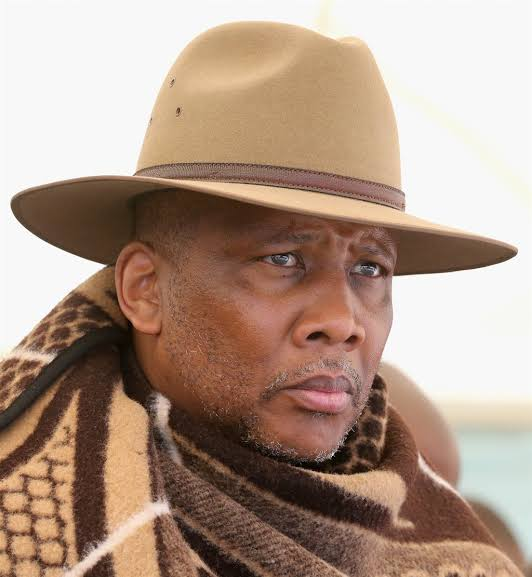
On January 10, 2025, a notable and unexpected development quietly entered the public domain: His Majesty King Letsie III of Lesotho is now a businessman. His Majesty is a founding shareholder in His Majesty King Letsie III Just Energy Transition Limited (HMKLIII JET), a UK-registered company, with a declared focus on the energy sector. The company’s registered address in Ruislip, London, makes it clear that the venture is serious and internationally positioned.
Then, on July 02, 2025, the King addressed an energy transition forum in Tokyo, Japan, organized by the United Nations University. In his keynote, His Majesty outlined the company’s vision and his personal dream of transforming Lesotho’s energy sector. Admirably ambitious. But here’s the catch, his travel, accommodation, and costs for this business-focused engagement were sponsored not by his private enterprise, but by public funds, in other words by our taxes.
Let me say this upfront: I have no objection to His Majesty venturing into the world of business. In fact, I welcome it. For too long, our monarchy has been ceremonial and disconnected from the gritty realities of economic life. In this sense, the King’s participation in the energy sector, an area where Lesotho faces significant challenges, is refreshing. It could even be a catalyst for change and innovation in an industry that desperately needs it. But the critical question remains: Should a monarch, now in business, still be carried on the back of the taxpayer?
We are entering a complex and unprecedented era in Lesotho. We now have a sitting monarch who is both a ceremonial head of state and an active participant in private enterprise. And not just any enterprise, a highly strategic and politically sensitive sector: energy. The optics are problematic. While His Majesty is within his rights as a private citizen to invest or form a company, we must consider the implications of him using public funds to finance what appears to be a private commercial venture.
There’s a clear distinction between a royal duty and a business interest. If His Majesty was attending a United Nations political summit as part of his constitutional role, that would be well within expectations and justifiable use of public funds. But in this case, he was promoting a private business, pitching to potential investors, and outlining a commercial vision, one that he stands to personally benefit from.
This dual role places him in a grey area that is neither entirely royal nor entirely private. On one hand, we continue to pay for his lifestyle, his travels, and his security as a head of state. On the other, he is entering a market where ordinary citizens, entrepreneurs, and start-ups must compete, often without the same access, networks, or state-funded exposure.
How are ordinary citizens supposed to feel when we fund the King’s travels for business purposes while we ourselves struggle to secure small grants or loans to support our own entrepreneurial dreams? How do we reconcile the principles of fair competition with a market player whose platform is amplified by royal privilege?
To be fair, the energy sector in Lesotho is in dire need of investment, innovation, and leadership. The idea of a “just energy transition” is timely and important. Load shedding, unstable grid supply, and dependency on imports continue to hold our economy hostage. If His Majesty’s involvement brings global investors to the table or shines a spotlight on renewable initiatives in the country, that would be a net positive. But transparency and fairness must accompany this involvement.
Public trust in our institutions is delicate. If we are to support His Majesty’s new role, we must be assured that there will be no conflict of interest, no unfair advantages, and most importantly, no misuse of public funds. The King has a choice: either he remains a constitutional monarch supported by the state, or he becomes a businessman responsible for funding his own ventures.
As citizens, we deserve clarity. Will His Majesty recuse himself from certain state privileges when acting in a business capacity? Will there be publicly disclosed financial boundaries between his royal duties and private investments? Will the companies he owns or is associated with be subject to the same regulatory and taxation frameworks as ours?
This is not about disrespecting the monarchy or denying His Majesty the right to evolve with the times. It is about fairness, accountability, and the principle that no one, no matter how revered, should operate above or outside the norms expected of every Mosotho.
So yes, I welcome His Majesty to the business world. Let him hustle. Let him show the youth that entrepreneurship is noble, necessary, and powerful. Let him contribute solutions to our energy crisis. But let him also finance his hustle like the rest of us, without leaning on the taxpayer.
If His Majesty is serious about being a businessman, perhaps it is also time he relieved us of the burden of maintaining his royal salary and privileges. A full transition into private enterprise could be the most powerful example of leadership in a new Lesotho, where even a King is willing to stand or fall on the merit of his ideas and investments, just like the rest of us. That would be a truly just transition.
In conclusion, I strongly argue that the Constitution of Lesotho does not permit the King to engage in business, primarily because His Majesty is granted immunity from legal proceedings. This immunity is meant to protect the dignity and impartiality of the monarchy. However, the situation becomes even more concerning with the revelation that the business in question is registered in the United Kingdom. This not only places the King within a foreign legal jurisdiction but also effectively strips him of the constitutional protection he enjoys at home. Should a business registered under his name breach a contract, it would inevitably raise serious legal and constitutional questions. The result is a potential constitutional crisis, one that threatens the very foundation of the monarchy’s role in Lesotho. For the sake of constitutional integrity and national stability, the King must make a clear choice: to be a sovereign above legal entanglements or a businessman subject to the law. He cannot be both.
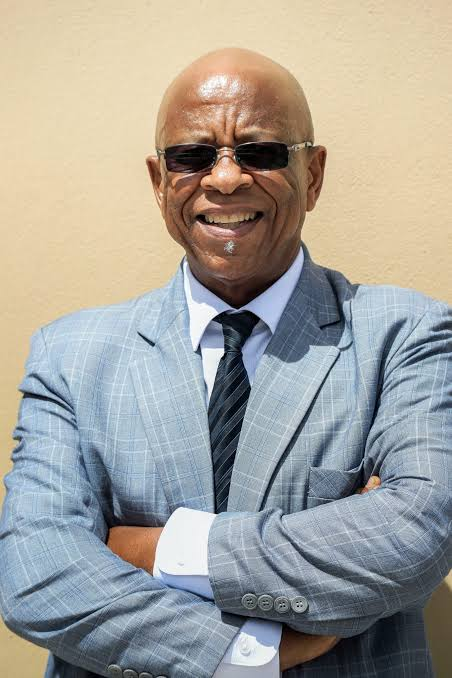
Maseru – The Lesotho Electricity Company (LEC) has once again extended the suspension of a senior employee as delays continue to plague the forensic audit commissioned by the company’s Board earlier this year.
In a formal communication signed by Acting Managing Director Ntsie N. Maphathe, dated 10 July 2025, the employee—whose identity Lesotho Tribune has chosen to withhold due to the sensitivity of the matter—was informed that their suspension will now continue until 11 September 2025, unless the audit is completed earlier.
“The forensic audit is still in progress and it will not be possible to finalize it by the initially anticipated date,” the letter reads, referencing earlier correspondence dated 12 March and 10 June 2025, which originally confirmed and extended the suspension.
“The Board remains committed to ensuring that all due processes are observed in a manner that is both fair and impartial.”
Despite the stated commitment to due process, this marks the second extension of both the suspension and the forensic audit, prompting public speculation and raising concerns about the efficiency and competence of the auditing firm involved.
Although LEC has not officially disclosed the identity of the audit firm, Lesotho Tribune has learned through unconfirmed sources that KPMG was selected to carry out the forensic investigation. Questions directed by Lesotho Tribune to the Office of the Auditor General—particularly regarding the scope and oversight of the forensic audit—remain unanswered at the time of publication.
The repeated delays are likely to reignite debate over governance and transparency within state-owned enterprises, especially given that forensic audits are typically commissioned in response to allegations of serious misconduct, financial irregularities, or operational failures.
Stakeholders in the energy sector and public accountability advocates have expressed concern that the continued extensions without clear timelines or public disclosures undermine the credibility of the audit process. A governance expert familiar with parastatal oversight, who asked not to be named, stated:
“If this is indeed KPMG, we are not questioning their global reputation—but rather the clarity of the terms of reference, and the level of institutional cooperation that has been given. When an audit drags on this long without transparency, it fuels suspicion rather than confidence.”
The case also reflects poorly on internal controls within LEC and raises the stakes for the Board, which may find itself under scrutiny if the audit eventually reveals mismanagement or if it fails to meet the expectations of the public and regulators.
As the country grapples with ongoing energy challenges, the need for a well-managed, transparent, and accountable LEC is more critical than ever. The outcome of this forensic audit—and how the company communicates it—will likely set a precedent for other state-owned entities under similar scrutiny.
Lesotho Tribune will continue to monitor this developing story and provide updates as more information becomes available.
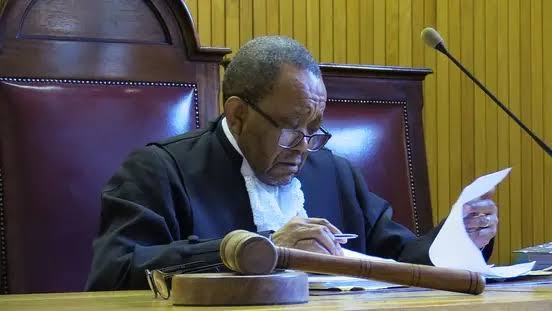
The High Court of Lesotho has been left scrambling to deal with a staggering 218 unresolved casesfollowing the departure of two senior judges; Justice Tseliso Monapathi and Justice Keketso Moahloli.
The backlog includes judgments and part-heard matters, some of which date as far back as 1994, now thrown into uncertainty due to missing litigants, lost files, and vanished witnesses.
A Legacy of Delay
Justice Monapathi, who retired in August 2023 after an illustrious 30-year judicial career, left behind a remarkable 107 undelivered judgments, spanning civil and criminal cases. The actual number of incomplete matters is even higher;116 in total, once part-heard cases are accounted for.
A detailed breakdown reveals a systemic failure in case finalisation:
• 37 civil trials
• 26 civil applications
• 2 civil appeals
• 2 criminal trials
• 7 criminal applications
• 1 criminal review
• 9 part-heard cases
Startlingly, five cases filed in 1994 remained unresolved at the time of his retirement. The bottleneck peaked between 2015 and 2021, with 62 cases stuck in limbo during that period alone.
Forced Exit Amid Mounting Criticism
Justice Moahloli, who resigned abruptly in October 2023, left under a cloud of controversy. His resignation followed a recommendation for impeachment by Chief Justice Sakoane Sakoane over persistent delays.
Moahloli left 84 undelivered judgments, predominantly civil applications, and 18 part-heard cases, bringing his total unfinished caseload to 102 matters. His annual backlog had shown a worrying trend, escalating from just one unresolved case in 2014 to 20 in 2021, suggesting chronic case mismanagement.
Administrative Fallout
The departure of the two judges has triggered a judicial logistical nightmare. Chief Justice Sakoanehas since reassigned all 218 abandoned cases to other sitting judges. Meanwhile, the Registrar of the High Court, Advocate Mathato Sekao, has issued a circular summoning litigants and lawyers to a roll call hearing scheduled for 4 August 2025 in an attempt to revive the dormant cases.
But the path forward is fraught with obstacles:
• Some litigants and witnesses are now deceased or cannot be located.
• Evidence has been lost or destroyed over time.
• Police officers involved in investigations have either retired or left service.
• Memories have faded, and documents have gone missing, creating legal ambiguities and procedural voids.
A System Near Collapse
These revelations come as Lesotho’s High Court continues to grapple with an already overwhelming backlog of nearly 4,000 pending cases. The addition of 218 complex, aged cases…many requiring re-litigation, further burdens a justice system that critics say is inching toward dysfunction.
Legal experts and human rights advocates are calling this a crisis of confidence in the judiciary. “When cases take 30 years and still aren’t resolved, the system isn’t just inefficient, it’s broken,” remarked one veteran lawyer, speaking anonymously.
What Happens Now?
While some cases may be salvaged, many are expected to collapse due to evidentiary and procedural decay. The Judiciary faces an uphill task…not only to catch up, but to restore public trust.
As roll call hearings begin next month, many families and businesses who’ve waited years, even decades, for justice will be watching closely. Whether this backlog will be cleared—or further buried in bureaucracy, remains to be seen.
Quick Stats:
• Monapathi: 107 undelivered judgments, 116 total incomplete cases
• Moahloli: 84 undelivered judgments, 102 total incomplete cases
• Total reassigned cases: 218
• High Court backlog: Approaching 4,000 pending casesj
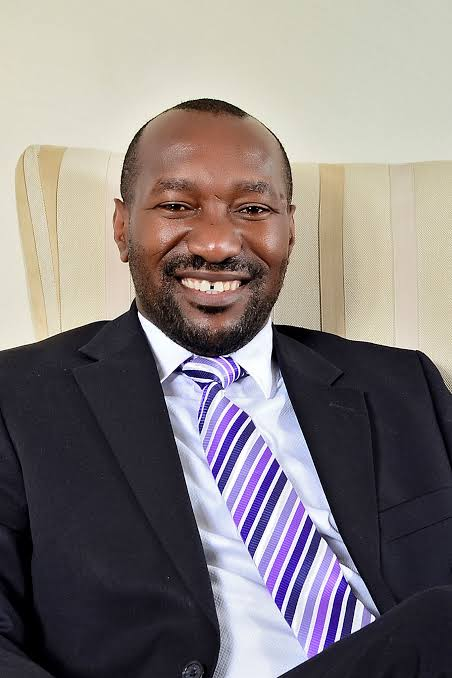
After a stellar 2024/25 campaign, Lioli FC’s players and technical team are set to receive a well-earned M200,000 bonus in recognition of their achievements this season.
The club’s management has decided to reward the team following their successful defence of the Vodacom Premier League (VPL) title and victory in the TJ Nthane Brothers Tournament.
In total, Lioli FC walked away with M650,000 for their league triumph and an additional M200,000from the cup competition.
Announcing the bonus at a press conference held at Blue Mountain Inn (BMI) this week, club president Lebohang Thotanyana said the reward reflects the club’s appreciation for the team’s dedication and consistent performance throughout the season.
“After such an exceptional season, it was only right for the club to acknowledge the hard work and contributions of both the players and technical staff,” Thotanyana said.
To further celebrate the team’s success, Lioli will also host its annual awards ceremony this Saturday at BMI. The event aims to highlight individual excellence and dedication during the 2024/25 campaign.
Award categories this year include:
• Most Disciplined Player
• Outstanding Young Player
• Most Improved Player
• Players’ Player of the Season
• Golden Glove
• Golden Boot
• Player of the Year
For the first time, the club is also introducing a new fan-driven category — Supporters’ Player of the Season — to give fans a chance to take part in celebrating the team’s journey and standout performances.
The celebrations cap off a season to remember for Tse Nala.
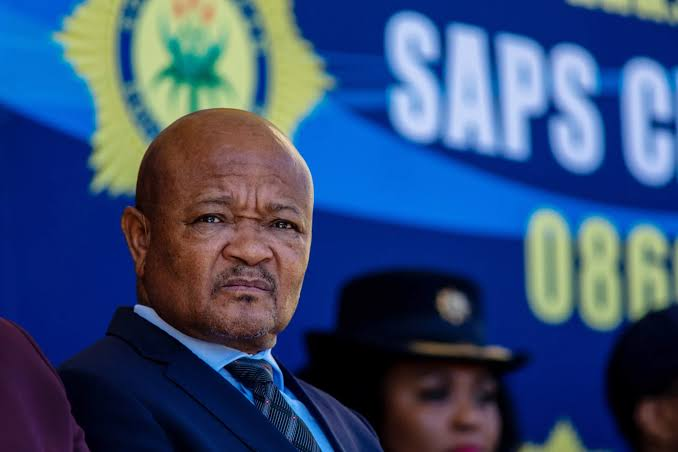
The uMkhonto weSizwe (MK) Party has opened a criminal case against Minister Senzo Mchunu and Major-General Shadrack Sibiya at the Brooklyn Police Station in Pretoria, accusing them of perjury.
The charges stem from allegations that Mchunu misled Parliament’s Portfolio Committee on March 5, claiming that instructions to disband a specialized police unit came from the National Commissioner. However, the National Commissioner later denied any knowledge of the decision.
A spokesperson for the MK Party stated that newly uncovered evidence, including a letter from Mchunu, contradicts his earlier testimony. “The minister lied to us as members of the Portfolio Committee,” the spokesperson said. “He claimed the directive came from the National Commissioner, but now we see a letter where he admits he personally disbanded the task force.”
The case also implicates Major-General Sibiya, with the MK Party alleging his involvement in unlawful surveillance activities. “How can the minister authorize the downloading of cell phone data without proper legal grounds?” the spokesperson questioned. “These actions must be tested by all means possible.”
The MK Party has vowed to pursue legal action, asserting that both officials must be held accountable. Authorities have confirmed receipt of the complaint, and investigations are expected to proceed.
This development adds to growing scrutiny over government accountability and transparency in South Africa’s law enforcement operations.
The announcement by U.S. President Donald Trump of a 30% tariff on South African goods and produce entering the United States from 1 August 2025 is deeply troubling. The economic consequences of this decision could be widespread and severe.
While not explicitly stated, this move may signal the effective end of South Africa’s participation in the African Growth and Opportunity Act (AGOA), which currently allows duty-free access for over 6,000 products, including automobiles, agricultural goods, and textiles.
Thousands of South African exporters, across farming, manufacturing, mining, and other sectors are now facing profound uncertainty. The impact on jobs and livelihoods could be devastating, particularly in a country already burdened by one of the highest unemployment rates in the world. Billions of rands in export revenue are at stake.
Given the potential fallout, South Africa must now accelerate urgent economic reforms that strengthen resilience, protect jobs, and position the country more competitively in the global marketplace.
Among these critical reforms are:
• Removing regulatory and infrastructure barriers to private sector participation in electricity generation and transmission
• Concessioning ports to improve logistics efficiency and reduce turnaround times
• Expanding private participation in freight rail, supported by investment in infrastructure and stronger security measures
• Reviewing property legislation to reinforce investor confidence and protect private ownership
• Reforming empowerment policies to more effectively tackle poverty and inequality
• Strengthening local government performance to improve service delivery and ensure financial accountability
• Taking decisive steps to combat corruption, which continues to undermine public trust and development
The brief extension granted, from 9 July to 1 August offers a narrow but vital opportunity to engage constructively and seek clarity from the United States. It is essential that this window is used wisely, with a focus on diplomacy, reform, and long-term economic stability.
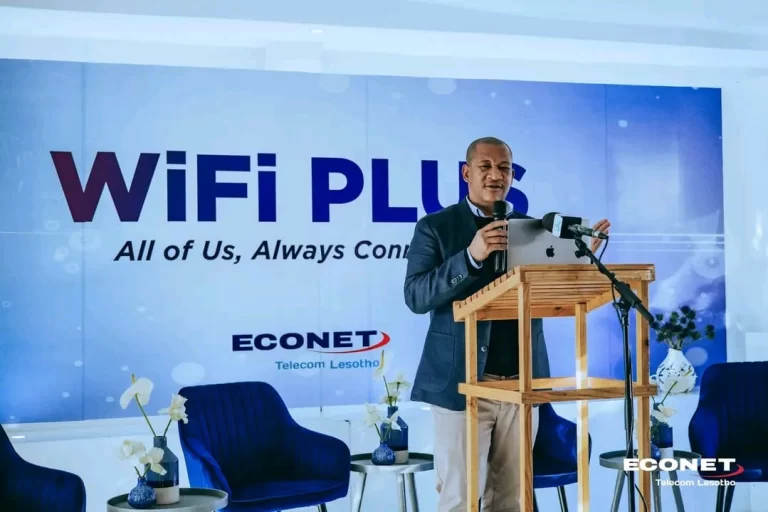
MASERU- Econet Telecom Lesotho (ETL) has launched a Fixed Mobile Convergence (FMC), known as Wi-Fi PLUS this week at Thabeng Hotel in Maseru along the week. Intended for both home and business, Wi-Fi PLUS guarantees quick, steadfast internet for all clients’ needs. From teleworking to streaming and video games, Wi-Fi Plus is an opening that connects all without any clash.
In his opening remarks at the launch, Chief Executive Officer of Econet Telecom Lesotho, Denis Plaatjies stated that the newly introduced product will allow users to stay connected in a faster and more appropriate way. He said that this innovative breakthrough represents more than just improvement, as it marks a turning point in Lesotho’s digital progress in general.
“Wi-Fi Plus permits us to reach even the most inaccessible communities, giving them access to the same quality of service enjoyed in urban areas. It also simplifies the customer experience by packaging voice, data, and SIM services into one convenient solution. By building on our existing fixed infrastructure, we are delivering consummate network reliability and efficiency. This is an essential moment in our journey to make digital access truly widespread,” Plaatjies remarked.
He showed that it is also an extension of the 4G internet connectivity that ETL is already having across the country especially in remote areas. Moreover, the Product Manager, Ntina Sehlooho said that Wi-Fi PLUS is a product with which ETL is targeting to allow its users to stay connected with different channels not only at a fixed place as it will also enable mobile connectivity.
Econet General Manager Sales and Services, Lebohang Ramaisa, said they are progressing out committedpackages for both Residential and Small, Medium & Micro Enterprises (SMME) customers. Ramaisa said they offer a residential package which is perfect for families and shared households that can connect up to seven users, each receiving mobile data, On-Net call minutes, and a free SIM card – all under one flexible, shared account.
In addition, Ramaisa stated that the Business (SMME) Package is designed for small businesses to connect up to five employees, with each receiving 10GB of data and two hours of On-Net talk time monthly for up to 24 months. Well-suited with prepaid SIM cards, this package is designed for ease operation with enough resources.
“This launch is a true evidence to Econet’s commitment to inclusive digital access and innovation. By joining the connectivity gap, Econet is allowing families, entrepreneurs, and communities to flourish in a digitally connected Lesotho, “Ramaisa emphasised.
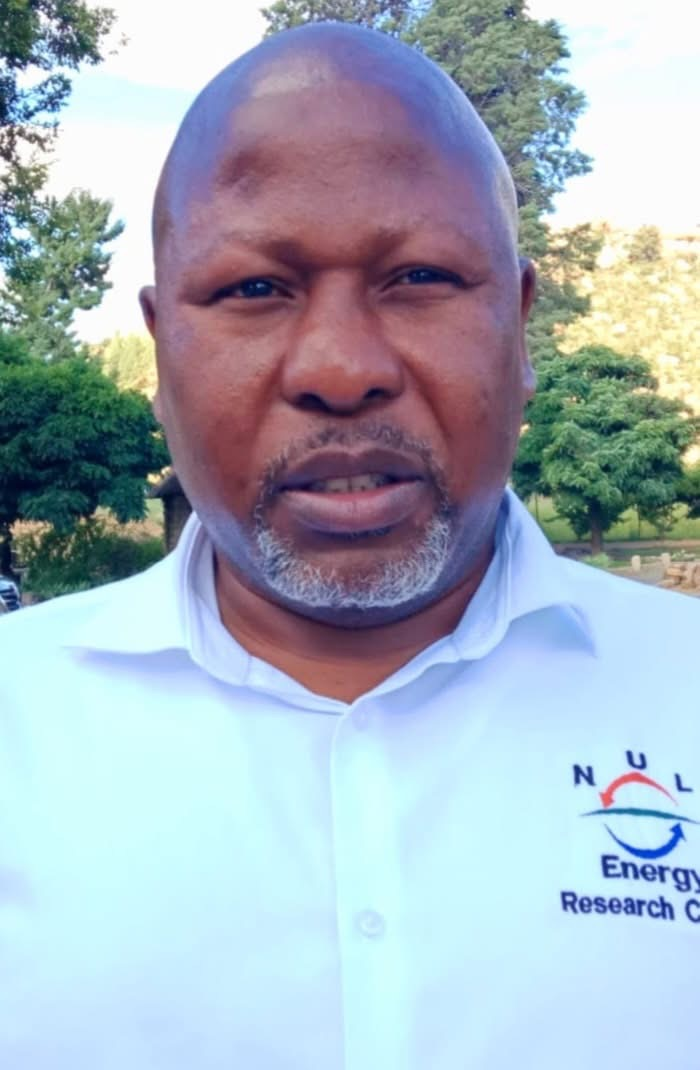
Let’s take a trip to the beautiful mountain villages of Motete in Butha-Buthe and in Thaba-Tseka. For a long time, these places had no electricity. People used candles for light, chopped firewood to cook, and walked long distances just to charge their phones. But that all changed when the National University of Lesotho (NUL) Energy Research Centre (ERC) showed up…with a plan. They were bringing in something called mini-grids, powered by the sun.
These mini-grids now light up over 110 homes in Motete and more than 75 in Linakaneng. That means families can cook, study, listen to the radio, and charge phones, all from clean energy.
“It cost us over M14 million to make it happen,” says Mr. Tšita Molapo, a physics lecturer at NUL and one of the people leading the project. “It wasn’t easy. These villages are very remote, and we were introducing high-tech systems in places that never had anything like this before.”
Luckily, NUL wasn’t working alone. The mini-grids were funded by Innovate UK, and NUL teamed up with Smart Villages from the UK, Gram Oorja from India, and MOSCET from Lesotho. You could say it was a worldwide team effort to help Lesotho’s mountains shine.
So how does the system actually work?
Well, it all starts with the sun. Big steel structures with solar panels are installed out in open areas where they can soak up all that beautiful sunshine. When sunlight hits the panels, something clever happens inside…tiny particles of light (called photons) knock around electrons inside the solar cells. This produces direct current (DC) electricity.
Now, DC electricity isn’t quite what most home appliances need. Before it reaches the houses, the electricity goes through something called an inverter, which turns it into alternating current (AC), the kind that lights your bulb and powers your fridge.
But what if no one is using the electricity during the day? No problem. The system includes batteries, which are like giant power banks. Any electricity that isn’t used right away is stored in these batteries for use at night, when people are home and using lights, charging phones, or watching TV.
Each village has a community committee that runs the system. Villagers don’t need fancy apps or bank cards. They just go to a local committee member with a laptop, buy electricity units for M5.00 per unit, and boom! The lights come on at home. No long queues, no complications.
“It’s something we never even dreamed about before NUL came knocking on our doors,” says Mr. Letšohla Mapentjane, one of the community leaders in Motete.
But just when things were about to get moving, guess what happened?
Covid-19 hit!
Everything stopped. Roads were closed. Moving equipment into the mountains? Forget it. For a while, people feared the project was gone for good.
But like we say in Sesotho, sesa-feleng se a hlola, everything comes to an end.
And sure enough, when Covid restrictions lifted, the project came back to life. The NUL team returned with their tools and technology, and in just a few months, homes began to glow at night. Radios played. Phones charged. Children studied under real lights for the first time.
“To say it was tough would be putting it lightly,” Mapentjane laughs. “None of us knew a thing about mini-grids when we started. But we were ready to learn. And with help from the NUL team and their international and local partners, we made it happen.”
Now here’s the really cool part. NUL scientists can monitor the whole system from their phones.
Each mini-grid has a smart little device called a data logger. It watches everything happening in the system, how much energy the panels are collecting, how full the batteries are and so on. All this info is sent through the internet to NUL scientists, who can check the system from their laptops or phones, whether they’re sitting at the university or travelling abroad.
They know, from miles away, when something ain’t going right.
Most of the power use happens in the evening. That’s when people switch on their lights, charge phones, or run small appliances. During the day, the sun does its job, filling up the batteries and preparing the system for the busy night ahead, even while sharing some power to day users.
Both Motete and Linakaneng now take full ownership of their mini-grids. The villagers handle the money, check the systems, and even teach each other how to use power wisely.
And just like that, these mountain communities are no longer left behind. They’re part of a global energy shift, one where power doesn’t come from burning coal or diesel, but from the sun above and science on the ground.
“As the world moves toward clean energy,” says Mr. Molapo, “these villages are leading the way. And that’s something we’re proud to be part of.”

Our focus is on data journalism and analysis over original reporting, on both criticism and acclaim. Our political alignment is Economic liberalism. Publishes daily online and Sunday on print.
Contact us: editor@lesothotribune.co.ls
© Lesotho Tribune