
Mohahlaula Airlines
Wednesday, July 22, 2026
Home Blog Page 70

Are Lesotho’s Corporations Governed for the People?

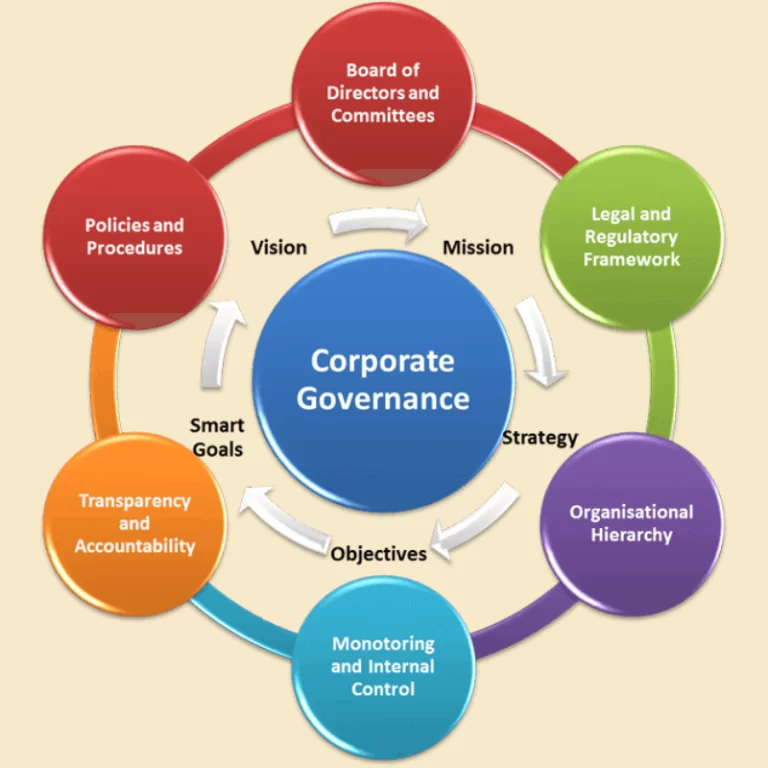
Across Lesotho, concern is growing over whether corporate governance truly serves the wider public interest, or funnels benefits toward insiders. While Environmental, Social, and Governance (ESG) principles are increasingly discussed, many companies in Lesotho, particularly state-owned enterprises (SOEs) and significant private firms-still fall short in independence, transparency, and stakeholder accountability.

Board Composition & Conflicts of Interest

Under the Companies Act (2011), directors in Lesotho must exercise fiduciary duties, including loyalty, care, and avoidance of conflicts of interest, but independent non‑executive directors remain rare.

Public entities such as the Lesotho Electricity Company (LEC) and the Water and Sewerage Company (WASCO) historically suffered from weak governance structures, political appointments, and improperly constituted boards, contributing to mismanagement and inefficiency  .

Executive Remuneration & Misaligned Incentives

Weak boards often fail to enforce alignment between executive pay and long-term company performance. Executives may be rewarded despite declining returns or deteriorating governance, classic indicators of agency problems and potential rent-seeking

ESG Oversight & Risk Governance

Good ESG governance demands active board oversight of environmental, social, and ethical risks, plus transparent disclosure. But most firms in Lesotho lack dedicated ESG or audit committees, and audit oversight remains sporadic; weakening both public trust and resilience to emerging risks.

Companies Leading the Way

Though challenges persist, a number of firms in Lesotho and regional corporations with Lesotho presence are making real strides:

Sekhametsi Development Trust / SMIC has formally integrated ESG values into its governance and ethics frameworks. Its corporate social investment programs focus on community development, health, education, and environment, aligning business practice with public benefit and stakeholder transparency 

Letšeng (Gem Diamonds) maintains a robust governance framework, with a strong Board that oversees financial, social, environmental, health and safety performance. It enforces a clear Code of Ethics, operates under recognized standards such as GRI G4.1, and reports ESG metrics consistently. The firm reports zero incidents of child or forced labour and maintains zero tolerance for corruption or abuse  .

Letshego Holdings, which operates in Lesotho, adopted regional best practices aligned with South Africa’s King III corporate governance code. It has added multiple independent non-executive directors, standardized board charters, and strengthened enterprise risk oversight. Board policies include clear governance procedures, conflict-of-interest rules, and systematic slides to address identified gaps  .

Are Corporations Serving the People?

With few independent directors, poor conflict-of-interest safeguards, and opaque remuneration practices, many corporations continue to benefit insiders at the expense of the broader stakeholder community. The deficiency of rigorous governance discourages investment, erodes confidence, and fosters inefficiencies, particularly among SOEs embedded in political patronage networks  .

Where Reform Must Focus

Broaden board independence and expertise: Boards need genuinely independent directors with sector-relevant experience.

Strengthen audit, risk, and ESG committees: These must operate autonomously and enforce transparency in performance and remuneration.

Align executive compensation with long-term value: Remuneration should be tied to measurable performance outcomes.

Enhance transparency and stakeholder reporting: Communication about conflicts, compensation, and ESG metrics should be accessible and routine.

Implement the Mohlomi Corporate Governance Code: Widely adopting the nationally contextualized code can anchor governance in Lesotho’s shared values and economic goals  .

Conclusion

For corporations in Lesotho to genuinely serve the public, from farmers to consumers to taxpayers, boardrooms must evolve from insulated decision-making centers into accountable guardians of stakeholder value. The companies showing leadership, such as Sekhametsi, Letšeng, and Letshego, demonstrate that governance aligned with ESG principles is both achievable and beneficial.

Much hinges on whether boards embrace independence, enforce transparency in executive pay and conflicts, and commit to stakeholder-inclusive conduct. With full implementation of the Mohlomi Code and improvements in practice, Lesotho can build corporate leadership structures that serve not only shareholders, but society as a whole.

—————

You think we have left out rising stars Leading the way?

Email us supporting data: editor@lesothotribune.co.ls
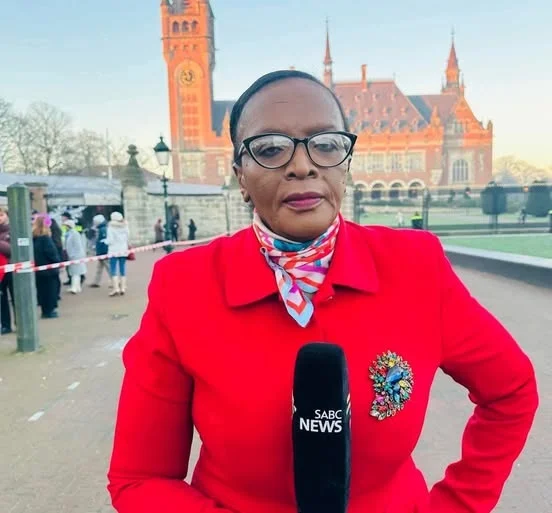
Sophie Mokoena Signs Off, Leaving a Legacy of Fearless Truth

0

Malefo Thinyane

Renowned SABC International News Editor Sophie Mokoena has announced her departure from the public broadcaster, drawing the curtain on a career that has shaped the landscape of South African journalism for decades. 

Known for her fearless reporting and sharp political interviews, Mokoena earned a reputation as one of the country’s most respected and influential journalists.

One of the defining moments of her career came in 2015, when I still in varsity, during a tense interview with Lesotho’s former military commander, Lieutenant General Tlali Kamoli. At the time, Lesotho was engulfed in political turmoil, and Kamoli stood at the centre of serious allegations including coup plotting and human rights abuses. 

Mokoena did not flinch. Her line of questioning was firm and unrelenting, pressing Kamoli on the unrest and holding him accountable in a manner few would dare. Kamoli, who would later face charges including murder and treason, deflected the questions, but the exchange laid bare the gravity of the political crisis and highlighted Mokoena’s commitment to the truth.

Over the years, Mokoena played a central role in shaping SABC’s international news coverage. Her ability to strike a balance between probing journalism and measured reporting earned her widespread acclaim. Whether reporting on regional conflicts, high-stakes diplomacy, or elections across the continent, she consistently brought clarity and depth to complex stories, earning the trust of viewers and the respect of peers.

As news of her departure spread, tributes poured in across social media, with colleagues, viewers, and fellow journalists celebrating her unwavering dedication to the craft. Many described her as a trailblazer and mentor, a figure who opened doors for younger journalists and raised the bar for political reporting in South Africa and beyond.

Sophie Mokoena’s exit from the SABC marks more than just the end of a professional chapter, it signals the departure of a voice that has long stood as a pillar of journalistic integrity. While she may be stepping away from the newsroom, her impact will endure in the stories she told, the questions she asked, and the standards she set.

Likhomo ‘M’e Sophie!

Lesotho Security Chiefs Warn Against Illegal Recruitment and Threats to National Stability

0

By Seipati Matobo

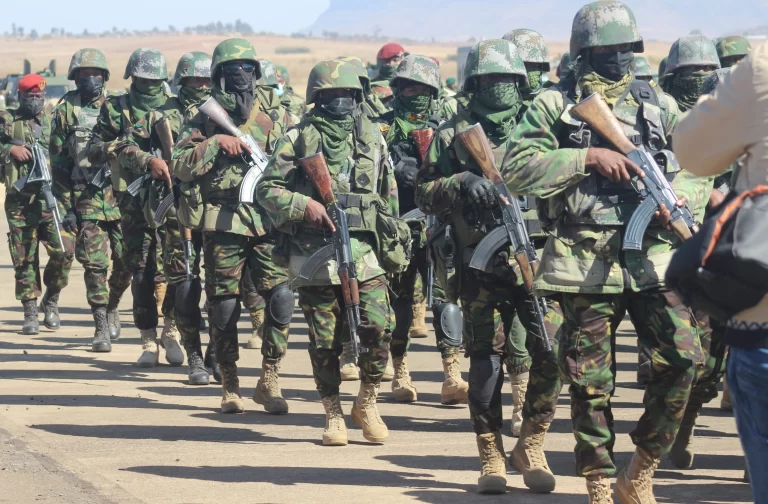
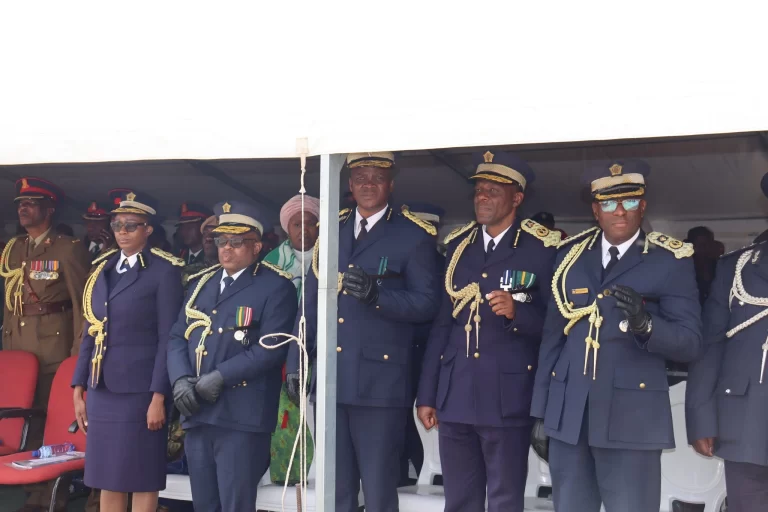
Maseru – The heads of Lesotho’s security institutions have issued a nationwide alert over what they describe as mounting threats to the country’s peace and sovereignty. The chiefs warned of illegal recruitment schemes allegedly designed to lure young Basotho into paramilitary training across the border in South Africa. 

Central to the concern is a group identifying itself as “Malata Naha”; loosely translated as “Defenders of the Nation”, which authorities accuse of orchestrating a clandestine operation aimed at misleading citizens into joining unapproved training camps on farms in South Africa under the guise of military preparation.

Security officials warned that this activity constitutes not only a violation of the law but also a direct assault on Lesotho’s sovereignty. Intelligence suggests the possibility of external support for these efforts, raising concerns that foreign actors may be manipulating vulnerable Basotho for destabilizing agendas. While no specific international entities were named, the tone of the statement underscored the seriousness of the issue and its potential to unravel national stability.

Adding to the gravity of the matter, the statement condemned what it described as “unacceptable” verbal attacks on His Majesty King Letsie III and the Royal Household. Without identifying the perpetrators, the chiefs insisted that such utterances offend both traditional values and legal provisions safeguarding the monarchy. They warned that public figures and private citizens alike would be held accountable for actions that undermine national unity or insult state institutions.

Equally concerning to the security apparatus is the alleged involvement of individuals in positions of authority. According to the joint statement, certain Members of Parliament and undocumented foreign nationals are suspected of participating in or enabling these operations. The statement made it clear that investigations are ongoing and affirmed that no one will be immune from legal consequences, regardless of their political or social standing.

Security chiefs have urged families and communities to remain vigilant and to report any unusual or suspicious activity, particularly attempts to entice youth into so-called training programs. They emphasized that recruits are being exploited and trafficked under false pretenses, making the situation not only a legal matter but also a humanitarian one.

In response, authorities have pledged swift and decisive action. Measures will include arrests and prosecutions under national security laws, enhanced border security, and collaboration with regional partners to dismantle cross-border recruitment networks. Intelligence agencies have also been tasked with identifying and monitoring the individuals or organizations believed to be financing and coordinating these operations.

Calling for national unity, the security leadership appealed to all Basotho to resist divisive narratives and manipulative forces. “Our peace is precious,” the statement declared, urging citizens not to allow misinformation or violence to erode the country’s stability. The message concluded with a solemn invocation: “God Bless Lesotho and the Basotho People.”

As a follow-up, police and immigration officials have been directed to intensify surveillance at borders and within local communities. Members of the public are encouraged to report any suspected illegal recruitment activities to the nearest police station or relevant authority as the nation moves to confront what could become a serious national crisis if left unchecked.

What remains mysterious is the fact that no single South African security installation reported on this.

Lesotho Youth Team Returns Home with 13 Medals from AUSC Region 5 Games

0

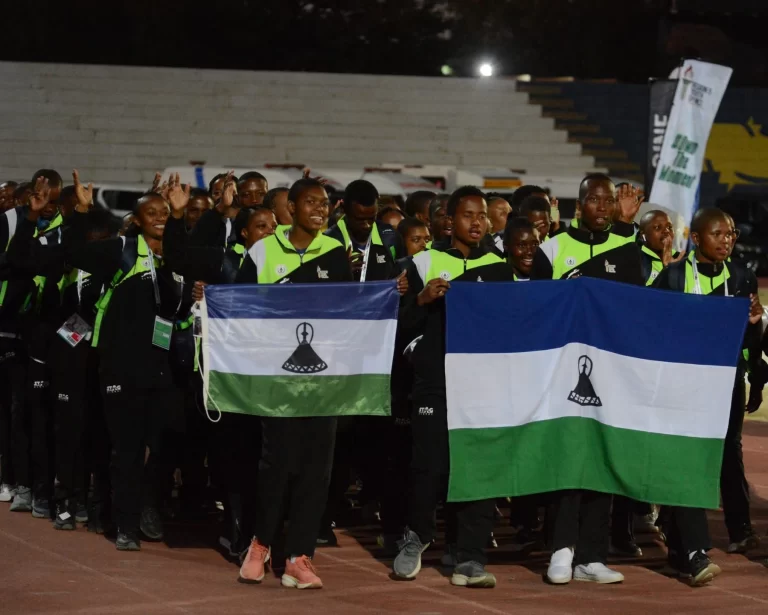
Maseru – Team Lesotho returned home on Tuesday after a stellar performance at the African Union Sports Council (AUSC) Region 5 Youth Games held in Windhoek, Namibia. The national delegation, comprising athletes across various sporting disciplines, clinched an impressive 13 medals, showcasing the country’s growing talent in youth sports.

The team was officially welcomed on Wednesday at a ceremony hosted at Scripture Union in Maseru. The event drew senior figures from the country’s sports administration, including Lesotho Sport and Recreation Commission (LSRC) president Baba Malephane, Lesotho National Olympic Committee (LNOC) CEO Morake Raleaka, and the Principal Secretary from the Ministry of Sport.

In a show of determination and talent, Lesotho’s athletes shone particularly in athletics and boxing, with additional success in Special Olympics and table tennis.

Medal Breakdown:

ATHLETICS

Gold Medals:

• Nokwanda Mabandla – T11 100m, T13 200m

Silver Medals:

• Liteboho Lebona – T12 100m

• ‘Mamakhooa Lipakela – T13 100m

Bronze Medals:

• Liteboho Lebona – 200m

• ‘Maletsatsi Pitso – 100m (Special Olympics)

• Tšelisehang Letuka – 200m (Special Olympics)

BOXING

Gold Medal:

• Relebohile Moso – 51kg

Silver Medal:

• Mvokelelo Snyman – 57kg

Bronze Medals:

• Realeboha Segoete – 60kg

• Retšelisitsoe Phalatsi – 60kg

• Reabetsoe Mokhitli – 54kg

TABLE TENNIS

Bronze Medal:

• Team Naleli Mfundisi, Nthabiseng Raleie, Zanele Mofechane

The AUSC Region 5 Youth Games serve as a developmental platform for young athletes across southern Africa and Lesotho’s latest achievements are a testament to the country’s growing footprint in regional sports.

Econet gives back to the community

By: Pheello Mosesi

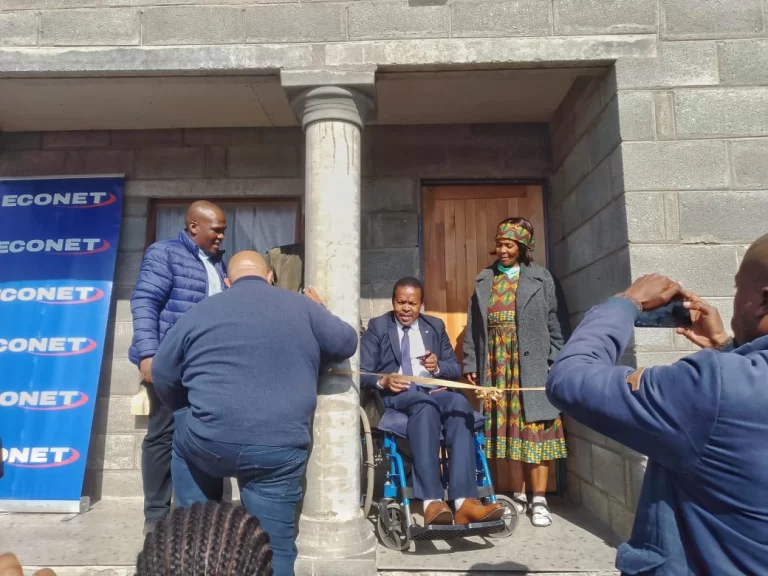
As the fifth beneficiaries of the Econet Telecom Lesotho’s corporate responsibility, the Maleoa family walked into a newly built two roomed house in Matsatsaneng, Butha-Buthe this week.

A mother of eight children, ’Masefako Maleoa, has been described to have lived in misery and anguish for years by her neighbour who spoke at the handover of the newly built house by Econet. The house, valued to an estimated quarter of a million, is fitted with furniture.

Speaking at the handover event on behalf of the company’s Chief Executive Officer, the Chief Financial Officer Teboho Tjaoane said they saw it beneficial and vital to build the Maleoa a house. 

“We would like to thank the customers who have helped ETL grow as their contributions have highly contributed to making things like this happen,” Tjaoane said.

He said in the previous week, an event of the same fashion took place in Mokhotlong, Ntlholohetsane, where a ‎16-year-old girl was gifted the same house from the telecommunications company. 

“In line with Econet’s mission, vision and core values, this new homeis not just a building but a symbol of our deep-rooted commitment tochanging lives. We believe that access to a safe and dignified livingenvironment is a basic human right. For the Maleoa family, this house represents security, peace of mind and a fresh start,” Tjaoane said. 

Not only did he thank Econet for making this family’s dream come true but he also passed his gratitude to the customers of the company as he revealed that he believes the growth of the company comes from them.

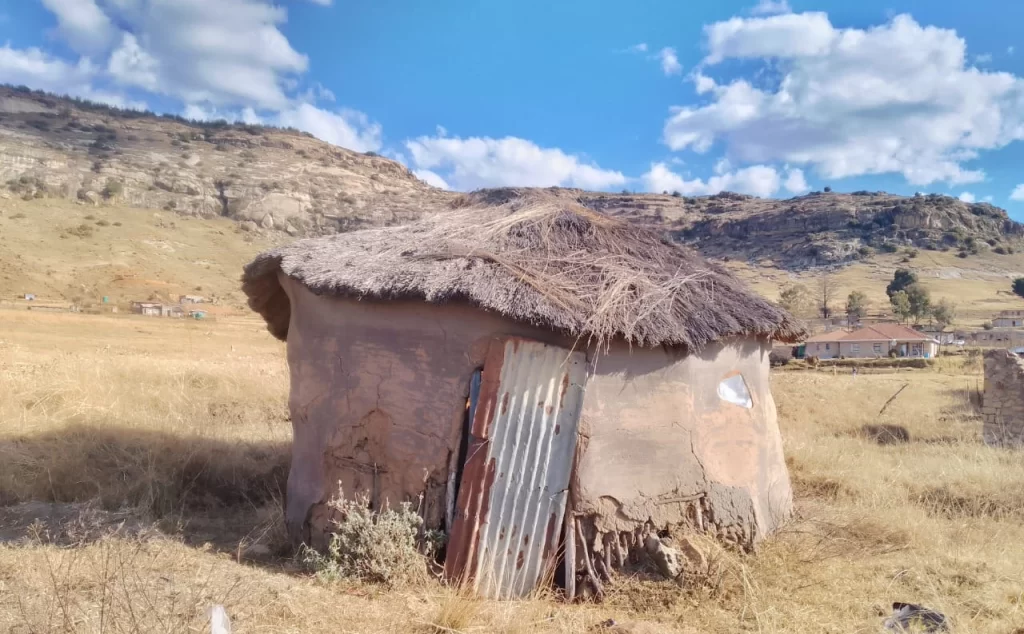
“I want to thank Econet for the house. ‎‎I lived in a muddy and ever puddly house.  The condition was heartbreaking.  It is still surreal to see I have a house like this because of Econet and for that act of kindness I will eternally be grateful.  Those who are to follow and be the beneficiaries, I will love to see them experience the joy I have as welland I wish this company growth,” ’Masefako Maleoa, the beneficiary said, voicing out her gratitude with a face filled with joy.

Present at this handover event was the Minister of Youth, Sports and Recreation, Honourable Pitso Lesaoana.

The Minister said they had been working on the housing project to help the less privileged for quite some time, adding that he was amazed at how persistent Econet has been in trying to improve the lives of Basotho with both corporate responsibility and their mission statement as a service and network provider. 

‎”I want to embrace ’Masefako for holding on in her conditions and not abandoning her responsibility as a parent. This new house will be a home to her family to secure their dignity and safety. As a ministry we are already working on seeing how we can also contribute to bettering the life of this family and others,” the Minister added.

‎He said he wished more companies could follow suit in helping the less fortunate to meet them halfway, to see them having their dreams turning into reality so that poverty could be combated in Lesotho.

“I plea with Basotho to also adapt to this behaviour of helping one another individually or in groups,” he said. 

‎This project is yet another milestone in Econet’s journey of puttingpeople first and demonstrating that beyond technology and innovation,at the heart of the company is a genuine desire to see communitiesthrive.

Lesotho Lawyer Takes Police to Court Over Social Media “Public Shaming” of Suspects

Maseru

In what could become a defining moment for digital rights in Lesotho, prominent attorney Adv. Lemohang Nzuzi has filed a groundbreaking constitutional case against the Lesotho Mounted Police Service (LMPS), challenging their increasingly controversial practice of publishing suspects’ photographs and personal details on social media before trial.

Key Players

Applicant: Adv. Lemohang Nzuzi (K.D. Mabulu & Co Attorneys)

Respondents: LMPS, Commissioner of Police, Minister of Police, Attorney General

Jurisdiction: High Court – Constitutional Division

The Heart of the Matter

Nzuzi, a well-regarded member of the Law Society of Lesotho, claims the police violated his constitutional rights when they posted his photograph and arrest information on their official Facebook page on July 10, 2025, after he was stopped for a routine traffic offense.

“This case goes beyond personal grievance,” Nzuzi says in his affidavit. “It speaks to a dangerous culture where law enforcement uses social media as a modern-day pillory, subjecting individuals to trial by public opinion before any court has spoken.”

Alleged Constitutional Breaches

The 28-page application highlights four core violations of Lesotho’s Constitution:

1. Right to Privacy (Section 11) – Unauthorized dissemination of personal information without consent

2. Right to Human Dignity (Section 4(1)(b)) – Public humiliation through online exposure

3. Freedom from Degrading Treatment (Section 8) – Emotional and psychological harm inflicted by digital shaming

4. Presumption of Innocence (Section 12) – Damage caused by prejudicial publicity before legal adjudication

What the Applicant Seeks

Nzuzi is asking the High Court to grant relief that could drastically reshape how police interact with the public online:

1. Declaration of Unconstitutionality – A formal ruling that LMPS’s social media practices infringe constitutional rights

2. Remedial Action –

• Immediate removal of the offending Facebook post

• A public apology and retraction from LMPS

3. Policy Reform –

• Introduction of a human rights-based social media code for LMPS

• Clear internal guidelines on publishing information about suspects

4. Constitutional Damages – M1.5 million to compensate for the violation of rights

5. Costs Award – Full legal costs to be borne by the respondents

Drawing Strength from Global Precedents

To bolster his case, Nzuzi cites progressive international frameworks:

South Africa: Legal limits imposed by the SAPS Act on naming and shaming suspects

United States (California): AB 1475 prohibits posting mugshots of non-violent arrestees on social media

France: CNRS research into the effects of digital exposure by law enforcement

Namibia: NAMPOL’s evolving policies on social media conduct

These examples, Nzuzi argues, underscore a growing global recognition that unchecked digital exposure by state actors can inflict irreversible harm.

Implications for Law Enforcement and Rights Protection

Legal commentators suggest the case could become a catalyst for reform not just in Lesotho, but across the region.

• It could lay the groundwork for Africa’s first court-defined digital rights framework in law enforcement

• Compel policing institutions to rethink and regulate their online conduct

• Offer legal protection for vulnerable individuals disproportionately affected by online public shaming

• Prompt broader conversations on how to balance public interest with individual rights in the digital age

Timeline

July 10, 2025 – Facebook post published by LMPS

July 15, 2025 – Court application filed

August 2025 – Hearing scheduled

What Happens Next

The High Court’s Constitutional Division is set to hear the matter in August 2025. With the Police Commissioner, Minister of Police, and the Attorney General all listed as respondents, the case is poised to be a high-profile test of state accountability in the age of social media.

“When police become publishers, the rules must change,” Nzuzi asserts. “This case is about affirming that our constitutional rights don’t end at the screen’s edge.”

Independent business & current affairs journalism · Lesotho Subscribe — M85/month
| Independent business & current affairs journalism · Lesotho