

Mohahlaula Airlines
Tuesday, July 21, 2026
Home Blog Page 84

FNB Lesotho Adopts a Card Localization Feature in their Services

MASERU

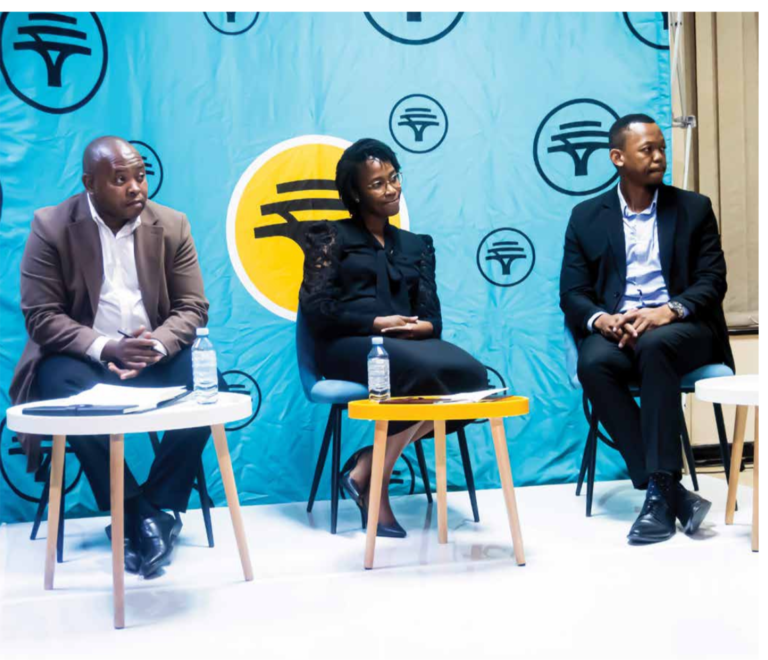
On the 11th of April 2024, First National Bank (FNB) held a press conference at the Lehakoe Recreational Centre to officially introduce a new feature of the bank which is the card localization. The intimate gathering was intended to give details pertaining to this new product and the changes that would come into effect thereof.

Masakoane Hanyane who is the head of Marketing & Communications was the Master of Ceremonies who rowed the boat seamlessly. She introduced the speakers on the panel who each thoroughly explained the concept of card localization. First to speak was Kamoho Mocheba who is the Chief Financial Officer at the bank. He initiated his talk by highlighting his two objectives, one being that at the end of his presentation he expected that Basotho would fully understand what Card Localization was and secondly, they should rest assured that their cards would still be fully functional even after the changes were implemented.

He briefly described CL as keeping local payment serviceswithin the country. He said that there were ways in which payments were made i.e. POS machines, withdrawing money from Automated Teller Machines (ATM) and the common denominator in these processes is a card. He further mentioned that CL was established because FNB wanted to contribute to the country’s economy as well as assist in the country’s plan for the exchange of money. The end goal is to encourage the collaboration of all the various paymentservices within the country, hence the formulation of Card Localization which is meant to support this venture.

The second member of the panel was Nthabeleng Khoali, she joined the conversation in an eloquent and articulate manner. Her focus was on individual card holders and ATMs, she added that CL was brought into effect on the 18th of February 2024. She indicated that this change does not bring about any additional charges to the cards that individuals still hold and that the cards will still transact with no hassle. 

Nthabeleng Khoali gave a summary of how these changes have altered bank charges. When a Lesotho national holding an FNB Lesotho card visits SA, the norm was that they were charged in the same manner as when they were within Lesotho borders. That has been brought to a halt, the charges for SA transactions have been increased. She encouraged individuals to check the FNB Lesotho pricing guide which will have the figures for withdrawal charges. Furthermore, charges for countries within the Common Monetary Area (CMA) will increase, these countries are SA, Namibia and Eswatini. Charges for countries outside the CMA will remain the same.

Charges for card purchases will remain the same whether within CMA or abroad. She gave clarity to a mix up that occurred a few months ago whereby card holders were being charged a 20% fee on purchases but that was rectified, and individuals were reimbursed. Furthermore, online betting site payments have been refrained due to the laws that guide them. Regarding ATMs, she mentioned that most people especially those who lived and worked in SA would be encouraged to use FNB Lesotho ATMs because they would incur less charges. Additionally, she raised awareness and said that individuals should be fully aware of what their bank says regarding charges related to such transactions, for instance, when one withdraws M500 they will receive that exact amount but be charged more than they had anticipated. Her urge was that this matter should be addressed with the branch that allocated the card. Khoali stated that as the bank, they have worked tirelessly to ensure that these changes do not disrupt the way cards are operating and pleaded that if anyone encounters any challenges then they should visit the nearest branch or call their customer care line.

Third on the panel was Motšeare Tšosane who represented businesses. He was very practical and clear in his talk where he began by reinforcing that CL was beneficial to everyone. He noted that the National Strategic Development Plan speaks about issues of technology of which the exchange of money relates to, this essentially means skills and jobs will be for the benefit of Basotho. His focus was on speed points/swiping machines, Tšosane shed light on the fact that the transfer of money from these machines did not take place within the country and as he gracefully put it, “the machines did not speak Sesotho”. With this statement, he simply meant that when a card holder made a payment, the machine would convert it to Rands and not Maloti even though the ratio of the two currencies is 1:1. 

With CL, the transfer of money has been brought home through the National Payment Switch (NPS) of the Central Bank of Lesotho thus money circulates within the realms of the country. Normally the money would follow a chain where it had to be directed to SA, converted into Maloti then sent back to Lesotho. To the business owners he guaranteed that the machines will function as per usual with no changes, the only difference will be international charges. He further mentioned that an economy that grows is one where money circulates internally, likewise when money circulates within the country, it gives us an opportunity to grow the country. An example he gave was that when we purchase from vendors and swipes, the money is deducted from accounts, and we believe we have completed the payment. What we are not aware of is that the money will only reflect on the vendor’s side 2 days later, which is rather a huge inconvenience. Additionally, they can offer businesses more easily because they are able to monitor their flow of money.

Lintle Tšita challenged the panel by asking how individuals will be able to confirm that Cl is effective. She was given a two faceted response which was that on the bank’s side, the charges incurred will be reduced because there is no longer a middleman. On the business’s side, they will get the pleasure of the funds reflecting rapidly as opposed to having to wait for 2 days. Another question from the floor was why it is that CL took this long to be administered of which Mr. Mocheba responded that such changes are influenced by the regulator and that they had to be in par with other banks to work coherently. Mr. Tšosane added that there ought to be a bridge when money is exchanged, hence they needed to have the way lead in the form of the NPS which is able to link banks. The proceedings were closed off by Mr. Mocheba who gave a vote of thanks and ascertained the public that FNB is there to assist as it is an innovative bank.

Michelle Tau: Africa’s Top 1 Taekwondo Athlete

0

Lesotho’s Michelle Tau has emerged as a force to be reckoned with in the world of Taekwondo, cementing her status as Africa’s top taekwondo athlete and 3rd in the world in the -46kg category, trailing behind Korea’s Mi-Reu Kang and Croatia’s Lena Stojkovic. This has led to an impressive climb to the 26th spot in the Olympic Rankings, Michelle’s journey is a testament to her talent, dedication, and the unwavering support of her nation.

As the pride and joy of Lesotho, Michelle Tau’s ascent to the pinnacle of Taekwondo has been nothing short of remarkable. Following in the footsteps of her late father, who was also a Mosotho Taekwondo legend , Michelle has carved her own path to success, fueled by a burning passion for her sport and a relentless pursuit of excellence.

As a beneficiary of the Olympic Scholarship for Athletes – Paris 2024, Michelle has spent the past few months honing her skills at the Taekwondo Tortosa-Artata Training Centre in Madrid, Spain, under the expert guidance of renowned coach Hugo Tortosa. The Lesotho National Olympic Committee (LNOC), together with the government of Lesotho, has spared no expense in supporting Michelle’s training, covering all expenses associated with accommodation, meals, and professional training and coaching.

Michelle’s journey reached a significant milestone in February 2024 when she secured her spot at the Paris 2024 Olympic Games through the African Qualifying Tournament in Dakar, Senegal. With the support of the LNOC, Michelle and her coach were provided with full reimbursement for travel expenses, meals, and allowances, ensuring that they could focus solely on their petformance.

Looking ahead, the LNOC has reaffirmed its commitment to supporting Michelle as she prepares for upcoming competitions, including the African President’s Cup in Equatorial Guinea. Since the beginning of the Olympic Scholarship in January 2022, Michelle has received invaluable support totaling over M800,000, a testament to LNOC’s dedication to fostering sporting talent and promoting athletic excellence in Lesotho

Beyond her achievements on the mat, Michelle Tau is a champion for women’s rights and empowerment. With a heart dedicated to making a difference, she advocates tirelessly for gender equality and the eradication of gender-based violence, using her platform as a taekwondo champion to inspire change and empower women and girls around the world.

Nthomeng Wants DPP Gone…Fast!

Plans are at an advanced stage to impeach Director of Public Prosecution (DPP), Advocate Hlalefang Motinyane, Lesotho Tribune can confirm.

Sources with intimate knowledge of the plan to impeach Advocate Motinyane revealed that three weeks, the Registrar, on the instruction of Chief Justice (CJ) Sakoane, made contact with former Chief Justice Mahapela Lehohla asking him to head the planned tribunal to impeach Director of Public Prosecutions (DPP) Adv. Hlalefang Motinyane.

This story is not free to read

Stay informed with Lesotho Tribune – your source for credible journalism. Get in-depth reporting and opinions for only M85 a month. Invest in journalism, invest in democracy – Subscribe Now, WhatsApp +26656365968 for payment details

Moleko O Leka Basotho

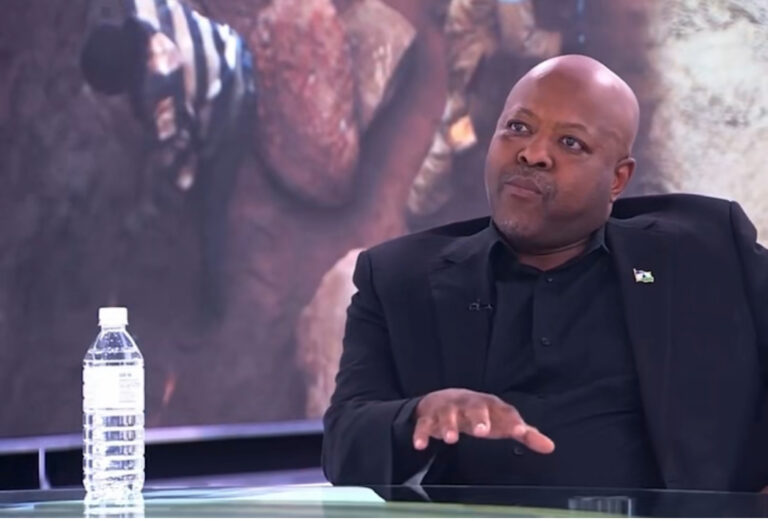
Lesotho’s X community (formerly known as twitter) was on Thursday 11 April very critical against minister Mohlomi Moleko on NEWZROOM AFRIKA.

Majority of the community was critical about the minister’s utterances about Basotho illegal miners, who are known to terrorise the South African communities around the old gold mine shafts in the heart of South Africa, Johannesburg.

When responding to question about whether it is true that the so called Zama-Zamas fund political parties in Lesotho, the minister confirmed that indeed these illegal miners fund the political parties in Lesotho.

Majority of X users who commented on Lesotho Tribune’s X post in relation to the minister’s interview, went hard on the minister, labelling him “mabena” loosely translated to the weak one…

One X user said, “Hona ke bomb!!!  💣  Kannete naa Ntate o ile ka ea thupelong ea Diplomacy?”

The other X user said, “No way he said that! Kingpins and enablers of this illegal mining activities in SA are known. SA isn’t doing anything about them, & our minister is sadly sustaining SA’s narrative that SA is a just an innocent victim of Zama-Zamas.”

The backlash didn’t end there, a litany of comments followed, predominantly painting the minister of being diplomatically weak and unfit to hold to hold a position as the minister.

Another X user exclaimed, “No diplomacy at all, I wonder if he even have the proof of what he said or he just wants to please. Now we all look bad as a nation..”

To top it all off, one X user jokingly said, “I wonder what this man smokes…but whatever he’s smoking I want to have it!”

Meleko!

0

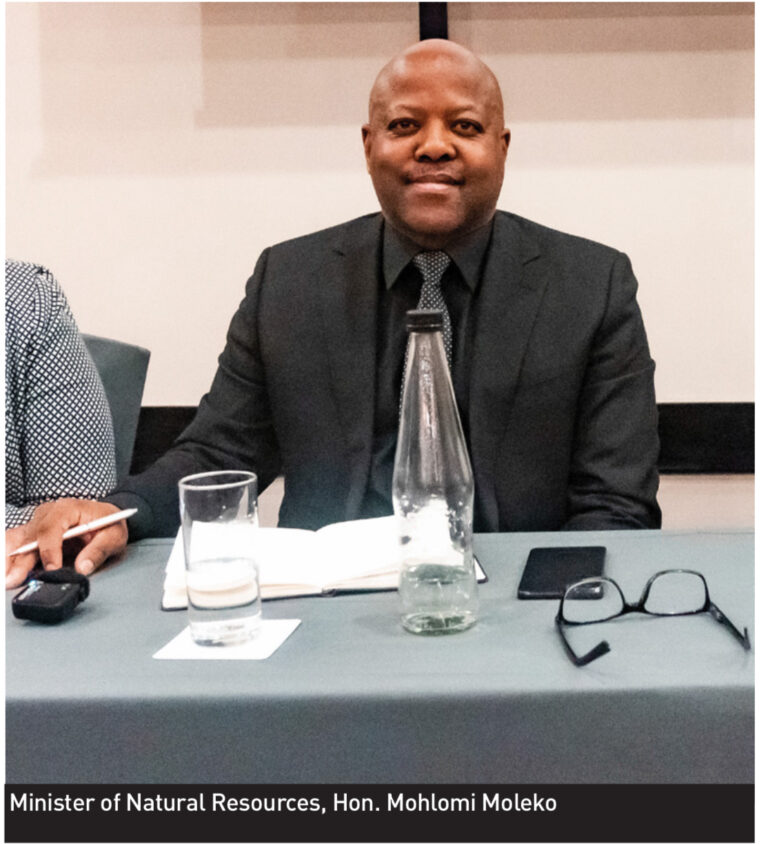
Minister of Natural Resources in Lesotho, Mohlomi Moleko, has found himself at the center of controversy once again, being perceived by many as a cheerleader for Lesotho’s diamond mines.

His unwavering defense of diamond mining leases, which he touts as advantageous for Lesotho, has raised eyebrows and drawn criticism from various quarters.

Minister Moleko’s assertion that Lesotho contributes “nothing” and yet receives 60% of the revenue from mining leases is not only inaccurate but also misleading.

Such statements not only misrepresent the facts but also undermine the importance of ensuring fair and equitable benefits from the country’s natural resources.

The reality is far from Moleko’s portrayal. Lesotho, like many resource-rich countries, should be benefiting more from its diamond mines. The current arrangement, where the country receives a fraction of the revenue while the mining companies reap substantial profits, is unjust and unsustainable.

It is disappointing to see Moleko consistently defending the status quo, portraying Lesotho’s mining leases as the best possible deal for the country…How retarded!

This stance not only ignores the glaring disparities in revenue sharing but also raises questions about whose interests Moleko is truly serving.

As a man entrusted with the responsibility of safeguarding Lesotho’s natural resources (and we are wondering how he is still a

minister BTW), Moleko should be advocating for fairer terms that prioritize the country’s interests.

Instead, his actions suggest a willingness to prioritize the interests of mining companies over those of his own country. It is time for Minister Moleko to reassess his priorities and start acting in the best interests of Lesotho.

Rather than being a cheerleader for the mining companies, he should strive to be a champion for his country, fighting for a fairer share of the revenue from its natural resources.

Minister Moleko’s defense of Lesotho’s mining leases is not only misguided but also detrimental to the country’s interests. Maybe the minister to stop embarrassing himself by constantly defending the indefensible…

Lesotho Flour Mills Responds to Southern Africa’s Drought Crisis

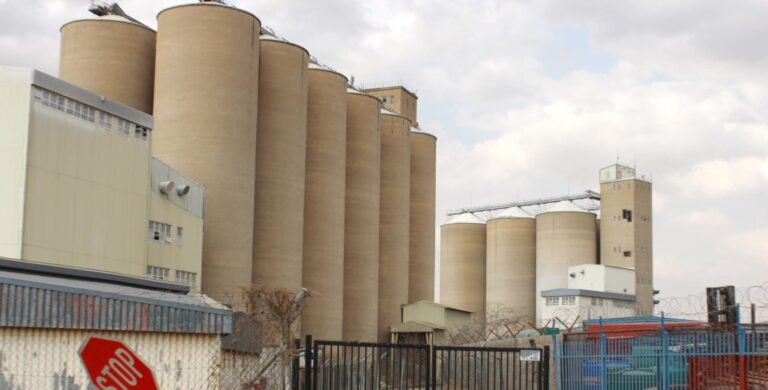
MaseruLesotho Flour Mills (LFM) is facing a challenging period due to the surge in raw white maize prices, a staple import for the company. The recent escalation in prices is a result of adverse weather conditions, particularly low rainfall and hotter than usual weather, affecting maize production in Southern African countries, including South Africa, a key supplier for LFM.

In a press release issued on Thursday, 4 April 2024, LFM revealed the underlying factors driving this unsettling trend. Following low rainfall and hotter than usual weather during the past two months across Southern African countries, LFM finds itself compelled to adjust maize meal prices to reflect the increased cost of raw materials.

The price of South African white maize surged by a staggering 39% within a span of just two months, catapulting from M3,800 per metric ton as of 31 January 2024, to M5,300 by 31 March 2024.The root cause of the price surge stems from a significant spike in South African raw white maize prices, a staple import for Lesotho Flour Mills.

As reported by Lesotho Flour Mills’s Chief Executive Officer, Mr. Fourie du Plessis, the price of South African white maize surged by a staggering 39% within a span of just two months, catapulting from M3,800 per metric ton as of 31 January 2024, to M5,300 by 31 March 2024.

This meteoric rise can be directly attributed to the adverse effects of the drought caused by the low rainfall and hotter than usual weather during the past two months. Mr. Du Plessis underscored the severity of the situation, emphasizing that the ongoing drought has dealt a significant blow to agricultural yields, particularly in South Africa, where maize production is anticipated to plummet by 20% below initial projections.

Such a shortfall inevitably translates to a substantial increase in maize meal prices, intensifying the plight of consumers already grappling with economic uncertainty.

Indisputably, the after-effects of this crisis extend far beyond national borders, as evidenced by Zimbabwean President Emmerson Mnangagwa’s declaration of a national disaster on Wednesday, 3 April 2024 due to drought conditions. With millions facing hunger, Zimbabwe urgently requires over $2 billion in aid to stave off the looming humanitarian catastrophe.

Acknowledging the profound impact of maize products prices on ordinary Basotho citizens, Lesotho Flour Mills remains steadfast in its commitment to mitigating the financial burden on consumers.

Despite the grim outlook, the Lesotho Flour Mills has thus far managed to limit price increases for April to 7%. However, with forecasts pointing to further escalations in the coming months, Lesotho Flour Mills is acutely aware of the need for proactive measures to ensure the continued affordability of maize meal for all.

In response to Lesotho Tribune’s questions regarding the specific proactive measures taken by Lesotho Flour Mills, the company stated that they are committed to continuously assessing the situation and implementing strategies to mitigate the impact on consumers to the best of their ability.

This includes optimizing the supply chain, exploring alternative sourcing options, and operational efficiencies, among other measures.

However, they emphasized the complexity of the situation, noting that predicting future price fluctuations with certainty is challenging.

Regarding the forecasted further escalations in maize meal prices, Lesotho Flour Mills stated that they are closely monitoring market trends and adjusting their strategies accordingly.

“While we cannot predict the exact trajectory of future price movements, we remain vigilant in our efforts to navigate these challenges and ensure continued access to essential food products for Basotho consumers,” LFM said.

As for the potential impact of a return to normal precipitation patterns on the ongoing crisis and the affordability of maize meal, Lesotho Flour Mills stated that it’s indeed a critical factor.

However, the interplay of weather patterns, agricultural production, and market dynamics is intricate and multifaceted. While improved precipitation may alleviate certain pressures, other factors such as global supply and demand dynamics also play significant roles.

In conclusion, while Lesotho Flour Mills appreciates inquiries, they emphasized the inherent uncertainty in predicting market movements. The company remains committed to transparency and proactive engagement with stakeholders as they navigate these challenges together.

Independent business & current affairs journalism · Lesotho Subscribe — M85/month
| Independent business & current affairs journalism · Lesotho