This week, Cadiant Lesotho lost its lucrative contract of investment consulting with the Public Officers Defined Contribution Pension Fund (PODCPF), a contract it has held for over six years, according to a source familiar with the matter, who requested to remain anonymous until the matter is made public by the Fund.
To read more on this PREMIUM story, pay M85.00 per month or M740.00 per annum
Rethabile Mosisili was former Prime Minister Dr. Pakalitha Mosisili’s son, speaking at his son’s funeral, Dr. Mosisili said his son battled alcoholism throughout his life. In a heartfelt statement, the Mosisili family revealed that Adv. Rethabile Godfrey Mosisili struggled with alcohol-use disorder, shedding light on his private battle and the broader issue of alcohol addiction.”Our beloved son, father, and brother, Adv. Rethabile Mosisili, struggled with alcohol-use disorder,” the family disclosed.
Advertisement
They chose to make this public statement during April, recognized as Alcohol Awareness Month, to share insights about the disease and offer support to others facing similar challenges.
Lesotho Tribune[LT] took an opportunity to interview late Advocate Mosisili’s son, Pulumo Mosisili [PM]
LT: Can you share with us some of the challenges Adv. Rethabile Mosisili faced while dealing with alcohol-use disorder?
PM: Advocate Rethabile’s journey has been marked by significant health challenges stemming from his struggle with alcohol use disorder. Following the removal of his gallbladder due to his condition, he faced difficulties maintaining a consistent diet. In 2009, he underwent a major operation and was given a grim prognosis, yet he defied the odds and continued to persevere. However, in 2020, he found himself once again confronted with serious health concerns arising from affliction. Alongside his health battles, Advocate Rethabile also had to contend with the stigma associated with alcohol use, enduring not only physical ailments but also the societal judgment and ridicule often directed towards those grappling with alcohol use disorder. Despite the lack of compassion from some quarters, he faced these challenges head-on, with his family members also bearing the brunt of societal misconceptions and criticism.
LT: How do you think disclosing his struggle with alcohol-use disorder can help raise awareness about this disease during Alcohol Awareness Month?
PM: Advocate Rethabile was widely esteemed across various spheres of life, known for his affability and widespread popularity. His altruistic nature extended to caring for numerous individuals, regardless of personal acquaintance; he was always ready to lend a helping hand. It is our belief that Ntate Rethabile would have wished to raise awareness about the perils of alcoholism, emphasizing its indiscriminate impact across diverse backgrounds and the potential lethality of its consequences. As a family, we have chosen to honor his memory by shedding light on this crucial issue, underscoring that alcoholism is a mental illness that can afflict anyone, and taking this step is a significant testament to his legacy.
LT: What support did Adv. Mosisili receive while battling alcohol-use disorder, and what support do you believe is crucial for others facing similar challenges?
PM: Advocate Mosisili was fortunate to receive unwavering support from both his immediate and extended family, who accompanied him to numerous medical facilities and engaged in heartfelt conversations to offer assistance. It’s imperative that we refrain from passing judgment or criticism towards individuals grappling with alcohol addiction. While our family may have sometimes expressed concerns, it was always rooted in care rather than malice. Supporting a loved one battling alcohol use disorder is a challenging and prolonged journey.
However, we recognize the importance of understanding that the first step towards recovery often involves the individual acknowledging their struggle. This became his biggest roadblock being that he could never acknowledge the problem.
Consequently, interventions and compassionate discussions can play pivotal roles in facilitating this acknowledgment and initiating the path towards healing. Resources such as the Anti Drug Abuse Association of Lesotho stand ready to provide assistance and support in these endeavors.
LT: How do you hope this disclosure will help combat the stigma surrounding alcohol addiction and promote understanding within communities?
PM: Disclosing Advocate Rethabile Mosisili’s affliction with alcohol use disorder can serve as a powerful catalyst for raising awareness about the pervasive nature of addiction and its impact on individuals and families. By sharing Advocate Mosisili’s journey openly and honestly, we shed light on the reality that alcohol use disorder can affect anyone, regardless of their status or reputation. Through this disclosure, we can dismantle the stigma surrounding addiction and foster empathy and understanding within our communities. Moreover, Advocate Mosisili’s story can inspire others struggling with similar challenges to seek help and embark on their own paths to recovery.
By initiating conversations and advocating for support and resources, we can collectively work towards destigmatizing addiction and creating a more compassionate and supportive society for those affected by alcohol use disorder.
LT: In what ways do you think individuals and communities can empower themselves with knowledge to assist loved ones struggling with alcohol-use disorder?
PM: Individuals and communities can empower themselves with knowledge to assist loved ones grappling with alcohol use disorder through various means. By educating themselves about the signs, symptoms, and effects of addiction, they can better identify when a loved one may be struggling and understand the complexities involved.
Open and honest communication fosters a supportive environment where individuals feel comfortable seeking help, while awareness of available resources such as support groups and treatment programs enables effective support.
Establishing healthy boundaries and practicing self-care are essential for maintaining emotional well-being, and cultivating empathy helps reduce stigma and encourages individuals to seek help. Additionally, promoting awareness of the risks associated with alcohol use and collaborating with local organizations and healthcare providers contribute to prevention efforts and facilitate access to support networks.
Through these efforts, individuals and communities can play a crucial role in supporting loved ones’ recovery journeys and fostering a healthier, more supportive society.
Maseru, Lesotho – On Tuesday, 26 March 2024, the streets of Maseru were alive with vibrant colors as cyclists embarked on a journey of solidarity and empowerment during the Tour de Frontline cycling event. More than just a race, this event symbolized progress and hope for a safer community, particularly for women and children.
The Tour de Frontline also aimed to address the lingering effects of the COVID-19 pandemic, with a specific focus on supporting the welfare of vulnerable groups. This year’s event exceeded expectations, raising substantial funds to benefit local organizations dedicated to improving lives. Among the beneficiaries were Matholeng Children’s Home, Morate Cerebral Palsy Association, Khaya Youth Film Production, Unheard Voices, and Mokhalinyane Nutrition.
Speaking on behalf of the Minister of Information, Communications, Science & Technology, and Innovation, Mr. Tšeliso Lesenyeho expressed gratitude to Tour de Frontline and ‘The Market’ restaurant for their invaluable contributions. He highlighted the crucial role played by both entities in raising awareness, mobilizing support, and generating funds for the noble cause.
Mr. Lesenyeho commended Tour de Frontline and The Market for their dedication to social progress and emphasized the importance of collective action in creating a safer and more inclusive society. He stressed that initiatives like Tour de Frontline not only raise funds but also inspire communities to unite and tackle pressing issues together.
Ms. Nthati Pelesa, General Manager of The Market Restaurant, echoed Mr. Lesenyeho’s sentiments, emphasizing the restaurant’s commitment to creating safe spaces for women and young girls. Beyond supporting organizations with similar mandates, The Market is actively empowering its staff and improving processes to fulfill this objective. Pelesa revealed that this initiative is just the beginning, with The Market planning to pioneer its own initiatives under the ‘Empower Her’ theme, potentially collaborating with like-minded entities.
Acknowledging corporate backers and partners such as Lesotho TV, Alliance, Aluwani, Mergence, and Lesotho Times, Pelesa urged participants and supporters to reflect on the collective journey and recommit themselves to the cause of social progress. She emphasized that their efforts would pave the way for a brighter and more equitable future for all members of the community.
Tour de Frontline’s impact extends far beyond the finish line. Through unity, dedication, and a shared vision, cyclists and supporters alike are pedaling towards a safer, more inclusive society for women and children in Maseru. The success of this event serves as a testament to the power of community-driven initiatives in effecting positive change. As the wheels keep turning, hope continues to ride alongside, guiding the way towards a better tomorrow for all Basotho.
Electricity Tariff Increase Dispute Sparks Controversy and Legal ActionIn a recent development that has stirred controversy and legal action, the Lesotho Electricity and Water Authority (LEWA) finds itself embroiled in a dispute over proposed electricity tariff increases. The dispute, which has garnered widespread attention and raised concerns about transparency and procedural fairness, underscores the complexities of regulatory processes and the need for robust mechanisms to ensure accountability and protect consumer interests.
The dispute originated from an application submitted by the Lesotho Electricity Company (LEC), seeking significant tariff increases across all customer categories for the financial years 2023/2024, 2024/2025, and 2025/2026. The application, which was received by the LEA without the most recent audited financial statements for the fiscal year ending 31st March 2023, has been met with skepticism and criticism from stakeholders, who question the justification behind the proposed increases.One of the key issues raised by stakeholders is the lack of transparency in the tariff-setting process.
The absence of the most recent audited financial statements has raised doubts about the accuracy and reliability of the information used to justify the tariff increases. Stakeholders, led by the Advocates for the Supremacy of the Constitution (Section 2), have argued that the lack of transparency undermines the trust of consumers and other stakeholders in the regulatory process.The controversy reached a boiling point when the LEWA, despite objections and concerns raised by stakeholders, proceeded to endorse the implementation of the new electricity tariffs on 20th March 2024.
This move has been met with widespread criticism and has prompted legal action from Section 2 and other stakeholders, who have challenged the decision in court.In his founding affidavit, Kananelo Boloetse, the President of Section 2, highlighted the importance of the case in safeguarding the rights of vulnerable persons and ensuring procedural fairness. Boloetse, along with other stakeholders, including consumer Bokang Sekopa, argued that the tariff increase would have a detrimental impact on consumers, particularly those with limited income, and called for a fair and transparent adjudication process.The case has significant implications for the electricity sector in Lesotho and has sparked a broader debate about the role of regulatory bodies in ensuring transparency and accountability.
It has also highlighted the need for greater public participation in regulatory processes to ensure that the interests of consumers are adequately represented. As the legal proceedings continue, stakeholders are hopeful for a fair and just resolution that considers the interests of all parties involved. The case serves as a reminder of the importance of transparency, accountability, and consumer protection in regulatory processes, and underscores the need for regulatory bodies to act in the best interests of the public.The dispute over the proposed electricity tariff increases in Lesotho has sparked controversy and legal action, highlighting the complexities of regulatory processes and the need for transparency and accountability in decision-making.
Stakeholders, led by the Advocates for the Supremacy of the Constitution (ASC), have raised concerns about the lack of transparency in the tariff-setting process and the potential impact on consumers, particularly those with limited income.The dispute originated from an application submitted by the Lesotho Electricity Company (LEC) to the Lesotho Electricity and Water Authority (LEWA), seeking significant tariff increases across all customer categories for the financial years 2023/2024, 2024/2015, and 2015/2026. However, the application was submitted without the most recent audited financial statements for the fiscal year ending 31st March 2023, raising questions about the justification behind the proposed increases.Stakeholders, including ASC and consumer Bokang Sekopa, have challenged the decision to approve the tariff increases, citing concerns about procedural fairness and the lack of transparency in the process. The case has been brought before the Commercial Division of the High Court, which specializes in handling commercial disputes.In his founding affidavit, Kananelo Boloetse, the President of Section 2, emphasized the importance of the case in safeguarding the rights of vulnerable persons and ensuring procedural fairness. Boloetse argued that the tariff increases would have a detrimental impact on consumers, particularly those with limited income, and called for a fair and transparent adjudication process.
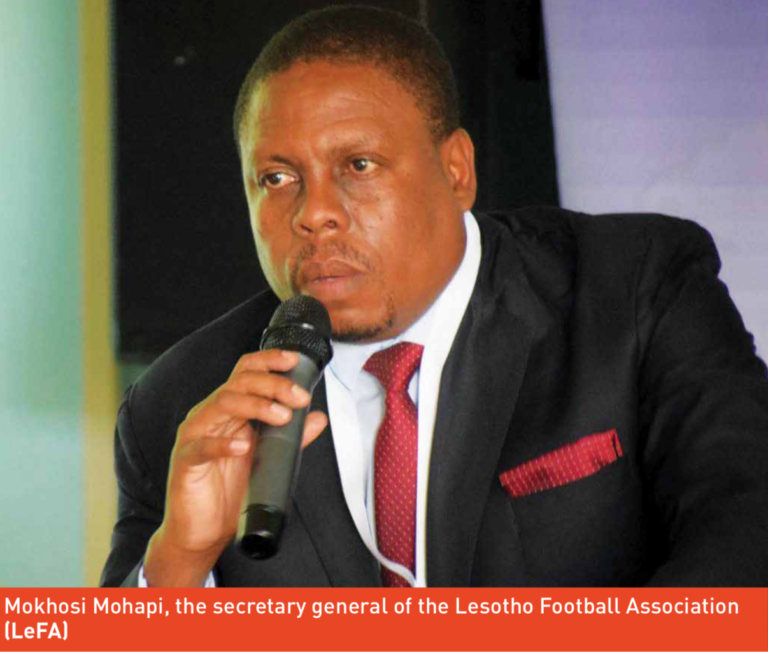
Mokhosi Mohapi, the secretary general of the Lesotho Football Association (LeFA), recently took to his Facebook page to address a pressing issue facing the association regarding the upcoming 2026 FIFA World Cup qualifiers.
In his statement dated March 27, 2024, Mohapi revealed that the Confederation of African Football (CAF) has instructed all 54 Member Associations, including Lesotho, to submit their home match day stadia for the qualifiers scheduled to be played during the FIFA period for international matches in June 2024.
The Setsoto Stadium, traditionally the home ground for Lesotho’s national team, has been banned by CAF for not meeting the minimum requirements set for hosting International Matches.
According to Mohapi, despite LeFA’s efforts to seek clarity from the Ministry of Sport, Tourism, Arts and Culture regarding the status of Setsoto Stadium, the responses received have been inadequate and lacking in the required information.
As the deadline for submission of host venues looms, LeFA has been left with no choice but to consider alternative options.
One such option is the Moses Mabhida Stadium in eThekwini/Durban, Kwazulu Natal, South Africa.
Mohapi explained that after comparing costs, Moses Mabhida Stadium emerged as the most affordable choice for hosting the Lesotho vs Rwanda match.
This development highlights the challenges faced by LeFA in ensuring that Lesotho meets the necessary requirements for hosting international matches. The association is now tasked with finalizing arrangements for the upcoming qualifiers, including securing a suitable venue that meets CAF’s standards.
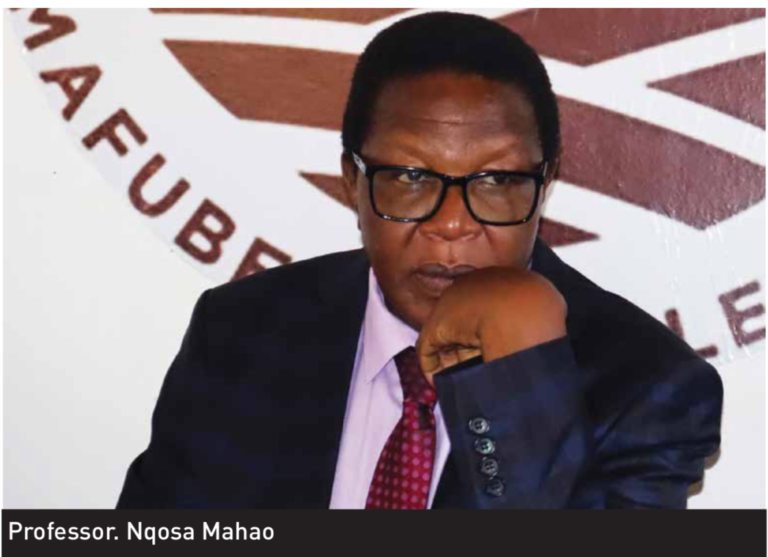
Prof. Nqosa Mahao, the Minister of Energy, delivered a startling statement in parliament this week, expressing deep concerns about corruption within the Lesotho Electricity Company (LEC). He candidly addressed parliament and the nation, shedding light on the state of the state-owned power company.”Unless LEC is restructured, the state company is in trouble,” Prof. Mahao emphasized.
He proposed conducting a forensic audit and initiating a comprehensive restructuring plan. These proposals stem from the findings of a 2018 forensic report that revealed the precarious state of affairs at LEC, including instances of corruption such as staff members engaging in business transactions with the company.
Highlighting the urgent need for restructuring at LEC, Prof. Mahao emphasized that without intervention, the company is at risk. He proposed conducting a forensic audit and initiating a comprehensive restructuring plan. These proposals stem from the findings of a 2018 forensic report that revealed the precarious state of affairs at LEC, including instances of corruption such as staff members engaging in business transactions with the company.
In a further revelation, Prof. Mahao disclosed that LEC has identified over 500 fictitious accounts, leading to substantial financial losses. He informed Members of Parliament that LEC is burdened with a significant debt estimated at close to half a billion Maluti. Addressing the severity of the situation, he stressed the need for immediate and drastic measures to prevent LEC from collapsing, noting its critical role in the country’s economic growth.During his briefing, Prof. Mahao expressed concerns raised by LEC staff regarding poor corporate governance. He mentioned complaints about conflicts of interest in procurement processes, lack of transparency, inflated tenders, insider trading, and clients making payments directly to staff members.
Additionally, he highlighted LEC’s outstanding debts to power generators like ESKOM and Ha Ramarothole, as well as issues with revenue collection.The Minister noted that the Auditor General’s financial audit report echoed these concerns. To address these challenges, he announced plans for a forensic audit, with the Ministry of Energy collaborating with the Ministry of Finance and Development Planning to cover the costs. Negotiations between the relevant authorities have been finalized, and the forensic audit is set to commence soon. This audit will provide crucial insights for government interventions aimed at restructuring LEC and ensuring proper control within the organization.
I may not approve of what you say, but I am prepared to defend to the death, your right to say it. This is a famous expression that may, depending on the text, be expressed in different words, but it boils down to one common denominator, life itself may be sacrificed in defence of the right of expression, that is how sacrosanct the ability of man to freely express opinions and share information is. It is in the context of this understanding that we shall attempt to analyse the recently decided case of Mergence investment v Lesotho Tribune.
The ability of man to communicate is perhaps one of the cornerstones of survival, communication helps in sharing ideas, bringing different perspectives on issues, challenging conventional wisdom and to assist decision makers to be well informed before making decisions, the ability for man to express himself has led to advancements even on the fields of science and technology. While certainly not exhaustive, in a nutshell, these considerations make it fundamental for the right to freedom of expression to be protected.
It must be conceded that just like any right, it must have certain restrictions and limitations in order to ensure that the freedom to express is not used to violate the right of others to their dignity and privacy both fundamental human rights. There must be a well-balanced mechanism that will ensure that the right to freedom of expression is exercised within the boundaries of protecting the dignity and privacy of other citizen. This is the principle that was put to the test when Mergence investment approached the High Court seeking certain orders against Lesotho Tribune, the Court had to draw the line between the right to freedom of expression and the right to dignity and decide whether Lesotho tribune had crossed the proverbial line.
The brief factual synopsis is that, Lesotho Tribune had made a publication stating that they have evidence that Mergence and one Semoli Mokhanoi both involved one way or the other in managing the affairs of the Public officers defined contribution pension fund, had essentially captured the fund and through an elaborate maze of companies were benefitting at times in situations where there are glaring cases of conflicts of interest. Lesotho tribune promised to run a series of articles on this subject to bring to light what was happening.
Worried that the publications would damage its reputation, Mergence and Semoli approached the High Court on urgent basis, they sought that Lesotho Tribune be interdicted from any further publications, and finally that the newspaper should be shut down for failure to comply with the printing and publishing Act. The duo instituted another lawsuit seeking millions in damages for the alleged defamation. Lesotho Tribune contested the claims fiercely.
Firstly, the Court had to deal with whether the applicants can obtain an interdict from publication of material that they are not aware of. In essence the applicants claimed that Lesotho Tribune has already published material that they consider defamatory and that they intend to publish more and that in defence of their dignity, the said future publications ought to be stopped. Secondly the Court had to deal with whether Lesotho Tribune was in violation of the Printing and Publishing Act and consequently whether it should be shut down.
In its defence, Lesotho tribune stated that all material that had been published and that which will follow is not defamatory at all, further that even if it was defamatory, such defamation was legally excusable because the publications were both true and in the public interest. The Tribune further stated that the claim that it has violated the printing and publish Act is an accusation of a crime and should not be entertained by the court sitting in its civil jurisdiction, if indeed a crime was committed Semoli should report the matter to the police and follow the due criminal process, it contended further that the Act itself provided that any publisher who infringes the said law must be prosecuted and a punishment of a fine or imprisonment handed down. In the circumstances even if it had violated the criminal statute, the appropriate remedy was that which was provided by the Act.
The High Court evidently found that the case of the applicants was without merit at all and proceeded to dismiss it with costs. It could not in the first place interdict speech that is not placed before court. Judges may be wise and knowledgeable in legal principles, but they do not have a crystal ball to look into the future to determine whether future publications will be defamatory. In essence the court refused to interdict the intended publications by Lesotho Tribune.
On the issue of whether the newspaper was operating in violation of the law, and consequently whether it must be shutdown, the High Court again dismissed this claim, if at all there is a suspicion of a crime there is no reason why the available criminal remedies would not be sufficient to remedy the violation. The applicant could not explain why they have failed to report this to the police or at least the registrar of societies, more so when the law prescribes what should happen in the event of default.
Ultimately the court considered that indeed the matters relating to the running of the Pension fund are matter of public interest. All public officers that are permanent and pensionable have interest in the fund, further, the Government through tax payers’ contributions, contributes to the pension fund, as such the management of such funds is a matter of public interest. Further, the public must be informed at all time with information relating to how their affairs are administered. The ability of the newspapers to freely publish is invaluable in a liberal society grounded on the protection of fundamental rights. I must hasten to mention that just because the application was dismissed with costs does not in any manner affect the pending litigation for claims for defamation instituted by Semoli and Mergence.
The tension between the right to freedom of speech and the right to dignity is as old as old gets. It remains a thorn even in the most advanced democracies, in the United States of America the Government still considered Julian Assange a spy for publishing some of the most damning information relating to communication between diplomats and some of the atrocities committed by the United States Army around the world. Clearly the said publications were true and of public interest, but he is facing criminal charges and has been in prison for years.
As Basotho we can only be glad that in the final analysis our Courts have consistently upheld the freedom of expression and have made judgements that advance this sacrosanct principle, key amongst them being the judgment of the High Court repealing the offence of criminal defamation. These judgments ensure that we abide by the long celebrated adage that, even if I may not agree with you, I have a duty to defend your right to say it.