



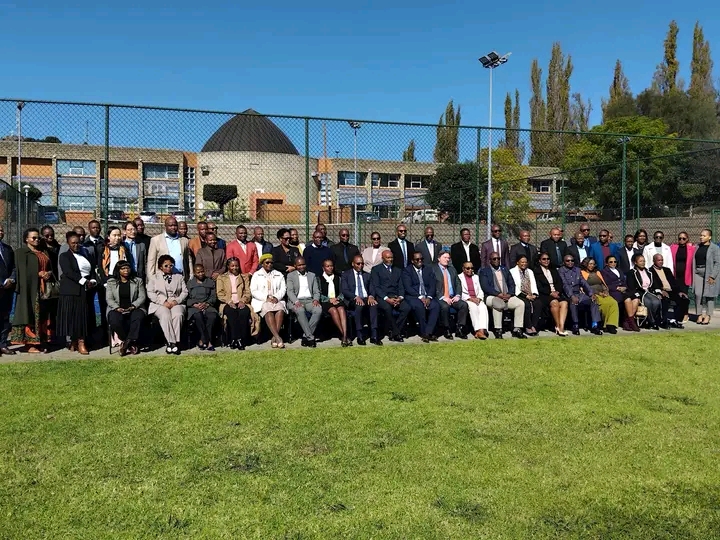
The Central Bank of Lesotho convened financial sector leaders and experts in Maseru to examine how geopolitical tensions are rippling into the country’s financial system and what steps the sector must take to stay resilient.
The Central Bank of Lesotho (CBL) brought together experts and industry leaders on Tuesday for a seminar on keeping Lesotho’s financial system strong in the face of global risks. The event took place in Maseru under the theme “Geopolitical Risk: Implications for Financial Stability.”
The meeting focused on how wars, trade disputes, and political tensions around the world are starting to affect smaller economies like Lesotho. Speakers talked about why it matters for the country to build a financial system that can handle shocks from outside, and what steps can be taken to prepare.
Experts warn of growing pressure at home
Nkhahle Seeiso, Head of Financial Stability at CBL, shared key findings from the bank’s 2025 Financial Stability Report, the 10th edition of the report.
Seeiso said that managing risk well is the foundation of a stable financial system. He explained that a resilient system is not one that never feels pressure, but one that can bend under stress without breaking.
“Resilience means the system can absorb shocks and keep working for households and businesses.”
He added that risks inside Lesotho have been rising. Families, companies, and government are all feeling the strain. Businesses are struggling because demand from outside the country has dropped. At the same time, new tariffs and trade rules set by other countries are making it harder and more expensive to trade.
On the government side, Seeiso said that revenue improved slightly in 2025, but it is still not strong enough. This leaves less room for the government to spend on emergencies or support programmes, which makes the country more vulnerable if another crisis hits.
Insurance sector looks for local solutions
Mpho Vumbukani, CEO of LNIG Hollard, spoke about the role of the insurance industry in managing risk. He said insurance exists to help people and businesses recover when unexpected events happen.
Vumbukani noted that the current global situation makes this job harder. With so much uncertainty in the world, insurers have to be careful about how much risk they take on. He said he hopes that current geopolitical tensions will be resolved soon, so that businesses and households can get some relief.
To make the local insurance sector stronger, companies are now looking at new ways to share risk. One approach is co-insurance, where several local insurers cover one big risk together. This keeps more of the risk inside Lesotho before it is passed on to large international reinsurance companies. The goal is to build more capacity and stability within the country’s own insurance market.
The seminar spotlighted that global events, even those far from Lesotho, can affect prices, jobs, and the cost of borrowing money at home. When external demand falls, local companies earn less and may cut back on hiring. When tariffs go up, imported goods become more expensive, putting pressure on households.
CBL said it will continue to monitor these risks and work with banks, insurers, and other financial institutions to make sure the system stays stable. The bank also stressed the need for businesses and households to be aware of these risks and plan ahead.
The Financial Stability Report is published yearly by CBL to give the public and policymakers a clear picture of the health of Lesotho’s financial sector and the challenges ahead.