



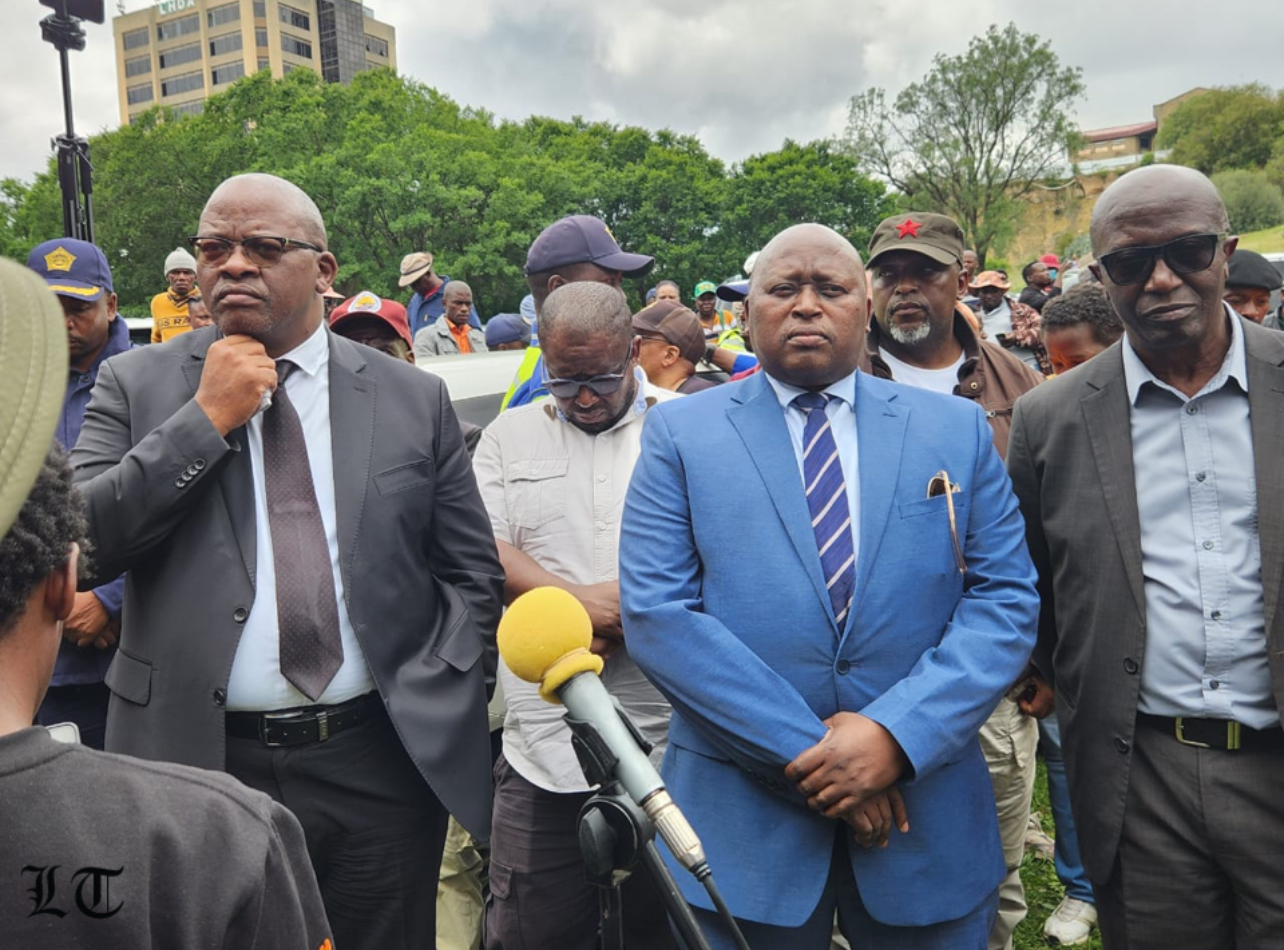
Here is the truth that keeps returning, no matter how loudly a government insists otherwise. Democracy wears down repression. It is patient. It is stubborn. It arrives with court papers, union placards, and the small courage of citizens who show up in daylight and ask to be heard.
Three years after taking office, the Matekane administration has run into that truth. Workers tried to march over job losses and the police said no. Unions then appealed to the minister and prepared to go to court. Within days, municipal authorities allowed a procession in Maseru. The sequence is not a triumph of benevolence. It is a reminder that rights outlast the political weather. Reports show unions threatened litigation after a denied permit, while the protest effort broadened through workers’ associations and civil groups. Shortly after, the Maseru City Council granted permission for a procession. That progression matters. It shows why power eventually bends to rules that are older and larger than any cabinet.
The Constitution sits at the centre of this story. It protects the freedom of peaceful assembly and expression. Those are not favours that leaders hand out on good days. They are guarantees that leaders must respect on bad days, especially when criticism stings. The text is clear. Freedom of expression is protected. Freedom of peaceful assembly is protected. Any restriction must be narrow, lawful, and necessary for things like public safety or order. That is the law in Lesotho, not a suggestion.
There is also an ordinary statute that draws the lines on processions. It requires notice and gives police limited powers to refuse, but only on exceptional grounds tied to real risks to peace or safety. Our courts have said so in plain terms. If you block a march, you must show compelling reasons, not vague discomfort with dissent. That standard is why permits denied on thin reasoning tend to crumble when challenged. The law forces the state to justify itself. That is how democracy wears down shortcuts.
Set this against the timeline of power. Sam Matekane took the oath on 28 October 2022 and formed a coalition government in early November. New leaders arrive with promises, energy, and a theory of control. Then the institutions quietly ask the same hard questions. Did you follow the Constitution. Did you follow the statute. Can you show proportional justification. Governments that ignore those questions discover that unions, courts, and councils can answer for them. That is not instability. That is the immune system of a constitutional order.
Some will try to spin the late permission as magnanimity. It is not. It is compliance. Others will claim that marches threaten order. The law already balances that risk. It allows restrictions, but it demands evidence. The burden sits with the state, not with citizens who want to walk in their own capital. When officials act as if a permit is a favour, they run into litigation and headlines. When they obey the Constitution, people protest, hand over memoranda, and go home. The streets stay open. The republic breathes.
There is an instructive lesson for the administration. You cannot win a contest against rights that are written down, litigated, and practiced by a public that refuses to be quiet. You can delay. You can posture. You can throw up roadblocks. In the end the text reasserts itself, the courts insist on reasons, and the unions find a legal route. That slow pressure is what turned a denial into a procession this week. That same pressure will keep returning every time the state forgets who owns the public square.
Democracy is not a vibe. It is paperwork, statutes, and constitutional clauses that force governments to explain themselves. It is also people who keep showing up until the explanation is either given or ordered by a judge. After three years in power, the Matekane government has been reminded of that. Those who believe they can outlast democracy should look again. The record of th