



From the printing press to artificial intelligence, each era’s transformative invention has been met with identical warnings, identical fears, and identical demands for restraint. History suggests the critics are always partly right, and always partly wrong.
When OpenAI released ChatGPT in late 2022, the warnings arrived within days. Academics feared plagiarism. Journalists feared displacement. Ethicists warned of hallucination, bias, and the erosion of truth. Governments convened emergency panels. The European Union accelerated legislation. Geoffrey Hinton, one of the architects of modern neural networks, resigned from Google and declared that he regretted his life’s work. The critic of artificial intelligence had arrived, fully formed, and the words being spoken sounded almost exactly like words that had been spoken before, about every transformative technology in recorded history.
The shape of technological criticism does not change. What changes is only the name of the machine.
“The fear is always the same: that the new thing will do what humans do, but without the humanity.”
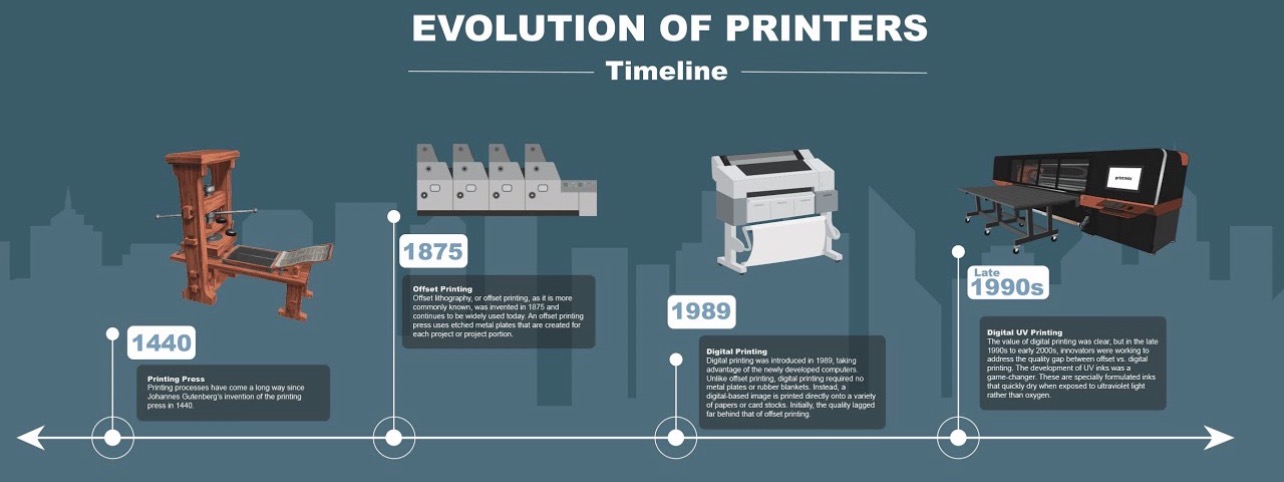
Tribune analysisIn 1440, Johannes Gutenberg introduced movable type to Europe. Within two generations, the printing press had produced millions of books. It had also produced, in the view of many scholars and clerics of the time, a catastrophe. Pope Alexander VI issued a papal bull in 1501 calling for censorship of printed material. The humanist philosopher Hieronymus Squarciafico warned that the abundance of books would make men lazy of mind, dependent on the printed page rather than on memory and original thought. The complaint was not that books were inaccurate. The complaint was that there were too many of them, that anyone could now publish, and that the gatekeepers of knowledge had lost control.
This is, word for word, the complaint made about the internet in 1995, about social media in 2008, and about generative AI in 2023.
1. It destroys jobs. Said of the mechanical loom (1811), the telephone exchange (1890s), the automobile assembly line (1920s), the personal computer (1980s), and now large language models.
2. It makes people stupid. Said of the printing press (1501), the novel (1790s), the telegraph (1850s), television (1950s), the internet (1990s), and smartphones (2010s).
3. It spreads lies. Said of the pamphlet press (1640s), the penny newspaper (1830s), radio (1930s), and now social media and AI-generated content.
4. It will be used by criminals. Said of every technology from the telephone to encryption to the dark web.
5. It moves too fast to regulate. Said, in almost identical language, in every decade since industrialisation.
The telephone is instructive. When Alexander Graham Bell demonstrated his device in 1876, the response from established institutions was sceptical and, in some quarters, hostile. The Western Union Telegraph Company, which had declined to purchase Bell’s patent for $100,000, issued an internal memo in 1876 concluding that the telephone had “too many shortcomings to be seriously considered as a means of communication.” Mark Twain, who was generally enthusiastic about technology, nonetheless described the telephone as an “invention of the devil” after being interrupted by one at an inconvenient moment. More substantively, critics warned that the telephone would destroy the art of letter-writing, undermine face-to-face community, enable criminals to coordinate at a distance, and allow employers to reach workers at all hours, obliterating the boundary between labour and rest.
All of these criticisms were correct. And none of them were sufficient reason not to have the telephone.
The pattern repeats with remarkable fidelity across the history of electricity, the radio, the automobile, aviation, nuclear power, the internet, and now artificial intelligence. Each technology arrives. Critics identify, usually accurately, the genuine harms it will cause. Society debates, legislates, adapts, and eventually normalises. The technology becomes infrastructure. A new technology arrives and the critics reappear, often using identical language, sometimes quoting each other across centuries without realising it.
“The Western Union memo declining to purchase Bell’s telephone patent for $100,000 is now one of the most quoted documents in business history, for all the wrong reasons.”
Tribune analysisTelevision offers perhaps the clearest modern mirror for the current AI debate. When broadcast television became a mass phenomenon in the late 1940s and 1950s, the critics were numerous, credentialed, and largely correct in their specific observations. The Federal Communications Commissioner Newton Minow famously described American television in 1961 as “a vast wasteland.” Researchers documented correlations between television viewing and reduced reading in children. Studies found that violent content influenced behaviour. Advertisers were accused of manufacturing desire and exploiting psychological vulnerability. The medium, critics argued, was fundamentally passive, turning citizens into consumers.
These criticisms were substantially accurate. They were also insufficient to prevent television from becoming the dominant medium of the twentieth century, from transmitting the civil rights movement and the moon landing, from creating shared cultural experience across fractured societies. The wasteland and the wonder coexisted, as they always do.
For South Africa and Lesotho, the AI debate carries an additional dimension that the European and American framings tend to obscure. The question is not only whether the technology causes harm. It is whether the communities most affected by that harm will have any say in how it is governed, and whether the benefits will be distributed equitably or extracted northward as so many previous technological revolutions were. The concern about AI displacing call centre workers in Johannesburg, transcription clerks in Maseru, or customer service agents in Cape Town is not abstract. But neither was the concern, once, about the displacement of hand-loom weavers in Lancashire.
The Luddites, whose name has become a byword for irrational technophobia, were not irrational. They were skilled textile workers who understood, correctly, that the mechanical loom would destroy their livelihoods. They were wrong about their ability to resist the change. They were right about the harm it would cause. The harm was real and lasted for a generation. What they could not foresee was that the industrial economy would eventually create more employment than it destroyed, albeit not for them, not in their lifetime, and not in their town.
AI today: “Large language models hallucinate facts and cannot be trusted for journalism or legal work.”
The telegraph, 1858: “The speed of transmission means errors will multiply before they can be corrected. The medium cannot be trusted.”
AI today: “These systems are trained on data that encodes historical bias and will perpetuate discrimination at scale.”
Television, 1952: “The medium encodes the biases of its producers and cannot give fair representation to minorities or the poor.”
AI today: “A handful of technology companies in California should not control infrastructure that affects every society on earth.”
Radio, 1934: “A handful of broadcasters in New York should not control the airwaves that reach every home in America.”
The AI critic of 2024 and 2025 is, in almost every particular, the same figure who stood at the threshold of every previous transformation. Hinton’s regret is genuine and not to be dismissed. The harms he identifies, from autonomous weapons to algorithmic deception, are real. But the structure of his concern, a brilliant insider who helped build the thing and now fears what it will become, is also the structure of Robert Oppenheimer’s concern about nuclear weapons, of Norbert Wiener’s concern about cybernetics, of Vannevar Bush’s ambivalence about the systems he helped create after the Second World War.
What history does not provide is a clean answer. The critic is not simply wrong. The enthusiast is not simply right. Each technology reshapes society in ways that are partially predictable, largely uncontrollable, and ultimately irreversible. The printing press gave Europe both the Reformation and the Wars of Religion. The internet gave the world Wikipedia and QAnon. AI will almost certainly give the world something comparably double-edged, something that will look, in a century’s time, both marvellous and terrible from the same vantage point.
The most honest position is the one that is hardest to hold: that the critic is right about the risks, that the risks do not make the technology stoppable, and that the only productive question is how to govern it, distribute its benefits, and mitigate its harms, not whether to have it at all. Every generation has faced this question. Every generation has answered it imperfectly and moved on.
The name of the machine changes. The argument does not.
“`