



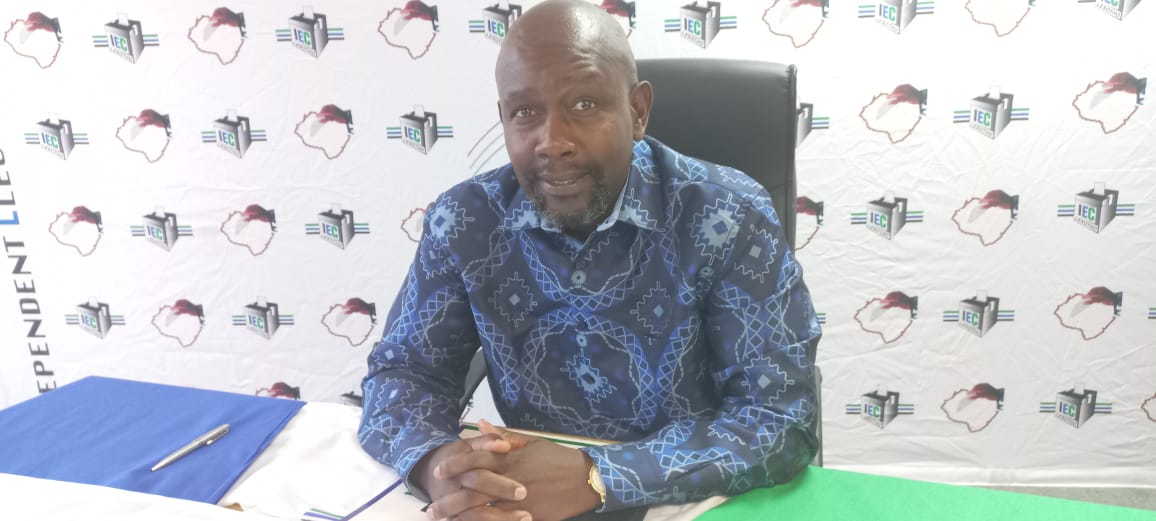
It is alarming and deeply troubling to see the Director of Elections at the IEC thrusting himself into a process he constitutionally has no business managing. The invitation he issued for a press briefing on an “IEC Commissioners’ Electoral Process” is not just an ordinary move, it is an attempt to muddy constitutional lines, usurp authority, and taint what should be a dignified, transparent appointment process….Delay the process and create a constitutional crisis!
Lesotho’s Constitution makes one thing abundantly clear: the IEC commissioners are not recruited by the Director of Elections or the IEC bureaucracy. They are appointed by the King acting on advice of the Council of State, chosen from not fewer than five nominations submitted by POLITICAL PARTIES. The law is clear, the Director’s office has no role in the shortlisting, the advising, or the final appointment.
By issuing an invitation to “an IEC Commissioners’ Electoral Process,” the Director is attempting foolishly to rewrite the institutional script, positioning himself and his office as an arbiter of a selection process he does not constitutionally control. It is an overreach disguised in bureaucratic language.
Tomorrow, (20 October 2025), political party leaders are themselves finalising the required list of five names from which the Council of State and the King will choose three. The IEC Director, by staging a media briefing on 21 October, signals that he intends to influence or comment on the nomination-to-appointment phase while it is still underway. That timing is not innocent, it is malicious. It creates an impression that the Director is not neutral but is lobbying, micromanaging, or shaping outcomes. That undermines the confidence that the public, political parties, and even donors must have in the independence and fairness of the IEC.
Even in better-intentioned hands, the IEC’s executive arm, the staff, Director, and secretariat, should not assume a voice in appointing commissioners. Their job is administration, implementation, and oversight after the constitutional actors do their work. The moment they position themselves as a participant in the constitutional act of appointment, they walk into a conflict of interest. The IEC may be empowered to employ its staff after consultation with the Public Service Commission and to manage operations. But that empowerment does not extend into the domain of political-constitutional appointments of its own leadership.
This is not an isolated misstep. The IEC under his supervision has repeatedly come under fire for administrative lapses. In 2022, the IEC admitted it made substantial errors in allocating parliamentary seats after the general election and had to ask the courts to correct them. That kind of error shows a shaky internal control environment and threatens legitimacy. Moreover, electoral analysts have criticized IEC readiness, resource constraints, late decisions, and weak communications during past polls. To now add constitutional overreach to a record of operational missteps is both reckless and irresponsible.
The Director’s behavior has eroded public trust. Once the public perceives him as part of the political game, he ceases to be a neutral guardian of elections and becomes a suspect player. His invitation undermines the constitutional separation of roles and angers political parties who must submit nominees in good faith, now fearing undue interference in what is supposed to be their prerogative. A head of electoral administration who pretends to influence appointments fractures internal morale, invites legal challenges, and precipitates instability in leadership transitions.
If allowed to stand, this act opens the door for future Directors or commissioners to intrude on appointment processes, turning the IEC into another political actor rather than a neutral arbiter.
The Director of Elections may cloak his actions in official stationery and polite language, but make no mistake, this is an authoritarian pivot masquerading as institutional initiative. The IEC’s credibility, integrity, and independence are at stake. He should be swiftly removed or disciplined, and an independent review established to reaffirm that no IEC official, however ambitious, must ever again attempt to steal the constitutional prerogative of commissioner appointment.