


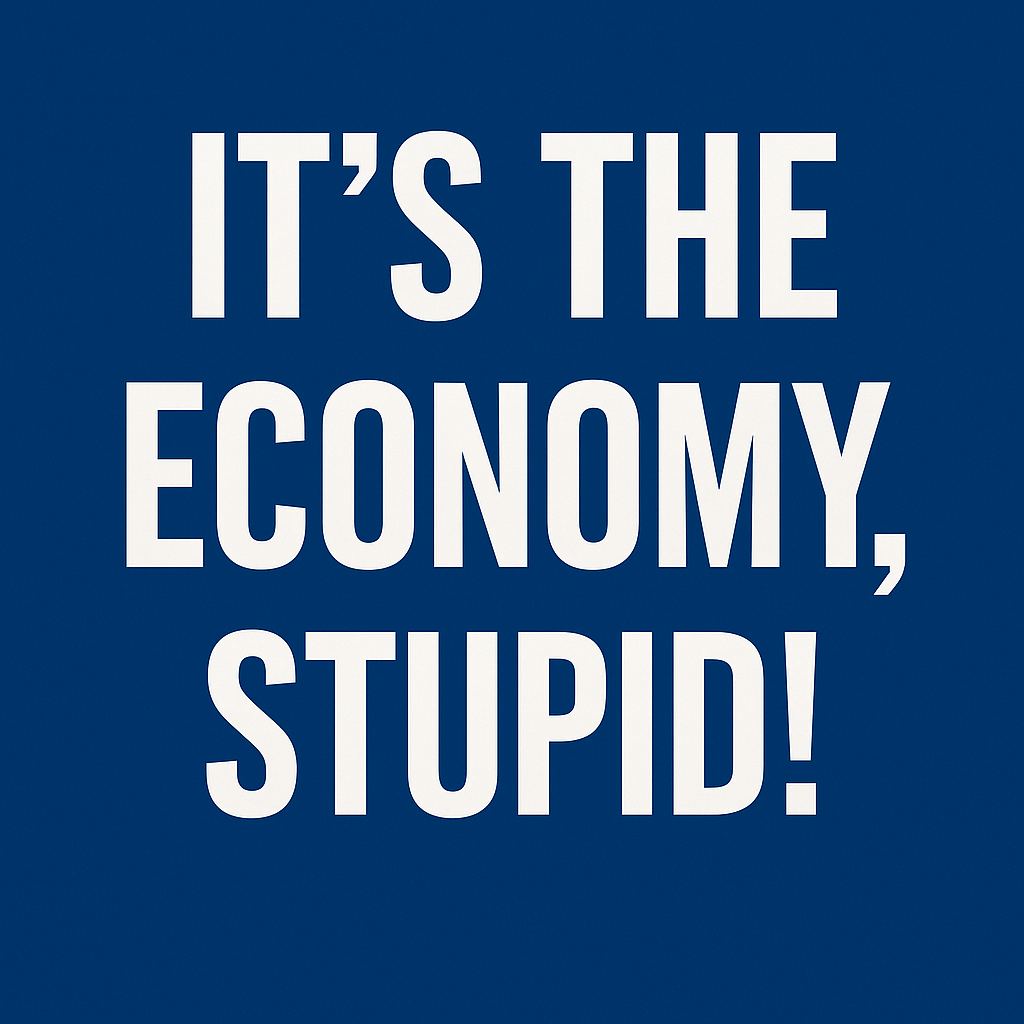
In 1992, a simple phrase helped unseat a sitting U.S. president: “It’s the economy, stupid.” It was not meant for headlines, it was a memo on the wall, a sharp reminder to campaign strategists that the real issues were not in the clouds of rhetoric, but in the pockets of the people.
Today, Lesotho’s ruling party, Revolution for Prosperity (RFP), might consider pinning the same note on the walls of State House and every boardroom where they now indulge themselves in ceremonial governance and elite handshakes.
Because if the African Development Bank’s recent Country Focus Report is to be believed and it should be, then Lesotho is staring down the barrel of an economic collapse. Growth is grinding to a halt. Unemployment is staggering. Donor confidence is evaporating. And the masses are tightening their belts while the ruling class loosens theirs around gourmet tables and imported furniture.
What prosperity? For whom?
The name Revolution for Prosperity once stirred a hopeful imagination. It suggested inclusive growth, youth employment, innovation, infrastructure, and rural transformation. But now, the revolution seems to have been reduced to a revolving door of tenders and power games, and prosperity confined to a curated inner circle of politically connected merchants of influence.
The AfDB’s report could not be clearer. Lesotho’s projected GDP growth for 2025 is a paltry 1.1%, falling even further to 0.5% in 2026. The so-called “revolutionary” government has failed to shield the economy from predictable shocks, such as the expiration of the AGOA agreement, the cancellation of MCC Compact II, and the pullout of PEPFAR and USAID. Instead of strategic countermeasures, we are offered silence, PR slogans, and a digital façade of governance that glows online but delivers nothing offline.
The livelihoods of Basotho do not live on Canva posters and hashtags.

Unemployment now festers at 30.1%, youth unemployment closer to 40%. Textile exports are plummeting. SACU revenues are no longer dependable. Meanwhile, the RFP’s leadership continues to operate as if Lesotho is in an economic vacuum, immune from the consequences of disengaged policymaking and shallow political pageantry.
This is not a leadership class that understands the mechanics of economic development. There is a marked absence of fiscal literacy, industrial strategy, or productive investment orientation. Most disturbingly, there is no evidence of empathy for the common citizen. Prosperity has become a tagline, not a measurable outcome.
There is no revolution when the state’s most capable thinkers are sidelined, and every appointment is an opportunity to reward proximity rather than competence.

It is one thing to inherit a fragile economy; it is another to actively mismanage it while pretending it is someone else’s problem. The RFP was elected on a promise of transformation. But transformation requires more than reshuffling cronies between ministries and boards. It requires understanding basic principles of economics, governance, and public finance. And it requires political humility, not the arrogance of first-time office holders who confuse popularity with performance.
The Country Focus Report offers clear solutions: diversify trade, strengthen public financial management, and prioritize domestic resource mobilization. But those require strategic capacity, something in short supply at the top.
Instead, Lesotho is being run by a group of improvisers who speak of innovation yet struggle to balance a budget or retain foreign partnerships.
This is a country where rural women walk 10 kilometers to access primary healthcare, where 22% of GDP comes from remittances abroad, and where donor aid has been central to surviva, not just development. Any leader who reads the AfDB report and does not call for an emergency national economic dialogue should not be called a leader at all.
If RFP truly believes in prosperity, let it first demonstrate its understanding of economics; not through speeches, but through outcomes. Where is the job creation plan? Where is the SME financing roadmap? Where is the investment in agri-industrial zones? Where is the energy strategy?
In its silence and its self-dealing, the RFP has become dangerously comfortable. But comfort is a luxury Lesotho can no longer afford. Because while they debate positions and polish egos, the foundations of this nation are crumbling beneath their feet.
So we echo the old warning…this time, for Maseru’s power elite: It’s the economy, stupid.