



Maseru — What began as a tense standoff between labour unions and the government over protest permits unfolded into a political power play within the ruling Revolution for Prosperity.
On 29 October 2025, the Maseru City Council (MCC) granted labour unions permission to hold processions targeting the Sam Matekane government. Sources within the development-partner community said external pressure helped sway the administration into issuing the permit. However, the police were yet to issue the final permit as required by law. The MCC approval represented one step closer to legality.
Lesotho’s trade unions had the previous day appealed to the Minister of Police and threatened court action after their earlier request to hold a protest march over job losses was denied. The coalition of unions, representing thousands of textile and garment workers, said they had followed all legal procedures under the Public Meetings and Processions Act of 2010. Despite this, Maseru Police Commissioner Tšeliso Moerane rejected the application.
In a letter dated 23 October, Commissioner Moerane cited “crucial omissions” in the unions’ submission. The police stated that while they respected the right to assemble, they carried a “huge responsibility to protect life and property and promote peace and well-being of the people.”
They outlined four deficiencies: the estimated number of participants, identification of organisers responsible for maintaining order, a permit from the Maseru City Council, and proof of prior arrangement with the Prime Minister’s office. Moerane asked the unions to explain why their “intended procession cannot be refused.”
The MCC’s move was widely seen as a compromise. Development partners, whose funding and conditions emphasise governance and civic freedoms, were said to have quietly leaned on the government. The argument was that Lesotho could not credibly claim to pursue reforms while suppressing the right to assembly. The city council’s decision thus reflected a tactical retreat from total restriction.
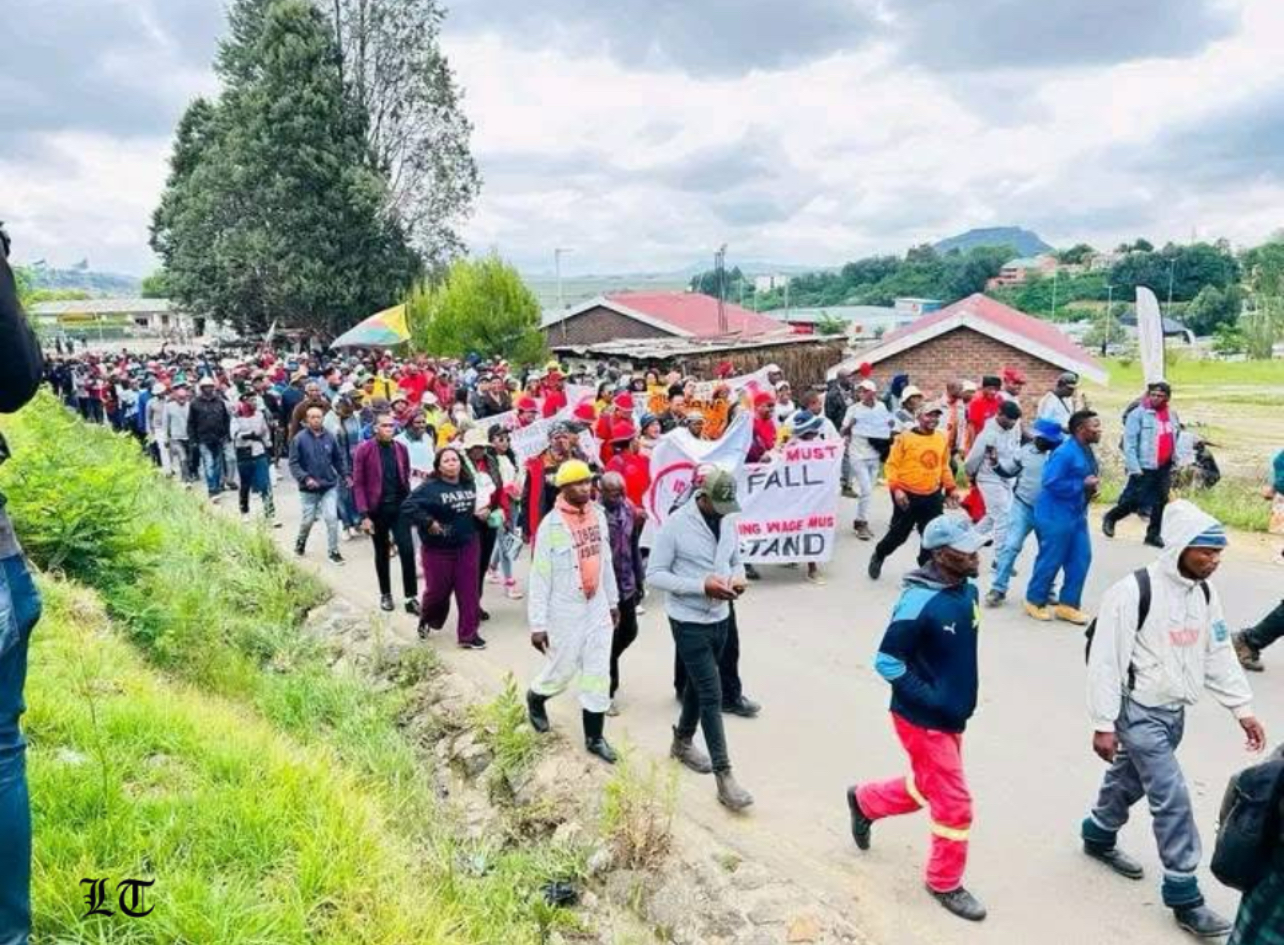
On Friday, the labour procession had taken place in the capital under tight police surveillance. Thousands of workers carrying banners marched peacefully, voicing frustrations over job losses and economic stagnation.
Leader of the Basotho National Party, Hon. Machesetsa Mofomobe voiced his concerns about the behaviour of the Lesotho Defense Force (LDF) who had held road blocks searching both motorists and passengers who were attending the march. Mofomobe called this intimidation by LDF and put the blame squarely on LDF Commander Mojalefa Letsoela.
EFTU leader Tsepang Makakole said they were grateful to the Minister of Police, Lebona Lephema, for his intervention. “Apart from the pressure from development partners, we would also like to thank Minister Lephema who ensured that we secured the permit,” Makakole said.
Government sources revealed that Lephema, who heads both the police and local government ministries, went against Prime Minister Matekane’s wishes. The Prime Minister was reportedly opposed to granting the unions the right to protest.
Insiders within the RFP told Lesotho Tribune that the move has widened internal rifts within the party. A subtle power struggle is said to be unfolding over succession planning. Lephema is reportedly unhappy with Matekane’s preferred choice of successor.
“Lebona is flexing his muscle trying to undermine the PM. We will deal with him properly,” said a state house insider who spoke anonymously.
Adding to the tension, Matekane was scheduled to receive China-donated agricultural implements on the same day as the protest. Sources within the party said the Prime Minister ignored the unions’ memorandum, sending a minister from his office to receive it instead.
“Ntate is busy. He will not waste his time by attending that march. Those are politicians, not labour unions,” said one RFP insider not authorised to speak to the media.
Friday’s procession marked the first protest under Matekane’s administration and a rare public show of defiance by organised labour. It also exposed widening cracks inside the ruling party, where loyalty to the Prime Minister appears to be tested by internal ambition and political muscle-flexing.