



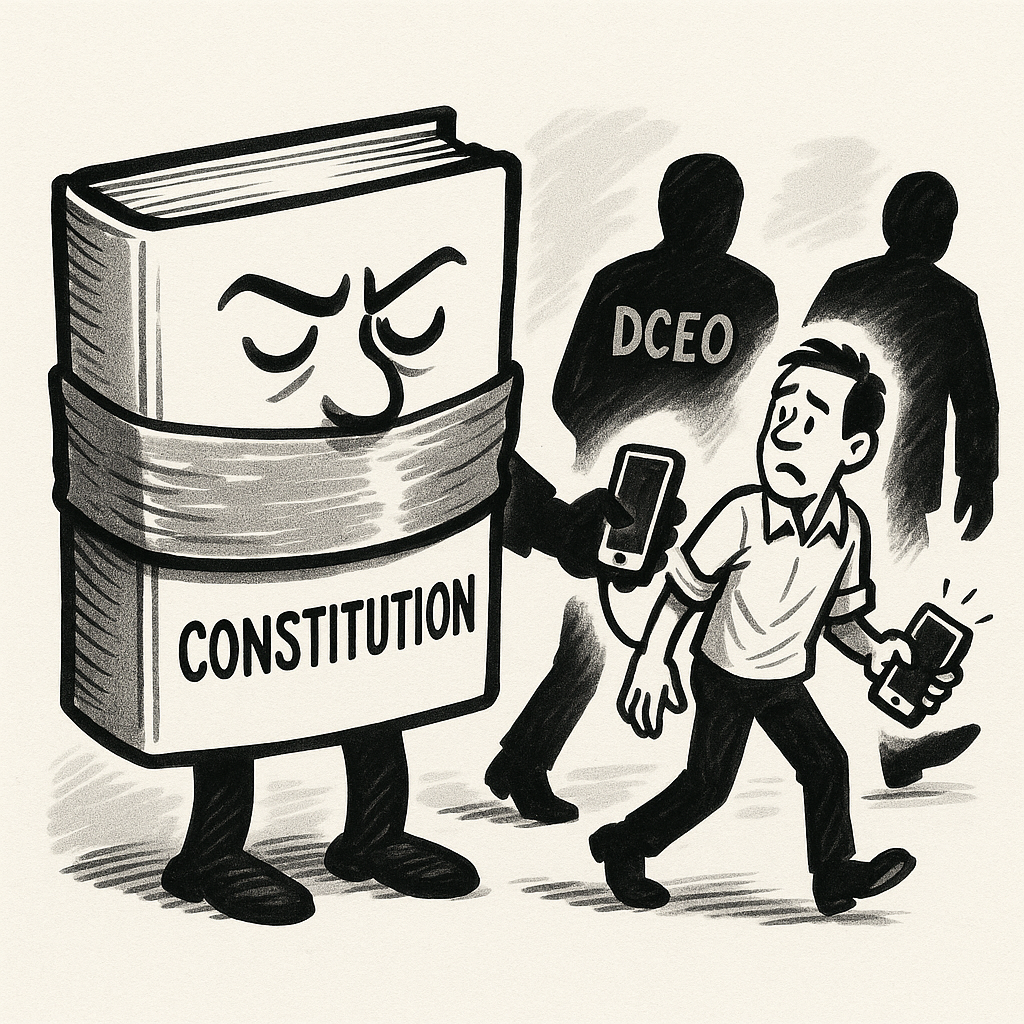
Silence has a way of saying more than words. When the Directorate on Corruption and Economic Offences stormed into the night and hauled away journalist Mohalenyane Phakela, confiscating his phones in defiance of a standing Constitutional Court order, the government said nothing. And that silence is deafening.
It is one thing for a state agency to act unlawfully, it is another for those in power to pretend not to notice. A court had already drawn a clear line, warning against warrantless seizures of journalists’ devices. To cross that line so brazenly is to test the strength of our Constitution. To leave that act unrebuked is to weaken it further.
What troubles me most is not the arrest alone, ugly as it is, but the signal that follows. When leaders keep quiet in the face of lawlessness, they allow the message to spread that court orders can be ignored when inconvenient. That journalists can be punished for doing their work. That constitutional protections are, perhaps, optional.
A government that believes in democracy has a duty to defend those protections even when it disagrees with what is published. Its silence here is not neutrality, it is complicity. And complicity chips away at the fragile trust between citizens and the state.
If this is the standard we accept, then the next time a journalist is dragged from his newsroom, there will be no shock left, only resignation. That is how freedoms die, not all at once, but piece by piece while those entrusted with safeguarding them look the other way.