



BY:Lemohang Botsane
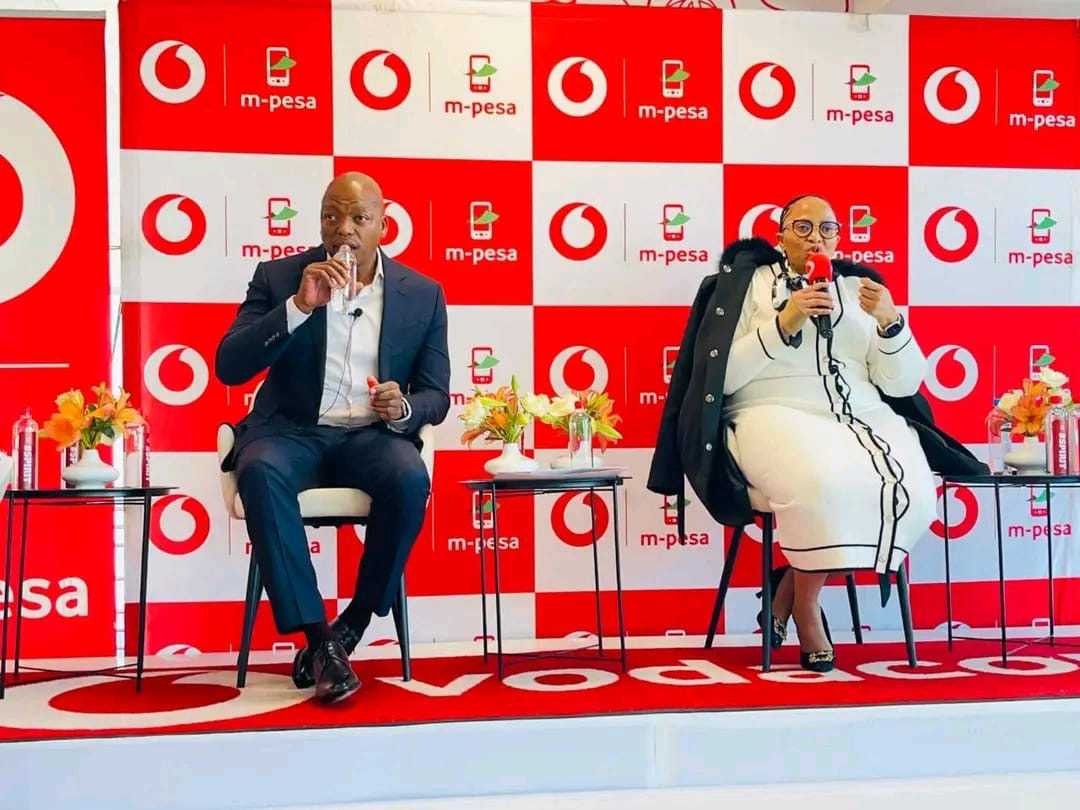
This week, Vodacom Lesotho held a high-ranking dialogue in Maseru, igniting a strong unity: Africa’s FinTech future relies on tactical partnerships, not on single-handed efforts.
Industry leaders, including the Minister of Finance and Development Planning, Dr Retṣ̌elisitsoe Matlanyane, M-PesaAfrica’s CEO, Sitoyo Lopokolyit and Vodacom Lesotho’s CEO, Mohale Ralebitso, came together to chart the transforming FinTech environment, highlighting collective growth and diversity.
Moving past historical milestones, the conversation at the gathering concentrated on visionary tactics to overcome barriers and tap into Africa’s huge potential. Panelistshighlighted the significance of balancing smart governance, dynamic private sector projects and a deep understanding of local needs.
Dr Matlanyane illuminated on a captivating puzzle in Africa’s FinTech context. While the continent was initially slow to embrace technological developments, it has since become a groundbreaker, with innovations like M-Pesa – a globally recognised mobile money service- advancing the financial landscape.
However, she issued an alert warning against becoming self-satisfied, underscoring that the continent still has significant ground to cover, specifically in employing the potential of Artificial Intelligence (AI) in financial services.
“We should be discussing the consolidation of AI in financial services by now, but unfortunately we still drag behind,” she said.
The Minister introduced a visionary plan for comprehensive digital intergration in Lesotho and across Africa.
“We forsee FinTech as a universal medium of exchange, as widely accepted as cash,” Dr Matlanyane said, urging businesses to embrace digital payments more broadly.
“Technology must be accessible to all, including remote communities and older generations, with user-friendly interfaces,” she he further stated. The Minister explained the government’s role, saying their responsibility “is to nurture innovation not obstruct it”.
She said this requires creating a supportive ecosystem through clear policies, strong infrastructure and intergrated platforms for smooth compatibility.
Sitoyo Lopokolyit said collaboration is vital for M-Pesa’sprogression, adding that opening APIs to developers promotes innovation and partnerships while emphasizing the importance of simplified cross-border transactions for continental commerce.
He outlined the next step: transitioning focus from financial accessibility to financial health and empowerment, fuelling wealth creation and success.
According to Mohale Ralebitso, human capital is the foundation of FinTech accomplishment. He advocates for investment in youth development, enabling them to drive innovation and compete on global stages. Ralebitso’sperspective for economic independence relies on Africa’s capability to generate it’s own financial infrastructure.
“By tailoring global technologies to local challenges, we can speed up progress,” Ralebitso said, emphasizing the significance of alliances between government and industry.
The conversation disclosed a clear guide for Africa’s FinTechfuture, one that stresses teamwork over competition. In this perspective, government lays the foundation with futuristic policies, the private sector drives innovationnand growth and a new generation of local talent steers to charge. The agreement was clear: Africa’s digital future depends on strong relevant alliances.
Introduced in 2013 in Lesotho, M-Pesa is a mobile money service offered by Vodacom Lesotho and has become an essential tool in financial diversity. Its key components include money transfer, bill payments, airtime purchase and many more.
You have 1 free article left this month. Create a free account for 15 articles/month.
Create free account