

Afro Barometer reports that in the year 2022, 53 percent of Basotho said violence against women is “somewhat common” while 28 percent found it as a “very common” occurrence within their communities.
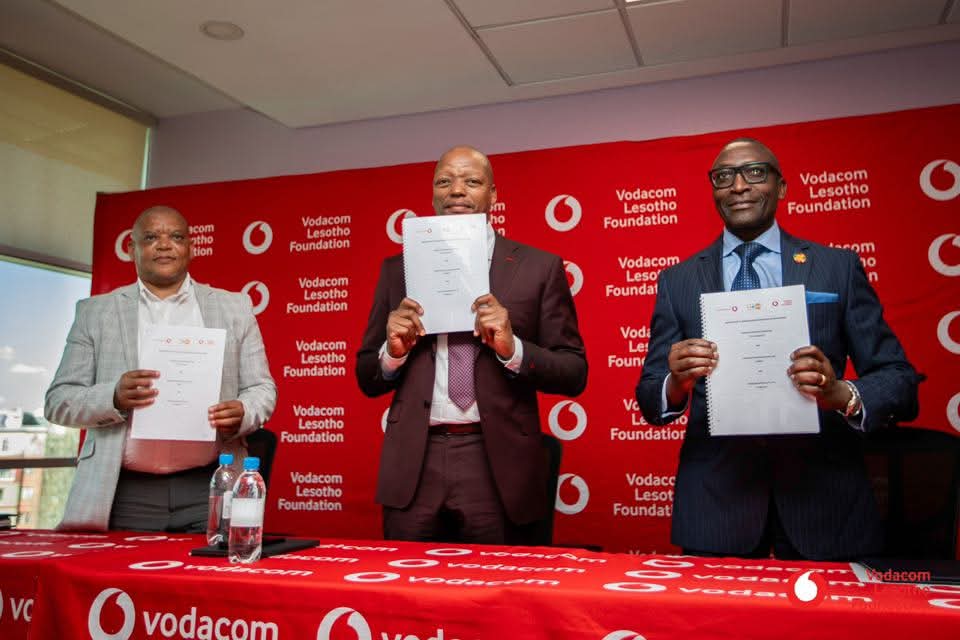
In Lesotho, it is reported that 86 percent of women endure the bitterness that comes with GBV. But in an effort to see Lesotho phasing out this alarming statistics, Vodacom Lesotho through its social investment programme Vodacom Lesotho Foundation and the United Population Fund (UNFPA) joint forces, signing a memorandum of understanding (MOU) termed to last three years effective from August 19.
The 2024 studies by LDHS have uncovered that 36 percent of women in Lesotho have experienced violence committed by their intimate partners.
Vodacom CEO Mohale Ralebitso said the collaboration was more personal for them as a company as they have lost an employee in the past as a result of GBV, referring to Rethabile Mofolo who tragically lost her life in the hands of her husband.
He indicated that women and children who are victims of GBV are often not presented with options to easily pack up and leave, hence they stay to endure the mental, verbal and physical abuse because their perpetrators are also their bread winners.
He therefore emphasized that the ceremony is of high significance to empower women and grand them equal opportunities that could help them be independent.
“We partner and sign this MOU today because the UNFPA is a valuable partner to us. We have a lot of work to do in ensuring that in instances where there is GBV, as a society we are there to assist and this assistance starts with stopping the GBV even before it gets anywhere. It starts with men stopping to act like they are no participants or support perpetrators to people who perform these acts,” Ralebitso said.
“We are fostering an environment where perpetrators are held accountable and women are empowered to speak out, to providing comprehensive support for survivors and their children. We urge every Mosotho to treat GBV with the gravity it deserves, reporting incidents as they would any other crime to ensure justice and protection,” he added.
Ralebitso further hinted that GBV related initiatives are not something they are commencing on from the partnership with the UNFPA, citing what Vodacom Lesotho Foundation continues to do with “Nthuse helpline” which is a line designated to give SOS calls in the case of an ongoing abuse.
In the merger between Vodacom and UNFPA, Ralebitso noted that it will be easier to further care and administer the care facilities that host victims of GBV which are already monitored under the company’s foundation.
“The foundation is also caretaking duties in several of the establishments which play host for GBV victims assisting them with shelter as well as counselling,” Ralebitso continued, futher adding that more facilities of this nature could be build and supported with facilitation and manpower they require for their success.
“We are not in every district yet, so in case there are other partners that wish to join in on the initiative maybe by donating more establishments of this nature, we can together undertake fundraising exercises to ensure that those facilities are refurbished to fit for their purpose. We will naturally support with communication infrastructure and ensuring that there are no charges taken,” he said.
The chairman of Vodacom Lesotho Foundation, John Matlosa, passed his gratitude to the UNFPA for merging with Vodacom in the initiative, citing that experience has taught the foundation that collaborations in such initiatives go a long way in making a difference for the better.
“We convey our appreciation to the organisation that funds the work that we do in gender equality. As a foundation, we supported a number of GBV issues. We have a number of safe houses in the country which shows our commitment on working on GBV issues. We noted over the easy that it is not easy to do these things alone over the years, hence we found it befitting to partner with UNFPA.”
He further noted that as a foundation, they already have a number of running operations which are linked to fighting GBV in collaboration with other organisations.
“We’ve got a Nokaneng App, a partnership between us and GZI which is solely intended a space through which victims can be able to access a counsellor at the end of the line. It identifies five or so people that are trustees in a case of GBV to seek help from them or have them find help for the victim.”
He added that one of the fundamental key areas would be to educate boys from an early age to take note on how to not become perpetrators of GBV due to misconceptions of what it may mean to be a man in a house hold.
“Earlier this year we engaged the Initiation Schools Council to say maybe we should change our perspective that when initiates come down from the mountain, they should understand that being a man does not give them the right to abuse women to assert power, and the project was very successful.”
UNFPA Country Representative John Kennedy Mosoti, emphasized the words of Ralebitso’s statement, conveying the significance of joining forces in fighting GBV in Lesotho.
In his remarks, he expressed that he is hopeful to see Basotho joining the them in order to curve the graph down from the 86 percent margin to the lowest within the period of the MOU
and even beyond.
“The eradication of GBV requires a firm, unified response from all stakeholders, regardless of staus of wealth,” Kennedy said.
Defined by Vodacom Lesotho, the MOU outlines a multi-faceted strategic framework, designed to address GBV through provision of safe environments, holistic survivor support strengthened partnerships, rehabilitation and reintegration and equality advocacy.
It has four focus areas which include ensuring the safety and security of survivors of GBV and their minor dependents through provision of shelter, to deliver survivor centered multi-sectorial care support services and empowering GBV survivors, to facilitate access to rehabilitative services and resources designed to assist survivors in their reintegration into the societies and to promote gender equality and protect human rights in Lesotho.
While Vodacom supports Lapeng centre, providing 40 to 60 survivors with support and logistics, now an added benefit has been brought in, engaging health services, police and counselling to improve convenience of services.
Legal services will also be provided for victims for their protection. Prior recovery, they will be provided with skills that will help them to be economically independent.
Vodacom is doing advocacy with UNFPA and the ministry of gender building to the 16th of November where all districts will be paid visits.