



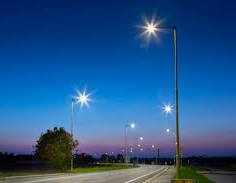
This is not an argument against infrastructure, stupid! Streetlights, water features, roads and public spaces matter and in many cases they are overdue. But when governments begin to treat such as achievements in themselves, rather than as tools meant to improve the economic position of households, something has gone wrong. Development is not proven by what can be photographed at night. It is proven by what changes, quietly and materially, in the lives of ordinary people.
There is a moment that every Mosotho recognises. You drive past a newly installed streetlight or pause near a water fountain that did not exist a year ago. It looks impressive. It photographs well. It signals movement. Someone somewhere will call it development.
But then you go home.
And at home, the questions begin to intrude. Has anything in my life actually changed.
This is the uncomfortable question we are not being asked to confront. Not by government. Not by opposition. Not even by ourselves.
Development, if it is to mean anything beyond concrete and cables, must eventually arrive at the level of the individual household. It must be felt in quieter, less visible ways. In the ability to save. In incomes that stretch beyond the end of the month. In households that can absorb a shock without collapsing. In young people who plan rather than merely survive.
Economists have a term for this, even if we do not use it in everyday language. Real development is not just aggregate growth or visible infrastructure. It is welfare improvement at the household level. It is when productivity rises and people retain more of the value they create. It is when livelihoods stabilise and economic anxiety recedes.
By that standard, we must ask honestly whether our recent “developments” have delivered anything meaningful.
A streetlight does not pay school fees. A fountain does not create disposable income. A paved circle with coloured lights does not turn informal work into secure employment. These things may improve aesthetics. They may even improve safety at the margins. But they do not change the economic position of a household.
This is where the conversation becomes uncomfortable, because it forces us to separate visibility from value.
Governments everywhere love projects that can be seen. They are measurable, ribbon friendly, and easy to defend in speeches. But households do not live in speeches. They live in balance sheets, even if they do not call them that. Income in. Expenses out. Debt accumulating quietly. Savings postponed indefinitely.
If development were real, more Mosotho households would be saving, not borrowing. They would be building buffers, not relying on overdrafts and mashonisa. They would be upgrading their skills, not waiting for the next public works programme. They would feel, in their daily decisions, that the economy is working with them rather than against them.
Ask yourself a simple question. Compared to five years ago, are you more financially secure. Not more hopeful. Not more impressed. More secure.
Can you handle an unexpected expense without panic. Can you go three months without income if things go wrong. Can your children realistically imagine a future that is not dependent on state employment or migration.
If the answer is no, then whatever development is being advertised is not reaching its intended destination.
This is not an argument against infrastructure. Roads, lights, and public spaces matter. But they are inputs, not outcomes. They are tools, not proof. When governments begin to treat them as achievements in themselves, something has gone wrong.
Real development is boring to photograph. It shows up in tax data, savings rates, employment stability, productivity, and household resilience. It shows up when people argue less about survival and more about opportunity. It shows up when politics loses some of its desperation because citizens are no longer economically cornered.
We should be worried that our political debate has been reduced to aesthetics. That we are being asked to clap for installations while households quietly deteriorate. That public money is being used to signal progress rather than to produce it.
Every Mosotho should pause and reflect, not angrily but honestly. Has my life materially improved. Am I better off in ways that matter. Or have I simply become more accustomed to looking at things that look like development.
Until development arrives in people’s pockets, their savings accounts, their job security and their sense of economic dignity, it remains decoration.
And decoration, no matter how brightly lit, does not change lives.