

Mohahlaula Airlines
Wednesday, July 22, 2026
Home Blog Page 11

Trade ministry PS spent M1.65m on 18 international trips, Parliament hears

The Ministry of Trade and Industry’s Principal Secretary undertook 18 international trips between July 2024 and April 2026, with Parliament hearing that total expenditure on air travel and subsistence allowances exceeded M1.65 million.

The Ministry of Trade and Industry’s Principal Secretary (PS) spent more than M1.6 million on international travel between July 2024 and April 2026, according to information tabled in the National Assembly on Thursday.

The figures were revealed by Deputy Prime Minister Justice Nthomeng Majara in response to questions from Basotho National Party (BNP) leader Machasetsa Mofomobe, who sought details regarding the PS’s appointment, the number of foreign trips undertaken, destinations visited, travel costs, subsistence allowances and the overall expenditure incurred since she assumed office in June 2024.

Breakdown of costs

Majara disclosed that the PS undertook 18 international trips over the period under review. The visits took her to a number of countries across Africa, Europe, Asia and North America as part of government and trade-related engagements.

According to the breakdown presented in Parliament, government spent M715,747.80 on subsistence allowances while M936,860.00 was paid for air travel, bringing the total expenditure to more than M1.65 million.

The records show that the PS travelled most frequently to South Africa, making eight visits. Other destinations included Botswana, Namibia, Morocco, Cameroon, Switzerland, Turkey, the United States, India and Japan, with two trips made to the Asian nation.

Item Amount (M)
Air travel 936,860.00
Subsistence allowances 715,747.80
Total 1,652,607.80

Purpose of the trips

The Ministry explained that the trips were undertaken in pursuit of its mandate to advance Lesotho’s trade and industrial development agenda. The PS reportedly attended a range of international meetings, conferences and forums focusing on trade, investment and regional economic cooperation.

Among the engagements cited were meetings involving multilateral trade organisations, conferences on Special Economic Zones (SEZs) and sessions organised by the Southern African Customs Union (SACU) Secretariat. Such forums are generally aimed at strengthening international partnerships, attracting investment opportunities and discussing policies that affect trade among member states.

Parliament’s oversight role

The disclosure comes at a time when government spending continues to attract public attention amid ongoing economic challenges facing the country. Questions surrounding the cost and necessity of official travel have become increasingly common as legislators seek greater transparency and accountability in the management of public resources.

Mofomobe’s questions formed part of Parliament’s oversight role, which allows Members of Parliament to seek explanations from ministers and government officials on the use of taxpayers’ money. Requests for detailed travel expenditure have become a recurring feature of parliamentary proceedings, particularly in light of concerns about the growing costs associated with official foreign trips.

While government maintains that participation in international forums is essential for promoting national interests and securing development opportunities, critics often argue that such travel must demonstrate measurable benefits to the country. The debate has intensified in recent years as citizens grapple with rising living costs and persistent unemployment.

Supporters of international engagement contend that attendance at trade conferences and regional meetings enables Lesotho to remain informed about global economic developments, negotiate favourable trade arrangements and strengthen relations with development partners. They further argue that opportunities for investment promotion and market access often emerge from such interactions.

However, others believe government departments should continuously assess whether every trip is necessary and whether virtual participation could reduce expenditure without compromising outcomes. The increasing availability of digital conferencing platforms has fuelled discussions on how governments can strike a balance between international representation and cost containment.

Ministry’s broader budget

Although the figures released in Parliament relate specifically to one senior official, they have reignited broader conversations about public sector expenditure and value for money. Analysts note that transparency in reporting travel costs is important for maintaining public confidence in government institutions and ensuring accountability.

Information obtained by this publication further shows that the ministry was allocated M423.8 million in the 2025/2026 financial year budget. The allocation is intended to support various programmes aimed at promoting industrial growth, strengthening trade competitiveness and improving the country’s investment climate.

The Ministry of Trade and Industry plays a central role in advancing Lesotho’s economic growth strategy through industrialisation, export promotion and investment attraction. Its responsibilities include supporting local businesses, facilitating trade agreements and creating an enabling environment for economic development.

The disclosure of the PS’s travel expenses is expected to fuel further debate both inside and outside Parliament regarding government spending priorities and the effectiveness of official foreign missions. While the trips were linked to trade and economic development initiatives, lawmakers and members of the public are likely to continue scrutinising whether the benefits derived justify the costs incurred.
Morning Digest — 25 May 2026

Good morning. Here is your Lesotho Tribune news briefing for Monday, 25 May 2026.

Africa

East Africa wants to curb imports of used clothes. But it's not easy

Kenya, Uganda, and Tanzania are seeking to reduce imports of used clothing from Western and Chinese suppliers, though implementation remains challenging. The East African nations are working to curb the secondhand garment trade that has long dominated their markets.

READ FULL STORY

Ebola outbreak poses massive challenges, warns nurse

A nurse warns that the ongoing Ebola outbreak in the Democratic Republic of Congo faces severe resource constraints that could hamper response efforts. Kate White expressed extreme concern about the inability to deliver critical support to affected areas.

READ FULL STORY

Morocco wants tourists to visit Western Sahara. Some say it's tightening its control

Morocco is promoting tourism to Western Sahara, a territory it claims to control, drawing criticism that the initiative aims to strengthen its grip over the disputed region. The campaign to attract Western visitors is seen by some observers as part of Morocco's consolidation of control.

READ FULL STORY

Red Cross volunteers die from suspected Ebola in DR Congo

Red Cross volunteers in the Democratic Republic of Congo have died from suspected Ebola, believed to have contracted the virus before the outbreak was officially identified. The deaths highlight the risks faced by humanitarian workers responding to the crisis.

READ FULL STORY

Russia invites media to view deadly strike on college in Luhansk

Russia provided rare footage of damage inflicted by a Ukrainian strike on a college in occupied Luhansk, inviting international media to view the destruction. The move represents an unusual media access initiative amid the ongoing conflict.

READ FULL STORY

Building collapse in Philippines leaves 3 dead, 17 missing

A building collapse in the Philippines has killed three people with 17 others missing, as rescuers use thermal imaging to detect signs of life beneath the rubble. Search and rescue operations continue at the site.

READ FULL STORY

Oil prices fall amid mixed signals on US-Iran peace deal

Oil prices have declined as markets react to conflicting signals regarding a potential US-Iran peace agreement. Japan's stock market surged to record highs on optimism about the possibility of ending geopolitical tensions in the Middle East.

READ FULL STORY

Syria holds legislative elections in former Kurdish-controlled areas

Syria has conducted legislative elections in areas previously controlled by Kurdish forces, including Hasakah and Kobane. The elections mark a significant shift in governance for regions that have experienced dramatic political changes.

READ FULL STORY

Stay informed. Stay ahead. — The Lesotho Tribune Team

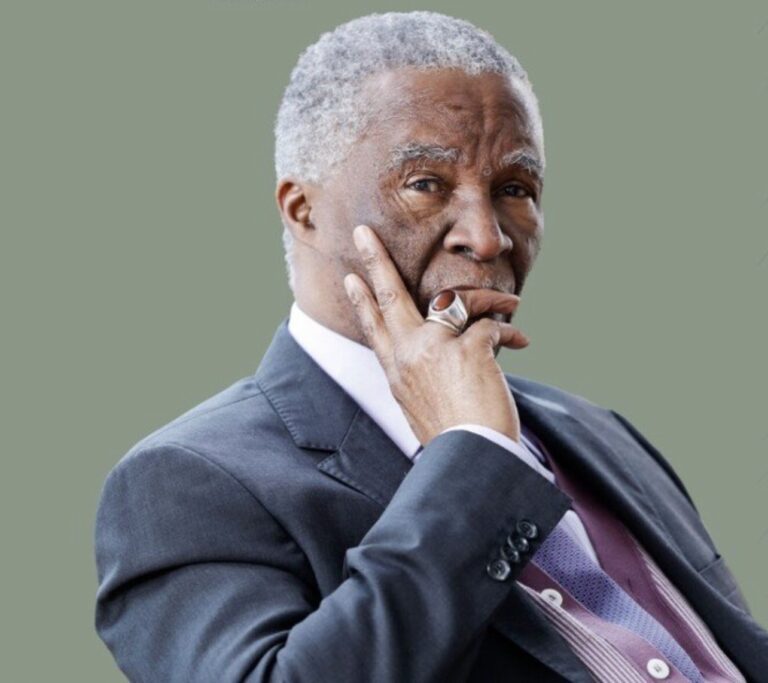
Mbeki says leaders, not migrants, caused SA’s economic decline

Former president Thabo Mbeki has called out what he describes as a dangerous misdirection in South Africa’s public debate, arguing that political leadership failures, not undocumented migrants, are responsible for the country’s high crime and unemployment.

Mbeki was addressing the NEPAD high-level business breakfast and Africa Day Lecture in Cape Town on Thursday, where he warned that South Africans are pointing fingers at the wrong people while ignoring the real causes of the country’s economic decline.

“Jacob Zuma and Cyril Ramaphosa caused high levels of crime and unemployment, not illegal immigrants. I was the head of state here; there were undocumented immigrants, and the economy was growing. Crime levels were down.”

His remarks directly reference the administrations of Jacob Zuma and Cyril Ramaphosa, which he links to the country’s economic downturn following years of stronger growth during the early democratic period.

Mbeki says while concerns about unemployment and crime are valid, blaming foreign nationals is misguided.

“Huge levels of unemployment, that’s correct. High levels of crime, that’s correct. But the finger is being pointed at the wrong people.”

He points to South Africa’s economic trajectory between 1994 and the late 2000s, saying the country experienced steady growth, reaching rates of up to six per cent, despite the presence of undocumented migrants.

“From 2009, it goes the opposite direction. It’s not caused by undocumented immigrants, the people who caused that decline, are laughing in the corner there, because we are pointing somewhere else.”

Mbeki argues that political and structural factors, rather than migration, are behind the country’s economic struggles, warning that misdirected blame risks deepening divisions and failing to address the real issues.

He also reflects on what he describes as a decline in African unity and integration since the early years of democracy.

“That sense of African integration that we had 25 years ago has receded. Why? That’s a question we must ask and answer.”

Mbeki has emphasised that migration to South Africa is deeply rooted in the continent’s shared history, particularly the role African nations played in supporting the anti-apartheid struggle.

“The continent came to own South Africa; this was not just a South African struggle, it was their struggle.”

The former president predicts that migration into South Africa will continue regardless of policy responses.

“The Africans will continue to come to South Africa. It doesn’t matter what you do. You can’t change the hearts and minds of these Africans.”

Mbeki cautions that calls for foreign nationals to go home ignore this historical context and are unlikely to solve domestic challenges.

“You are not going to solve the problem of unemployment here by shouting against undocumented Africans and leaving the culprits.”

Instead, he urges South Africans to confront the root causes of economic decline and joblessness, warning that failure to do so will allow those responsible to evade accountability.

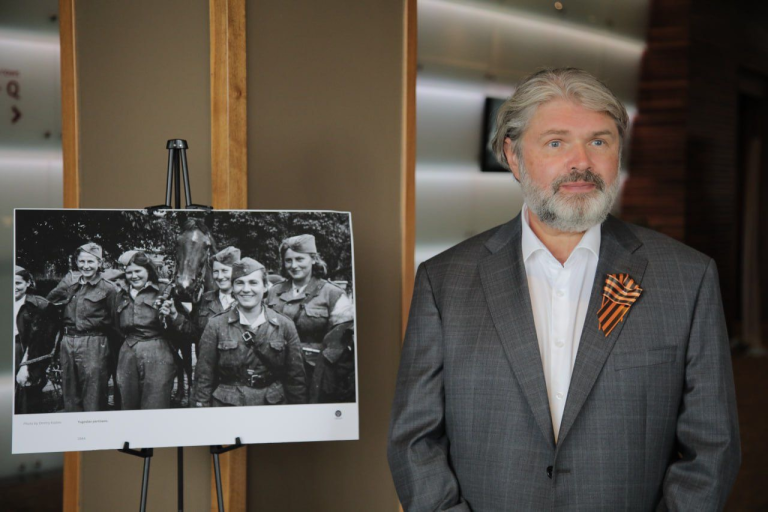
Russian ambassador hails Lesotho’s heroes and calls for stronger partnership on Africa Day

Russian Ambassador Roman Ambarov has extended congratulations to Lesotho on Africa Day and Heroes Day, reaffirming Moscow’s commitment to a stronger bilateral partnership and calling on Maseru to deepen dialogue with Russia as the continent reshapes itself into a multipolar order.

In a message issued on the occasion of 25 May, Ambassador Ambarov described the date as carrying a double significance for the Mountain Kingdom, uniting what he called the rhythm of pan-African solidarity with the deep pulse of national remembrance.

Africa Day marks the founding of the Organisation of African Unity in Addis Ababa in 1963, when African leaders resolved to end colonialism and forge a common destiny. Ambarov said Russia, then the Soviet Union, had stood with Africa in that struggle, citing what he described as a shared belief in every nation’s right to chart its own course free from external domination.

On Heroes Day, the Ambassador drew a line from King Moshoeshoe the Great through the Gun War to the political pioneers of independence and the human rights defenders who sheltered the persecuted during apartheid. He described Lesotho’s heroes as woven into the fabric of the African Renaissance, and said Russia honours their memory with an understanding of the cost of defending sovereignty, given its own history.

Ambarov presented his Letters of Credence to His Majesty King Letsie III on 27 August 2025. He said the King had spoken of the need to evolve the historic friendship into a stronger and more efficient partnership for the twenty-first century. The then Minister of Foreign Affairs and International Relations, Lejone Mpotjoane, had echoed that sentiment, indicating Lesotho’s readiness to deepen dialogue and explore new horizons.

In February 2026 the Ambassador conducted a working visit to Maseru, during which the capital hosted for the first time a reception marking Russian Diplomatic Workers’ Day. The reception marked 46 years of formal bilateral relations. During the event, Ambarov noted that Russia-Africa trade has reached approximately 27 billion United States dollars, and said Russia is ready to support Lesotho in energy security, agriculture and grain supply.

“These are not abstract figures or distant promises. They are signposts on a shared road towards food sovereignty, economic resilience and a more balanced global partnership.”
— Ambassador Roman Ambarov

The Ambassador also said Russia looks forward to hosting a Lesotho delegation at the third Russia-Africa Summit in Moscow, scheduled for 28 to 29 October 2026.

Ambarov extended wishes of sound health and success to His Majesty King Letsie III, the Prime Minister and the Government, and offered his respect to every family in Lesotho.

The message was issued by the Embassy of the Russian Federation to the Republic of South Africa and the Kingdom of Lesotho.

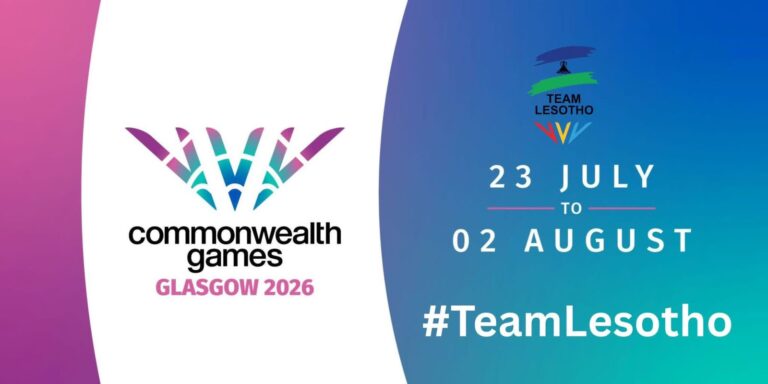
Lesotho Sends 14 Athletes to Glasgow 2026 Commonwealth Games

Lesotho will send a 14-athlete delegation to the 2026 Commonwealth Games in Glasgow, competing across athletics and boxing in what organisers hope will mark a new chapter for the country’s sporting ambitions.

The 2026 Commonwealth Games, scheduled for Glasgow from 23 July to 2 August, are approaching, and Lesotho will be sending a compact but promising delegation built around two sports: athletics and boxing. The Games will feature 10 sports, including several fully integrated Para-sports, but athletics and boxing will be Lesotho’s main targets.

Glasgow 2026 presents an opportunity to showcase the upcoming talent of the new generation of athletes from Lesotho.

The athletics squad consists of eight athletes divided between men and women.

Athletics — Men’s Team
Athlete Events
Mojela Koneshe 100m / 200m
Neo Ntelele 200m / 400m
Kente Mokheseng 200m / 400m
Kamohelo Mofolo 5000m / 10000m
Athletics — Women’s Team
Athlete Events
Malia Nalane 100m / 200m
Mamakoli Senauoana 200m / 400m
Manqabang Tsibela 800m / 1500m
Nthabiseng Lekotoko 5000m / 10000m

Mojela Koneshe enters the Games as one of the athletes to watch after producing very impressive performances during the 2026 season. His participation in both the 100m and 200m will likely place him among Lesotho’s most closely followed competitors in Glasgow.

Neo Ntelele and Kente Mokheseng will strengthen Lesotho’s 200m and 400m representation, having qualified with satisfying times. On the women’s side, Malia Nalane and Mamakoli Senauoana provide similar balance in the short sprint categories, and both have had strong seasons.

In middle-distance competition, Manqabang Tsibela will compete in the 800m and 1500m, races that often demand tactical discipline and strong finishing ability. Meanwhile, Kamohelo Mofolo and Nthabiseng Lekotoko will carry Lesotho’s long-distance hopes in the 5000m and 10000m, categories in which athletes from Lesotho have historically earned continental and international respect.

Lesotho’s boxing delegation consists of six athletes.

Boxing — Men’s Team
Athlete Weight Class
Refiloe Thai 70kg
Pooana Khoahli 65kg
Toka Litabe 60kg
Mathealira Seholohohlo 55kg
Boxing — Women’s Team
Athlete Weight Class
Realeboha Segoete 60kg
Rapelang Maselela 57kg

The boxing team notably carries medal ambitions, and they may ultimately provide Lesotho with its best results at Glasgow 2026. The men’s squad covers multiple weight divisions, allowing Lesotho representation across lightweight and welterweight categories. Refiloe Thai and Pooana Khoahli are expected to face highly competitive opposition from boxing powerhouses such as England, India, Australia, and Nigeria.

On the women’s side, Realeboha Segoete and Rapelang Maselela will compete in divisions that continue to grow in quality and international attention within Commonwealth competition. The inclusion of both male and female boxers also reflects the continued development of women’s boxing in the country.

Overall, Lesotho is expected to send a 14-athlete delegation. While the country may not arrive in Glasgow with one of the Games’ largest teams, the delegation represents a blend of youth, developing talent, and growing ambition. For many of these competitors, Glasgow 2026 will not only be about medals, but also gaining experience on one of the Commonwealth’s biggest sporting stages.

IEC urges Finance Ministry to designate acting director as chief accounting officer

Electoral Governance · Lesotho

The Independent Electoral Commission has written to the Minister of Finance demanding that Acting Director of Elections Lydia Macheli be formally designated as the Commission’s Chief Accounting Officer within 14 days, warning that continued inaction constitutes a breach of statutory duty and threatens the constitutional independence of the institution.

The Independent Electoral Commission has sent a formal letter to the Ministry of Finance and Development Planning requesting the urgent designation of its Acting Director of Elections as Chief Accounting Officer, citing mounting legal obligations under the Public Financial Management and Accountability Act 2011 and the National Assembly Electoral Act 2011.

In the letter, dated 12 May 2026 and signed by IEC Chairperson Rev. Dr John Maphephe, the Commission says the designation is not a matter of administrative convenience but a statutory requirement with direct consequences for the Commission’s ability to manage public funds appropriated by Parliament.

The substantive Director of Elections resigned in February 2026. The Commission subsequently appointed Ms Lydia Macheli as Acting Director of Elections with effect from 10 February 2026, and formally communicated the appointment to the Ministry of Finance on 20 February 2026, together with a request for her designation as Chief Accounting Officer. The Ministry has not responded.

“The failure to designate the Acting Director of Elections as CAO constitutes a breach of statutory duty and is inconsistent with the principles of legality, rationality, accountability, and the rule of law.” — IEC to Minister of Finance, 12 May 2026

The Commission’s letter draws on independent legal opinions which conclude that under section 144(5) of the National Assembly Electoral Act 2011, the Director of Elections, including any duly appointed acting Director, is by operation of law the Commission’s Chief Accounting Officer. The opinions further confirm that the Minister of Finance is legally mandated under sections 2, 4(g), and 6 of the PFMAA to designate a Chief Accounting Officer for each government spending unit, and that this obligation is functional rather than discretionary.

The legal advice also holds that the Minister has no authority to disregard or substitute the designation flowing from the Commission’s lawful appointment of the Acting Director, and that failure to act is inconsistent with the principles of legality, rationality, accountability, and the rule of law.

Key Legal Framework
Section 66 – Constitution of Lesotho Establishes the IEC as a constitutionally autonomous institution not subject to direction or control by any person or authority.
Section 144(1) – Electoral Act 2011 Designates the Director of Elections as Chief Executive Officer and head of administration of the Commission.
Section 144(5) – Electoral Act 2011 Makes the Director of Elections, by operation of law, the Chief Accounting Officer responsible for financial control and accountability.
Section 4(g) – PFMAA 2011 Mandates the Minister of Finance to designate a Chief Accounting Officer for each government spending unit. The obligation is peremptory, not discretionary.

The IEC warns that the absence of a formally designated Chief Accounting Officer creates institutional uncertainty, risks non-compliance with statutory public financial management obligations, and may negatively affect the Commission’s operational readiness as it prepares for the 2028 Harmonised Elections.

The letter further notes that the Commission is currently implementing recommendations from regional and international observer missions, including the SADC Electoral Observation Mission and the European Union Election Observation Mission. These reforms include strengthening the electoral register, institutional capacity building, enhanced stakeholder engagement, and expanded voter education. Continued inaction on the CAO designation, the Commission warns, risks slowing the implementation of those programmes.

The IEC requests that the Minister designate Ms Macheli as Chief Accounting Officer within 14 days of receipt of the letter, in compliance with section 4(g) of the PFMAA.

Copies of the letter were sent to the Speaker of the National Assembly, the Minister of Law and Justice, Leaders of all Political Parties, the Forum of Political Parties, the Attorney General, the Auditor General, the Directorate on Corruption and Economic Offences, the UNDP Resident Representative, the European Union Representative, and the SADC Advisory Council and IDEA International.

Gem Diamonds: fewer carats sold but higher prices at Letšeng in Q1

Mining · Lesotho

Gem Diamonds posted revenue of $32.1-million from its Letšeng mine in Lesotho for the March quarter, sustained by the sale of exceptional large stones despite a fall in overall carat volumes, with all operational metrics remaining within 2026 guidance.

Gem Diamonds (LSE: GEMD) recorded revenue of $32.1-million for the quarter ended 31 March 2026, with its primary production export of 16,727 carats achieving an average selling price of $1,501 per carat, up 17% on the previous quarter.

The company also sold an additional parcel of ten diamonds each weighing more than 10.8 carats, generating a further $7-million in revenue and bringing total quarterly sales to $39.1-million. Production at the Letšeng mine, in the Maluti mountains of Lesotho, was weighted toward the lower-grade Main Pipe in line with the mine plan, with a reduced contribution from the higher-value Satellite Pipe.

“Large exceptional diamonds continue to underpin Letšeng’s value proposition.” — Gem Diamonds, Q1 2026 results statement

The highest price achieved during the quarter was $32,908 per carat for a 52.24-carat white diamond. Four stones sold for more than $1-million each, generating aggregate revenue of $9.9-million.

Ore treated slipped 3% quarter-on-quarter to 1.33-million tonnes, while carats recovered rose 3% to 21,605. The fall in carats sold, down 21% to 16,727, reflected the deferral of certain parcels into the second quarter rather than any operational shortfall.

Two diamonds exceeding 100 carats were recovered during the period: a 191.82-carat Type IIa white diamond and a 100.71-carat Type I faint yellow diamond. Both are scheduled for sale in the quarter to 30 June 2026. Waste stripping increased sharply to 70,943 tonnes from 48,304 tonnes in the fourth quarter of 2025, reflecting continued investment in mine development.

Letšeng Q1 2026 key metrics
Metric Q1 2026 Q4 2025
Revenue $32.1-million
Carats sold (primary export) 16,727 ct
Average price per carat $1,501/ct $1,283/ct
Carats recovered 21,605 ct
Ore treated 1.33-million t 1.37-million t
Waste stripped 70,943 t 48,304 t
Diamonds >100 ct recovered 2
Highest price achieved $32,908/ct (52.24 ct white)

Gem Diamonds holds a 70% interest in Letšeng, which is widely regarded as the world’s highest dollar-per-carat kimberlite diamond mine. The results reflect the mine’s structural dependence on large, exceptional stones to maintain revenue at times when production is weighted toward the lower-value Main Pipe.

The broader diamond market continues to face pressure from weaker consumer demand and competition from laboratory-grown stones, which have eroded pricing in the smaller-carat commercial segment. Letšeng’s concentration in large natural diamonds of gem quality has provided a degree of insulation, though the company recorded a net loss and negative free cash flow for the 2025 financial year. Management confirmed that all key operational and financial metrics for the first quarter remain within the company’s full-year 2026 guidance.

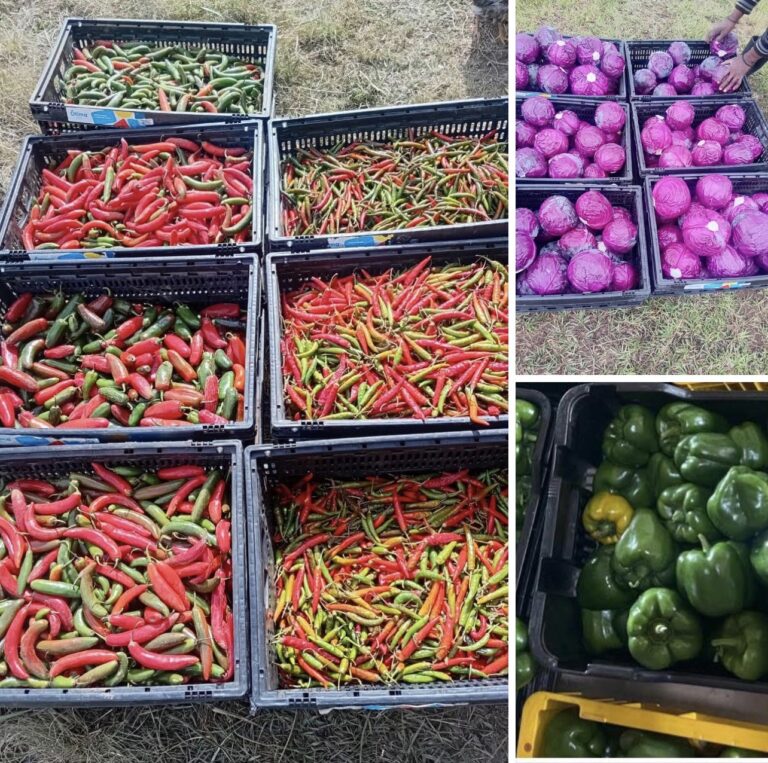
Chilli, garlic and tomato prices surge at Johannesburg and Pretoria markets, raising fresh produce costs for Lesotho border traders

Chilli, garlic and tomato prices surge at Johannesburg and Pretoria markets, raising fresh produce costs for Lesotho border traders

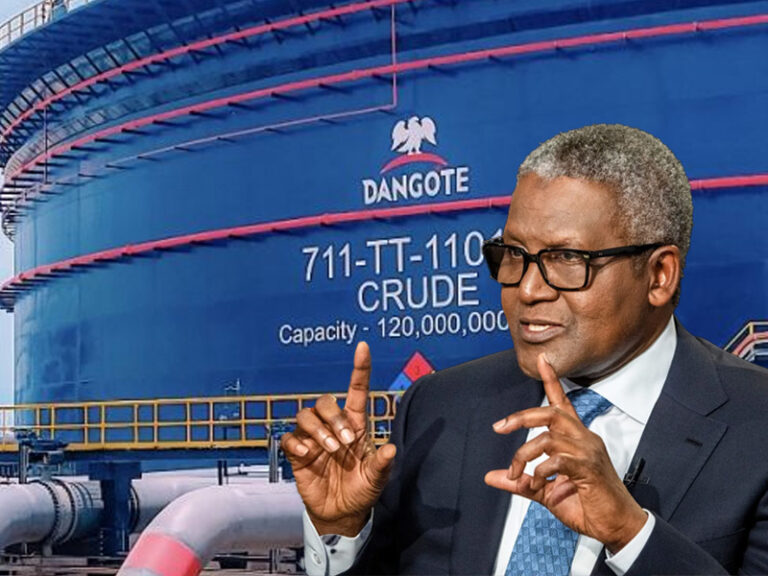
Dangote opens refinery listing to African investors as South Africa’s pension giants signal partnership interest

Aliko Dangote has told Africa’s largest pension fund that the planned stock exchange listing of his petroleum refinery is designed to open industrial wealth creation to ordinary Africans, as South African institutional investors signalled growing appetite for the continent’s large-scale infrastructure assets.

The President and Chief Executive of Dangote Group made the remarks during a visit by the leadership of South Africa’s Government Employees Pension Fund, the Public Investment Corporation and Alterra Capital Partners to the Dangote Petroleum Refinery and Petrochemicals complex and Dangote Fertiliser Limited in Lagos.

The South African delegation included GEPF Chairperson Frans Baleni, GEPF Principal Executive Officer Musa Mabesa, PIC Deputy Chairperson Mongwena Maluleke, PIC Chief Executive Officer Patrick Dlamini, and Alterra Capital Partners Managing Partner Genevieve Sangudi.

The GEPF is Africa’s largest defined benefit pension fund, managing the retirement and associated benefits of more than 1,8 million public sector workers in South Africa. The PIC, which manages approximately 230 billion United States dollars in assets largely on behalf of the GEPF, is the continent’s largest asset manager.

Dangote said Africa’s next phase of economic growth must be anchored on large-scale industrial projects capable of creating jobs, strengthening domestic production capacity and generating broad-based prosperity.

“We are opening the doors for investors to participate directly in Africa’s industrial future and the prosperity it will create.”
— Aliko Dangote, President and CEO, Dangote Group

Dangote said the refinery reflects the scale of untapped opportunities within Africa’s energy market, particularly as most African countries remain dependent on imported refined petroleum products despite growing industrial demand. He noted that demand for polypropylene, aviation fuel and refined petroleum products had exceeded earlier projections, reinforcing the commercial viability of the project.

“We thought about Nigeria first and then exports, but even with our current production, we are practically living hand to mouth because the market demand is extremely high,” he said.

GEPF Chairperson Frans Baleni said the refinery demonstrated that Africa can execute transformational infrastructure projects when backed by visionary leadership, long-term investment and strong technical expertise.

“If it can be done anywhere else in the world, it can be done in Africa. This project has shown that the continent is capable of achieving world-class industrialisation at scale,” Baleni said.

He added that the significance of the project extends beyond Nigeria’s borders. “What has been built here is reshaping how the world should think about African industrial capability, and it should reshape how Africa thinks about itself. For too long, projects of this magnitude have been associated with other parts of the world. The Dangote Refinery and Petrochemicals Complex is a powerful demonstration that, with visionary leadership and long-term capital, that perception no longer holds. This is the kind of African-led industrial scale that institutional investors on this continent should be backing,” he said.

PIC Chief Executive Patrick Dlamini described the refinery as one of the most transformative industrial projects undertaken on the continent. Invoking former South African President Nelson Mandela, he said: “It always looks impossible until it’s done. This project is redefining the story of Africa and the possibilities of Africa.”

Dlamini said PIC was actively seeking long-term partnerships aligned with infrastructure development, industrialisation and economic transformation across Africa. “What we have seen today reinforces our conviction that the next chapter of African prosperity will be written through partnership between African institutional capital and African industrial champions. There is real strategic alignment between Dangote’s industrial agenda and how we are positioning our portfolio, and we look forward to exploring meaningful avenues for collaboration,” he stated.

The visit comes amid a separate development at the Group. Dangote Industries Limited has commenced preliminary activities for the execution of the Olokola Deep Seaport project, a multi-billion-dollar maritime and industrial infrastructure initiative at the Olokola Free Trade Zone.

The project spans more than 10,000 hectares across Ogun Waterside Local Government Area of Ogun State, stretching to Ilaje Local Government Area of Ondo State along the Gulf of Guinea coastline. It forms a central part of the Group’s Vision 2030 expansion agenda.

Managing Director for Infrastructure and Logistics at Dangote Industries, Captain Jamil Abubakar, described the proposed seaport as a strategic gateway that would transform host communities and Nigeria’s export capacity.

“The Olokola Port project is a major step in opening up Nigeria’s economic potential, strengthening trade, reducing pressure on existing ports and supporting industrial growth. It will create real opportunities for host communities through jobs, business activities and long-term developments across both Ogun and Ondo states,” Abubakar said.

He said the port was designed as a logistics gateway for an integrated industrial ecosystem that would strengthen Africa’s maritime trade and regional commerce. The facility is intended to facilitate exports of fertilisers, petrochemicals and refined petroleum products, while also supporting future liquefied natural gas exports and the importation of industrial equipment.

During community engagement visits to Ode-Omi in Ogun State, Araromi Seaside Kingdom and Igbokoda in Ondo State, traditional rulers expressed support for the project. The Lenuwa of Ode-Omi, Oba Folailu Adekunle Hassan, approved the commencement of survey activities and said the community had been awaiting the project. The Alara of Araromi Seaside Kingdom, Oba Adeoloye Olawole, pledged both physical and spiritual support.

Dangote Industries said the seaport is expected to drive large-scale economic activity, create jobs, attract foreign direct investment and strengthen Nigeria’s participation in intra-African trade under the African Continental Free Trade Area.

Additional reporting by Sunday Ehigiator, Peter Uzoho and Kayode Tokede.

Too young to lead? Too old to learn? Lesotho cannot afford either excuse

Kofi Annan once said you are not too young to lead and not too old to learn. That quiet sentence has a great deal to say to this country right now.

There is a tendency in Lesotho, as in many places, to treat age as a qualification in itself. The young are told to wait their turn. The experienced are told they already know everything worth knowing. Kofi Annan, the late Ghanaian diplomat and United Nations Secretary-General, had a gentle but firm response to both camps. You are not too young to lead, he said, and not too old to learn.

That sentence is deceptively simple. Read it slowly and it pushes back against two of the most stubborn obstacles in public life: the gatekeeping that keeps capable young people on the margins, and the complacency that keeps experienced people from growing. Both are costly. In a country still finding its feet across so many sectors, Lesotho can ill afford either.

You are not too young to lead. And you are not too old to learn.

The case for young leadership does not rest on novelty. It rests on energy, proximity to the problems, and an absence of the political debts that accumulate over decades in office. Young Basotho are finishing university, starting businesses, building things in their communities, and navigating a world their elders did not design. That is not a disadvantage. That is exactly the preparation that many forms of leadership require.

At the same time, the call for experienced voices to keep learning is not an insult. It is a recognition that the world moves. Laws change. Technologies shift. Communities evolve. The minister who last studied a subject in 1994 is working from a map that no longer matches the territory. Wisdom is a real thing, but it requires maintenance.

The good news is that these two ideas are not in competition. The most functional institutions tend to be the ones that move people across generations rather than sorting them into separate camps. Mentorship, succession planning, and honest internal conversation are not soft management concepts. They are how organisations survive their founders and outlast their original moment.

The most functional institutions move people across generations rather than sorting them into separate camps.

Lesotho has a young population. The median age sits well below thirty. That is a resource, not a problem to be managed until it ages out. How the country chooses to engage that resource, in government, in the private sector, in civil society, will shape what kind of place this is in twenty years. And the people currently in senior positions have a direct role in that outcome, not just through policy, but through the daily decisions about who gets a seat in the room and who is asked to wait outside.

Equally, learning does not stop at a certain rank or a certain age. Some of the most important developments in Lesotho’s economic and civic life in the coming decade will be driven by forces that did not exist when current leaders were trained. Climate adaptation. Digital financial services. Regional trade under new frameworks. The leaders who thrive will be the ones who remain genuinely curious.

Annan spent his career trying to build institutions that were larger than any one person’s ego or generation. That ambition seems worth borrowing. Not too young to lead. Not too old to learn. It is a short sentence. But it describes an entire civic philosophy.

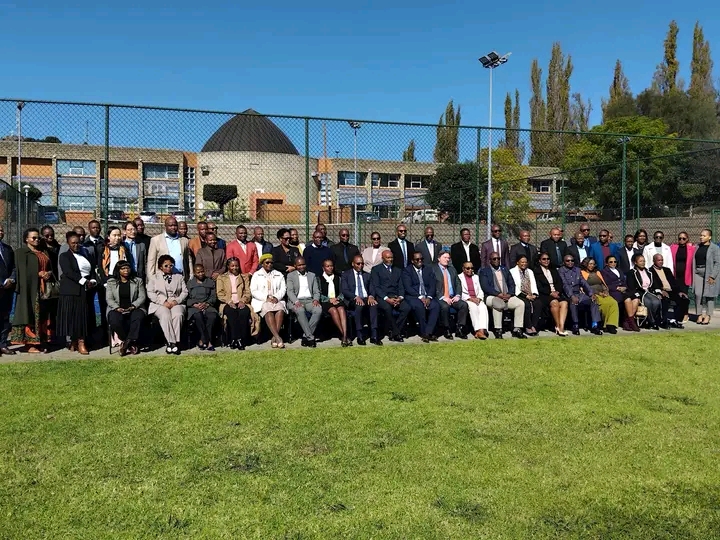
CBL seminar examines geopolitical risks to financial stability

The Central Bank of Lesotho convened financial sector leaders and experts in Maseru to examine how geopolitical tensions are rippling into the country’s financial system and what steps the sector must take to stay resilient.

The Central Bank of Lesotho (CBL) brought together experts and industry leaders on Tuesday for a seminar on keeping Lesotho’s financial system strong in the face of global risks. The event took place in Maseru under the theme “Geopolitical Risk: Implications for Financial Stability.”

The meeting focused on how wars, trade disputes, and political tensions around the world are starting to affect smaller economies like Lesotho. Speakers talked about why it matters for the country to build a financial system that can handle shocks from outside, and what steps can be taken to prepare.

Experts warn of growing pressure at home

Nkhahle Seeiso, Head of Financial Stability at CBL, shared key findings from the bank’s 2025 Financial Stability Report, the 10th edition of the report.

Seeiso said that managing risk well is the foundation of a stable financial system. He explained that a resilient system is not one that never feels pressure, but one that can bend under stress without breaking.

“Resilience means the system can absorb shocks and keep working for households and businesses.”

He added that risks inside Lesotho have been rising. Families, companies, and government are all feeling the strain. Businesses are struggling because demand from outside the country has dropped. At the same time, new tariffs and trade rules set by other countries are making it harder and more expensive to trade.

On the government side, Seeiso said that revenue improved slightly in 2025, but it is still not strong enough. This leaves less room for the government to spend on emergencies or support programmes, which makes the country more vulnerable if another crisis hits.

Insurance sector looks for local solutions

Mpho Vumbukani, CEO of LNIG Hollard, spoke about the role of the insurance industry in managing risk. He said insurance exists to help people and businesses recover when unexpected events happen.

Vumbukani noted that the current global situation makes this job harder. With so much uncertainty in the world, insurers have to be careful about how much risk they take on. He said he hopes that current geopolitical tensions will be resolved soon, so that businesses and households can get some relief.

To make the local insurance sector stronger, companies are now looking at new ways to share risk. One approach is co-insurance, where several local insurers cover one big risk together. This keeps more of the risk inside Lesotho before it is passed on to large international reinsurance companies. The goal is to build more capacity and stability within the country’s own insurance market.

The seminar spotlighted that global events, even those far from Lesotho, can affect prices, jobs, and the cost of borrowing money at home. When external demand falls, local companies earn less and may cut back on hiring. When tariffs go up, imported goods become more expensive, putting pressure on households.

CBL said it will continue to monitor these risks and work with banks, insurers, and other financial institutions to make sure the system stays stable. The bank also stressed the need for businesses and households to be aware of these risks and plan ahead.

The Financial Stability Report is published yearly by CBL to give the public and policymakers a clear picture of the health of Lesotho’s financial sector and the challenges ahead.

Lesotho launches first phase of e-government services platform

Lesotho’s shift to digital government services has cleared its first milestone, with officials cautioning that full back-end automation will come in stages as each phase is tested and validated.

Lesotho’s push to move government services online has reached its first stage, with officials saying more improvements will follow until the entire process is fully automated behind the scenes.

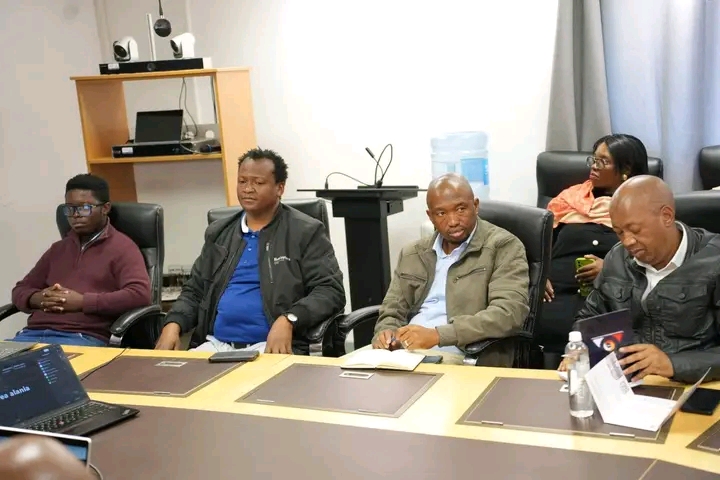
Principal Secretary of the Ministry of Information, Communications, Science, Technology and Innovation (MICSTI), Kanono Ramashamole, said e-services will go through several stages of development before they are fully linked to government back-end systems. He made the remarks on Wednesday while officiating a validation exercise for the new e-services platform at the ICT boardroom. Representatives from different government ministries attended the meeting, with Ramashamole joining virtually.

Speaking to participants, the Principal Secretary explained that this first phase is about testing whether the initial system works as intended. MICSTI is leading the project as the front-desk ministry responsible for digital services.

“This is the first stage of automation. We want to check if it is successful before moving to the next level. If this project succeeds, it will help cut down long queues and make it easier for Basotho to access government services.”

Cross-ministry cooperation required

Director General of Information Communications Technology, Thapeli Tjabane, also addressed the meeting and stressed that digitising government services is not a one-day job. He said it requires support and cooperation across all ministries and departments.

Tjabane added that MICSTI has been working with partners such as Computer Business Solutions (CBS), who provided training and demonstrated how the system will work from start to finish. The training is meant to ensure that government staff understand how to use the platform and support citizens once it goes live.

Less paperwork, faster service

One of the participants, Ts’ebeletso Mofolise from the Ministry of Public Service, said the project will help improve record-keeping and reduce manual paperwork.

“This system will make it easier to record data accurately and reduce the amount of manual work staff have to do. It will save time for both government workers and the public.”

The ICT department within MICSTI is leading the rollout of e-services and is working closely with other ministries to speed up the shift to online service delivery. Ministries involved in the current phase include Home Affairs, Public Service, Public Works and Transport, and Finance, among others.

Officials said the goal is to eventually allow citizens to apply for documents, pay fees, and access other services online without having to visit government offices in person. For now, the validation exercise will help identify any gaps and ensure the system is ready for wider use.

MICSTI said more updates and training sessions will follow as the project moves to the next stages of automation.

Independent business & current affairs journalism · Lesotho Subscribe — M85/month
| Independent business & current affairs journalism · Lesotho