



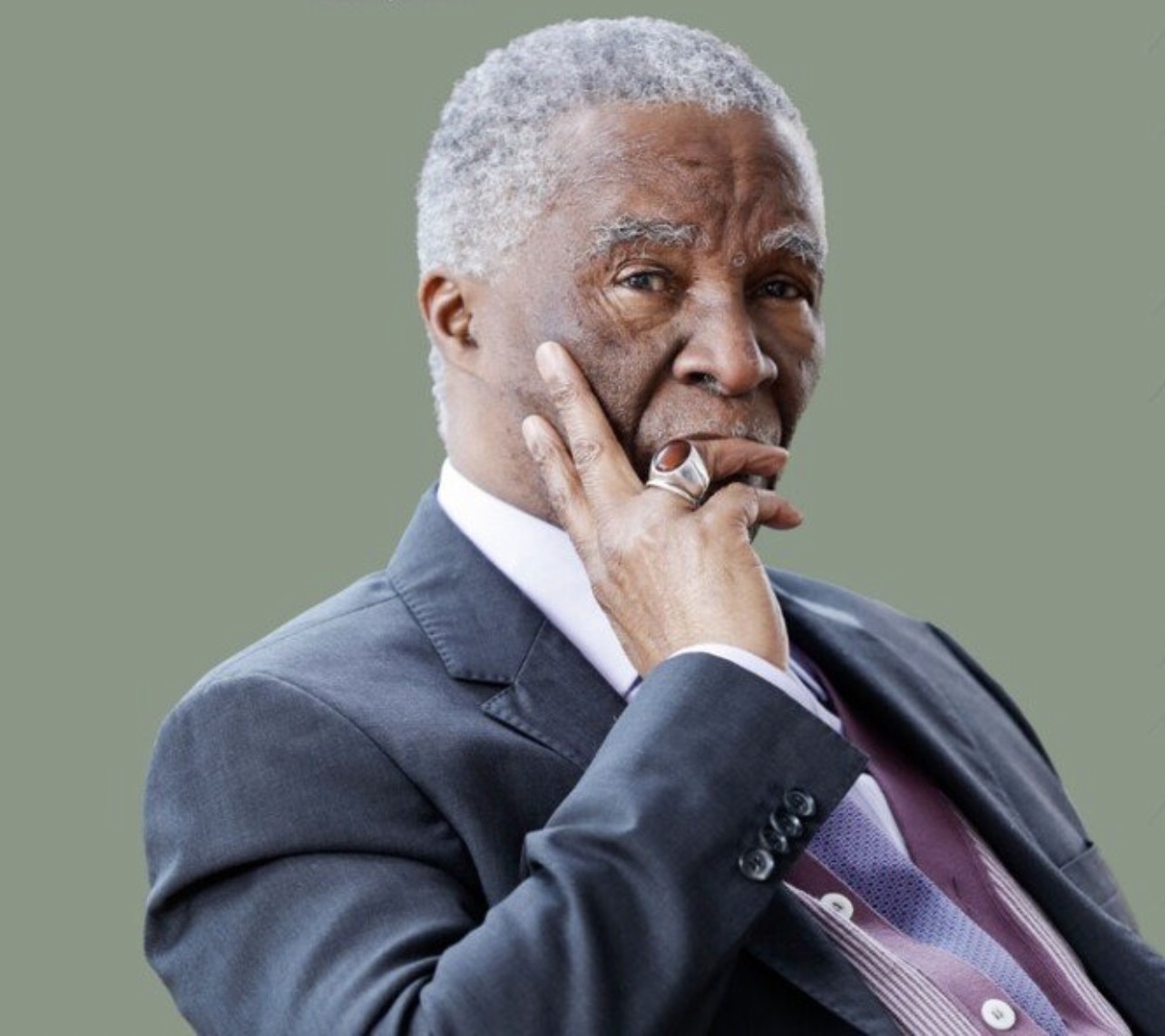
Former president Thabo Mbeki has called out what he describes as a dangerous misdirection in South Africa’s public debate, arguing that political leadership failures, not undocumented migrants, are responsible for the country’s high crime and unemployment.
Mbeki was addressing the NEPAD high-level business breakfast and Africa Day Lecture in Cape Town on Thursday, where he warned that South Africans are pointing fingers at the wrong people while ignoring the real causes of the country’s economic decline.
“Jacob Zuma and Cyril Ramaphosa caused high levels of crime and unemployment, not illegal immigrants. I was the head of state here; there were undocumented immigrants, and the economy was growing. Crime levels were down.”
His remarks directly reference the administrations of Jacob Zuma and Cyril Ramaphosa, which he links to the country’s economic downturn following years of stronger growth during the early democratic period.
Mbeki says while concerns about unemployment and crime are valid, blaming foreign nationals is misguided.
“Huge levels of unemployment, that’s correct. High levels of crime, that’s correct. But the finger is being pointed at the wrong people.”
He points to South Africa’s economic trajectory between 1994 and the late 2000s, saying the country experienced steady growth, reaching rates of up to six per cent, despite the presence of undocumented migrants.
“From 2009, it goes the opposite direction. It’s not caused by undocumented immigrants, the people who caused that decline, are laughing in the corner there, because we are pointing somewhere else.”
Mbeki argues that political and structural factors, rather than migration, are behind the country’s economic struggles, warning that misdirected blame risks deepening divisions and failing to address the real issues.
He also reflects on what he describes as a decline in African unity and integration since the early years of democracy.
“That sense of African integration that we had 25 years ago has receded. Why? That’s a question we must ask and answer.”
Mbeki has emphasised that migration to South Africa is deeply rooted in the continent’s shared history, particularly the role African nations played in supporting the anti-apartheid struggle.
“The continent came to own South Africa; this was not just a South African struggle, it was their struggle.”
The former president predicts that migration into South Africa will continue regardless of policy responses.
“The Africans will continue to come to South Africa. It doesn’t matter what you do. You can’t change the hearts and minds of these Africans.”
Mbeki cautions that calls for foreign nationals to go home ignore this historical context and are unlikely to solve domestic challenges.
“You are not going to solve the problem of unemployment here by shouting against undocumented Africans and leaving the culprits.”
Instead, he urges South Africans to confront the root causes of economic decline and joblessness, warning that failure to do so will allow those responsible to evade accountability.