Mohahlaula Airlines
Wednesday, July 22, 2026
Home Blog Page 30

Matekane Moves to Court ABC as RFP Cracks Deepen

0

MASERU — Prime Minister Sam Matekane has moved swiftly to stabilise his fragile parliamentary position, mandating three senior cabinet ministers to open urgent talks with the All Basotho Convention (ABC) on joining the governing coalition, Lesotho Tribune has been informed by multiple sources with direct knowledge of cabinet deliberations today.

The extraordinary cabinet directive comes as the ruling Revolution For Prosperity (RFP) faces its most serious internal rupture since assuming power, with further defections by its Members of Parliament expected before the end of the day.

According to highly placed sources, the outreach to ABC is a calculated attempt to rebuild a reliable governing majority in anticipation of continued losses from within Matekane’s own caucus. The Prime Minister is understood to be seeking a formal political arrangement that would cushion his administration against a possible parliamentary minority scenario.

“This is about numbers and survival,” one source familiar with the discussions said. “Cabinet is fully aware that the situation is fluid and could deteriorate rapidly.”

The move marks a significant political shift. ABC, once the dominant force in Lesotho’s coalition politics, has until now remained outside Matekane’s governing arrangement. Bringing ABC into government would immediately alter the balance of power in the National Assembly and potentially blunt the impact of RFP defections.

Today’s cabinet decision underscores the growing urgency inside government as the ruling party’s internal cohesion weakens. Lesotho Tribune has been reliably informed that additional RFP MPs are expected to announce their departure imminently, in what insiders describe as a coordinated political repositioning.

The Prime Minister’s strategy reflects a recognition that the threat is no longer theoretical but present and escalating. Should the defections continue at the current pace, Matekane could face the prospect of governing without a secure majority, exposing his administration to legislative paralysis or even a motion of no confidence.

The developments also raise the stakes for opposition parties, who have been quietly positioning themselves to benefit from the ruling party’s instability.

What remains unclear is whether ABC will accept the overture, and on what terms. 

Speaking to Lesotho Tribune, a source who is not authorized to talk to the media said, “rubbish, we (ABC) will agree to that madness!”

Lesotho Tribune is awaiting ABC’s response on the question asked. 

Historically, coalition negotiations in Lesotho have involved complex bargaining over cabinet positions, policy influence, and civil service deployments.

For now, the immediate focus remains on Parliament, where the governing party’s majority appears increasingly uncertain.

Today could prove to be a defining moment in the survival of Matekane’s administration.

This is a developing story.

Former IEC Director Mphaiphele Maqutu to Face Corruption Charges in Lesotho Court

0

Maseru

Lesotho Tribune has been reliably informed that former Director of Elections at the Independent Electoral Commission, Adv. Mphaiphele Maqutu, his former secretary Joalane Mavuso and former IEC Finance Manager ’Mabatho Sesoane are expected to appear in court this week on charges linked to alleged corruption surrounding an IEC tender.

According to sources familiar with the matter, the trio’s fingerprints were taken earlier this week as part of the formal charging process. A police source, who spoke on condition of anonymity because they are not authorised to brief the media, confirmed that charges are imminent.

“Their fingerprints were taken this week and they will be charged this week,” the source said.

The anticipated court appearance comes just weeks after Adv. Maqutu tendered his resignation from the electoral body. His resignation was submitted barely a day after the newly appointed IEC commissioners formally assumed office.

The current Commission is chaired by Reverend Dr John Maphephe, with Pontšo Mamatlere Matete and Dr Chelete Monyane serving as members.

Although Adv. Maqutu resigned two weeks ago, he remains in office on notice and is expected to serve until 2 March 2026.

Sources close to developments within the IEC say his abrupt departure followed a tense engagement with the newly appointed commissioners during their first official meeting with executive management. That meeting reportedly focused on scrutinising key management and administrative decisions taken under his leadership.

Among the issues said to have been raised were the employment of more than 20 temporary staff members, what were described as questionable redeployments, alleged suspensions of permanent heads of department without adherence to due process, and alleged procurement irregularities.

It is not yet clear whether the corruption charges expected this week relate directly to the procurement concerns raised by the commissioners or to separate findings arising from an ongoing investigation.

The IEC has not yet issued an official statement on the matter. Efforts to obtain comment from Adv. Maqutu and the other officials named were unsuccessful at the time of publication.

The developments place the country’s electoral body under renewed scrutiny at a time when institutional integrity and public confidence in governance systems remain under sharp public focus.

If formally charged, the case is likely to test both the internal oversight mechanisms of the IEC and the broader accountability framework governing public procurement processes.

They Meant to Kill,” Prosecutor Tells Court

0

MASERU — The prosecution has told the High Court that the two soldiers accused of killing Lisebo Tang did not fire their weapons by mistake or out of fear, but with a clear and deliberate intention to take lives.

Delivering closing arguments on Tuesday, Advocate Motene Rafoneke said the evidence before the court shows that the shooting was intentional and calculated, not an act of self-defence.

The case is being heard before Chief Justice Sakoane Sakoane, with Sergeant Tjekane Sebolai and Private Selone Ratsiu standing trial for murder, attempted murder and malicious damage to property.

The charges stem from a fatal shooting that occurred on May 9, 2014 near the home of retired army commander Tlali Kamoli, where the two accused had been assigned night duty.

Tang died after the soldiers allegedly opened fire on the vehicle she was travelling in with Tsépo Jane, who survived with injuries. Prosecutors say the car was also extensively damaged by bullets during the attack.

In his submissions, Rafoneke urged the court to focus on the manner and intensity of the shooting, arguing that the number of rounds fired and the type of weapons used leave little room for doubt about the accused’s intentions.

“Our submission is that when the accused shot at the vehicle, there was intention to kill whoever was inside,” he told the court.

He stressed that the soldiers were armed with AK-47 rifles, which he described as “war weapons” designed for combat situations rather than routine security duties.

According to the prosecution’s breakdown of the evidence, the vehicle was struck by 42 bullet holes while stationary. The two accused reportedly discharged a total of 24 rounds between them, with one accounting for 10 shots and the other 14.

To the state, those figures are telling.

Rafoneke argued that such concentrated and sustained gunfire could not have been meant merely to disable a vehicle or scare off its occupants. Instead, he said, it showed a deliberate effort to eliminate anyone inside.

“The manner in which the shooting was executed disregarded whether the occupants of the vehicle survived or not,” he said.

He further dismissed any suggestion that the soldiers acted in self-defence. For a self-defence claim to succeed, he argued, there must be an immediate and real threat to life. In this case, he said, no such danger existed.

“There was no imminent danger against the accused,” he maintained, adding that the use of lethal force was neither necessary nor justified.

The prosecutor told the court that both men actively participated in the shooting and that there was sufficient evidence linking each of them directly to the attack. He urged the judge to find them guilty on all counts.

However, the defence has consistently presented a different version of events.

Earlier testimony indicated that the soldiers believed they were responding to a security threat. Evidence before the court revealed that the vehicle matched a description contained in what was referred to as a “Red Alert,” which warned of a white four-by-four vehicle allegedly involved in bombing incidents.

According to this account, the accused suspected the occupants might be dangerous individuals targeting the residence of the former commander.

The defence also argued that Tang and Jane ignored instructions to exit the vehicle and identify themselves, behaviour that allegedly heightened the soldiers’ suspicions. The accused reportedly interpreted the situation as hostile and acted under standing orders.

One such order, quoted during proceedings, instructed soldiers to “capture the enemy, if it resists or flees, eliminate it.”

The defence has suggested that the accused were simply following protocol in what they believed was a volatile environment.

But the prosecution insists this explanation does not justify the level of force used.

Rafoneke argued that even if the vehicle raised suspicion, the response should have been measured and proportionate. Firing dozens of rounds at a stationary car, he said, could not be considered reasonable action by trained professionals.

“This was not an accident. This was not panic. This was a conscious decision,” he said, urging the court to treat the case as a straightforward instance of unlawful killing.

The matter has stretched over several years and has already seen one accused discharged. Private Kopano Matsoso, who was initially charged alongside Sebolai and Ratsiu, was acquitted in 2020 after the court found no evidence linking him to the offences.

His acquittal narrowed the focus to the two remaining accused.

For Tang’s family, the proceedings represent a long search for accountability, while for the accused, the stakes could not be higher, as convictions on the charges could carry severe penalties.

As closing arguments wrap up, the case now rests in the hands of the court.

Chief Justice Sakoane is expected to weigh whether the shooting was a split-second response to a perceived threat or, as the prosecution contends, an intentional act aimed at killing the occupants of the vehicle.

The judgment, when delivered, is likely to have lasting implications not only for the accused but also for how security forces respond to suspected threats in the future.

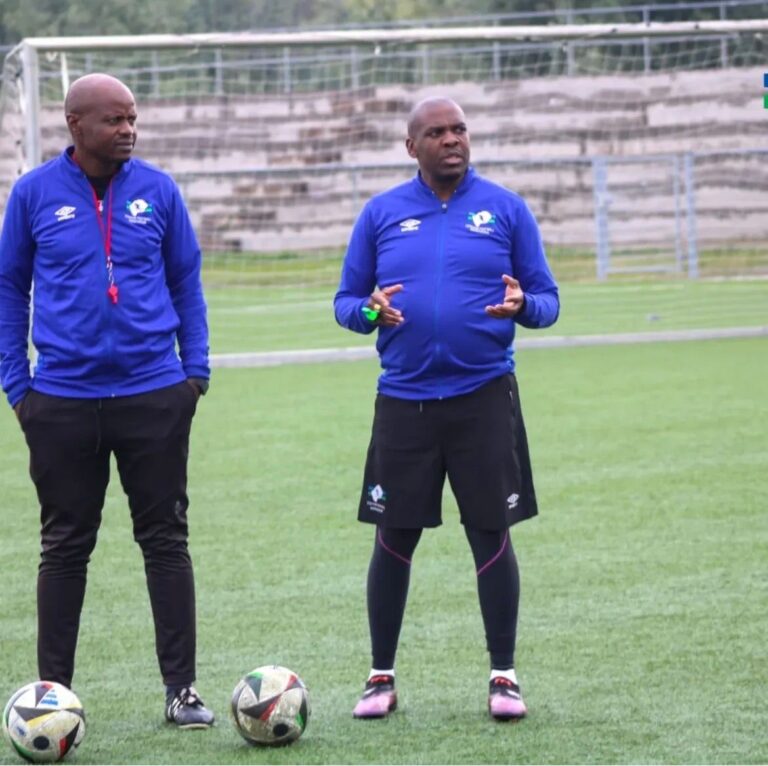
Likuena Turn to coach Bob Mafoso for Their Football Redemption

Newly appointed Bob Mafoso has officially taken charge of the Lesotho national football team, Likuena, stepping into the hot seat with a two year contract.

The Lesotho Football Association(LeFA) has reunited Coach Mafoso with the national setup after he previously served as an assistant to his predecessor Leslie Notši . His appointment follows a stint in Namibia, where he was at the helm of African Stars FC.

Mafoso’s coaching breakthrough dates back to the 2013/14 campaign when he guided debutant Likila United to an impressive sixth-place finish in their maiden Lesotho Premier League season, an achievement that immediately marked him as one of the country’s brightest young tacticians.

That overachievement earned him a move to the ambitious Sandawana, where he steered the Botha-Bothe side to a fourth-place league finish, reinforcing his reputation as a coach capable of maximizing squad potential, which could be what the current Likuena need.

His rapid rise drew the attention of powerhouse Bantu FC, where in 2016 he was appointed assistant coach to James Madidilane. The partnership proved fruitful as Bantu clinched consecutive league championships.

Mafoso decided to step away from Madidilane’s shadow in 2018, when he assumed head coaching duties at Kick4Life FC, guiding the club to a respectable fifth-place league finish.

He later returned to Bantu FC, but this time as head coach, and delivered the club’s fourth league crown, with an 18-match unbeaten run during a season heavily disrupted by the Covid-19 pandemic.

Coach Bob Mafoso also had stints with Lioli FC where he notably won the People’s cup in 2022 and Linare FC before making the move to Namibia.

While in Namibia, he added silverware to his cabinet by winning the league and securing qualification for the CAF Champions League, further evidence of his capacity to deliver success, even beyond Lesotho’s borders.

On the international front, Mafoso has long been embedded in Likuena’s technical structures.

Working alongside coach Notši, he was part of the bench that led the Makoanyane XI to reach the COSAFA U-20 Championship final in 2023, ultimately finishing runners-up to the U-20 Zambian national team.

Speaking during his official unveiling, at Bambatha Tšita, coach Mafoso acknowledged the magnitude of the responsibility awaiting him.

“I have mixed emotions about the job. I’m excited and scared at the same time because I know that expectations are very high,” he said.

He added that institutional backing would be key to his tenure:

“I take strength from knowing that I have the commitment from the President that he will give me and the team support.”

Coach Bob Mafoso and his Likuena side have already begun training. If anyone can lead the Lesotho National team, it’s coach Bob Mafoso, carrying a CAF A coaching license, multiple titles in his coaching career, international exposure and overall coaching experience. Mafoso has officially assumed the Likuena role.

Blood Bank Probe Concluded, but Ministry Allegedly Sitting on Damning Findings

0

A months-long investigation into alleged malpractice and systemic failures at Lesotho’s national blood services has been concluded, yet senior management within the Ministry of Health is now accused of resisting its own findings.

Lesotho Tribune has been reliably informed that the final report recommends decisive disciplinary action, including the dismissal of the Blood Bank Manager, Mahloli Ratsiu and the removal of several politically connected individuals said to be occupying posts for which they allegedly do not meet minimum qualifications.

However, according to multiple sources within the health sector, efforts are underway to “neutralise” the report and protect senior officials from accountability.

This story was first reported by the Public Eye in August 2025 following whistleblower disclosures. What has changed is that the internal investigation triggered by those revelations has now reportedly been finalised, and its recommendations appear to have unsettled powerful interests.

The Case That Triggered Alarm

The investigation was sparked by disturbing incidents uncovered by sources who spoke to Public Eye at the time.

In one case, a 15-year-old leukaemia patient tested HIV negative upon admission at St Joseph’s Hospital and later at Queen ‘Mamohato Memorial Hospital, where she received multiple blood transfusions.

Her condition deteriorated, prompting a transfer to a hospital in Bloemfontein. Subsequent testing revealed that she was HIV positive with a full-blown infection.

Medical personnel in Bloemfontein reportedly found no alternative risk factors. The teenager was not sexually active. Both parents tested HIV negative. Doctors concluded that the most plausible source of infection was a contaminated transfusion and alerted QMMH to investigate.

For many in the medical fraternity, that moment should have triggered sweeping reform.

Instead, insiders say it triggered quiet panic.

The Vanishing Blood Unit

A second incident involved a blood donor from a local mining company whose sample tested positive for HIV. According to sources, the result was erroneously captured as negative in the system.

The contaminated unit, identified as 0103143, was sent to QMMH. Although insiders claim it was never transfused into a patient, the unit has allegedly neither been traced nor formally disposed of.

The error was only discovered months later when the same donor returned to give blood again, leaving staff confused as to why a previously positive donor was attempting to donate anew.

If accurate, the lapse points not to a clerical mistake, but to systemic failure.

“We Have Never Seen the Blood Bank in This State”

Now, with the investigation concluded, the focus has shifted from operational failure to political protection.

Sources who requested anonymity for fear of reprisal painted a grim picture.

“For the time, we have never seen the blood bank in this state,” one said. “Unqualified people are handling very delicate issues of blood, putting everyone in danger.”

Another source alleged prolonged absenteeism at senior level.

“Mahloli Ratsiu takes weeks without coming to work. Dr Maile and Dr Rannyali are aware, but because he’s  politically aligned no action is taken.”

Lesotho Tribune has not independently verified attendance records, but multiple insiders corroborated claims that concerns about leadership conduct were raised internally long before the investigation concluded.

Management Pushback

At the centre of the controversy is the reported recommendation to remove Mahloli Ratsiu from his position and to review the appointments of several individuals said to lack requisite qualifications.

Sources allege that management within the Ministry of Health, including the Minister, Selibe Mochoboroane, are reluctant to implement the recommendations in full.

If true, the implications are grave.

The integrity of a national blood service is not an abstract administrative issue. It is the thin red line between life and preventable death. It is trust in a system that patients enter unconscious, vulnerable and without bargaining power.

To shield officials in such a context would not merely be poor governance. It would be a betrayal of public trust.

A System Under Strain

Healthcare professionals interviewed for this story emphasised that blood services demand strict adherence to protocol, qualified personnel and robust quality control systems.

Any compromise, whether through political patronage or weak oversight, increases risk exponentially.

Responding to questions from Lesotho Tribune, Mr Monkoe Leqheka, Director Laboratory, said:

“Investigations on the matter are on-going, after completion, a report with a recommendation will be availed, then the proper actions will be taken. Due to the sensitivity of the issue, the findings will not be published for public consumption but will be communicated with the concerned families.”

The question now facing the Ministry is simple. Will it act on its own investigation, or will it bury it?

Lesotho Tribune has sent formal questions to the Ministry of Health seeking confirmation of the investigation’s findings, the nature of its recommendations, and whether disciplinary action will follow. At the time of publication, no further response had been received.

This is no longer merely a matter of bureaucratic housekeeping.

It is about whether the health system can look a 15-year-old girl and her family in the eye and say that every possible measure was taken to protect her.

And if not, whether those responsible will be held to account.

Lesotho Is Online. But It Is Not Monetised.

0

We scroll. We post. We trend. We argue in comment sections.

Yet when it comes to turning attention into income, Lesotho often hits a wall.

Creators complain that they cannot access certain monetisation tools. Small online sellers struggle to scale beyond WhatsApp orders. Local businesses hesitate to spend meaningfully on digital ads. And global platforms quietly treat Lesotho as an afterthought.

It is tempting to say the problem is simple: we are too small.

That explanation is comfortable. It is also incomplete.

What “not monetised” really means

When Basotho say “Lesotho is not monetised,” they are usually referring to four different frustrations at once.

First, creator monetisation. Many local creators can build audiences but cannot access the same structured monetisation tools available in larger markets.

Second, digital advertising revenue. A functioning monetised ecosystem requires a strong base of businesses spending on digital ads. If ad demand is thin, creator payouts remain thin.

Third, app store and subscription payments. Monetisation requires seamless payments, reliable payouts, and integration between platforms and local banking systems.

Fourth, real e-commerce. Not inbox selling. Not informal arrangements. True checkout systems, delivery reliability, consumer protection, and returns processes.

So the question is not whether Lesotho has internet users. It does. The question is whether Lesotho has built the rails that allow digital activity to convert into predictable economic value.

The numbers tell a careful story

According to DataReportal, Lesotho had approximately 1.13 million internet users at the start of 2025, representing about 48 percent of the population. Social media user identities were estimated at around 619,000.

Those numbers suggest reach. They suggest presence.

But reach does not equal purchasing behaviour.

Lesotho’s own National Digital Transformation Strategy states that while roughly 46 percent of Basotho have a commercial bank account and about 28 percent have a mobile money account, only around 10 percent make online purchases or pay bills electronically.

That gap is everything.

If only one in ten citizens is transacting online, global platforms see limited upside. If online shopping is not routine, “digital shops” do not see scale. If scale is weak, investment slows.

Now add another structural problem quietly acknowledged in policy documents: the absence of a comprehensive national addressing system. Without reliable physical addresses, delivery becomes unpredictable. And without delivery reliability, e-commerce stalls before it matures.

This is not about talent. It is about infrastructure.

The uncomfortable truth about monetisation

Small market size does matter. Lesotho is not Nigeria or South Africa.

But size alone does not explain the friction.

The deeper constraints are these:

• Advertiser demand remains shallow. Many Basotho businesses still underinvest in digital advertising, which limits the advertising pool that funds monetisation.

• Payment integration is improving but not frictionless. Even with progress such as the national payment switch introduced in 2022, integration between platforms, banks, and local merchants is not automatic.

• Fraud risk and informal trade patterns increase operational costs. Platforms hesitate where compliance and dispute management are expensive relative to expected revenue.

• Logistics and addressing remain underdeveloped. E-commerce without reliable last-mile delivery is theory, not scale.

When platforms evaluate markets, they calculate expected revenue against compliance cost, fraud exposure, support requirements, and payout complexity. If the revenue side is small and the friction side is high, rollout is slow.

This is not discrimination. It is economics.

So is Lesotho completely excluded?

No.

Some monetisation channels exist. Google AdSense, for example, includes Lesotho among supported countries. That means structured advertising monetisation is technically available.

But availability does not automatically translate into widespread income. Approval thresholds, verification processes, banking logistics, and traffic scale still determine who actually earns.

The reality is uneven access, not absolute exclusion.

What must change

Monetisation is not a gift. It is an outcome of systems working together.

Government must treat digital infrastructure like physical infrastructure. Addressing systems are as important as roads. Consumer protection for online transactions must be predictable. Regulatory engagement with global platforms must be deliberate, not reactive.

Banks and the Central Bank must reduce friction for online merchant accounts and payout systems. Integration standards need to be seamless, not theoretical.

Telcos must ensure that data affordability supports transactional behaviour, not just passive browsing.

Media and creators must professionalise operations, diversify revenue streams, and build advertiser confidence locally.

And businesses must understand that digital advertising is not a luxury. It is the oxygen that sustains monetised platforms.

The real diagnosis

Lesotho is connected.

But connectivity without commercial depth produces visibility without value.

The country is not fully monetised because its digital economy remains shallow. Too few people transact online. Too few businesses spend meaningfully on digital ads. Delivery systems are inconsistent. Payment integration is still maturing. Addressing infrastructure is incomplete.

Monetisation follows scale, trust, and infrastructure.

Lesotho has the audience. What it lacks is the economic density that convinces global platforms that this is a first class digital market.

Until we build that density, we will continue to scroll through opportunity while others cash in on it.

Inside the Sekhametsi Forensic Report

0

Who Is Involved, What Happened, What Is Proven And What Comes Next

A forensic investigation into Sekhametsi Investment Consortium (SMIC) has laid bare a series of governance, procurement, and investment control failures that raise serious questions about how decisions were made and money was committed.

For readers encountering this story for the first time, here is what you need to know.

Who is SMIC?

Sekhametsi Investment Consortium (SMIC) is an investment vehicle linked to the Sekhametsi group structure. It holds interests in various ventures, including property development and enterprise investments. Its board of directors is responsible for approving major expenditures, investments, and contracts.

At the centre of this report are board decisions, or the absence of them.

Who are the other key entities?

LNDC

The Lesotho National Development Corporation (LNDC) is a government-owned development agency that promotes investment in Lesotho.

The report examines a pledge made by SMIC to LNDC for participation in the Dubai Expo.

VDI

Vodacom Digital Investments (VDI) was a proposed investment target in which SMIC acquired a minority shareholding (2.5%). The deal required substantial capital commitments from SMIC.

The forensic report scrutinises how this investment was approved and whether due diligence was properly conducted.

PS: be on the lookout in the coming week(s) about VDI, Mergence Lesotho and Public Officers Defined Contribution Pension Fund…

Creative Lab

Creative Lab is a private company reportedly contracted in connection with Dubai Expo activities and branding-related work.

The report questions how payments to this company were approved and whether procurement rules were followed.

Sekhametsi Place

Sekhametsi Place refers to a property refurbishment project undertaken within the SMIC structure. The forensic review compared contracted amounts to actual invoices paid during this project.

What the Report Alleges

The report does not accuse individuals of criminal conduct outright. Instead, it alleges serious governance failures.

These include:

• Expenditure committed without documented board approval

• Incomplete or weak due diligence on large investments

• Procurement decisions made without competitive processes

• Potential conflicts of interest in valuation and advisory roles

• Invoicing that exceeded contract values without proper documentation

• Missing or damaged digital governance records

These are structural failures. They concern how decisions were made, not just what decisions were made.

What the Report Clearly Establishes

There are several matters the report documents with supporting evidence.

1. The LNDC Dubai Expo Pledge

SMIC pledged $12,000 (approximately M180,000) to LNDC in connection with Dubai Expo participation.

The forensic review states there was no documented board resolution authorising this pledge. The payment was processed, but it was not properly classified in the financial statements as a donation.

This establishes two things:

• A governance approval gap

• A financial reporting classification issue

2. Creative Lab Payment

A payment of approximately M315,682 was made to Creative Lab.

The report notes that it was unable to verify the full procurement trail, including board minutes approving the amount and confirmation of competitive quotations.

The issue here is not necessarily that the service was unnecessary, but that the authorisation and procurement documentation were incomplete.

3. The VDI Investment

SMIC committed to acquiring a 2.5% stake in VDI.

The forensic report states:

• The offer letter was signed before funding of approximately M145 million had been secured.

• Comprehensive due diligence documentation was not provided.

• The promoter and the valuer of the transaction shared overlapping connections, creating potential conflict-of-interest concerns.

• Shareholding documentation, including share certificates and Companies Act reporting, was not fully evidenced.

The report does not declare the investment fraudulent. It concludes that governance procedures surrounding it were weak.

4. Sekhametsi Place Refurbishment

The report compares contract values under PROCSA agreements to invoices paid.

It identifies a significant variance, with invoiced amounts exceeding contracted values by over M14 million, and notes that no documented variation orders were provided to justify the increase.

This finding is significant because variation orders are standard in construction projects. If costs legitimately increase, formal written amendments are required.

Without those, oversight weakens.

5. Damaged Digital Records

A hard drive containing governance records was found to be damaged, limiting recovery to a small amount of data.

This materially affected the investigators’ ability to verify board minutes and historical decisions.

What the Report Cannot Prove

Because of incomplete documentation and damaged records, the report cannot definitively prove:

• That cost overruns were fraudulent rather than poorly documented

• That valuation concerns resulted in inflated pricing

• That signatories acted with malicious intent

• That shareholders suffered quantifiable financial loss in every questioned transaction

The report highlights red flags. It does not deliver criminal verdicts.

That distinction matters legally and institutionally.

What the Report Recommends

The report recommends that SMIC consider:

• Assessing potential liability of former directors under the Companies Act

• Conducting further engagement with project managers and signatories to account for refurbishment costs

• Reviewing compliance failures related to share issuance and reporting

These are not automatic legal actions. They are recommendations for consideration.

The Bigger Picture

This forensic review paints a picture of an organisation where:

• Board authority may not have been consistently documented

• Procurement discipline weakened

• Investment due diligence processes were not robust

• Record keeping systems were fragile

None of these failures alone guarantee corruption. But collectively, they create vulnerability.

Governance does not collapse in one dramatic moment. It erodes through exceptions that become habits.

What Happens Next?

SMIC faces three strategic choices:

1. Pursue recovery or liability actions where financial loss can be quantified

2. Implement deep governance reforms, including strict board resolution protocols and digital record preservation

3. Treat the report as factional ammunition and move on

Only one of those options strengthens the institution.

For shareholders and stakeholders, the key issue is not whether the report is uncomfortable. It is whether SMIC uses it as a corrective blueprint.

Because in corporate governance, documentation is not bureaucracy.

It is protection.

Read full report here

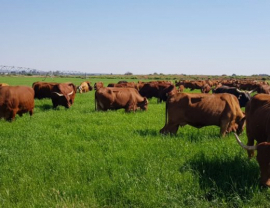
Free State Confirms 53 New Foot-and-Mouth Cases as Total Rises to 344

The Free State Department of Agriculture and Rural Development has confirmed 53 new cases of Foot-and-Mouth Disease (FMD), bringing the total number of confirmed outbreaks in the province to 344.

In a media release dated 13 February 2026, the department said new infections were recorded across multiple towns including Kroonstad, Viljoenskroon/Vredefort, Heilbron, Parys/Vredefort, Sasolburg/Deneysville, Cornelia/Frankfort/Villiers, Bethlehem, Reitz/Lindley, Vrede/Memel, Warden, QwaQwa/Harrismith, Bothaville, Marquard/Senekal, Edenburg, Bloemfontein and Boshof/Bultfontein.

Authorities say outbreaks have now been identified across fourteen local municipalities, with some areas reporting significantly higher case numbers than others.

Most Affected Areas

Among the hardest hit municipalities:

Viljoenskroon/Vredefort (Moqhaka Municipality) has recorded 61 confirmed cases

Parys/Vredefort (Ngwathe Municipality) stands at 49 cases

Deneysville/Sasolburg (Metsimaholo Municipality) has 45 cases

Cornelia/Frankfort/Villiers (Mafube Municipality) has 28 cases

Other affected towns include Kroonstad, Heilbron, Bethlehem, Reitz/Lindley, Vrede/Memel, Warden, QwaQwa/Harrismith, Odendaalsrus/Welkom/Ventersburg, Bothaville, Marquard/Senekal, Hlohlolwane (Clocolan), Rouxville, Edenburg, Bloemfontein and Boshof/Bultfontein.

Movement Restrictions and Quarantine Measures

The department confirmed that movement restrictions have been implemented on all farms within a 10-kilometre radius of infected premises.

Infected farms have been placed under quarantine. Surrounding farms have also been placed under precautionary quarantine while surveillance is conducted to determine the extent of the spread.

Officials say these measures are necessary to prevent further transmission of the highly contagious viral disease, which primarily affects cloven-hoofed animals such as cattle, sheep and goats.

Concern Over Under-Reporting

The department expressed concern over what it described as an increase in farmers failing to report suspected FMD cases.

Authorities warned that failure to report suspected cases is not only a criminal offence but also undermines disease control efforts.

Accurate reporting is critical to planning vaccination campaigns. Officials said under-reporting distorts the disease picture and may result in vaccine shortages in specific areas, thereby delaying control measures and increasing the risk of further spread.

Legal Obligations of Farmers

Farmers have been reminded of their legal obligations under Section 11 of the Animal Diseases Act, which requires animal owners to take all reasonable steps to prevent the introduction and spread of controlled diseases.

The department urged farmers to immediately report any suspected cases to their nearest state veterinarian or animal health technician to enable prompt investigation.

Economic Implications

Foot-and-Mouth Disease poses serious economic risks to the livestock sector. Beyond direct animal health impacts, outbreaks can disrupt trade, limit movement of livestock and livestock products, and affect farmer incomes.

With confirmed cases now approaching 350 across the province, agricultural authorities face mounting pressure to contain the outbreak before it escalates further.

The department says surveillance and vaccination planning remain ongoing.

Independent business & current affairs journalism · Lesotho Subscribe — M85/month
| Independent business & current affairs journalism · Lesotho