

A months-long investigation into alleged malpractice and systemic failures at Lesotho’s national blood services has been concluded, yet senior management within the Ministry of Health is now accused of resisting its own findings.
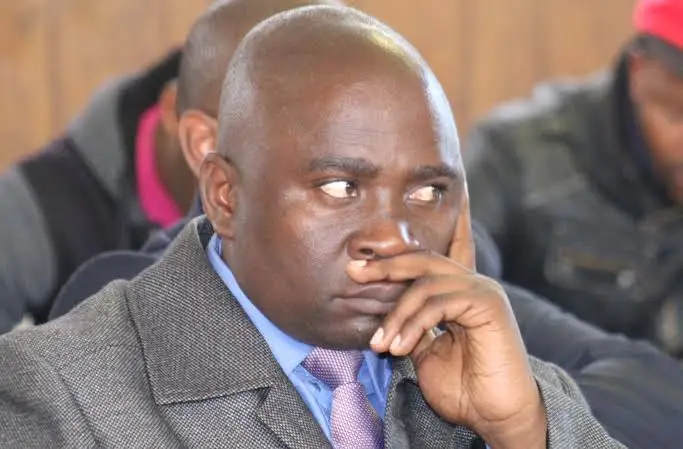
Lesotho Tribune has been reliably informed that the final report recommends decisive disciplinary action, including the dismissal of the Blood Bank Manager, Mahloli Ratsiu and the removal of several politically connected individuals said to be occupying posts for which they allegedly do not meet minimum qualifications.
However, according to multiple sources within the health sector, efforts are underway to “neutralise” the report and protect senior officials from accountability.
This story was first reported by the Public Eye in August 2025 following whistleblower disclosures. What has changed is that the internal investigation triggered by those revelations has now reportedly been finalised, and its recommendations appear to have unsettled powerful interests.
The Case That Triggered Alarm
The investigation was sparked by disturbing incidents uncovered by sources who spoke to Public Eye at the time.
In one case, a 15-year-old leukaemia patient tested HIV negative upon admission at St Joseph’s Hospital and later at Queen ‘Mamohato Memorial Hospital, where she received multiple blood transfusions.
Her condition deteriorated, prompting a transfer to a hospital in Bloemfontein. Subsequent testing revealed that she was HIV positive with a full-blown infection.
Medical personnel in Bloemfontein reportedly found no alternative risk factors. The teenager was not sexually active. Both parents tested HIV negative. Doctors concluded that the most plausible source of infection was a contaminated transfusion and alerted QMMH to investigate.
For many in the medical fraternity, that moment should have triggered sweeping reform.
Instead, insiders say it triggered quiet panic.
The Vanishing Blood Unit
A second incident involved a blood donor from a local mining company whose sample tested positive for HIV. According to sources, the result was erroneously captured as negative in the system.
The contaminated unit, identified as 0103143, was sent to QMMH. Although insiders claim it was never transfused into a patient, the unit has allegedly neither been traced nor formally disposed of.
The error was only discovered months later when the same donor returned to give blood again, leaving staff confused as to why a previously positive donor was attempting to donate anew.
If accurate, the lapse points not to a clerical mistake, but to systemic failure.
“We Have Never Seen the Blood Bank in This State”
Now, with the investigation concluded, the focus has shifted from operational failure to political protection.
Sources who requested anonymity for fear of reprisal painted a grim picture.
“For the time, we have never seen the blood bank in this state,” one said. “Unqualified people are handling very delicate issues of blood, putting everyone in danger.”
Another source alleged prolonged absenteeism at senior level.
“Mahloli Ratsiu takes weeks without coming to work. Dr Maile and Dr Rannyali are aware, but because he’s politically aligned no action is taken.”
Lesotho Tribune has not independently verified attendance records, but multiple insiders corroborated claims that concerns about leadership conduct were raised internally long before the investigation concluded.
Management Pushback
At the centre of the controversy is the reported recommendation to remove Mahloli Ratsiu from his position and to review the appointments of several individuals said to lack requisite qualifications.
Sources allege that management within the Ministry of Health, including the Minister, Selibe Mochoboroane, are reluctant to implement the recommendations in full.
If true, the implications are grave.
The integrity of a national blood service is not an abstract administrative issue. It is the thin red line between life and preventable death. It is trust in a system that patients enter unconscious, vulnerable and without bargaining power.
To shield officials in such a context would not merely be poor governance. It would be a betrayal of public trust.
A System Under Strain
Healthcare professionals interviewed for this story emphasised that blood services demand strict adherence to protocol, qualified personnel and robust quality control systems.
Any compromise, whether through political patronage or weak oversight, increases risk exponentially.
Responding to questions from Lesotho Tribune, Mr Monkoe Leqheka, Director Laboratory, said:
“Investigations on the matter are on-going, after completion, a report with a recommendation will be availed, then the proper actions will be taken. Due to the sensitivity of the issue, the findings will not be published for public consumption but will be communicated with the concerned families.”
The question now facing the Ministry is simple. Will it act on its own investigation, or will it bury it?
Lesotho Tribune has sent formal questions to the Ministry of Health seeking confirmation of the investigation’s findings, the nature of its recommendations, and whether disciplinary action will follow. At the time of publication, no further response had been received.
This is no longer merely a matter of bureaucratic housekeeping.
It is about whether the health system can look a 15-year-old girl and her family in the eye and say that every possible measure was taken to protect her.
And if not, whether those responsible will be held to account.