Mohahlaula Airlines
Wednesday, July 22, 2026
Home Blog Page 31

Lumpy Skin Disease Treatment Rolled Out Nationwide as Cases Reach 1,061

0

MASERU – Government has begun nationwide distribution of medication to combat lumpy skin disease following weeks of concern from livestock farmers across the country.

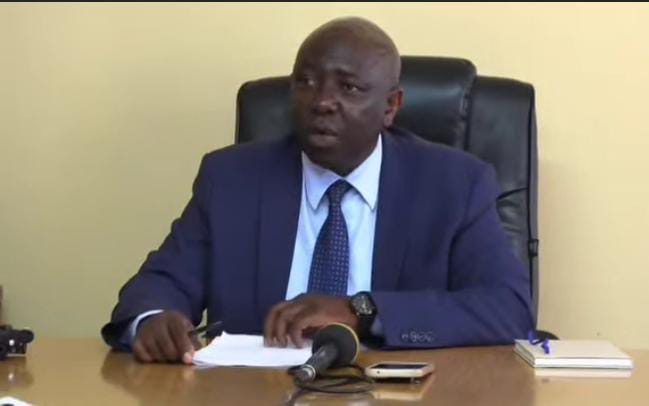
Minister of Agriculture, Food Security and Nutrition, Thabo Mofosi, confirmed at a press conference on Thursday that the long-awaited antibiotics have now arrived and are being dispatched to affected districts. Veterinary teams will administer the treatment free of charge directly at farmers’ homesteads.

The delay, according to the Minister, was caused by temporary factory closures in South Africa during the Christmas holidays, coupled with high regional demand as several Southern African countries grapple with outbreaks of the same disease.

“We acknowledge the frustration this delay has caused,” Mofosi said. “However, we are pleased to confirm that the medication is now available and distribution has commenced in all affected areas.”

The Ministry reports 1,061 verified cases of lumpy skin disease nationwide, with 63 cattle deathsrecorded to date. While officials indicate that the overall infection rate has slowed, new cases have emerged in districts that were previously unaffected.

Lumpy skin disease is a viral infection that primarily affects cattle and water buffalo. It is transmitted through biting insects such as mosquitoes, as well as through direct contact between animals. Although there is no specific cure for the virus itself, supportive treatment including antibiotics helps prevent secondary infections and strengthens the animal’s ability to recover.

The Minister urged farmers to take preventative measures while the rollout continues.

“Farmers must isolate infected animals, ensure they have sufficient food and water, and keep them in shaded areas. Infected livestock should not be used for work,” he advised.

Verification of suspected cases remains ongoing in several areas, with veterinary officers continuing field assessments.

The Ministry maintains that controlling the outbreak is a national priority, given the importance of livestock to household incomes and food security. Authorities have assured farmers that additional support measures will be implemented should the situation escalate.

For now, officials say the focus remains on early detection, isolation, and rapid treatment to prevent further spread and safeguard Lesotho’s cattle population.

World Bank Group Day Commemorated in Maseru, Focus Shifts to Inclusive Growth

0

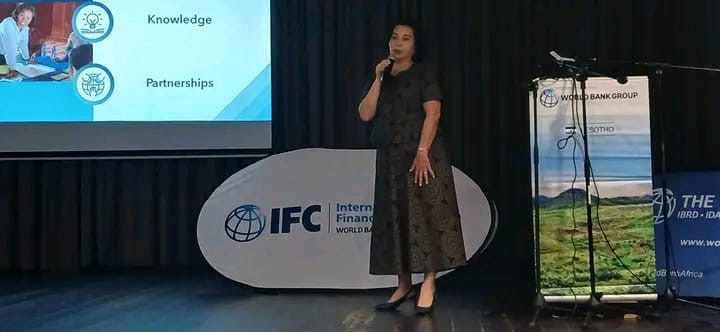
MASERU – The World Bank Group this week marked World Bank Group Day in Maseru, reaffirming its development partnership with the kingdom of Lesotho and its commitment to supporting the country’s economic and social priorities.

The commemoration brought together senior government officials, development partners, project beneficiaries and civil society representatives. The event served both as a reflection on ongoing programmes and as a platform to assess whether development interventions are delivering meaningful results on the ground.

Speaking at the event, the World Bank Country Representative to Lesotho, Ms Dinara Djoldosheva, underscored the importance of partnerships in achieving measurable development outcomes.

“This day offers firsthand insights into how development initiatives are transforming lives and helping anchor our work in real community expectations and priorities,” she said.

Djoldosheva noted that engaging directly with beneficiaries allows projects to remain responsive and aligned with the needs of Basotho communities. She emphasised that development must be rooted in lived realities rather than policy frameworks alone.

Also addressing the gathering, the Unktrd Nations Resident Coordinator in Lesotho, Ms Amanda KhoziMukwashi, called for deeper collaboration among institutions to advance inclusive and sustainable growth. She stressed that economic expansion must translate into tangible improvements in people’s lives.

“Economic growth must reduce poverty, create jobs and strengthen livelihoods, particularly for vulnerable groups,” she said.

KhoziMukwashi further observed that Lesotho’s development challenges, including unemployment, infrastructure gaps, social protection constraints and climate vulnerability, are interconnected and require coordinated, multi-sectoral responses.

On behalf of government, Deputy Principal Secretary in the Ministry of Finance and Development Planning, Ms ’Malereko Molefi, echoed the call for inclusive development. She said progress should not be measured purely in macroeconomic figures, but in dignity, opportunity and social inclusion.

“Development must be reflected in improved livelihoods and the everyday experiences of our people,” she said, reaffirming government’s commitment to strengthening cooperation with international partners.

World Bank Group Day is observed globally to reflect on the institution’s mission of ending extreme poverty and promoting shared prosperity. In Lesotho, the event highlighted ongoing programmes across sectors such as infrastructure, social protection, economic reform and climate resilience.

The gathering concluded with renewed pledges from stakeholders to deepen collaboration, improve accountability and ensure that development partnerships translate into sustainable and inclusive growth for the country.

Lesotho Tribune Publisher Selected Among Top 50 in Création Africa Programme

MASERU – Bohlokoa Media Company, the publisher of Lesotho Tribune, has been selected among the Top 50 entrepreneurs for the second edition of the Création Africa programme covering South Africa, Lesotho and Malawi.

The announcement was made by the French Institute of South Africa on Friday, 06 February, following what organisers described as an intensive external jury selection process.

“We are proud to announce the Top 50 entrepreneurs selected for the second edition of Création Africa South Africa, Lesotho and Malawi,” the Institute said in a public statement. “Congratulations to all selected entrepreneurs as they embark on this exciting journey.”

The selection places Lesotho Tribune’s parent company within a regional cohort of high-potential creative enterprises poised for scaling, collaboration and continental exposure.

Cementing Lesotho Tribune’s Position

Speaking on Friday, Phafane Nkotsi, proprietor of Lesotho Tribune, described the milestone as both humbling and strategic.

“We are grateful for the opportunity from Création Africa to learn and better serve and cement our position as Lesotho’s publication of record,” Nkotsi said.

For a publication that has steadily positioned itself as a data-driven, investigative and culturally anchored platform, the recognition signals validation beyond Lesotho’s borders.

Nkotsi said Bohlokoa Media Company intends to use the programme to accelerate its transition into a hybrid cultural media hub that integrates journalism, storytelling, creative content and digital production.

The ambition is not incremental growth. It is structural transformation.

Scaling Into a Regional Cultural Platform

Lesotho Tribune is seeking support to expand into a regional cultural platform that amplifies Basotho narratives and strengthens the visibility of African creative industries.

According to Nkotsi, the project will focus on:

• Digital expansion

• Strengthening and improving the podcast Lesotho’s Investment Case

• Developing cultural content spaces

• Advancing visual and digital production capacity

The vision is to create a media ecosystem that does more than report news. It aims to curate identity, archive culture, platform artists, profile entrepreneurs and deepen public discourse across sectors.

In practical terms, this could mean more multimedia storytelling, enhanced podcast production, collaborative creative projects, stronger regional distribution networks and structured engagement with artists and cultural practitioners.

For Lesotho, where cultural production often struggles with funding gaps, distribution bottlenecks and limited cross-border exposure, the programme represents a gateway into continental creative circuits.

A Strategic Inflection Point

The timing is significant.

African creative industries are increasingly being recognised as drivers of economic growth, youth employment and soft power influence. Digital platforms are reshaping how stories travel, how culture is monetised and how small media houses compete with global players.

Participation in a programme like Création Africa signals that Lesotho Tribune is no longer positioning itself merely as a local newspaper. It is staking a claim within Africa’s creative economy.

Nkotsi emphasised that the programme offers not only workshops and hands-on activities but also opportunities to connect with fellow creatives across borders. That network effect may prove as valuable as any technical training.

If executed strategically, the initiative could expand Lesotho Tribune’s footprint beyond print and online reporting into structured cultural programming, podcast syndication, regional storytelling collaborations and creative incubator models.

What Is Création Africa?

Création Africa is an entrepreneurial development programme spearheaded by the French cultural network in Southern Africa, including the French Institute of South Africa. It targets high-potential creative entrepreneurs operating within cultural and creative industries.

The programme provides selected participants with structured workshops, mentorship, skills development sessions, networking opportunities and exposure to regional and international creative ecosystems.

Its objective is to strengthen creative entrepreneurship across Southern Africa by equipping founders with the tools to scale sustainably, collaborate across borders and contribute meaningfully to the continent’s cultural economy.

Selection into the Top 50 follows a competitive external jury process, making it both merit-based and highly selective.

For Bohlokoa Media Company and Lesotho Tribune, the journey now shifts from recognition to execution.

The real work begins.

Police Instruct Mojapela Not To Label Matekane Administration As Corrupt

0

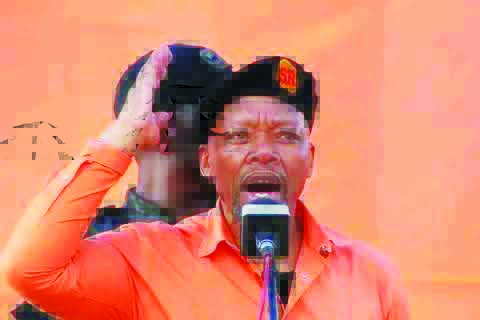
MASERU – Socialist Revolutionaries (SR) leader Teboho Mojapela has accused the police of attempting to silence him over his outspoken criticism of corruption, alleging that he was summoned to police headquarters and warned to stop speaking publicly about what he describes as “high-level graft pulling the country down.”

Mojapela told Lesotho Tribune yesterday, Saturday 07 February, that he received a phone call last Friday instructing him to report to police headquarters at 2pm. He said he was unable to attend at the scheduled time and instead presented himself on Monday this week, where he met officers for approximately three hours.

According to Mojapela, the meeting was not routine.

“Junior police officers summoned me with the intention of threatening me and curtailing my constitutional right to freedom of expression,” he said. “They told me to stop talking about the high corruption that is pulling the country down.”

He claimed officers advised him to report corruption privately rather than raise it in public forums. They allegedly warned that his continued commentary could “cause instability in the country.”

Mojapela described the interaction as “deeply troubling” and characterised it as an abuse of power.

“This is a clear abuse of power. It means the Commissioner of Police himself is complicit,” he charged.

The opposition leader, who has consistently criticised the government for what he calls entrenched conflicts of interest among ruling MPs and ministers, questioned why he had been singled out.

“Newspapers, radio stations and civil society organisations complain about corruption every day, but they are never called to the police. Why me? Why now?” he asked.

Mojapela said he believes his uncompromising stance against corruption has placed him in the government’s crosshairs.

“They see me as their enemy because I hate their corruption,” he said, adding that he would not be intimidated into silence.

“I know a man’s life has to be full of trials and tribulations, but that does not mean I will give these corrupt people a chance to destroy me. They can destroy my flesh, but not my spirit. I will not allow them to kill me. They want my life.”

At a previous rally in Machache, Mojapela condemned alleged corruption linked to the controversial Queen ’Mamohato Memorial Hospital tender, which he claimed was unlawfully awarded. He argued that corruption has crippled not only the economy but also the livelihoods of ordinary Basotho.

“When those elected to govern are corrupt, the economy suffers, leading to crime and unruly behaviour, including murders,” he said.

He further questioned why Lesotho remains underdeveloped despite its natural resources, alleging that those in power enrich themselves at the expense of national progress. He cited alleged irregularities in infrastructure projects, including at the Maseru traffic circle and Makoanyane Square.

“There is corruption there. A contractor works, then demolishes the work and starts again,” he alleged.

Mojapela also claimed nepotism within government structures, alleging that relatives of ministers are appointed to positions, including at embassies, without merit.

Justice Held Together by Tape

0

A firearm, presented as evidence before the High Court, sits on a wooden surface. It is held carefully. It is meant to represent the weight of the law, the seriousness of a criminal trial, the gravity of justice. And yet, attached to it is a makeshift paper tag, folded and covered in what appears to be ordinary adhesive tape.

The photograph is jarring.

That small detail speaks volumes.

In any criminal justice system, the chain of custody is sacred. Evidence must not only exist. It must be handled in a way that inspires confidence. It must be documented, preserved, labelled and stored according to strict forensic protocols. The integrity of the system depends on it. When the public sees a firearm tagged with handwritten paper wrapped in tape, the immediate question is not about the accused. It is about competence.

Was the evidence logged properly?

Was it preserved in a tamper-proof manner?

Is there a documented custody trail from seizure to courtroom?

These questions are not technical nitpicking. They go to the heart of fair trial standards.

Modern forensic practice is not a luxury. It is foundational. Evidence tags are supposed to be durable, standardised, uniquely coded and linked to documented entries. They exist to eliminate doubt. They exist to protect both the prosecution and the defence. They exist so that convictions, if secured, survive appeal.

When presentation appears improvised, the perception becomes corrosive.

Let us be clear. The officer who prepared that exhibit may well be diligent, hardworking and operating under severe constraints. Resource shortages in policing are not new in Lesotho. Forensic departments often work with limited budgets, inadequate equipment and insufficient training. But that is precisely the point. When institutional underinvestment becomes visible in a courtroom, it undermines public trust.

Justice is not only about catching suspects. It is about procedure.

A compromised chain of custody can collapse an otherwise strong case. Defence counsel need only raise reasonable doubt regarding contamination, misidentification or mishandling. Appeals courts are unforgiving where evidentiary integrity is concerned. Sloppy documentation can undo months of investigation.

And beyond the courtroom technicalities lies something deeper. Symbolism matters. Courts represent the highest expression of state authority. When evidence appears labelled with improvised materials, the message projected is one of fragility in systems that should be robust.

The criminal justice system is an ecosystem. Police investigations feed prosecutions. Prosecutions rely on evidentiary integrity. Courts depend on procedural reliability. If one link weakens, the entire chain strains.

Lesotho has faced persistent public concern about policing standards, prosecutorial consistency and trial delays. High profile cases have tested the system repeatedly. Each visible lapse reinforces a narrative that institutions are overstretched, under-resourced or poorly supervised.

The question is not whether officers are trying. The question is whether the state has invested adequately in professional forensic infrastructure.

Do police stations have standardised evidence kits?

Are forensic officers equipped with tamper-proof tagging systems?

Is there routine audit of evidence handling procedures?

Are court exhibit standards codified and enforced uniformly?

These are governance questions.

Improving forensic standards is not glamorous. It does not produce immediate political headlines. But it determines whether convictions stand. It determines whether innocent individuals are protected from wrongful prosecution. It determines whether victims receive justice that is beyond reproach.

If resources are the constraint, then the issue becomes budget prioritisation. A single collapsed murder case due to evidentiary mishandling costs far more in public confidence than the price of proper forensic labelling systems.

If training is the issue, then continuous professional development must become mandatory. Forensic science evolves. Handling protocols evolve. Institutional learning must evolve too.

If supervision is the issue, then leadership accountability must follow.

The image of that firearm with its improvised tag is more than a procedural lapse. It is a mirror. It reflects how small technical weaknesses can cast large institutional shadows.

Justice cannot look improvised.

For a country striving to strengthen rule of law, attract investment, and build institutional credibility, details matter. Investors watch governance quality. Citizens watch fairness. Courts watch procedure. Every exhibit placed before a judge carries not only evidentiary weight but reputational weight.

We cannot afford a criminal justice system that appears held together by tape.

If Lesotho is serious about restoring confidence in law enforcement and the courts, then forensic standards must be elevated from afterthought to priority. Evidence handling must be beyond criticism. Courtroom presentation must project professionalism.

Because in the end, justice must not only be done. It must be seen to be done.

The first political parties’ Pre-Budget Dialogue

0

Purpose and context

• The event was convened as a Pre-Budget Review Dialogue ahead of the 2026/27 National Budget, designed to give political parties a structured platform to discuss fiscal priorities, economic realities, and policy proposals before the Minister of Finance finalises the budget.  

• It aimed to widen engagement beyond government ministries and technical experts by incorporating views from multiple political parties on issues that should shape the budget strategy.  

Participation

• Following a public nomination process, a roster of political parties across the political spectrum were formally invited to participate in the dialogue.  

• youth leagues from BAP, UAT, RFP, BNP and YES took part in discussions, debating key fiscal and policy issues in front of an audience.  

Key issues discussed

• Parties focused on fiscal priorities and economic policy, including what sectors should be funded in the coming budget, how government revenue should be marshalled, and what macro-economic challenges (e.g., inflation, unemployment) need to be addressed.  

• Participants debated how the forthcoming budget can better reflect citizen needs, youth employment, and economic development imperatives, pushing for policy clarity ahead of the formal budget speech.  

General tone and outcome

• The dialogue was positioned as collaborative rather than confrontational, focusing on constructive input rather than partisan point-scoring.  

• While not a decision-making forum, it served as an important consultative space to surface differing party priorities and push for those views to be reflected in the final budget proposals.  

WATCH DIALOGUE BELOW

From National Call-Up to Early Retirement: Lets’oara’s Sudden Exit

Lesotho Senior Women’s National Team, Mehalalitoe, are intensifying preparations for the upcoming COSAFA Women’s Championship scheduled to take place in Polokwane later this month, as the squad looks to make a strong impression on the regional stage.

Drawn in a challenging Group A, Mehalalitoe will face hosts South Africa, alongside Malawi and Angola. Lesotho will open their tournament campaign on February 18 with a fixture against Angola, a match expected to set the tone for their group stage ambitions.

However, as preparations continue in camp, the national side has been dealt an emotional setback following the loss of one of the country’s promising young talents.

Hunters Ladies Football Club captain Mone Lets’oara has been forced to retire from football at just 19 years of age after being diagnosed with an illness. The development comes after the player was rushed to hospital on 24 January 2026, having collapsed during a match.

In a statement released by Hunters Ladies FC, the club confirmed that Lets’oara would no longer be able to continue playing football following medical advice. Doctors who attended to the young star recommended that she cease playing the sport entirely for health reasons.

Lets’oara was diagnosed with asthma, and medical professionals determined that continuing with competitive football could place her health at serious risk. Prior to her illness, the talented captain had been named in the provisional squad for the upcoming 2026 COSAFA Women’s Championship and had recently been called up to train with Mehalalitoe as part of preparations for the tournament.

Her retirement marks a heartbreaking moment not only for her club but also for the national team setup, where she was widely regarded as one of the emerging prospects for the future of women’s football in Lesotho.

This latest development adds to a growing list of careers cut short by medical conditions within local football circles. Recently, Matlama Football Club defender and defensive midfielder Molefe ‘Linaoa’ Thatho was also forced into early retirement after doctors warned that continuing to play could expose him to a life-threatening medical risk.

Mehalalitoe will push forward with their COSAFA Women’s Championship preparations, they do so carrying both competitive ambitions and the emotional weight of losing a young talent who had been on the cusp of representing the country on one of the region’s biggest stages in female football.

Basotho Doubt Equal Application of the Law

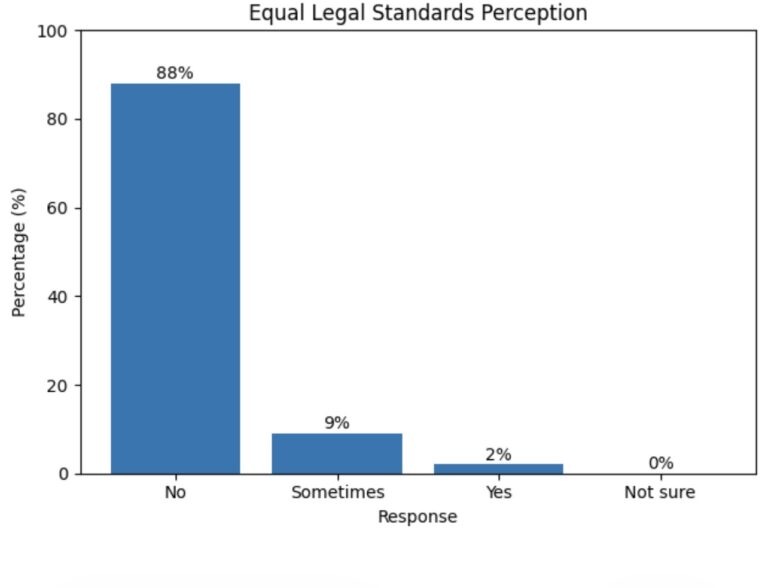
A recent Lesotho Tribune Sentiment Tracker poll has revealed a stark public perception: a large majority of respondents do not believe powerful individuals in Lesotho are held to the same legal standards as ordinary citizens.

The question posed was direct:

“Do you believe powerful individuals in Lesotho are held to the same legal standards as ordinary citizens?”

The response was equally direct.

Out of 43 votes recorded on X, 88 percent answered No. Only 2 percent said Yes, while 9 percent chose Sometimes. None selected Not sure.

Even allowing for the limited sample size, the imbalance is striking.

A Perception Gap

Public confidence in equal treatment before the law is foundational to constitutional democracy. When nearly nine out of ten respondents say they believe the law does not apply equally, it signals more than dissatisfaction. It signals distrust.

In a small jurisdiction such as Lesotho, where political leadership, business elites and public institutions often operate within overlapping social and professional circles, perception matters deeply. Citizens watch how investigations unfold. They observe who is charged swiftly and who is not. They notice which cases stall and which move quickly through the courts.

Whether that perception reflects legal reality is a matter for institutional data and case analysis. But perception alone carries weight. Trust in institutions does not collapse overnight. It erodes gradually, through accumulated impressions.

The Context Behind the Sentiment

The poll result does not exist in isolation. Over the past year, Lesotho has seen a series of high-profile investigations, corruption allegations, governance disputes and court challenges involving senior officials, politically connected individuals and institutional heads.

Some cases have resulted in arrests. Others have been delayed. A few have been publicly debated before reaching courtrooms. Each episode feeds into a broader narrative about consistency in enforcement.

For many citizens, the question is not simply whether prosecutions occur. It is whether they occur evenly, transparently and without fear or favour.

The 88 percent “No” response suggests that, among this group of engaged respondents, confidence in that evenness is low.

Rule of Law and Economic Implications

This is not merely a legal issue. It is an economic one.

Investor confidence is closely tied to predictability and equal enforcement. If markets perceive selective application of the law, capital becomes cautious. Contracts become uncertain. Risk premiums rise.

The rule of law is not abstract. It underpins credit systems, procurement integrity, public finance discipline and anti-corruption frameworks.

A country’s governance credibility is one of its most valuable intangible assets.

—————————————————————————

Important Note on Methodology

The Sentiment Tracker poll was conducted on X and gathered 43 votes with 203 views. It is not a scientific national survey and does not claim statistical representativeness.

It does, however, provide a snapshot of engaged public opinion within Lesotho Tribune’s audience base.

Sentiment is data. It may not be definitive, but it is directional.

The real threat to Lesotho is not China – it is our own complacency

0

By Silence Charumbira 

Recent commentary has attempted to position China as Lesotho’s “biggest economic threat,” arguing that Beijing’s trade model structurally disadvantages small economies like ours. This narrative, while seductive in its simplicity, fundamentally misdiagnoses our challenges and dangerously misdirects our policy focus. “A more nuanced perspective is this: the key challenge for Lesotho’s economic development lies not in external factors like China or the West, but in our ability to fully embrace and act on the responsibility for shaping our own economic future.

Before we rush to blame external actors for our predicament, we must reckon with a basic principle of international relations: every country’s primary obligation is to its own citizens. China has no duty to industrialize Lesotho any more than the United States has a duty to build factories in rural Mississippi. Nations pursue their national interests. The question is not whether China protects its domestic market – of course it does – but whether we are competent enough to leverage the opportunities that do exist for our own benefit.

The sovereignty of self-interest

While economic statecraft denotes that every government must protect and nurture its local industry, China has overly opened up. In recent years, the Chinese market has increasingly become open to cooperating countries because opening up is basic national policy. While protectionism is the new norm for most countries especially in the West, as recently as November, China announced that it “had extended its unilateral visa-exemption arrangements for 48 countries”. And in December, China’s Hainan province “launched island-wide special customs operations, allowing freer entry of overseas goods, expanding zero-tariff coverage, and introducing more business-friendly measures”. “This initiative will significantly ease the entry and exit of people, goods, capital and data across Hainan, enhancing its position as a hub of global exchange,” said the People’s Daily in December.

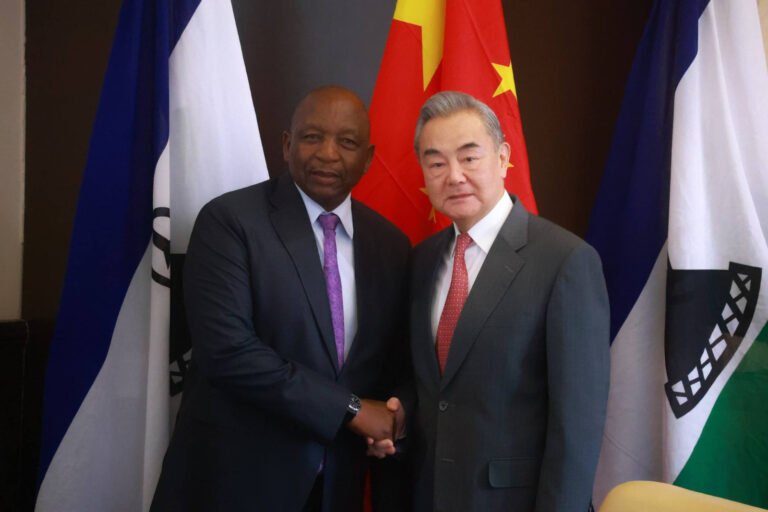
China has numerous policies and programs explicitly designed to benefit African countries: the Forum on China-Africa Cooperation (FOCAC), Belt and Road Initiative financing, concessional loans, technical assistance programs, and scholarship opportunities. China’s Foreign Minister, Wang Yi, told Prime Minister Sam Matekane last month during his historic visit to Lesotho that the Asian giant would “accelerate the implementation of its zero-tariff policy for Africa in Lesotho, expand bilateral economic, trade, investment, and industrial cooperation, facilitate greater access for Lesotho’s specialty products to the Chinese market, and continuously boost Lesotho’s national development”. These are not secrets. They are published, documented, and available. The onus is squarely on African governments to study these programs, understand their mechanics, and deploy them strategically for national development.

When Zimbabwe exports groundnuts to China, when South Africa exports minerals, when Ethiopia leverages Chinese financing for industrial parks, they are not being granted charity – they are executing policy. The question we must ask ourselves is stark: why have we failed to do the same? Can we attribute our challenges in capitalizing on available opportunities to China – or is this an area where we face ongoing work to build sufficient institutional capacity, consolidate political will, and refine strategic vision?

The infrastructure fallacy cuts both ways

The argument that “infrastructure without industrial development is a dead end” sounds compelling until you examine its inverse: industry without infrastructure is utterly impossible. No investor, Chinese or Western, will establish manufacturing operations in countries where roads are impassable, electricity is unreliable, and ports are nonexistent. Infrastructure is the prerequisite, not the afterthought.

China has built roads, airports, railways, and power stations across Africa. These are tangible assets that will outlast any political administration. They create the physical foundation upon which industries can be built. The reality that we have yet to fully leverage this valuable infrastructure points to areas where our policy alignment and implementation can be strengthened – not to any flaw in the infrastructure itself. When roads carry imported goods inland instead of local exports outward, the problem is not the road – it is what we have failed to produce.

The reality is this: creating industries is Lesotho’s job, not China’s. International partners can provide capital, technology transfer, and market access frameworks, but they cannot manufacture political will or bureaucratic competence. If we are still working to attract more investment despite improved infrastructure, it is worth exploring how we can further enhance our business environment, streamline our regulatory framework, and strengthen our governance structures. Blaming infrastructure donors for our inability to industrialize is intellectual evasion.

The West is no savior

Calling for renewed alignment with Western markets is proof that we are suffering from selective amnesia. Just months ago, Donald Trump – a symbol of Western policy priorities – dismissed Lesotho as “a country that nobody has heard of” before promptly imposing crushing tariffs. This is the partner we are told represents our economic salvation?

Let us not forget that colonialism, the most extractive economic system in modern history, was a Western invention. The same powers that now lecture Africa about fair trade are the ones that structured global commerce to perpetuate dependency. The idea that Western markets are somehow inherently more open or benevolent than Chinese markets is historically illiterate and empirically questionable.

What, exactly, are the attractive policies the West is offering small countries like Lesotho today? The African Growth and Opportunity Act (AGOA), often cited as a model program, exposes the hollowness of this narrative. AGOA provides preferential market access to the United States for qualifying African exports. On paper, it is generous. In practice, Lesotho has chronically underutilized it. That aside, it is clearly a tool to control and manipulate beneficiary countries. There is no reliability because the United States reserves the right to cancel anytime as a way to either whip nation states into line or to impose its own morals on them.

Why? Because accessing AGOA requires meeting rules of origin, compliance standards, quality controls, and supply chain documentation that many of our producers cannot satisfy. The problem is not the program – it is our capacity to use it. This is the pattern: opportunity exists, we fail to seize it, then we blame the opportunity provider. Whether the provider is China or the West is irrelevant if we lack the state capacity to execute.

Everyone serious imports less 

The complaint that China is “increasingly importing less outside raw materials” betrays a fundamental misunderstanding of economic development. As countries develop, they naturally reduce reliance on imports by building domestic production capacity. This is not a Chinese conspiracy – it is the entire point of industrialization.

The United States imports less than it did decades ago relative to GDP. Europe does the same. Should we blame them for our failure to diversify and revitalize our production base? China is now growing some of the best crops globally, reducing its agricultural import dependency. This is success, not sabotage. If Zimbabwe and South Africa see declining groundnut exports to China, the question is whether they can compete on quality, price, and reliability – not whether China owes them perpetual demand.

Can we reasonably attribute Lesotho’s continued import of cabbages – despite agriculture being a stated economic pillar – to China? Should Beijing be accountable for gaps in our processing capacity, cold storage, or agricultural extension services? These are areas where targeted policy adjustments and capacity-building can deliver meaningful progress, rather than issues to be resolved through finger-pointing.

The South African example

Before we point accusatory fingers at China, let us examine our immediate neighbor. What does Lesotho export to South Africa beyond labor and water? More poignantly, what could South Africa possibly import from us? The answer is devastating: almost nothing of value-added significance.

South Africa has advanced manufacturing, sophisticated supply chains, and export capacity that dwarfs ours. If we cannot competitively produce goods for a market just across the Mohokare river, what magical policy intervention would make us competitive in Shanghai? The problem is not geographic distance or trade barriers – it is productive capacity or lack thereof.

This exposes the central fallacy in the anti-China argument: even if China opened its markets completely, Lesotho would still struggle to export because we do not produce enough goods of sufficient quality at competitive prices. Trade access means nothing without tradeable products. We can blame China for protectionism, but protectionism only matters if you have something to sell.

The devil is in the details

The fundamental issue might not even be whether China is a perfect partner but whether we are serious about development. China offers financing, infrastructure, technical cooperation, and market frameworks. So does the West, though increasingly with conditionalities and moral lectures. The question is not which patron to choose but whether we have the governance, vision, and execution capacity to use any of them effectively.

Why not explore ways to refine policies to make doing business in Lesotho as seamless as in our neighboring countries? How can we further develop and implement a clear, actionable industrial strategy? In what ways can we increase investment in skills development, research institutions, and technology adoption? How might we encourage a greater focus on productivity alongside governance priorities? As China implements its effective five-year plans, could we strengthen our own economic blueprint and deepen our commitment to its execution?These are questions that cannot be answered by analyzing Chinese trade surpluses or Western tariff schedules. They require looking inward.

Intellectual honesty is crucial

The narrative that China is our biggest economic threat is intellectually lazy and politically convenient. It risks allowing policymakers to look outward for explanations rather than inward for solutions, shifting focus from Maseru to Beijing. It is certainly simpler to highlight challenges with foreign trade policies than to address areas where domestic capacity, governance, or strategic focus can be enhanced.

China is a competitor, yes, but so is every other economy. Competition is the nature of international commerce. The question is whether we are equipped to compete. Currently, we are still building that competitive capacity – and that is a journey we can embrace proactively..

We must stop politicking without values, principles, or ideals. We must cease the endless blame-shifting that characterizes our public discourse. Development is not something done to you by benevolent foreigners – it is something you build through hard policy choices, institutional reform, and long-term strategic thinking.

China offers opportunities. So does the West. The failure to capitalize on either is not evidence of their inadequacy but of ours. Until we accept this fundamental truth, no amount of analysis about trade surpluses, market access, or dumping will change our trajectory. The threat to Lesotho is not in Beijing or Washington – it is in our own mirror.

We must change. The world will not wait for us to figure this out.

Silence Charumbira is an international journalist based in Maseru, Lesotho. He has worked with multiple reputable organizations like The Guardian, China Daily, Guangming, Xinhua, CNN and the Associated Press (AP) among others. He writes on diverse topics including China-Africa relations. The views expressed in this article are his own and do not necessarily represent those of the publication.


China-Lesotho: A Strategic Partnership for Practical Outcomes, Tangible Benefits and Shared Future

0

H.E. Amb. YANG Xiaokun

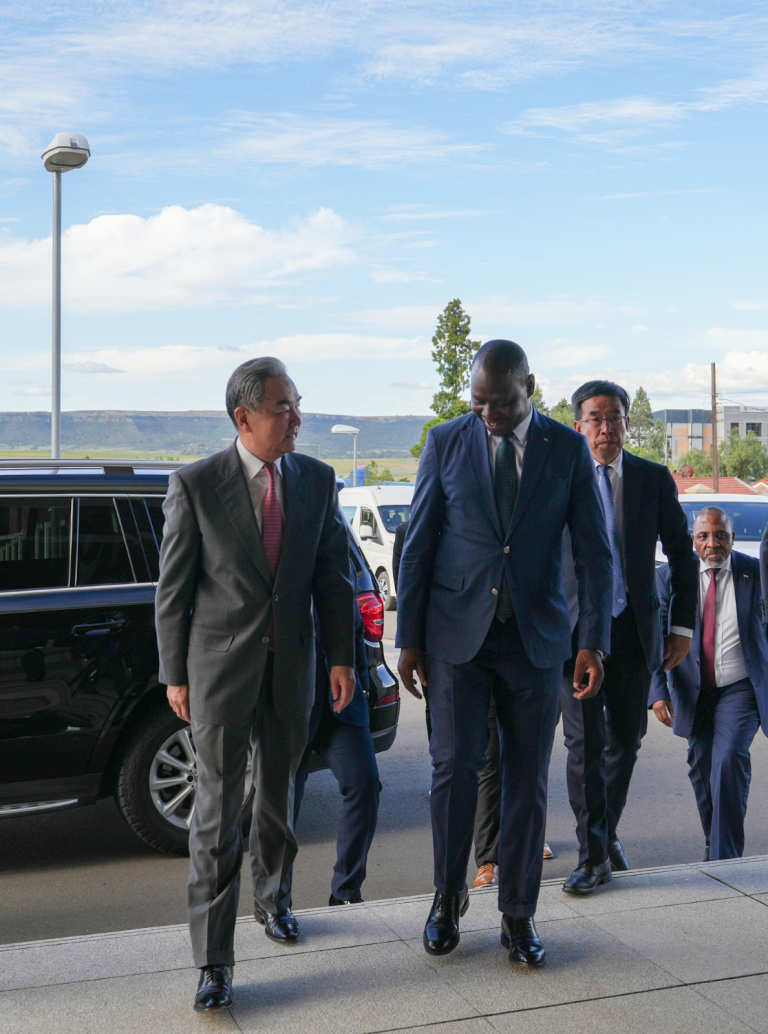
The visit of H.E. Wang Yi, Member of the Political Bureau of the CPC Central Committee and Minister of Foreign Affairs of China, to Lesotho marked an important milestone in the development of China–Lesotho relations. It reaffirmed the shared commitment of both countries to advancing a strategic partnership focused on practical cooperation, long-term development, and tangible benefits for the Basotho people.

Over the years, guided by mutual respect and equality, China has worked closely with the Government and people of Lesotho to support national development priorities, accelerate modernization, and improve livelihoods. This cooperation is not abstract in nature; it is reflected in projects, policies, and people-to-people exchanges that have produced visible and lasting results.

Infrastructure is a cornerstone of economic and social progress. In Lesotho, China’s foreign aid projects have contributed to strengthening public services, improving connectivity, and supporting sustainable growth. In Maseru, facilities such as the Parliament Building, the State House, the National Library, and the Mathabiseng Convention Centre play an important role in governance and public life. These projects serve daily needs while standing as long-term symbolic assets. Specialized facilities, including the Fingerprint Examination Laboratory, have enhanced public safety. Beyond the capital, the Mpiti–Sehlaba-Thebe Road has improved connectivity between rural and urban areas, facilitating trade,tourism, and mobility. Phase I of the Mafeteng Solar Power Plant has a total installed capacity of 30 megawatts, contributing to energy security and the transition to renewables. Chinese enterprises also participate in major national initiatives such as the Polihali Transfer Tunnel and Dam, supporting water resource management and future economic development. Together, these projects, which were constructed or granted by China during the past decades, form part of a broader effort to create an enabling environment for investment, industrial activity, and inclusive growth.

China–Lesotho cooperation continues to deepen in trade, investment, and industrial development. Bilateral trade has grown steadily, while China has implemented zero-tariff treatment on 100 per cent of tariff lines for all 53 African countries with which it has diplomatic relations, including Lesotho. This policy reflects China’s commitment to open markets and provides concrete opportunities for Lesotho exports. Recognizing wool and mohair as signature products of Lesotho, the two sides have reached consensus on signing a protocol for greasy wool to be imported from Lesotho to China, facilitating market access and encouraging value addition through local processing. By doing so, Lesotho’s position in the global value chain will be significantly enhanced. In the mineral trade, global market trends are shaped by technological progress and evolving consumer demand. In the diamond sector, natural diamonds and synthetic diamonds largely serve different market segments. China remains an important consumer market for natural diamonds, while the growth of synthetic diamonds is driven primarily by industrial and technological applications. For diamond-producing countries, including Lesotho, strengthening beneficiation, diversification, and resilience remains essential for long-term development amid global market changes.

China also actively encourages enterprises to invest in downstream industries in Lesotho, supporting industrial diversification and job creation. Chinese enterprises have conducted on-site inspections and due diligence for potential investments in Lesotho’s wool processing sector. Chinese enterprises are also investing in poultry farming; in October 2025, the LNDC delegation visited Qingdao and signed contracts with Chinese poultry companies worth approximately US$100 million, supporting local production, food security, and industrial upgrading.

China provides technical support and equipment to enhance Lesotho’s capacity for independent and sustainable development. In 2025, China donated 148 pieces of agricultural machinery and handed over the Maseru Agricultural Storage and Logistics Infrastructure to support agricultural modernization and productivity. Since 2006, China has implemented four phases of Juncao (mushroom) technology cooperation, providing grants totaling RMB 21.33 million. Chinese experts have brought advanced cultivation techniques to Lesotho, and the fifth phase of the project is set to launch. As a Chinese proverb goes, “Giving a man a fish is not as good as teaching him how to fish.” Chinese enterprises operating in Lesotho have created employment opportunities and contributed technology, skills, and management experience that support local capacity-building. According to 2024 statistics, three major Chinese-funded enterprises engaged in large-scale national projects have employed and trained over 4,000 local workers; approximately 2,000 Chinese nationals reside in Lesotho, operating businesses and factories that have employed and trained more than 17,000 Basotho workers. Through such initiatives, China helps Lesotho strengthen self-reliant, sustainable development rather than relying solely on external aid.

China is equally committed to health and well-being. The Maseru District Hospital, built with over RMB 430 million, equipped with modern facilities including CT scanners, digital X-ray systems, an ICU, and a pathology lab, provides modern medical services close to home. Since 1997, 201 Chinese medical professionals have been deployed to Lesotho, who treated over 300,000 patients, performed more than 8,000 surgeries, trained over 800 local staff, and conducted outreach services in over 200 villages. To combat AIDs, last year, China launched a joint project with UNAIDS, “Eliminating the Triple Threat in Girls and Young Women in Lesotho,” investing over US$2 million and expected to benefit more than 20,000 young women. By combining capacity-building with emergency support, China and Lesotho have tackled public health challenges side by side.

People-to-people exchanges have further enriched our relationship. By the end of 2025, 3,970 Basotho had attended short-term training in China, and another 820 have participated in online training during the pandemic. Hundreds of young Basotho have received full scholarships to study at prestigious universities such as Peking University and the University of International Business and Economics. These programs cover public finance, trade facilitation, clean energy, and other fields, with a focus on youth and women. For example, in 2025, women comprised 63.2% of trainees, and participants under 35 accounted for 18.9%, promoting inclusive development. In Lesotho, the Confucius Classroom at Machabeng College delivers 3,096 lessons annually, while the Confucius Institute at the National University of Lesotho averages 3,000 teaching attendances per week. In 2026, the China–Africa Year of People-to-People Exchanges will host around 600 activities across youth, women, culture, education, and civil society, further strengthening mutual understanding and friendship.

More importantly, the visit of H.E. Wang Yi injected fresh momentum into the ongoing mutually beneficial cooperation between China and Lesotho. During the visit, the two sides achieved a series of significant outcomes. First, China announced a new grant of RMB 100 million (approximately 250 million Maloti), marking the second such grant since the FOCAC Beijing Summit. Second, China will provide RMB 12 million (30 million Maloti) in emergency food assistance, continuing its tradition of donating food to Lesotho over the years. In addition, substantial progress has been made on advancing the second phase of the Mafeteng Solar Power Plant Project with a total installed capacity of 50 megawatts. The two countries also agreed to fully leverage the policy benefits of zero-tariff treatment to further open the market to Lesotho, aiming to maximize tangible benefits for both peoples.

The facts and figures demonstrate that the China–Lesotho strategic partnership is not an empty slogan but a genuine friendship built on long-standing mutual trust, shared development, and win-win cooperation. China–Lesotho cooperation is both tangible and reliable. In the face of global challenges, China firmly supports Lesotho in safeguarding its sovereignty, security, and development interests. While some people called Lesotho as a country that nobody has ever heard of, H.E. Wang Yi’s came to Lesotho, sending a clear message: Lesotho matters, and the Basotho people matter. While some countries impose high tariffs or manipulate aid to influence Lesotho’s choices,China adheres to the principle of sincerity, real results, amity, and good faith, respects the sovereignty of Lesotho, and supports Lesotho in pursuing development paths suited to its own national conditions. 

Looking ahead, China will take this visit as a new starting point, translating leaders’ consensus into concrete action. We will continue to deepen cooperation across sectors, keep our doors wide open to Lesotho, and through pragmatic efforts, bring more tangible benefits to both peoples, jointly ushering in a new chapter in the China–Lesotho strategic partnership.

Independent business & current affairs journalism · Lesotho Subscribe — M85/month
| Independent business & current affairs journalism · Lesotho