


Mohahlaula Airlines
Wednesday, July 22, 2026
Home Blog Page 29

Lesotho has stopped pretending its budget can save the economy

0

There was a time when Lesotho’s national budget pretended to be something it was not.

It pretended to be an engine of prosperity. A guarantor of jobs. A promise that government, somehow, would carry the nation forward.

That illusion has now been quietly abandoned.

The newly tabled 2026/27 budget does not say so bluntly. Budgets rarely do. But read carefully, and the shift is unmistakable. The language has changed. The ambition has changed. Most importantly, the honesty has changed.

Government is no longer pretending it can employ its way out of unemployment.

Instead, it is admitting that Lesotho’s future lies elsewhere.

For most of the past decade, the budget was an instrument of survival.

The 2022/23 fiscal plan was delivered in the long shadow of COVID-19, at a time when the economy had slowed, deficits widened, and uncertainty dominated policy thinking. Fiscal consolidation was the order of the day. Government borrowing filled the gap between ambition and reality.  

It was a defensive budget.

Its purpose was not transformation.

Its purpose was endurance.

In the years that followed, optimism briefly returned.

Construction activity linked to the Lesotho Highlands Water Project lifted growth. Revenues stabilised. Government spoke of recovery and inclusive expansion.

But the recovery was fragile.

By 2025, the illusion was breaking again.

Growth projections were revised downward. External shocks returned. Textile factories cut jobs. Mines scaled back operations. The vulnerability of Lesotho’s economic model was exposed once more.

These were not policy failures alone.

They were structural realities.

The truth is that Lesotho’s economy has never been fully in its own hands.

It depends on customs revenues collected elsewhere.

It depends on water sold elsewhere.

It depends on trade preferences negotiated elsewhere.

It depends on demand determined elsewhere.

And when those external forces weaken, Lesotho weakens with them.

This dependence is not new.

But the 2026/27 budget is the first in recent memory to confront it directly.

It states clearly that government must create conditions for growth, not attempt to manufacture growth itself.  

This is a profound shift.

It is also an overdue one.

For decades, government has been the country’s largest employer.

This created stability.

It also created dependence.

A generation of Basotho grew up believing that economic security would come from public employment.

But public employment cannot expand indefinitely.

The budget now acknowledges what economic reality has long dictated.

Jobs must come from productive enterprise.

Not from the state.

This is not a message of pessimism.

It is a message of transition.

Lesotho stands at an inflection point.

The old model, driven by government spending and external transfers, has reached its limits.

The new model, driven by private investment and productive expansion, has yet to fully emerge.

Between those two realities lies uncertainty.

And opportunity.

The challenge now is not to write better budgets.

It is to build a different economy.

Budgets can allocate resources.

They cannot create dynamism.

They can signal direction.

They cannot generate momentum.

That must come from elsewhere.

From investors willing to take risks.

From entrepreneurs willing to build.

From institutions capable of enabling growth rather than constraining it.

The most striking feature of this year’s budget is not what it promises.

It is what it stops promising.

It no longer suggests that transformation will come easily.

It no longer suggests that government alone will deliver prosperity.

It no longer suggests that structural constraints can be wished away.

This is not defeatism.

It is realism.

And realism is where serious economic transformation begins.

Lesotho has stopped pretending.

Now it must start building.

Related article https://lesothotribune.co.ls/the-minister-is-shocked-the-country-is-shocked-that-she-is-shocked/
Sadness after the gunfire

0

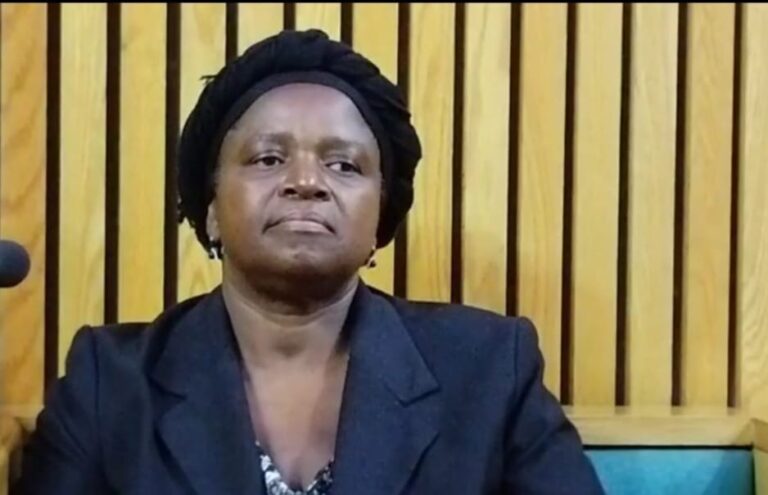
MASERU-Emotions ran high in the High Court this weekas Captain Haleeo Makara described the dull mood that followed the death of former army commander, Brigadier Maaparankoe Mahao. Speaking as both a defence witness and one of the accused, Captain Makara told the court that members of the arrest team “bowed their heads with sadness” when they were informed that Mahao had died at Makoanyane Military Hospital.

The testimony forms part of the defence case in the long-running trial in which nine members of the Lesotho Defence Force (LDF), including retired army commander Tlali Kamoli, stand accused of murdering Mahao. The incident dates back to June 25, 2015, when Mahao was shot at Ha Lekete in Mokema during what the defence describes as a lawful operation to suppress mutiny within the army. The prosecution, however, maintains that the killing was planned and deliberate.

Captain Makara confirmed in court that he was the soldier who fired the shot that struck Mahao. He told the court that the decision to shoot was made in a split second, under intense pressure.

According to his account, the arrest team had approached Mahao’s vehicle as part of an operation aimed at apprehending suspected mutineers. The defence maintains that Mahao was among those considered part of the alleged mutiny plot within the LDF. On the day in question, the team intercepted his vehicle and attempted to arrest him.

Makara testified that Mahao was holding a firearm at the time, posing a danger to Captain Hashatsi, who led the arresting team. Hashatsi was reportedly instructing Mahao to step out of the vehicle when the situation escalated.

“I had to protect Captain Hashatsi,” Makara told the court. “There was no other way I could be able to help him without shooting at the window of the truck. It was impossible for me to go open the window, then come back and shoot.”

One of the central issues in the case has been the manner in which Mahao was shot. Under questioning, Makara explained why he aimed at the right side of Mahao’s body rather than attempting to disarm him by targeting his hand.

He told the court that there was simply no time to aim at a smaller part of the body. “It was going to take me long to aim at the hand because it is one of the small parts of the body,” he said. In the heat of the moment, he believed shooting at the side of the body was the only viable option to neutralise the perceived threat.

Makara also acknowledged that the vehicle in which Mahao was travelling was damaged during the shooting. He described the incident as chaotic and fast-moving, leaving little room for calculated action.

The defence argues that the damage to the vehicle and the fatal shooting were consequences of a lawful operation that went wrong, not evidence of a planned killing.

After Mahao was shot, he was transported to Makoanyane Military Hospital. Makara told the court that when members of the team were informed that Mahao had died, the mood shifted dramatically.

“Our heads were bowed with sadness,” he said quietly.

The statement appeared to underline the defence’s argument that there was no intention to kill Mahao. According to the accused, the outcome was tragic but unintended.

However, the prosecution disputes this version of events. State lawyers argue that the operation was not merely an arrest gone wrong, but a calculated act aimed at eliminating Mahao.

Captain Makara is not the first among the accused to take the stand in his own defence. Earlier in the proceedings, Captain Litekanyo Nyakane, the first accused in the matter, also admitted participating in the operation intended to arrest Mahao. Nyakane told the court that while the mission was meant to apprehend Mahao, it ended in his shooting and death.

The nine accused soldiers face multiple charges. These include murder, attempted murder, theft, and unlawful damage to property. The attempted murder charges relate to others who were allegedly present during the shooting, while the property-related charges stem from damage caused during the operation.

The defence continues to insist that the team acted within the scope of their duties, responding to what they perceived as an immediate threat. The prosecution maintains that the evidence will show otherwise.

The killing of Maaparankoe Mahao on June 25, 2015, remains one of the most controversial and painful chapters in Lesotho’s recent history. At the time of his death, Mahao was widely regarded as a respected senior military figure.

The incident intensified political and security tensions in the country and drew both regional and international attention. Years later, the matter continues to unfold in court, with detailed testimony painting differing pictures of what happened that winter day in Mokema.

For the families involved, and for the nation at large, the proceedings are more than just a legal exercise. They represent a search for clarity and accountability over events that had far-reaching consequences.

Throughout the trial, two sharply contrasting narratives have emerged.

The defence portrays the shooting as a tragic but lawful response during a volatile arrest operation. According to this account, Mahao’s possession of a firearm created an immediate risk to the arresting team, justifying the use of force.

The prosecution, on the other hand, contends that the operation was a cover for a premeditated killing. They argue that the evidence will demonstrate intention and coordination among the accused.

As testimony continues, the court is tasked with examining the credibility of witnesses, the consistency of their accounts, and the forensic and documentary evidence presented.

The matter is being heard before Justice Charles Hungwe, who has presided over the trial as it moves through complex and often emotional testimony.

With several defence witnesses already heard and more expected, the case remains far from conclusion. Each new account adds another layer to an already intricate legal battle. The case is said to continue on 08th day of June 2026.

UCI Grant Boosts Lesotho’s Long-Term Cycling Strategy 

0

The Federation of Cycling Lesotho (FCL) has officially announced that it’s application for the 2026 UCI Solidarity Grant has been endorsed by the Union Cycliste Internationale (UCI), marking a significant boost for our country’s cycling ambitions.

The funding represents a calculated investment in the future of the sport of cycling in Lesotho, targeting structural growth rather than short-term gains. Central to the programme is the introduction and expansion of cycling initiatives within schools, combined with a comprehensive Talent Identification (TID) system. The objective is to detect talented riders at an early stage and channel them into an organised national development pipeline, ensuring that promising athletes are nurtured through clearly defined progression routes.

Beyond grassroots discovery, the grant also reinforces the federation’s athlete performance model. High-potential cyclists will benefit from systematic coaching, performance tracking, sports science support and carefully planned exposure to international competitions. This layered approach is designed to move athletes from foundational training to elite readiness under a monitored and data-driven framework.

The initiative also aligns closely with Olympic preparation structures, particularly through collaboration with the Lesotho National Olympic Committee (LNOC) School of Excellence. By aligning development pathways with Olympic standards, FCL aims to establish a sustainable route that transitions young prospects into future Olympic contenders.

The newly secured grant also works in tandem with the recent delivery of 594 bicycles in January 2026 under the Working Bikes/Bikes for Lesotho programme. With equipment resources now increased, the UCI funding ensures that infrastructure, technical guidance, and athlete development systems operate cohesively rather than in isolation. Access to quality bicycles at grassroots level removes one of the biggest barriers to participation, particularly in rural communities where talent often goes unnoticed due to limited resources.

The broader benefits of this integrated model are both sporting and socio-economic. At a development level, structured school programmes promote physical activity, discipline and life skills among young learners. At a performance level, a clear athlete pathway reduces stagnation by providing measurable benchmarks, competition exposure and long-term athlete management. Over time, this increases the likelihood of Lesotho consistently qualifying riders for continental championships, World Championship events and potentially the Olympic Games.

For already established riders such as Tumelo Makae, the strengthened system offers a more stable high-performance environment. Instead of relying primarily on individual effort, sponsorships and sporadic opportunities, elite cyclists will now operate within a framework that supports periodised training, international race calendars and professional progression. This will surely raise the overall standard of domestic competition, as younger athletes are inspired by more visible role models competing at higher levels.

The FCL is laying the foundation for a sustainable cycling ecosystem rather than isolated projects. If effectively implemented, the 2026 UCI Solidarity Grant could mark a turning point, shifting the country’s cycling landscape from potential-driven to performance-oriented.

Banks and Farmers Face Challenges in SADP II Project Implementation

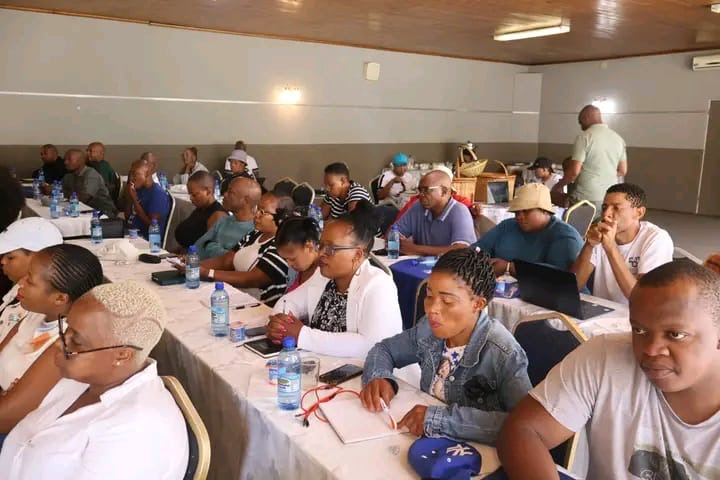
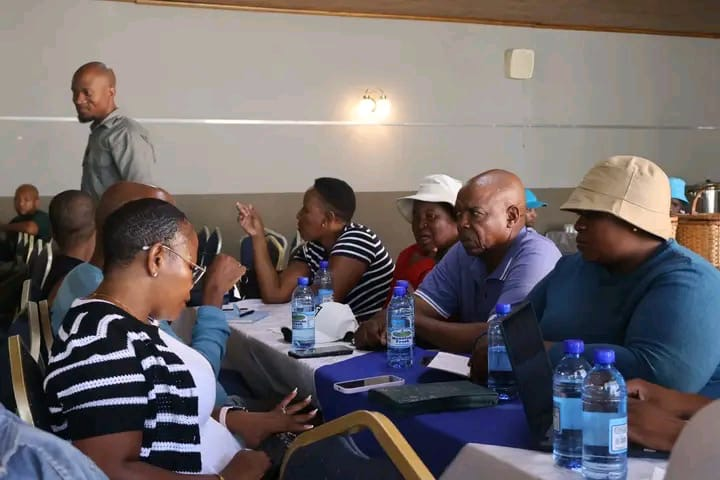
MOHALESHOEK- A recent workshop held in Mohaleshoek under the Smallholder Agriculture Development Project 2 (SADP II) highlighted several challenges faced by both farmers and banks involved in the project. The workshop brought together representatives from three local banks, as well as beneficiaries from different categories, to identify and address issues hindering project implementation.

According to the feedback presented, beneficiaries from Rounds 1 and 2, who worked with one Bank, complained about high bank charges, with each transaction costing M300.00. They also cited instances where suppliers were not properly verified, leading to delays and complications. On the other hand, the bank pointed out that incorrect bank account numbers were submitted due to negligence, and there were delays in obtaining feedback from SADP II.

Round 2 beneficiaries also working with the same bank highlighted the manual processing of transfer letters as a major challenge, leading to prolonged approval timelines. Inaccurately completed transfer letters and submission of blurry documents, such as beneficiary Ids, further complicated the process.

The second bank, which worked with Round 3 beneficiaries, cited insufficient training provided to farmers, non-compliance with payment obligations, and delays in disbursement of funds by SADP II as some of the challenges they faced. The bank also noted that some farmers showed limited interest and participation during training sessions, and incorrectly recorded email addresses contributed to communication delays.

The third and last bank, which handled the Youth Grants, pointed out the absence of a local branch in Qacha’s Nek as a challenge, requiring farmers to travel long distances to access banking services. Delays in approving requisitions to utilize remaining account balances and dormant bank accounts also hindered progress.

The workshop identified several areas for improvement, including the need for better training and capacity building for farmers, streamlined processes to reduce delays, and improved communication between SADP II, banks, and beneficiaries. Recommendations included reducing bank charges, implementing electronic processing systems, and increasing access to mobile banking services.

The SADP II project aims to support smallholder farmers in Lesotho, and addressing these challenges is crucial to ensuring the success of the project. By working together, banks, farmers, and SADP II can overcome these obstacles and improve the lives of rural communities.

SADP II Hosts Workshop To Track Progress And Address Hurdles In The Project

0

MOHALESHOEK- The Smallholder Agriculture Development Project 2 (SADP II) recently convened a two-day workshop in Mohaleshoek, bringing together farmers and stakeholders to assess progress and identify areas for improvement in the implementation of agricultural projects.

The workshop aimed to gather insights from farmers and representatives of various banks on the challenges encountered during project implementation, including procurement processes and material acquisition. According to the matching grants specialist Relebohile Khatibe, the objective of the workshop was to track progress from the farmers’ perspective, as well as that of the banks they work with, in order to identify lessons learned and areas for improvement.

Representatives from different categories of beneficiaries, including round 1, 2, and 3, as well as youth participants, attended the workshop. The categories are divided regionally, with round 1 focusing on the mountain districts of Mokhotlong, Qacha’s Nek, and Thaba Tseka, while rounds 2 and 3 cover all 10 districts, and the youth round targeting young farmers.

In his welcome remarks, the DAO representative emphasized the importance of reflection and learning from past experiences. He noted that previous projects had suffered from a lack of ownership, resulting in only about 5% of projects remaining operational. To address this, SADP II has introduced a matching grants system, which provides funding in monetary form to promote project ownership among beneficiaries. The representative expressed optimism that this approach would yield better results, citing positive progress to date.

The workshop provided a platform for stakeholders to share experiences and best practices, with the goal of accelerating project implementation and improving overall impact. By the end of the workshop, participants were expected to have gained a better understanding of their role in driving progress and addressing challenges in smallholder agriculture development.

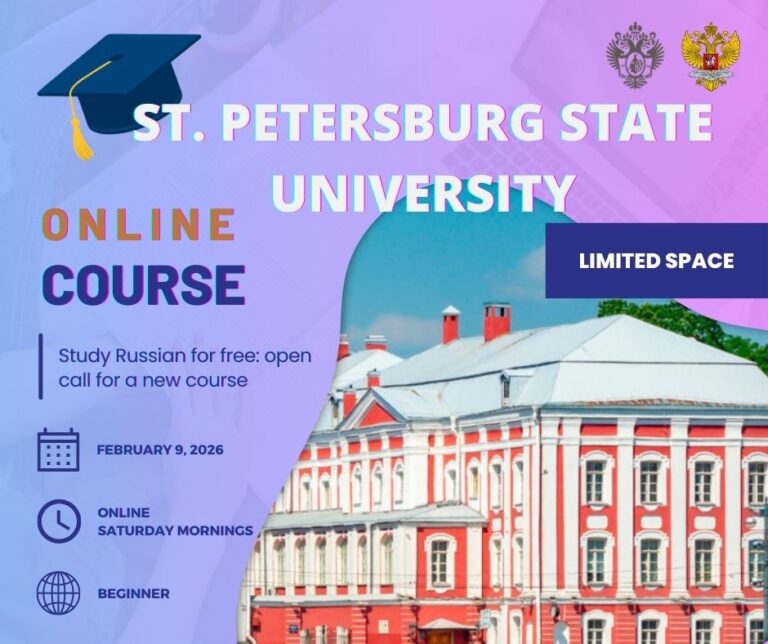
Free Online Russian Language Courses by SPbU 

St. Petersburg State University is one of the oldest universities in Russia, with more than 20 faculties, where tens of thousands of students study. 

SPbU offers several options for free online Russian language courses aimed at different audiences and training levels. 

And we are pleased to announce that new courses are starting on February 28th!

📚 Who is it for? 

The course is designed for absolute beginners — no prior knowledge required.

🗓 Course format: 

• Online (via Zoom) Once a week • Saturday mornings

Everyone is welcome! Feel free to register and invite your friends or anyone who might be interested.

👉 Registration link

✉️ If you are not a beginner but are interested in studying online, please contact directly: danya.a.gorbunova@gmail.com 

How the Lesotho Budget Process Works: Step-by-Step Guide from Preparation to Approval and Spending

How the Lesotho Budget Process Works: Step-by-Step Guide from Preparation to Approval and Spending

Every year, Basotho watch the Minister of Finance stand in Parliament and present what is commonly called “the Budget.” It is often treated as the final step. Headlines are written. Allocations are debated. Celebrations and criticisms follow.

But in reality, the Budget speech is only the middle of a much longer legal and administrative process.

The truth is this. Government cannot spend a single cent legally simply because the Minister announced it. There is a constitutional chain that must be completed first. Understanding this process is critical for citizens, businesses, contractors, and civil servants who depend on government spending.

This explainer walks through how Lesotho’s budget moves from preparation to actual release of money.

Step 1: Budget Preparation Begins Inside Government (August to January)

The process starts months before the public ever hears about it.

The Ministry of Finance issues what is called a Budget Call Circular to all government ministries, departments, and agencies. This circular instructs them to prepare their spending plans for the next financial year.

Each ministry submits:

• Operational expenses (salaries, fuel, utilities)

• Capital projects (roads, hospitals, schools)

• New policy proposals

At this stage, ministries often request far more money than government can afford.

The Ministry of Finance then reviews these requests against:

• Expected tax revenue

• SACU receipts

• Grants and loans

• Economic forecasts

This is where difficult decisions begin. Many proposed projects are reduced, delayed, or rejected entirely.

This internal stage is where the real budget is shaped.

Step 2: Cabinet Approval – Political Authorisation

Once the Ministry of Finance finalises the draft budget, it is presented to Cabinet.

Cabinet, chaired by the Prime Minister, reviews and approves the budget as government policy.

This is a critical step because it converts the budget from a technical proposal into an official government position.

After Cabinet approval, the Minister of Finance is authorised to present it to Parliament.

Step 3: Budget Speech in Parliament – Public Presentation (February)

This is the stage most citizens are familiar with.

The Minister of Finance presents the Budget Speech in the National Assembly.

The speech explains:

• Total government spending

• Tax measures

• Ministry allocations

• Economic outlook

However, this speech does not give government legal authority to spend money.

It is simply a proposal to Parliament.

Spending authority comes later.

Step 4: Parliamentary Scrutiny and Debate

After the speech, Parliament begins detailed scrutiny.

This happens through:

Portfolio Committees

Each ministry’s budget is examined by relevant parliamentary committees.

Committees can question:

• Why allocations increased or decreased

• Whether projects are realistic

• Whether funds were properly used previously

Parliamentary Debate

Members of Parliament debate the budget in the National Assembly.

They can:

• Support it

• Criticise it

• Recommend changes

However, in practice, governments with majority support usually pass their budgets.

Step 5: Passing the Appropriation Act – Legal Authority to Spend

This is the most important legal step.

Parliament passes a law called the Appropriation Act.

This Act:

• Legally authorises government to withdraw money

• Specifies exactly how much each ministry can spend

Without this Act, government spending would be illegal.

This law operationalises the budget.

Step 6: Royal Assent – Budget Becomes Law

After Parliament passes the Appropriation Bill, it is sent to the King for Royal Assent.

Once signed, it becomes official law.

Only after this step does the budget fully exist legally.

Step 7: Treasury Releases Funds – The Most Misunderstood Step

This is where reality often diverges from public expectations.

Even after the budget becomes law, ministries do not automatically receive all their money immediately.

Instead, funds are released gradually by the Treasury.

This happens through a system called:

Warrants and Cash Releases

Treasury releases money based on:

• Cash availability

• Revenue collections

• Government priorities

If government revenue is lower than expected, Treasury may delay releases.

This is why some projects announced in the Budget never happen.

They were approved legally but never funded in practice.

This distinction is crucial.

Budget approval does not guarantee spending.

Cash availability determines actual spending.

Step 8: Ministries Request Funds and Spend

Once Treasury releases funds, ministries can:

• Pay salaries

• Pay contractors

• Buy equipment

• Implement projects

Payments are made through the government financial management system.

Step 9: Oversight and Auditing

After money is spent, several institutions monitor how it was used.

These include:

• Auditor General

• Public Accounts Committee

• Ministry of Finance

Their role is to ensure funds were used legally and properly.

This is how corruption and misuse can be identified.

Step 10: The Budget Execution Reality – Why Some Projects Never Happen

This is perhaps the most important reality.

Many Basotho assume that when a project appears in the Budget, it will definitely happen.

This is not always true.

Projects can fail due to:

• Lack of cash

• Delays in procurement

• Weak implementation

• Political changes

This is called budget execution risk.

It is a major challenge in many developing economies.

Key Terms Every Mosotho Should Understand

Budget Speech

A policy announcement, not spending authority.

Appropriation Act

The law allowing government to spend.

Treasury Release

Actual release of money.

Budget Allocation

Planned spending amount.

Budget Execution

Actual spending.

These are not the same thing.

Why This Process Matters for Businesses and Citizens

Understanding this process helps explain why:

Contractors are sometimes paid late.

Projects are announced but delayed.

Government spending slows during financial stress.

The key bottleneck is often not Parliament approval.

It is cash availability.

The Bottom Line: The Budget Speech Is Not the End. It Is the Beginning.

The Budget becomes real only when money is released by Treasury.

The process can be summarised simply:

Preparation → Cabinet → Parliament → Law → Treasury Release → Spending → Audit

Each step matters.

Each step determines whether promises become reality.

For Basotho, the true test of the Budget is not what is announced in February.

Lesotho’s Cabinet: Full List of Ministers and the Team Steering the Country

0

MASERU — Lesotho’s Cabinet, chaired by Prime Minister Sam Matekane, is the central decision-making body responsible for running government and implementing national policy. Comprising senior ministers drawn from across government portfolios, the Cabinet determines how public funds are allocated, how services are delivered, and how the country responds to economic and social challenges.

The current Cabinet brings together ministries responsible for finance, health, education, agriculture, infrastructure, and national security, among others. Their collective decisions shape the daily lives of Basotho and define the country’s long-term direction.

Prime Minister and Deputy Prime Minister

At the helm is Prime Minister and Minister of Defence and National Security Sam Matekane, who leads government operations and oversees national security.

Supporting him is Deputy Prime Minister and Minister of Parliamentary Affairs Justice Nthomeng Majara, whose role includes coordinating government business in Parliament and supporting the legislative agenda.

Finance and Economic Ministries

The management of Lesotho’s economy rests primarily with Minister of Finance and Development Planning Dr Retšelisitsoe Matlanyane, who is responsible for the national budget, fiscal policy, and economic planning.

Other key economic portfolios include:

Minister of Trade, Industry and Small Business Development Mokhethi Shelile

Minister of Agriculture, Food Security and Nutrition Thabo Mofosi

Minister of Natural Resources and acting Minister of Energy Mohlomi Moleko

Minister of Tourism, Sports, Arts and Culture Motlatsi Maqelepo

These ministries play a central role in supporting business activity, agriculture, tourism, and resource management.

Infrastructure and Service Delivery

Infrastructure development and service delivery fall under several ministries, including:

Minister of Public Works and Transport Neo Matjato Moteane

Minister of Local Government, Chieftainship, Home Affairs and Police Lebona Lephema

These ministries oversee roads, energy supply, policing, and local governance structures.

Social and Human Development Ministries

Several ministries focus on education, health, and social welfare:

Minister of Education and Training Dr Ntoi Rapapa

Minister of Health Selibe Mochoboroane

Minister of Labour and Employment Tšeliso Mokhosi

Minister of Gender, Youth and Social Development Pitso Lesaoana

Their responsibilities include schools, healthcare services, employment regulation, and social programmes.

Governance, Justice and Administration

Government administration and legal affairs are handled by:

Minister of Law and Justice Richard Ramoeletsi

Minister of Public Service Mputi Mputi

Minister in the Prime Minister’s Office Limpho Tau

These ministries oversee legal systems, civil service operations, and executive coordination.

Environment, Technology and International Relations

Other important portfolios include:

Minister of Environment and Forestry Letsema Adontsi

Minister of Information, Communications, Science, Technology and Innovation Nthati Moorosi

Minister of Foreign Affairs and International Relations Lejone Mpotjoane

These ministries focus on environmental protection, technology development, and international diplomacy.

The Role of Cabinet in Lesotho’s Governance

Cabinet ministers are responsible for implementing government policy through their respective ministries. They oversee public programmes, manage government departments, and present legislation and policy proposals.

Their work affects key areas such as:

• Public spending

• Service delivery

• Economic policy

• Infrastructure development

• Education and healthcare

As Lesotho continues to address economic pressures and social needs, the performance of Cabinet and its ministries remains central to the country’s governance and development.

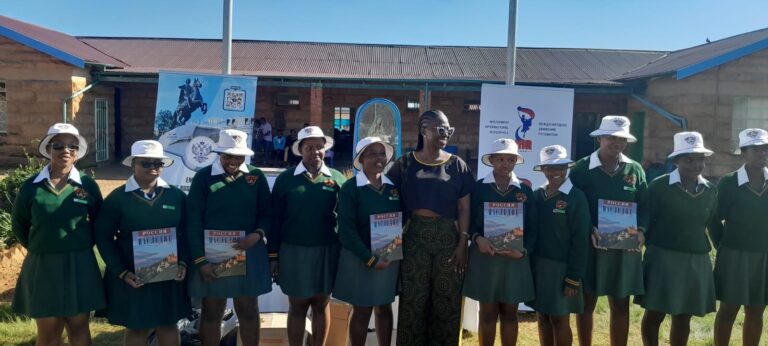
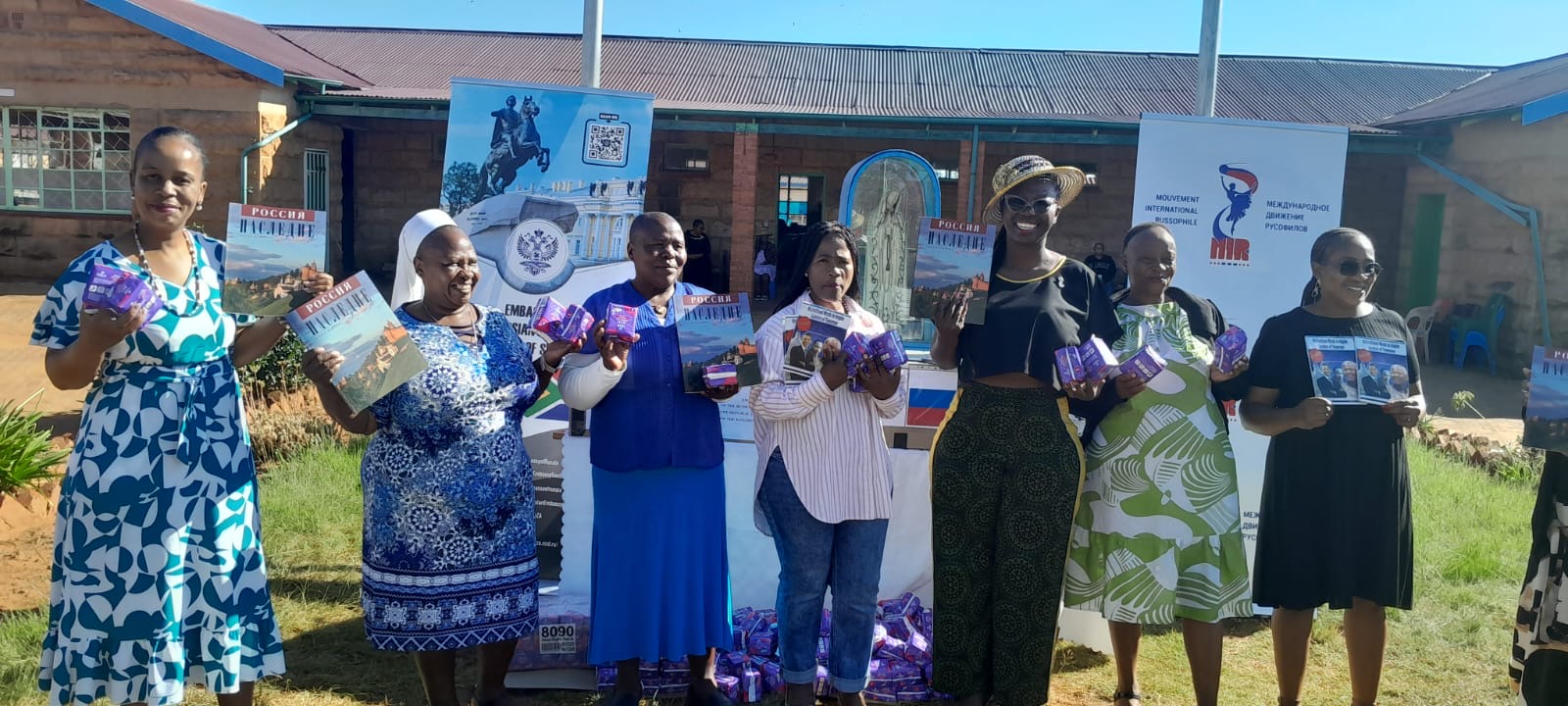
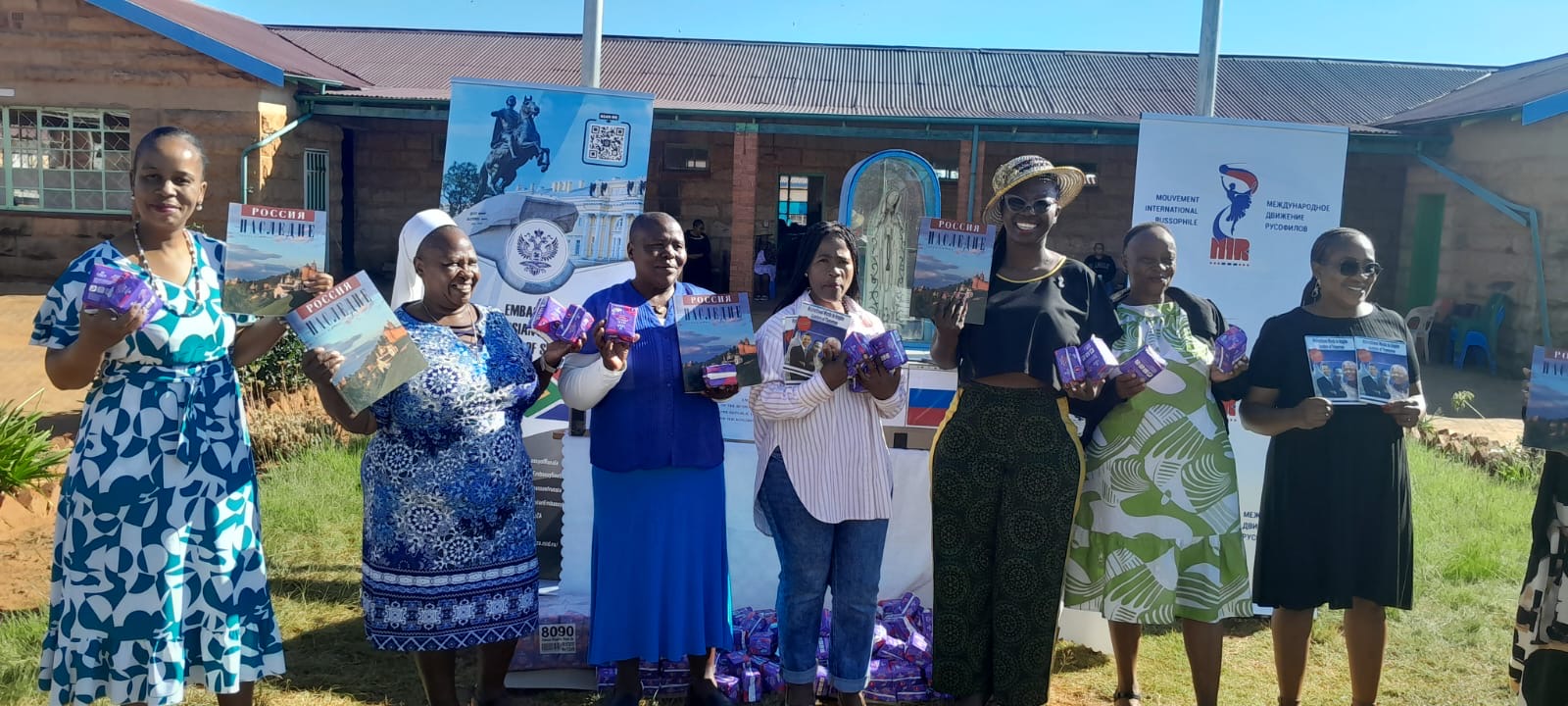
Holy Family High School Receives Sanitary Supplies and School Materials as International Russophile Movement Launches in Lesotho

0

MASERU – Former Holy Family High School student Machere Seutloali has officially launched the International Russophile Movement in Lesotho, marking the occasion with a donation of school supplies and sanitary materials to girls at her former school.

Seutloali led a delegation from the movement during a handover ceremony held at Holy Family High School today, in what she described as a symbolic and deeply personal starting point for the organisation’s activities in the country.

The donation, which included essential learning materials and sanitation products, is aimed at supporting girl learners and improving their dignity, health, and ability to participate fully in their education.

Speaking during the emotional ceremony, Seutloali said the initiative reflects her belief that meaningful change must begin within one’s own community.

“Charity begins at home,” she said. “Because I was moulded in this school yard, I found it necessary to start this project here, in the same school that helped shape who I am today.”

She added that returning to Holy Family High School to launch the movement was both intentional and symbolic.

“Where you come from determines where you are going,” Seutloali told students and staff, encouraging learners to remain proud of their roots and committed to uplifting others as they progress in life.

The event marked the official launch of the International Russophile Movement in Lesotho, signalling the organisation’s intention to undertake community-focused programmes, particularly those supporting education and youth development.

The initiative comes at a time when access to sanitary products remains a barrier to education for some girls in Lesotho, with stakeholders increasingly calling for partnerships and interventions to address menstrual health challenges in schools.

School authorities welcomed the donation, describing it as a meaningful contribution that will positively impact learners.

The International Russophile Movement is expected to expand its activities in Lesotho in the coming months, with a focus on social support, youth empowerment, and community outreach.

Independent business & current affairs journalism · Lesotho Subscribe — M85/month
| Independent business & current affairs journalism · Lesotho