Mohahlaula Airlines
Thursday, July 23, 2026
Home Blog Page 36

The 2025/26 Africa Cup Of Nations Laces Up For the Semi-Finals

The 2025/26 Africa Cup of Nations, currently taking place in Morocco and running into January 2026, has reached its most intense phase as the tournament moves deep into the knockout rounds. With the Quarter Final Stage now complete, 4 of Africa’s top footballing nations will be battling for a place amongst the continent’s elite in Semi Finals. 

The hosting nation, Morocco continue to carry the hopes of the home crowd and have looked composed under pressure, and have shown great tactical maturity. They continue to show the world how much they want it after beating Cameroon 2-0 on Saturday Janury 10th, Their next match will be on Wednesday, January 14th and this match will decide which team heads on to the Finals. 

Senegal, the defending champions, remain firmly in contention and have once again shown why they are considered one of the most balanced sides on the continent, Senegal moved to the Semi Final after defeating Mali to a shallow 1-0. Senegal’s next match will be on Wednesday,January 14th.

Other tournament powerhouses such as Nigeria, Egypt, Algeria, and Ivory Coast are locked in tense battles as their margins between victory and elimination grow increasingly thin. Several matches have been decided by single moments of brilliance or costly defensive errors, showing how unforgiving the knockout stage can be.

As the competition edges closer to the semi-finals, the dream of lifting Africa’s most prestigious football trophy remains alive for a handful nations. With every match now carrying enormous weight, all nations will make sure to deliver their best.

LMPS moves to calm breathalyser storm

0

MASERU-The Lesotho Mounted Police Service (LMPS) has moved to calm growing public unease over the hygiene and credibility of breathalyser tests used in drunk-driving arrests, firmly rejecting claims that motorists are made to blow into the same unclean device.

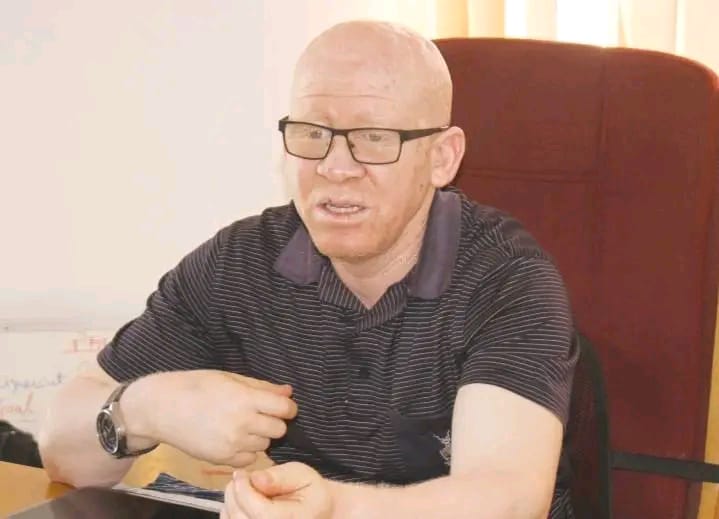
The police response follows public allegations by Transformation Resource Centre (TRC) Executive Director, Tsikoane Peshoane, who suggested that officers routinely use one breathalyser on several motorists without changing any components, raising fears about both health risks and the reliability of the results.

In a statement circulated on its official platforms, LMPS said the reports spreading on social media were misleading and risked creating unnecessary panic. The police clarified that while the breathalyser machine itself is reused, each suspect is required to blow into a new, disposable straw, which is immediately thrown away after use.

“Every motorist is provided with a fresh straw before taking a breathalyser test,” the statement reads. “These straws are single-use and are disposed of straight after each test. This procedure is followed to ensure hygiene, safety and the integrity of the results.”

LMPS stressed that no driver is expected to blow directly into the device and that the service remains committed to upholding professional standards in traffic law enforcement.

However, the police clarification has done little to silence the legal and public debate ignited by Peshoane’s arrest in Mafeteng, where he was allegedly apprehended on suspicion of drunk driving.

According to his legal team, Peshoane repeatedly demanded a “clean breathalyser” at the time of his arrest, insisting that he would not submit to a test unless he was satisfied that proper sanitary precautions were in place. The lawyers maintain that their client was not provided with what he considered a clean device and that this formed part of the reason he refused to blow into the breathalyser.

Beyond the question of disposable straws, the defence has raised broader concerns about the way the police handled the matter.

In their submissions, Peshoane’s lawyers argue that despite the dispute surrounding the breathalyser, police failed to offer any explanation as to why no blood or urine samples were taken for laboratory analysis. They say such tests could have provided an independent and scientifically verifiable basis for determining whether their client had consumed alcohol.

The legal team points to what they describe as “conflicting interpretations” of Section 94 of the Road Traffic Act No. 8 of 1981, which deals with the testing of motorists suspected of driving under the influence. They argue that in circumstances where a breath test is contested, alternative testing methods should be considered to safeguard both the rights of suspects and the credibility of the prosecution.

According to the defence, police records in the matter indicate that no positive alcohol test results were obtainedin relation to Peshoane. They further note that, at this stage, they have not challenged the adequacy of the proceedings that followed before the Magistrate’s Court, particularly in relation to the Section 128 application.

However, the lawyers insist that deeper questions surrounding the functionality and reliability of the breathalyser allegedly used cannot be adequately dealt with at the level of the Magistrate’s Court.

They contend that where allegations of abuse of prosecutorial discretion have been raised, and where the scientific reliability of equipment is called into question, the issues transcend ordinary criminal procedure.

In this regard, the defence argues that matters such as the accreditation of breathalyser manufacturers, the calibration of devices, and the scientific validity of the technology employed fall within the purview of the Constitutional Court.

“These are not merely factual disputes,” the legal submissions state in substance. “They go to the heart of whether the tools being used by the State meet constitutional standards of fairness, legality and scientific credibility.”

Adding to the controversy, Peshoane’s lawyers claim that police officers labelled their client a drunkard based on breathalyser readings allegedly obtained from tests conducted on other motorists.

They argue that such conduct, if proven, would be deeply prejudicial and incompatible with basic principles of justice, as no person can lawfully be declared intoxicated on the basis of another individual’s test results.

The defence maintains that their client’s arrest was tainted by procedural irregularities and that public statements made in connection with the case have unfairly damaged his reputation.

For its part, LMPS has not commented directly on the specific legal claims surrounding Peshoane’s arrest, focusing instead on correcting what it describes as false impressions about its general breathalyser procedures.

The police reiterate that breathalyser machines are standard law-enforcement tools worldwide and that their effectiveness depends on strict adherence to operational guidelines, including the use of disposable mouthpieces or straws.

They have urged the public not to rely on “unverified narratives” circulating online, warning that misinformation undermines trust in institutions and may discourage cooperation with road safety operations.

The controversy unfolds at a time when road safety remains a major concern in Lesotho, with alcohol-related accidents continuing to claim lives and strain emergency services. Drunk-driving roadblocks and spot checks have become a regular feature on major routes, often drawing both praise for their deterrent effect and criticism over alleged heavy-handedness.


Justice Minister Under Fire Over Alleged Use of Inmates to Work His Fields

0

Mohale’s Hoek

The Minister of Justice and Correctional Services, Hon. Richard Ramoeletsi, has been accused of using inmates incarcerated at Mohale’s Hoek Correctional Facility as unpaid labourers to perform agricultural work, including weeding fields allegedly linked to him, raising fresh questions about abuse of state power and the exploitation of prisoners.

Two independent sources from Mekaling, the minister’s constituency in the Mohale’s Hoek district, told Lesotho Tribune that inmates from the correctional facility are routinely taken out to work in nearby fields. The sources allege that this labour benefits the minister directly and substitutes employment opportunities that could otherwise have gone to local villagers.

According to the sources, who requested anonymity for fear of reprisal, the use of inmates amounts to free labour and reflects a broader pattern of political privilege, where access to state institutions is leveraged for personal benefit.

“This is not community service. These are inmates being used instead of employing people from the village who are desperate for work,” one source said.

The allegations, if proven, would raise serious legal and ethical concerns. While Lesotho Correctional Services permits inmate labour under specific conditions, such work is typically restricted to prison-managed agricultural projects, rehabilitation programmes, or court-sanctioned activities. Using inmates to work private fields would potentially violate both correctional regulations and constitutional safeguards against forced labour.

At the time of initial publication, Lesotho Tribune had not received a response from Minister Ramoeletsi.

Subsequently, the minister contacted this publication and rejected the allegations in their entirety, describing them as false and defamatory. He insisted that he does not own agricultural fields and denied using inmates for private labour.

“It is defamation. I don’t have fields. Those are LCS fields,” Minister Ramoeletsi said.

Lesotho Correctional Services Public Relations Officer also denied the claims, insisting that inmates are only engaged in agricultural work linked to prison-owned land.

“Not true,” the LCS PRO said. “Bats’oaruoa ba ntse ba sebetsa masimong ao toronko e lemmeng seahlolo le beng ba ona Maphutseng Mhoek. At least to my knowledge.”

The PRO added that, to their understanding, inmates were not involved in any privately owned fields linked to the minister.

“Empa ha ke tsebe haeba masimo a letona le ona a kenelletse in that block farming, such that ho hlaha eka ho hlaoloa a hae fela,” the PRO said.

Crucially, the LCS spokesperson acknowledged that such conduct would be unacceptable if it were taking place.

“It is not acceptable hore inmates baka hlaola masimo a letona. And entse sa etsahale joalo,” the PRO said.

The statements introduce ambiguity rather than full closure. While both the minister and Lesotho Correctional Services deny that inmates are being used for private benefit, questions remain around the demarcation of block farming activities and how prison-operated agricultural land is perceived by surrounding communities.


Editor’s Note:
This story has been updated to include a response from Minister Richard Ramoeletsi, received after initial publication.

Judge vows to oversee destruction of gun exhibits

MASERU-Three firearms that vanished from court custody in a high‑profile murder case have been recovered and formally presented to the High Court, but not before a stern rebuke from a judge who has warned that mishandled weapons are fueling violent crime in the country.

The weapons had mysteriously disappeared after they were handed over to police as exhibits in the murder trial of Ralikonelo ‘Leqhashasha’ Joki, Mothibe Mothibe and Thomello Ntsane. A ruling by Justice Tšeliso Mokoko compelled the Commissioner of Police and investigating officers to explain how the firearms went missing. This week, following efforts to trace them, the recovered guns were brought into court as ordered.

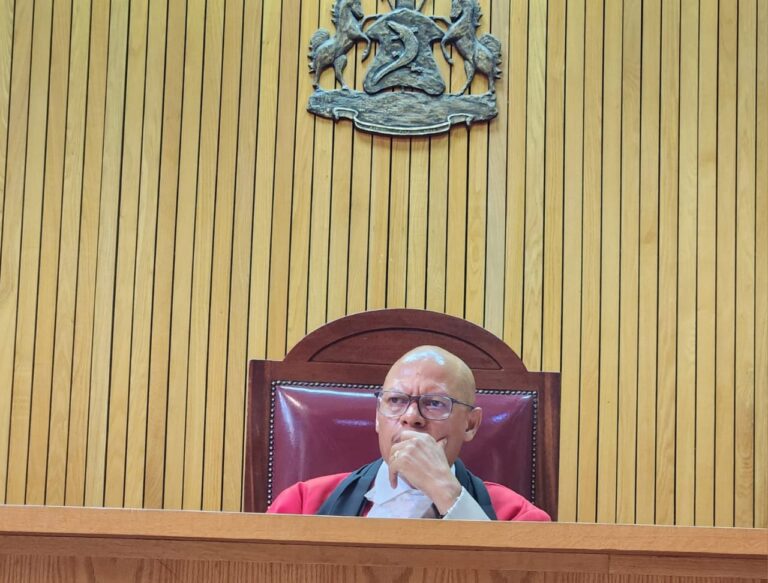
During proceedings, Justice Mokoko recounted that the court had earlier directed the firearms to be presented before the hearing. But when the case was called, the weapons could not be produced, and officers present began blaming one another for their disappearance. The situation alarmed the judge, who noted that firearms released into police custody have at times later been linked to new crimes.

Commissioner of Police Advocate Borotho Matsoso acknowledged the mishap. He told the court the firearms had been misplaced due to negligence, termed the lapse careless, and promised that measures were taken to recover them. Matsoso said the police had learned a lesson from the incident. Still, he conceded that there had been past misconduct in which officers unlawfully disposed of firearms instead of destroying them, a practice that runs counter to official policy.

The court stressed that all firearms exhibits are to be destroyed as ordered, emphasizing that the continued circulation of illegal weapons poses a grave threat to public safety. In a new directive, Justice Mokoko ordered that the Commissioner must inform the court in advance of the date on which firearms exhibits will be destroyed. The judge also indicated an intention to personally observe the destruction to ensure compliance.

The episode comes against a backdrop of public concern over missing or mishandled weapons. Earlier reporting on the same matter detailed tense courtroom exchanges after the guns vanished, with Justice Mokoko expressing suspicion that the police could be involved in trafficking or careless handling of such evidence. A December report described a confrontation in which officers could not agree on who had custody of the firearms, and the judge’s accusations that the missing weapons might already be in criminal hands.

With the directive issued, all eyes now turn to the next stages, the scheduling of destruction, the court’s observation of that process, and the ongoing efforts to ensure that any firearms used as exhibits have no chance of re‑entering illegal circulation. The recovered firearms are a reminder of what can go wrong, but the court’s response may become a blueprint for preventing such incidents in the future.

Ministry Revives National Quality Awards 

The Ministry of Trade, Industry and Business Development (MTIBD) has announced the restart and launch of the 2026 National Quality Awards. This initiative shows the government’s plan to promote quality standards, make local businesses more competitive and raise Lesotho’s global reputation.

The National Quality Awards commenced in 2013 to encourage excellence, innovation and continuous improvement in Lesotho’s business sector. 

The awards took a break in 2017 and are now being brought back to match the Southern African Development Community (SADC) 2025 call for stronger regional quality systems.

The reinstatement means Lesotho wants its companies to meet international best practices to promote excellence and better quality management to recognise businesses that perform at world‑class levels and encourage companies to use global quality standards for products and services.

In preparation for the 2026 awards, the Ministry held technical workshops and awareness campaigns from March to November 2025 across the country. These events helped businesses understand quality standards and get ready to enter the competition aiming to strengthen Lesotho’s quality infrastructure and help local enterprises grow in the regional market.

The 2026 Awards ceremony is therefore set for January 28, 2026 and will honour five categories: Product of the Year, Exporter of the Year, Service of the Year, Individual Contributor of the Year and Company of the Year – highlighting excellence and lifting standards across Lesotho’s businesses. The Ministry urged Qualifying firms to apply for national recognition and a stronger, more competitive economy.

betPawa Launches 1UP on Double Chance Exclusively for AFCON

0

As the Africa Cup of Nations returns with its familiar rush of drama, tension and unforgettable moments, betPawa has introduced a new feature designed for fans who understand how quickly football can turn.

Called 1UP on Double Chance, this feature gives AFCON fans a new way to experience tournament football.

The idea is simple and powerful. Back a team on Double Chance. The moment that team scores the first goal, the bet is settled as a win. There is no long wait until the final whistle. No anxiety over late equalisers. One goal is enough.

1UP applies to eligible Double Chance Full Time bets only. Terms and conditions apply.

AFCON is a tournament where early goals often define the story of a match. A single strike can lift a nation, silence a stadium or force opponents into

desperate mistakes.

With betPawa’s 1UP on Double Chance, that first breakthrough now carries even more meaning.

This feature speaks directly to the psychology of football fans. The fear of losing after being in front. The frustration of seeing a winning position slip away in the final minutes.

With 1UP on Double Chance, betPawa removes that stress and replaces it with clarity and confidence, designed for the pace and pressure of tournament football.

While some operators offer 1UP as a standalone feature, betPawa brings it together with Double Chance to give AFCON fans a different way to experience tournament football.

For AFCON fans, that means greater control and less waiting when the match is on the line.

As AFCON captures the attention of millions across the continent, betPawa’s

latest innovation arrives at the perfect moment. Built for the pace of tournament football and the intensity of knockout games, 1UP on Double

Chance gives fans a smarter way to enjoy every match, exclusively on betPawa.

AFCON delivers moments that define tournaments. With betPawa’s 1UP on

Double Chance, a single goal can be all it takes.

Explore 1UP on Double Chance and experience AFCON with greater clarity and control on betPawa.

Independent business & current affairs journalism · Lesotho Subscribe — M85/month
| Independent business & current affairs journalism · Lesotho