



MASERU-The Lesotho Mounted Police Service (LMPS) has moved to calm growing public unease over the hygiene and credibility of breathalyser tests used in drunk-driving arrests, firmly rejecting claims that motorists are made to blow into the same unclean device.
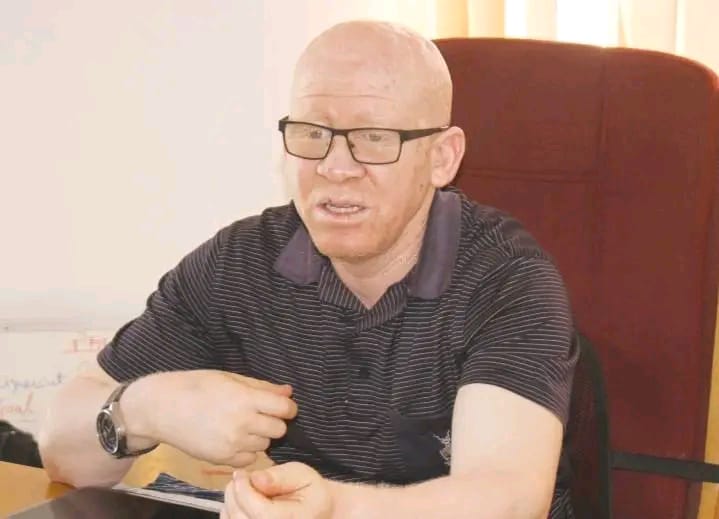
The police response follows public allegations by Transformation Resource Centre (TRC) Executive Director, Tsikoane Peshoane, who suggested that officers routinely use one breathalyser on several motorists without changing any components, raising fears about both health risks and the reliability of the results.
In a statement circulated on its official platforms, LMPS said the reports spreading on social media were misleading and risked creating unnecessary panic. The police clarified that while the breathalyser machine itself is reused, each suspect is required to blow into a new, disposable straw, which is immediately thrown away after use.
“Every motorist is provided with a fresh straw before taking a breathalyser test,” the statement reads. “These straws are single-use and are disposed of straight after each test. This procedure is followed to ensure hygiene, safety and the integrity of the results.”
LMPS stressed that no driver is expected to blow directly into the device and that the service remains committed to upholding professional standards in traffic law enforcement.
However, the police clarification has done little to silence the legal and public debate ignited by Peshoane’s arrest in Mafeteng, where he was allegedly apprehended on suspicion of drunk driving.
According to his legal team, Peshoane repeatedly demanded a “clean breathalyser” at the time of his arrest, insisting that he would not submit to a test unless he was satisfied that proper sanitary precautions were in place. The lawyers maintain that their client was not provided with what he considered a clean device and that this formed part of the reason he refused to blow into the breathalyser.
Beyond the question of disposable straws, the defence has raised broader concerns about the way the police handled the matter.
In their submissions, Peshoane’s lawyers argue that despite the dispute surrounding the breathalyser, police failed to offer any explanation as to why no blood or urine samples were taken for laboratory analysis. They say such tests could have provided an independent and scientifically verifiable basis for determining whether their client had consumed alcohol.
The legal team points to what they describe as “conflicting interpretations” of Section 94 of the Road Traffic Act No. 8 of 1981, which deals with the testing of motorists suspected of driving under the influence. They argue that in circumstances where a breath test is contested, alternative testing methods should be considered to safeguard both the rights of suspects and the credibility of the prosecution.
According to the defence, police records in the matter indicate that no positive alcohol test results were obtainedin relation to Peshoane. They further note that, at this stage, they have not challenged the adequacy of the proceedings that followed before the Magistrate’s Court, particularly in relation to the Section 128 application.
However, the lawyers insist that deeper questions surrounding the functionality and reliability of the breathalyser allegedly used cannot be adequately dealt with at the level of the Magistrate’s Court.
They contend that where allegations of abuse of prosecutorial discretion have been raised, and where the scientific reliability of equipment is called into question, the issues transcend ordinary criminal procedure.
In this regard, the defence argues that matters such as the accreditation of breathalyser manufacturers, the calibration of devices, and the scientific validity of the technology employed fall within the purview of the Constitutional Court.
“These are not merely factual disputes,” the legal submissions state in substance. “They go to the heart of whether the tools being used by the State meet constitutional standards of fairness, legality and scientific credibility.”
Adding to the controversy, Peshoane’s lawyers claim that police officers labelled their client a drunkard based on breathalyser readings allegedly obtained from tests conducted on other motorists.
They argue that such conduct, if proven, would be deeply prejudicial and incompatible with basic principles of justice, as no person can lawfully be declared intoxicated on the basis of another individual’s test results.
The defence maintains that their client’s arrest was tainted by procedural irregularities and that public statements made in connection with the case have unfairly damaged his reputation.
For its part, LMPS has not commented directly on the specific legal claims surrounding Peshoane’s arrest, focusing instead on correcting what it describes as false impressions about its general breathalyser procedures.
The police reiterate that breathalyser machines are standard law-enforcement tools worldwide and that their effectiveness depends on strict adherence to operational guidelines, including the use of disposable mouthpieces or straws.
They have urged the public not to rely on “unverified narratives” circulating online, warning that misinformation undermines trust in institutions and may discourage cooperation with road safety operations.
The controversy unfolds at a time when road safety remains a major concern in Lesotho, with alcohol-related accidents continuing to claim lives and strain emergency services. Drunk-driving roadblocks and spot checks have become a regular feature on major routes, often drawing both praise for their deterrent effect and criticism over alleged heavy-handedness.