

Mohahlaula Airlines
Thursday, July 23, 2026
Home Blog Page 50

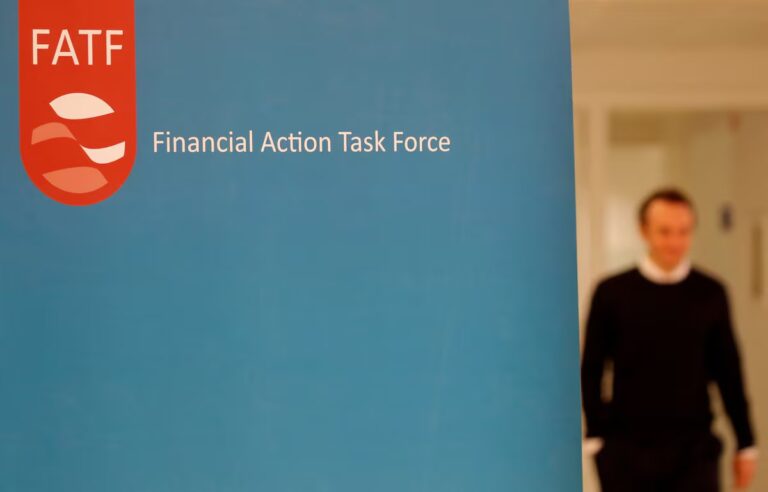
Four African Countries, Including South Africa, Exit FATF Grey List

The Financial Action Task Force (FATF) has removed four African countries from its grey list of jurisdictions under increased monitoring for money laundering and terrorist financing risks. The countries are South Africa, Nigeria, Mozambique, and Burkina Faso.

The announcement

During its plenary meeting in October 2025, FATF confirmed that these nations had made significant progress in strengthening their financial systems and meeting international standards. South Africa and Nigeria, two of the continent’s largest economies, were singled out for notable improvements in their legal frameworks and enforcement mechanisms.

FATF said South Africa had enhanced its investigation and prosecution of serious financial crimes, improved access to beneficial ownership information, and strengthened supervision of non-financial businesses. Nigeria demonstrated progress in financial intelligence coordination and inter-agency cooperation. Mozambique and Burkina Faso completed their agreed action plans, leading to their removal as well.

Why this matters

Being placed on the FATF grey list carries serious implications for a country’s economy. It often leads to increased scrutiny from international financial institutions, reduced investor confidence, and higher compliance costs for businesses. Analysts estimate that grey listing can lower foreign investment inflows by nearly 7.6 percent of GDP.

For South Africa, the decision marks a critical turning point. It restores investor confidence, strengthens the credibility of its financial sector, and signals a renewed commitment to tackling financial crime. Nigeria also stands to benefit as its delisting reinforces efforts to attract global investment and restore trust in its banking sector.

Remaining challenges

Despite the progress, FATF cautioned that these countries must sustain their reforms. Effective implementation and political commitment are essential to maintaining compliance. For South Africa, institutional weaknesses that emerged during the state capture era continue to pose risks. For Nigeria, transparency and regulatory enforcement remain key areas requiring vigilance.

Regional implications

The removal of these four countries sends an encouraging signal across Africa. It demonstrates that reform and collaboration with international partners can yield tangible results. It also challenges other countries in the region to intensify efforts to align with global standards on anti-money laundering and counter-terrorist financing.

For smaller economies such as Lesotho, the development is a reminder that robust financial governance is now a prerequisite for integration into global markets. Compliance not only reduces reputational risk but also improves access to capital and trade.

Conclusion

The FATF’s decision to delist South Africa, Nigeria, Mozambique, and Burkina Faso is a milestone for Africa’s financial integrity. It rewards years of reform and hard work by regulators and policymakers. Yet the message remains clear: maintaining credibility in the global financial system requires ongoing vigilance, institutional strength, and sustained commitment to transparency.
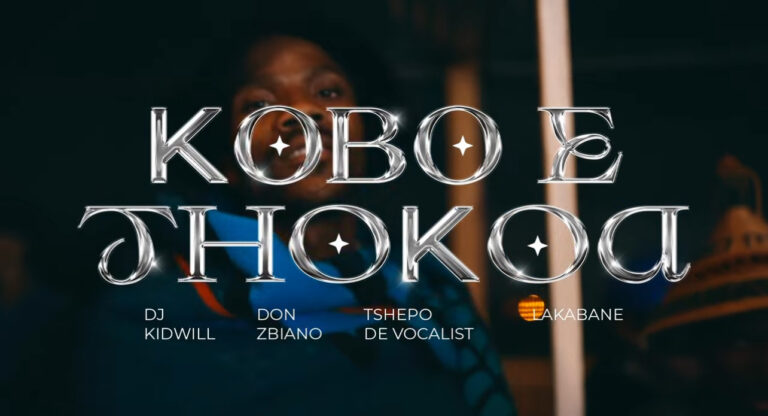
Kobo e Thokoa The Soundtrack of Summer

Two days in and Kobo e Thokoa is already picking up speed on YouTube. DJ Kidwill, Don Zbiano, Tshepo De Vocalist and Lakabane have dropped something that feels like summer arriving early, warm, confident, unapologetically Basotho.

It’s the kind of track that sneaks into your day and refuses to leave. The hook is powerful , the vocals ride the beat with easy chemistry, and you can tell the artists are having fun.

The lyrical prowess of the artists is outstanding, you can imagine it blasting at a tavern in Hlotse or spilling from taxis in Maseru, people nodding along knowing every lyric. It’s not trying too hard, it just works. The track celebrates rhythm, collaboration, and that soft swagger unique to Lesotho’s “new” music wave.

Something interesting is unfolding in Lesotho sonically, and Kobo e Thokoa is no exception!

Leaked Memos Expose Deep Divisions in Matekane’s Gvt Over M400 million Slush Fund

0

Two leaked cabinet memoranda have laid bare serious divisions inside Prime Minister Sam Matekane’s administration, revealing how government first approved, then abruptly reversed, a multi-million-maloti plan to purchase 200 tractors for farmers.

The memos, dated 19 September 2025 and 9 October 2025, show a policy U-turn that insiders describe as the product of a bitter power struggle between senior ministers in the finance and agriculture portfolios. One of the memos was leaked to Lesotho Tribune by a cabinet member who opposed the initial decision, claiming it was “financially reckless and politically motivated.”

In the 19 September memo, cabinet had approved an allocation of M174.95 million to the Ministry of Agriculture, Food Security and Nutrition for the procurement of 200 tractors and associated implements. The decision mandated the ministry to design a repayment model under a cost-sharing arrangement, offering a 30 percent government subsidy and a 60-month repayment plan for the remainder. The funds were to be drawn from the Contingencies Fund, and the Law Office was instructed to prepare a supplementary budget bill.

Less than three weeks later, that entire framework was scrapped.

The 9 October memo records cabinet’s decision to rescind the earlier approval and instead inject an additional M200 million into the Lesotho PostBank Credit Guarantee Facility (LPBCGF), extending its operation for another seven years. Control of the tractor and farm-equipment financing programme was thus transferred from the agriculture ministry to PostBank, a move one official said was “a win for the Finance Ministry and a blow to Agriculture.”

The revised memorandum also instructs PostBank to accommodate youth and farmers who have not previously benefited from government subsidy schemes. While the change is presented as inclusive, critics say it masks a fierce contest for who controls the country’s mechanisation funds.

An official familiar with the proceedings told Lesotho Tribune that the original scheme would have opened the door for politically connected suppliers to benefit through inflated tractor prices and ghost contracts. “There was no proper procurement plan or oversight mechanism. It was a recipe for scandal,” the source said.

Yet others argue that moving the scheme to PostBank risks excluding smallholders who cannot meet lending requirements, undermining the very goal of agricultural mechanisation.

The episode underscores the fragile state of decision-making in Matekane’s cabinet, where ministers often pull in different directions on economic policy. Analysts say the reversal reflects a deeper problem of inconsistency and lack of institutional discipline.

Political observers view the tractor saga as symptomatic of broader governance strains within Matekane’s coalition, where rival power centres are emerging around key ministries. The decision also highlights how fiscal tools such as the Contingencies Fund can become political weapons rather than instruments of development.

For now, the Lesotho PostBank Credit Guarantee Facility will oversee the mechanisation programme, but the political cost of the U-turn is already showing. Within Matekane’s own ranks, several ministers are said to be frustrated by what they describe as “decision-making by reversal” that leaves government credibility in tatters.

Jane Thaba-Ntšo Announces Retirement from International Football

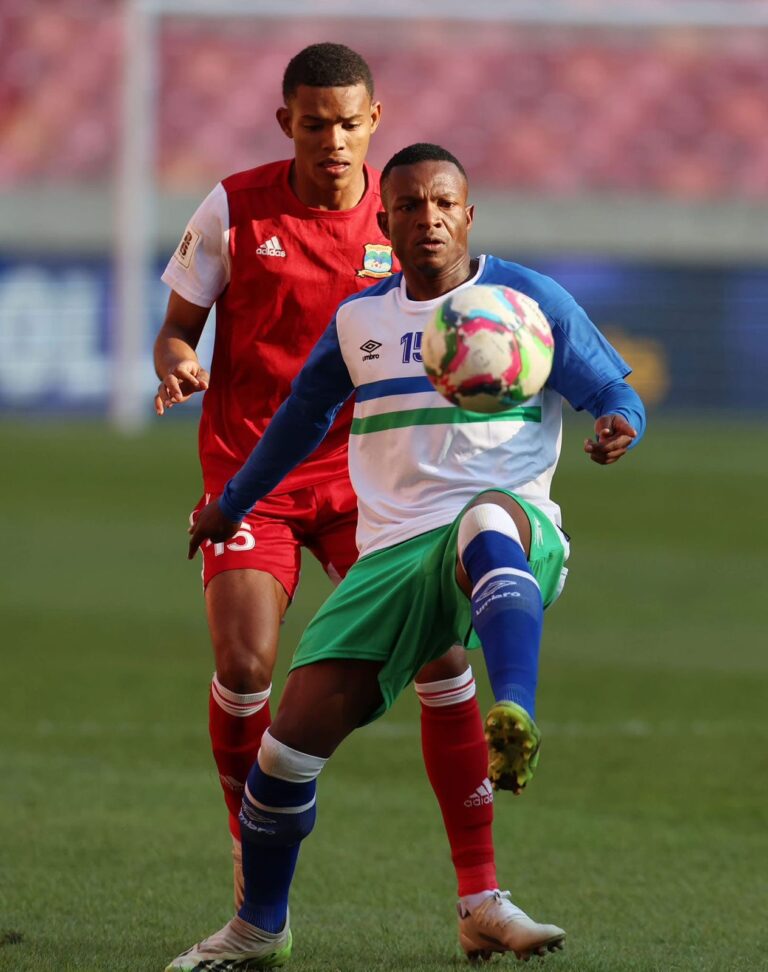
The curtain may have fallen on one of Lesotho’s most decorated football careers, as veteran midfielder Jane Thaba-Ntšo, famously known as Morena oa Thaba, has officially announced his retirement from international football.
The 29-year-old Matlama FC star formally submitted his retirement letter to the Lesotho Football Association (LeFA), signaling his decision to end his participation in the national team setup and focus solely on his club career. The move could mean that his recent appearance against Zimbabwe was the last time football lovers saw him donning the Likuena colours.

“I believe it is time to grant young players the opportunity to represent the nation. At this stage, my desire is to continue playing for Matlama only, as my tenure with the senior national team has come to an end,” Thaba-Ntšo said. “One cannot remain in the national team indefinitely. When the moment arrives, it is only fitting to step aside and allow the next generation to rise,” he added.

Born in Thaba-Bosiu, Thaba-Ntšo’s football journey began in the Thaba-Bosiu B Division League, where his talent was quickly noticed through outstanding performances in local and high school tournaments. His rose from grassroots football to the international stage quickly. He made his senior international debut on 19 November 2014 in a 2015 Africa Cup of Nations (AFCON) qualifier against Gabon. Since then, Thaba-Ntšo has been a cornerstone of the national team, amassing over 94 international capsand scoring 17 goals, which makes him both Lesotho’s most capped player and its all-time leading goal scorer. Amongst his many achievements, Thaba-Ntšo also holds a remarkable record from the 2016 COSAFA Cup, where he scored against Mauritius after just 34 seconds, the fastest goal ever recorded in the tournament’s history.

The maestro is also known for his consistency and commitment, Thaba-Ntšo has been a key figure in Lesotho’s top-flight football for over a decade. His leadership and experience have made him a respected figure both on and off the pitch. However, recent months have brought challenges. Earlier this year, Thaba-Ntšo lost his wife to illness, a personal tragedy that deeply affected him. Additionally, during the 2025 COSAFA Cup, he dislocated his elbow in a match against Namibia and was hospitalized with a soft tissue injury. These personal and physical setbacks may have contributed to his decision to step away from the international scene.

Sources within the Lesotho Football Association have indicated that the federation’s leadership plans to meet with Thaba-Ntšo in an attempt to persuade him to reconsider his decision, as his influence and experience are still viewed as vital to the national team. However, insiders suggest that the midfielder appears resolute about his retirement.

Jane Thaba-Ntšo leaves behind a legacy of excellence, dedication, and history-making moments. His departure marks the end of an era for Likuena, with fans and officials alike acknowledging the void his absence will create. While his international boots may be hung up, Thaba-Ntšo’s contribution to Lesotho football will be remembered for generations to come, as a symbol of passion, perseverance, and pride.

The Real Failure Is Not the PAC, It Is DCEO and LMPS

0

We have been watching with a mix of anger and disappointment as Basotho turn their frustration toward the Public Accounts Committee for exposing corruption and yet doing “nothing.” But that judgment is misplaced. The PAC has done its part. It has called witnesses, exposed evidence, and tabled reports that have shaken the public sector. The real failure lies elsewhere, in the institutions that were created to fight crime and corruption, the DCEO and the LMPS.

This year alone, two state-owned enterprises, the Lesotho Electricity Company and the Lesotho National Development Corporation, were hauled before the PAC. Corruption, not speculation but fact, was laid bare. Yet nothing has followed. The PAC cannot arrest, it cannot prosecute, it cannot confiscate assets. That is the work of the DCEO and the police. And on that front, both institutions have failed spectacularly.

Let us start with LEC. Internal audit reports released in May 2025 revealed how agents and staff colluded to credit customer accounts with money that was never deposited. A single deposit was used several times to justify fake credits. The company lost about M1.8 million. Even worse, LEC’s procurement unit could not produce proper documentation for multi-million maloti contracts. Prices were inflated beyond the original quotations. Suppliers were paid more than they bid. When the auditors asked for justification, there was none.

Then there is LNDC. During its hearing before the PAC, the Committee discovered that the Corporation’s internal auditor was unqualified for the position and related to the board chairperson. The PAC demanded that she be dismissed immediately. That was bold oversight, but what happened next? Nothing.

These are not rumours. They are facts recorded in official hearings. The PAC has done what it could. It has investigated, questioned, and exposed. The problem is that when the cameras switch off and the reports are published, the institutions that should take over vanish into silence.

DCEO and LMPS are the real story here. The agencies that should pursue suspects, freeze assets, and lay charges have instead become guardians of the powerful. The DCEO appears timid when dealing with senior officials, but aggressive when chasing small cases or intimidating the media. The police, on the other hand, seem to find their energy only when journalists report inconvenient truths.

We sometimes think Basotho do not fully understand how limited the PAC’s powers are. It can shine a light, but it cannot act on what it finds. It cannot arrest anyone. It cannot freeze a single bank account. The baton is supposed to be passed to the DCEO and the police, but both institutions drop it every time. That is why the same corrupt networks keep resurfacing in different ministries and parastatals.

We have seen this pattern before. Remember the Tsolo affair, where millions were mismanaged under the guise of renewable energy projects. The DCEO opened an investigation, but it dragged on until the case was struck off the roll. Witnesses disappeared, evidence went missing, and by the time anyone cared, the public had moved on. That is not incompetence by accident, it is incompetence by design.

The DCEO itself is in a state of decay. Its leadership is weak, its independence questionable, and its priorities confused. Instead of following money trails, it spends time issuing statements defending the government. Instead of targeting corruption in ministries, it targets the media. The LMPS has followed a similar path. When corruption involves ordinary officers, arrests come fast. When it touches the politically connected, investigations stall. Files vanish. Dockets are lost.

What frustrates me most is that Basotho still think the PAC can fix this. It cannot. The PAC’s job is to reveal, not to punish. If we want justice, we must demand it from the institutions that hold that power. The DCEO and LMPS have budgets, laws, and mandates that give them teeth, yet they behave like house pets.

We have spoken to a few people who work in these institutions. Some are honest and frustrated. They speak of interference, files that must “go upstairs,” and instructions to slow things down. Others have simply given up. That is the tragedy of our state. Even the honest ones are trapped in a culture of paralysis.

So, before we shout at the PAC for “doing nothing,” let us look closely at those who should be acting. The DCEO and the LMPS have become protectors of the same corruption they were created to fight. Their silence is not neutral; it is betrayal.

And while they sleep, the country bleeds. Projects are inflated, money disappears, and no one goes to jail. Journalists who try to report are threatened. The public grows more cynical. The only people who thrive are those who know someone powerful enough to call off the investigators.

Lesotho does not need new speeches about fighting corruption. It needs institutions that actually believe in their mandates. The DCEO and LMPS must be rebuilt, restructured, and insulated from political influence. Until that happens, the PAC will continue to shout into the void, and Basotho will continue to mistake exposure for justice.

For now, the truth is uncomfortable but clear. The PAC is not the problem. The rot is deeper. It lives in the very institutions that should be cleaning the system, but have instead learned how to survive within it.

Incompetent Maqutu Oversteps… Again!

0

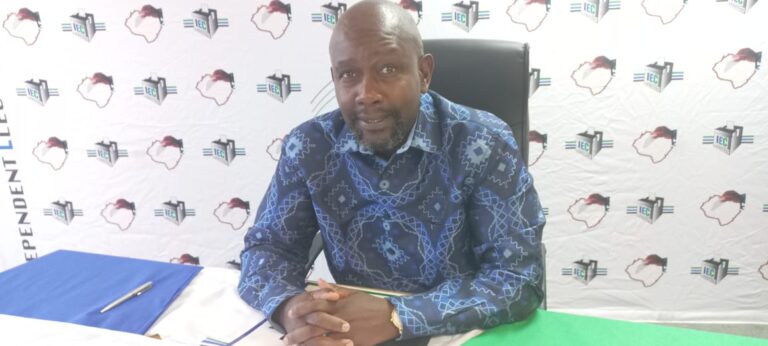
It is alarming and deeply troubling to see the Director of Elections at the IEC thrusting himself into a process he constitutionally has no business managing. The invitation he issued for a press briefing on an “IEC Commissioners’ Electoral Process” is not just an ordinary move, it is an attempt to muddy constitutional lines, usurp authority, and taint what should be a dignified, transparent appointment process….Delay the process and create a constitutional crisis!

Lesotho’s Constitution makes one thing abundantly clear: the IEC commissioners are not recruited by the Director of Elections or the IEC bureaucracy. They are appointed by the King acting on advice of the Council of State, chosen from not fewer than five nominations submitted by POLITICAL PARTIES. The law is clear, the Director’s office has no role in the shortlisting, the advising, or the final appointment.

By issuing an invitation to “an IEC Commissioners’ Electoral Process,” the Director is attempting foolishly to rewrite the institutional script, positioning himself and his office as an arbiter of a selection process he does not constitutionally control. It is an overreach disguised in bureaucratic language.

Tomorrow, (20 October 2025), political party leaders are themselves finalising the required list of five names from which the Council of State and the King will choose three. The IEC Director, by staging a media briefing on 21 October, signals that he intends to influence or comment on the nomination-to-appointment phase while it is still underway. That timing is not innocent, it is malicious. It creates an impression that the Director is not neutral but is lobbying, micromanaging, or shaping outcomes. That undermines the confidence that the public, political parties, and even donors must have in the independence and fairness of the IEC.

Even in better-intentioned hands, the IEC’s executive arm, the staff, Director, and secretariat, should not assume a voice in appointing commissioners. Their job is administration, implementation, and oversight after the constitutional actors do their work. The moment they position themselves as a participant in the constitutional act of appointment, they walk into a conflict of interest. The IEC may be empowered to employ its staff after consultation with the Public Service Commission and to manage operations. But that empowerment does not extend into the domain of political-constitutional appointments of its own leadership.

This is not an isolated misstep. The IEC under his supervision has repeatedly come under fire for administrative lapses. In 2022, the IEC admitted it made substantial errors in allocating parliamentary seats after the general election and had to ask the courts to correct them. That kind of error shows a shaky internal control environment and threatens legitimacy. Moreover, electoral analysts have criticized IEC readiness, resource constraints, late decisions, and weak communications during past polls. To now add constitutional overreach to a record of operational missteps is both reckless and irresponsible.

The Director’s behavior has eroded public trust. Once the public perceives him as part of the political game, he ceases to be a neutral guardian of elections and becomes a suspect player. His invitation undermines the constitutional separation of roles and angers political parties who must submit nominees in good faith, now fearing undue interference in what is supposed to be their prerogative. A head of electoral administration who pretends to influence appointments fractures internal morale, invites legal challenges, and precipitates instability in leadership transitions.

If allowed to stand, this act opens the door for future Directors or commissioners to intrude on appointment processes, turning the IEC into another political actor rather than a neutral arbiter.

The Director of Elections may cloak his actions in official stationery and polite language, but make no mistake, this is an authoritarian pivot masquerading as institutional initiative. The IEC’s credibility, integrity, and independence are at stake. He should be swiftly removed or disciplined, and an independent review established to reaffirm that no IEC official, however ambitious, must ever again attempt to steal the constitutional prerogative of commissioner appointment.

Former WILSA Director Faces M5.6 Million Corruption and Money Laundering Charges

0

Former Women in Law Southern Africa (WILSA) Programmes Director, Mamosa Mohlabula-Nokoana, has appeared before the Maseru Magistrates’ Court on charges of corruption and money laundering involving more than M5.6 million.

WILSA is a regional network of non-governmental organisations that advocates for the socio-economic, political, and legal empowerment of women and children. The organisation operates in Lesotho, Botswana, Malawi, Mozambique, Eswatini, Zambia, and Zimbabwe through research, legal reform advocacy, and community-based programmes addressing issues such as gender inequality, inheritance, and gender-based violence.

According to the Directorate on Corruption and Economic Offences (DCEO), Ms Mohlabula-Nokoana and former WILSA Executive Director Libakiso Matlho allegedly siphoned M5,613,110.10from the organisation’s accounts between 2016 and 2022.

Crown Counsel Advocate Willy Makamane, appearing for the DCEO, told Magistrate Thabang Tapole that the accused carried out multiple illegal transactions from WILSA’s bank accounts for personal enrichment. Ms Matlho, however, was not present in court. The Crown informed the bench that she is still abroad and that efforts are underway to facilitate her return to face trial.

The two are charged under section 25(1)(a)(b)(c) read with section 25(4) of the Money Laundering and Proceeds of Crimes Act No. 4 of 2008 (as amended).

Court documents show that the pair allegedly channelled WILSA funds through online transfers amounting to M1,078,542.05, cheque deposits totalling M2,471,568.05, and cash withdrawals of M1,548,000.00. They also reportedly sold a WILSA-funded property for M515,000.00 in an attempt to disguise the source of the funds.

On the second count of corruption, they are accused of violating section 21(3) of the Prevention of Corruption and Economic Crimes Act No. 5 of 1999 (as amended), read with section 26(1) of the Penal Code Act 2010. The charge alleges that the two misappropriated or diverted WILSA funds that had been entrusted to them by virtue of their positions. Should the corruption and money-laundering charges fail, the DCEO is pursuing an alternative count of theft.

Advocate Qhalehang Letsika, appearing for Ms Mohlabula-Nokoana, applied for bail, proposing a M3,000 cash deposit, a M50,000 surety in movable or immovable property, and an undertaking that his client would attend trial and not interfere with witnesses. The Crown did not oppose the application, and Magistrate Tapole granted bail on those terms.

The court further ordered the Crown to expedite Ms Matlho’s return or consider separating the trials to avoid further delays. The case was postponed to 12 November 2025 for remand.

This court appearance comes two weeks after the DCEO successfully applied for an order by Chief Justice Sakoane Sakoane to freeze Ms Mohlabula-Nokoana’s Nedbank account (No. 91000002327) and preserve her Masowe III property (Plot No. 12314-034) pending the outcome of the case.

SADC Condemns Instability in Madagascar, Calls for Urgent Dialogue

0

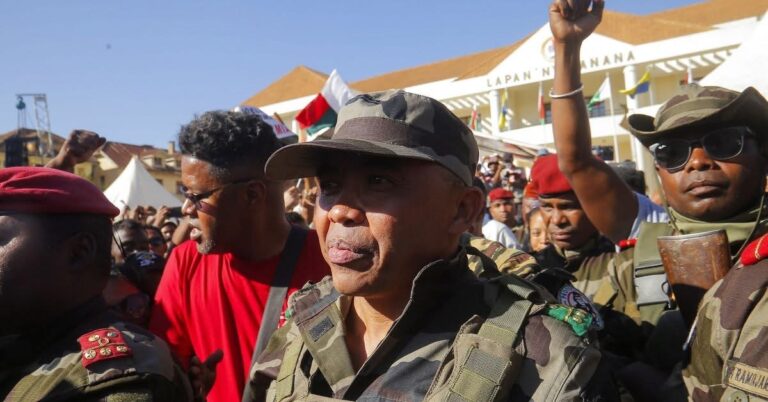
The Southern African Development Community (SADC) has expressed deep concern over the political and social turmoil unfolding in Madagascar, calling for an immediate end to violence and a return to constitutional order.

In a communiqué issued after the Extraordinary Summit of the SADC Organ Troika on Politics, Defence and Security Cooperation, held virtually on 16 October 2025, regional leaders reaffirmed their commitment to help restore peace and democratic governance in the island nation.

The meeting, chaired by Malawi’s President Arthur Peter Mutharika in his capacity as Chairperson of the Organ, was attended by Tanzania’s Vice President Dr. Philip Isdor Mpango and Eswatini’s Minister of Foreign Affairs, Senator Polile Shakantu. Also present were ministers from the SADC Troika member states and the SADC Executive Secretary.

Appeal for Calm and Inclusive Dialogue

The summit urged all political actors in Madagascar to engage in inclusive dialogue as the only path toward lasting peace. It further called on all sides to refrain from violence, looting, and the destruction of property.

“The summit reaffirmed its commitment to supporting efforts aimed at restoring peace, stability, and democratic governance,” the communiqué read. It also emphasised the importance of protecting vulnerable groups, especially youth, women, the elderly, and persons with disabilities.

Deployment of Fact-Finding Mission

SADC has endorsed the deployment of a technical fact-finding mission to Madagascar by 22 October 2025, supported by the SADC Secretariat. The mission is expected to gather information on the ground and report back to the Chairperson of the Organ by 31 October 2025.

Following the mission, SADC will convene another Extraordinary Organ Troika Summit to deliberate on the findings and determine further steps to address the political crisis.

Coordination with International Partners

The communiqué also directed the SADC Secretariat to coordinate closely with the African Union, the United Nations, and the Indian Ocean Commission to ensure a unified and complementary regional approach to stabilising Madagascar.

A comprehensive roadmap to end the crisis is expected to be developed with input from SADC’s Panel of Elders, the Mediation Reference Group, and the Secretariat. This plan will outline the necessary assistance and interventions required to support a return to democratic governance.

A United Front for Regional Stability

The summit extended appreciation to President Mutharika for his leadership in convening the urgent meeting and reaffirmed the bloc’s commitment to promoting peace and stability in the region.

“The Chairperson of the Organ Troika extended gratitude to Heads of State and Government for their participation and their continued commitment to promoting stability, peace, and security in the region, and the Republic of Madagascar in particular,” the statement concluded.

SADC’s intervention comes amid rising international concern about the political crisis in Madagascar, following reports of protests, alleged electoral disputes, and deepening divisions among the country’s political elite.

PAC Hearings Reveal Multi-Million Maloti Graft, Cronyism and Cover-Ups

In a jaw dropping set of hearings this week, the Parliamentary Public Accounts Committee (PAC) has exposed what appears to be systemic corruption inside the Lesotho National Development Corporation (LNDC), implicating its top leadership in illicit advance payments, shady tenders, kickback schemes, and cover-ups of procurement violations.

Leaks of internal LNDC reports presented to the PAC reveal that the agency advanced hundreds of millions of maloti in payments to contractors who failed to deliver, Revolution for Prosperity (RFP) politicians, tolerated procurement irregularities, and silenced internal critics.

Advance Payments That Never Delivered

One shocking revelation concerns Parkhomes and Mobile Offices. An advance of M500,000 was paid by Tšepo Putsoa to a South African firm which never delivered on the contract. According to the report, Interim CEO Molise Ramaili is accused of protecting a close associate, Property Manager Tsepo Putsoa, shielding him from disciplinary action despite his role in the corrupt deal.

Elsewhere, in Tikeo Industrial Paving Works, Ramaili, even before his appointment as acting CEO, is said to have been awarded work amounting to M594,269 without proper documentation such as tax clearance or a board resolution. The report claims Putsoa disregarded procurement rules as a favour to Ramaili.

In LNDC Block A (Lift Replacement), the company Otis, a South African lift firm, was paid an advance of M800,000 for work never performed. When the job never materialised, no refunds were made. Subsequently, Schindler, another South African firm, was awarded the same contract for M2.7 million. LNDC reportedly did not recover the initial advance. The report alleges that Ramaili and Putsoa received kickbacks in this scheme as well.

Renovations of LNDC Block A Level 4 were similarly abused. Shining Star Construction was granted advance payments exceeding 30 percent without following the proper process. The same names, Ramaili and Putsoa, are mentioned as beneficiaries of corrupt payments.

Culture of Impunity and Internal Weakness

The report paints a picture of an institution captured by an executive duo, Ramaili and Putsoa, who allegedly manipulated procurement rules, advanced state funds without delivery, and neutralised internal dissent.

Multiple projects granted advances never had proper Works Completion Certificates or formal Works Purchase Orders. In some cases, payment was made before execution of work or even before bids were evaluated.

The PAC has taken notice. In a separate but related move, it has ordered LNDC to fire its internal auditor for allegedly turning a blind eye to hiring malpractice and conflict of interest in staff appointments.

During the hearings, LNDC faced withering criticism, with PAC members accusing its leadership of treating the corporation as a personal slush fund and failing to produce key documents or justify decisions.

Political Overtones and Institutional Fragility

The timing of these revelations is politically charged, taking place in the backdrop of growing public concern over state agency corruption, fiscal mismanagement, and governance failures. Critics argue that LNDC has for years served as a vehicle for patronage under various administrations.

This scandal further erodes public confidence in reform, with many expecting that the institutional rot exposed at LNDC may mirror abuse in other development agencies.

Namibia Looks to Lesotho for Digital Policing Inspiration

Maseru — When Lesotho tech firm EngiData first visited Police Headquarters in 2019, they were not greeted by sleek servers or computer screens but by stacks of thick paper books, handwritten records of every spotfine issued across shifts. According to Neo Kolobe, Managing Director at EngiData, that moment sparked a revolutionary idea.

“We were told there was no money to digitize the process,” Kolobe recalled. “But we showed them that the money was right there in those books. The unpaid fines themselves could fund the technology.”

That vision became eSpotfine, a homegrown system that has not only digitized how Lesotho’s police manage traffic fines but has now drawn international attention.

This week, a high-powered Namibian delegation arrived in Maseru to study both the eSpotfine and the Traffic Case Management Systems, both developed by EngiData and implemented by the Lesotho Mounted Police Service (LMPS). The visiting team includes senior representatives from the Namibian National Police, the National Road Safety Council, the Prosecution Office, the Judiciary, and the Municipal Police.

Their visit marks a proud moment for Lesotho, now being recognised as a leader in digital law enforcement across Southern Africa.

The System That Changed Everything

Senior Inspector Moeketsi Mahetlane, a key figure in the Automated Traffic Justice System within LMPS’s IT Department, said the journey began between August and September 2019. “That is when the eSpotfine was successfully introduced,” he explained. “From that moment, the traffic department started living its dream of operating in a technologically advanced era.”

Funded by the Road Fund and powered by EngiData’s design, eSpotfine has become one of the most efficient and transparent traffic enforcement systems in the region. It allows officers to issue fines electronically, track offenders in real time, and link payments directly to the justice system, cutting out the delays and leakages that plagued the manual system.

“This system has changed how we work,” Mahetlane said. “We can now hold people accountable, trace those who fail to comply, and maintain proper digital records. For years, we dreamed of this system but financial constraints stood in our way.”

Regional Recognition

EngiData’s innovation first caught regional attention when Botswana’s law enforcement officialsvisited Lesotho in May 2022 to study the system. This week’s Namibian visit builds on that growing interest.

On Thursday, the Namibian delegation visited traffic police roadblocks around Maseru, the Pitso Ground Police Station, and several eSpotfine payment points. They observed how real time data collection and automation have reduced human error and improved accountability. Later in the day, the group met with officials from the Ministry of Law and the Judiciary to understand how the system integrates with court and prosecution workflows.

Tomorrow, the team will meet with system developers, the Road Fund, and transport regulators to explore how similar models could be adapted in Namibia.

Protecting Innovation and Preserving Security

While the visitors were given hands-on exposure to the system, the LMPS was careful not to reveal sensitive operational details. The IT and traffic departments maintained strict confidentiality to ensure no security breaches occurred.

Even so, the guests were impressed by the system’s sophistication and the professionalism of the Lesotho team. “The visits have given our officers a sense of pride,” said Mahetlane. “It motivates us to work even harder and continue raising the bar.”

A Basotho Solution with Global Potential

For EngiData, the Namibian visit is not just a validation of technical excellence but a celebration of Basotho ingenuity. “This system was built by Basotho for Basotho,” said Kolobe. “And now, it is inspiring others beyond our borders.”

In a continent where digital transformation is often outsourced, EngiData’s achievement stands as proof that homegrown innovation can solve complex public sector challenges.

As one LMPS officer put it, “What we have achieved with eSpotfine is proof that African solutions can come from within Africa. We are proud that Lesotho is setting the pace.”

With EngiData’s innovation now under the regional spotlight, Lesotho is not just catching up with the digital age; it is helping define it.

Independent business & current affairs journalism · Lesotho Subscribe — M85/month
| Independent business & current affairs journalism · Lesotho