

Mohahlaula Airlines
Thursday, July 23, 2026
Home Blog Page 49

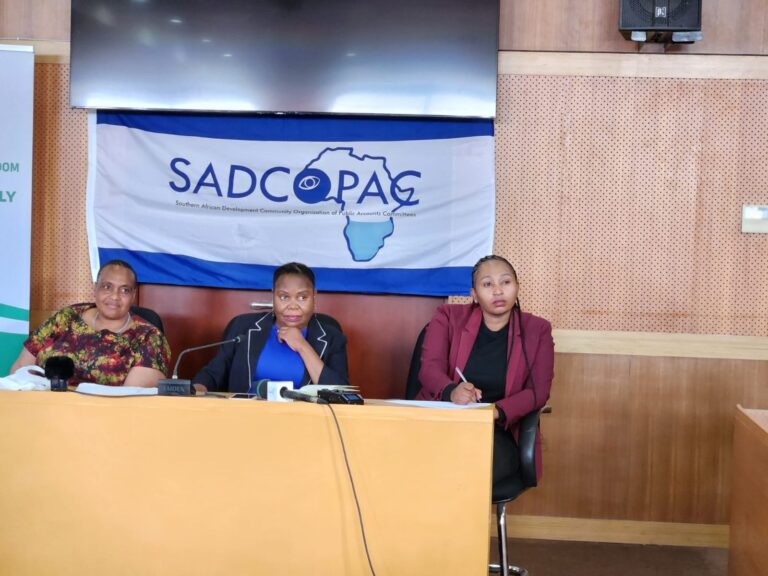
“We Are No Longer Toothless, We Bite,” PAC Chairperson

0

MASERU

The Chairperson of the Public Accounts Committee (PAC), Machabana Lemphane Letsie, has declared that the committee is no longer a “toothless dog,” but a powerful watchdog that now bites where it must.

She said the committee, which once struggled to make an impact, is now operating with strength, authority and real results. 

As she unpacked the committee’s role within the Southern African Development Community Organization of Public Accounts Committees (SADCOPAC), Lemphane-Letsie said the PAC has transformed from a body that was once ignored to one that now commands respect and fear among public officials who mishandle government funds.

“There was a time when people viewed the PAC as a sleeping dog. Those days are over,” she said firmly. “Today, the PAC works and people know that we mean business.”

Lemphane-Letsie explained that in the past, the committee’s findings and recommendations were often disregarded, and those implicated in the misuse of public money faced no real consequences. But now, she said, the tide has turned.

According to the Chairperson, the PAC has strengthened its oversight role by demanding accountability from ministries, state-owned enterprises, and other public institutions. She said the committee’s sessions are no longer routine meetings but serious hearings where evidence is presented and tough questions are asked.

“People used to think PAC’s job was to make noise and do nothing,” she said. 

“Now, they realise that we have the legal power to call anyone to account and to make recommendations that have weight.”

She added that the committee operates strictly within the law, following proper parliamentary procedures when interrogating witnesses or summoning accounting officers.

“We are accused of being harsh or overreaching,” she said. 

“But we only apply the law as it is. Our responsibility is to ensure that taxpayers’ money is used for the purpose it was intended for, not for personal enrichment.”

 Lemphane Letsie admitted that the committee’s firm stance has not been welcomed by everyone. Some individuals and institutions, she said, complain that the PAC has become too aggressive or political.

She dismissed such criticism, saying the committee’s duty is not to please people but to protect the public purse. 

“When we summon people who misused funds, some claim we are targeting them,” she said. “But the truth is simple, if you manage public money, you must be ready to explain how you used it. That’s accountability.” 

The Chairperson said it is unfortunate that some officials try to hide behind technicalities or legal excuses instead of simply telling the truth about how they handled funds.

“We deal with cases where millions of maloti go missing, and yet some people want to convince us that nothing happened,” she said. 

“We cannot allow that. The era of impunity is ending.”  

Lemphane Letsie highlighted that a strong and fearless PAC is crucial for restoring public confidence in how government funds are managed. She said citizens must know that Parliament is watching and that wrongdoing will not go unnoticed.

“People must trust that their money is safe and used properly,” she said. 

“Every maloti collected from taxpayers must go to services, not to pockets.” 

She added that the committee’s growing reputation for firm action is already influencing how ministries and agencies handle their financial records.

“We have seen improvement in how some departments prepare for audits,” she noted. 

“They now know that if they ignore audit recommendations, they will have to face the PAC.”

Lemphane Letsie concluded by calling on all public servants to work with integrity and accountability. She said the PAC will continue to act without fear or favour, ensuring that every cent of public money is properly accounted for. 

“The PAC is not your enemy,” she said. 

“We are here to safeguard public funds for the benefit of the people. But if you misuse those funds, we will not hesitate to act.”

She said the committee’s effectiveness lies not in its power to punish, but in its ability to expose wrongdoing and push for corrective measures. 

“Our job is to shine a light where there is darkness,” she said. 

“When we do that, we make sure the system becomes stronger.”

With a renewed sense of purpose, the PAC under Mrs. Lemphane Letsie’s leadership has become one of Parliament’s most active committees, proving that it is indeed no longer a toothless dog, but a watchdog with both bark and bite.

The R24 Million Cabbage: Shoprite’s Quiet Battle to Keep South Africa’s Superfood Within Reach

Cabbage has worn many hats over the centuries. A wartime lifesaver. A symbol of endurance. Even a term of affection in France. Yet in South Africa, it is something simpler and more profound — a daily staple that fills plates, nourishes families, and stretches household budgets when times are tight. And Shoprite, Africa’s largest food retailer, has quietly decided that this humble vegetable deserves protection.

The quiet subsidy behind the green leaves

Over the past two and a half years, the Shoprite Group has been investing millions to keep cabbage affordable for its customers. Between June 2024 and July 2025 alone, the Group spent R24 million subsidising cabbage prices across its stores.

That investment ensured that a head of cabbage cost no more than R12.99 at Usave and R14.99 at Shoprite, even when the wholesale price climbed to R25 during the year. In some outlets, shoppers paid even less. It was a deliberate move to shield consumers from market volatility and preserve one of the country’s most accessible sources of nutrition.

A South African staple worth defending

Cabbage is not just another vegetable lining supermarket shelves. It is a food of history and endurance. During the Second World War, it was cultivated in “Victory Gardens” because it was easy to grow, survived harsh conditions, and provided essential nutrients when meat and other staples were scarce.

Decades later, its role has not changed much. It remains rich in vitamins C and K, fibre, antioxidants, and minerals — a nutritional powerhouse that can feed a family for a fraction of the cost of other produce. It is also one of the few vegetables that thrives across South Africa’s diverse climates, from the subtropical soils of Limpopo to the temperate plains of the Western Cape.

Because of this adaptability, cabbage has become an anchor of informal food markets and backyard gardens. It is, in many ways, the people’s vegetable — resilient, abundant, and quietly powerful.

Why Shoprite took the initiative

South Africa produced more than 160,000 tons of cabbage for the formal market in 2024, with far more grown by smallholders and informal producers. But abundance does not always guarantee affordability. Rising input costs — fuel, fertiliser, water, and transport — have made it difficult for farmers and retailers to keep prices low.

Shoprite’s intervention through price capping was not merely a commercial decision. It was a social one. By absorbing part of the cost, the Group ensured that millions of families could still put fresh vegetables on their tables without sacrificing quality or nutrition.

“Cabbage is an integral part of many South African diets. It is resilient, nutritious, tasty, and familiar. By keeping it affordable, we are investing in food security, dignity, and health for millions,” says Quintin Paladin, General Manager: Freshmark & Fresh Foods.

Beyond the checkout counter

In a country where food insecurity remains a pressing concern, Shoprite’s R24 million subsidy may seem small in the scale of national economics, but it represents a profound statement of intent. It reflects an understanding that sustainability is not only about supply chains and logistics — it is about people.

By ensuring that the price of cabbage stays within reach, Shoprite has reaffirmed its role not just as a retailer but as a participant in South Africa’s broader food security ecosystem. The result is both practical and symbolic: a simple green vegetable standing at the intersection of commerce, nutrition, and dignity.

And perhaps that is the real story — that sometimes, doing something extraordinary for millions can start with something as ordinary as a cabbage.

PLMC Punishes Matlama FC and the Fans Pay the Price

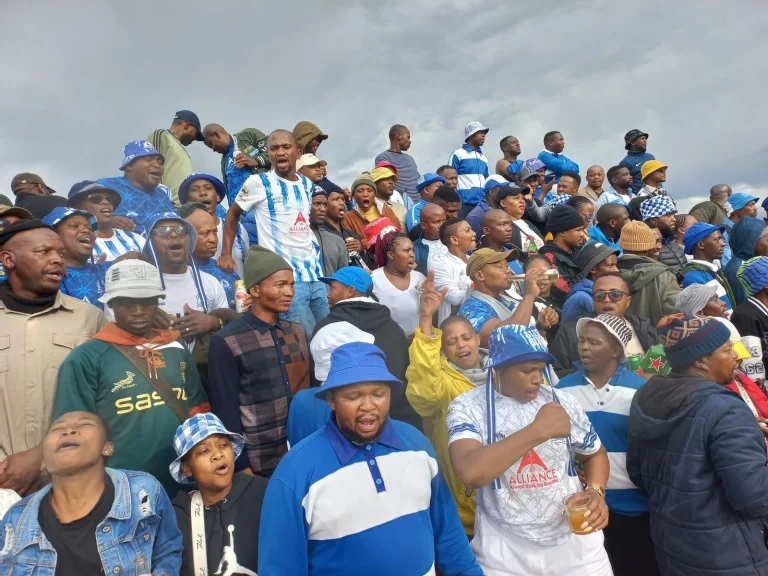
The Premier League Management Committee (PLMC) has sanctioned Matlama Football Club following misconduct by the club’s supporters during the final of the Maluti Mountain Cement Charity Cup 2025 at Bambatha Sports Arena.

More than two weeks ago, frustration boiled over in the stands when supporters believed their team had been denied a clear penalty. Instead, the referee awarded Matlama a free kick just outside the box, a decision that sparked outrage and led to objects being thrown onto the field.

As a result, Matlama FC were then fined M20,000, with M10,000 of that amount suspended for the remainder of the 2025/2026 season, provided no similar offence occurs again.

Matlama FC responded with an official statement shared on their social media platforms, confirming receipt of the sanction dated 21 October 2025. The club detailed that:
•    M10,000 must be paid within 14 days
•    The remaining M10,000 is suspended on condition of good conduct throughout the season

In their communication, the Matlama Executive Committee acknowledged a key resolution made during a meeting attended by representatives from Branches, the Supporters Committee, and EXCO, where it was unanimously agreed that supporters would mobilize funds should a penalty be imposed.

This publication has reliably learned that Matlama supporters have indeed lived up to that promise. Fans from all branches have assured club leadership that they will cover the fine themselves, relieving management of financial pressure. Collection of contributions began yesterday, with payments already being channeled directly to the club’s finance office in a collective effort to bail out the team. 

The sanction brings a stern reminder from the PLMC regarding fan behavior, but for Matlama, it has also highlighted the solidarity and loyalty that continues to define their passionate fanbase.

Meshu’s Portrait Delayed from Auction as Auctioneer Awaits Valuation

0

Maseru — The much-anticipated auction of Meshu Mokitimi’s portrait will not be taking place next week after all. Lescor Auctioneers, which had been expected to list the 99-year-old artist’s work among its featured items, says the painting is still undergoing valuation and cannot yet be assigned a proper reserve price.

Phoka Lithebe, a representative of Lescor, told Lesotho Tribune that the company is “still in the process of having it valued” and will only include it in a future sale once the “correct reserve price” has been established. He added, “Yes, there is good potential for the art market in Lesotho. If a Mosotho artist can sell his art for 2 million maloti, it is possible.”

The postponement reinforces a deeper issue that has long haunted Lesotho’s art scene. The country lacks a formal system for valuing and trading creative works. Art has traditionally existed outside structured economic frameworks. There are no recognized art indices, few professional curators, and almost no commercial galleries. Prices are often set by sentiment rather than by standardized valuation.

Lescor’s decision to delay the sale until the portrait is properly appraised could mark a turning point. It signals a cautious but necessary move toward professionalizing the creative sector, where art is not only appreciated for its beauty but also treated as a legitimate economic asset.

For decades, Meshu Mokitimi’s paintings have lived quietly in private homes, galleries, and memory. He belongs to that fading generation of Basotho artists who created for the love of form, not the promise of fortune. That his work now requires formal valuation shows how far Lesotho’s art market still has to go before it can confidently price its own talent.

Lesotho, lacks the infrastructure to ensure its artists receive fair recognition or compensation.

The delay in auctioning Meshu’s work is therefore more than a scheduling matter. It is symbolic. It highlights both the potential and the fragility of Lesotho’s creative economy. Without proper archives, provenance systems, and valuation experts, even priceless works risk being undervalued or lost to informal trade.

For Mokitimi, who has witnessed Lesotho’s transformation through nearly a century of art, this moment is not a setback but a reflection of progress in motion. His portrait may not go under the hammer next week, but its story already challenges the nation to think differently about the value of creativity.

When it finally does reach the auction floor, the figure it commands will not just represent what a buyer is willing to pay. It will measure what Lesotho believes its art and its artists are truly worth.

Malawi to ban export of unprocessed minerals

0

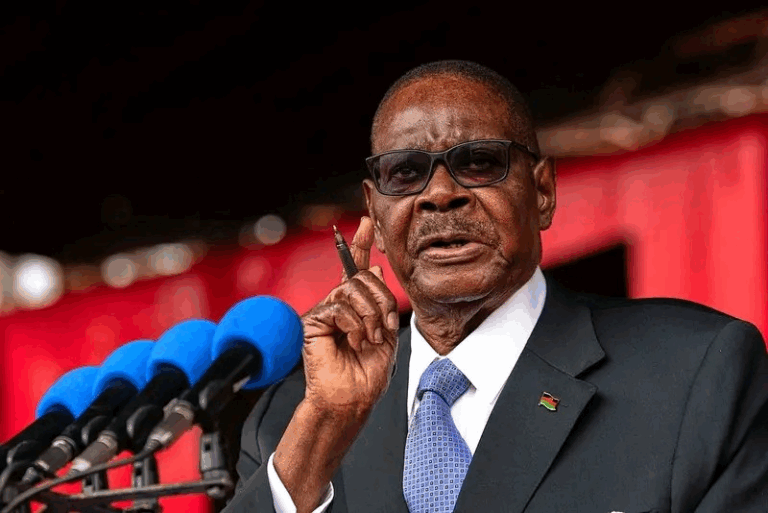
Malawi’s new president, Peter Mutharika, has announced that no unprocessed mineral resources will be allowed to leave the country. The move is part of a broader strategy to stimulate industrial growth and maximize the value of Malawi’s natural resources. With abundant deposits of bauxite, uranium, and graphite, Malawi stands to earn an estimated $500 million annually by developing its mineral sector before exporting. 

The government is currently investing in key mining sites, including the rutile deposits in Kasiya, Lilongwe, and the rare earth elements at Kangankunde in Balaka. 

He described the current system—where minerals are extracted and exported without local value addition—as a major loss to the national economy, depriving Malawians of jobs and government of much-needed revenue.
Speaking during a press briefing at Kamuzu Palace in Lilongwe, Mutharika emphasized that the government will now prioritize local beneficiation, mineral value addition, and downstream processing as key pillars of its mining policy.

He said Malawi can no longer afford to continue exporting raw minerals while importing finished products made from the same materials at high cost.

“This practice has been undermining our industrial growth and keeping our people in poverty,” Mutharika said. “We must add value to our minerals right here in Malawi, create jobs, and keep the profits within our borders.”
The President revealed that his administration will soon establish a National Mining Corporation to oversee mineral production, processing, and export to ensure transparency and accountability in the sector.
He added that Malawi must build strategic partnerships with credible international investors who can help develop local capacity while respecting the country’s resource sovereignty.
According to mining experts, the Kasiya rutile deposit, managed by Sovereign Metals Limited, is one of the largest undeveloped rutile reserves in the world, with the potential to make Malawi a key player in the global titanium market.
Similarly, the Kangankunde rare earth deposit in Balaka is considered one of the most promising sources of rare earth elements, which are critical in the production of electric vehicles, renewable energy technologies, and high-end electronics.
Analysts have long argued that Malawi’s dependence on exporting raw minerals has limited its economic potential, as the country earns minimal revenue while foreign companies profit from processing and selling refined products abroad.
The ban on raw mineral exports is therefore seen as a bold and strategic move to reverse this trend and establish a strong industrial base rooted in mineral value addition.
Economists have, however, cautioned that implementing the policy will require massive investment in processing infrastructure, technology, and skilled labor to ensure Malawi can handle large-scale mineral refining locally.
They have also urged the government to ensure that the new policy framework promotes transparency, environmental sustainability, and community participation, especially in areas affected by mining activities.
Civil society organizations have welcomed the announcement but called for strict oversight mechanisms to prevent corruption and exploitation in the sector.
They emphasized that mineral wealth should directly benefit Malawians through improved public services, infrastructure, and job creation rather than enriching a few individuals or companies.
President Mutharika’s directive marks a significant milestone in Malawi’s quest to transform its natural resources into a driver of sustainable economic growth and industrialization.
As the country moves to implement the export ban, the spotlight now turns to how effectively the government will translate this vision into action and ensure that Malawi’s mineral wealth truly works for its people.

Court Hears Defence Evidence in Witchcraft Murder Trial

MASERU

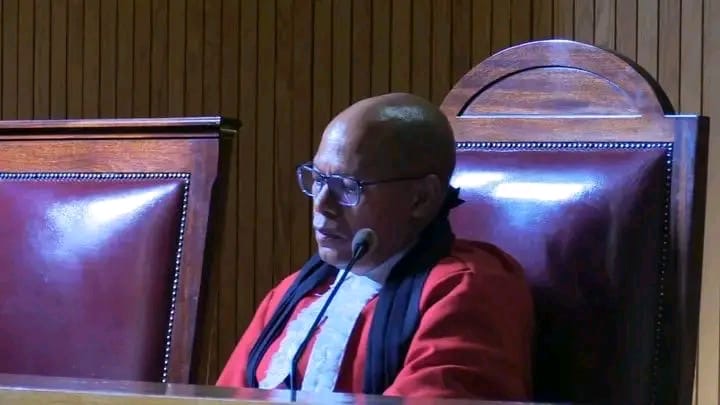
The High Court continued hearing defence evidence in a murder case where several men from Sefikeng in Berea are accused of killing a traditional healer they suspected of witchcraft. Justice Tšeliso Mokoko presided over the proceedings as the third accused, Lesang Salemane, took the stand to give his side of the story.

The men are charged with the murder of Mokola Lebakeng, a traditional doctor who was allegedly attacked and killed by villagers who accused him of using witchcraft. Salemane told the court that on the night Lebakeng was killed, he was in the company of Thato Matlosa and Tšepo Khomolishoele, both of whom have already testified for the State.

He said the three were walking near the home of the deceased when they noticed people gathered there. 

“We did not know what was happening at first,” Salemanesaid. 

He told the court that after a short while, they heard someone shouting for another person to be stopped.

“Even though it was dark, I managed to see some of the people present. I saw the brother of the deceased and the first accused. I also recognized the voice that was calling out, it was that of Molefi Ramothamo, who one of my co-accused,” Salemane testified.

He said the situation was tense and confusing, adding that he did not take part in any assault or planning of the incident. 

“There was shouting and movement all over the place. I got scared and left the scene,” he added.

Earlier this week, the court heard evidence from the first and second accused, Thokoane Maqelepo and MathibeliMaqelepo, who both denied any involvement in the killing.

Thokoane told the court he was at home when the incident happened, insisting that he had been falsely accused. Mathibeli also denied participating in the crime, claiming the accusations were based on rumours and personal grudges. Both accused persons argued that they were victims of false allegations spread by villagers who believed the deceased was responsible for mysterious illnesses and deaths in the community.

The killing of Mokola Lebakeng has left the Sefikengcommunity deeply divided. Some residents described the deceased as a humble man who helped people with traditional medicine. Others, however, claimed he used his powers for harmful purposes. The murder case has once again brought to light the growing problem of witchcraft-related violence in Lesotho’s rural areas, where superstition and fear often fuel mob justice.

Justice Mokoko listened carefully as Salemane gave his testimony and occasionally asked for clarification on some of his statements. 

Meanwhile, the prosecution maintains that the accused men acted together when they attacked and killed Lebakeng. According to the prosecution, the accused believed the deceased was behind a series of unexplained misfortunes in the village.

The case is postponed to November 17 as the defence will be bringing its last witness to testify.

Maqelepo Denies Role in Alleged Witchcraft Killing

MASERU

One of the men accused of killing a traditional healer in Sefikeng, Berea, has told the High Court that he had no part in the brutal attack that claimed the life of Mokola Lebakeng.

Testifying before the court this week, Thokoane Maqelepo firmly denied taking part in the murder, saying he neither planned nor participated in the incident. Maqelepo is among several men accused of killing Lebakeng after accusing him of witchcraft.

He told the court that the deceased was more than a neighbour, he was like a brother. “We grew up together,” he said. “I had no reason to harm him. He was a person I respected and cared about.” Maqelepo insisted that he was not among those who chased and attacked the deceased. He said he could never take part in an act of violence, explaining that he is sensitive to injuries and cannot even bear to watch others get hurt.

He further denied claims that he led the group that attacked and killed Lebakeng. According to him, he had no knowledge of any plan to harm the deceased and was surprised to find a crowd already gathered at the scene.

Giving his evidence in chief, Maqelepo recounted that he was on his way to visit his brother, Mathibeli Maqelepo, who is also one of the accused in the same case, when he came across a crowd of people near the home of the deceased’s brother.

He said when he arrived, the mob appeared angry and was pelting stones at the house. “They were shouting and throwing stones. I stopped and watched, not knowing what was going on,” he told the court. According to Maqelepo, the deceased later emerged from the house, running for his life. The angry crowd immediately chased after him. “People ran after him, but I did not follow them,” he said. “I remained behind with the deceased’s brother.”

He told the court that while others went after the deceased, he stayed to check on the family, particularly the children who were still inside the house as stones continued to hit the walls and windows. “I wanted to make sure the children were safe,” Maqelepo testified. “After things calmed down, I helped the deceased’s brother to see what damage had been done to the house.”

He added that after evaluating the damage, he and the deceased’s brother left the scene together and went home. He said he did not see what happened after the crowd chased the deceased and only learned later that the traditional healer had been killed.

The accused maintained throughout his testimony that he did not take part in the killing, nor did he encourage anyone to do so. He rejected any suggestion that he had a leadership role in the events that led to the death.Maqelepo told the court that accusations linking him to the attack were false and unfair. 

“I am being blamed for something I did not do,” he said. “People assumed I was involved because I was there, but I never took part”. He also pointed out that his relationship with the deceased had always been peaceful and friendly. He said he had no quarrel with him and that rumours about witchcraft had nothing to do with him. 

Throughout his testimony, Maqelepo appeared emotional as he described the events of that day. He told the court that the killing shocked him deeply and that he could not understand why anyone would believe he was involved.

“I was heartbroken when I heard that he was dead,” he said quietly. “He was someone I knew well. I would never harm him.” The court heard that the attack took place after community members accused the deceased of practicing witchcraft. It is alleged that the mob assaulted him before setting him on fire, resulting in his death. 

He concluded his testimony by repeating his innocence and expressing confidence that the truth would clear his name.

The trial continues before Justice Tšeliso Mokoko with further witness testimonies expected.

Independent business & current affairs journalism · Lesotho Subscribe — M85/month
| Independent business & current affairs journalism · Lesotho