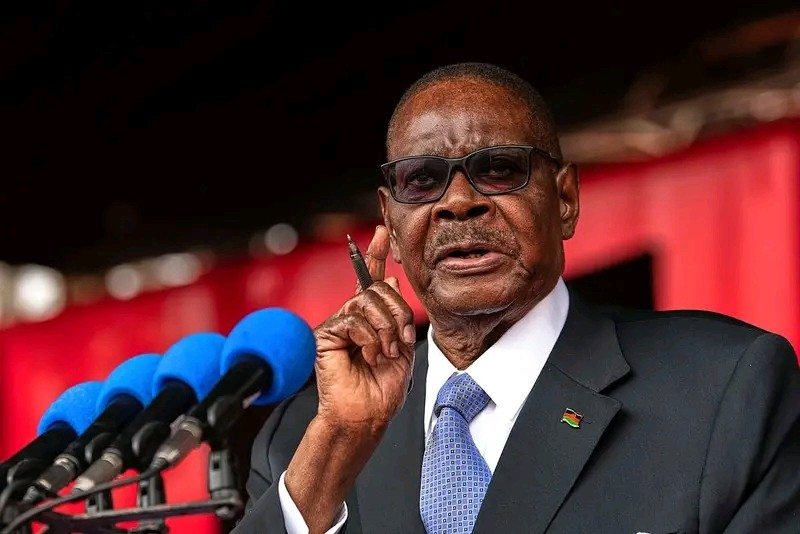


Malawi’s new president, Peter Mutharika, has announced that no unprocessed mineral resources will be allowed to leave the country. The move is part of a broader strategy to stimulate industrial growth and maximize the value of Malawi’s natural resources. With abundant deposits of bauxite, uranium, and graphite, Malawi stands to earn an estimated $500 million annually by developing its mineral sector before exporting.
The government is currently investing in key mining sites, including the rutile deposits in Kasiya, Lilongwe, and the rare earth elements at Kangankunde in Balaka.
He described the current system—where minerals are extracted and exported without local value addition—as a major loss to the national economy, depriving Malawians of jobs and government of much-needed revenue.
Speaking during a press briefing at Kamuzu Palace in Lilongwe, Mutharika emphasized that the government will now prioritize local beneficiation, mineral value addition, and downstream processing as key pillars of its mining policy.
He said Malawi can no longer afford to continue exporting raw minerals while importing finished products made from the same materials at high cost.
“This practice has been undermining our industrial growth and keeping our people in poverty,” Mutharika said. “We must add value to our minerals right here in Malawi, create jobs, and keep the profits within our borders.”
The President revealed that his administration will soon establish a National Mining Corporation to oversee mineral production, processing, and export to ensure transparency and accountability in the sector.
He added that Malawi must build strategic partnerships with credible international investors who can help develop local capacity while respecting the country’s resource sovereignty.
According to mining experts, the Kasiya rutile deposit, managed by Sovereign Metals Limited, is one of the largest undeveloped rutile reserves in the world, with the potential to make Malawi a key player in the global titanium market.
Similarly, the Kangankunde rare earth deposit in Balaka is considered one of the most promising sources of rare earth elements, which are critical in the production of electric vehicles, renewable energy technologies, and high-end electronics.
Analysts have long argued that Malawi’s dependence on exporting raw minerals has limited its economic potential, as the country earns minimal revenue while foreign companies profit from processing and selling refined products abroad.
The ban on raw mineral exports is therefore seen as a bold and strategic move to reverse this trend and establish a strong industrial base rooted in mineral value addition.
Economists have, however, cautioned that implementing the policy will require massive investment in processing infrastructure, technology, and skilled labor to ensure Malawi can handle large-scale mineral refining locally.
They have also urged the government to ensure that the new policy framework promotes transparency, environmental sustainability, and community participation, especially in areas affected by mining activities.
Civil society organizations have welcomed the announcement but called for strict oversight mechanisms to prevent corruption and exploitation in the sector.
They emphasized that mineral wealth should directly benefit Malawians through improved public services, infrastructure, and job creation rather than enriching a few individuals or companies.
President Mutharika’s directive marks a significant milestone in Malawi’s quest to transform its natural resources into a driver of sustainable economic growth and industrialization.
As the country moves to implement the export ban, the spotlight now turns to how effectively the government will translate this vision into action and ensure that Malawi’s mineral wealth truly works for its people.
Malawi to ban export of unprocessed minerals