

Mohahlaula Airlines
Wednesday, July 22, 2026
Home Blog Page 67

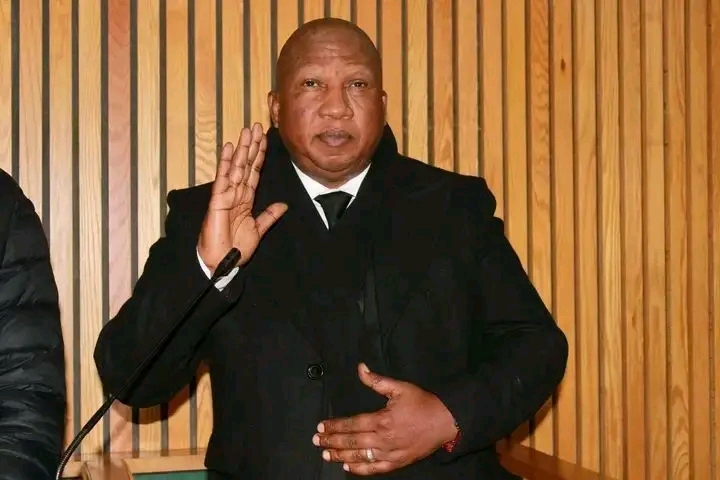
Letsoela Blames Political Interference for Mahao’s Death during Explosive Court Testimony

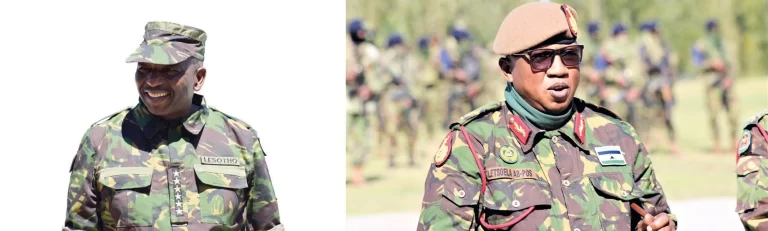
MASERU-In a striking revelation before the High Court, the current Commander of the Lesotho Defence Force (LDF), Lieutenant General Mojalefa Letsoela, has laid blame on interference by authorities in army affairs as a root cause of the instability that led to the 2015 fatal shooting of former army commander, Lieutenant General Maaparankoe Mahao.

Testifying under cross-examination in the ongoing high-profile trial of nine LDF members, including the former army chief, Retired Lieutenant General Tlali Kamoli, Letsoela painted a picture of a deeply fractured military, where divided loyalties and defiance of lawful authority paved the way for chaos and ultimately, tragedy.

Letsoela told the court that Mahao had been lawfully appointed as the Commander of the LDF on August 29, 2014, by the “then competent authority,” in reference to the former Prime Minister. However, the change in command was never fully realized due to what he described as “unhealthy civil-military relations” and deliberate interference from senior officials and politicians.

“Mahao’s appointment, though lawful, was not honored. Kamoli had been lawfully relieved of his duties, yet he continued to exercise power within the army. This created two centers of command, one under Kamoli, the other under Mahao,” Letsoela testified.

According to Letsoela, this dual command structure bred division and confusion within the military ranks. Soldiers were unsure who to obey, and factions began to form, a dangerous situation for any disciplined force, but particularly volatile in a politically sensitive environment like Lesotho’s at the time.

He described the situation as a direct consequence of interference by those in authority, which destabilized the chain of command and placed the military in a precarious and dangerous position. “It was this interference, not simply internal military disagreement, that sowed the seeds of the unrest and ultimately the fatal incident that claimed Mahao’s life,” he added.

The murder trial has gripped national attention since it began, as it involves some of the most senior former members of the LDF, including Kamoli, who has long been accused of undermining civilian control over the army during his tenure. The accused face charges of murder, attempted murder, and other crimes related to Mahao’s death in June 2015.

Mahao, who was ambushed and shot dead by fellow soldiers outside Maseru, was a respected figure in both military and civilian circles. His death drew international condemnation and prompted a Southern African Development Community (SADC) intervention, which ultimately led to the establishment of a Commission of Inquiry into his killing.

Letsoela’s testimony adds a new dimension to the trial, shedding light not only on the internal breakdown within the army but also on the political manipulation that fuelled it. His words appear to support long-held claims that Mahao’s death was not an isolated act of violence, but a symptom of a broader systemic failure involving the abuse of power and disregard for legal authority.

Lesotho’s Inflation Cools at 4.4% in May, But Food and Clothing Bite Harder

0

MASERU


Lesotho’s annual inflation rate settled at 4.4% in May 2025, marking a slight deceleration from earlier highs, but still revealing pressure points in critical consumer categories such as food, clothing, and housing. The latest Consumer Price Index (CPI) report from the Bureau of Statistics highlights not only the resilience of some inflationary drivers but also the complex story underneath the average.


“While the overall index shows stability, sectoral inflation tells a deeper story,” notes one analyst, pointing to key necessities like food and housing registering higher-than-average price increases.

CPI Overview – May 2025

CategoryWeight (%)May 2024 IndexApril 2025 IndexMay 2025 IndexYoY Change (%)MoM Change (%)
Food & Non-alcoholic beverages32.61116.8123.55124.216.30.5
Alcohol and Tobacco6.41124.95129.99130.734.60.6
Clothing & Footwear8.12113.65122.02123.138.30.9
Housing, Water, Electricity, Gas and Other Fuels14.9109.14109.73112.823.42.8
Furnishings, Household Equipment & Routine Maintenance3.32115.13116.99117.652.20.6
Health1.91114.52117.86118.03.00.1
Transport11.13110.15108.69108.14-1.8-0.5
Communications4.3999.9899.9899.73-0.3-0.3
Recreation and culture1.38106.59107.5108.031.40.5
Education4.86117.06117.55117.550.40.0
Restaurants and Hotels6.5594.49104.92105.2811.40.3
Miscellaneous goods and services4.41114.56118.11118.233.20.1

Key Movers: The Categories Driving Inflation

Food & Non-Alcoholic Beverages
The biggest contributor to inflation remains food, with a year-on-year increase of 6.3%. This category alone added 2.1 percentage points to the overall CPI. Bread, grains, and vegetables led the price surges, raising alarm for low-income households.

Clothing & Footwear
Clothing costs spiked 8.3% year-on-year. Notably, footwear prices soared by 10.4%, reflecting higher import costs and seasonal shifts.

Housing, Utilities & Fuels
With a 2.8% month-on-month increase, housing-related expenses showed the steepest short-term growth. The hike was due to imputed rent and maintenance, while electricity and gas fell.

Restaurants and Hotels
Restaurant and hotel prices rose a whopping 11.4% year-on-year. Catering services alone increased by 12.6%.

Year-on-Year CPI Change by Category (May 2025)

CPI Index Trends by Category (May 2024 – May 2025)

Bottom Line

May 2025 CPI figures paint a nuanced picture of Lesotho’s inflation dynamics—while the headline rate seems benign, underlying pressures are deeply felt at the household level. As winter sets in, attention will turn to how rising energy and clothing prices strain already tight budgets.

For households, it’s not just about inflation…it’s about where it’s happening.

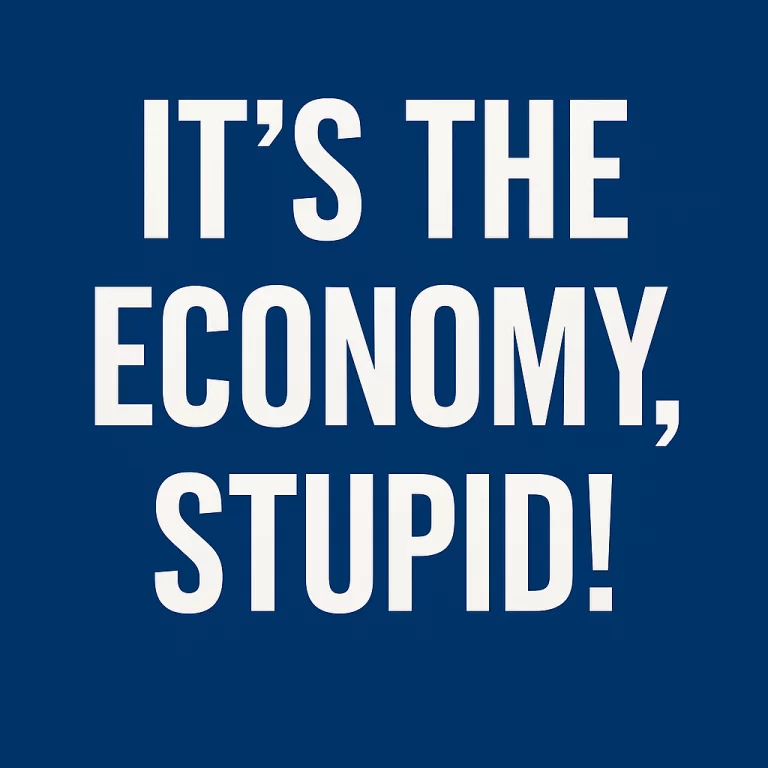
It’s the Economy, Stupid!

0

In 1992, a simple phrase helped unseat a sitting U.S. president: “It’s the economy, stupid.” It was not meant for headlines, it was a memo on the wall, a sharp reminder to campaign strategists that the real issues were not in the clouds of rhetoric, but in the pockets of the people.

Today, Lesotho’s ruling party, Revolution for Prosperity (RFP), might consider pinning the same note on the walls of State House and every boardroom where they now indulge themselves in ceremonial governance and elite handshakes.

Because if the African Development Bank’s recent Country Focus Report is to be believed and it should be, then Lesotho is staring down the barrel of an economic collapse. Growth is grinding to a halt. Unemployment is staggering. Donor confidence is evaporating. And the masses are tightening their belts while the ruling class loosens theirs around gourmet tables and imported furniture.

What prosperity? For whom?

The name Revolution for Prosperity once stirred a hopeful imagination. It suggested inclusive growth, youth employment, innovation, infrastructure, and rural transformation. But now, the revolution seems to have been reduced to a revolving door of tenders and power games, and prosperity confined to a curated inner circle of politically connected merchants of influence.

The AfDB’s report could not be clearer. Lesotho’s projected GDP growth for 2025 is a paltry 1.1%, falling even further to 0.5% in 2026. The so-called “revolutionary” government has failed to shield the economy from predictable shocks, such as the expiration of the AGOA agreement, the cancellation of MCC Compact II, and the pullout of PEPFAR and USAID. Instead of strategic countermeasures, we are offered silence, PR slogans, and a digital façade of governance that glows online but delivers nothing offline.

The livelihoods of Basotho do not live on Canva posters and hashtags.

Unemployment now festers at 30.1%, youth unemployment closer to 40%. Textile exports are plummeting. SACU revenues are no longer dependable. Meanwhile, the RFP’s leadership continues to operate as if Lesotho is in an economic vacuum, immune from the consequences of disengaged policymaking and shallow political pageantry.

This is not a leadership class that understands the mechanics of economic development. There is a marked absence of fiscal literacy, industrial strategy, or productive investment orientation. Most disturbingly, there is no evidence of empathy for the common citizen. Prosperity has become a tagline, not a measurable outcome.

There is no revolution when the state’s most capable thinkers are sidelined, and every appointment is an opportunity to reward proximity rather than competence.

It is one thing to inherit a fragile economy; it is another to actively mismanage it while pretending it is someone else’s problem. The RFP was elected on a promise of transformation. But transformation requires more than reshuffling cronies between ministries and boards. It requires understanding basic principles of economics, governance, and public finance. And it requires political humility, not the arrogance of first-time office holders who confuse popularity with performance.

The Country Focus Report offers clear solutions: diversify trade, strengthen public financial management, and prioritize domestic resource mobilization. But those require strategic capacity, something in short supply at the top. 

Instead, Lesotho is being run by a group of improvisers who speak of innovation yet struggle to balance a budget or retain foreign partnerships.

This is a country where rural women walk 10 kilometers to access primary healthcare, where 22% of GDP comes from remittances abroad, and where donor aid has been central to surviva, not just development. Any leader who reads the AfDB report and does not call for an emergency national economic dialogue should not be called a leader at all.

If RFP truly believes in prosperity, let it first demonstrate its understanding of economics; not through speeches, but through outcomes. Where is the job creation plan? Where is the SME financing roadmap? Where is the investment in agri-industrial zones? Where is the energy strategy?

In its silence and its self-dealing, the RFP has become dangerously comfortable. But comfort is a luxury Lesotho can no longer afford. Because while they debate positions and polish egos, the foundations of this nation are crumbling beneath their feet.

So we echo the old warning…this time, for Maseru’s power elite: It’s the economy, stupid.

Botswana Clears Motsepe of Terrorism Links

0

Gaborone – The Government of Botswana has formally apologized to Ambassador Bridgette Motsepe for false and reckless allegations that linked her to terrorism financing and money laundering.

In a press release issued on the 29 July 2025, the government acknowledged that on 29 October 2019, Mr. Jako Hubona, an investigator at the Directorate of Corruption and Economic Crime, submitted a sworn affidavit to the High Court of Botswana. In his affidavit, he alleged that Ambassador Motsepe was a co-signatory to bank accounts used to launder funds allegedly stolen from the Bank of Botswana and further implicated her in the financing of terrorism.

The government now admits that these allegations, which were also supported by several state institutions at the time, were entirely false and made without credible basis. 

“The allegations made by Mr. Hubona against Ambassador Motsepe and supported by the government bodies he mentions are entirely false and were made recklessly,” reads the official statement.

In addition to Ambassador Motsepe, the allegations also implicated a number of other individuals and institutions. These included Wilhemina Maswabi, former President Seretse Khama Ian Khama, the late Isaac Kgosi, various financial institutions, and the South African Reserve Bank.

The press release notes that the Government of Botswana, along with the Directorate of Corruption and Economic Crime, the Directorate of Intelligence Security Services, and Mr. Hubona himself, have all unconditionally retracted the allegations. A formal apology has been extended to Ambassador Motsepe and others named in the now-discredited claims.

The statement further underscores a shift in governance, highlighting that the new human rights-based administration under Advocate Duma Boko is committed to the principles of justice and transparency. “The new human rights-based Government of Botswana under the leadership of Advocate Duma Boko reaffirms its commitment to the rule of law and assures the public that fabrications of the nature as occurred will never occur,” it concludes.

Federal Reserve Holds Key Interest Rate Steady as Central Bankers Weigh Tariff Effects

0

KEY TAKEAWAYS

  • The Federal Reserve held its key interest rate steady, as widely expected.
  • Fed officials are keeping rates high to reduce inflation, which is still above the Fed’s target of 2% annual rate.
  • Fed Chair Jerome Powell and other members of the central bank’s policy committee have said they’re concerned President Donald Trump’s tariffs could push up prices and stoke inflation.
  • The Fed has resisted pressure from Trump to cut rates.

The Federal Reserve held its key interest rate steady Wednesday, defying demands from President Donald Trump to slash borrowing costs.

The Fed’s policy committee voted to keep the central bank’s key fed funds rate in a range of 4.25% to 4.5%, the same since December, in an effort to push down inflation.1 Two members of the 12-person committee, Fed Governors Michelle Bowman and Christopher Waller, dissented and voted to cut rates by 0.25 percentage points. Financial market participants widely expected the rate decision.

Fed Chair Jerome Powell and other Federal Open Market Committee members have resisted increasing pressure from Trump to cut rates. Trump has hurled insults, threats, and demands at Powell and accused him of mismanaging a renovation project at the Fed’s Washington headquarters. Trump has said he wants lower interest rates to reduce the interest the federal government pays on the national debt.

Fed officials have said they’re holding the rate steady at a higher-than-usual level to raise borrowing costs on all kinds of loans and bring inflation down to the Fed’s goal of a 2% annual rate. They have also voiced concerns that Trump’s tariffs will increase inflation as the costs of the import taxes are passed along to consumers.

Fed officials are widely expected to cut borrowing costs later in the year, with financial markets pricing in a 58% chance of a September rate cut according to the CME Group’s FedWatch tool, which forecasts rate movements based on fed funds futures trading data.2

The Fed faces a balancing act on its monetary policy: rates too low could stoke inflation, while high borrowing costs could slow the economy too much and cause mass layoffs.

Trump’s extensive campaign of raising import taxes has raised concerns on both sides of the Fed’s “dual mandate” from Congress to keep inflation low and employment high. So far, the economy has avoided a severe uptick in prices and mass layoffs, though recent data show some tariff-related price hikes are taking hold and the economy is starting to slow down.

Letsoela Gets 3-Year Contract Amid Cabinet Division

The Lesotho Tribune can exclusively report that Prime Minister Sam Matekane has appointed Lesotho Defence Force (LDF) Commander, Lieutenant General Mojalefa Letsoela, for a further three years. Letsoela’s original contract was due to expire on 11 August 2025, raising speculation in recent weeks about a potential leadership shake-up at the helm of the country’s armed forces.

According to well-placed sources within government, the decision to renew Letsoela’s tenure did not come easily. Cabinet was sharply divided on the matter, with some ministers reportedly pushing for a fresh appointment, citing the need for generational transition within the LDF. Others, however, argued in favour of continuity and stability within the military, especially in light of recent national and regional “developments”.

The Lesotho Tribune understands that a combination of those who want Lesotho’s stolen land (matseka naha), internal security concerns, and regional cooperation commitments tipped the scale in Letsoela’s favour. 

A senior government insider said, “The Prime Minister had to make a tough call. There was no consensus in cabinet, but the decision had to be made in the interest of the state.”

Lieutenant General Letsoela, who has led the LDF since 2019, is seen by some as a steadying figure in an institution that has historically played a controversial role in Lesotho’s politics. His reappointment may signal a desire by the Matekane administration to maintain a firm grip on security matters ahead of possible governance reforms and anticipated regional defence cooperation initiatives.

The Prime Minister’s Office and the Ministry of Defence had not responded to our queries by the time of publication.

This is a developing story.

Government Secretary is expected to make an announcement anytime from now!

———————-

This story has been updated to reflect the correct end of Commander Letsoela’s contract and his first name

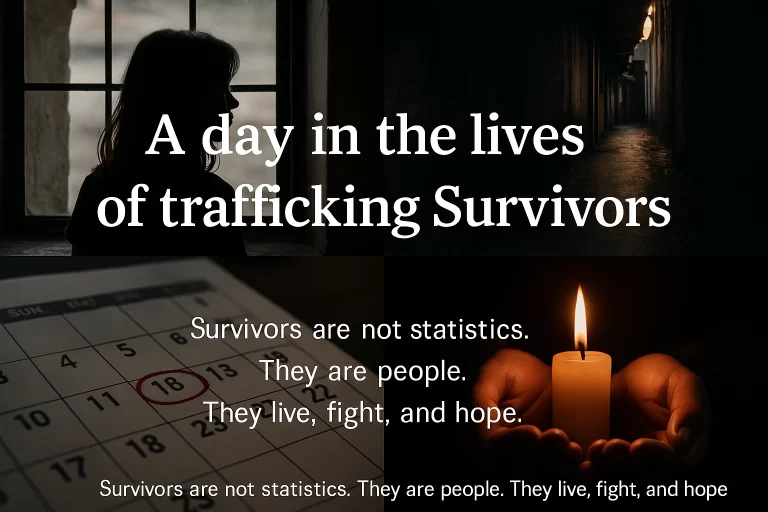
A day in the lives of trafficking Survivors

When Matṣ̌episo (real names withheld), 32, from Pitseng, Leribe, left home on 20 October 2023, she believed she was stepping into a new chapter;  one that promised a stable job and a better life for her 9-year-old son and elderly grandmother.

Instead, she walked straight into a trap; the job she was promised in Welkom, South Africa, had been arranged by her friend, someone she trusted, but as soon as she arrived, the truth became clear: there was no job, there was no salary.

With a trembling voice, she said she was supposed to work at the guest house, but unfortunately, when she got there, she was forced to sleep with the owner of the guest house.

She said she was promised a salary of R2,500, but to her surprise, her employer deducted food, rent and other false costs from the salary, leaving her with nothing but trauma.

She said night after night, after the hard work in the guest house, she was forced into sex with the owner until she fell pregnant.

As if the pregnancy was enough, Matṣ̌episo was not only haunted by the abuse but also by the threats she got if she considered terminating the pregnancy. 

“They told me if I aborted the baby, I would die,” she said. 

That fear kept her silent but one night, she made a brave decision to run. She escaped by climbing over a wall, barefoot and terrified. But alive, she returned home, pregnant, broken.

Her baby turned one on July 17, 2025,  a living reminder of what she endured.

Today, with support from Beautiful Dream Society (BDS), the European Union and World Vision, ’Matšepiso is rebuilding. She runs a small piggery business and receives emotional support from counsellors.

Another victim, Thato (not real names), a young man with a promising football career, said it all started with a handshake. In  2021, he was spotted while playing for a B Division team. A Nigerian man promised to help him attend professional trials in Dubai and offered a signing bonus of R25,000 if he succeeded.

That was hopeful. He prepared carefully, getting vaccinated, testing for HIV and processing a visa. He finally flew out in November after a two-week quarantine in Kenya but when he landed in Dubai, there were no football trials.

Instead, he was taken into a house full of strangers and stripped of his documents. He was forced to open multiple bank accounts and register his SIM cards. His identity and personal information would be used to launder money.

Thato said he was even forced to sign a fake marriage certificate with a woman he did not know, but that did not work. 

“They used my name to commit crimes. I was their puppet,” he said.

Eventually, a local man who owned a flat noticed that Thatolooked distressed and offered to help him. Authorities in Dubai uncovered the trafficking ring and he came back home.

When he arrived, the Nigerian man who played a role in his trafficking was sentenced to 15 years in prison and was also arrested for not having proper documentation in Lesotho.

That is also getting help from BDS and World Vision. He received therapy and tools to start an electrical workshop — drill, grinder and startup materials.

“They used my talent against me. I lost my football career and I am never returning to it,” he said painfully. 

Boitumelo, a seamstress, had been working in textile factories in Lesotho. After COVID-19 hit, she lost her job. In 2022, a man promised her work in South Africa’s Newcastle factories where she’d earn better money.

She and several other women boarded at night, smuggled through the border near Maputsoe. They were told not to bring their passports. When they arrived in Durban, the factory was dark, cramped and filthy with toilets next to the kitchen. There was little food or no food at all and even less hygiene.

“They promised us work. What we found was slavery, sexual exploitation, work exploitation, followed by which I fell seriously ill, unable to speak or move until I was hospitalised,” she recalled.

She was rescued by police and later supported by BDS and World Vision. They provided her with a sewing machine and startup fabric on August 1, 2024. Today, she works from home and is slowly regaining her confidence.

Keitumetse from Butha-Buthe said she was approached by a churchmate, a woman much older than her, telling her that there was a job in Johannesburg. Keitumetse had to leave her business of selling hot dogs and food in town for Johannesburg, only to find out she was lured into sex work.

Before she left, she was asked about her body, her age and they requested her to share her photos. She left on  April 7, 2024. When she got to Johannesburg, she was taken to what looked like a party house, loud music, weapons and men.

She said various men entered the room to explore her, touch her and offer her drinks which were already opened.

“I was scared and pretended to drink their drugged drink,” she said.

Keitumetse also highlighted that the men she was left with in the room slept due to heavy drinking, giving her a chance to escape to the neighbouring house, and later left for the nearest petrol station.  She said she was finally rescued by police. 

She was repatriated and, like the rest of the survivors, she received therapy from the BDS, which gave her 100 broilers and sent her back to school. She received additional help from World Vision, and through the European support, she was given six piglets to start an income-generating project.

Human trafficking is a pressing crisis that often goes unnoticed by many. Consider the poignant story of Thato, a talented athlete whose journey took him from the hopeful dreams of football fields to the grim reality of financial trafficking. This illustrates that human trafficking is not just a far-off issue affecting distant communities; it is a pervasive problem that can arise from trusted individuals in our own lives. The allure of opportunity can sometimes mask darker intentions, leading vulnerable individuals into exploitative situations. It’s crucial to recognize that this is a societal issue that requires attention and action, as it can impact anyone, even those who seem to be following a promising path.

Lesotho takes a step towards fighting climate change

0

 
On July 25,2025, the Ministry of Environment and Forestry, Revenue Services Lesotho (RSL), together with the Ministries of Trade and Industry and Education and Training, signed a Memorandum of Understanding (MoU) to implement licensing and quota systems to enforce the Ozone and Non-Ozone Regulations 2024. At the same event, held in Maseru, the Refrigeration and air-conditioning curriculum was launched. 
 
Meant to be pioneered at four institutes countrywide; LerotholiPolytechnic, Technical School of Leloaleng, Thaba TsekaTechnical Institute and Catholic Comprehensive Community College, eligible qualifiers for the programme are people who have successfully completed their COSC and LSCE studies. The programme is meant to run for 2 and a half years, with the first 24 months meant for theoretical studies and the remaining 6 for apprenticeships where students will practically apply their skills. 
 
Speaking at the event, the Revenue Services Lesotho (RSL) Acting Commissioner General ‘Manneheng Mopeli, said the MoUmarked a new chapter of collaboration and shared responsibility in implementing and enforcing the Ozone and non-Ozone Depleting Substances Regulations in supporting Lesotho’s compliance with the Montreal Protocol.
“As RSL, we recognise that protecting our environment is not only a moral obligation but a legal imperative, aligned with our international commitments. Environmental integrity, economic development and revenue mobilisation are not mutually exclusive pursuits, they must and can reinforce one another,” Mopeli said. 
She said the authority, in the partnership, will play a strong role in strengthening controls around the importation and exportation of controlled substances, emphasising that their border management role puts them in a unique and strategic position to keep Lesotho’s environment safe from harmful and illegal substances. 
“We therefore welcome the cooperation and technical support that will be extended by the Ministry of Environment and other partners in this regard,” she added. 
Lesotho is a Party to the 1985 Vienna and 1987 Montreal Protocols on the protection of the ozone layer and it passed the instrument of accession to both in 1994., mandating Lesotho to phase out substances that deplete the Ozone Layer’s Ozone Depleting Substances’ and accord to both agreements by controlling consumption of Ozone Depleting Substances (ODS) and report under articl7 of the Montreal Protocol by the end of July and March every year.
The country’s consumption of Hydrofluorocarbons (HFC) and ODS is said to be currently predominantly in the servicing of refrigeration and Air-Conditioning (FAC) equipment hence its HFC and ODS are dominantly accounted for by the RAC sector. 
Partners gathered at the ceremony agreed that the signing of the MoU was the beginning of a journey of action, vigilance and collaboration in the interest of Lesotho’s environment, economy and future generations.

Standard Lesotho Bank gifts Elizabeth Bruyele Old Age Home

By: Pheello Mosesi

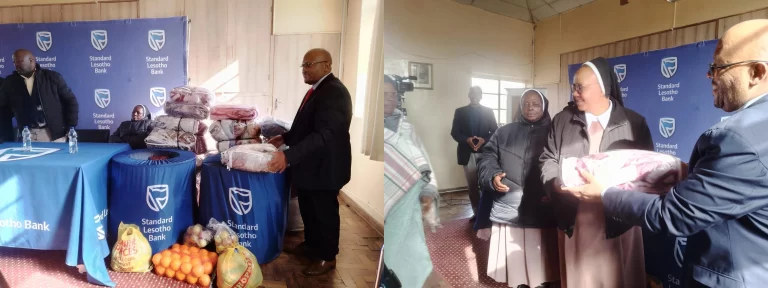
On July 3, Standard Lesotho Bank (SLB) visited the Elizabeth Bruyele Old Age Home in Leribe to donate blankets, winter clothes and food packages.

The old age home is under the care of the Sisters of Charity association and accommodates a capacity of 15 men and women.

The social responsibility run by SLB has an astounding R100 000.00 invested in it to solely help the poor, the elderly, people living with disabilities and orphans. Speaking at the event, a member of Our Lady of Pontmain Convent, Sister Alice Mputsoe, gave her gratitude for the support SLB provided the home with. 

“SLB has made an enormous act of giving back which we can never take lightly,” she uttered these words before revealing that a great portion of the elderly seated in the room were investors in SLB. 

“You, as the elderly, have invested in the bank when you used to work, and this is an act that shows appreciation.”

‎”This bank is here to help, not just to create a publicity stunt. This is not something that we are going to forget even years after this. Sisters of Charity is grateful for the presence of the bank,” she added.‎

Mamojabeng Mofube, representing the elderly, said they have never experienced anything like what the blue bank had done.

“We are well taken care of by our caretakers here along with the SLB. Life is hard at our age, the young ones challenge us and pay no attention to our advice. But seeing that the young staff of SLB has remembered us in these trying times warms our hearts.”

Public Relations Officer of the bank, Manyathela Kheleli, said the initiative is themed winter drive and focuses on giving back to the community, with the prime beneficiaries being vulnerable groups. ‎

“I needed to be here regardless of my tight schedule.  The elderly are the cornerstone of society.  I love being a part of initiatives like this one.”

He further indicated that the growth of the bank which enables it to succeed in initiatives like this, relies heavily on the support of Basotho who bank at SLB. 

“The support of Basotho also enables initiatives like this, in return, we hold a responsibility to give back to the community.”  

“‎Our mission is to help Lesotho thrive and advance. We understand the sacrifices that old people make towards helping the communities grow, so much that they even forget themselves.”  

“‎All the partners who are contributing towards the growth of the country are indebted to you as the elderly.  Social Development also made this work possible through the Sisters For Charity association.” He added.

“‎Since it is winter right now, we felt it was appropriate to come and help the elderly.  We started this initiative last year helping in the correctional services. We are focused on orphanages, elderly homes and disability homes this year,” he remarked. 

Independent business & current affairs journalism · Lesotho Subscribe — M85/month
| Independent business & current affairs journalism · Lesotho