


Mohahlaula Airlines
Wednesday, July 22, 2026
Home Blog Page 68

THE 2025 STATE OF THE ECONOMY IN LESOTHO: JOBLESS GROWTH AND SILENT FAILURES

0

FAILURES

By Khotso Mahonko

Lesotho’s economy in 2025 presents a complex and layered story, one that features

encouraging fiscal numbers on the one hand, and deep structural cracks on the other. The

economy has grown with 2.5% of the GDP in 2024/2025 fiscal year. Yet, beneath this headline,

lies a narrow base for that growth, which is heavily dependent on public infrastructure projects,

particularly the ongoing construction at Polihali under the Lesotho Highlands Water Project

Phase II (LHWP-II). If you strip away the contribution of this single project, the rest of the

economy barely grows at 2.0%, revealing an economy whose progress remains fragile and

unevenly distributed.

The LHWP-II has emerged not only as a water infrastructure initiative but also as a much

needed stimulus engine. It has created over 8000 direct jobs. These gains have offered

temporary relief to many Basotho families. However, the sustainability of this growth is

questionable. Once the construction winds down, the question remains: what comes next to

absorb this labor and maintain the growth momentum?

Fiscal performance, on paper, is more encouraging than it has been in years. The government

recorded a fiscal surplus, thanks in large part to windfall revenues from the Southern African

Customs Union (SACU), which reached nearly 27% of GDP, and water royalties that now stand

at over 7.2% of GDP. Public debt has been reduced to 56.6%, and foreign reserves now cover

six months of imports. But these achievements mask a more concerning reality: SACU transfers

are highly volatile and non-guaranteed, while water royalties, though rising, are temporary. The

risk, therefore, is that these gains will fund consumption or administration rather than investment

in productive sectors.

Yet the larger story is about structural stagnation, and no area illustrates this more clearly than

foreign direct investment (FDI). Lesotho has not attracted any significant FDI in several years

now, a stark reversal from the early 2000s when the country was hailed as a model of

investment-driven industrial growth, especially in manufacturing. Today, investor confidence is

eroded by a combination of factors: a cumbersome regulatory environment, limited ease of

doing business, persistent political uncertainty, and inadequate infrastructure outside of

donor-supported megaprojects. But part of the blame must also be placed on the Lesotho

National Development Corporation (LNDC). Despite being the apex investment promotion

agency, LNDC has not demonstrated the urgency or strategic aggression required to attract

investors in a globally competitive landscape. It lacks a coherent investment promotion strategy,

has weak aftercare support for existing investors, and has not adapted to the evolving needs of

21st-century capital which seeks not just tax holidays, but the entire ecosystem readiness.

Compounding this stagnation is the gradual collapse of a once-reliable income source for many

families: remittances from Basotho working in South African mines. For decades, theseremittances served as the lifeblood of rural economies, supporting school fees, livestock

purchases, retail spending, and even construction. However, declining mine employment,

mechanization in South Africa’s mining industry, and tightening immigration policies have led to

a sharp fall in remittances. In the 1990s, more than 100,000 Basotho worked in South Africa’s

mines; today, that figure has dropped to under 35,000. As remittance flows shrink, so too does

local liquidity in Lesotho’s rural and peri-urban economies, resulting in weakened demand for

goods, growing rural poverty, and a further contraction of informal market activity.

Meanwhile, Lesotho’s education system continues to operate in a vacuum, producing thousands

of graduates every year into a job market that is already saturated and structurally misaligned.

Higher education institutions are flooding the market with degree holders in traditional fields

without regard to current absorption capacity or economic relevance. Despite the transformation

of the global economy, very little has changed in Lesotho’s curriculum structure, pedagogy, or

output expectations. The system still prioritizes rote learning and theory-heavy programs, rather

than equipping learners with the skills and mindsets needed in modern economies; namely

creators, problem-solvers, innovators, digital practitioners, and entrepreneurs. The result is a

mismatch: a surplus of graduates chasing nonexistent jobs, while the economy simultaneously

suffers from deficits in technical, digital, and innovation oriented capabilities.

On the ground, the average Mosotho continues to feel the weight of a jobs crisis that shows no

signs of abating. Official youth unemployment is pegged at around 39%, but this figure is

misleading. It is said that over 220,000 youth were excluded from labor force calculations in

recent assessments, which significantly understates the true scale of youth joblessness. If these

excluded youth are factored in, the real youth unemployment rate may exceed 60%. Among

adults, job losses have been concentrated in key sectors such as textiles and mining, the two

pillars that have historically driven formal employment.

The textile manufacturing sector, once the pride of Lesotho’s industrial development under

AGOA, has been shrinking since the COVID-19 pandemic. In 2023 alone, over 10,000 jobs

were lost, and by 2024 employment numbers had declined further to around 27,000. With the

return of U.S. President Donald Trump and the imposition of steep tariffs—reportedly as high as

50%, a further 12,000 jobs are at risk this year if the negotiations to talk the U.S to a lower

percentage fail. Factories could scale down, and in some cases, closing entirely, as exports

become uncompetitive.

In the mining sector, the situation is equally grim. Mothae and Liqhobong mines are currently not

operational. Letšeng, the flagship mine, is struggling with low diamond sales, partly due to the

rise of synthetic lab-grown diamonds, global price weakness, and foreign currency exchange

challenges. The mine is cutting 20% of its workforce, amounting to about 300 jobs. These

developments have meant that dividends from the mining sector are virtually non-existent or just

extremely low this year despite the government holding 30% equity in these operations. Other

state-linked enterprises like Lesotho Flour Mills have not declared dividends in years, while the

dividend status of Econet and other government-shareholding entities remains unclear.Foreign aid, which has historically been a critical support structure for Lesotho, is also under

strain. The closure of several U.S. funded initiatives, including USAID programs and the

Millennium Challenge Corporation (MCC) Compact, has not only slowed development work but

also resulted in job losses. Although official figures remain difficult to verify, it is estimated that

thousands of professionals and community-level workers were affected by the withdrawal or

suspension of these projects.

The broader economic landscape reveals deepening poverty and rising vulnerability. While

macro-level poverty indicators show slight improvement, the lived experiences of Basotho tell a

different story. According to Afrobarometer’s 2025 survey, 85% of citizens experienced cash

shortages, 61% went without food, and nearly half lacked access to clean water at some point

during the year. Inflation, particularly food inflation, continues to erode real incomes, especially

for the working poor and those in the informal economy who live hand to mouth, I cannot talk

about those without income at all, it must be a disaster.

Entrepreneurship, often touted as the solution to unemployment, struggles in this environment.

The domestic market is weak. With only an estimated 350,000 people having steady income out

of a potential 550,000 economically active population, local demand remains constrained. Most

micro-entrepreneurs are trading in saturated markets, with little growth capital, no access to

meaningful business development services, and limited state support. Entrepreneurship, in this

case, becomes a survival mechanism rather than a catalyst for wealth creation.

Agriculture remains an underperforming sector. While livestock showed some resilience, crop

production was again hit by climate-related challenges and market inefficiencies. Government

efforts toward improving inputs and irrigation remain fragmented. Lesotho still imports more than

90% of its food, even while thousands go hungry, a tragic contradiction in an agriculturally

endowed country.

Despite these sobering realities, not all is bleak. Tourism, often overlooked in previous national

strategies, is showing signs of promise. In 2024, nearly one million tourists visited Lesotho, a

figure that signals both recovery and opportunity if you ask me. The country’s unique mountain

landscapes, cultural heritage, and growing eco-tourism ventures present a chance to build a

more inclusive and locally-rooted economy. If developed carefully, tourism could emerge as a

top-three contributor to GDP in the coming years. However, this will require coordinated

investment in infrastructure, hospitality training, and marketing alongside measures to ensure

community participation and benefit-sharing.

The time for talk is over. What Lesotho now needs is practical delivery, inclusive policymaking,

and bold leadership. The choices made between now and 2027 will define whether the country

remains stuck in the loop of dependency or charts a new path toward sustainable,

people-centered growth
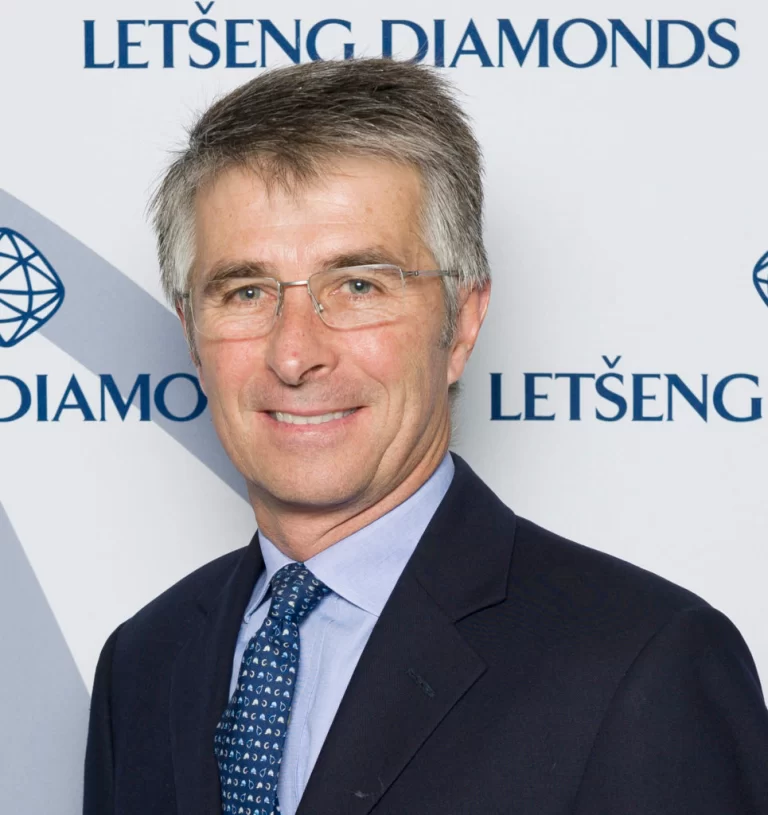
Letšeng CEO considers to cut his M25.9 million Salary

Maseru, 24 July 2025 – In a powerful signal of solidarity during turbulent times, Clifford Elphick, Chief Executive Officer of Gem Diamonds, is reportedly offering to take a substantial reduction in his own compensation—currently estimated at LSL 25.9 million per year—to support the restructuring efforts aimed at saving Letšeng mine and preserving livelihoods in Lesotho.

Gem Diamonds, owner of the high‑altitude Letšeng mine in Lesotho, has embarked on sharp cost‑cutting measures amid a steep global slump in rough‑diamond prices, weaker US dollar exchange rates, and pricing pressures from synthetic alternatives. As part of this financial response, the company announced a reduction of waste mining volumes by almost half and is laying off roughly 250 staff, equating to 20% of Letšeng’s workforce.

Alongside job cuts and operational throttling, the company has also initiated temporary salary reductions for its board, executives and management, with the possibility that pay will be partially replaced by share awards to align leadership incentives with shareholder interests.

In what is being interpreted by industry observers as a courageous act of leadership, Elphick is believed to be offering to trim his annual pay—previously reported as LSL 25,879,140 in 2022—to “save” Letšeng. That level of executive compensation, when translated from USD benchmarks, is considerably high for a company of Gem Diamonds’ current market capitalisation and earnings profile.

At the heart of this gesture is a symbolic and practical commitment: Elphick is prepared to reduce his own income in real terms to bolster Gem Diamonds’ ability to weather one of the most challenging market periods in years—and in doing so, preserve jobs and investment in Lesotho.

Gem Diamonds has confirmed that these changes are expected to cut costs by US$1.4–1.6 million per month. Waste stripping tonnage has been cut back from more than 5 million to approximately 1.8–2 million tonnes annually, while carat production and sales have declined sharply year-on-year, sales value falling 46% to US$ 44.7 million in the first half of the year.

Despite meeting production targets, the firm continues to face margin erosion—a decline made worse by the burden of high executive pay. Industry analysts note that Gem Diamonds, now valued at just £7 million, once boasted a valuation of £550 million; the discrepancy speaks to a dramatic valuation fall that heightens pressure on cost structures at every level.

Letšeng is no ordinary mine—it produces some of the world’s most remarkable high‑value diamonds, including the famed 910‑carat Lesotho Legend and the 603‑carat Lesotho Promise, making it the kimberlite operation with the highest average dollar-per-carat value globally. The mine contributes significantly to the Lesotho economy: as a major local employer, taxpayer, and partner to national interests.

The CEO’s willingness to forego part of his own earnings transcends corporate image—it’s a potential lifeline. By offering to step back financially, Elphick is underlining the message that saving Letšeng is a collective responsibility, starting at the very top.


What’s At Stake

Key IssueWhy It Matters
High executive pay vs low company valueWith CEO compensation exceeding LSL 25 million—even as the firm is now valued in single-digit millions—Elphick’s proposed cuts spotlight disparities in value and pay.
Layoffs and cost-reductionAround 250 jobs cut at Letšeng, coupled with major operational downscaling, pregnant with social and economic ramifications locally.
Symbolic leadershipElphick’s offer could set a tone of shared sacrifice, encouraging other executives and stakeholders to participate in the recovery effort.
National interest of LesothoLetšeng’s continued operation underpins local employment and government revenue; its preservation is of strategic importance to the nation.


In His Own Words

As Elphick put it in a difficult earnings update: “While the company has met its production targets, it has not been immune to the sustained pressure on rough‑diamond prices and adverse exchange rate movements.” He reaffirmed that the restructuring—including staff reductions and executive pay cuts—was essential to “conserve cash and protect shareholder value”.

If his personal salary cut proceeds, it will be a rare gesture from CEO to frontline workers—a move aimed at preserving the place and people who have long defined Letšeng’s unique brand in the global diamond industry.


Conclusion

Clifford Elphick’s proposed sacrifice of his LSL 25–26 million salary is more than a financial adjustment—it’s a moral statement: that the survival of Letšeng mine, its workforce, and its role in the Lesotho economy matters more than executive compensation. In these uncertain times for the diamond sector, it may just be the leadership move needed to help steer a recovery.

Standard Lesotho Bank ESG Risk Report 2023: Driving Sustainable Finance in Lesotho

Maseru, July 2025 – Standard Lesotho Bank has released its first standalone Environmental, Social and Governance (ESG) Risk Report for the year ending 31 December 2023. This report reflects the bank’s growing leadership in responsible finance, sustainable development, and ethical governance within Lesotho.

Environmental Sustainability and Risk Management

In 2023, the bank fully integrated ESG governance within its risk management framework, aligning with Standard Bank Group principles. All corporate and commercial lending now undergoes mandatory Environmental and Social (E&S) impact assessments. The bank also improved its data aggregation and incident reporting systems, ensuring compliance with BCBS 239 standards.

Social Responsibility and Community Investment

Standard Lesotho Bank engaged a wide range of stakeholders—civil society, regulators, corporate clients—to define ESG priorities. Through its Corporate Social Investment (CSI) initiatives, the bank invested R228 million in 2023, supporting education, health, and community development. Additionally, staff engagement was high, with over 99% of employees completing ethics and conduct training.

Strong Governance and Ethical Conduct

The bank follows a three-lines-of-defence model for ESG risk, ensuring accountability across business units, compliance teams, and internal audits. A strict Code of Ethics governs employee behavior, reinforced by mandatory scenario-based training and regular conduct risk reviews. The bank also enhanced third-party due diligence processes, promoting ethical procurement and reducing ESG-related risks.

Progress in Sustainable Finance

Standard Bank Group, which includes Standard Lesotho Bank, mobilized R105.1 billion in sustainable finance in 2023, with R15.5 billion directed toward renewable energy. While most figures are South Africa-centric, Lesotho is positioned to benefit through new sustainable credit opportunities and partnerships.

Conclusion

Standard Lesotho Bank’s ESG Risk Report signals a strategic commitment to sustainable banking. While challenges remain in extending ESG practices to SMEs and rural sectors, the bank’s 2023 performance sets a benchmark for ethical, impactful finance in Lesotho.

ESG Summary Table

ESG PillarHighlightsFocus Areas
EnvironmentalE&S screening; improved ESG data systemsSupport for green financing; climate risk integration
SocialR228 million CSI; 99% ethics training; stakeholder-informed materialityBroader outreach to underserved communities; employee wellbeing
GovernanceThree-lines-of-defence model; ethics code; procurement due diligenceTransparent reporting; robust conduct monitoring

Council of State Triggers Crucial IEC Appointment Process: Political Parties Given Until August to Submit Nominees

Maseru 

Lesotho’s political leadership has been called to immediate action following a formal communication from the Government Secretary, Mrs. Teboho ‘Malisebo’ Mokela, regarding the commencement of the appointment process for members of the Independent Electoral Commission (IEC), including its Chairperson.

Acting on the directive of the Council of State at its sitting on 10th July 2025, His Majesty the King—through the Council as the appointing authority—has instructed that consultations among registered political parties begin without delay, in accordance with the Constitution of Lesotho.

This process, which is both constitutionally binding and time-sensitive, is intended to ensure the smooth transition and potential reappointment of IEC leadership ahead of key electoral activities expected in the coming years.

Legal Framework Governing the Process

The letter cites Section 66 of the Constitution of Lesotho, as amended by both the Fourth and Fifth Amendments, as the legal foundation for this appointment process. Specifically, Section 66(a)(4)mandates that:

“For the purpose of enabling the Council of State to select the names of persons to be submitted to the King… the Council shall request all registered political parties… to jointly propose to the Council within a period of thirty days… a list of not less than five names.”

This provision compels political parties to cooperate in crafting a shortlist of qualified nominees from which the Council will ultimately recommend appointments to His Majesty. It is a rare exercise in cross-party consensus, enshrined in law to protect the independence and legitimacy of the electoral body.

In addition, Section 66(7) (as amended by Act No. 8 of 2004) limits the term of any Electoral Commission member to a maximum of two five-year terms, reinforcing the principle of renewal while allowing for continuity where merited.

All Three Current Members Seek Reappointment

Accompanying the letter are notices from all three incumbent IEC Commissioners, including the current Chairperson, expressing their desire for further engagement with the Commission. The Commissioners have served their initial five-year terms and are now seeking reappointment in line with the provisions of the Constitution.

While the law allows for a second term, it is ultimately within the prerogative of the Council of State, acting on nominations submitted by political parties—to determine whether incumbents will be retained or replaced.

This element introduces both an opportunity and a challenge for political leaders: to carefully weigh experience against the need for reform, and to prioritize institutional independence and competence over political loyalty.

Strict Deadline: End of August 2025

Political parties are now racing against a strict constitutional clock. According to the Government Secretary’s letter, all responses and proposed nominees must be submitted no later than the end of August 2025.

“Please be advised that we are operating within strict legal time frames,” reads the letter. “As such, you are requested to treat this matter with the utmost urgency it requires.”

The Council’s timeline leaves political actors just weeks to consult internally, agree collectively, and submit names in accordance with an agreed procedure. Given Lesotho’s history of political fragmentation, this process will test the maturity and resolve of party leaders to act in the national interest.

Significance for Electoral Democracy

This appointment process could not come at a more critical time. The IEC remains one of the cornerstones of Lesotho’s democratic architecture, charged with managing elections, enforcing electoral law, and ensuring that the will of the people is respected and protected.

Failures in the Commission’s leadership—real or perceived—can have far-reaching consequences, including voter apathy, political instability, and post-election disputes.

By requiring that political parties jointly nominate at least five names, the Constitution intends to safeguard the impartiality of the IEC while ensuring that its leadership reflects broad-based confidence.

This constitutional mechanism, if executed faithfully, can serve as a model of democratic cooperationand a check against the politicisation of independent institutions.

A Call to Political Leadership

The Council of State’s instruction is more than a procedural step—it is a test of statesmanship. Political parties must now demonstrate their commitment to democratic consolidation by participating in this process with transparency, urgency, and integrity.

The country—and its constitutional democracy—demands nothing less.

Editor’s Note:

This story will be closely monitored for developments regarding the submission of nominations and reactions from political stakeholders. For more updates on Lesotho’s governance and legal reforms, follow our website on Political Affairs.

Nepotism and Corruption: The Normalisation of Unfair Practices in Lesotho’s Governments  

0

In recent weeks, the socio-economic challenges facing Lesotho have intensified, particularly with escalating unemployment rates casting a long shadow over the lives of many Basotho. As citizens relentlessly strive for a better future, hoping for equitable access to opportunities, social media this week erupted with the emergence of a leaked “secret deployment list.” This document has sparked significant outrage and discussions, as many perceive it to exemplify blatant nepotism within the realm of foreign mission appointments linked to influential members of the ruling party.

The leaked “Resubmitted Memorandum C3 (2025/11)66 by the Honourable Minister of Foreign Affairs and International Relations”, Lejone Mpotjoane, bluntly outlines a series of appointments. Key figures with alleged ties to the ruling party, the Revolution For Prosperity (RFP), have been controversially approved by Cabinet for various vacant positions as First Secretaries within Lesotho Missions located in cities worldwide, including New York, Kuwait, Pretoria, Dublin, Addis Ababa, Ottawa, Brussels, Beijing, Johannesburg, and Rome. 

Among those named in the memorandum are Ms Ntsieleng Molise, set to assume the role of Consul in Johannesburg and Mr Tsebo Ntlhakana, who will serve as her vice. These appointments, which have allegedly been shrouded in controversy and secrecy, have led many commentators on social media to suggest that they epitomize a troubling trend in Lesotho’s governance where familial connections and political loyalty are prioritized over professional qualifications and transparency. This trend, many had hoped, would have been left behind with previous administrations. They expected way better from the current administration led by the RFP. 

Interestingly, one of the newly appointed individuals participated as a panellist at a youth engagement summit that was called by the Prime Minister in June at the ’Manthabiseng Convention Centre. The summit focused on collaborative strategies to tackle the pressing issue of youth unemployment in Lesotho. The irony is conspicuous: a speaker advocating for the unemployed youth of the nation was subsequently rewarded with a prestigious position as a First Secretary in a foreign mission. This move sends a bewildering message to the youth who attended the summit, suggesting that activism for personal and collective rights may surprisingly lead to unexpected opportunities, albeit through methods that many deem unethical.

In a surprising twist, public reactions to these appointments have been mixed. Some segments of the population have expressed approval, hailing the government’s actions as steps toward achieving fairness and justice in job placements within governmental institutions. This response uncovers a troubling reality: in Lesotho, the intertwining of nepotism and corruption has become so ingrained that it pervades political and administrative life, often overlooked in favour of personal gain.

History reveals that this troubling phenomenon is however not a novel occurrence. Past administrations, irrespective of their political orientations, have faced accusations of favouring personal connections over merit in diplomatic appointments. Such practices have the potential to result in inefficiency and the elevation of individuals lacking essential qualifications to hold significant roles. These trends foster a public sentiment that places more emphasis on personal relationships than on prioritizing the best interests of the nation and its populace.

Despite the historical context and the facts laid bare, celebrating these developments is misguided. Instances like this frequently entail ignoring qualified candidates in favour of family members or party loyalists. Should this scenario be accurate, it will undoubtedly lead to a further erosion of public trust in the government. 

Rather than envy directed at the appointed individuals, the prevailing sentiment is one of scepticism regarding the ruling party’s commitment to transparency and meritocracy, principles the RFP famously championed during its 2022 election campaign, which voters eagerly supported in hopes of significant change. 

In response to these developments, citizens are urging the government to explain the document and clarify the selection criteria employed in appointing individuals to serve in foreign missions. While it remains uncertain whether such transparency will restore public confidence in the government, it is essential that the administration strive to address the concerns raised by the populace. The growing distrust among Basotho toward the current administration signals a pressing need for accountability and reform within its system.

Mofosi promises 1000 jobs to Basotho youth

0

By: Pheello Mosesi
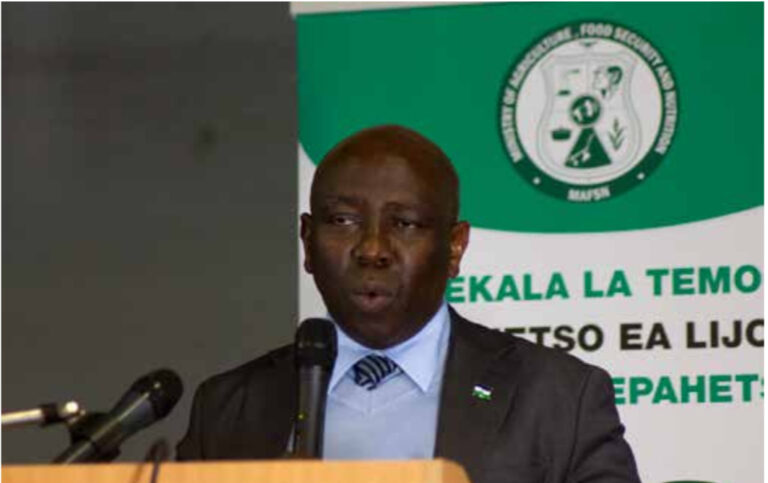
As part of united efforts to help curb unemployment in Lesotho, the Minister of Agriculture, Food Security and Nutrition, Honourable Thabo Mofosi, launched a youth Mentorship Program for 1000 Young Farmers under the Second Smallholder Agriculture Development Project (SADP II) at the Agric College in Maseru this week. 
The SADP II monitored initiative is designed to foster development and sustainable job creation for young Basotho Farmers aged between 18 and 35 who are already engaged in agriculture and agribusiness, formally trained or not and those interested in the farming field. The Minister said the programme seeks to enhance the effective use of grants granted to the young farmers while boosting business performance and encouraging greater youth involvement in agriculture.
Honourable Mofosi commenced his speech by highlighting the importance of Agriculture as a business and a means of food consumption. He proceeded to indicate that unlike other countries globally, Lesotho is slowly starting to recognise the importance of agriculture. 
 “When we talk of Agriculture, we often label it as a cornerstone of the country. However, it goes beyond that, it is actually the cornerstone of life in general. Consumption of food is not a voluntary act but it is actually an obligatory necessity of every person,” Mofosi said in his introduction speech.
“Another fundamental angle of life in this day and age is money. We all seek out platforms that can help us earn money as businesses and companies. Agriculture is a business that does not have a lot of limitations and extended requirements, the only requirement is for a person to be active in it for production,” he added.
Mofosi said he wished for the beneficiaries of the programme to be youth driven by passion and love for agriculture, saying the aim of the ministry is to have sustainable growth through the programme. 
The programme is set to incubate an intake of 1000 agriculturally active young farmers across the country with each district having a representation of 100. Key focus areas for this support are potato production, broiler chicken production, egg production and vegetable production and nursery growers for the first intake. 
“We have studied where there is a higher demand in the market,” he said, adding that the selection criterion of the project is going to be very strict and selected participants of the programme will be expected to be just participants within their district programme centre.
The programme encompasses a variety of potential approaches and interventions for applicants; a combination of both theoretical and practical information. These approaches include apprenticeships which will see the applicants receiving grants. It will also include an incubation approach set for applicants who failed in the Matching Grants, therefore preparing them for their next call. 
Another approach will be Farmer Field Schools and this approach is specifically designed for those who fail in the Matching Grants, hence they will be exposed to one-on-one coaching, technical training, group sessions and peer coaching by field experts.     
Beyond the conference, Mofosi requested that another conference be held at a later stage of the programme where the core agenda will be to reshape and re-channel the youth’s mindset about agriculture as a business.         
The programme, taking place at the highest esteemed agriculture tutoring institution in Lesotho, was graced by the attendance of District Agricultural Officers from all 10 districts, the AgricCollege lecturers, other ministry officials, media personnel and agriculture students.    

Lesotho, India sign MoU on digital public infrastructure

BY: Lemohang Botsane

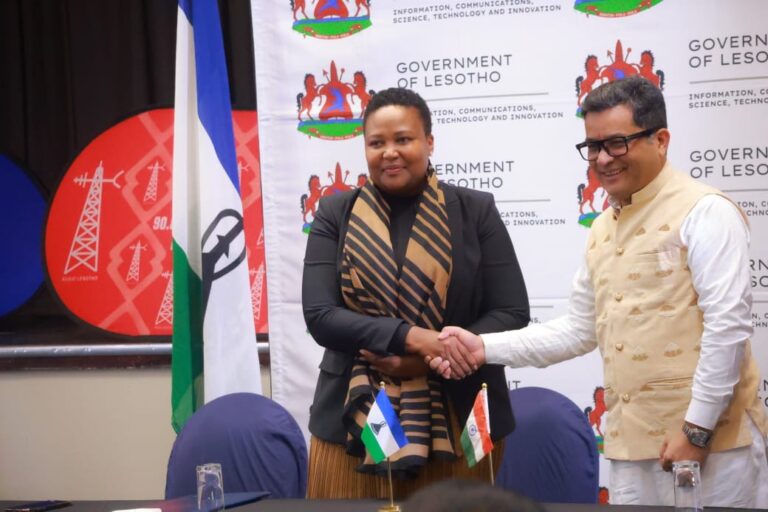
In an event held in Maseru this week, Lesotho’s Ministry of Information, Communications, Science, Technology and Innovation hosted the Ministry of State of Eternal Affairs of India, His Excellency Pabitra Margherita, to sign a Memorandum of Understanding (MoU) on Digital Public Infrastructure (DPI). 

With this new focus on digital transformation, the Principal Secretary of the Ministry of Communications, KanonoRamashamole, said Lesotho and India are embarking on a new chapter that will help the ministry implement its data transformation strategy, affirming that they were committed to deploying the DPI.

Ramashamole said the next steps that follow this big landmark for the ministry will be to make time to further discuss areas necessary to improve the country’s media landscape and broadcasting with the hope of yielding positive results from their collaboration with India. 

Speaking at the signing event, Honourable Margherita said India’s relationship with Lesotho is deeply rooted, saying the two countries share values of cooperation and common alignment. He said the two countries can also share knowledge through several departments, from tourism to infrastructure development. 

“We can all collaborate and share expertise and ideas as well as experiences in almost everything”, he said, adding that the MoU is a sign of commitment and understanding between the two countries in science and technology.

Honourable Nthati Moorosi, the Minister of Information, Communications, Science, Technology and Innovation, expressed her honour to host India. She said the journey, which started with the signing of a binding document, was a special occasion as the two countries also celebrate five decades of vibrant relations that were established back in 1971, strengthening shared values and transparency, development and sound cooperation. This long-term relationship has also flourished across sectors including education, trade, governance and military cooperation. 

It was said that the two countries, over the years, have managed to build a foundation of trust and innovation from India’s Line of Credit, India-Lesotho Centre for Advanced Education in Information Technology, to their military trading partnerships. Therefore, the agreement seeks to bolster Lesotho’s digital transformation strategy that was launched earlier this year to promote knowledge exchange, capacity building and co-development of digital solutions in areas including digital ID systems, digilocker implementation, AI-enabled public services and the development of dDigitalpublic goods are aligned with global standards. 

“As we align with international standards to maintain the confidence of advanced…let this agreement inspire progress and mutual prosperity for our people,” Honourable Moorosisaid, saying the ministry was excited about the opportunities the collaboration will present to Basotho, especially young entrepreneurs and institutions. 

“This MoU, signed in the wake of our national digital transformation strategy launch, reaffirms our joint commitment to driving progress and innovation,” the Minister said. 

The government of Lesotho is honoured to partner with India in this initiative, a global leader in digital innovation. Through this partnership, Lesotho seeks to build capacity, exchange knowledge and co-develop digital solutions that will empower its citizens and stimulate economic growth.

Maroala FC Reinforces Squad Ahead of Vodacom Premier League Debut

Maroala Football Club is making waves in the transfer market scene following its promotion to the Vodacom Premier League (VPL) for the first time since its founding in 1947. After clinching the 2024/25 A Division League, Northern Stream title with 43 points, the Maqhaka-based side is showing no signs of slowing down as they aggressively bolster their squad and front office in preparation for class football.

The newly promoted team has embarked on a recruitment spree, signing a series of promising players to strengthen key positions. In their bid to reinforce their goalkeeping department, Maroala FC pursued former Manonyane FC goalkeeper, Utloanang Leoma. A loan agreement was successfully reached between Maroala and Lijabatho FC, securing Leoma’s services for the upcoming season.

Midfield creativity and depth were also high on the club’s priority list. Linare FC’s Koenehelo “Copper” Mothala joined Maroala on a one-year deal following the expiry of his contract with his former club. Mothala, who had spent his entire professional career with Linare, brings much needed experience and leadership to Maroala’s midfield.

Joining him is fellow former Linare midfielder Siyabonga Mkhize, who also signed a one-year deal with the club. Mkhize, having parted ways with Linare earlier this season, will aim to revitalize his career with the newly promoted side.
But Maroala FC’s recruitment drive isn’t over yet. Reports indicate that the club is expecting two more additions from Ghana a central defender and a striker to further bolster their squad ahead of the new season.

Maroala FC has already started making its mark on the national stage. In May 2025, the club reached the final of the Top 8 Cup after a solid 2–0 semi-final victory over Kick4Life Juventude. Although they fell short in the final against Members FC, their fourth-place finish in the competition earned them prize money and valuable top-flight experience. They also clinched the 2024/25 A division league.

As the club sets its sights on its maiden VPL campaign, efforts off the field have also been ramped up. In June 2025, Maroala FC elected a new 11 member executive committee to meet the administrative standards required at the premier league level. Relebohile Obza Thelingoane was retained as the club’s Public Relations Officer, ensuring continuity in media and public affairs.
With this fresh committee, new talent, and ambitious vision, Maroala FC is not just looking to survive in the Vodacom Premier League they seem ready to compete.

LEC Procurement Manager Faces Suspension over Procurement Irregularities

MASERU-The Lesotho Electricity Company (LEC) is once again under public scrutiny following fresh revelations that its Procurement Manager, Peo Mputsoe, is facing suspension over suspected procurement irregularities.

The development came to light during a sitting of the Public Accounts Committee (PAC) earlier this week, where the acting Head of Finance at LEC, Lintle Thamae, confirmed that a suspension letter was in the final stages of preparation. Thamae told the committee that the pending suspension follows a disciplinary process initiated by LEC after concerns were raised about Mputsoe’s handling of procurement procedures within the state-owned enterprise.

According to Thamae, the utility had issued a show-cause letter to Mputsoe, demanding an explanation for his alleged conduct. However, the committee was told that his response was deemed unsatisfactory by the company’s leadership, prompting them to escalate the matter toward suspension.

“The company took the decision to act after it was not satisfied with the explanations provided. As of now, the suspension letter is being finalized,” said Thamae, responding to questions from PAC members who expressed concern over ongoing procurement issues at LEC.

The PAC, chaired by Hon. Lekhetho Mosito, has been a consistent watchdog over the financial practices of public institutions, with LEC frequently appearing before the committee due to recurring issues related to governance and fiscal discipline. Members of the committee noted with concern that the power utility continues to exhibit signs of deep-rooted management challenges, of which procurement irregularities are only one part.

The committee also highlighted the need for stronger oversight mechanisms to prevent maladministration and ensure accountability within parastatals. “This is not the first time LEC is before us for similar matters. We are concerned about the culture of impunity and lack of clear consequence management,” said one member during the hearing.

Although full details of the alleged irregularities were not disclosed during the session, the PAC indicated that a formal inquiry may be necessary to probe deeper into the company’s procurement activities and overall financial governance. The committee also hinted at the possibility of summoning Mputsoe to give his side of the story in subsequent sessions.

LEC has for years been battling public perceptions of mismanagement, with repeated reports of inefficiency, financial misappropriation, and poor service delivery. The latest revelations only add to the challenges faced by the utility, which is central to the country’s energy infrastructure.

As the suspension process unfolds, stakeholders are watching closely to see whether LEC will finally implement effective corrective measures. Meanwhile, the PAC has vowed to continue its oversight role in holding public officials accountable and ensuring that governance standards are upheld in all state-owned entities.

RFP MP Imprisoned Over Land Fraud Allegations

A Revolution for Prosperity (RFP) member, Puseletso Lejone (45), who is also the Member of Parliament for Thaba-Moea Constituency No. 73, has found himself behind bars after failing to meet bail conditions set by the Maseru Magistrate’s Court on July 23rd, 2025. Lejone stands accused of orchestrating multiple fraudulent land deals, involving both individuals and institutions.

According to Detective Police Constable Ponto Motumi from the Police Headquarters’ Anti-Corruption and Fraud Unit, Lejone allegedly sold a plot of land to a local church for approximately M140,000, without possessing any legal documentation to substantiate ownership. He was initially granted bail of M3,000 and required to pledge property worth M20,000.

In a separate matter, Lejone is accused of purchasing a field valued at M400,000 but only paid M105,000. The sellers have reportedly been unable to retrieve the property documents because the rightful owner of the field passed away and the estate has not yet been formally settled. For this case as well, the court set bail at M3,000 with a surety of M30,000 in property.

Police Inspector Tšeliso Pheta noted that the accused was uncooperative during the arrest, forcing the police to apply significant effort to bring him before the court. Inspector Pheta issued a public appeal, urging all individuals with similar pending matters to voluntarily report to the authorities.

Meanwhile, several families and at least one church remain in limbo, waiting anxiously for property documents that have yet to materialize. What was supposed to be the security of land ownership has now turned into a legal and emotional nightmare.

This unfolding case shines a spotlight on the growing concerns around fraudulent land transactions in Lesotho, especially those involving high-profile individuals and raises urgent questions about transparency, accountability, and the rule of law.

Independent business & current affairs journalism · Lesotho Subscribe — M85/month
| Independent business & current affairs journalism · Lesotho