
Mohahlaula Airlines
Wednesday, July 22, 2026
Home Blog Page 66

Murder Accused Tlelase Denies Role in Killings of ‘Leqhashasha’ and Two Others

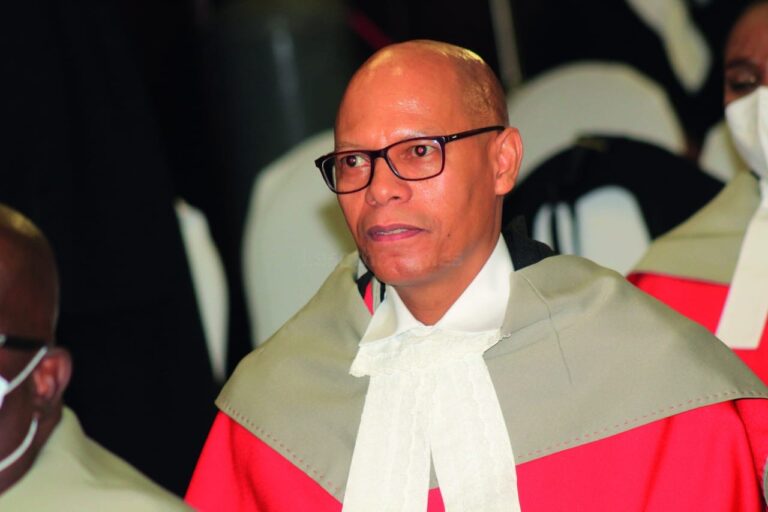
One of the men accused in the high-profile killings of prominent radio personality Ralikonelo “Leqhashasha” Joki, as well as Mothibe Mothibe and Thomello Ntsane, has taken the stand to deny any involvement in the murders.

On Tuesday, Mothusi Tlelase testified in his own defence after the High Court dismissed his joint application for discharge alongside his three co-accused. Speaking before Justice Tšeliso Mokoko, Tlelase insisted he was being wrongfully implicated by state witnesses seeking to protect themselves.

Tlelase told the court that he only learned of the deaths of Mothibe and Ntsane the day after the killings, from a villager in Mokema. On the night of the fatal incident, he claimed, he had been drinking at Koro-Koro with two men, Sekhobe Maama and Rapelang Chaka, who have both testified for the prosecution.

According to Tlelase, Maama and Chaka had earlier sold a firearm to his co-accused, Sootho Liphoto. He alleged that the pair implicated him falsely to “impress the police” and distance themselves from blame. “They testified as accomplice witnesses and accepted liability for the killings of Mothibe and Ntsane,” he said.

He further accused another key witness, Teboho Kumi, of providing false evidence against him. Kumi testified that he had transported the alleged killers of Joki on the night of the radio personality’s death. Tlelase argued that Kumi’s testimony was motivated by self-interest, suggesting Kumi believed his impounded vehicle would be released if he cooperated with investigators.

Tlelase, Liphoto, and their co-accused, Kamo Phakoe and Moabi Sesioana, face three counts of murder. Prosecutors allege that the men acted in concert to commit the killings, in violation of Section 40 (1) of the Penal Code Act No.6 of 2010, read together with Section 40 (2) and Section 26 (1) of the same Act.

The state contends that on May 14, 2023, the accused shot and killed Joki in Lower Thamae, Maseru. Six days later, on May 20, 2023, they allegedly murdered Mothibe and Ntsane in Mokema.

Section 40 (1) of the Penal Code states that any person who performs an unlawful act with the intention of causing death is guilty of murder if death results from that act. Section 40 (2) prescribes the death penalty for those convicted. Section 26 (1) provides that when two or more people share a common purpose to commit an unlawful act, and in pursuing it an offence is committed, all are deemed to have committed that offence.

The prosecution is led by Advocate Christopher Lephuthing, while the defence is headed by Advocate Lepeli Molapo. The case, which has gripped the nation due to Joki’s prominence and the shocking nature of the killings, continues in the High Court. Further testimony from the accused and closing arguments are expected.
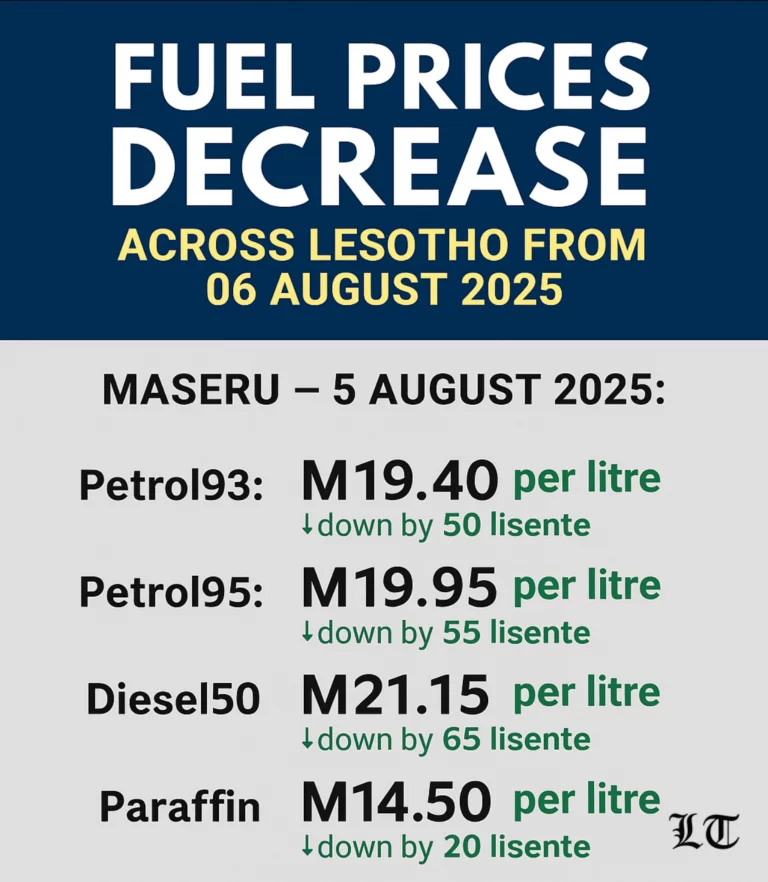
Fuel Prices Decrease Across Lesotho from 06 August 2025

0

Maseru –  The Petroleum Fund has announced a reduction in fuel prices across Lesotho, effective from Wednesday, 6 August 2025.

According to the official statement, the following new prices will apply:

Petrol93: M19.40 per litre (down by 50 lisente)

Petrol95: M19.95 per litre (down by 55 lisente)

Diesel50: M21.15 per litre (down by 65 lisente)

Paraffin: M14.50 per litre (down by 20 lisente)

The Fund urged all fuel dealers to comply with the new regulated prices and warned against selling at inflated rates.

The price reduction reflects recent changes in global oil markets and importation costs.

LEWA Board Crisis Deepens as Masheane is Fired Over Facebook Post

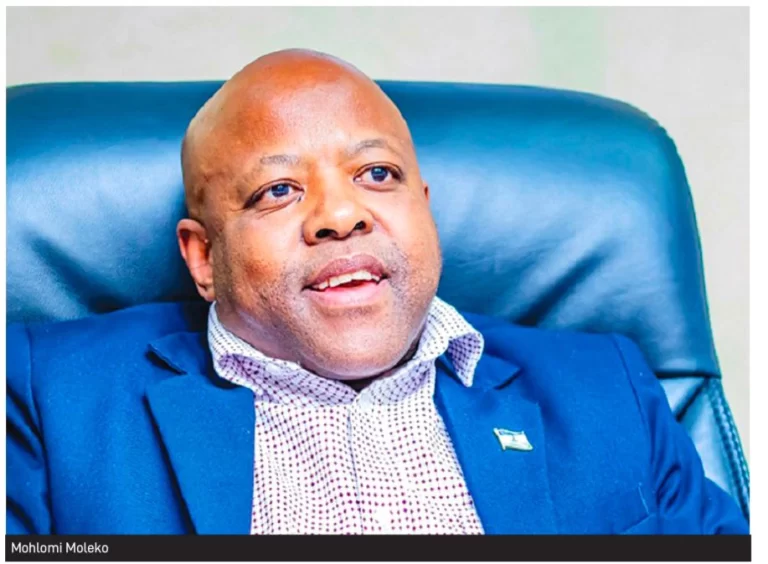
The turmoil at the Lesotho Electricity and Water Authority (LEWA) board continues to unfold, with Acting Minister of Energy, Hon. Mohlomi Moleko, issuing a termination letter to board member Khotso Masheane on 4 August 2025. This marks the second dismissal in a matter of weeks following the earlier firing of the board chairperson, Makotoko Makotoko. Moleko’s letter, which Lesotho Tribune has seen, accuses Masheane of conduct inconsistent with the collective responsibility required of board members and points to a specific Facebook post as the tipping point.

According to the letter, Masheane’s social media comments, published a day after the chairman’s termination, undermined the board’s integrity and cast doubt on the decision-making processes at LEWA. While the post does not mention any individual by name, Minister Moleko interprets the remarks as an implicit criticism of the leadership and decisions taken in the interest of good governance. The statement cited by the Minister reads: “Boards of failed companies are often full of agreeable professionals who nod along just to keep the peace.”

The Facebook post in question, which was made from Masheane’s verified profile, goes beyond that one quote. In a detailed and reflective tone, Masheane writes, “Both successful and failed organizations often have the same board structures, policies, and meeting routines. But outcomes vary drastically. Why? The difference is not in the systems; it is in the people. Specifically, it is the quality and courage of the board members.” He further laments the tendency to appoint individuals based on their paper credentials rather than their moral character and courage to challenge dysfunction from within.

While many observers viewed the post as a broader commentary on governance culture in the country, the Minister regarded it as an attack on the credibility and legitimacy of a lawful decision by the appointing authority. In the termination letter, Moleko emphasized that public disparagement of board decisions and fellow members, even through innuendo, compromises the reputation of the institution. He reiterated that LEWA board service is a position of collective accountability, not a platform for public dissent.

Moleko concluded the letter by stating that Masheane’s remarks made it difficult to view his actions as anything other than an attempt to undermine lawful decisions. “Such conduct is not compatible with the high standards of professionalism, unity, and mutual respect required of members serving in regulatory governance,” the Minister stated.

With two dismissals in rapid succession, the crisis at LEWA signals deeper fissures in the governance of state-owned entities. The firings have sparked debate over the limits of board member expression, the role of constructive dissent in public institutions, and whether the Minister’s actions amount to authoritarian overreach or are necessary to preserve institutional integrity. As questions swirl around governance reform and regulatory independence, the LEWA board saga continues to dominate the national discourse and raises uncomfortable truths about the state of accountability in Lesotho’s public institutions.

This is a developing story.

Mafeteng, Mohale’s Hoek to benefit from LLWDP II

0

Mafeteng

Sponsored by the Government of Lesotho, the World Bank, European Investment Bank (EIB) and the European Union (EU), the implementation of the Lesotho Lowlands Water Development Project Phase II (LLWDP II) has turned its Focuson Zones 6 and 7 (Mafeteng and Mohale’s Hoek). This was revealed by the LLWDP II Project Manager, MathealiraLerotholi, in Mafeteng this Wednesday.

After a long crisis stature for the people of Mafeteng and Mohale’s Hoek, a flicker of hope has been sparked by the LLWDP II in the workshop that was held at Mafube Guest House. The workshop attracted the presence of members of parliaments, project developers, law enforcement personnel, media houses and the Minister of Energy, with the serving pipeline set to run from Morija to Metolong.

Speaking at the workshop, the Minister of Energy, MohlomiMoleko, said the world was currently focused on obtaining success in Sustainable Development Goal 6.

“This means by the year 2030, every global citizen should have access to clean water. This project here in Lesotho is set up to ensure that the possibility of this within our region is met,”Mohlomi said.

He said he was optimistic that in a not-so-distant future, Basotho would live without the weight of paying for water and electricitylectricity as these bill payments would have been lifted off their shoulders. The Minister said he believed this was possible since Lesotho has adequate water supply and generates enough turnover in a year to self-supply maintenance costs. 

“Last year, Mafeteng got a bitter taste of lacking water and thismade rounds on the news. The Prime Minister then pressed that my ministry move swiftly to address this matter. I am therefore grateful to see strides implemented to seeing this project getting underway,” he said. 

Mathealira Lerotholi said the project that has a budget of €123 million is set to serve over 60 percent of Basotho (280 000) with clean water in the selected zones. 

“The purpose of this project covers a wide spectrum of goals. These include increasing availability of potable water Hlotse and Maputsoe (zone 2 and 3), Mafeteng and Mohale’s Hoek, increasing access to improved water supply services, improving operational performance of Water and Sewerage Company (WASCO) and rehabilitation of water distribution networks to mention but a few,” remarked Lerotholi.

He said all the villages and communities which the pipelineswill pass through will also benEfit from the project, both with the supply of clean water and jobs for those aged between 18 and 58. 

Beyond the pipeline that will be supplying over 57 million litres of water to 280,000 people, the project is set to also renew andrenovate the Likhoele dam, a supply centre that was built in the 80s in Mafeteng. The dam is said to have been idling without purpose after it was clogged up with mud. Moleko made a promise that before the end of this year, a tender will be released for a contractor who will unclog it.

Lesotho Men’s Tennis Team Waves The Flag In Botswana

0

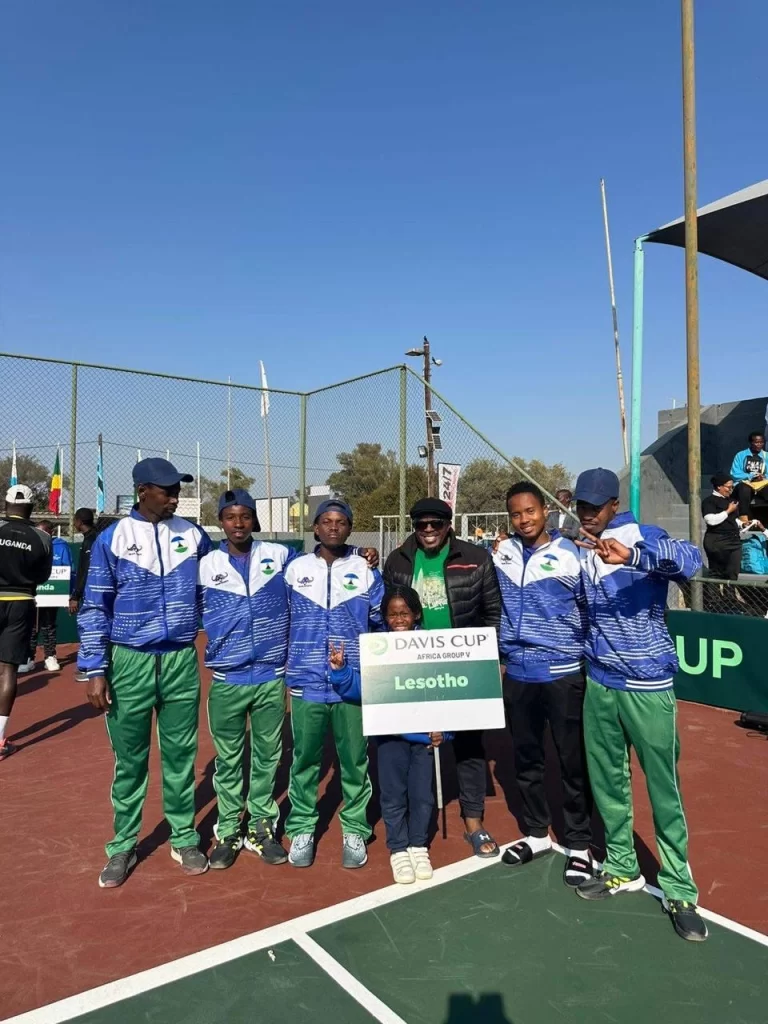
The Lesotho Men’s Tennis Team took a confident step in their international sporting journey this July as they traveled to Gaborone, Botswana, to compete in the Davis Cup – Africa Group V. The team departed on Tuesday, 22 July 2025, from Moshoeshoe I International Airport, carrying not only their rackets but also their hopes and pride.

The Davis Cup, is a premier international team competition in men’s tennis, sees nations from around the globe compete across various levels. In Africa, the tournament is structured into groups (I through V), with countries battling for promotion or fighting to avoid relegation. Lesotho, currently in Group V, was among fifteen nations vying for two promotion slots into Group IV for 2026.

This year’s Davis Cup group V matches were hosted at the National Tennis Centre in Gaborone, Botswana. Countries such as Mozambique, Tanzania, Uganda, Djibouti, Ethiopia, Seychelles, Libya, and Congo were also in the mix, creating a fiercely competitive environment. Lesotho kicked off their campaign with a powerful performance against Mauritius on Wednesday, 23 July. The team made a clear statement of intent, sweeping the tie with dominant showings from top players Mpho Leshoele and Lerato Mathibela. Both players secured wins in the singles matches and later teamed up to clinch the doubles match, giving Lesotho a clean sweep in their opening encounter.

The team, comprising Mpho Leshoele, Lerato Mathibela, Kamohelo Marhibeela, and Langa Matloebe, faced a tougher test on Friday, 25 July, against Rwanda. In a hard fought battle, Leshoele lost narrowly to Rwanda’s Claude with scores of 4–6, 5–7, while Mathibela also went down in straight sets (3–6, 6–7) to Etienne. However, the duo bounced back in the doubles match, defeating Rwanda’s Dieu Donne and David Manzi in a thrilling 6–4, 7–6 (5) victory that showcased their resilience and teamwork.

Ultimately, Lesotho finished 5th out of the 15 participating nations a significant improvement from their 10th-place finish in 2024. During last year’s Group V event, Lesotho had competed in Pool C alongside Botswana, Madagascar, and Libya, where they suffered defeats in all their ties, including a ninth-place play-off loss to Sudan. These young athletes have not only represented Lesotho on the court but have elevated the country’s standing in the African tennis community. With continued support and development, Lesotho’s climb up the Davis Cup ranks looks promising.

Lesotho Bans Imports of Eggs, Potatoes, and Cabbage

0

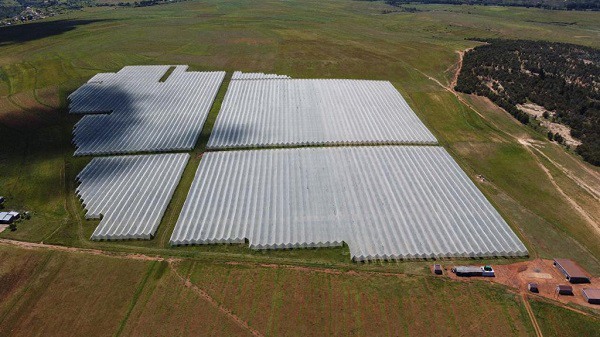
The recent policy shift by Lesotho’s Ministry of Agriculture, Nutrition and Food Security marks a bold and strategic step toward revitalizing the country’s struggling agricultural sector. This week, the Ministry announced a ban on the importation of eggs, potatoes, and cabbage. The move is designed to empower local producers, stimulate rural economies, and push the nation closer to self-sufficiency.

After months of public missteps and policy uncertainty that left many doubting the government’s priorities, the Matekane-led administration deserves credit for a decision that puts Basotho farmers first, without favour or political manoeuvring. This is a welcome change and a meaningful vote of confidence in the country’s agricultural potential.

The timing of the ban could not be better. Local farmers are already producing these commodities at competitive prices and quality, making imports increasingly unnecessary. By restricting the entry of foreign alternatives, the Ministry is not just protecting the local market. It is also sending a strong signal of support to the men and women who invest their time, effort, and capital into sustainable food production.

At its core, this policy supports more than just short-term protection. It lays a foundation for a resilient agricultural economy. It promotes food security by reducing Lesotho’s dependency on external suppliers. It encourages sustainable farming practices and provides an incentive for further investment in local agriculture. Most importantly, it fosters pride in homegrown produce.

We believe this move will catalyze broader economic benefits, stabilizing prices, creating rural employment, and encouraging entrepreneurial activity within farming communities. The long-term gains could be transformative, especially if coupled with ongoing support, access to markets, and capacity-building for smallholder farmers.

Of course, no policy is without risks. There is always the potential for price manipulation or supply shortages if regulation and enforcement are not carefully managed. That is why ongoing monitoring, transparency, and collaboration with farmers’ unions and consumer protection bodies will be key. A fair and predictable marketplace will prevent abuse and ensure the intended benefits reach the grassroots.

This decision also presents an opportunity to reduce Lesotho’s trade deficit by curbing the outflow of currency used to import food. It is a firm step toward economic self-determination. It aligns with the broader national vision of prosperity through self-reliance.

We commend the Ministry for showing leadership and trusting Basotho farmers with the responsibility of feeding the nation. It is now up to the farming community to rise to the occasion, maintaining quality, scaling production, and justifying the confidence placed in them.

When Heroes Become Thieves

0

Collen Chikore

A truth we have long feared in the whispers of our communities has now been dragged into the glaring, unforgiving light. A report from a senior South African police commissioner, General Nhlanhla Mkhwanazi, has given an official name to the betrayal that is bleeding our nations dry. It alleges an unholy alliance, a criminal syndicate of the highest order, linking officials from Zimbabwe’s ruling Zanu PF and the office of President Mnangagwa with insiders from South Africa’s own governing party, the ANC.

The names Zanu PF and the ANC should echo in the halls of global history. These are the fabled liberation movements the world once rallied behind to defeat the racist regimes of Rhodesia and Apartheid. We, their people, gave them our trust, believing they would build nations worthy of the blood spilled for freedom. That trust now lies shattered. The report alleges that these two hands, once joined in the fight for justice, are now joined in a conspiracy to plunder our collective wealth—illegally moving cash, gold, and other minerals across our borders.

To the world watching, this is more than just another story of “African corruption.” It is a direct consequence and mockery of your international policies. General Mkhwanazi’s report confirms that a primary motive for this syndicate is to bypass the very sanctions you imposed on Zimbabwean elites. While you believe you are isolating a regime, you are, in fact, fuelling the creation of a sophisticated shadow state. Your sanctions have become a catalyst for a more insidious, transnational crime that rots not one, but two nations from the inside out.

The cost of this alleged betrayal is etched onto the faces of our people. Every untaxed diamond spirited out of Zimbabwe is a school that cannot be built in Harare, a hospital that closes its doors in Mutare. The wealth of an entire nation is being siphoned away, leaving millions in poverty while the architects of their misery feast.

This poison seeps across the border into South Africa. The illicit cash fuels the hyper-violent crime that turns our streets into warzones. It hollows out our state institutions, breeding a culture of impunity. And cruelly, it feeds the flames of xenophobia, as angry and desperate South Africans are manipulated into blaming the poor Zimbabwean immigrant, rather than the powerful elites in both countries who are the true authors of our shared pain.

We are witnessing the moral bankruptcy of a generation of liberators. The promise of freedom has been sold for a private jet, a foreign bank account, a life of luxury built upon the suffering of millions.

We therefore appeal to you, the international community. Your work is not done. Inaction is complicity. Do not look away. We demand more than just sanctions; we demand a targeted, global response against these criminal networks. Empower international bodies like INTERPOL to investigate these claims without political interference. Use your financial intelligence to track and freeze the assets of not just the individuals, but the entire web of corruption that enables them.

Support the brave journalists and officials like General Mkhwanazi who risk their lives to expose this rot. They are the true heroes now. The dream of a free and prosperous Southern Africa is dying. We are fighting to revive it, and we ask you to stand with us, not with those who have turned their flags into shields for criminal enterprise.

Zimbabwe human rights activist.

Independent business & current affairs journalism · Lesotho Subscribe — M85/month
| Independent business & current affairs journalism · Lesotho